
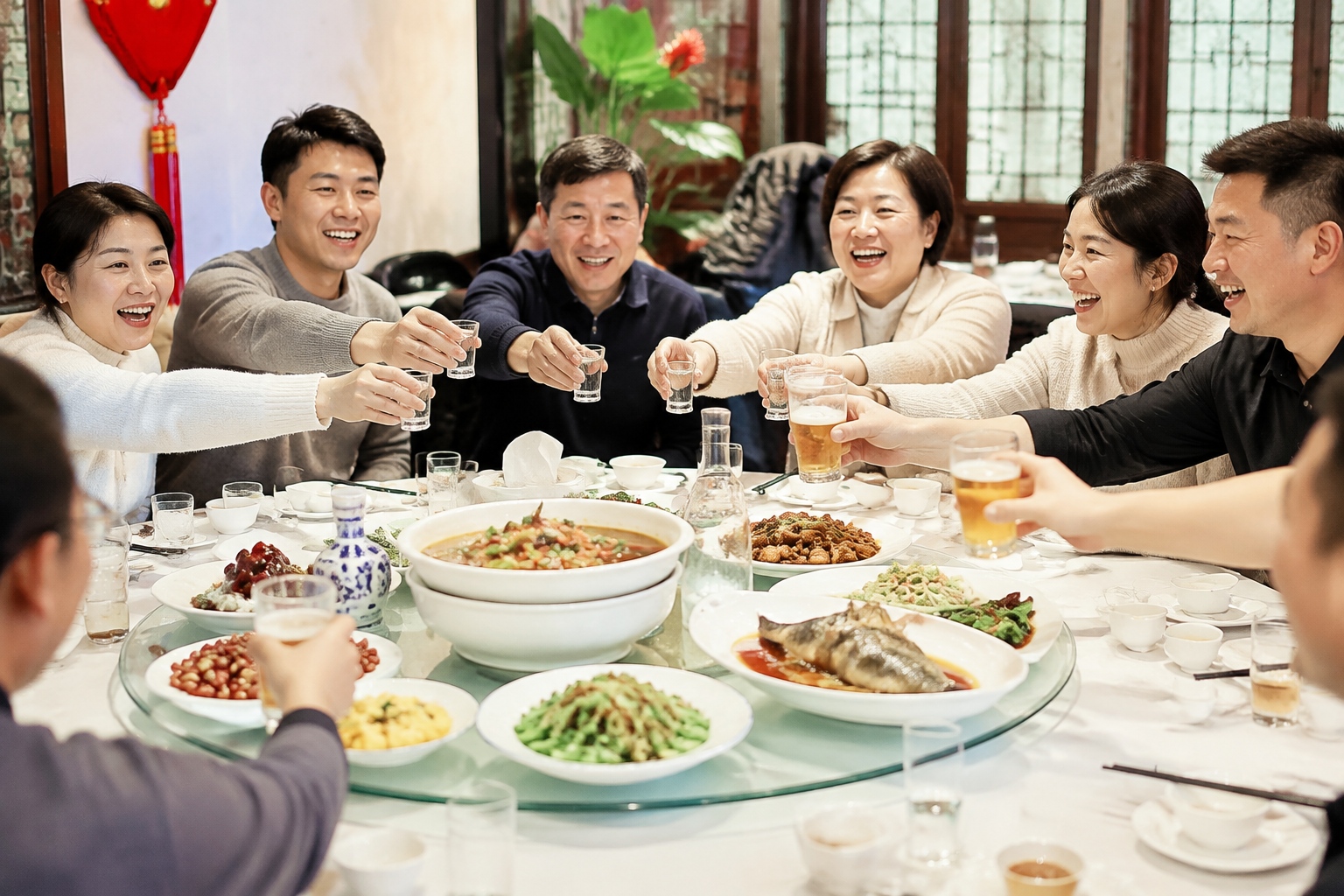

Introduction: My First Seating Disaster
My first proper Chinese banquet was a masterclass in humiliation. I walked in, saw an empty seat, and sat down. The room went quiet for a second. Then a friend grabbed my arm and whispered, “That’s the host’s seat. You’re not the host.” I moved, face burning, and learned a lesson that took years to fully unpack: in China, where you sit is not just about sitting.
Where Everyone Sits (and Why It Matters)
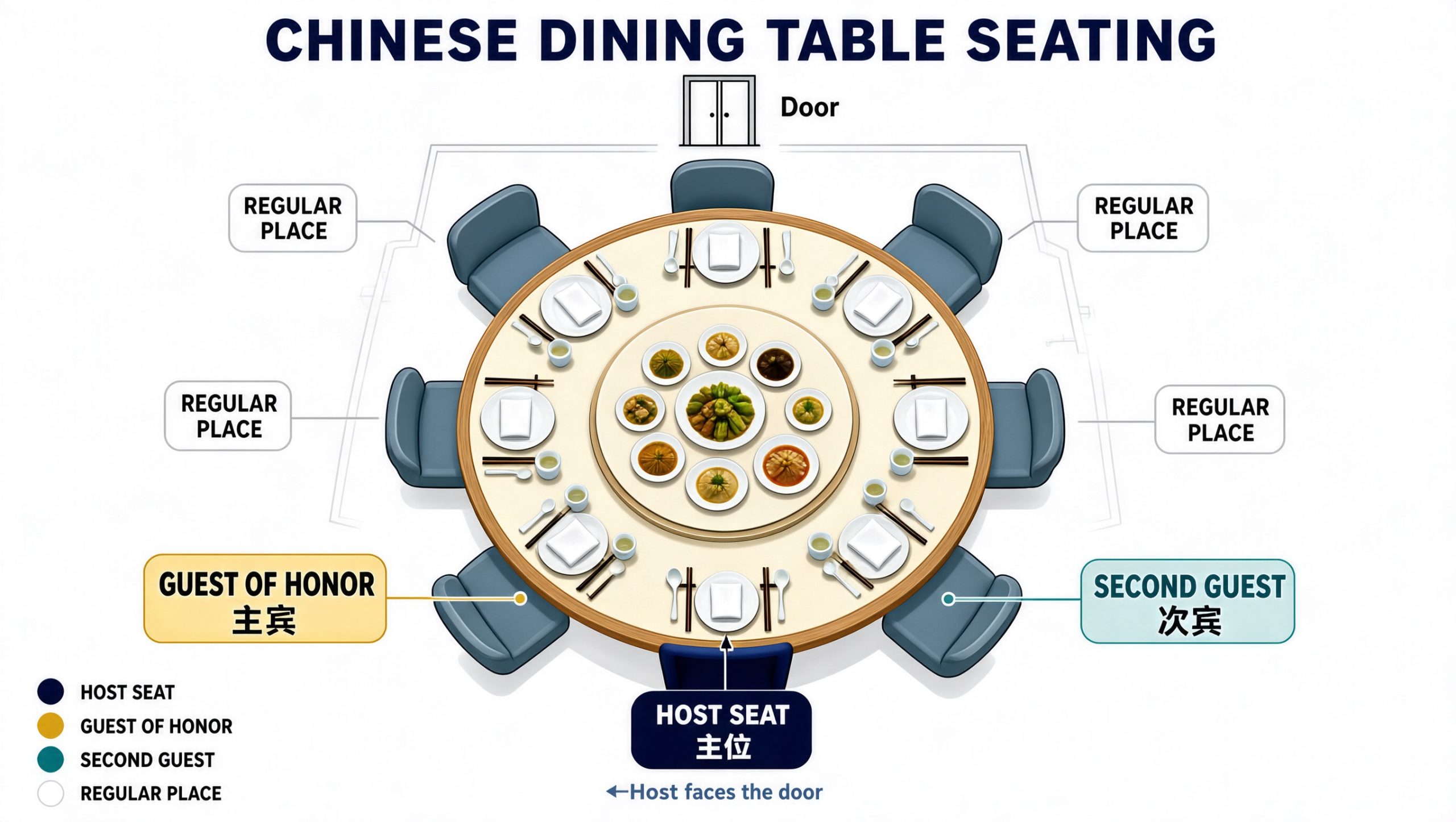
Chinese banquet seating looks like a circle, but it’s actually a map of social gravity. The most important seat is usually the one facing the door, called the “main seat” (主位). It’s reserved for the host or the highest-ranking guest. The guest of honor sits to the host’s right. The second guest sits to the left. Everyone else fills in around the table, roughly in order of importance.
Why? Because the host needs to see who comes in, and the best dishes get placed in front of the VIPs. It’s also a way to show respect: the closer you sit to the host, the higher your status. If you’re a guest, don’t just pick a seat. Wait to be guided. The host will usually say, “请上座” (please take the seat of honor) or “随便坐” (sit anywhere) — but “随便” is never really random. When in doubt, ask: “Where should I sit?”
Toasting: Timing, Posture, and the Art of the Clink
Toasts are the heartbeat of a Chinese banquet. They’re not just “cheers”; they’re social negotiations in a glass. The first toast usually comes from the host, who stands up, says a few words, and invites everyone to drink together. You don’t start eating or drinking before that. If you’re a guest, you should wait for the host to initiate.
When you toast someone older or more senior, use both hands to hold your glass, or support the bottom with your left hand. Keep your glass lower than theirs when you clink. It’s a small gesture, but it speaks volumes about your awareness of hierarchy. If you’re the junior person, you also might want to stand up when toasting across the table.
One more rule: don’t toast people across the table with a full glass and then take just a tiny sip. In formal dinners, toasting often involves finishing your glass (“干杯”, literally “dry cup”). But if you can’t drink, it’s acceptable to sip and let the other person down easy — more on that later.
“Ganbei!” vs. “Suiyi”: The Drinking Game
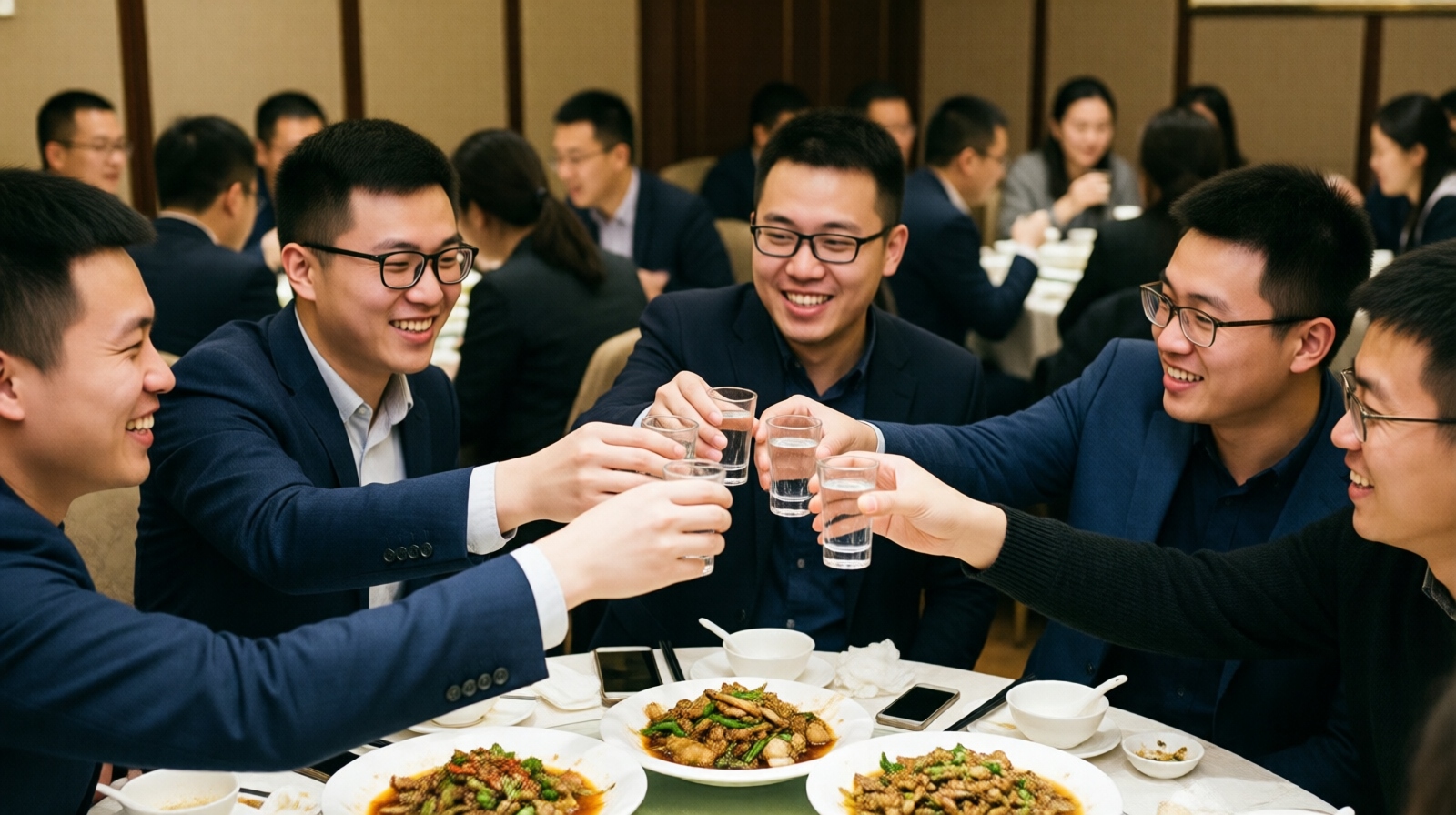
If you’ve been to a Chinese banquet, you’ve heard “干杯!” (gān bēi) — “dry the cup!” — followed by a dramatic drain of glass after glass. There’s also “随意” (suí yì) — “as you like” — which means you can take a small sip. The tension between these two captures the culture of drinking.
In some situations, especially at business dinners, pushing “drink more” is a way to test social stamina and sincerity. Phrases like “感情深一口闷” (deep feelings, down in one gulp) or “感情浅舔一舔” (shallow feelings, just a lick) turn alcohol into a metric of friendship. It’s intense, and it can be exhausting if you’re from a culture that treats drinking as a personal choice, not a public ritual.
Here’s the secret: the pressure is often about giving face, not actually getting you drunk. A skilled person knows how to pace themselves, or how to decline gracefully without making a scene. And the younger generation is increasingly saying, “以茶代酒” (replace alcohol with tea). The ritual remains, but the liquid is negotiable.
The Battle to Pay: Why Everyone Fights Over the Bill
If you’ve ever been to a Chinese restaurant at the end of a meal, you might have witnessed what looks like a wrestling match at the counter. People literally tug at the bill, raise their voices, and try to block each other’s payment. It’s called “抢买单” (qiǎng mǎi dān) — fighting to pay the bill.
To an outsider, it seems theatrical. To a Chinese person, it’s a serious exchange of social credit. Offering to pay shows generosity, and accepting someone’s payment puts you in their debt. Over time, people keep mental ledgers of who paid last time. The system works because everyone goes through the motion of wanting to pay, and the host of the occasion usually “wins” after a long struggle.
If you’re a guest and it’s not your gathering, you don’t have to fight too hard. You can say, “下次我来” (next time I’ll treat) to signal reciprocity. And don’t be surprised if the host sneaks off to pay before the meal ends. That’s a classic move: asking for the check in advance, so there’s no fight at all.
How to Say No to Alcohol Without Losing Face
If you don’t drink, you can still survive a Chinese banquet. The key is to give a plausible reason early, so people stop pressuring you. Common excuses: “I’m driving” (very effective in cities with strict drunk driving laws), “I’m on medication,” or “My doctor told me not to.” You can also say you’re allergic to alcohol — a little white lie, but it works.
Once you’ve declared no alcohol, be consistent. Offer to drink tea, juice, or soda instead. When someone toasts you, you can raise your tea glass and tap it on the table instead of clinking (a table-tap is a common alternative, especially in Guangdong). If you’re the junior person, also make sure to walk over to the senior person’s table to toast with tea. That shows respect, even if the glass isn’t full of Baijiu.
And if you do drink, pace yourself. Alternate with water, eat before drinking, and never empty your glass every time. The goal is to connect, not to collapse.
The Modern Banquet: Networking, Bonding, and Survival Tips
In modern China, the banquet is still a crucial social platform. It’s where business deals get sealed, friendships deepen, and families reconnect. The rules aren’t a rigid etiquette manual; they’re a flexible dance of respect, reciprocity, and relationship maintenance.
For newcomers, here’s a mini survival kit:
1. If you’re not sure where to sit, ask the host directly.
2. Wait for the host to make the first toast.
3. Keep your glass lower than seniors when clinking.
4. Take small sips unless the host calls “干杯”.
5. Don’t eat until everyone has arrived and the host says “开动” (start).
6. When the bill arrives, offer to pay, but let the host win — unless you’re the host.
7. At the end, say “谢谢款待” (thanks for the hospitality) to show gratitude.
Remember, the banquet isn’t just about food. It’s about building trust and showing that you understand the unspoken rules. When in doubt, observe and follow the oldest or most senior person at the table. That’s the closest thing to a GPS for navigating Chinese dining culture.
So next time you’re invited to a Chinese dinner, relax. You’ll probably make a mistake — I certainly did. But if you laugh at yourself, pay attention, and raise your glass with both hands, you’ll be fine. And maybe, just maybe, you’ll get to pay the bill.
Start the discussion at forum.chinacomes.com