

In Hohhot, the Day Starts With a Pot of Dark Tea
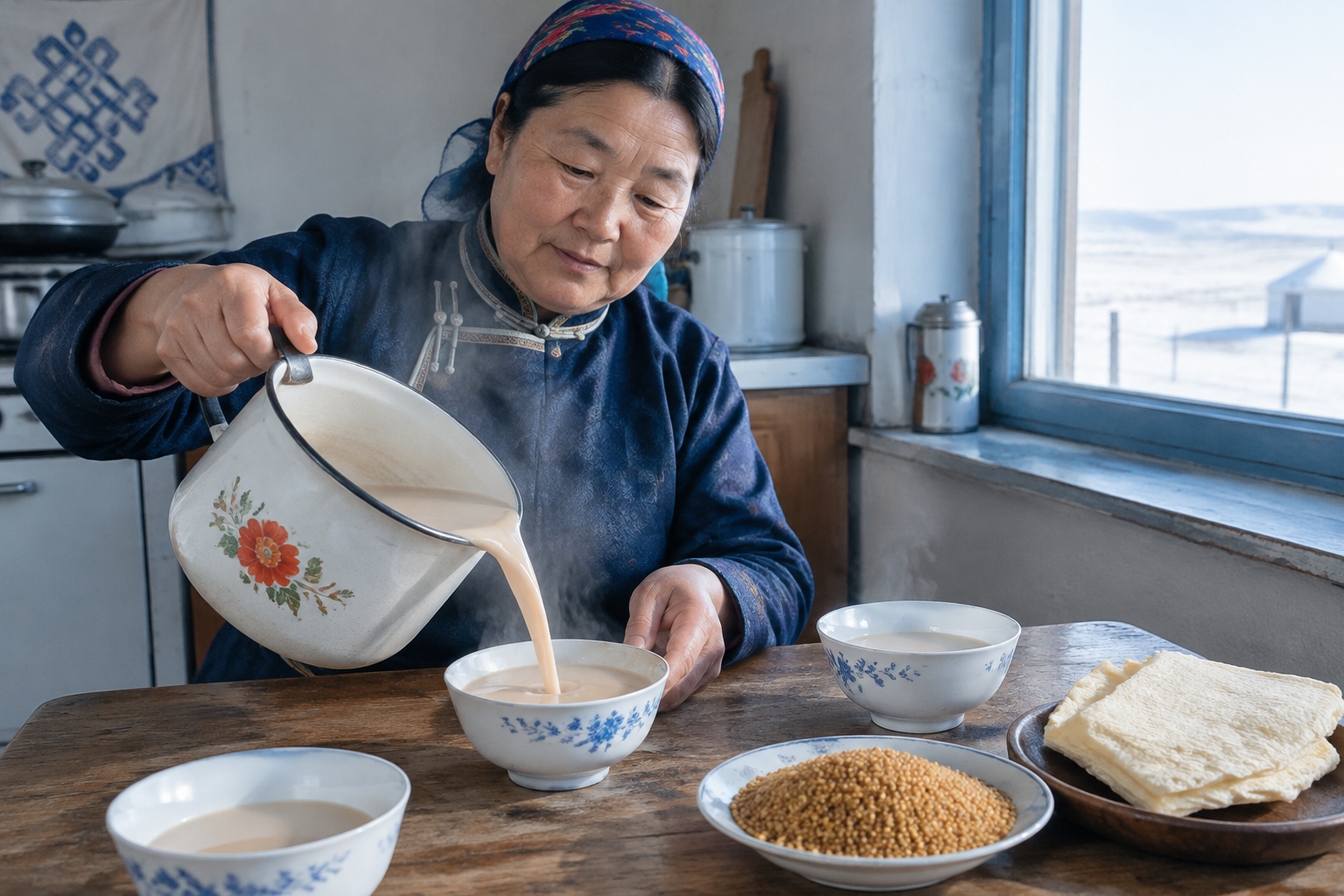
Shortly after six in the morning, in a fourth-floor apartment in Hohhot, the capital of China’s Inner Mongolia Autonomous Region, Sarina doesn’t reach for the coffee grinder. She takes a small knife, chips a corner off a hard black brick of tea, and drops it into a pot of water on the stove. Fifteen minutes later the water has turned almost black. She adds milk — usually more milk than water — and a pinch of salt, and pours the result into bowls.
On the table there is a plate of roasted millet, a slab of milk skin, and, if it’s a weekend, cold boiled mutton cut into chunks. This is suutei tsai in Mongolian, nai cha in Chinese: milk tea. Hot, salty, faintly smoky — and almost nothing like the sweet, chewy, plastic-cupped drink most of the world now calls milk tea.
Why Salty? Because of Horses, Winter and Meat
Foreign visitors in Inner Mongolia ask the same question almost every time: why is the tea salty? The answer is practical rather than exotic.
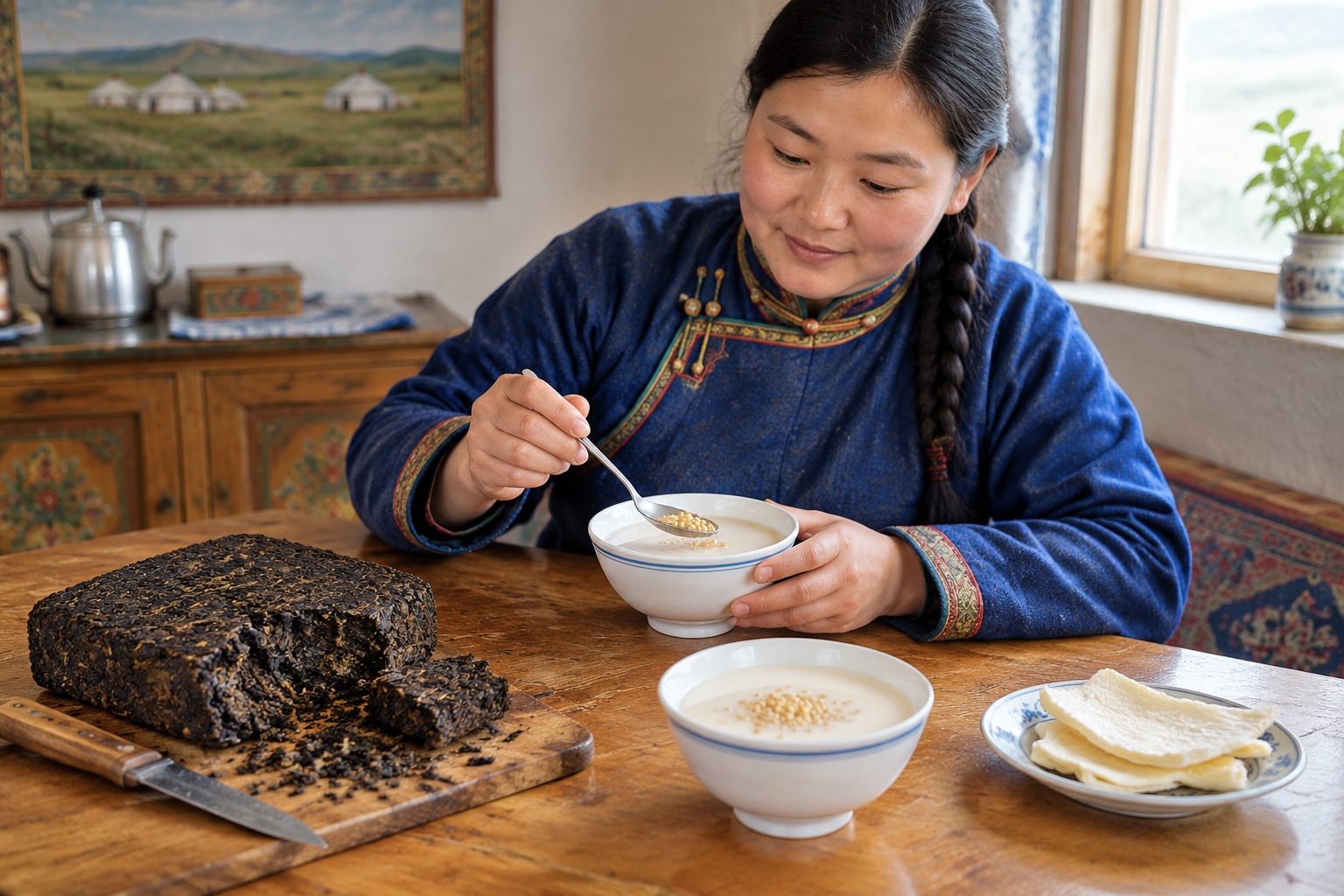
The tea itself arrives as compressed bricks, historically made from coarse leaves grown far to the south in Hubei and Hunan. Loose tea would have been crushed, damp and worthless after weeks on horseback. Pressed into a brick the size of a hardcover book, it survived the long caravan routes north — the same routes that made tea a form of currency between China, Mongolia and Russia in the 18th and 19th centuries. That trade is where the phrase “liquid gold” comes from. In parts of it, a brick of tea really did function like money.
Brick tea is tough, so it has to be boiled hard rather than briefly steeped. Milk softens the bitterness. Salt is what a body wants when the diet is mutton, dairy and little else for months, and when the work happens outdoors in dry wind and temperatures well below freezing. Salt replaces what sweating under heavy clothing takes out. Hot liquid warms you from the inside and helps the stomach deal with fatty meat. None of that is strange; it is ordinary food logic in a cold, meat-heavy place.
It also helps to know that Inner Mongolia is not alone. From Tibetan butter tea to the salty milk teas of Central Asia and parts of Russia, a whole belt of Asia drinks tea with milk and salt rather than sugar.
How It Is Actually Made
There is no single recipe. Some families use one part tea concentrate to three parts milk; others reverse that ratio. Some add roasted millet for texture, milk skin for richness, a little butter, or dried meat to make it a full meal in a bowl. Two things stay constant: the tea is boiled, and the salt is there.
The Rhythm of the Day
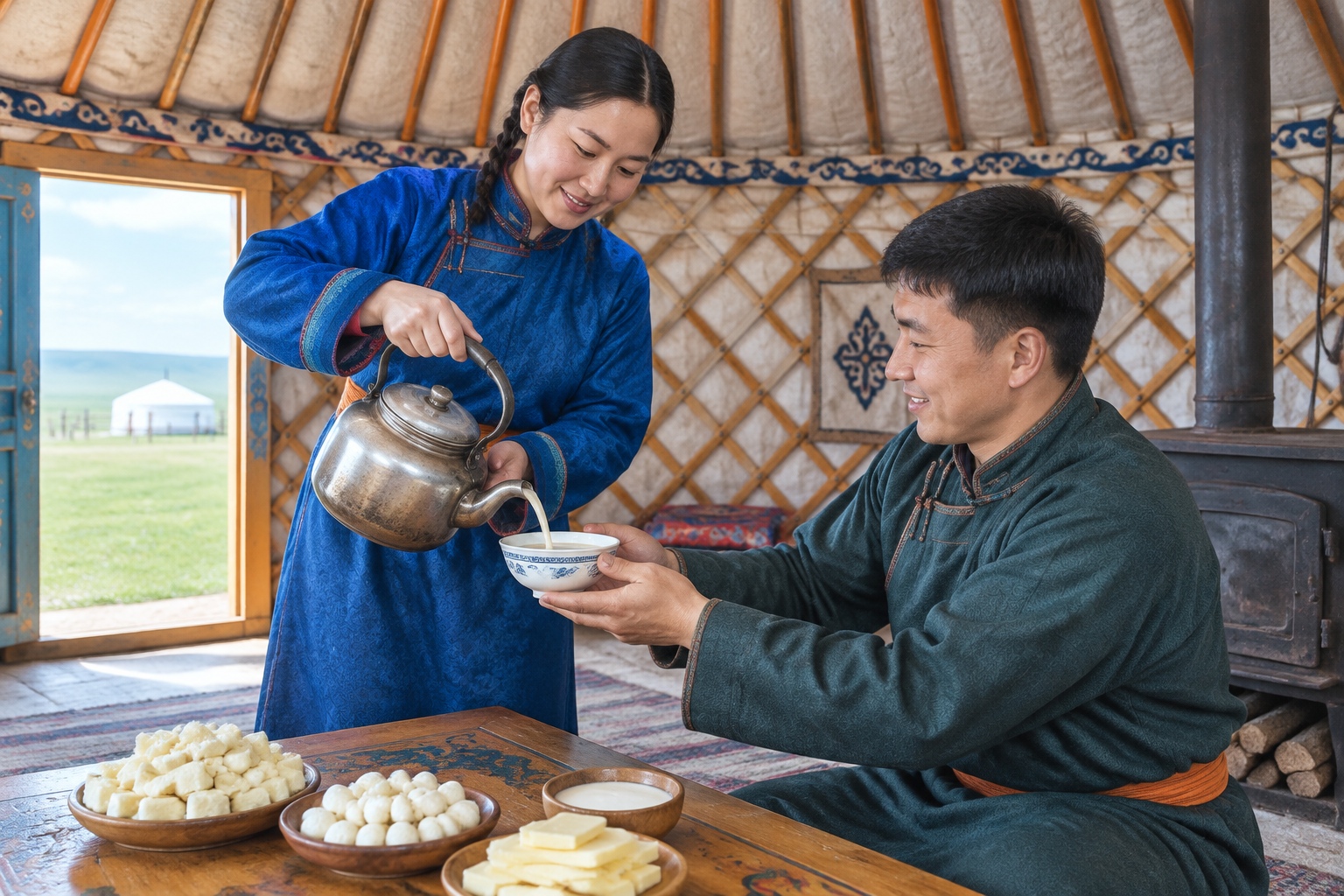
In herding families, tea comes before breakfast, before the phone, before anyone goes out to check the animals. In the city the order is much the same. In Hohhot, breakfast milk tea is normally paired with shaomai — steamed dumplings with thin, pleated skins and a lamb filling — or with a baked flatbread dipped straight into the bowl. Tea houses open early and stay busy until mid-morning; the same tables fill again in the afternoon, with retirees playing cards for three hours over one pot.
At work, the habit travels in smaller containers. Instant milk tea sachets sit in office drawers; thermoses go to construction sites and clinics. “Come over for tea” in Inner Mongolia does not mean a fifteen-minute break. It means an hour at minimum, and usually a meal around it.
Hospitality: The First Thing You Are Handed
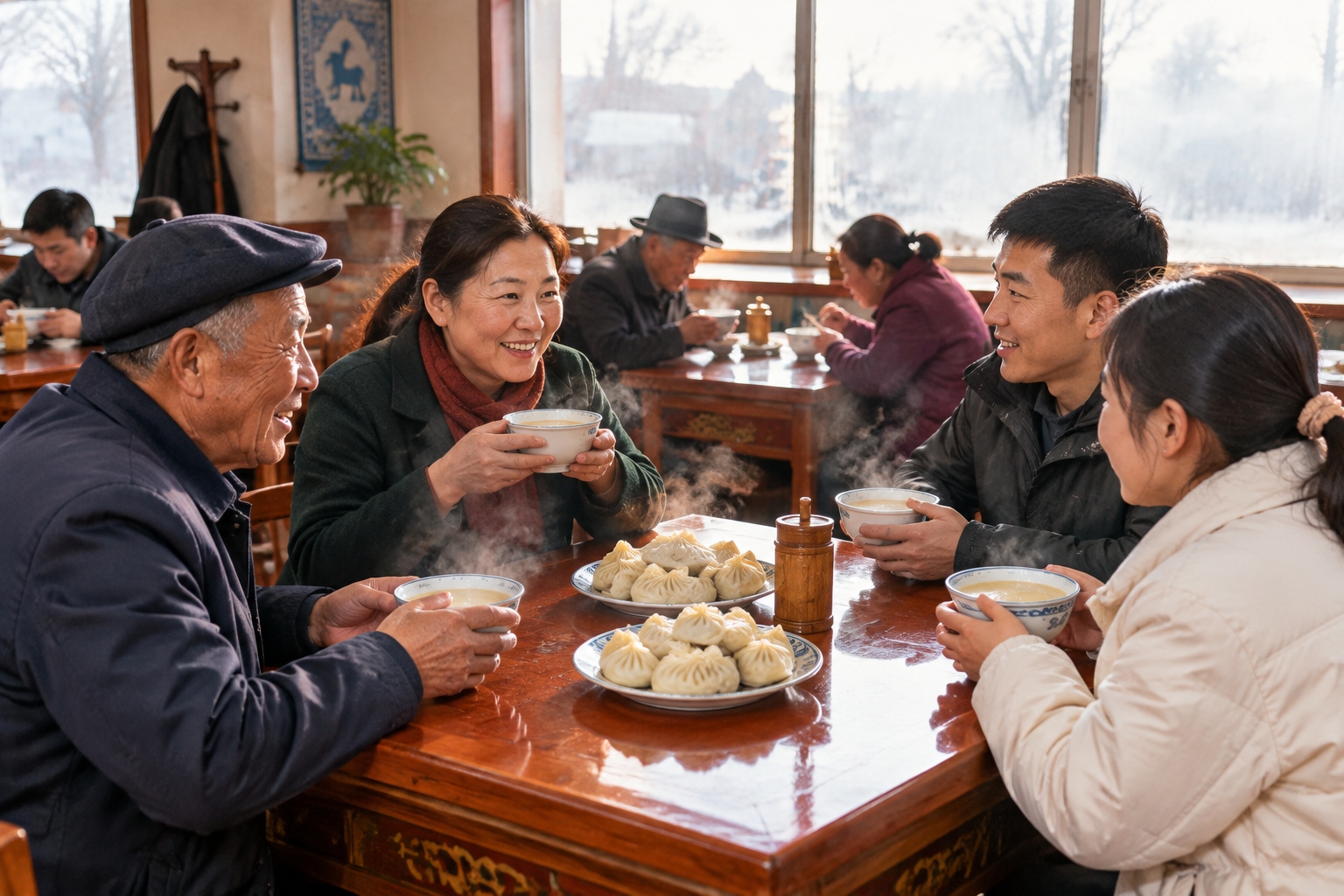
If you visit a herder’s home — a yurt on the grassland, or increasingly a brick house with a satellite dish and a car parked outside — the sequence is predictable. You sit down. Before you have finished sitting, a bowl of hot tea is in front of you.
The bowl is passed with both hands, or with the right hand supporting the base. You receive it the same way. It gets refilled long before it is empty; in many households the host watches the bowl the way a waiter watches a water glass. The oldest person at the table is served first. If you have had enough, you do not refuse out loud — you leave a little tea in the bowl, and everyone understands.
None of this is a museum ritual. Grandmothers are strict about it; a 25-year-old in a down jacket might pour your tea while checking a WeChat message with the other hand. The point is not etiquette for its own sake. It is that a guest should be warm and fed within two minutes of arriving, and tea is the fastest way to do both.
The Tea Table as Social Infrastructure
On the grassland, a neighbor can be twenty kilometers away. Sitting with tea for two hours is not idleness; it is how information, help and company move across a large, thinly populated landscape. Livestock prices, weather, a son’s exam results, which hospital has a good cardiologist — all of it gets sorted out at the tea table.
In cities the function is similar but the furniture is different. Milk tea houses in Hohhot and Xilinhot work a bit like cafés, except that children do homework in the corner, grandparents argue about the price of mutton, and nobody feels pressure to leave. Inner Mongolia produces more milk than any other province-level region in China, and the country’s two largest dairy companies, Yili and Mengniu, are both headquartered in Hohhot. Milk here is not a specialty item; it is a staple, and tea is what turns it into a social occasion.
Two Versions of the Same Bowl
Rural and urban milk tea are not identical. On the grassland, the milk often comes from the family’s own cows, and in summer the tea may be boiled outdoors. In the city, restaurants and chains have standardized the process, and convenience stores sell bottled and powdered versions for people who want the taste in ninety seconds.
Sweet milk tea exists too, and young people drink plenty of it — the budget bubble tea chains with tens of thousands of outlets across China are as visible in Hohhot as anywhere else. Many people happily drink both: sweet, iced and chewy with friends in the afternoon; salty and hot at home with their parents in the morning. Some younger drinkers add sugar to the family pot, which older relatives treat as a mild personal insult.

Tourism, Social Media, and What Does Not Change
Over the past few years, salty milk tea has become a small internet curiosity. Travel posts and short videos introduced it to visitors who arrive expecting the sweet version and get a bowl of hot, savory liquid instead. Some restaurants now list both salty and sweet on the menu. Packaged “Mongolian milk tea” sells in airport shops, though a good deal of it contains more sugar and milk powder than tea.
That commercial layer is real, and it is worth being clear-eyed about it. But it sits on top of a habit that has not moved much. Locals still drink milk tea at breakfast, at home, on ordinary Tuesdays, without much thought about tradition. Visit the grassland on a July package tour and you will see the performance version. Sit in a Hohhot tea house in January, with the windows fogged and a plate of shaomai going cold, and you will see the everyday one.
A Bowl, Not a Brand
So what does it taste like? Salt first, then the fat of the milk, and underneath, a smoky, slightly bitter edge from the brick tea. It is not a dessert. It is closer to soup, and it is often drunk the way soup is: with something solid alongside it, in no hurry.
Milk tea in Inner Mongolia was never designed to be photogenic, and it has survived the arrival of sugar, plastic cups and global chains without much trouble. The next time you hear the words “milk tea,” it may be worth remembering that the phrase covers at least two entirely different things — and that in one of them, the salt is the whole point.
Start the discussion at forum.chinacomes.com