

Editorial note: No stall address, interviews, dated menu, or field notes were supplied for this article. The family and morning scenes below are illustrative, not reported encounters. Food and housing descriptions provide general context; no stall-specific prices, business history, or redevelopment timeline are asserted.
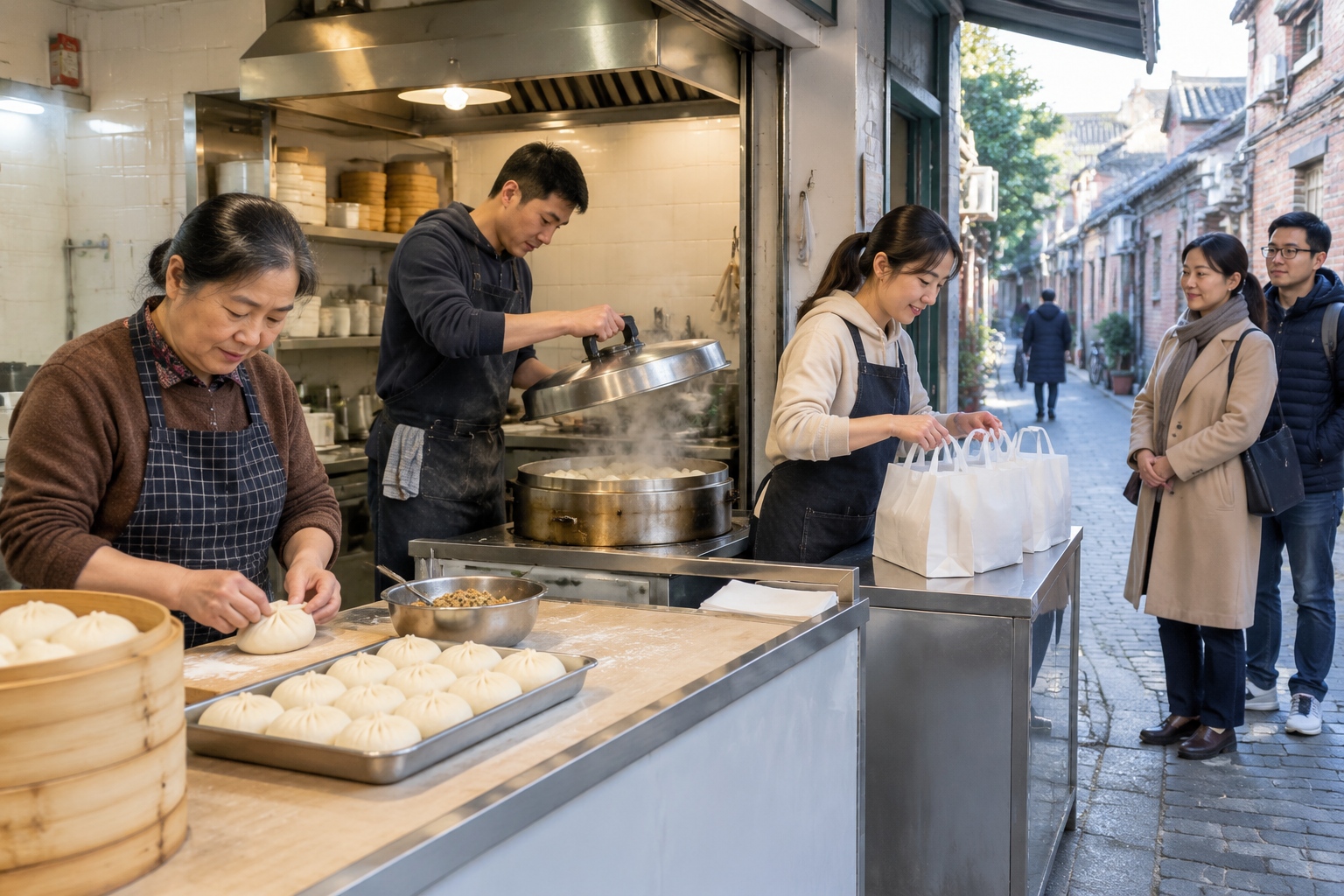
Before the first customer reaches the counter, someone has already lifted a sack of flour, washed the work surface, and checked the heat beneath a heavy pan. Picture a small breakfast shop opening onto a Shanghai lane: a grandmother folds dough, her adult son watches the stove, and his daughter sets takeaway bags beside the till.
A lid rises. Steam briefly hides the cook’s wrist. Outside, a bicycle bell sounds, and a customer shifts a bag from one hand to the other, ready to leave as soon as breakfast is packed.
This imagined morning offers a way into a real question: what does a family-run breakfast stall preserve when the neighborhood around it changes—and what does preserving it ask of the people doing the work?
Shanghai alley life begins at the breakfast counter
A longtang is a residential lane, or a network of lanes, associated with Shanghai’s older neighborhoods. Many connect rows of houses; some contain shikumen, homes recognizable by their stone-framed entrances. The terms overlap, but they are not interchangeable: longtang describes the lane environment, while shikumen refers to a housing form.
For residents, these spaces have accommodated washing, deliveries, conversations, and the journey between home and the main road. Conditions differ considerably. An attractive brick frontage may sit beside cramped rooms, steep stairs, or shared facilities.
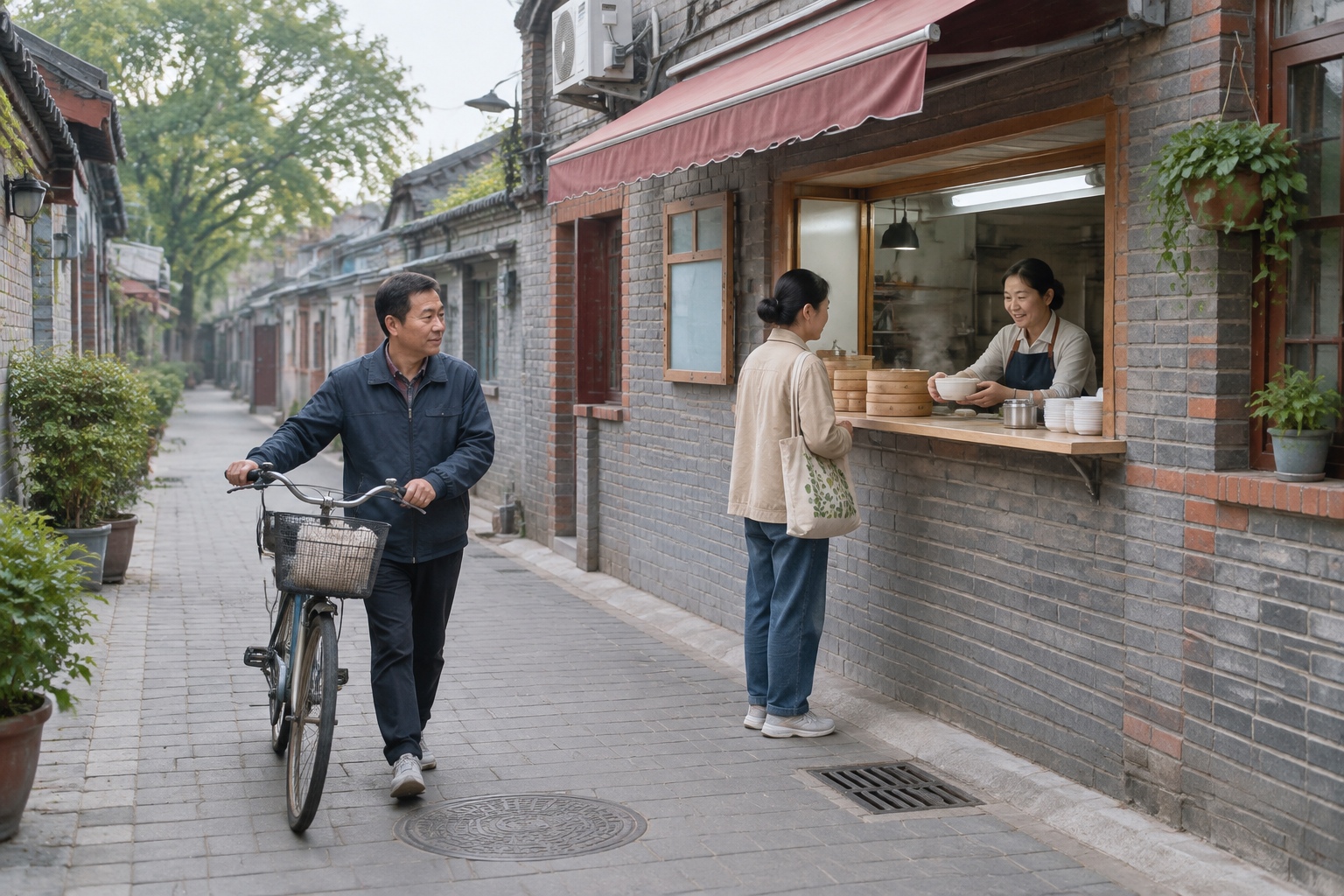
A breakfast counter near the lane entrance fits into that geography. Customers can collect food between locking their front door and catching a bus. Here, “stall” may mean a compact shop with a serving window, rather than a cart on the pavement. That distinction matters when discussing rent, utilities, and permission to operate.
What is on a Shanghai breakfast menu?
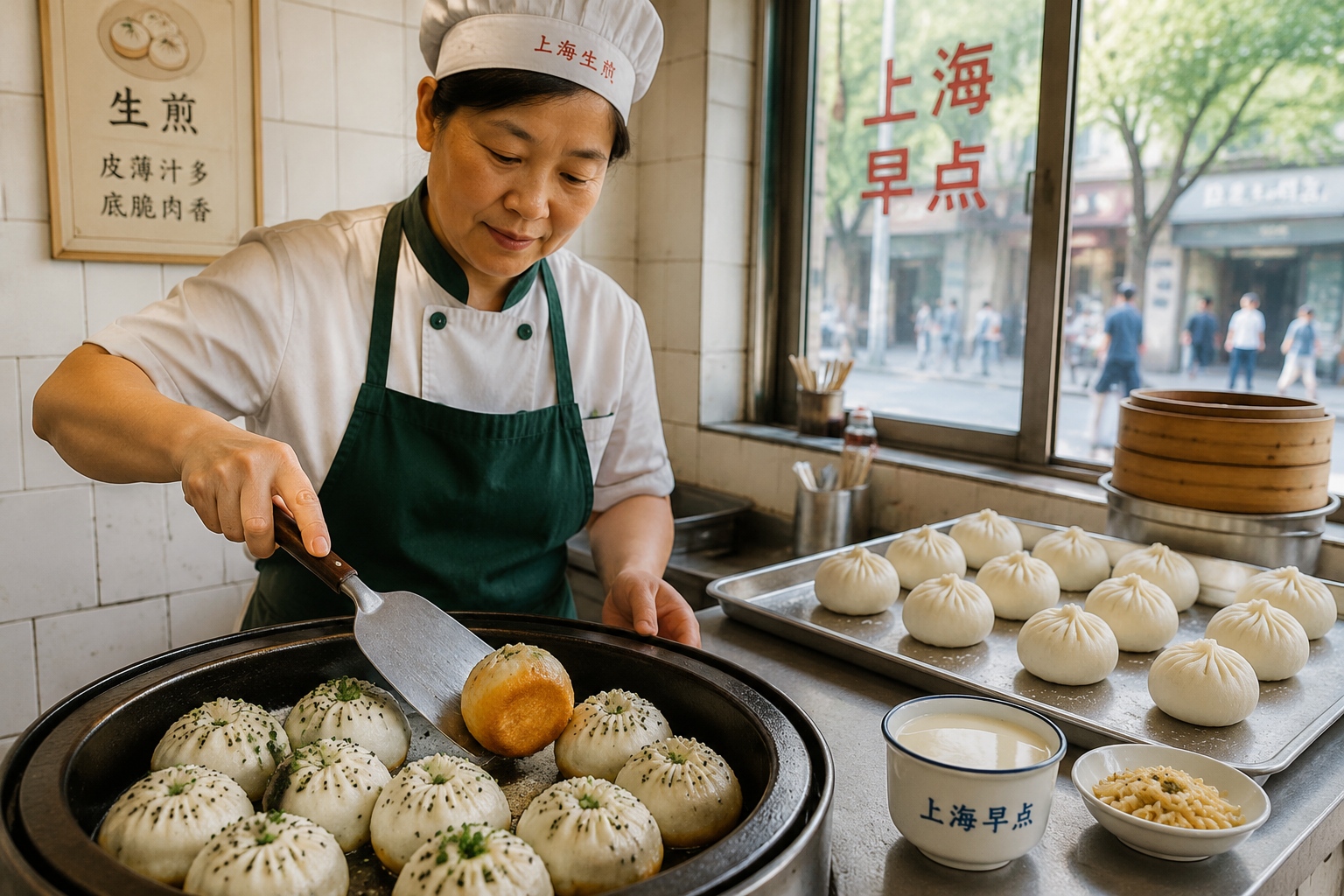
In our illustrative shop, the pan holds shengjianbao: buns commonly filled with pork, cooked with oil and water so the bottoms brown while steam cooks the dough and filling. Some versions contain considerable hot broth. A careful first bite prevents a scalded mouth; vinegar is a familiar accompaniment.
Alongside them might be cifantuan, glutinous rice wrapped around fillings such as youtiao, a fried dough stick, with preserved vegetables or pork floss. The rice is pressed around the filling and wrapped for carrying. Its dense, chewy texture makes it quite a different breakfast from a crisp-bottomed bun.
Doujiang, soy milk, can accompany either. Sweet and savory preparations exist, although an individual shop may offer only a limited choice. These foods belong to a broader regional breakfast culture; no single counter represents everything Shanghai eats before work.
Prices and waiting time need a date
A useful account would record the displayed price, portion size, and observation date together. Shengjianbao may be sold in set portions, so a number without the bun count is incomplete. A rice roll’s price can change with its fillings; a drink may be charged separately.
There is no verified menu here from which to calculate an honest breakfast total. Waiting time also depends on the batch: collecting ready buns and waiting for a fresh pan are different experiences. Visitors should check the board and ask what is available before joining a queue.
Three generations, different kinds of knowledge
Return to the imagined family. The grandmother notices whether dough feels too firm. Her son judges the pan by its sound and the color beneath a lifted bun. His daughter keeps track of orders and explains unfamiliar dishes to a customer.
Such a division is plausible, but it cannot establish this family’s history. A reported account would need each person’s relationship, working role, and recollection of when the business began. An old permit, rental document, or dated photograph could help distinguish a remembered beginning from a documented one.
Passing on a recipe also involves more than listing ingredients. A learner must recognize when dough is ready, distribute filling consistently, and adjust heat without burning the first batch. These judgments emerge through repeated work.
Changes can be equally practical: clearer portion sizes, different packaging, or fewer menu items during the busiest hour. Keeping a familiar taste does not require every working method to remain fixed. Nor does helping at the counter prove that the youngest relative intends to inherit it.
The livelihood behind a family-run breakfast stall
The visible transaction lasts seconds. Preparation may begin much earlier, and cleaning continues after customers leave. Filling must be prepared and stored safely, utensils washed, surfaces cleaned, supplies checked, and the following morning planned.
Any credible account of earnings must separate sales from income. Money collected pays for ingredients, rent, utilities, packaging, maintenance, and potentially wages or platform charges. Food left unsold also has a cost.
Family labor complicates the calculation. If three relatives work without separate salaries, the cash remaining does not automatically represent a good wage for each person. Their combined hours matter. So do rest days and the cost of finding cover when someone is ill.
When ingredients become more expensive, raising prices is only one response. A shop might simplify its menu or reduce waste. Whether any choice works depends on actual purchases, customer numbers, and costs—figures that should come from records or clearly attributed estimates, shared with the owners’ consent.
Regulars, commuters, and a phone beside the till
A regular may order with a few words because the seller already knows the preference. A newcomer needs the menu, an explanation, and time to choose. Both occupy the same narrow space, sometimes while another customer is watching the clock.
QR-code payments through services such as Alipay and WeChat Pay are common in China. At a small counter, a customer may scan the merchant’s code, enter the amount, and show the completed payment. Other setups allow the merchant to scan the customer’s payment code.
These systems can speed up a purchase, but they do not remove every difficulty. A flat battery, an unfamiliar app, or uncertainty over the amount can interrupt the exchange. Cash acceptance and available payment methods should be checked at the individual business.
Delivery is another separate question. A shop accepting mobile payments does not necessarily take online orders. Delivery introduces packaging demands, collection traffic, and charges that depend on the arrangement. A crisp bun also changes as steam gathers inside a closed bag.
When neighborhood change reaches the doorway
Street repairs and housing improvements are felt in small movements: whether a delivery can reach the entrance, whether customers can stand safely, whether rainwater drains away, and whether an older resident can walk to breakfast without crossing a busy road.
Residents may welcome better sanitation, safer wiring, or improved housing while worrying about losing nearby services. Owners may value a cleaner workspace yet struggle with a changed rent or a period of disrupted access. The balance varies by project and household.
Shanghai’s municipal government portal is a starting point for official information, but a particular stall’s experience requires an identifiable address, relevant notices, and dated accounts from affected people. Without those, it would be misleading to attach a demolition, relocation, or renovation story to this family.
Urban memory is also selective. Someone returning for a familiar breakfast may remember the smell of the pan more readily than the discomfort of an old kitchen. People still living there have present needs alongside attachments to the past.
Will the next generation keep making breakfast?
The youngest family member’s choice depends on more than affection. Income, early starts, physical strain, time off, and other job opportunities all belong in the conversation. So does the possibility of running the business differently.
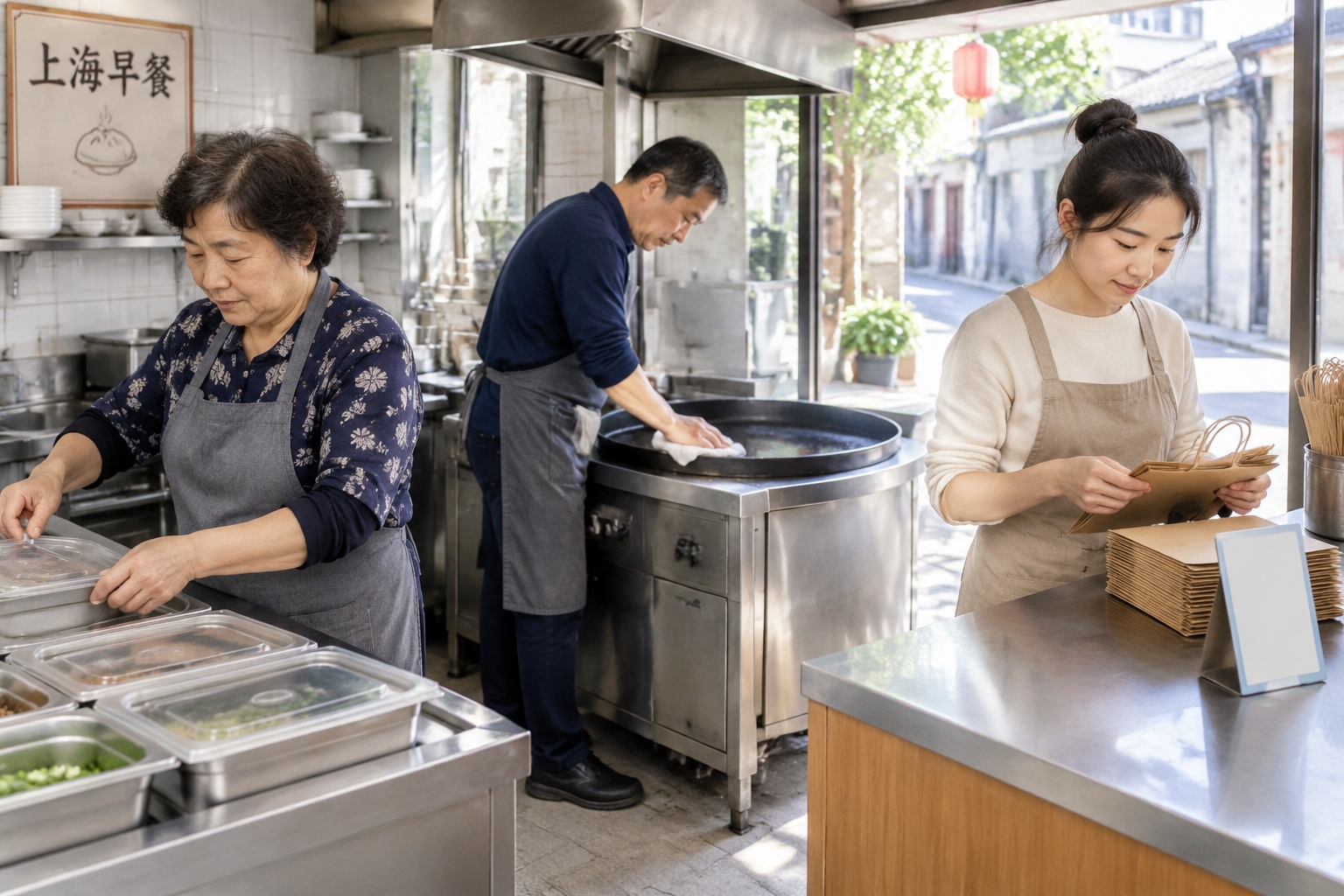
In the imagined closing scene, the daughter counts unused takeaway bags while her father scrapes the cooled pan. The grandmother checks what remains for tomorrow. Their work overlaps for a moment, but it does not settle who will open the shop in ten years.
For a visitor, breakfast is finished when the last bun is eaten. For the family behind the counter, another round of work remains. Shanghai’s food memories depend partly on whether that work can support a life someone chooses to continue.
Start the discussion at forum.chinacomes.com