
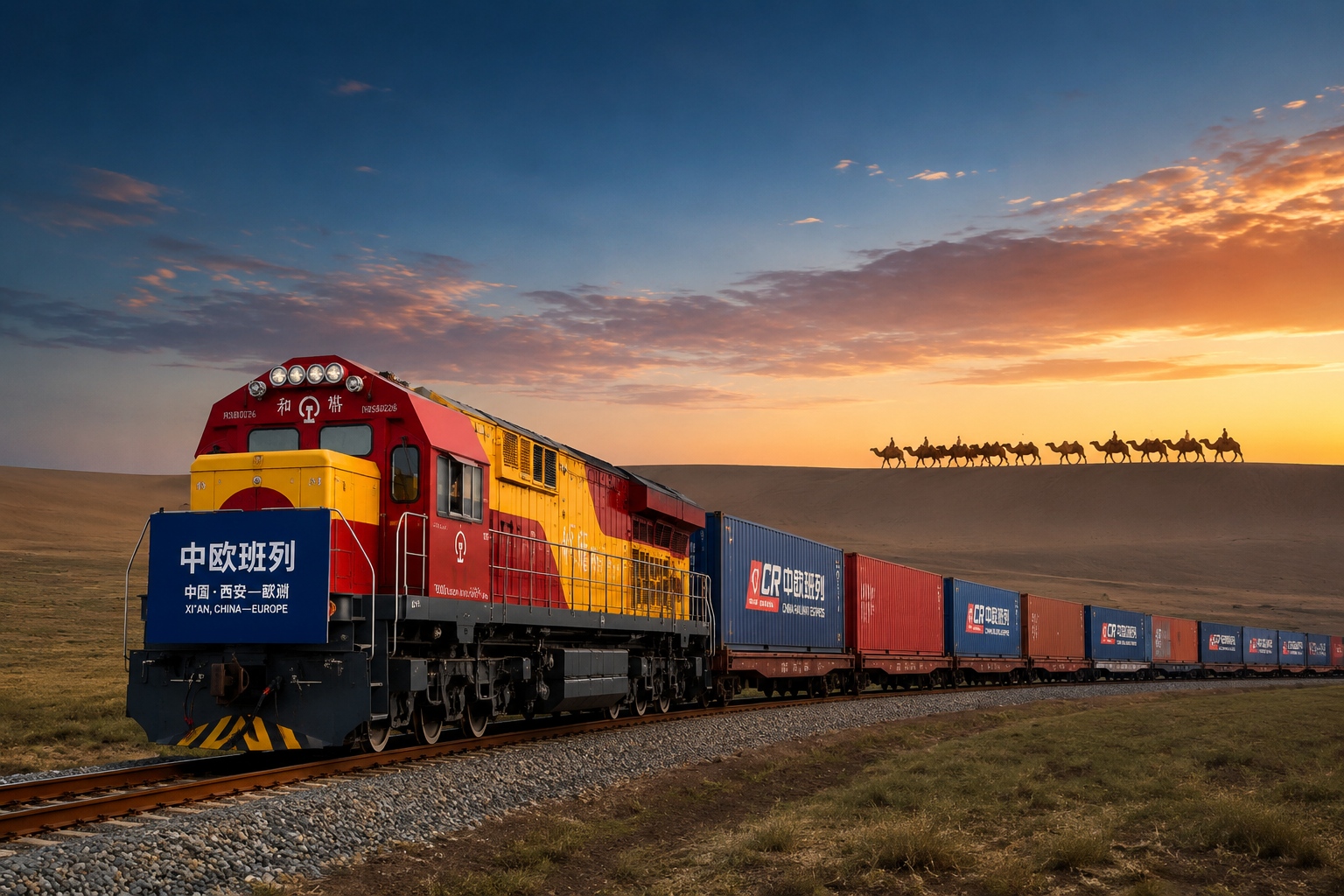

A Story That Left the Museum
On a foggy morning outside Xi’an, a train weaves out of a freight station. It has 100 containers, mostly laptops, winter coats, car parts and sewing machines. It will cross Kazakhstan, Russia, Belarus and Poland before reaching Germany, probably in 15 to 18 days. A few kilometers away, tourists take photos of a Tang Dynasty parade that re-enacts the Silk Road. Both scenes tell the same story: this region has been moving goods and ideas between China and the rest of Asia for more than two thousand years. The vehicle has changed; the rhythm has not.
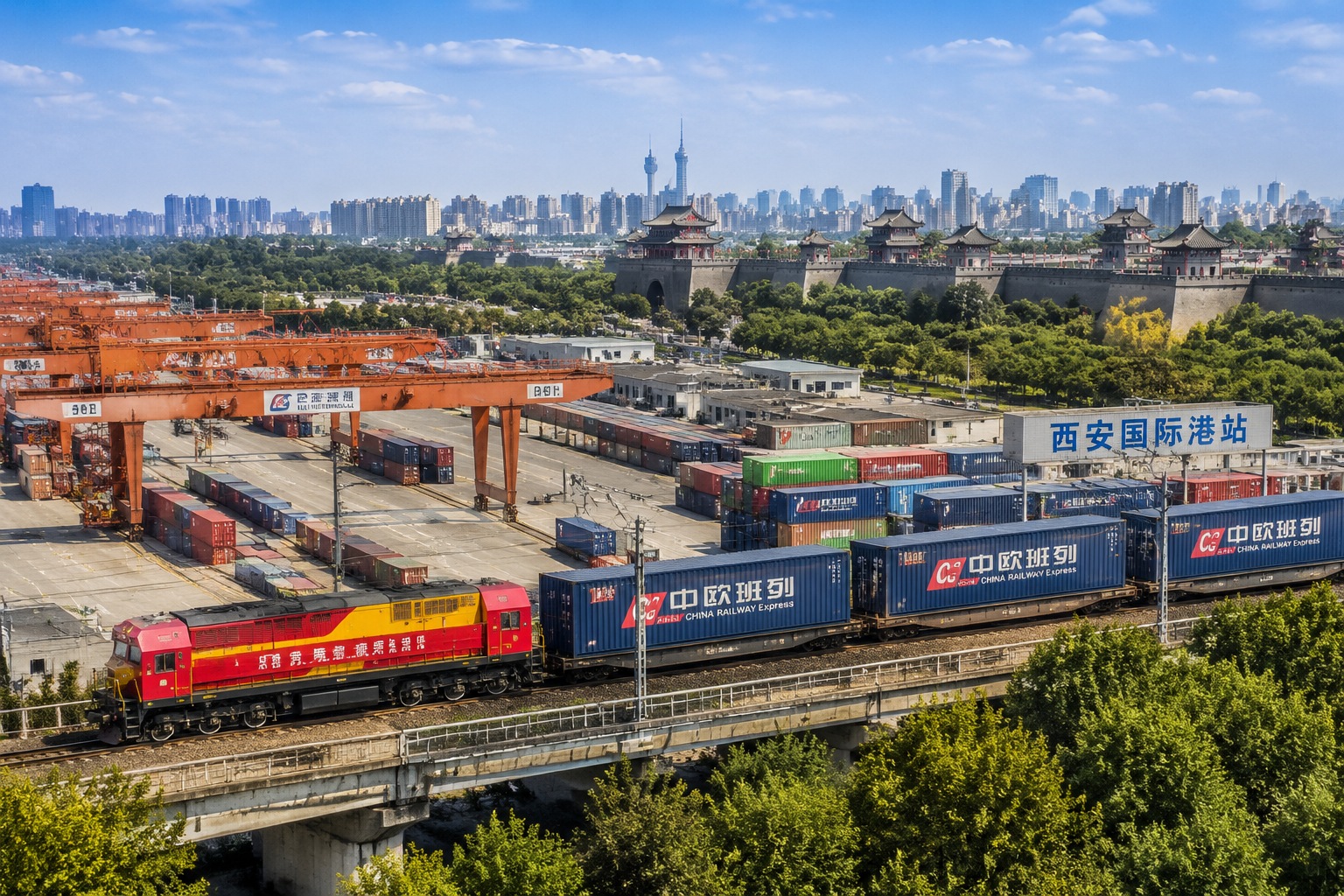
If you live in Europe or North America, you may think of the Silk Road as a romantic museum piece. But today it has a practical, modern version called the China-Europe Railway Express (中欧班列). It is the world’s longest regular freight rail service, and for many families in China it is simply the fastest way to send local products to distant supermarket shelves. For visitors, the first surprise is the scale. A single train can be 800 meters long, carrying as much cargo as dozens of trucks. You need to stand at an end to believe it.
The Old Road That Never Closed
Most people learn that silk and jade travelled west from China, while glass, horses and religious teachings came back. The road was not a single highway. It was a network of dusty tracks, oasis towns and mountain passes. Chinese envoys, Sogdian merchants and Persian monks carried more than goods: they spread techniques, beliefs and even recipes. When ocean shipping became safer, the land route quieted down, but the memory stayed deep in the Chinese imagination.
That memory is one reason why China started to build a new rail artery through Eurasia in the 2010s. But the deeper motivation was economic: many factories are concentrated inland, far from coastal ports. A land route to Europe would reduce shipping time and give the interior a chance to trade directly with the world.
One Trader in Yiwu, 9,000 Kilometers Away
To understand what this network means for ordinary people, I spent an afternoon with a trader in Yiwu, a city in eastern China known as the world’s supermarket for small goods. He sells plastic cups, Christmas inflatables and kitchen gadgets. Let’s call him Mr. Zheng. He speaks little English, but he has buyers in Poland, Spain, and even an occasional client in Turkey.
Before the train, Mr. Zheng had two choices. Sea freight was cheap but slow: a container to Poland took 30 to 35 days, plus unpredictable port congestion. Air freight could get there in three days, but it was so expensive that it only made sense for high-value goods. The China-Europe train offered a third way: about 18 days and a price roughly between the two. “Now I can ask my customer: do you want it by boat, by plane, or by train?” he told me. “It feels like choosing between a bus, a taxi and a plane.”
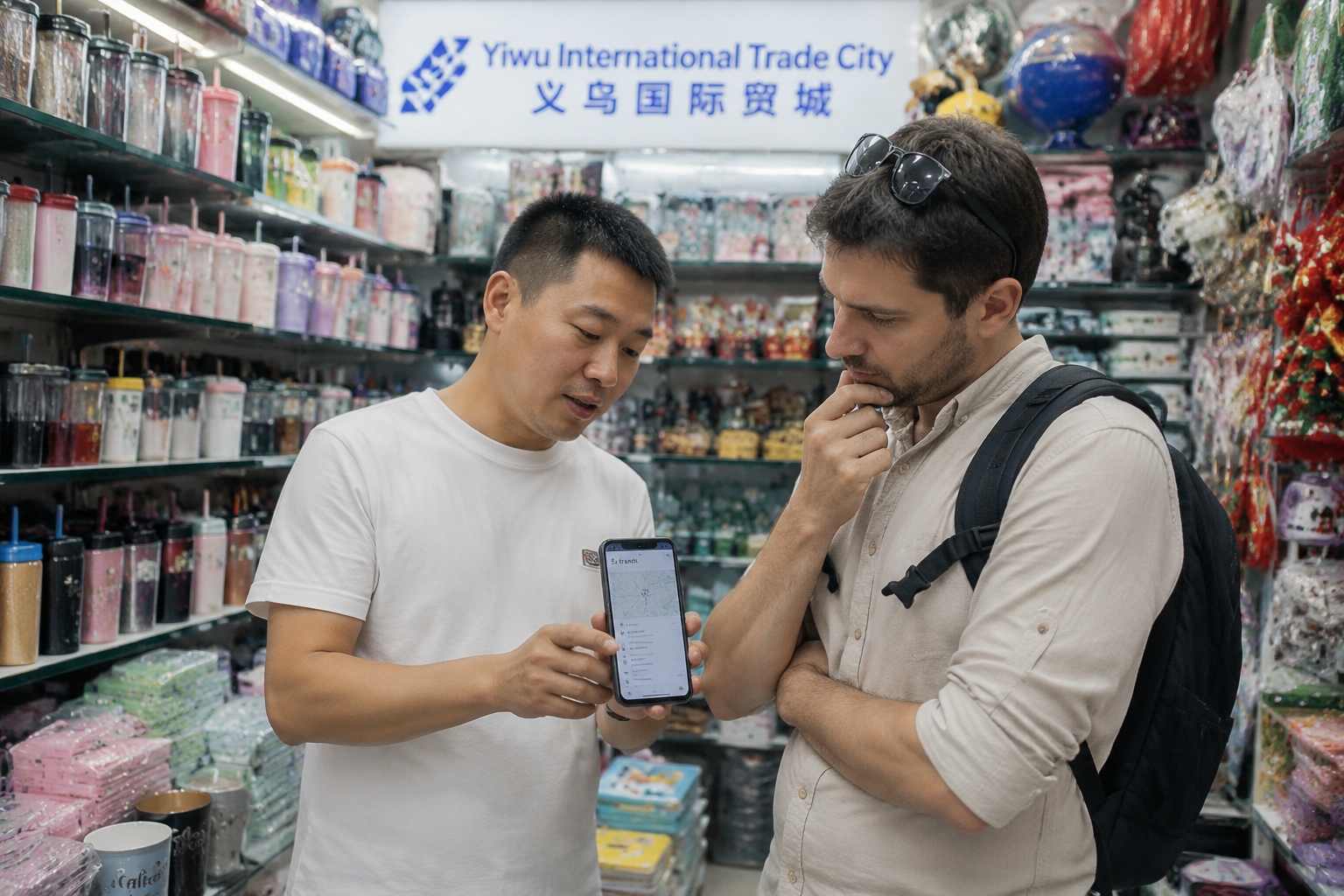
The practical difference is visible in his small office. He opens his phone and shows me a tracking page: the container he sent to Madrid has crossed into Poland, twelve days after leaving Yiwu. Ten years ago, he couldn’t have tracked a cargo this easily. Today, even a small trader can follow his goods across three continents. This is not a miracle. It is the result of infrastructure. But the effect on people is surprisingly emotional. Mr. Zheng once received a photograph from a supermarket shelf in Warsaw with one of his kitchen gadgets placed next to a Polish brand. “That’s my product,” he said. “It got there before Spring Festival.”
Dispatch Rooms and Cold-Chain Boxes
Behind this ease is a level of coordination that Europeans often associate with airlines. Railway control centers in cities like Chongqing and Chengdu run shifts around the clock. Dispatchers watch every train on a huge digital map, the same way air-traffic controllers watch planes. Each container has a unique digital fingerprint, and many containers are equipped with sensors that record temperature, shock and door opening. If someone opens a container illegally, the operator gets a warning.
Cold-chain logistics is one quiet innovation that changed trade in perishables. When the network began, most trains carried electronics and clothing. Now you can find refrigerated containers with German sausages, Chinese cherries and Kazakh dried apricots. These containers are monitored remotely; if the cooling system fails, the train can be stopped at the next station before the cargo is ruined.
At a border point like Alashankou, where China meets Kazakhstan, the train literally changes its wheelsets. China uses standard gauge; Kazakhstan uses wider Russian gauge. In the transfer yard, overhead cranes lift every container from a Chinese flatcar to a Kazakh flatcar. Visitors often compare it to a giant Lego assembly area.
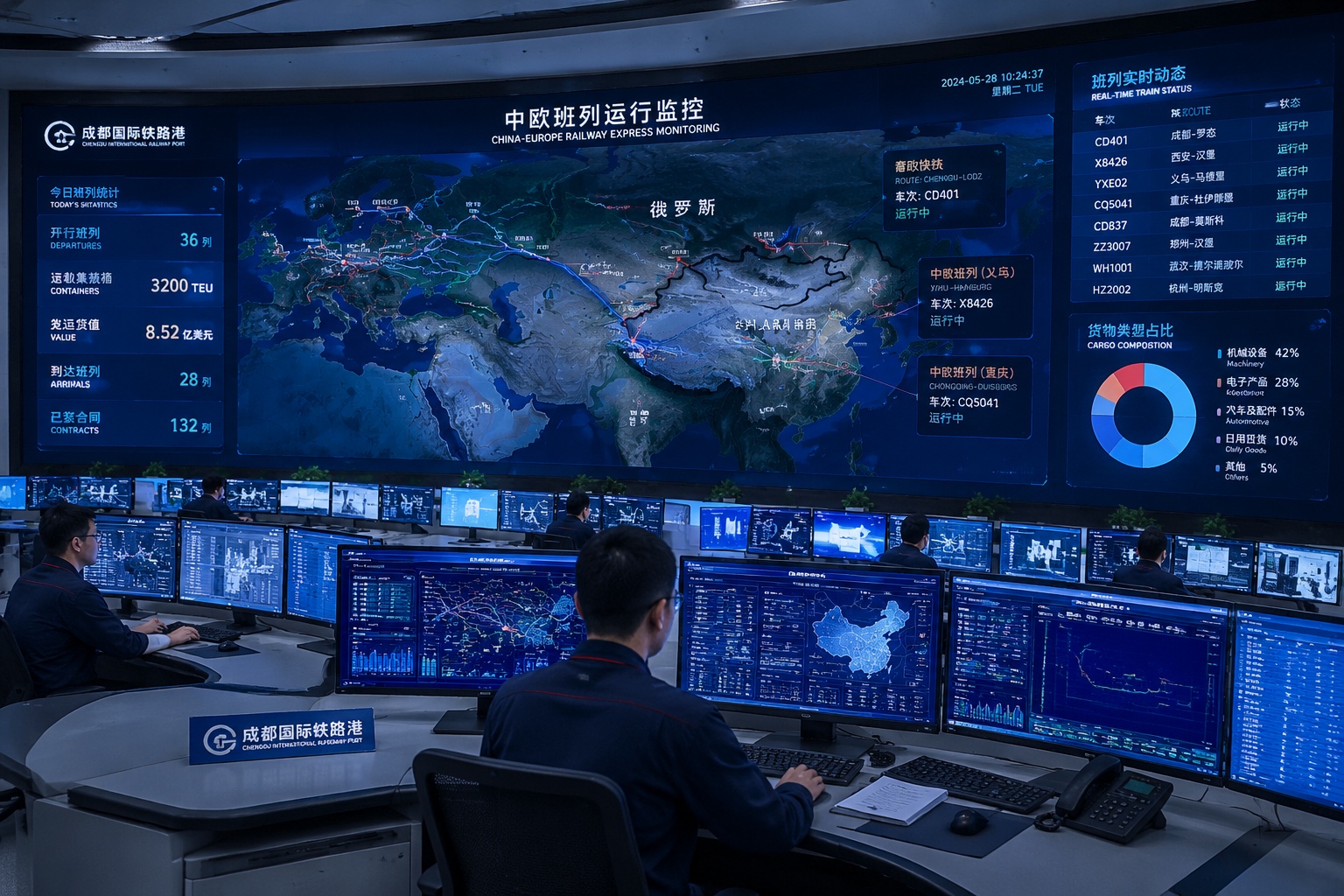
For a European or American user, the biggest culture shock is how easy it is to book. Many China-Europe rail platforms let you reserve a train slot online, just like booking a hotel room. You get a digital waybill number, and a mobile app shows the real-time position of your container. Customs agencies from four or more countries share data in advance, cutting border waits from days to hours on several corridors. That is one reason why cumulative trips on the China-Europe Railway Express passed 100,000 in 2024.
What a Train Does to Cities and Jobs
The economic impact goes far beyond the track. Chongqing, a mountain city in southwestern China, used to be far from major shipping lanes. Today, its railway station connects directly to Duisburg, a former steel city in Germany’s Ruhr area that reinvented itself as an inland port for Chinese goods. Chinese logistics companies have opened offices there, hiring local workers for warehouse and customs work. In cities like Xi’an and Chengdu, huge logistics parks have grown around rail terminals, with sorting lines, e-commerce warehouses and small hotels for truck drivers.
For young Chinese, these parks offer an alternative to the traditional move to coastal factory towns. A college graduate in Xi’an can work as a customs broker, a cross-border e-commerce operator or a data analyst for a freight platform. Some start even smaller: they buy niche goods from Yiwu, place them in a shared warehouse at the rail station, and sell them to customers in Eastern Europe through short-video apps. The train has turned geography from a disadvantage into a resource.
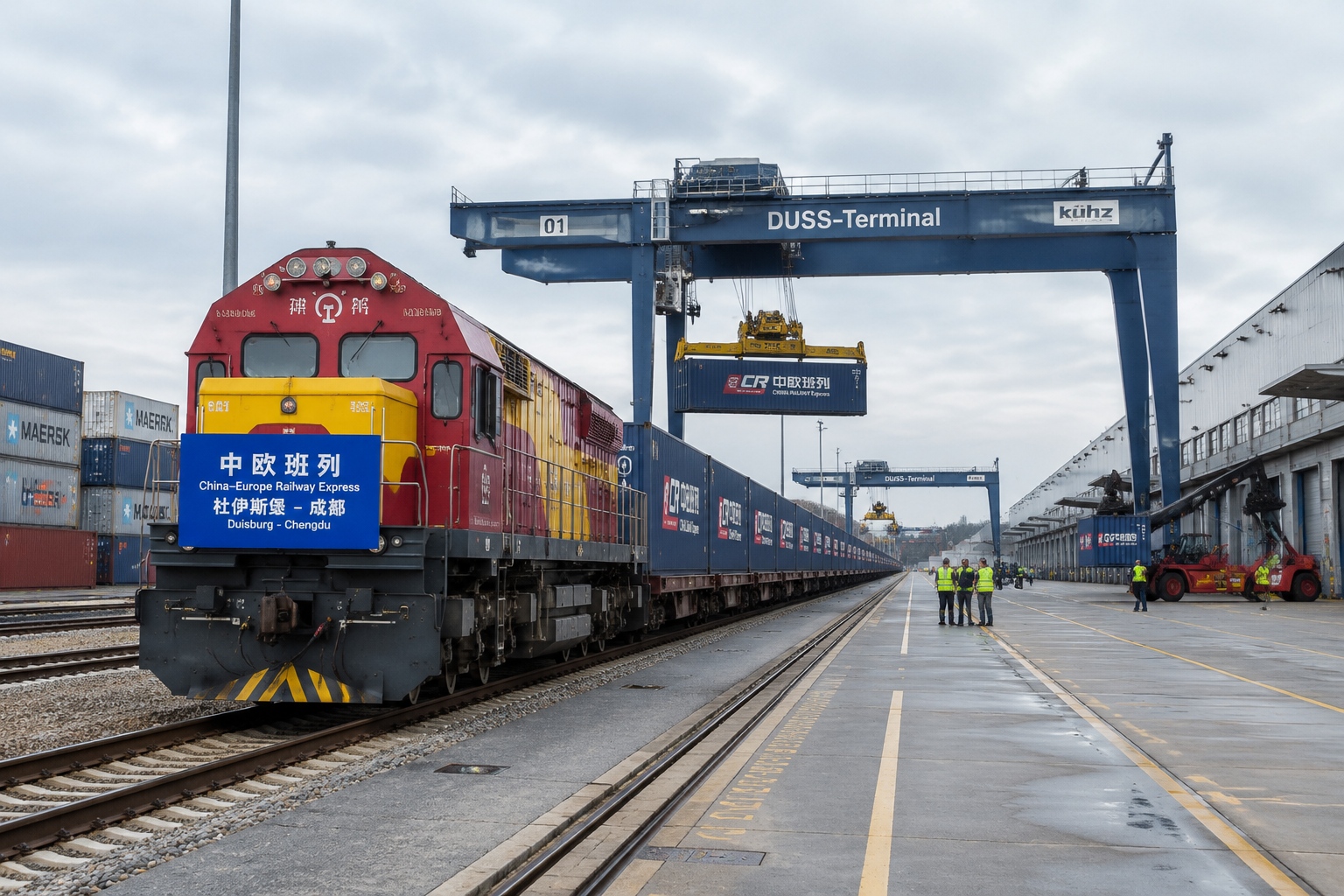
Not everything is smooth. Border congestion, changes in Eurasian politics and conflict zones can all disrupt the route. During the Red Sea shipping crisis, many exporters switched to rail because it was safer and more predictable. That tells you something about the network today: it is no longer a pilot project, but a real alternative.
Green Wheels Over Grey Asphalt
Rail is one of the least polluting ways to move heavy freight. A single train can take more than 100 trucks off the road, and rail freight emits far less per ton of cargo than air. Many sections of the Chinese rail network run on electricity, and China’s grid adds wind and solar capacity every year. So when a factory sends goods to Europe by train, the carbon footprint is increasingly tied to renewables. This doesn’t make the whole journey completely green, because the diesel locomotives used in some partner countries still matter, but it is the direction many young Chinese workers say they want.
A Legend You Can Book Online
The Silk Road was never only a road. It was a conversation between people who lived differently and produced different things. The China-Europe Railway Express is the same conversation, written in rail gauge and GPS data instead of camel bells and paper maps. On a platform in Yiwu, Mr. Zheng packs another container before sunset. He doesn’t think about dynasties or geopolitics. He thinks about the customer in Poland who wants the new batch before Easter. But somehow, the line connecting the two is two thousand years old.
If you want to understand contemporary China, watch what it moves. The legend didn’t end; it just changed its engine.
Start the discussion at forum.chinacomes.com