
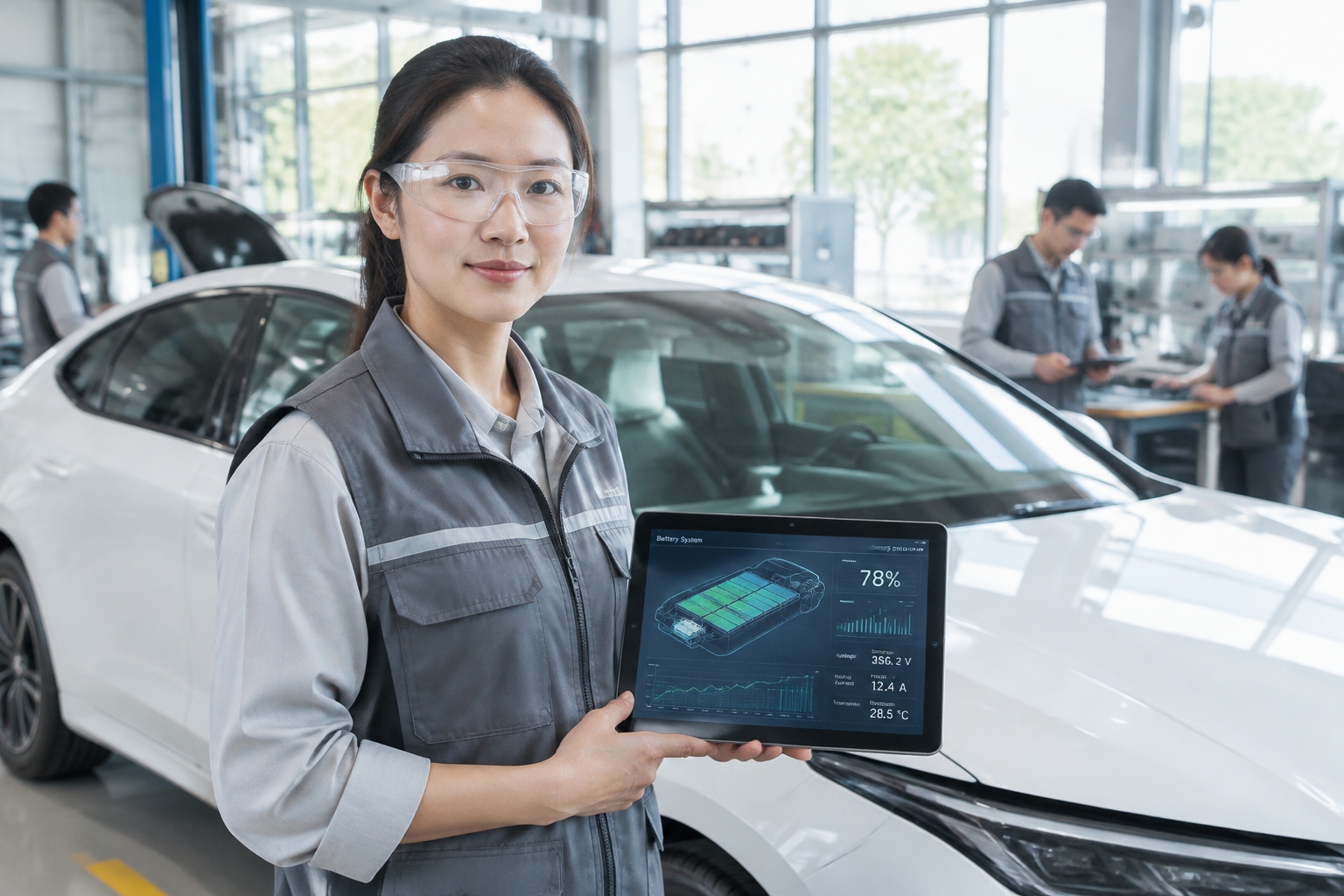

Last Tuesday, I met Lin Jing at the R&D center of Blue Bay Motors, a young electric vehicle startup on the outskirts of Shenzhen. She was wearing a grey work vest over a NASA T-shirt, safety glasses pushed up into her hair, and she was crouched beside a white sedan with its hood open. In one hand she held a tablet showing rows of battery diagnostics.
“You’re here early,” she said, glancing at my notebook. “Let me just finish this check.”
I had asked to shadow her for a day. Before we even got to the tour, she made one thing clear.
“I respect Tesla, but I’m not a Tesla fan,” she said. “That usually surprises people.”
I hadn’t even mentioned Tesla.
A Morning in the Workshop
At 8:30, the workshop was already humming. Forklifts moved pallets of battery modules, and engineers in identical vests huddled around a test rig. Lin led me past a row of prototypes — sedans, SUVs, and one hatchback with racing stripes — before stopping at her current project: a mid-size electric sedan called the Blue Bay A7.
“This battery pack holds 78 kilowatt-hours,” she said, pointing to a rectangular case. “It gives a range of about 600 kilometers on the Chinese CLTC cycle. But range isn’t the hard part anymore. The hard part is making sure it doesn’t lose too much power on a freezing day in Beijing.”
She and her team had spent months testing battery thermal management at low temperatures. “China is huge. You can’t design only for Shanghai or Shenzhen.”
Her job title is vehicle integration engineer. That means she worries about everything — how the battery fits with the motor, how the software talks to the charging system, how the driver feels in the third hour of traffic. “It’s a bit like being a conductor. Everyone else is playing an instrument. I just try to make sure they play at the same speed.”
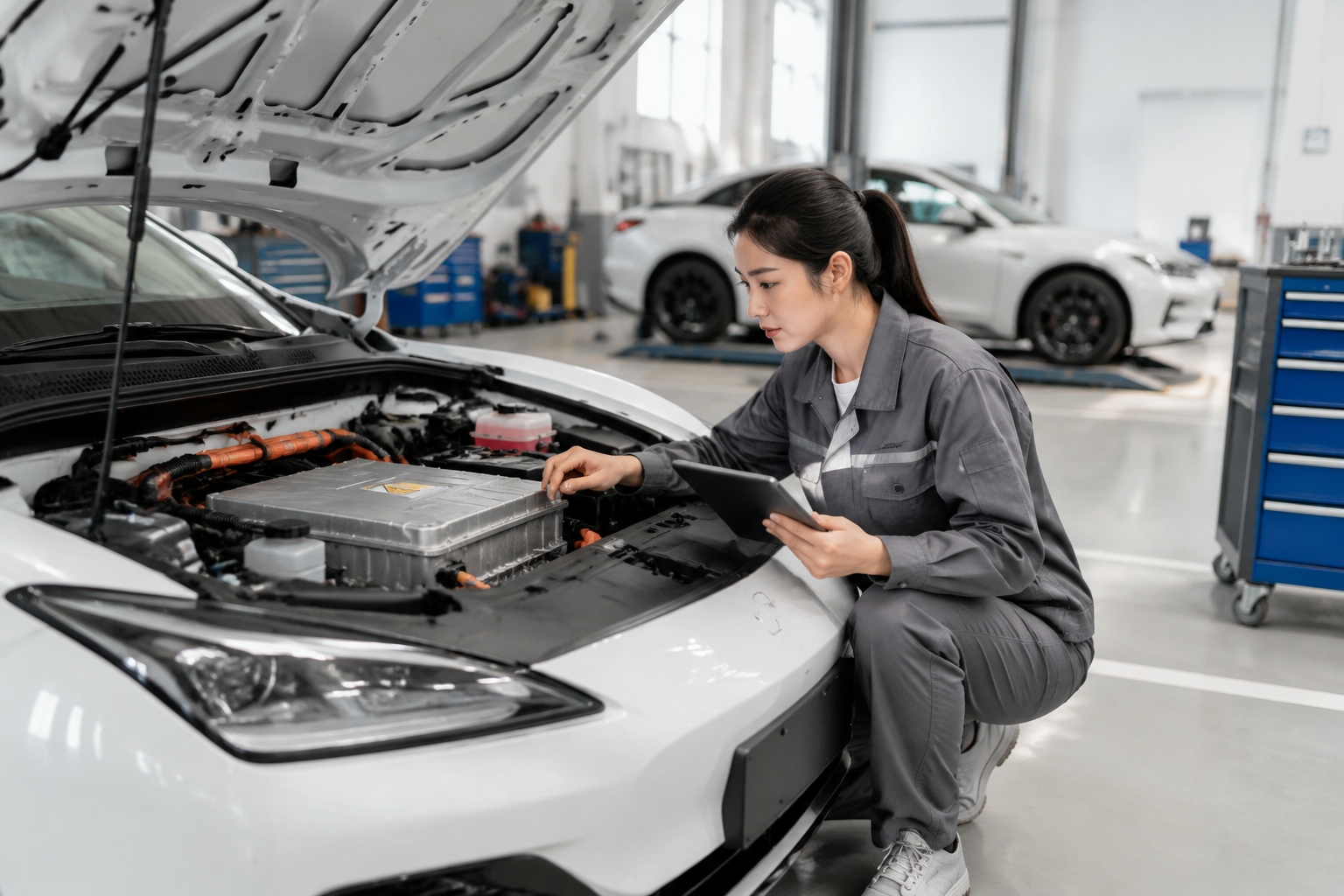
China’s electric vehicle boom is easy to quantify from outside: In 2023, new energy vehicles — pure electric and plug-in hybrids — made up about 60 percent of global EV sales, with more than nine million sold in China. But walking through this workshop, that statistic becomes personal. The engineers checking torque curves, the women welding door frames, the technicians calibrating sensors — they are all part of a story that is rarely told in the West’s headlines about subsidies and trade disputes.
The Tesla Question
I asked Lin to explain her earlier comment. She leaned against a fender and smiled.
“Tesla did something incredible,” she said. “They turned electric cars from a niche curiosity into something people desire. In America, that’s their car. But in China, the average driver wants something different.”
She had driven a Model 3 twice, she said. Nice acceleration, clean software. But the rear seats felt cramped, and the suspension was tuned for smooth California highways, not for potholes in Harbin or speed bumps in Wenzhou.
“Also, at that price, people here expect the back seat to be comfortable. We don’t all want a sports car.”
Her team deliberately focused on what they call “China-first” features: short overhangs for tight parking, extra insulation for noisy urban streets, and a voice assistant that understands Chinese dialects. “We don’t need to copy Tesla. We need to solve problems that Tesla doesn’t see.”
From Paper to Prototype
After the workshop tour, we walked to a cramped conference room where Lin joined a whiteboard discussion with five engineers. The topic: an intermittent glitch in the charging control software. One engineer pulled up a graph on a laptop; another suggested a firmware pause after a voltage spike. Lin asked a quiet question about the temperature sensor’s tolerance, then wrote a new equation on the board.

“This is my favorite part,” she told me later. “We’re not just building a car. We’re building something that communicates — the battery, the charger, the cloud, the phone app. If any one of them is off, the whole experience suffers.”
Her day is a mix of hands-on debugging, code reviews, and endless meetings. But she insisted it isn’t as glamorous as people think. “We spend 80 percent of our time on the last 20 percent of the product. The details nobody sees.”
That’s also why she pushed back when I asked about female engineers. “I don’t think about gender much. I think about the problem. To be honest, in my first job, I was often the only woman in the room. Now, in our team of 12, four are women. It’s getting better, but not because anyone gave us a lift — because we stayed.”
She studied mechanical engineering at a university in Wuhan, then spent six years at a joint venture automaker before joining Blue Bay Motors two years ago. Her parents, both factory workers, initially wanted her to become a teacher. “Now they tell their friends their daughter builds electric cars.”
She laughed.
Charging Up the Country
At 7 p.m., Lin announced that she was done. We walked out to the parking lot, where she unlocked a small hatchback with the Blue Bay logo — an employee-priced model. “We have to test our own products,” she said.
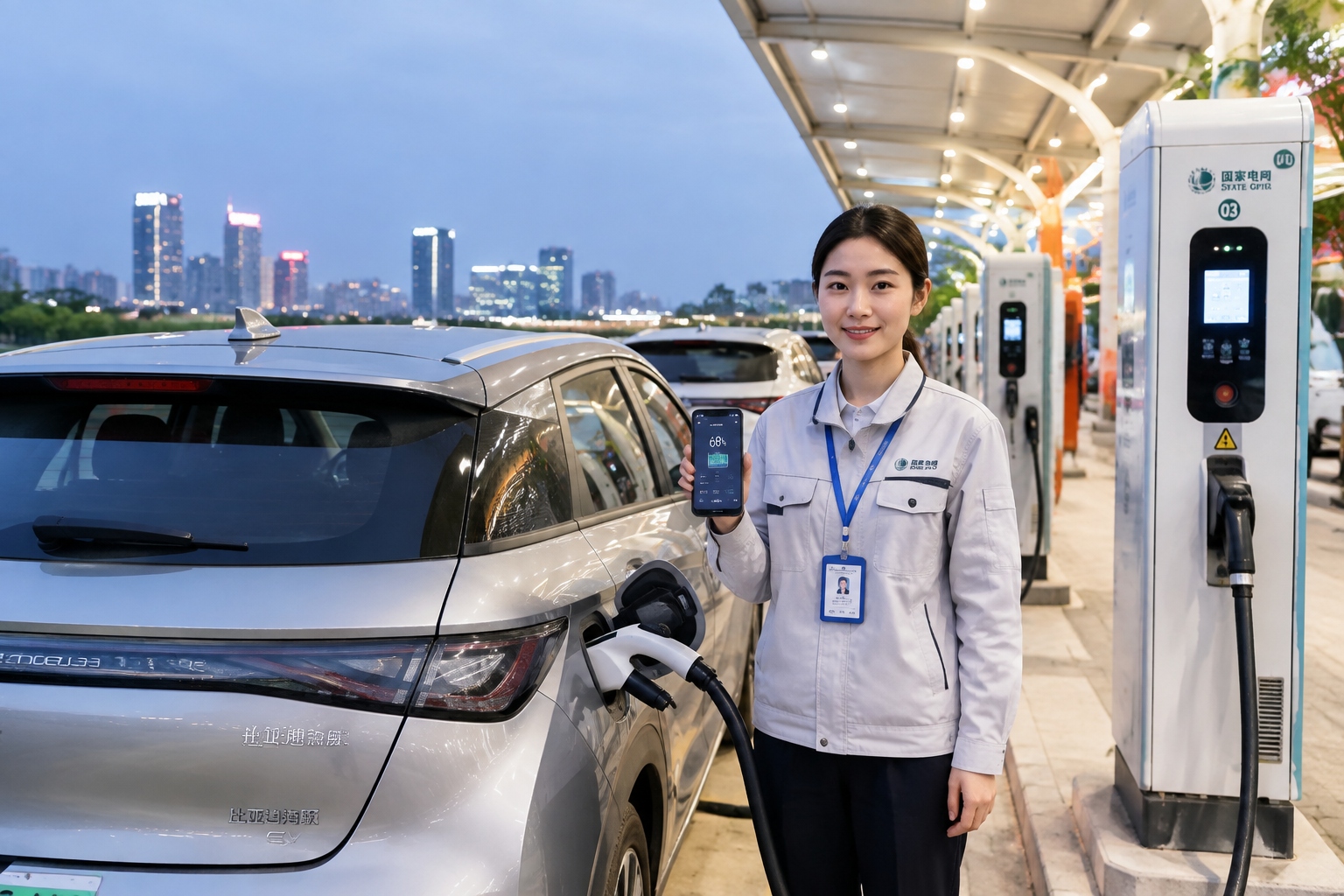
She drove me to a nearby charging station on the edge of the city. The station had 12 chargers, and eight were occupied. A sign said it had been built a year ago as part of a national push to add more rural and suburban charging points.
“Three years ago, this would have been impossible,” Lin said. “Now there are charging piles almost everywhere along highways. It doesn’t give people range anxiety anymore.”
She plugged in her car and opened the charging app on her phone. “That is a bigger change than any battery technology.” After a ten-minute top-up, she drove me back to the subway station. As I got out, I asked one last question: what would she say to someone who thinks Chinese EVs are just copycats?
“Let them come and drive,” she said. “It’s a different world. And we’re the ones who live here.”
Lessons From an Engineer
Spending a day with Lin gave me a clearer view of China’s EV industry than any feature article. It is not just about subsidies or “scary” competition with Tesla. It is about a generation of engineers who grew up with smartphones and now build cars that fit how people actually live — narrow roads, dense cities, long winter drives.
Lin never once asked me to admire her. She just showed me her work. That’s probably the most Chinese thing about her.
As I walked down to the subway, I looked back and saw her still standing by the charging station, chatting with another driver. The future of electric mobility in China, I realized, isn’t a shiny showroom concept. It happens every day in ordinary people’s routines.
And if you ask that engineer about Tesla, she’ll tell you the truth: “I don’t need a hero. I need a car that works.”
Start the discussion at forum.chinacomes.com