

Under the fluorescent lights
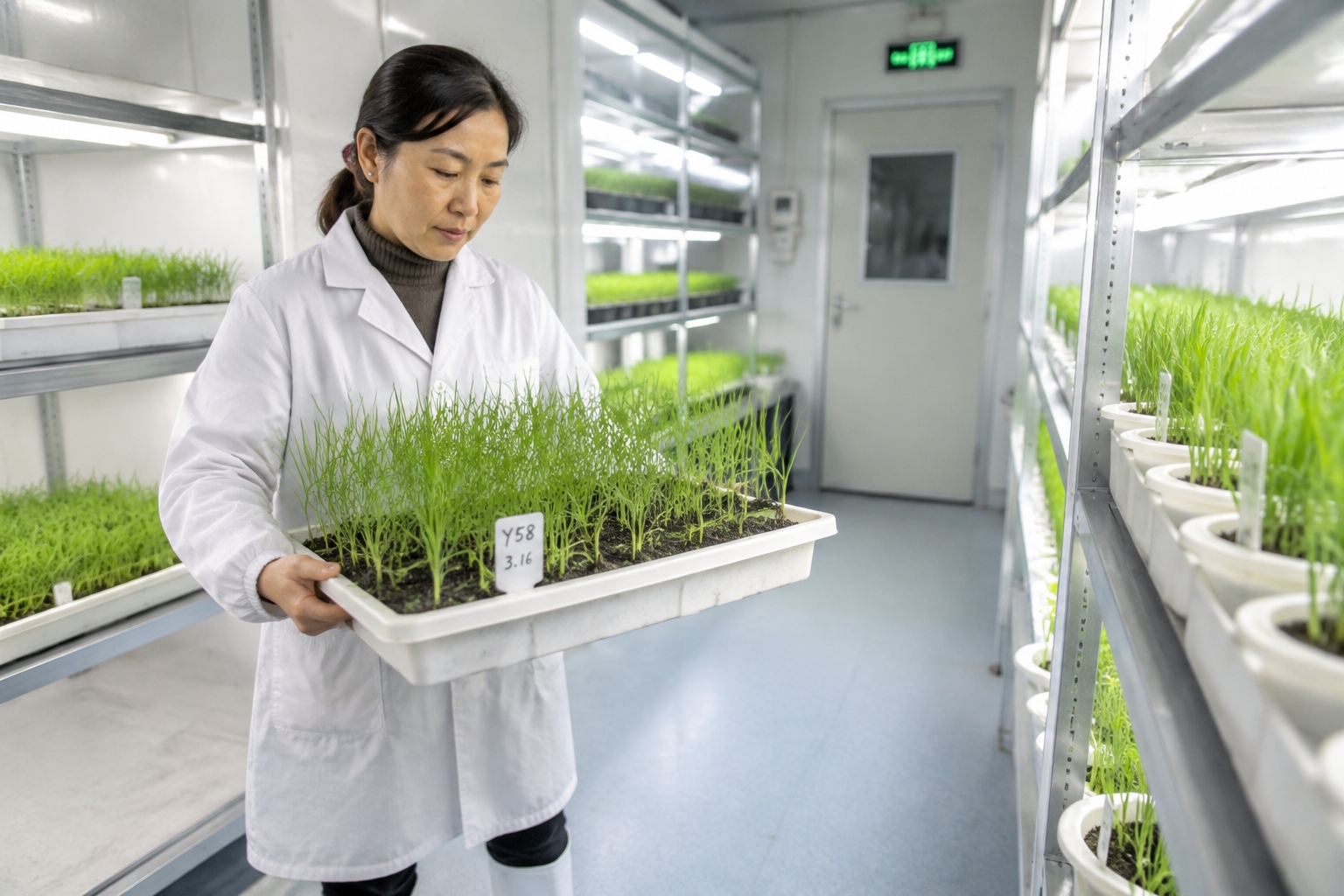
At 8:30 in the morning, Wang Xiaomei pulls a plastic tray from a growth chamber in Hefei. The rice seedlings are ten days old, barely two centimeters tall, leaning toward the light. She turns one pot over and touches the roots. “This line is still a bit weak,” she says, making a note on a tablet. The room smells of damp soil and warm air. Outside the window, a gray winter has settled over the city.
For the past eight years, Wang has worked at a provincial rice research institute in Anhui Province. Her job is not glamorous. It means long months of checking leaves, measuring grains, waiting for soil samples to dry. But the thing she studies—the tiny genetic message inside a seed—ends up on tens of thousands of dinner tables across central China.
Wang Xiaomei is one of a growing number of female scientists in Chinese agricultural research. She is 43 years old, with a short ponytail and a blue fleece jacket under her lab coat. She did not grow up with a dream of becoming a scientist. She grew up in a village where rice was life.
A village childhood that smelled of rice
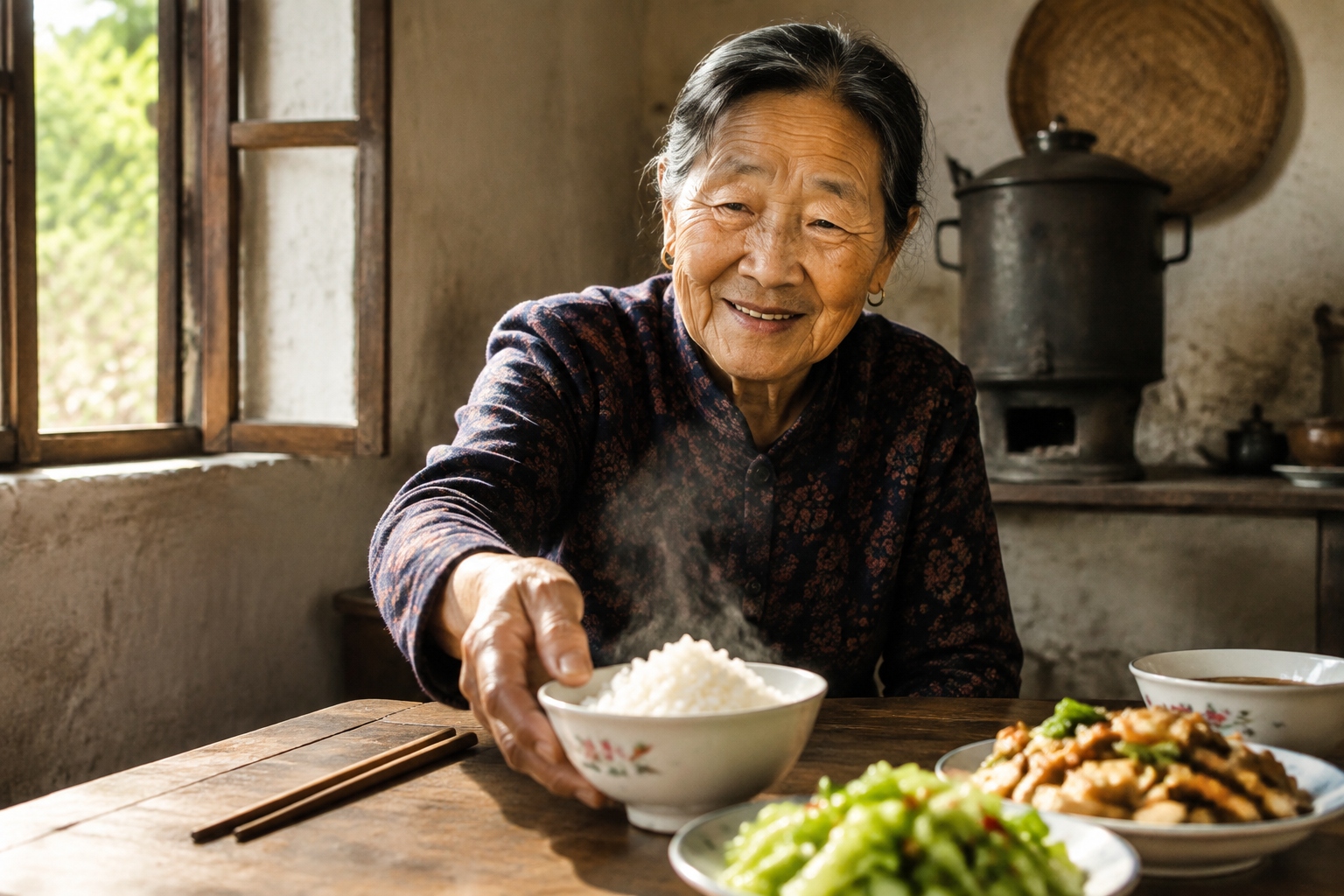
Wang was born in the early 1980s in a village near the western edge of Anhui Province. Rice paddies covered nearly every flat space that wasn’t a house or a lane. “I spent a lot of time in mud,” she says. As a girl, she helped her grandmother transplant seedlings, standing knee-deep in cold water. At harvest time, the family carried rice to a small mill, but for special meals the women would use an iron jar to pound the husks off one batch at a time. The rice was new and fragrant; it was also never quite enough.
In the 1990s, her hometown was not among the poorest places in China, but it was poor enough. Farmers grew rice by tradition and instinct. They kept seeds from the previous harvest, planted them in the same paddies, and hoped the weather would cooperate. “Nobody thought a seed could be improved to feed more people,” she says.
Wang left for college in 2001, when she was 18. A high school teacher had mentioned the term “genetic breeding.” She didn’t fully understand it, but she liked the idea of working with living things. She chose biology as her undergraduate major and later went on to graduate study in rice genetics.
A quiet revolution in a plastic dish
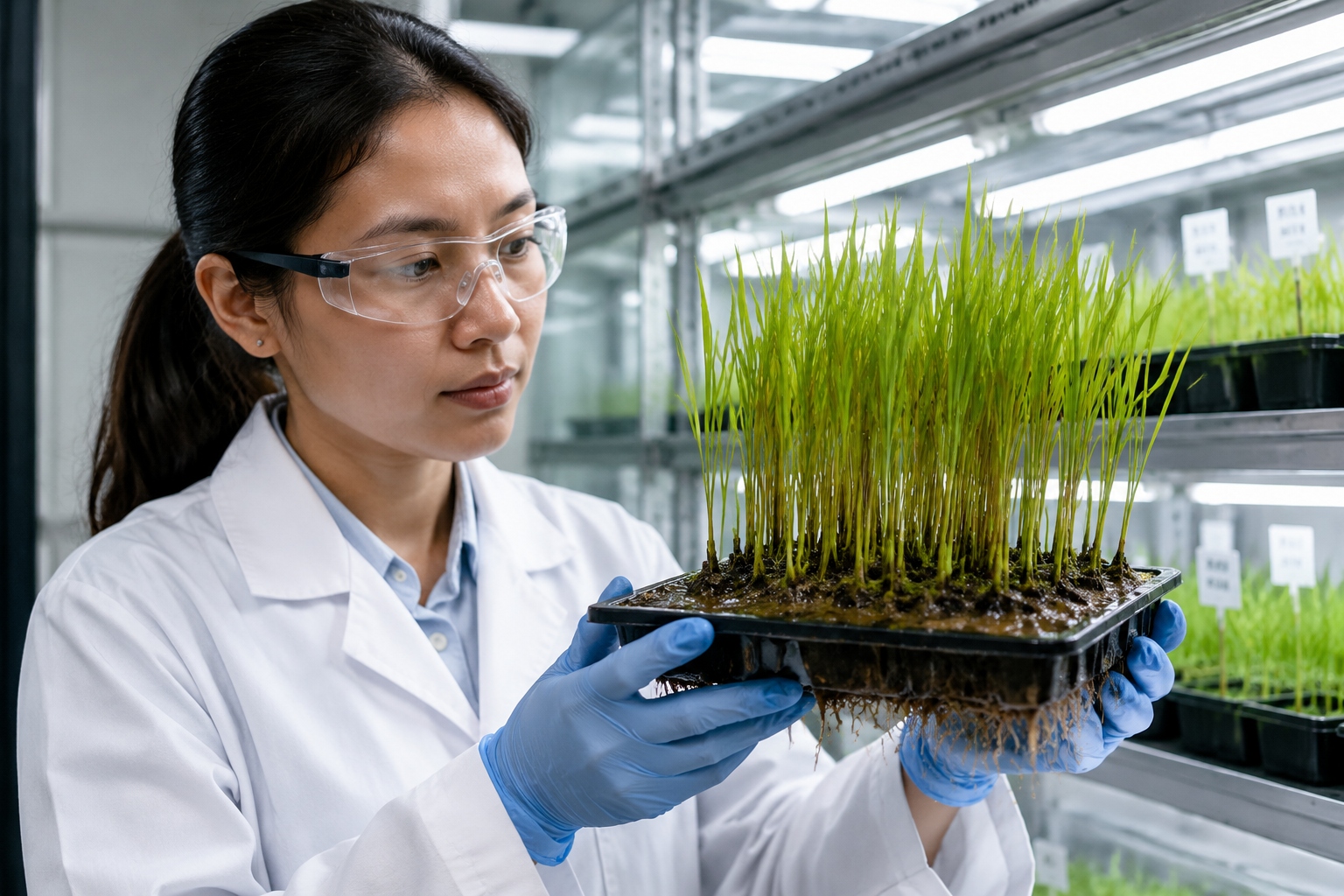
In graduate school, Wang learned to look at a seed differently. It was not just a grain to be cooked; it was a packet of instructions with thousands of switches. “Once I saw DNA bands on a gel, I thought: this thing is a code, and I could learn to read it,” she recalls.
Her research team now focuses on a danger that is almost invisible when you eat: cadmium. Cadmium is a heavy metal that occurs naturally in some soils, but decades of mining and industrial pollution have left parts of southern China with fields that contain too much of it. Rice plants are efficient at picking up cadmium from the soil and storing it in their grains. For people who eat a lot of rice, a lifetime of exposure can lead to kidney and bone damage. China’s official food safety limit is 0.2 milligrams per kilogram of rice; in some contaminated areas, test fields show far more.
The safest solution would be to clean up the soil, but that is slow and expensive. A cheaper, more practical tool is better seed. Wang’s team spent years identifying genetic markers associated with low cadmium uptake. They crossed traditional low-cadmium local varieties with high-yielding modern lines, then screened thousands of offspring for both traits. “It’s simple, but slow,” she says. “One generation of rice takes about three and a half months. We repeat it over and over so the final seed has the best of both worlds.”
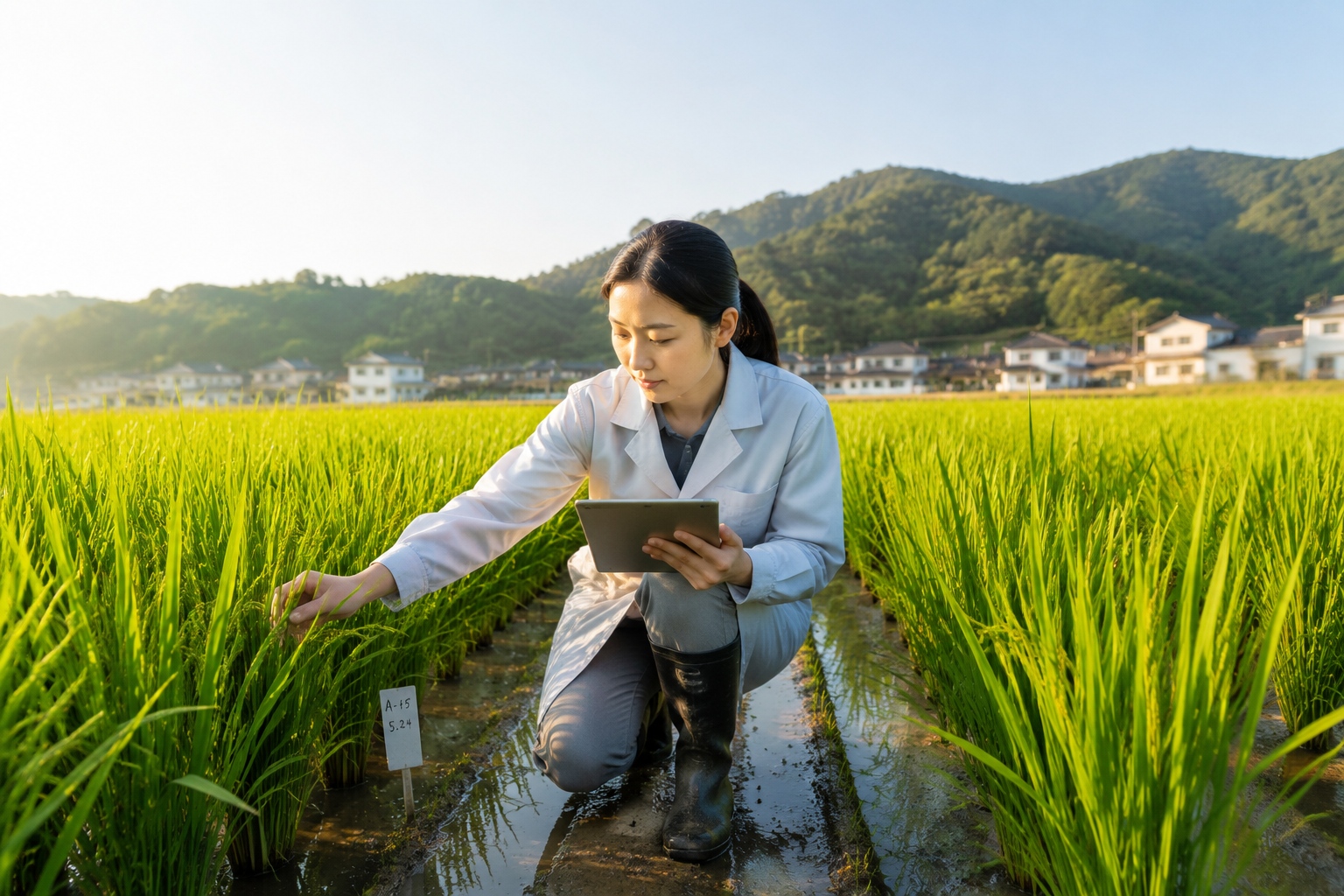
The work is painstaking. In the lab, every seedling is numbered and tracked. In the field, each small plot is surrounded by buffer zones so pollen does not drift from one test to another. Wang spends more than half of the year in rubber boots, either at the institute’s experimental stations or in farmers’ fields. She has a permanent tan line above her socks.
The long road to a named variety
In China, a new rice variety is not released after a single good harvest. It must pass at least two years of provincial or national field trials, where independent experts compare it with existing varieties in different locations. Only then does the final variety receive an official name, usually a string of numbers and a place name. Wang’s current lines are in the second year of a regional trial. She describes the wait with a dry smile: “Breeding is the slowest quick way to solve a problem.”
The data are demanding. Each line is planted in rows, measured for heading date, plant height, tiller number, grain weight, and cadmium content. The team sends samples to an independent lab. In the meantime, they keep a backup of seeds in a low-temperature storage room at the institute, a kind of insurance against poor harvests or climate surprises.
From test plot to farmer’s table
The first time her team took a promising line back to a village, the farmers were skeptical. “They looked at the seedlings and said, this is just rice,” Wang says. “Then we asked them to plant a small plot. After harvest we showed them the test results. The cadmium was low, and the yield was almost the same as their usual rice.”
Her team has now tested the new lines in multiple counties across southern Anhui and into neighboring Jiangxi Province. Farmers don’t see the genetics; they see easier-to-manage plants and rice that can be sold without worry. At a local market, rice made from the new variety sells at a small premium because it has a label showing low cadmium. “A safe food label is a powerful thing,” Wang says.
Her mother, who still lives in the village, is one of the hardest critics. “She tastes the rice. If the texture is not right, she tells me straight,” Wang laughs. The new variety has not yet reached her mother’s bowl, but she is working on it.
What a seed can and cannot do
Wang is careful not to oversell the promise of a new seed. The cadmium trait is only one part of a complicated system. Farmers still need soil testing, water management, and a market that rewards safer food. “A seed is a better starting line, not the finish line,” she says.
The realities of Chinese agriculture are wide. A variety that works in Anhui may fail in Guangdong, because soil, climate, and local pests are different. Breeding is not a one-time victory; it is an ongoing negotiation with nature. Even the low-cadmium trait is not a blank check—if a field is heavily contaminated, the plant still cannot keep the grain clean enough. “We have to fix the soil too,” she says. “Seeds are not magic.”
There is also the question of gender in the sciences. At conferences, Wang is sometimes mistaken for a student or a lab technician, not the lead researcher. “It’s easier to talk to a male colleague in the same position,” she says carefully. But she also sees the field opening up. Many of the younger researchers in her department are women, and she tries to support them the way a retired professor once supported her.
Dinner tables only look simple
By early afternoon, the lab is quiet. Wang takes one last tray of seedlings out of the growth chamber and puts it under a window. She says the new variety still needs several years of field trials before it can be officially named and released. Rice is not fast food. “If you eat a bowl of rice, you are tasting many seasons of waiting,” she says.
Wang has not forgotten why she started. She still returns to her home village at harvest time. She walks through the fields, touches the panicles, and sometimes pulls a grain from the husk just to taste its raw sweetness. Her grandmother is no longer alive to see what her granddaughter does, but the old iron jar still sits in the kitchen.
She likes to think of her work as a quiet change in the food chain. A girl who once knelt in mud now reads DNA sequences. The rice on the table is not the same as the rice she ate in her childhood. Each new variety is a small chapter in a long story about feeding a country. And the chapter is not finished.
At the end of the afternoon, the lights in the growth chamber flick off automatically. The young plants are left in the dark for a few hours, like sleeping seeds. Tomorrow, Wang will be back to check their roots again.
Start the discussion at forum.chinacomes.com