
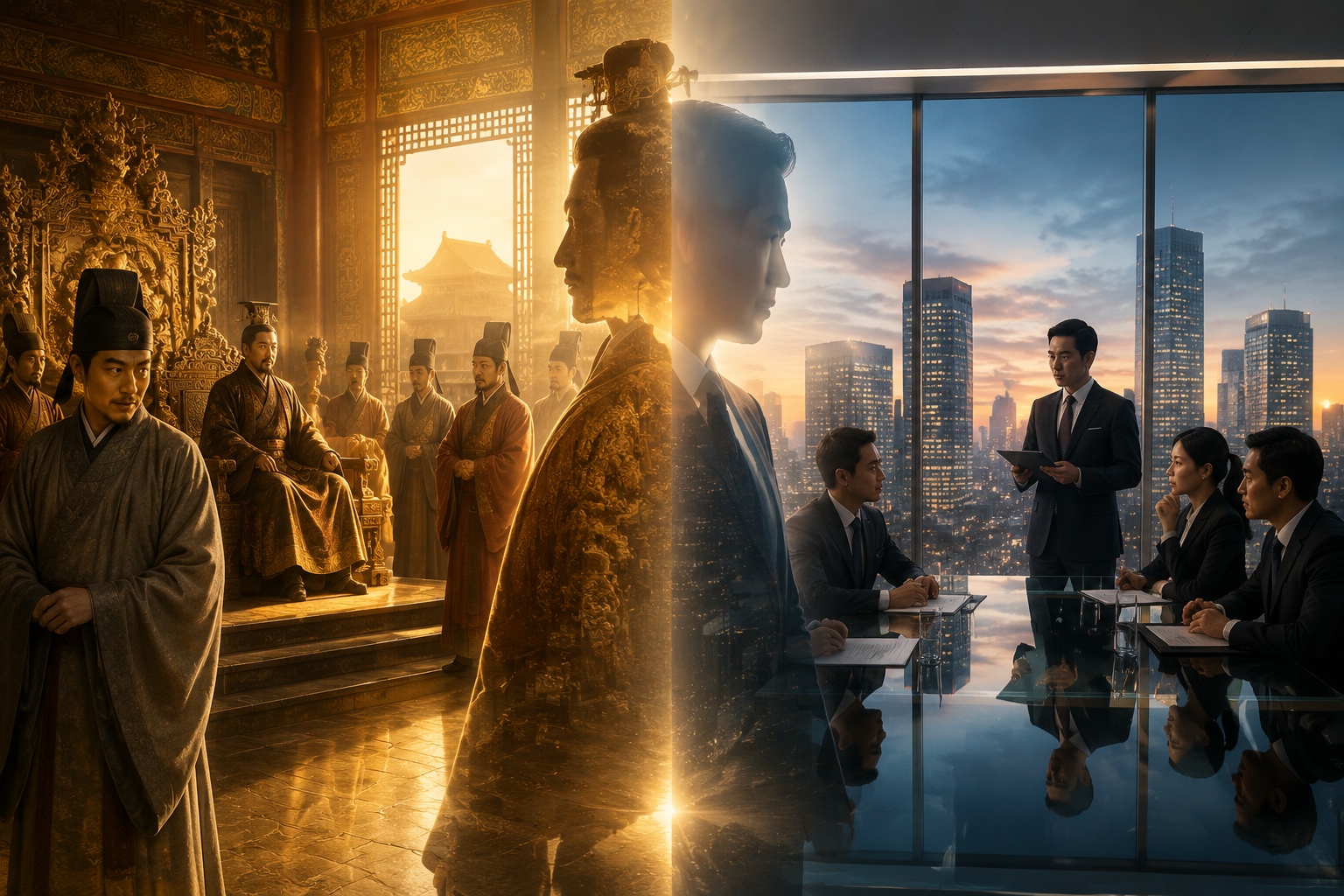

1. A Scene That Made Millions Hold Their Breath
In the opening episodes of Nirvana in Fire (琅琊榜), a sickly young man named Mei Changsu enters the capital of a fictional empire. He wears plain robes, speaks softly, and seems too weak to lift a sword. Yet within months, he methodically dismantles powerful clans and brings down princes, all through information, alliances, and carefully timed moves. Chinese audiences didn’t just watch this drama—they studied it. The show aired in 2015 and remains one of the most rewatched costume dramas on streaming platforms. Why does a story set in a made-up historical era feel so relevant to modern viewers?
The answer lies in what I call China’s power-play culture: a set of unofficial rules for navigating hierarchy, relationships, and interests. It’s not a formal ideology, but it’s everywhere—in office politics, business negotiations, family disputes, and even social interactions. To understand China, you need to understand this coded language.
2. What Is “Power-Play Culture”?
In English, “power play” often evokes a hockey tactic. In Chinese, the nearest equivalent might be quánmóu (权谋), which literally means “power strategy.” It’s the art of achieving goals through indirect means: reading people, building networks, planting rumors, forming alliances, and patiently waiting for the right moment to strike. It thrives in environments where rules are vague, resources are limited, and connections matter more than formal procedures.
Western political dramas like House of Cards show similar scheming, but there’s a subtle difference. Frank Underwood’s ambition is naked and personal. Mei Changsu’s maneuvers, on the other hand, are always dressed in loyalty and righteousness. He claims to serve the prince, the court, and justice—even when his true motives are revenge. In Chinese power culture, the moral facade is not optional. You must appear virtuous even while playing hardball.
3. The Same Grammar in History Books
Chinese viewers find Nirvana in Fire believable because its plots echo centuries of recorded history. Open any volume of the Zizhi Tongjian (资治通鉴), a historical chronicle compiled by Sima Guang in the 11th century, and you’ll find the same patterns: ministers who use code language to test emperors, officials who build factions through marriage alliances, and courtiers who spread rumors to destroy rivals.
Take the Tang dynasty official Li Linfu (李林甫), a consummate schemer remembered for his phrase “lips of sweetness, swords in the belly” (口蜜腹剑). He rose to become prime minister not by brilliant policies, but by manipulating the emperor’s preferences and isolating opponents. Or consider the famous Han dynasty strategist Chen Ping (陈平), who used gold and gossip to sow discord among enemy generals. He was praised for his contribution to the founding of the Han, yet his methods were deeply underhanded. These are not exceptions. The Twenty-Four Histories are filled with such stories.
In a system where the emperor held absolute power and legal institutions were weak, personal trust and suspicion often determined success or failure. If you wanted to achieve something—whether you were a general, a minister, or a low-ranked clerk—you had to master the human game as much as the official task.
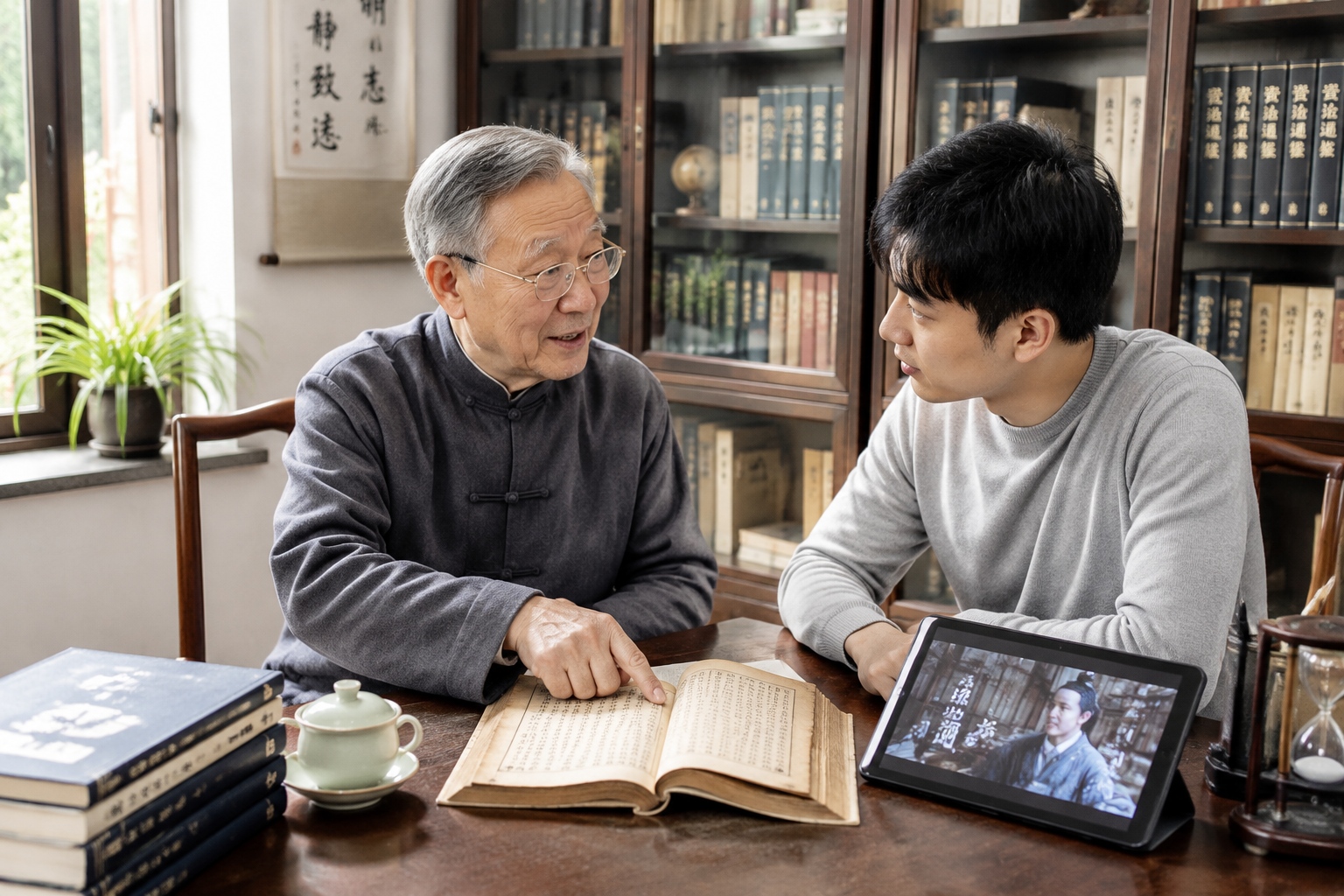
4. Why the Chinese Version Looks Different
Western readers might ask: isn’t this just politics everywhere? Yes, but China’s version has distinct features shaped by its long imperial history. For over two thousand years, China was governed by a centralized bureaucracy that selected officials through written exams (the imperial examination system). Those exams tested classical knowledge, not practical management skills. So once a man entered officialdom, he had to operate in a dense web of personal relationships: those who helped him pass the exam, his colleagues, his mentors, his regional faction, and his family.
Because promotion depended on the emperor’s favor and on evaluations by these networks, officials had to be extremely careful. Open confrontation was risky; the man who won a fight publicly often lost quietly later. Instead, the smart survivors used subtler tools: sending gifts, praising enemies in public while undermining them in private, and always keeping a paper trail (or a person) that could be used later. Over centuries, these skills became a recognizable cultural pattern. Parents taught children caution, schools rewarded students who could navigate teacher preferences, and even ordinary people learned to read between the lines. This is why a show like Nirvana in Fire feels so familiar to Chinese audiences—it simply dramatizes an old, well-known grammar.
5. Power Play in Modern China: Offices, Negotiations, and Dinner Tables
Foreigners often notice that Chinese workplaces have a different rhythm. Meetings are longer, direct criticism is avoided, and “guanxi” (relationships) are openly discussed as a professional asset. This is not ancient history; it’s a living legacy. Consider a typical scenario in a Chinese company. A manager wants to introduce a new project. Instead of presenting it directly at the meeting, he will first consult with key stakeholders one by one: the boss, a competitor’s ally, the HR director. He will adjust his proposal based on their reactions, then let the most senior person support it publicly. To a Western eye, this may look like excessive caution or even manipulation. To a Chinese eye, it’s simply how things get done—you build consensus before you announce a decision.
In business, too, power play is embedded. Contract negotiations are often preceded by long dinners and small talk. A smart negotiator might deliberately mention a mutual acquaintance to test the other side’s reaction. He will not say “we want a 20% discount” directly; he might instead offer a concession on one point to get an unspoken advantage elsewhere. This is not about dishonesty—it’s about reading intentions and preserving face for everyone. Even social life has its own micro-power moves. When you compliment a colleague’s child in China, you might be implicitly seeking favor with the colleague. When you decline a third glass of baijiu at dinner, you must say something like “I’m unworthy of such honor” rather than a simple “no, thanks.” These patterns, learned over thousands of years, are now deeply woven into everyday behavior.

6. A Culture That Is Changing
None of this means every Chinese person is scheming. In fact, many Chinese people are remarkably straightforward, and modern urban life is pushing toward more transparent systems. But understanding the cultural substrate helps explain why certain behaviors feel natural in China. It also prepares outsiders for what they might encounter.
If you’re an expat manager in Shanghai and notice that your Chinese team avoids direct feedback, don’t assume they are passive-aggressive. They might be following the old rule: “Don’t embarrass people in public.” If you’re a foreign entrepreneur negotiating in Shenzhen, don’t be surprised if your partner talks about your first phone call as a “bond” that should bring mutual benefits later. This is the social contract of reciprocal obligation.
At the same time, China is changing. Millennials and Gen Z, raised in a market economy and digital world, are often less patient with opaque power games. They post honest reviews online, quit bosses who micromanage, and prefer clear job descriptions. The old power-play culture is real, but it’s not frozen. It’s being rewritten every day in shared apartments, startup incubators, and Douyin comment sections. So the next time you watch Nirvana in Fire or any Chinese historical drama, pay attention. You’re not just watching an entertaining story. You’re looking at a mirror that China has held up for centuries—and it still reflects the faces of today.
Start the discussion at forum.chinacomes.com