
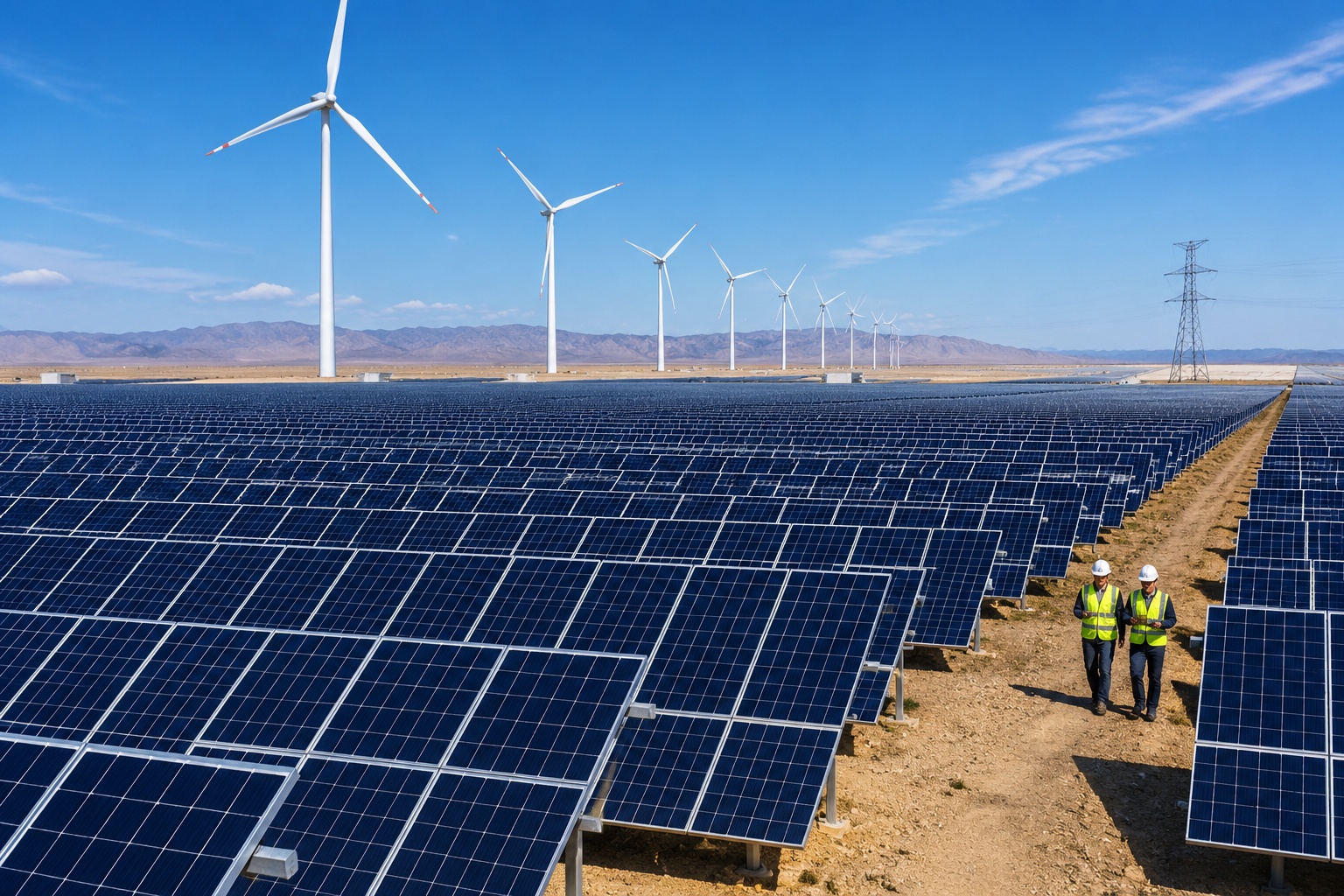

Sunlight in the Desert
Drive along the edge of the Gobi Desert in northern China, and you’ll see an ocean of dark-blue solar panels stretching beyond the horizon. Next to them, rows of wind turbines spin slowly in the dry breeze. At noon, the panels are so bright you have to squint. This isn’t a film set—it’s part of a change that’s quietly rewriting how the world’s second-largest economy powers itself.
In China, people sometimes call wind and solar power “invisible coal.” Like coal, it lights our cities and runs our factories. But there’s no mine, no smoke, and no heavy trucks. Every kilowatt-hour produced by wind or sun means one less lump of coal that needs to be dug up and burned. In 2023, China’s wind and solar farms generated more than 1.4 trillion kilowatt-hours of electricity. If that had to be made by burning coal, it would have required roughly 400 million tons of it. That’s more than India’s entire coal output in a year.
A Power Grid Like No Other
China uses more electricity than any other country—about 9.2 trillion kilowatt-hours in 2023. That’s nearly twice as much as the United States. To keep that many lights on, you need an enormous and highly dependable grid. And for the most part, China has one. Power cuts are rare, even in crowded cities with brutal summer heat and millions of air conditioners.
But keeping that grid stable while replacing coal with weather-dependent renewable energy is a constant balancing act. The sun disappears at night, and the wind can calm for days. For a long time, skeptics said a grid can’t run on renewables alone. China is trying to prove them wrong.
The ‘Invisible Coal’ Revolution
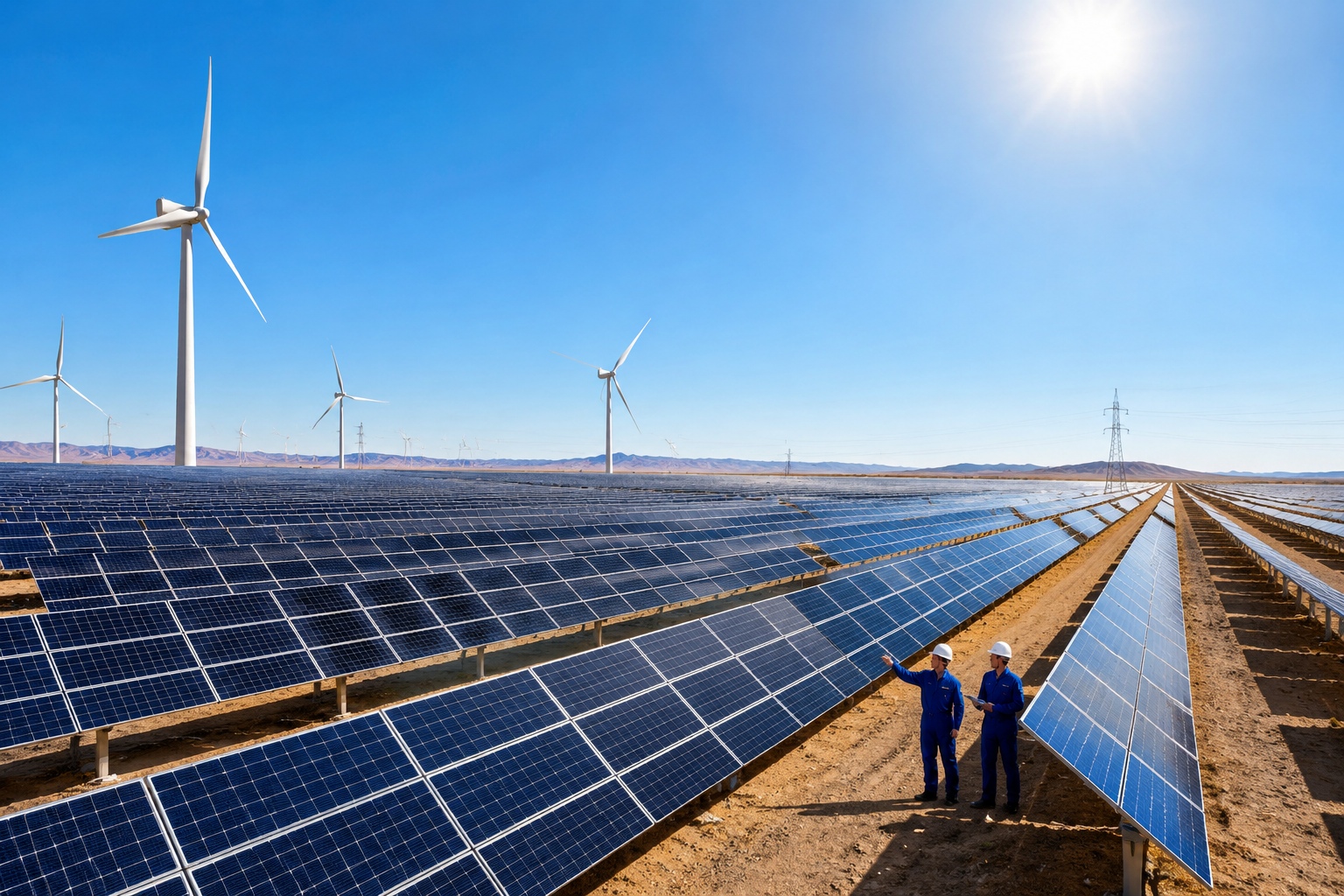
Here’s some perspective: by the end of 2023, China had about 610 GW of solar capacity and 440 GW of wind capacity. Combined, that’s over 1,000 GW of clean power—more than the entire generating capacity of the United States. Hydroelectric power, the oldest of the three, adds another 420 GW. These three sources together now produce about one-third of the country’s electricity, and the share is climbing each year.
The Gobi Desert is one of the sunniest places on Earth. China has been building solar farms there on an almost unimaginable scale. Some are so large they can be seen from space. But these remote deserts are far from the industrial centers on the coast, which is where a lot of the electricity is needed.
Keeping the Lights On When the Sun Doesn’t Shine
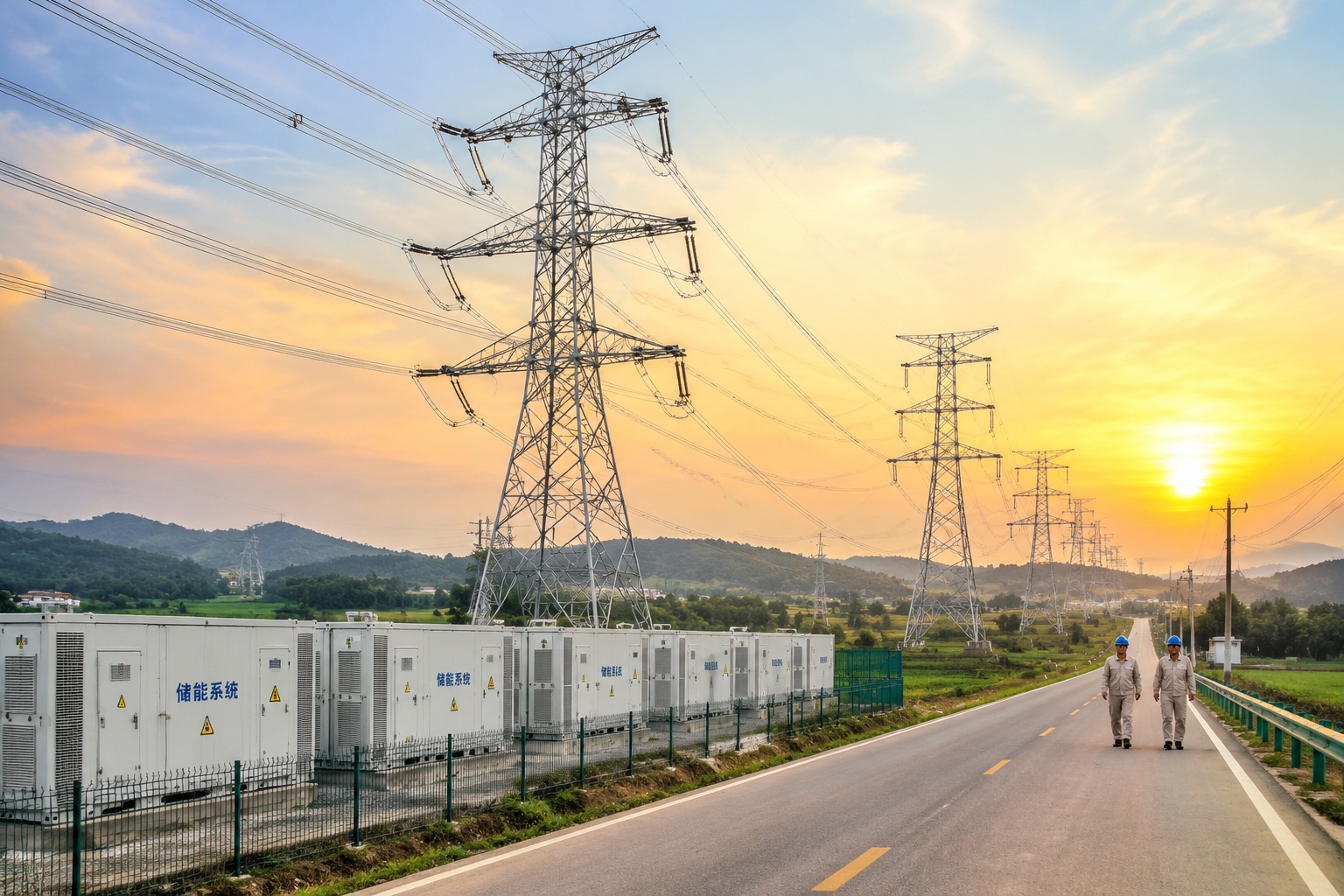
To make that work, China has built the world’s longest ultra-high-voltage (UHV) transmission lines. These giant steel towers carry electricity at 800,000 to 1,100,000 volts—enough to send power from a desert in Xinjiang all the way to Shanghai, a distance of 3,000 kilometers, with only a small loss. This is like a highway for electrons, built at a scale no other country has attempted.
But even with the highways, you still need a backup for when the wind stops and clouds roll in. China is answering with massive energy storage. In the western province of Qinghai, a giant solar-hydro hybrid plant pairs an 850 MW solar farm with the Longyangxia Dam. When the sun is strong, solar does the work; when it’s cloudy or dark, hydro kicks in within minutes. In the eastern city of Ningbo, dozens of large battery containers are stacked in former factory lots, charging at night when electricity is cheap and releasing power during the evening peak. By the end of 2023, China had built about 30 GW of battery storage—more than half of the global total.
From Rooftops to Fast-Chargers: Life in the New Energy Era
For most people, the energy transition is invisible. You flip a switch and the light goes on, exactly as it has for decades. But if you pay attention, you can see the changes.
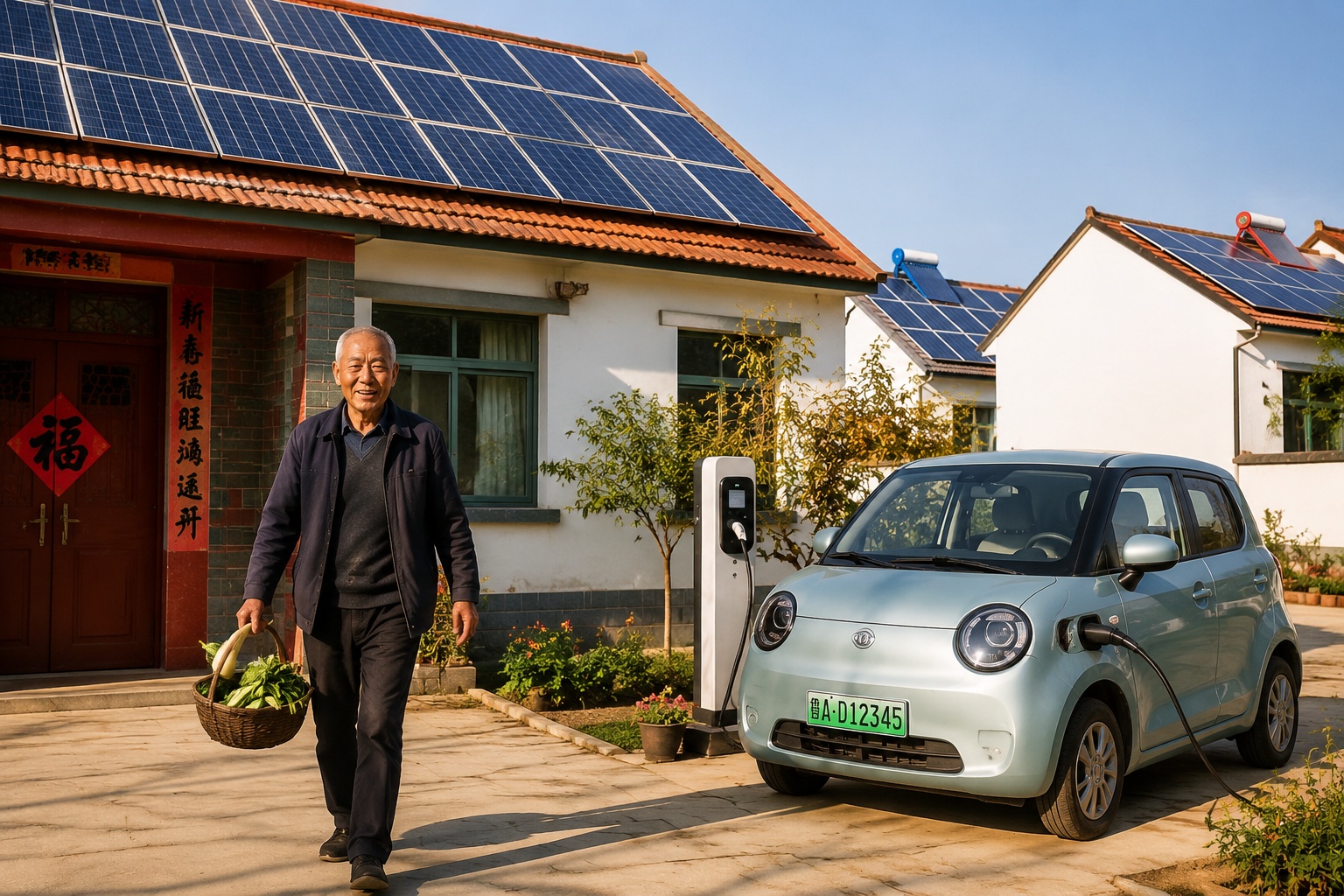
In rural areas of Shandong and Henan, farmers rent out their rooftops to solar companies. A typical roof brings in about 1,500 yuan (roughly $200) per year, which is real money for a retired couple. In cities, new residential neighborhoods often include an EV charging station, and small solar panels on balconies are becoming a trendy way to cut your electricity bill. In 2023, China sold more than 9 million electric vehicles, and nearly every one of those drivers now has easy access to a public charger.
The energy transition is also showing up in surprising places: an aluminum factory in Yunnan runs almost entirely on hydroelectric power; a remote village in Tibet uses a microgrid with batteries and solar panels instead of a diesel generator. These stories are small, but they add up.
The Coal That Isn’t Going Away
It would be dishonest to write about China’s energy without talking about coal. Coal still generates about half the country’s electricity, and in some months that share rises even higher. When a heatwave in the summer pushes air conditioning demand to record levels, grid operators will turn on coal plants to be safe. When a drought in the south reduces hydroelectric output, coal often fills the gap.
This isn’t because China doesn’t want to give up coal—it’s because the transition is hard. Coal power is dispatchable: you can burn it whenever you need it. Renewable energy is not. The country is investing heavily in battery storage, pumped hydro, and a smarter grid to change this, but it will take time. In the meantime, coal plants are being made more flexible, adjusting their output more quickly to complement renewables rather than constantly running at full throttle.
So, Is There Enough Power?
For most of the time, in most places, the answer is a clear “yes.” China has built one of the world’s most reliable power systems, and the share of “invisible coal” is helping it become cleaner without making it less dependable. There will always be moments of strain—extreme weather, rapid economic shifts—but the system is much more robust than many outside observers believe.
The truly remarkable thing is not that China uses a lot of solar and wind power; it’s how fast it’s happening. The country is trying to solve the toughest energy puzzle of the 21st century by turning sunlight, air, and water into the fuel behind a modern economy. That’s not just news. It’s a preview of what a future powered by “invisible coal” might look like.
Start the discussion at forum.chinacomes.com