

The Longest Extension Cord
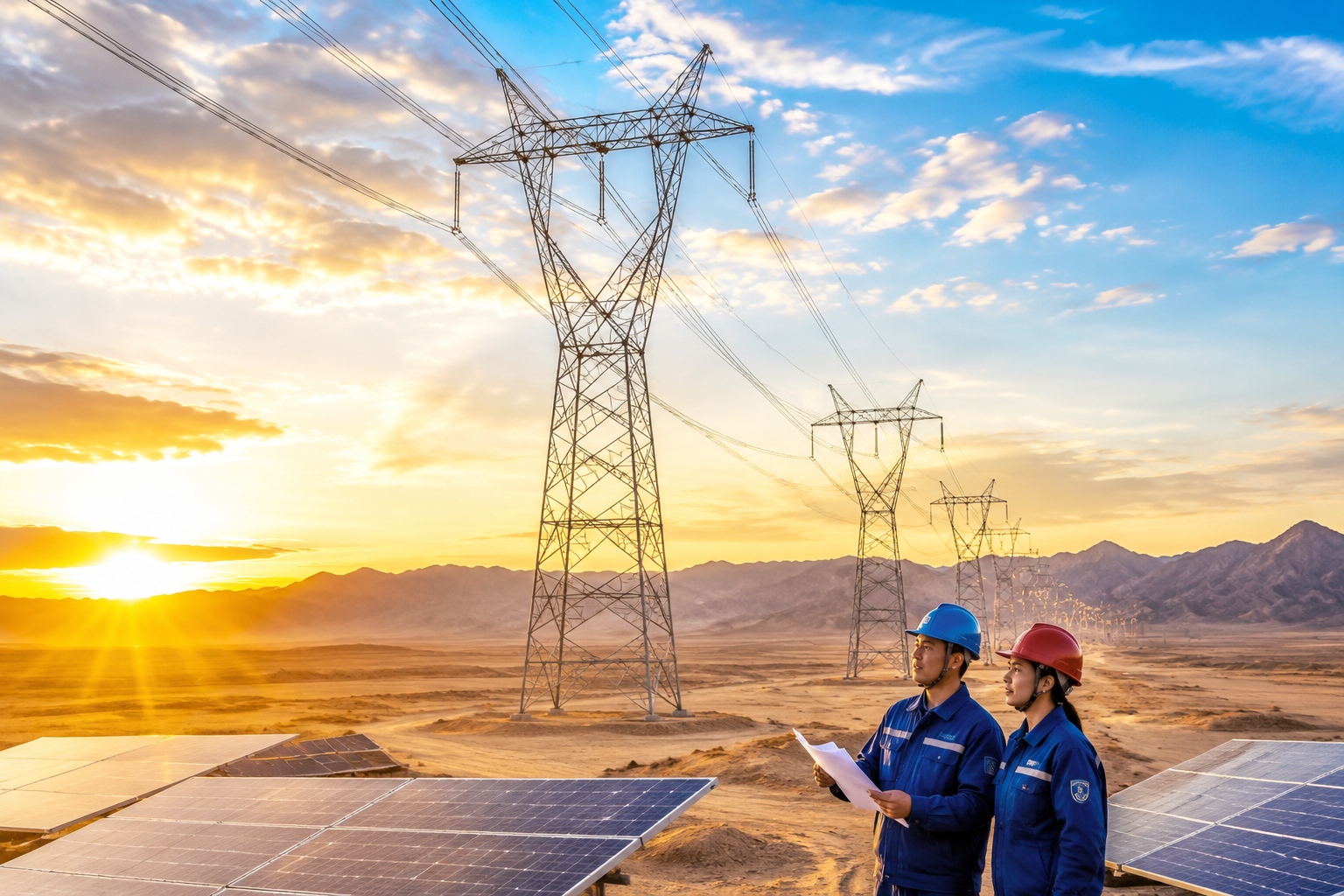
In the Gobi Desert, a few hours’ drive from the city of Hami, you can watch the sun set twice. First it dips behind the photovoltaic panels that stretch to the horizon, turning them into a dark blue sea. Then, as dusk creeps across the gravel, orange lights begin blinking on the steel towers that march southward like mechanical giraffes. Those towers are not just pylons. They are part of a 3,300-kilometer extension cord that reaches all the way to Shanghai.
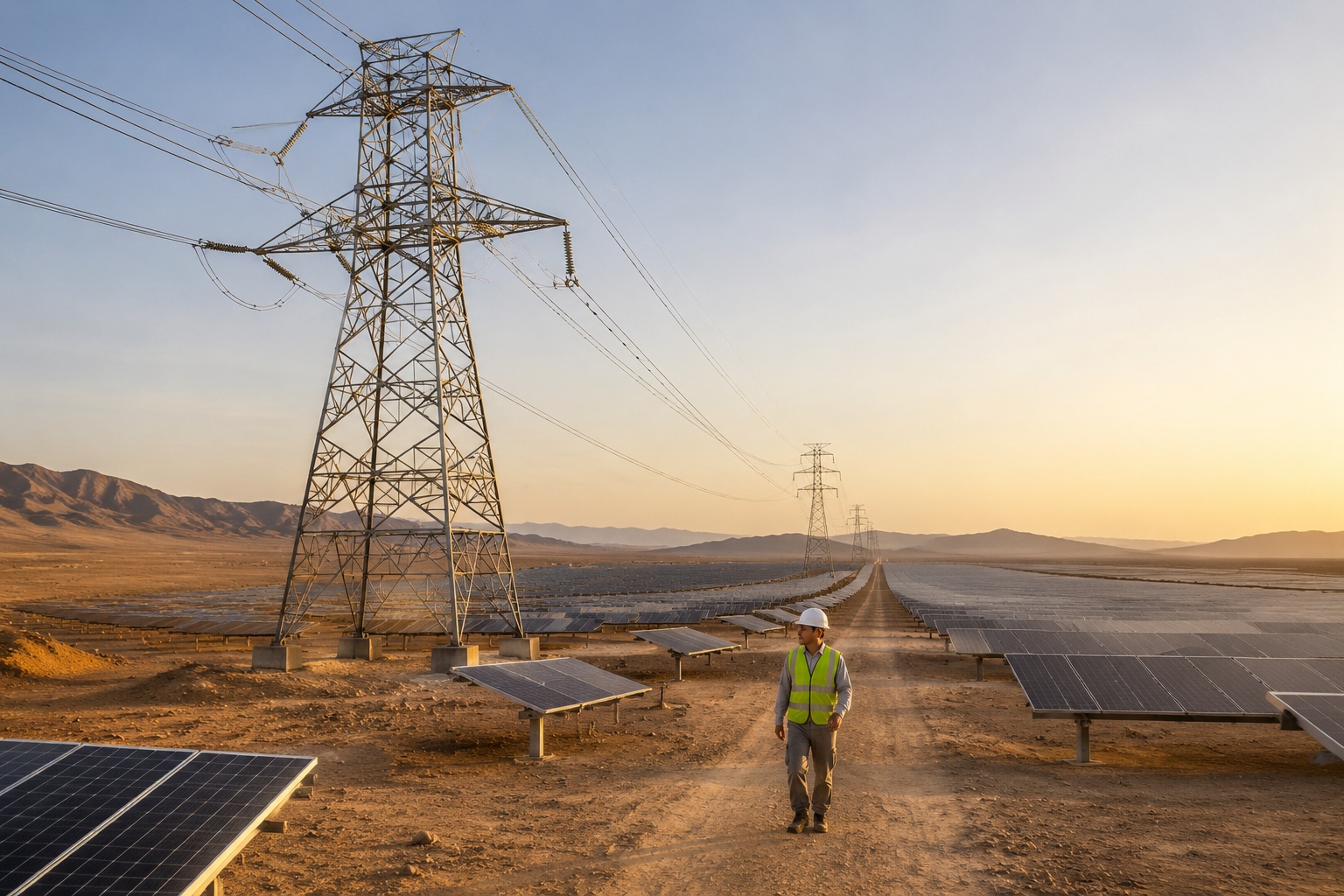
Standing under one of those towers, you hear a faint hiss — the sound of electrons pushing through cables at 1,100,000 volts. It is easy to feel small. But then you remember: this line is the reason a family in Shanghai can flick a switch and watch their kitchen light come on, even though the nearest coal mine is far away and the wind that spins the turbine behind you is not blowing in their city.
Why Does China Need to Ship Electricity?
If you look at a map of China’s energy resources, you’ll see a striking imbalance. The sunniest, windiest areas — Xinjiang, Gansu, Inner Mongolia, Qinghai — are sparsely populated. The provinces that consume the most electricity, on the other hand, hug the coast: Guangdong, Jiangsu, Zhejiang, Shanghai. For a long time, China bridged this gap by building coal plants near the coast and shipping coal by train. That worked, but it also made cities smoggy and added to the country’s carbon footprint.
Renewable energy changed the equation. Solar and wind are abundant in the west, but they are location-dependent. You cannot pack the Gobi sun into a freight container. So China decided to build power lines that act like a national power grid stretched across the continent. This is not a futuristic idea. It is already operating.
If you are from Europe, you might think of the interconnectors that let Norway sell hydro power to Germany. If you are from the United States, you might think of the high-voltage lines that bring California’s solar farms to neighboring states. But China’s scale is different. It is building transmission lines that are not just longer, but also rated at voltages that were considered impossible only a decade ago.
The Shock of Ultra-High Voltage
Electricity loses power as it travels through wires. The trick to minimizing loss is to increase the voltage. Standard transmission lines in many countries operate at 220,000 or 400,000 volts. China’s new ultra-high-voltage (UHV) lines operate at 800,000 or even 1,100,000 volts. The higher the voltage, the less current is needed to transfer the same amount of power, and the less energy is wasted as heat.
The world’s first ±1,100 kV DC line runs from Changji in Xinjiang to Guquan in Anhui province. It is 3,300 kilometers long and can carry 12 gigawatts of electricity — enough to power an entire small country. The towers that carry these cables are enormous: some are as tall as a 40-story building. The cables themselves are thick bundles of aluminum and steel, held together by insulators that look like giant string beads.
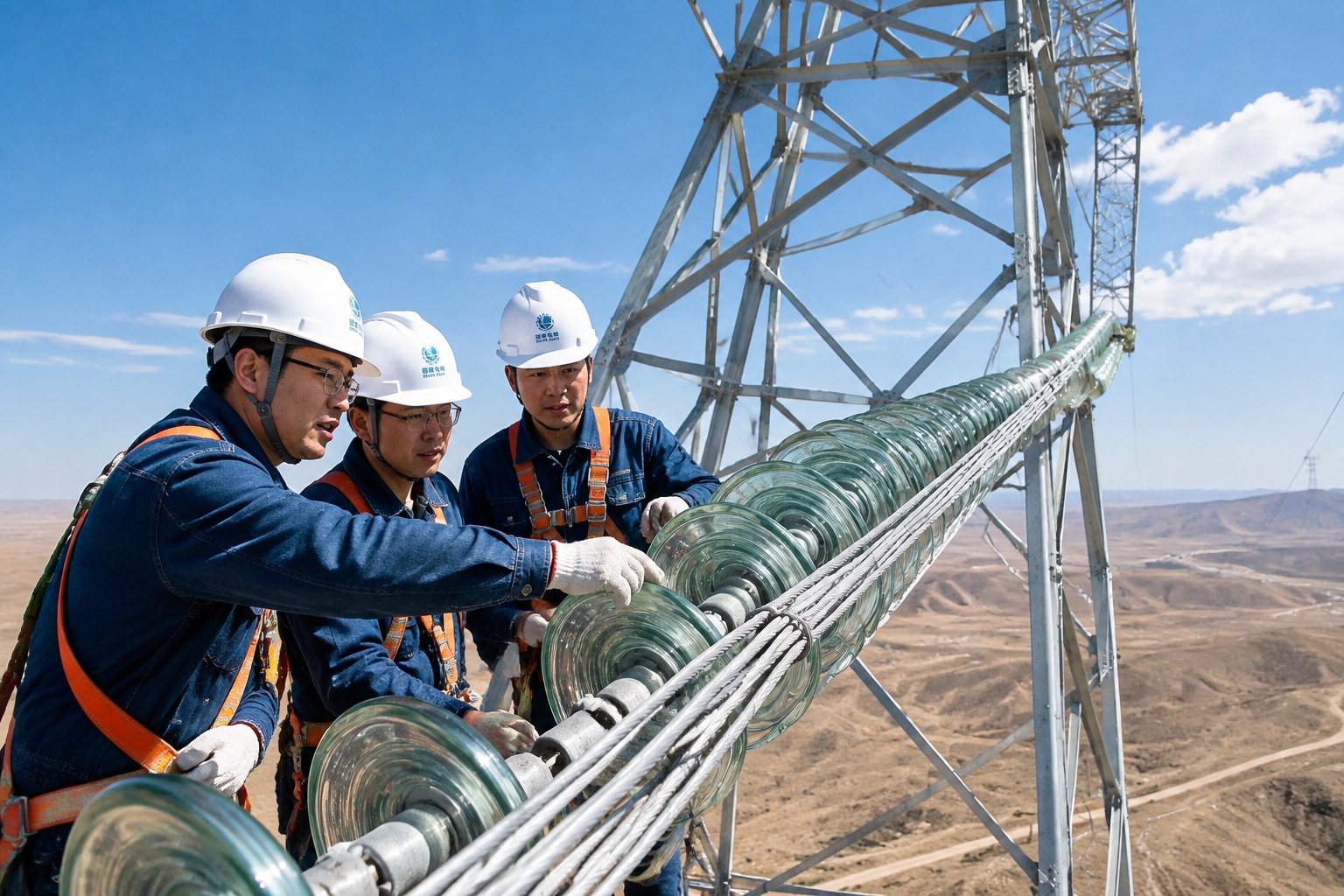
For engineers, building these lines was a challenge in materials science and logistics. The cables must withstand temperature swings from -40°C in the desert to humid coastal air. They must survive sandstorms, snow, and earthquakes. And because UHV creates strong electric fields, workers have to design special spacing to prevent sparking. The result is a quiet revolution that most people outside the energy industry will never see.
A Trip Across the Country
Let me take you on a virtual ride along one of these routes. Start at a solar farm near Hami, in the eastern part of Xinjiang. Here, rows of photovoltaic panels are tilted toward the sun like sunflowers. On a clear day, they produce about 1,500 hours of full-load electricity every year. The operators are often young engineers who live in dormitories on the edge of the desert. They ride ATVs to inspect panels, and they joke that their job is to keep the sand out of everything.
From Hami, the electricity enters a converter station, where alternating current is transformed into direct current for long-distance travel. Direct current is better for very long distances because it avoids the losses caused by capacitance in AC lines. The converter station is a sprawling complex of transformers, valves, and cooling systems. It hums like a giant air conditioner.
After the converter station, the line heads east through the Hexi Corridor, a historic Silk Road route. The towers follow a white steel corridor that cuts across sagebrush plains, over the Yellow River, and through the mountains of Ningxia. In some sections, the line shares space with a high-speed railway, and you can see both trains and electricity racing side by side.
By the time it reaches Anhui, about 2,000 kilometers away, the electricity is converted back to alternating current and sent onward to Shanghai through a network of lower-voltage lines. The entire journey takes just milliseconds — faster than a blink.
What It Feels Like on Both Ends
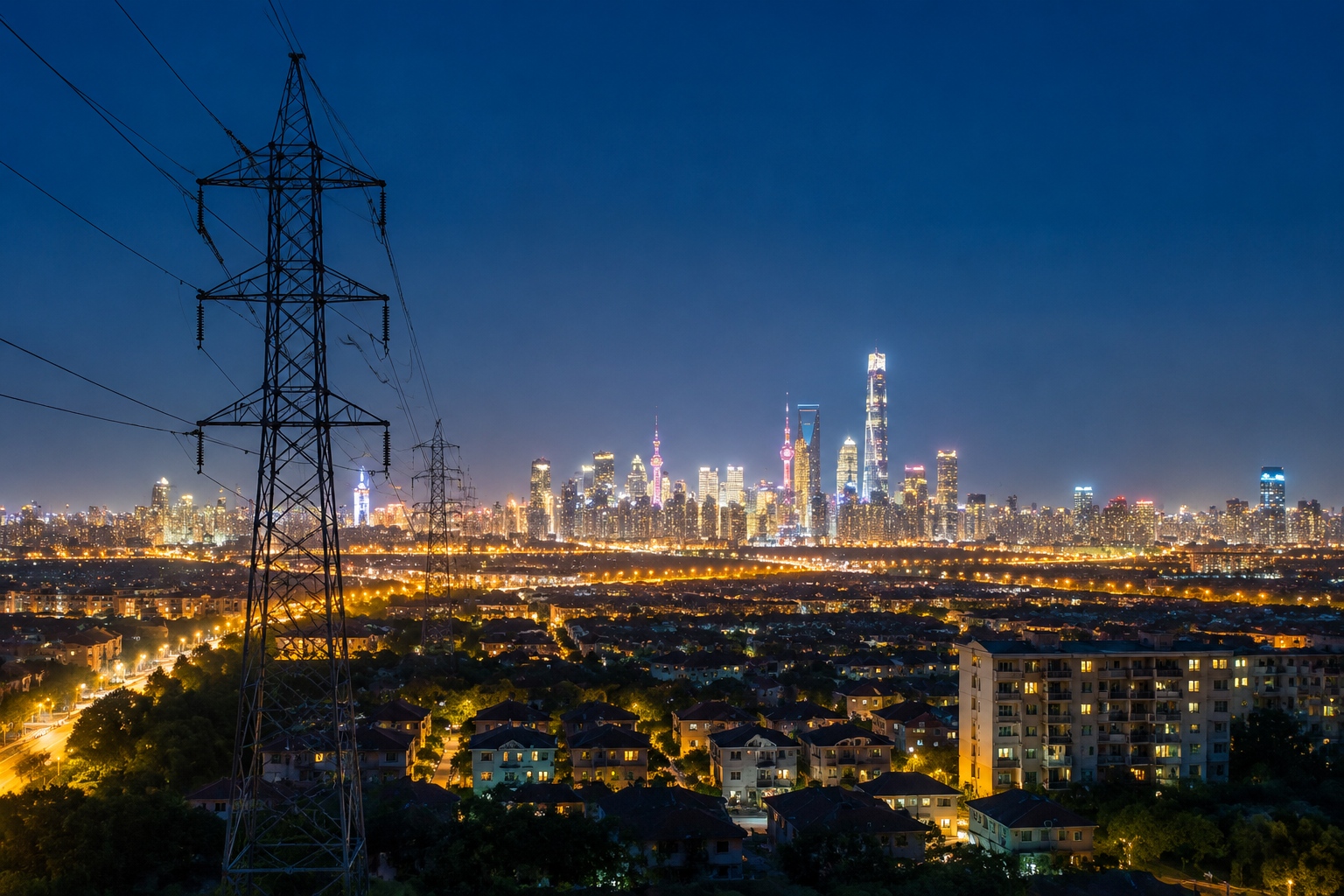
In the countryside near Shanghai, villages are equipped with shared electric vehicle chargers, thanks to the surplus electricity arriving from the west. In urban apartments, residents rarely think about where their power comes from. But if you ask them, many will say they know about the long-distance lines from news coverage of giant pylons crossing the desert.
For the people living near the western power plants, the change is more immediate. In Hami, a taxi driver told me that before the big solar farms, the town was quiet and dusty, with few jobs for young people. Now there are solar panel cleaning crews, inverter technicians, and security guards at the substations. The income is modest, but it is steady, and it has kept families together that might otherwise have migrated to coastal cities for work.
Not everything is perfect. Building huge transmission lines across sensitive landscapes has raised environmental concerns. In some sections, planners adjusted the route to avoid bird migration corridors. In others, they buried cables under rivers instead of stringing them across suspension bridges. These are real trade-offs, and Chinese engineers are still learning how to balance clean energy with ecological preservation.
The Global Meaning
What makes China’s UHV network unique is not just its voltage. It is the way it ties together the country’s geography. In the United States, the power grid is patchwork of regional systems, and moving electricity from the windy Midwest to the populous East Coast can involve multiple handoffs and regulatory hurdles. In Europe, cross-border connections are improving, but national interests often complicate long-term routing. China, thanks to a centralized electricity system and decades of planning, can build a national network at a scale that others can only imagine.
This has global implications. If you want to fight climate change, you need to be able to move clean electricity from where the sun is strong to where the factories are. The Chinese model shows that a large country can, in fact, turn its renewable resources into a shared national resource. It is not a silver bullet — China still relies on coal for a big share of its power, and the UHV lines themselves have environmental costs. But the direction is unmistakable.
The next time you see a picture of a solar panel array in a desert, ask not only about the panels themselves but about the invisible connector that brings their energy to a city thousands of kilometers away. In China, that connector is a steel tower, a bundle of cables, and an idea: the sunlight in the west belongs to every household in the east.
Start the discussion at forum.chinacomes.com