
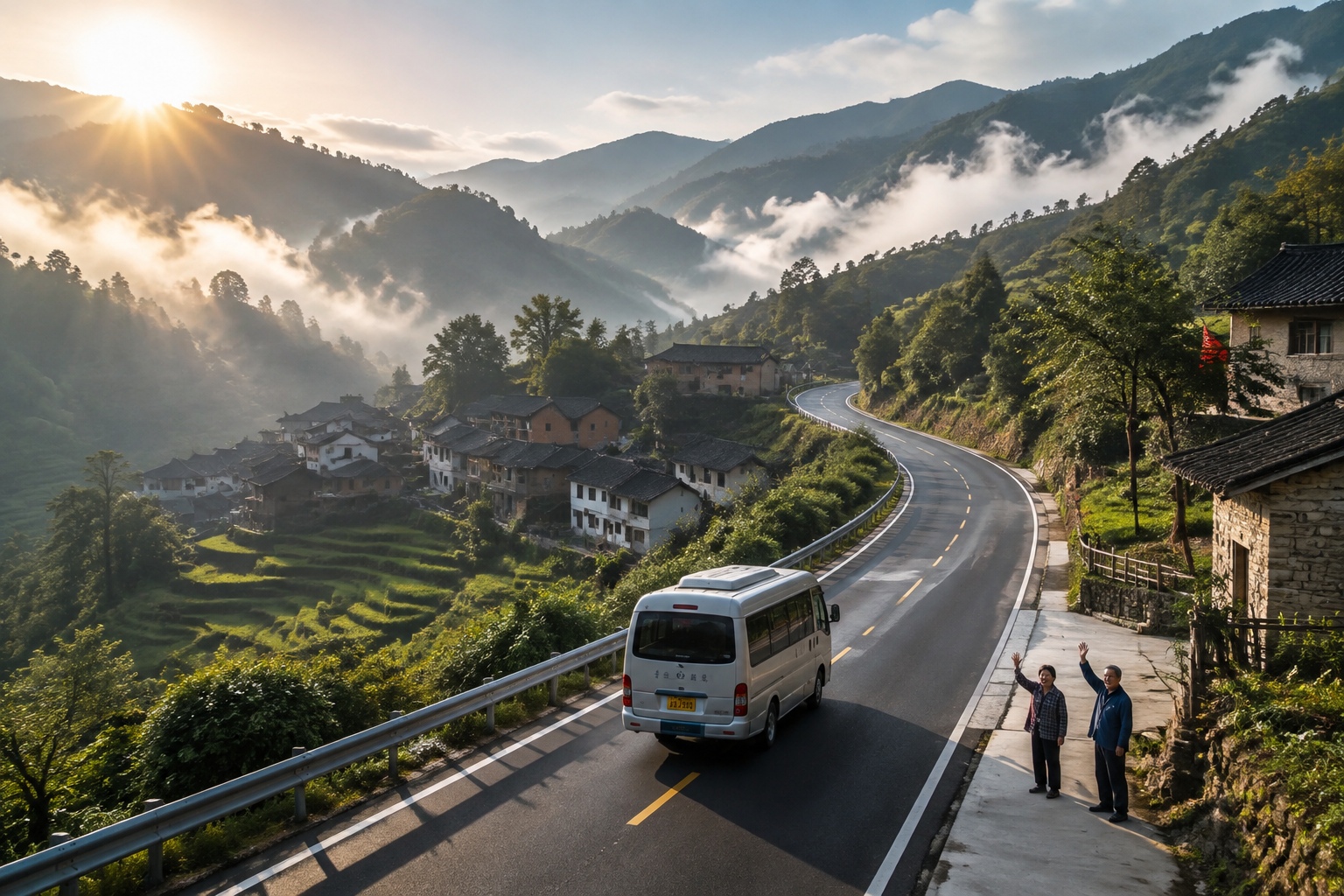

A Morning at the Village Gate
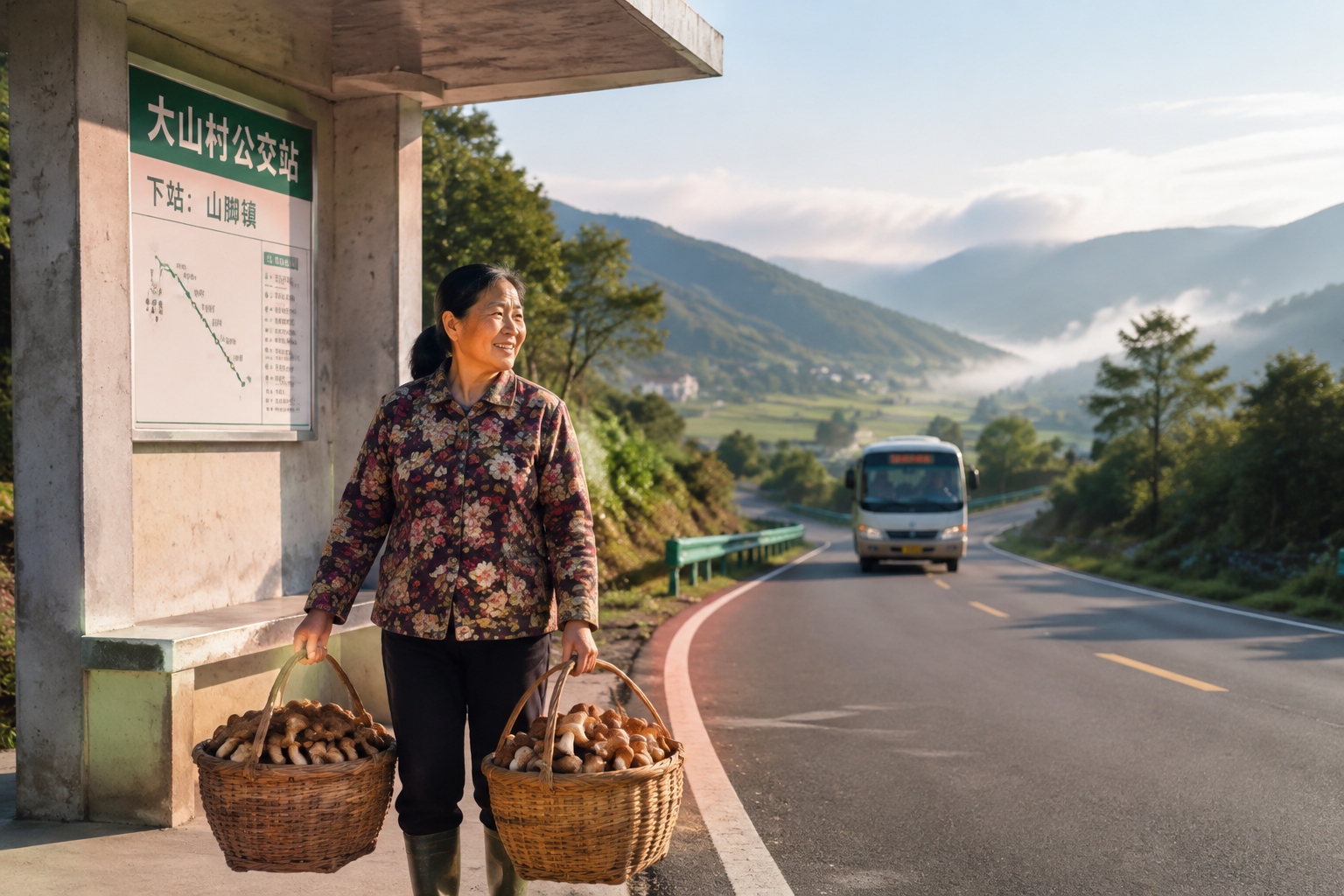
At 6:30 a.m., the mist is still hanging over the terraced fields when Wang Lan walks to the edge of the village. She carries two woven baskets filled with fresh mushrooms. In the past, she would have had to hike two hours down a slippery, narrow footpath to reach the nearest town, hoping the mushrooms would survive the trip. Today, she stands at a new bus stop on a two-lane asphalt road. The minibus to the county seat arrives in 20 minutes. The ride takes 35 minutes. By 8:15, she can be at the morning market, her mushrooms still damp with dew.
Wang Lan lives in Qingxi Village, a small settlement tucked into the mountains of western China. For generations, the only way out was a winding footpath that locals called ‘goat track.’ It was too narrow for carts, impassable by car, and after rain it turned into a river of mud. Children walked to school for hours; sick people had to be carried on bamboo stretchers. When the Chinese government launched its massive rural road construction program, Qingxi Village was among the last to be connected. The asphalt road reached the village in 2021, as part of a national effort that has pushed the country’s total road network past 5.4 million kilometers.
The Scale of China’s Road Network
To understand what 5.4 million kilometers means, imagine driving all the way around the Earth at the equator—135 times. That’s the total length of roads in China today, including highways, rural roads, and expressways. According to the Ministry of Transport, by the end of 2023, China had built more than 4.6 million kilometers of rural roads alone, connecting nearly all villages with a population of over 1,000. Expressways alone stretch for about 177,000 kilometers, the longest network in the world.
The road program began in earnest in the 2000s with the ‘Village to Village’ initiative. The goal was simple: every village should be accessible by road. Early projects focused on basic gravel roads, but over time many have been upgraded to asphalt. In Qingxi Village, the new road is part of the ‘Three Rural Areas’ development, which ties infrastructure to poverty alleviation and rural revitalization.
How Roads Changed Daily Life
The changes are tangible. For Wang Lan, the road means her mushrooms can reach a larger market. Previously, she sold only to a few neighbors or traded in the village for rice and salt. Now she sells to town merchants who come to buy in bulk. Her income has almost doubled.
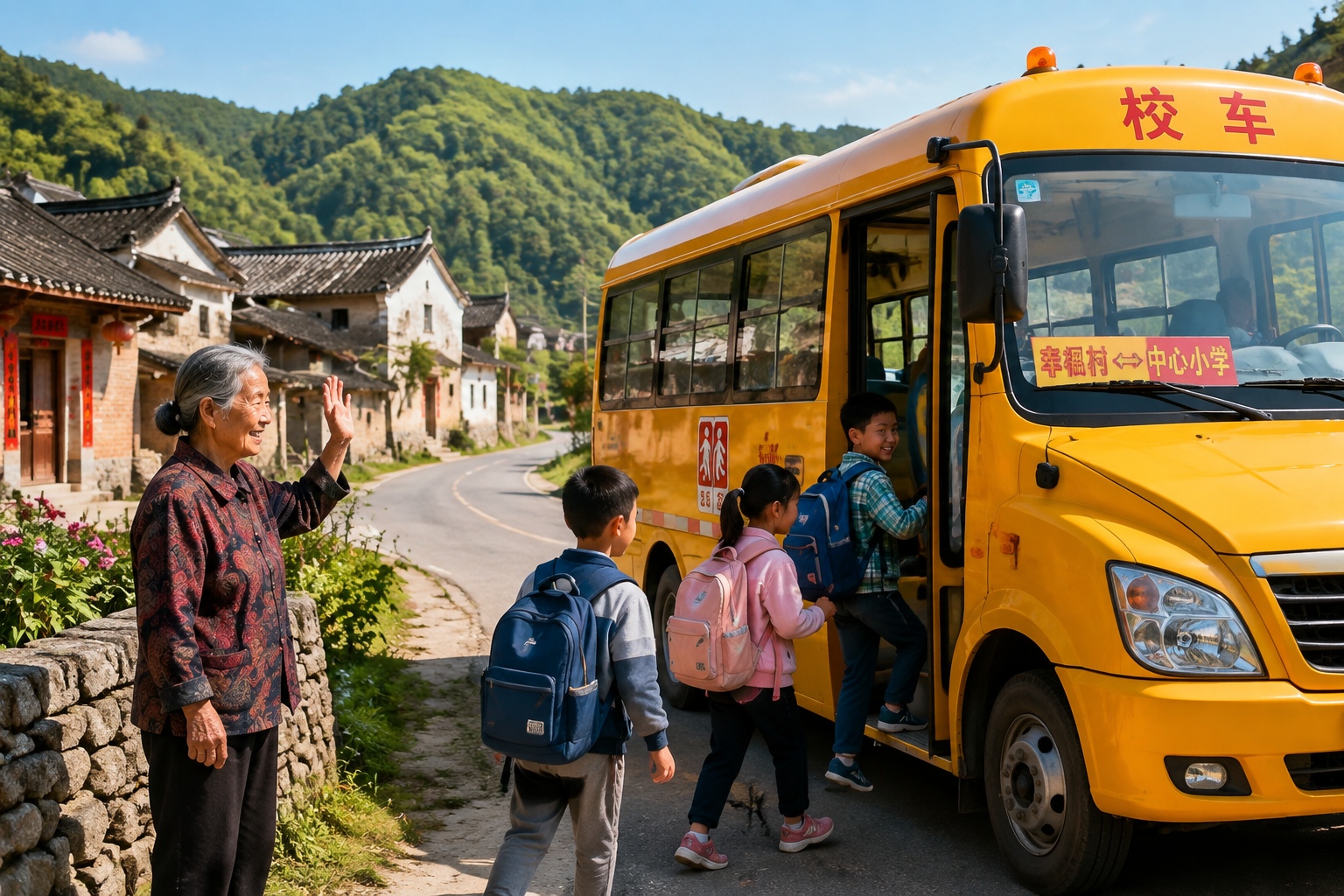
The road also brought the school bus. Children now wait at the same stop where Wang Lan catches the minibus. The bus, painted bright yellow, arrives at 7:10 and takes them to the central school in the township. Before the road, children had to board at the school during the week, eating and sleeping away from home. Parents rarely saw them except on weekends. Now the bus runs twice a day, so children come home every evening.
Healthcare has improved too. The village clinic has a nurse, but serious cases need to go to the county hospital. In the past, the evacuation was a nightmare—villagers would carry the patient down the mountain, sometimes losing precious hours. Today, an ambulance can reach the village in 40 minutes, and the road is wide enough for it to turn around at the clinic gate.
New Kinds of Opportunity
The road is also changing the village’s economy. A few young people have started to return. Liu Wei, who used to work in a factory in Shenzhen, came back two years ago to open a homestay. He converted his grandfather’s old stone house into a simple guesthouse for hikers. The road makes it possible for tourists from the city to drive up on weekends. He now hosts about 60 visitors a month, and his guesthouse is connected to a electric vehicle charging point.
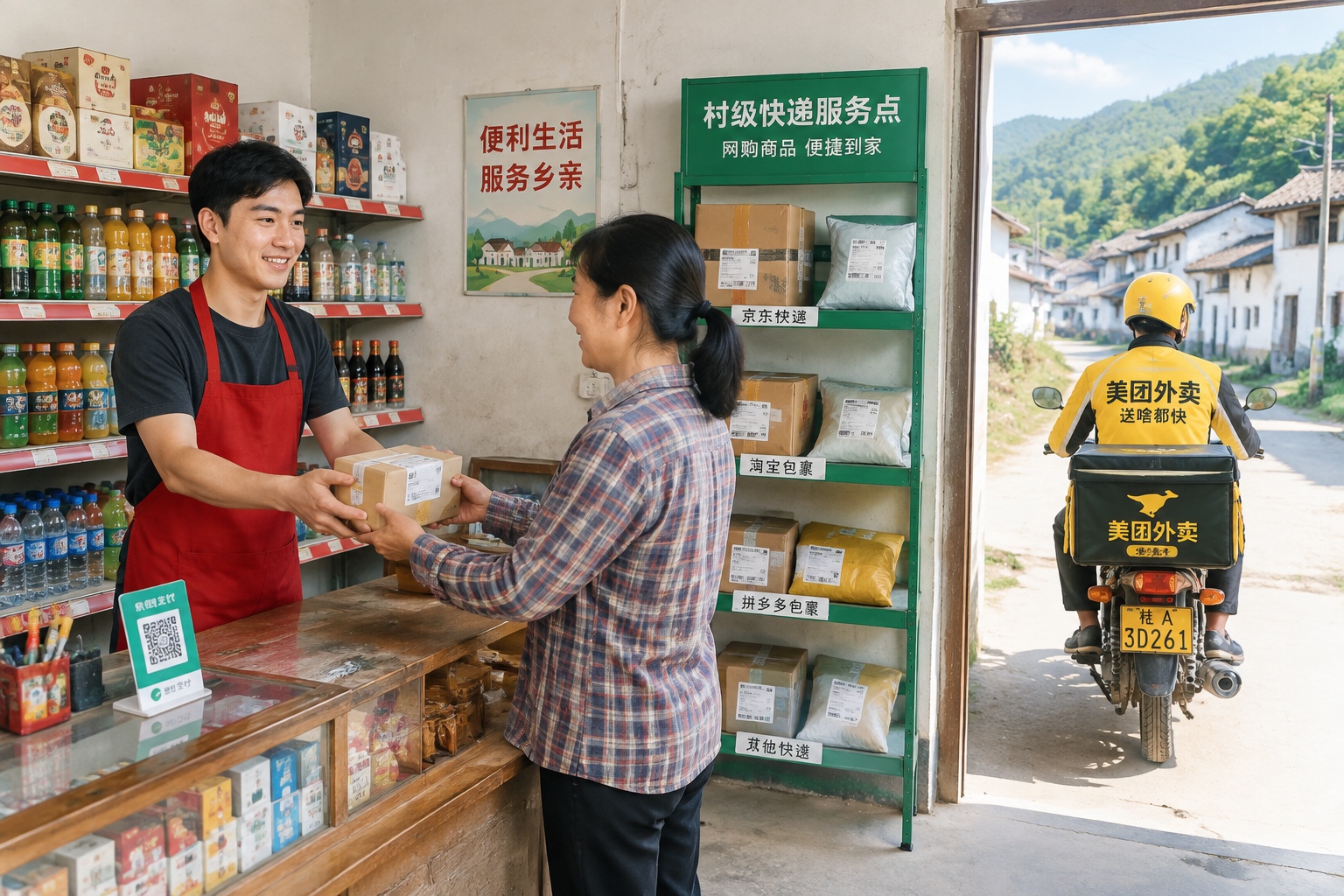
E-commerce has arrived too. Wang Lan’s mushrooms are now also sold online. The local delivery company has set up a pickup point in the village shop. People can order seeds, tools, and even household appliances online, and pick them up a few days later. For the first time, the village is not at the end of the supply chain.
Still Work to Be Done
It would be romantic to say the road solved everything, but Qingxi Village still faces challenges. The road is narrow in places, and safe during heavy rain, but landslides can block it for days. The winter snow melts, and the maintenance relies on the county government, which sometimes struggles with budget. Mobile network is still patchy; Wang Lan’s smartphone often shows no signal. And not everyone is benefitting equally—older villagers who can’t use apps find it harder to seize the online market.
Moreover, the road has brought changes in lifestyle that some residents feel ambivalent about. The younger generation no longer wants to farm, and the village population is shrinking as more people move to cities for work. The road, in a way, enables the outflow.
Conclusion
But on a misty morning, Wang Lan is not thinking about those paradoxes. She flags down the minibus, which rattles along the smooth asphalt. The conductor knows her by name. She looks out the window at the steep green slopes, now dotted with white farmhouses. Her mushrooms are in the basket, and the market is less than an hour away. In a country where distance used to mean isolation, the road has made distance just a matter of time.
China’s 5.4 million kilometers of roads are more than a feat of engineering. They are threads connecting millions of ordinary lives to opportunity, convenience, and, for better or worse, change.
Start the discussion at forum.chinacomes.com