
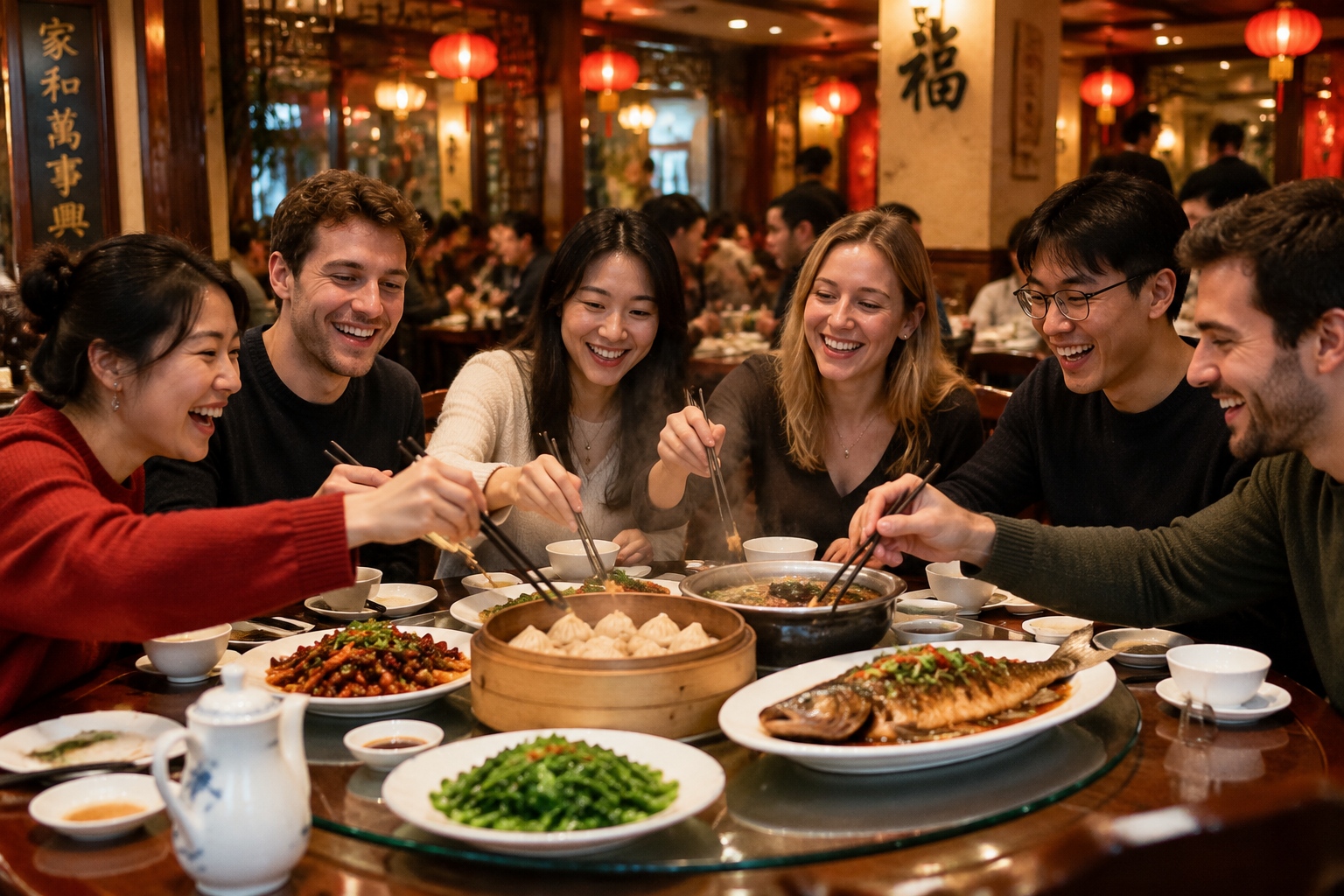

Dinner Is Served—But Where Do You Start?
You arrive at the restaurant, jet-lagged and hungry. The table is round, the center is spinning, and every dish seems to be moving in slow motion. Your host hands you the menu. “What would you like?” A dozen eyes turn to you. You freeze.
If this sounds familiar, you’re not alone. In China, ordering a meal is not just about picking food—it’s a social ritual. Once you understand the unspoken rules, you’ll discover that the chaos has its own logic. This survival guide will walk you through the art of ordering and eating in a Chinese shared-meal setting, so you can relax, and maybe even impress your hosts.
The Spinning Table: The Center of Attention
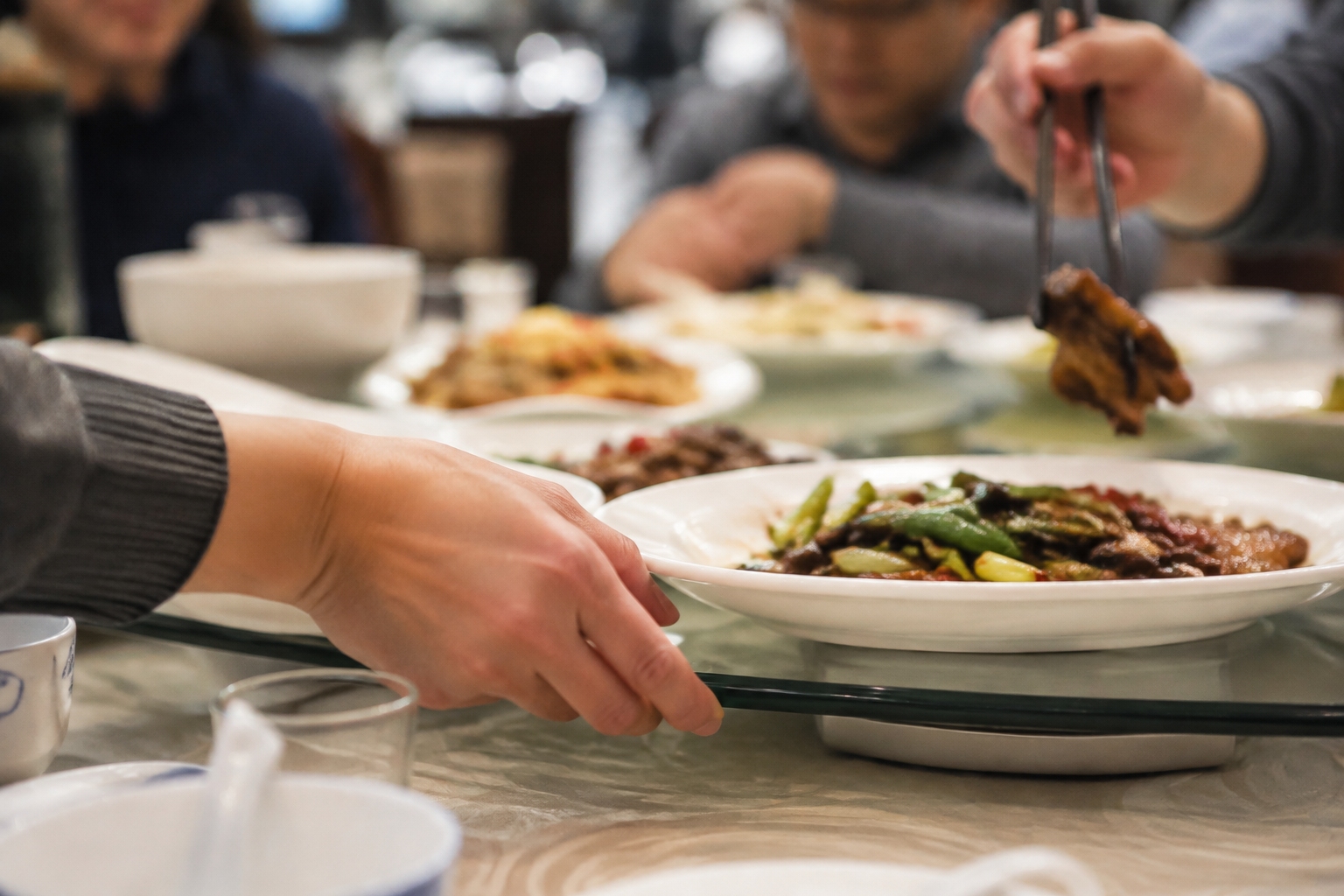
The lazy Susan is both a blessing and a test. It brings every dish to you, but it also demands constant awareness. The golden rule is: turn it clockwise. Why? Probably because most people are right-handed, and it feels natural. But more importantly, don’t turn it while someone is reaching for food. Wait until the chopsticks have landed safely on a piece of fish or a dumpling, then gently rotate the next dish toward yourself.
There’s a moment of panic when you see a dish you really want on the other side of the table. Resist the urge to grab it. Instead, wait for the table to come around, or ask someone next to it to pass it. Yes, it’s slower, but it’s also more polite. And remember: if you’re the one hosting, you’re the de facto table conductor. You set the pace, you make sure everyone gets a taste.
Many Westerners fear the spinning table because they’re used to having their own plate. But here, the table itself is the plate, and the motion is part of the conversation. Once you get the hang of it, you’ll see it’s not about waiting; it’s about taking turns.
How Many Dishes? The Golden Rule
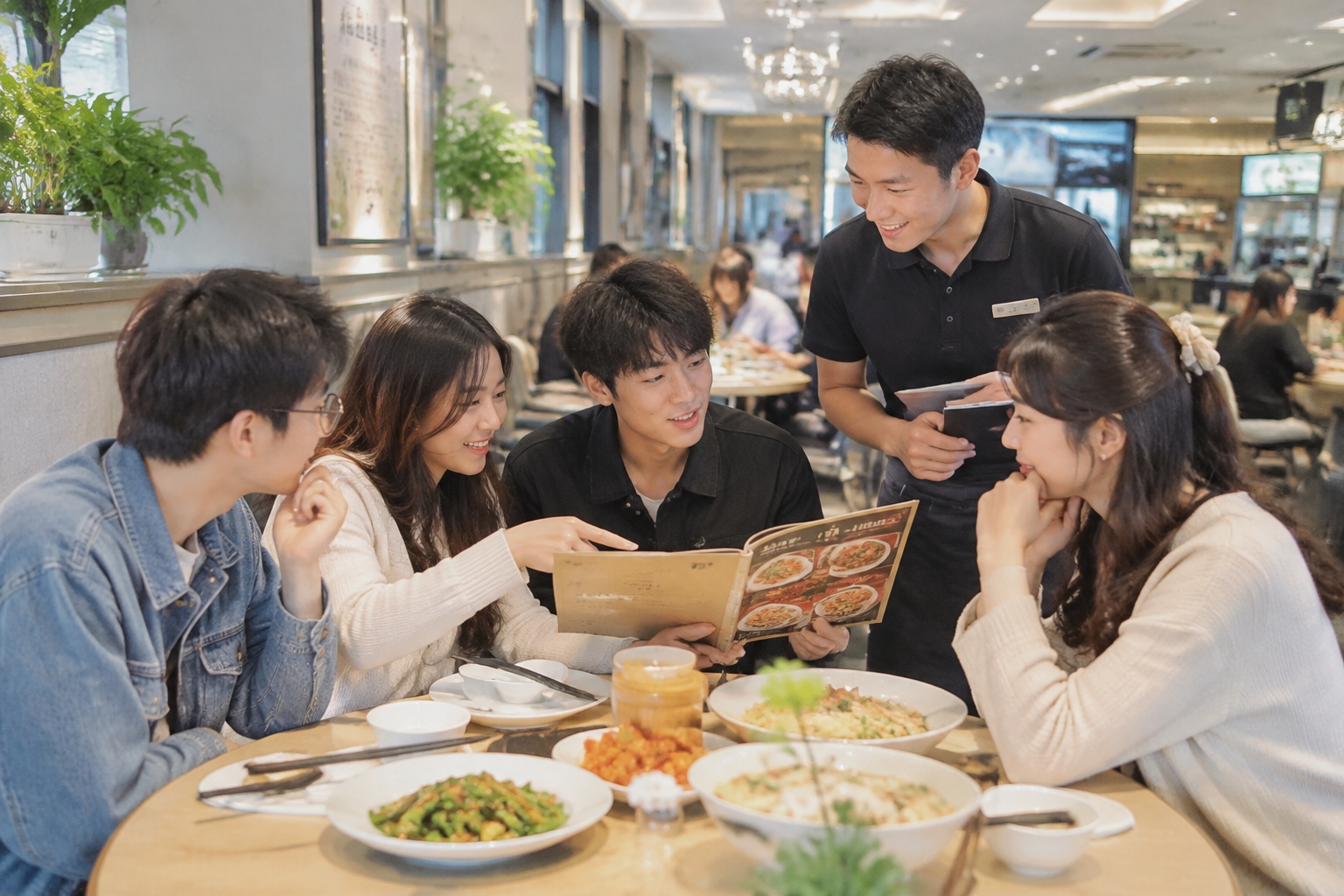
One of the first questions you’ll face as a guest is: “What do you want to order?” But asking that is almost a trap. If you order too little, you seem cheap; order too much, wasteful. The common wisdom is simple: order one dish per person, plus a soup. So if there are four of you, that’s four dishes and a soup. This is the baseline, and you can adjust upward based on appetite and mood.
But there’s a catch. Chinese hosts often order more than the table can eat. It’s a sign of generosity, and leaving a little food actually shows that the host provided enough. So don’t be shocked if you end up with eight dishes for three people. The key is to understand the logic: you’re not just filling stomachs; you’re feeding relationships.
When you’re ordering, think about balance. You want variety: a meat dish, a poultry or fish dish, a vegetable dish, and something with eggs or tofu. And always, a soup. Soup is the digital clock of the meal—it marks the beginning and the end. If you’re lost, just ask the waiter for recommendations; they’ve seen it all.
Decoding “Suibian”: The Magic Word
When someone asks you what you’d like to eat and you say “suibian” (随便), you’re not being lazy. You’re actually expressing trust. Suibian means “whatever you feel like ordering, I’ll be happy.” It’s a polite way to hand the decision back to the person who asked. But it can create a paradox: if everyone says suibian, who decides?
The trick is to make it easier for the other person. Instead of just saying “suibian,” you can say “I’m not sure, but I love spicy food” or “Anything with vegetables sounds great.” That gives your host a clue without burdening them. And if you’re the host, and someone says suibian to you, don’t push them for a specific answer. You can pick two or three items and ask, “Would you prefer this or that?” That’s the polite move.
For foreigners, “suibian” often sounds evasive or indecisive. But in China, it’s a social lubricant. It says, “I trust your taste, so please take the lead.” Once you understand that, it stops being annoying and becomes a compliment.
Who Picks Up Chopsticks First?
In many Western meals, everyone starts eating when their food arrives. In China, the meal officially begins when the host, or the most senior person, picks up their chopsticks. This is a sign of respect. If you’re a guest, watch for the host to say something like “来来来, eat, eat!” or just take a bite. Then you can dive in.
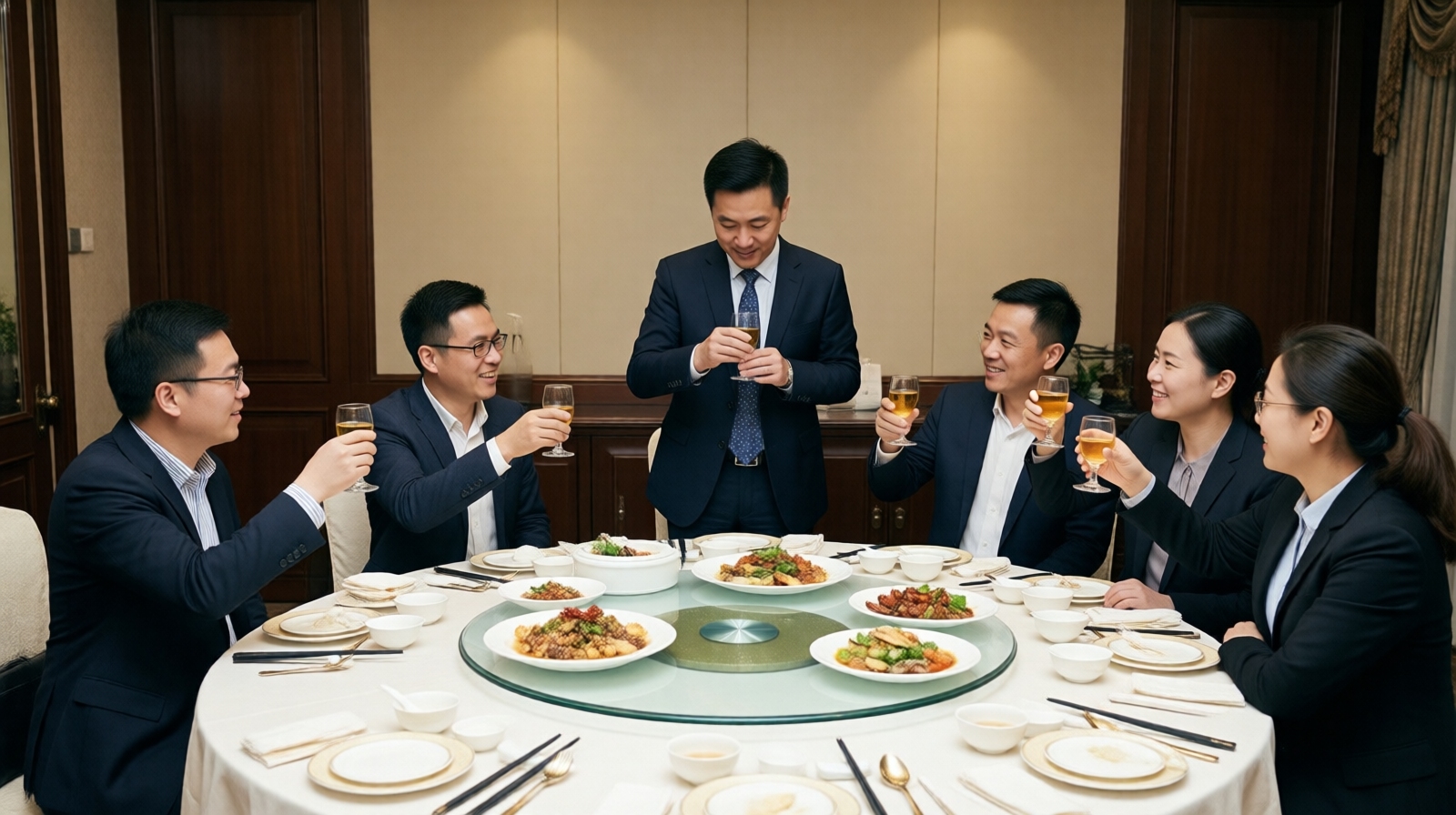
But there’s nuance. If there are elderly people, they should be served first. You can even pick up a piece of food and place it on their plate as a gesture of respect. It’s not mandatory for foreigners, but it’s noticed. Also, when the host toasts you, you should stand up (or at least raise your glass) and clink your glass lower than theirs if they’re your senior. The table is a stage for hierarchy, but it’s a friendly kind—everyone knows their role, and that creates a comfortable rhythm.
One common misconception is that this hierarchy means you can’t relax. Actually, it’s the opposite. Knowing who goes first frees you from guessing. You just follow the flow, and soon everyone is laughing and sharing stories.
Different Tables, Different Rules
Not all shared meals are the same. Let’s break it down:
With Friends
Rules are relaxed. You can eat fast, grab the last dumpling, and joke around. Even the spinning table can become a weapon in a playful tug-of-war. The key is casual fun.
With Family
Respect starts to matter. Elders get the best seats, and the host usually orders familiar dishes that everyone loves. If you’re a guest, bring a small gift like fruit or dessert, but don’t stress too much.
Business Meals
This is where the full protocol comes into play. The host orders for the whole table, often asking for suggestions but making the final call. You’ll notice that people don’t start eating until the host does. Your glass is always topped up, and toasting is a dance. If someone toasts you, you should toast back—and if you’re unsure about the rules, just follow what others do.
Across all scenarios, there’s one universal rule: be observant. Watch what others do, and you’ll quickly find your rhythm.
Embrace the Shared Table
The shared meal is more than a way to eat. It’s a micro-universe of Chinese social logic: generosity, hierarchy, and reciprocity. As a foreigner, you don’t need to be an expert. You just need to show up with an open mind and a willingness to learn. Order a few dishes, spin the table clockwise, and when someone says “suibian,” smile and make a choice. You may not master every rule, but you’ll definitely enjoy the food—and the company.
So next time you’re invited to a Chinese dinner, don’t panic. See it as an adventure. And when in doubt, just ask. Your hosts will be more than happy to explain, as long as you don’t keep the table waiting too long.
If you remember nothing else: one dish per person, clockwise spinning, and never say “I dunno” to “suibian.”
Start the discussion at forum.chinacomes.com