
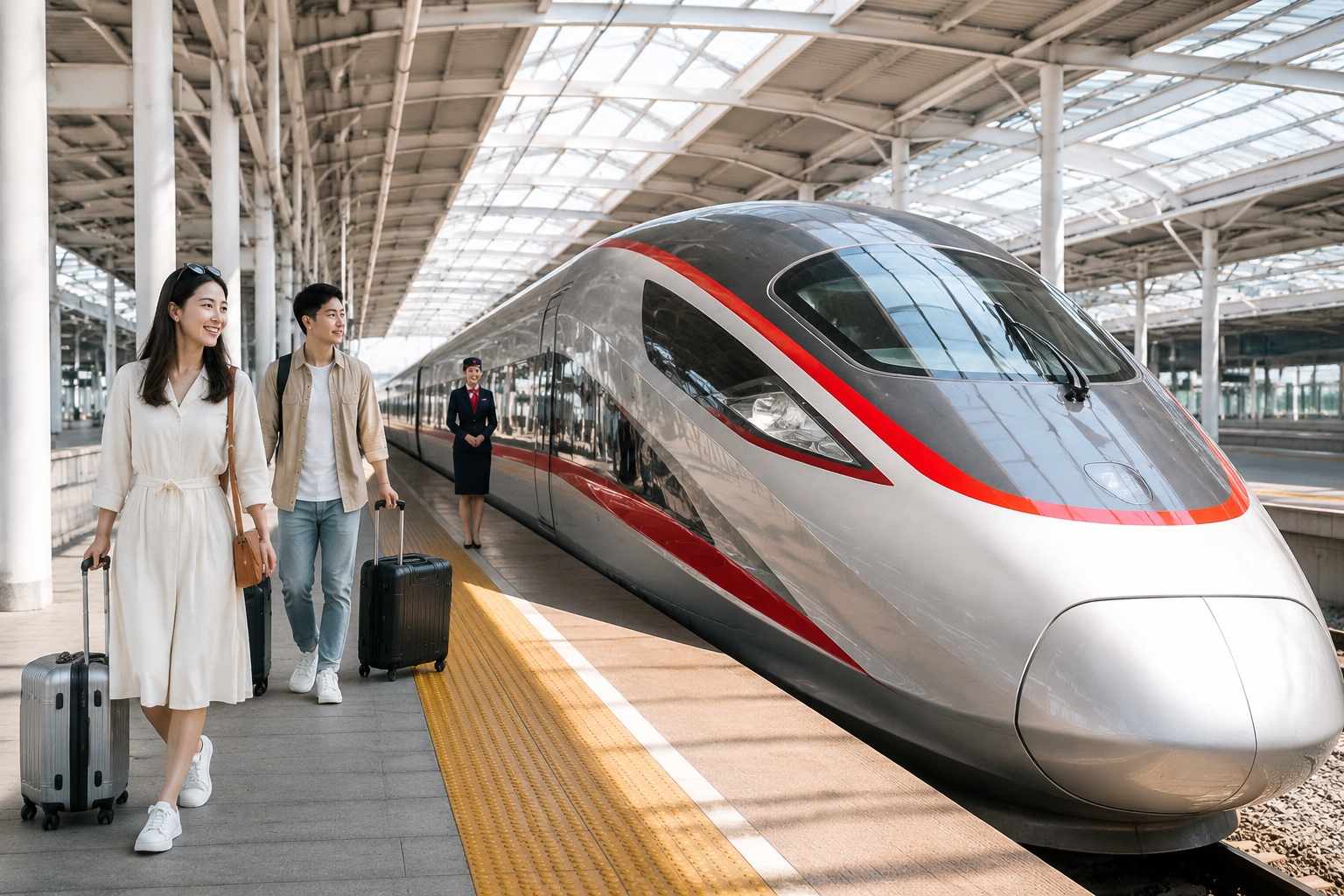

An Ordinary Morning at Beijing South Station
At 8:15 a.m. on a Tuesday, Zhang Wei taps her phone against the ticket gate at Beijing South Station. She doesn’t pull out a paper ticket or wait for a clerk to scan it. The gates slide open, and she heads to Platform 10. She’s a commuter who lives in Beijing but works in Tianjin, a 30-minute high-speed rail ride away. In many countries, that sort of daily commute would be unthinkable. In China, it’s just part of life for millions of people.
China now operates more than 45,000 kilometers of high-speed rail, making up over 70% of the world’s total. The trains are fast, safe, and frequent. But when you ask ordinary passengers what they care about, they rarely start with the network size. They talk about whether their train is on time, whether they can get a ticket, and whether there’s a power socket at their seat. This article looks at the passenger experience behind the record-breaking numbers.
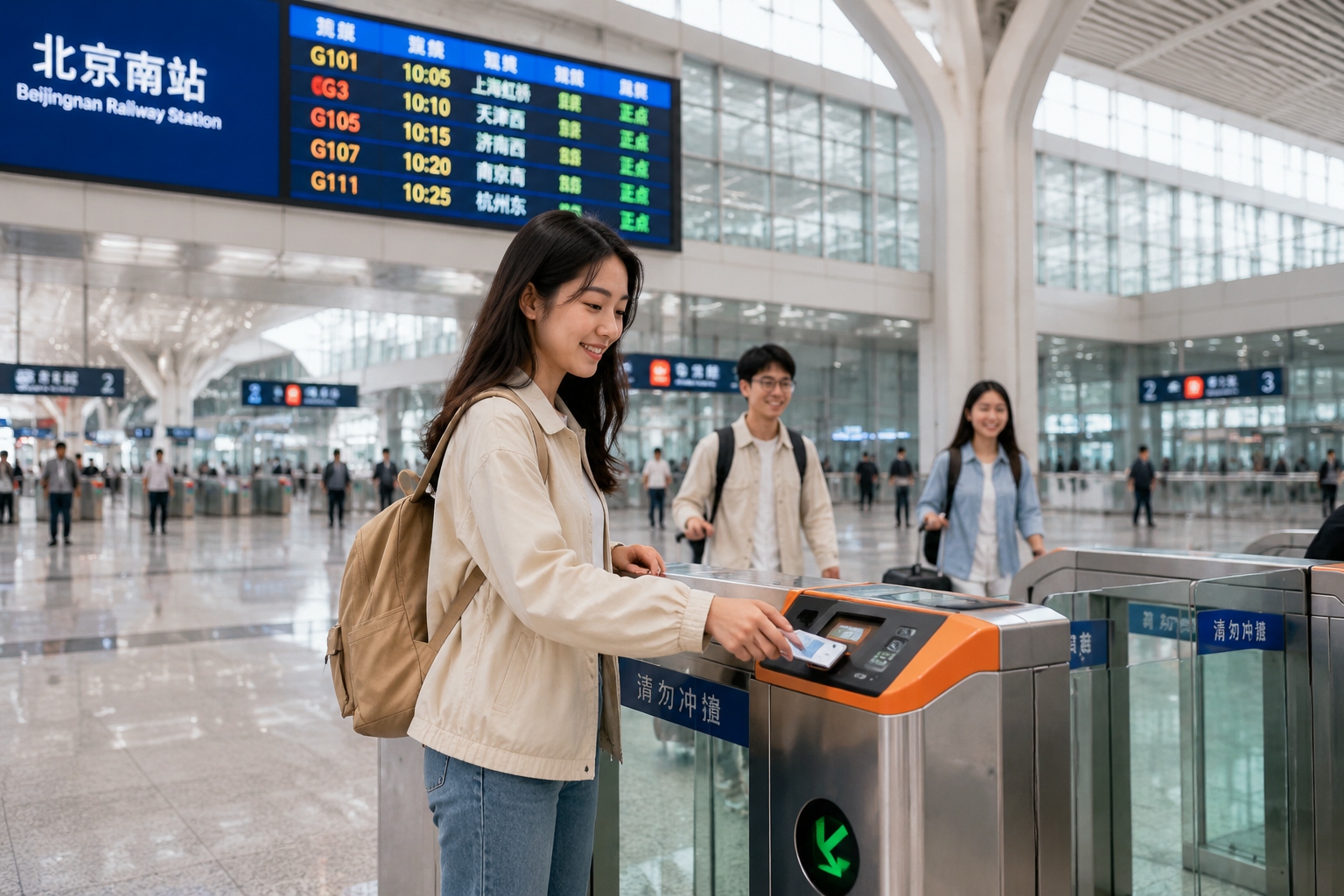
Ticketing: A Phone Is All You Need
The first thing a regular passenger notices is how simple it is to buy a ticket. The official railway app, known as 12306, handles most bookings. Five years ago, travelers often had to queue at stations or use third-party websites. Today, over 85% of tickets are purchased online, and for most high-speed routes, you don’t even need a paper ticket. An ID card or the QR code on a phone is enough to pass through the gates.
There’s also a “waiting list” system called alternate booking. If no seats are left, you can indicate a preference for time and class, and the system will automatically grab a ticket if another passenger cancels. This feature has saved many a last-minute trip.
For frequent travelers, the app can remember your usual routes and even make repeat bookings in a couple of taps. The entire process feels less like bureaucratic red tape and more like ordering a meal in a delivery app.
Punctuality: Time Is the Real Currency
For business travelers and commuters, punctuality matters more than speed. Chinese high-speed trains boast an average on-time arrival rate above 98%, according to railway operators. On many popular routes, trains run every few minutes during peak hours. If you miss one, you usually don’t need to wait long for the next. That sort of reliability changes how people plan their days.
In a country where meetings start on the minute, the punctual high-speed rail network has become a part of business etiquette. It’s not unusual for a deal to be closed in a city 100 kilometers away and for the negotiator to be back for dinner at home.
During major holidays, the railway adds extra temporary trains to meet the surge in demand, and the official app shows real-time delay information. Even in the peak season, most high-speed services run within 5 minutes of schedule.
The Station Experience: Big but Efficient
Chinese high-speed rail stations are often vast. Beijing South, for example, can handle tens of thousands of passengers an hour. But the experience is designed to move people quickly. Security checks are streamlined, signs are bilingual, and many stations have dedicated channels for passengers with no luggage. Even at giant hubs like Shanghai Hongqiao, the average time from entering the station to reaching the platform is around 15 minutes for those who know the route.
For connecting trips, major stations provide clear transfer guides and moving walkways. In some places, you can switch from a high-speed train to a domestic flight, metro, or long-distance bus within the same complex. Accessibility is also a priority: there are ramps and lifts everywhere, and staff are quick to help passengers who need extra assistance.
Despite the crowds during rush hours, the flow feels organized. Digital screens above each gate show the train number and carriage position, so you know exactly where to stand.
On Board: Comfort in the Details
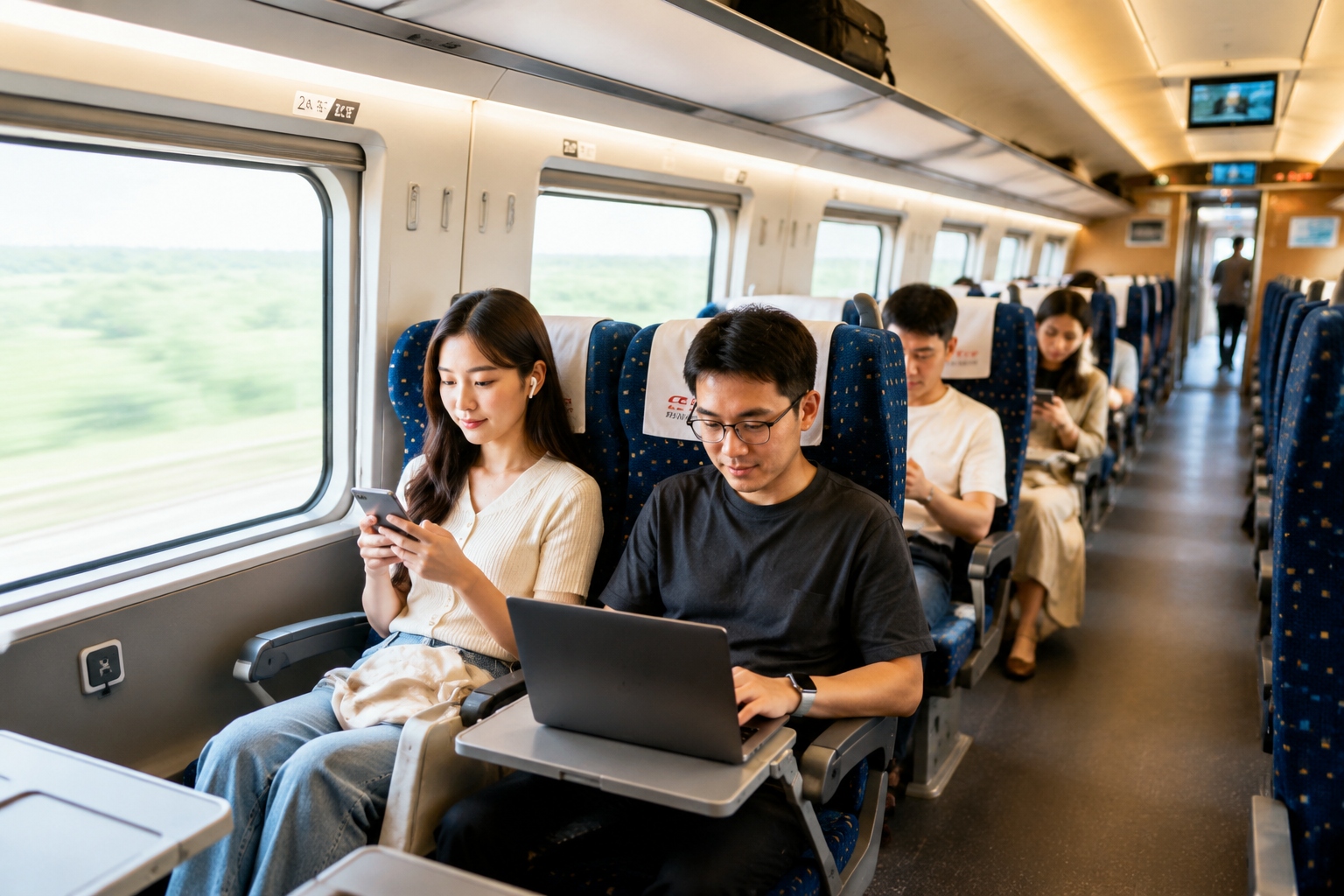
Once on the train, different classes offer different experiences. But even in second class, the standard is decent. Seats have at least some legroom, fold-out tables, and power sockets. Wi-Fi is available on many newer trains, although it can be slow in rural areas. The trains are smooth; you can balance a cup of tea without splashing it. Toilets are cleaned regularly, and there are often vending machines or mobile snack trolleys.
In second class, the seat pitch is around 1020 millimeters (about 40 inches), which is comparable to many airlines’ premium economy. First class offers more room, and business class seats turn into fully flat beds. For those who work on the go, the steady ride and quiet carriages make it easier to open a laptop and take a video call.
Couples and families can choose facing seats on some models, and parents will appreciate the child-friendly facilities. For long journeys, the recline angle and sound insulation are better than on most planes’ economy classes.
Beyond the Train: A Changed Way of Living
High-speed rail has done more than shorten travel times; it has reshaped the geography of daily life. Take a few examples: A worker in Kunshan lives near the Shanghai border and commutes to the city center by train. A family from Nanjing can take a weekend trip to Huangshan and still be home on Sunday evening. A company in Chengdu can recruit talent from Chongqing because the two metropolises are only an hour apart.
Ticket prices, while higher than regular trains, are often cheaper than flights for mid-distance trips when you count time to and from airports. A second-class ticket from Beijing to Shanghai costs around 550 yuan (roughly $75), which is less than a full-fare domestic flight for most dates. And you arrive directly in the city center, not at an airport far outside town.
Compared with driving, high-speed rail is also a stress-free alternative. There is no traffic, no need to find parking, and the time spent on the train can be used for reading, working, or simply resting. For many people, the train has become the default choice for journeys of 300 to 1,500 kilometers.
What Passengers Still Want
Of course, the system isn’t perfect. During the Chinese New Year travel season, tickets for popular routes can sell out in minutes. Some stations get crowded and confusing. Wi-Fi can drop during tunnels, and the on-board dining options are often mediocre. Passengers, in turn, want better food, more direct routes, and even more frequent services. The complaints, however, are the kind that exist in a mature network, not a struggling one. They are complaints about details, not about the core experience.
Conclusion
China’s high-speed rail network is a huge engineering achievement, with more miles than the rest of the world combined. But the reason people actually depend on it is more personal. It’s the comfort of knowing you can book a ticket in your phone, walk into a station minutes before departure, and arrive on time, every time. The numbers are impressive; the daily experience is what earns loyalty.
Start the discussion at forum.chinacomes.com