

A City Built on a Power Cord
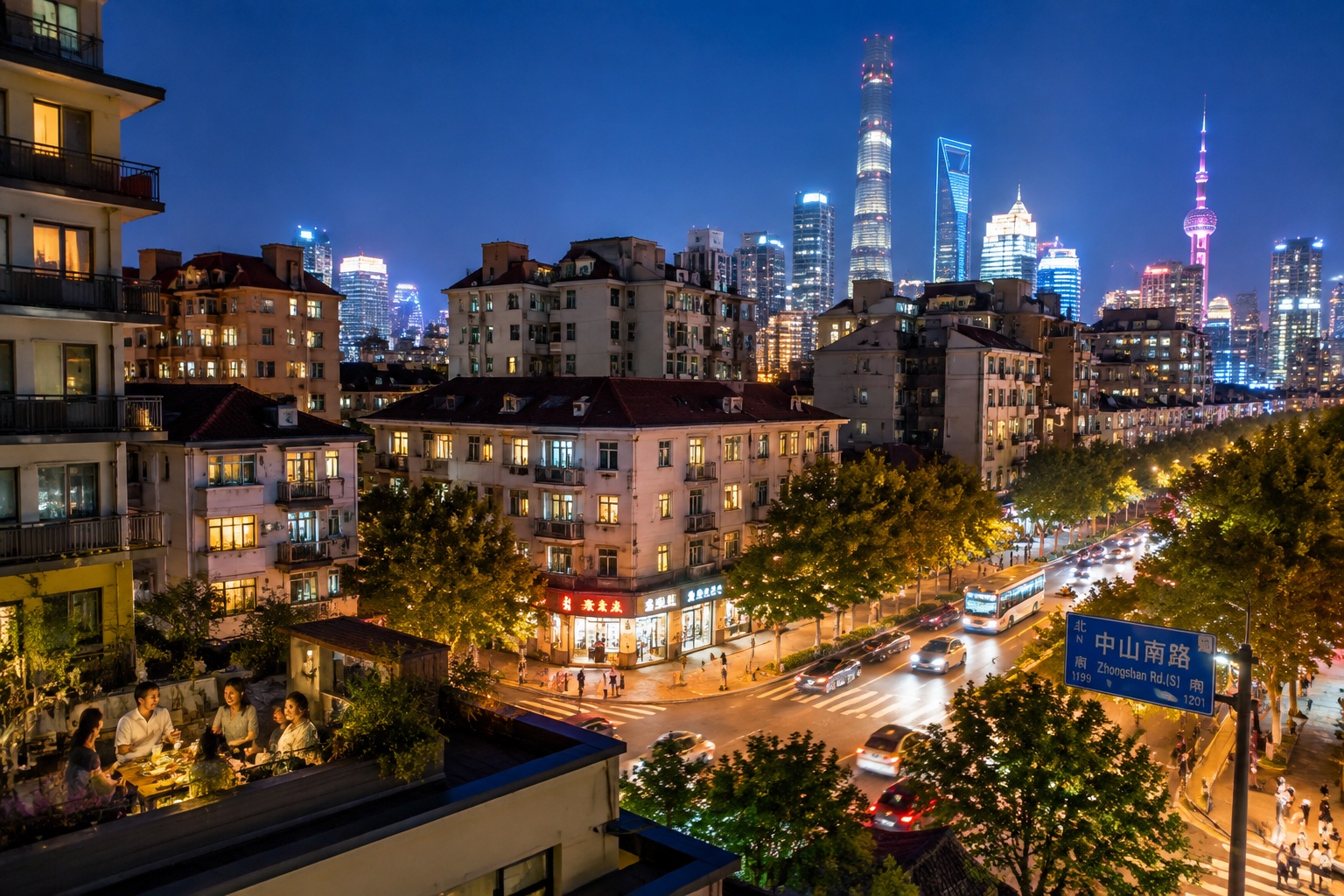
Picture a typical apartment in Shanghai: the evening rush hour, lights glowing, the hum of an air conditioner, a phone charging on the bedside table. Few residents realize that the electricity keeping the city alive may have started its journey 3,000 kilometers away, in the deserts of Xinjiang or the plains of Inner Mongolia. The path from a solar panel in the desert to a socket in Shanghai is one of the most impressive engineering feats of our time.
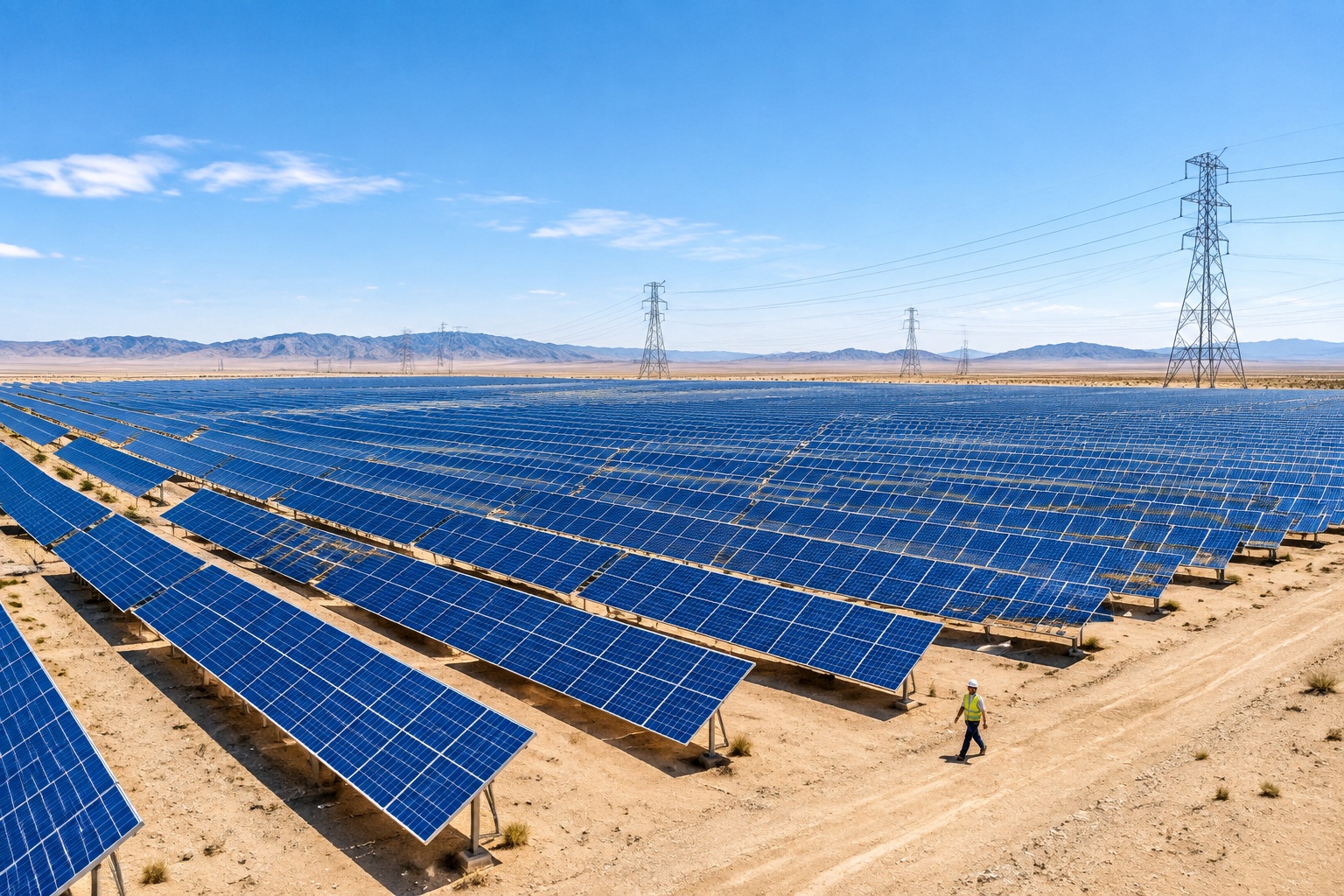
It’s also the reason you can think of China’s western provinces as a giant power bank for the coast. When the sun shines during the day, solar farms in the Gobi Desert produce enormous amounts of electricity. Some of it is used immediately, but a large portion is stored in massive battery banks and pumped-storage facilities—think of it as a battery the size of a small town. Then, when Shanghai hits its evening peak, that stored energy is released and sent across the country through ultra-high-voltage transmission lines.
The Power Bank Analogy, Made Practical
A power bank does three things: it stores energy, it delivers it when you need it, and it does so without a surge or a drop. The system connecting the desert and Shanghai does exactly the same, just on a scale that’s hard to wrap your head around.
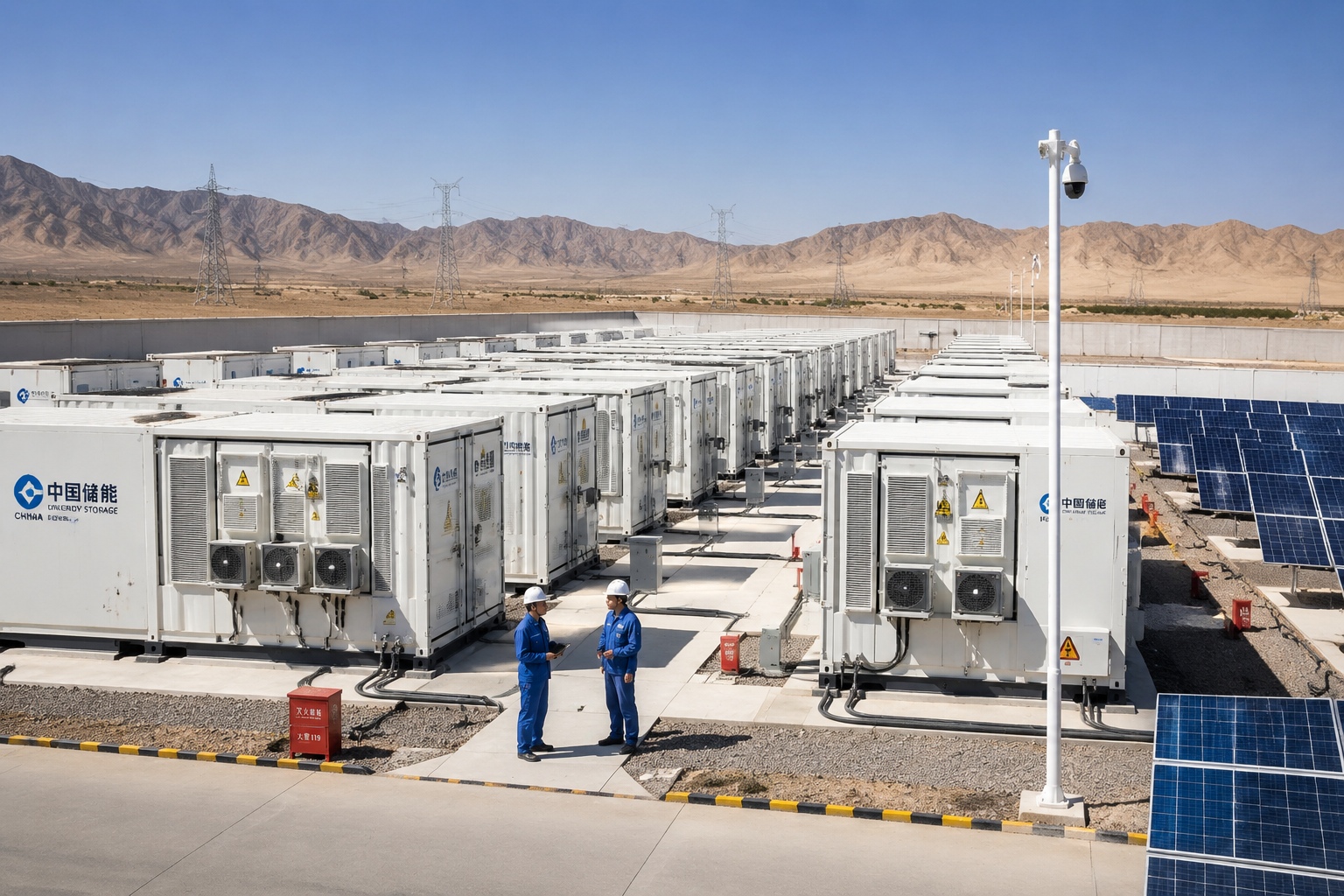
The storage part is not one unit. It includes lithium-ion battery stations—some as large as football fields—and pumped-hydro plants where water is pumped uphill during surplus hours and released through turbines when demand is high. Together, they let grid operators smooth out the sun’s tantrums: clouds pass, power dips; solar output falls at dusk; between 6 and 9 p.m., the whole city seems to switch on at once.
Without storage, a renewable grid would be unreliable. With it, the desert sun can light up a coastal skyscraper after dark.
From Desert Sands to Ultra-High Voltage
Now the transmission part. China has built a network of ultra-high-voltage direct current (UHVDC) lines that are true world records. One of the most famous, the Changji-Guquan line, runs from the edge of the Gobi Desert to Anhui province, covering 3,324 kilometers at ±1,100 kV—the highest voltage in commercial operation anywhere. It can carry up to 12 gigawatts, enough to power more than 50 million homes.
Why so long, and why so high? Because solar and wind resources are abundant in the west, but the big cities are in the east. A UHVDC line loses less than 5% of its energy over a 3,000-kilometer journey, thanks to direct current and high voltage. For comparison, that’s more efficient than a battery, and much more feasible than shipping coal by train.
A Day in the Life of the Grid
So how does a day actually unfold? Let’s step inside the mind of a grid dispatcher—a person who manages the balance between supply and demand with a computer screen and a cool head.
At sunrise in the Gobi, solar farms begin ramping up. By midday, output is huge, and demand in Shanghai is still moderate. The extra power is diverted into storage: batteries charge, water is pumped uphill. As the sun sets and people return home in the east, the controllers start discharging the batteries and opening the gates of the pumped-storage plants. The current flows through the UHVDC lines and arrives in Shanghai just in time for the evening peak.
This invisible dance happens every single day, with the power bank charging during the day and feeding the city at night.
Why This Matters in Real Life
For an ordinary citizen in Shanghai, the most obvious effect is that the lights simply stay on. But there’s more. The shift to this desert-solar-and-storage system actually changes the air they breathe, because every kilowatt-hour delivered this way replaces one that could have come from a coal-fired plant. In 2023, renewables already accounted for about 30% of China’s electricity generation, and projects like this are pushing the number up.
It also makes electricity cheaper in the long run. Solar and wind are now often cheaper to build than coal, and once installed, the fuel is free. The mega-battery approach helps catch every possible electron.
The Hard Parts Nobody Admits
Of course, it’s not simple. Building a globe-scale power bank takes money, land, and coordination. The environmental impact of massive battery production isn’t zero, and recycling is still an unsolved problem. Also, the long transmission lines cross deserts, rivers, and mountains—each kilometer a small engineering epic.
But the biggest challenge may be social: getting local communities to accept the construction of new lines and stations, especially when the benefits are felt thousands of kilometers away. China has an advantage in this regard because public land ownership and centralized planning can speed things up. That also means projects move quickly, but sometimes at the cost of local voices.
For now, the system works. The power bank spreads risk and keeps Shanghai connected to the sunniest corners of the country.
What’s Next: A Longer, Smarter Power Bank
China isn’t stopping. There are plans for slightly shorter but still monstrous UHVDC lines, plus more grid-scale storage sites. Some are experimenting with compressed-air storage in salt caverns, others with giant flow batteries. There’s even talk of connecting East China to the far west of Mongolia, a country that could become a solar hub for the region.
The dream is to make renewables as stable as coal. With this generation of “power banks,” the country is trying to do just that.
Conclusion
The next time you’re in Shanghai and you plug in your phone, take a minute to think about the journey that electricity may have taken: born from sunlight in a desert, stored in a battery, and squeezed through some of the world’s most advanced power lines—all to arrive in the palm of your hand. That’s not just engineering; it’s a story about how a country can change its energy future in one generation. And it all starts with a simple idea: a giant power bank to keep the megacity humming.
Start the discussion at forum.chinacomes.com