


Two Career Scripts in One Family
In the early 1990s, most Chinese families thought about work in a very different way. A young person dreamed of landing a job in a state-owned factory or government office, often called an “iron rice bowl.” The phrase meant a position that was almost impossible to lose: pay was low, but the employer provided housing, medical care, pension, and even your children’s kindergarten. In return, you gave the organization your entire working life.
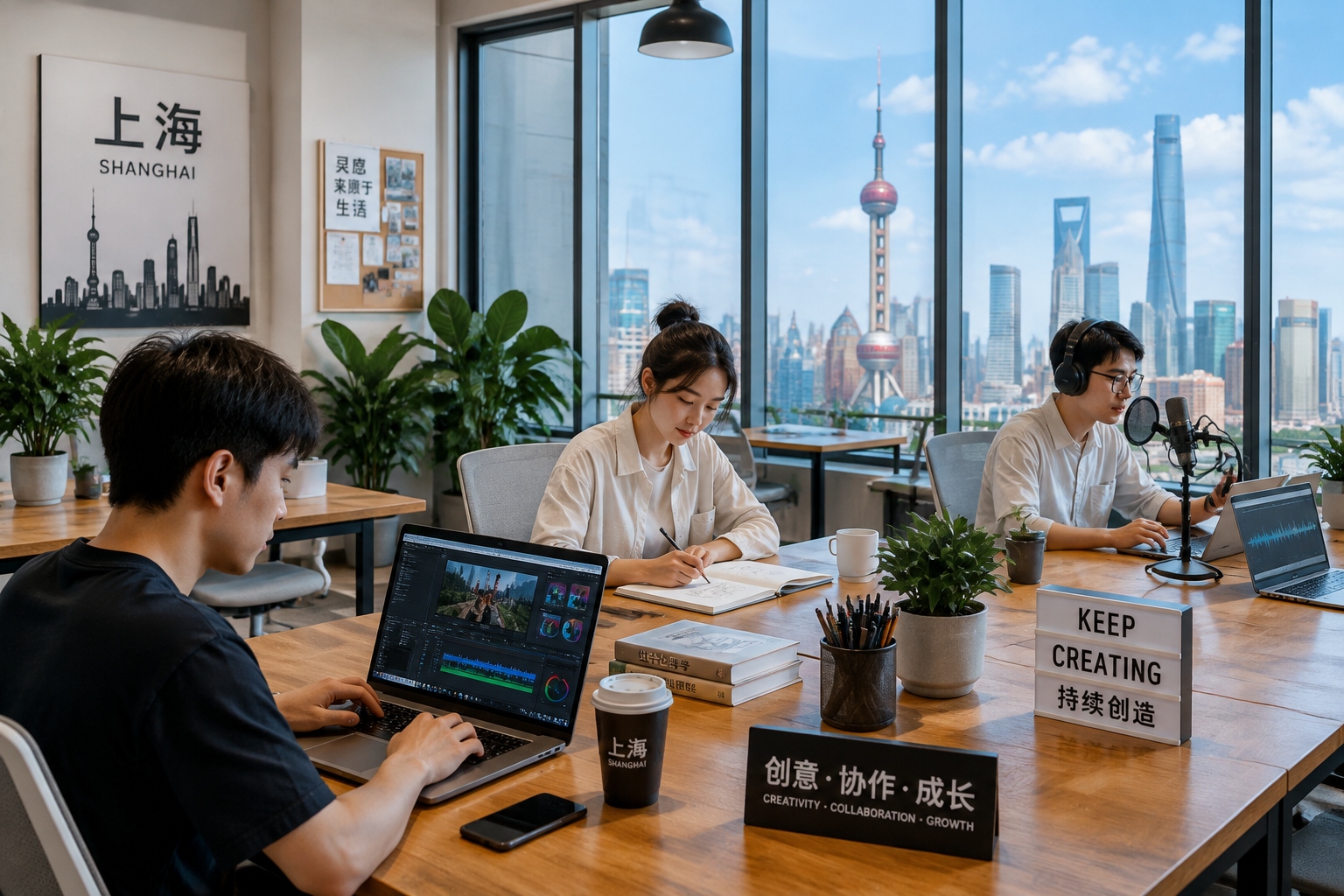
Today, walk into any co-working space in Shanghai or Shenzhen and you will hear different conversations. A product designer may also be a podcast host. A real estate agent might sell insurance certificates online in the evening. A university administrator could teach an online course on weekends. These are not side jobs for a few bored individuals—they are part of a growing social trend known as “slash youth” (斜杠青年, xié gàng qīngnián), a term borrowed from the forward slash used to separate different identities in a bio.
When a Job Was a Lifetime Contract
To understand why the shift matters, it helps to remember what the iron rice bowl actually meant. The country’s planned economy assigned workers to jobs, often for life. If you were recruited by a state company in 1985, your file—an official paper record of your work history—would follow you for decades. Your housing depended on the factory, and so did your children’s schooling. Job security was not a nice-to-have; it was the spine of a person’s social identity.
Public-sector employees often had “positions” rather than careers. You did not negotiate salary much, and promotion depended on seniority. In exchange, you accepted a gentle but persistent limitation: changing employers was difficult, and starting something new was riskier. The system provided stability, but it also made individual initiative less necessary.
The first cracks appeared in the 1990s, when state-owned enterprises laid off around 28 million workers as the economy was restructured. For many families, the iron rice bowl broke suddenly. That moment taught a generation that no employer—state or private—would guarantee a future forever.
What Exactly Is a Slash Youth?
“Slash youth” entered everyday Chinese conversation around 2015, popularized by articles about young people who refuse to be defined by a single job title. The basic idea is simple: one person holds several professional identities at the same time. A typical bio might read “Content creator / yoga instructor / travel photographer.” Instead of climbing one corporate ladder, slash youths build their own portfolio of income sources, skills, and social connections.
Today the term includes people far beyond the narrow youth category. Retired engineers teach on paid Q&A platforms. Mothers create pop-up bakery services. Recent graduates spend mornings at freelance design studios and evenings operating vlogs. The slash is not just a job arrangement—it is a psychological distance from the old world where a single employer determined your worth.
Three Paychecks, One Calendar
Chen Yue, 29, lives in Nanjing and is a typical slash youth. She spends Monday to Thursday working as a communication specialist at a foreign company. On Fridays, she takes a train to Anhui, where she works as a co-host for a local wedding planning studio. Between tasks, she edits videos for a small skincare blogger. Her monthly income is roughly 60 percent salary, 25 percent weekends, and 15 percent side projects. “The safest thing I can do is not rely on one company anymore,” she said during a phone interview.
Another example is 33-year-old Zhao Qiang in Guangzhou. He studied labor law and by day advises construction workers on employment contracts. On weekend mornings, he leads city cycling tours that he advertises on Xiaohongshu, a lifestyle app. In the evenings, he publishes short videos that explain labor rights. “I grew up hearing my father say that a strong man has no bad skills,” he says. “My father meant one solid skill. I take it as having several weak ones that add up.”

The Forces That Pushed People Toward the Slash
Several structural changes made this possible. First, digital platforms have lowered the barrier to earning outside a formal workplace. A university student can start an online course store or a paid audiobook channel with a few hundred yuan. According to official data, China’s “flexible employment” population has already surpassed 200 million—more than one in four workers. The term covers food delivery riders, livestream sellers, freelancers, and part-time consultants, reflecting a huge grey zone between traditional employment and running your own business.
Second, education has expanded rapidly. China now produces more than ten million university graduates every year. With so many educated young people, there are not enough comfortable corporate chairs for everyone. Employers have become pickier, and many graduates have realized they cannot expect to stay in one company for a lifetime, as their parents did. Higher education also teaches stronger communication and digital skills, which makes side activity possible.
Third, safety nets have moved away from the old employer-based model. In the past, losing one job meant losing your housing, your children’s access to a good school, and your pension. Today, social benefits are managed at the city level and can be transferred. Many slash youths buy their own insurance through flexible-employment schemes. It is not as generous as the old full-time package, but it creates more room to experiment.
Finally, the desire for autonomy plays a significant role. Spending hours in traffic everyday to sit in an office felt much less meaningful to a generation that grew up with smartphones, online communities, and the belief that identities should be personal choices, not administrative categories. A 2023 survey by a Chinese HR platform found that nearly 70 percent of young respondents said they would like to generate income from more than one source, often because they wanted to feel in control of their own time.
Freedom With Fine Print
It would be misleading to describe the slash lifestyle purely as liberation. Many workers in the gig economy face long hours, unstable income, and no paid leave. For every successful “slash youth” earning five streams of income, there are others who simply work two full-time-equivalent jobs just to keep up with rent. Lifestyle coaches often exaggerate the romance, but most practitioners are realistic about the grind.
There is also cultural pressure. A 55-year-old parent in a small city still finds it strange to say that a son is “company operations manager and a wedding MC.” Family dinners can become awkward when relatives ask: “What is your real job?” The phrase “real job” carries the memory of the iron rice bowl—a stable, recognizable position that outsiders respect.
This tension is not unique to China, but its Chinese version is distinctive because the old system was so complete. Almost every adult remembers a relative who worked in one factory for 40 years and still receives a pension from it. Those memories make the new flexibility both exciting and slightly frightening.
A Portfolio of Smaller Plates
Some analysts argue that the decline of the iron rice bowl signals a crisis of social trust. Others see growing individualism and entrepreneurial energy. The more balanced view is that China is in the middle of a generational transition from waiting for a stable rice bowl to assembling many smaller, imperfect plates. That transition involves gains in personal freedom and losses in institutional protection.
For overseas readers, the key is not to see slash youth as a trendy social media buzzword. It is a practical answer to a changed economic landscape. When lifelong job security became impossible, young Chinese chose to build security out of skills, networks, and portability. The new normal is not the end of stability as an ideal. It is a redefinition: from one job that defines your life to multiple jobs that, together, form your safety net.
Start the discussion at forum.chinacomes.com