

A Winter Wonderland in a Shopping Mall
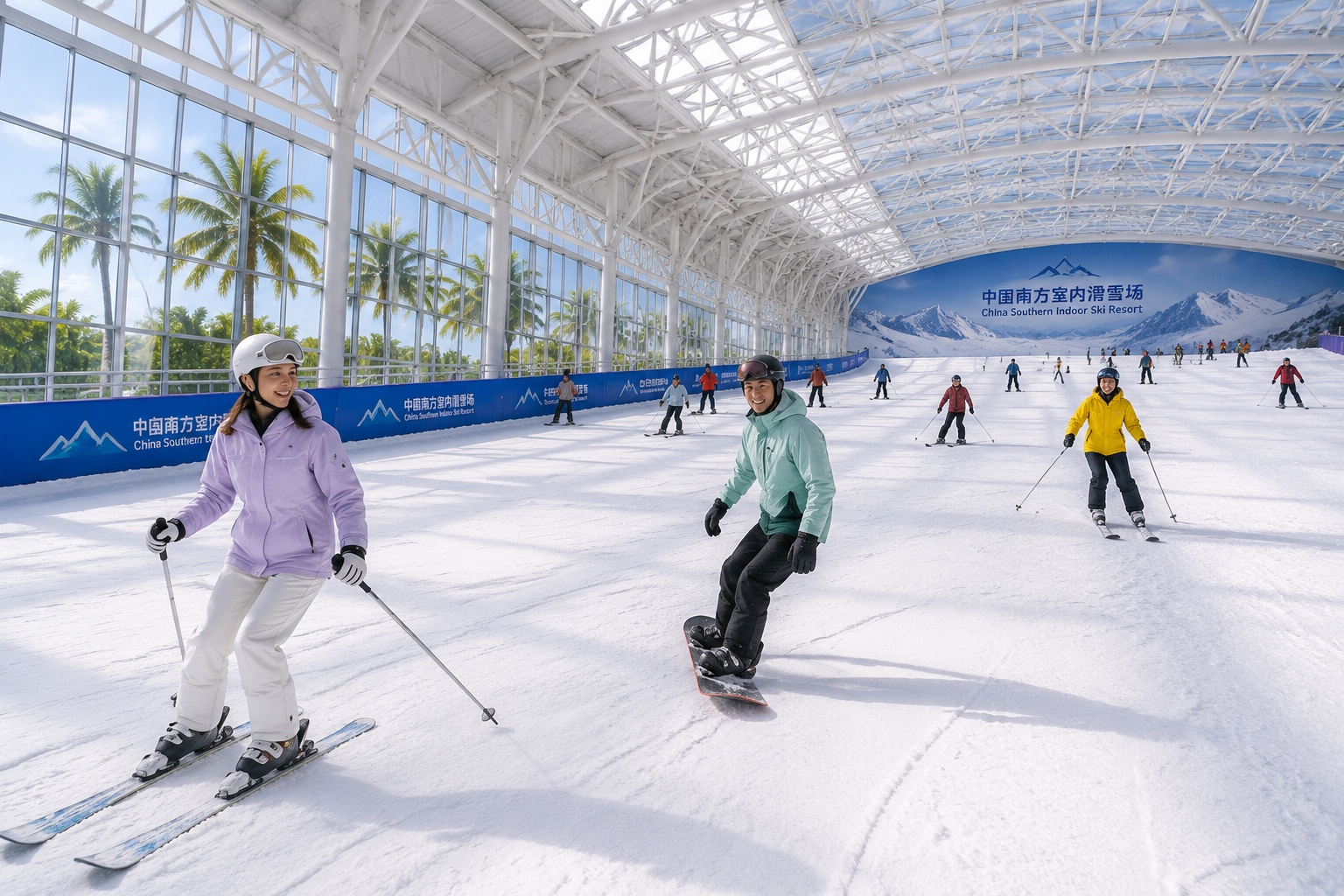
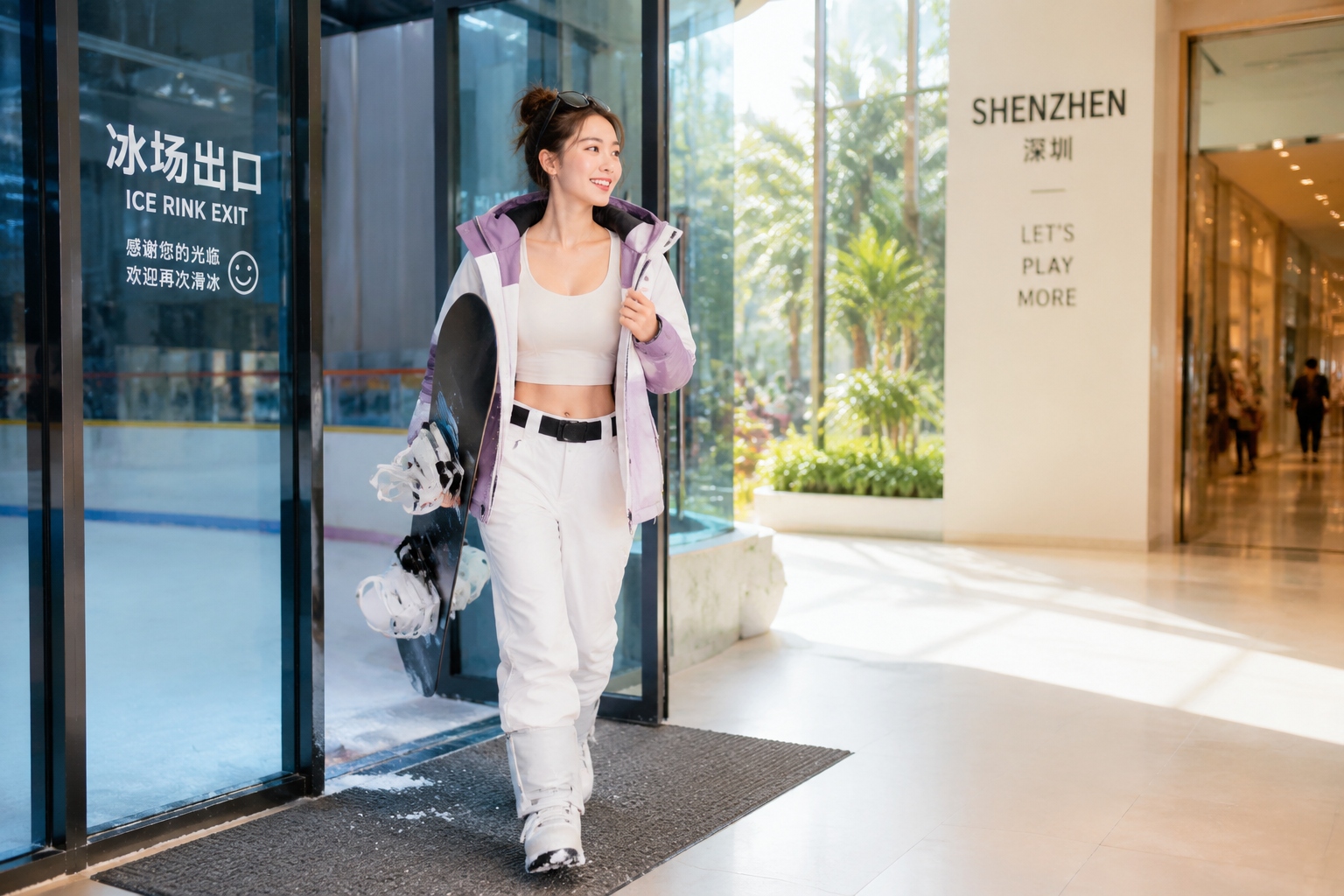
Shenzhen, a metropolis on China’s southern coast, rarely sees temperatures below 10 degrees Celsius. The humidity is punishing, and it almost never snows. Yet on any given Saturday, queues form outside a ski resort inside the MixC shopping complex. Visitors step out of the summer heat into a cavernous hall kept at minus five degrees. They rent jackets, boots, and snowboards, then shuffle through a snow door onto a real slope.
One of them is 27-year-old marketing executive Chen Jie. “I first tried snowboarding in Harbin three years ago, but it’s a two-day trip just to get there and back,” she says. “Now I ski most weekends without leaving the city.” Chen is part of a quiet but dramatic shift: Skiing, once the preserve of China’s freezing north, is becoming a year-round activity in the tropical south.
Why China’s Ski Map Is Moving South
For decades, Chinese winter sports were synonymous with the northeast provinces — Heilongjiang, Jilin, and Liaoning — where snow banks pile up naturally. The Winter Olympics in Beijing in 2022 gave the industry a national push, but it was an unlikely region that grabbed the momentum: the Pearl River Delta in southern Guangdong province, home to Shenzhen, Guangzhou, and Hong Kong.
The reason is a special kind of infrastructure: large indoor snow resorts built inside shopping malls or entertainment complexes. They are not novelty ice rinks or small plastic-slope simulators. The best of them are full-scale mountains-in-a-box, with real snow, multiple runs, ski lifts, and even terrain parks.
China now has more indoor ski facilities than any other country. According to the China Ski Industry White Paper published by the Tang Jian Gang Sports Industry, there were 50 operating indoor ski resorts as of the 2022–2023 season, and at least another 20 are in planning or construction. Guangdong alone counts seven such venues, with several clustered around the Greater Bay Area metropolitan region.
The Numbers Behind the Snow Rush
The growth has been astonishing. In 2023, skier visits to indoor snow venues in southern China jumped by nearly 60% compared to the previous year, according to regional tourism data. The largest indoor resort in the Greater Bay Area — located in Guangzhou, a 30-minute high-speed train ride from Shenzhen — spans 75,000 square metres and can hold close to 10,000 visitors a day. During the peak winter season and school holidays, it sells out days in advance.
For Shenzheners, the convenience is a major draw. “From the center of Shenzhen to this resort is around two hours by train and metro,” says Chen Jie. “It takes less time than getting to the airport and boarding a flight to the north.” The price is also reasonable: a full-day beginner package, including equipment rental, costs around ¥300–500 (roughly $40–70). Flights to Harbin can cost twice that before you buy a lift ticket.
These numbers are reshaping the demographics of skiing in China. A 2023 industry report from the Chinese Ski Association stated that the southern provinces now account for over 30% of all new skier registrations, and most of them are under 35 years old.
Keeping the Cold In: How It Works
Building a ski slope in a city where the average annual high temperature is 26°C is an engineering challenge. The core technology is a powerful cooling system that circulates refrigerant through massive pipes buried beneath the snow. Modern facilities also rely on high-tech insulation: the walls are often sandwiched with 10-centimetre-thick panels that trap the cold air while the heat from the outside world never gets a chance to seep in.
Energy consumption used to be the biggest barrier. Early indoor ski venues in China were notoriously expensive to run, with some shutting down after a few years. But improvements in compressor efficiency and humidity control have cut energy use by as much as 35% since 2015, says Wang Lei, an engineer who has worked on three indoor resort projects in southern China. Some new projects are even experimenting with solar panels on the roof to feed the refrigeration plant, as well as heat recovery systems that use waste heat for the surrounding shops and restaurants.
“We’re not just building a ski resort,” Wang explains. “We’re building a high-tech climate machine that runs 24/7. The ski slope is the product, but the real technology is in the basement, in the cooling loops, in the control systems.”
More Than a Slopes: A New Form of Urban Entertainment
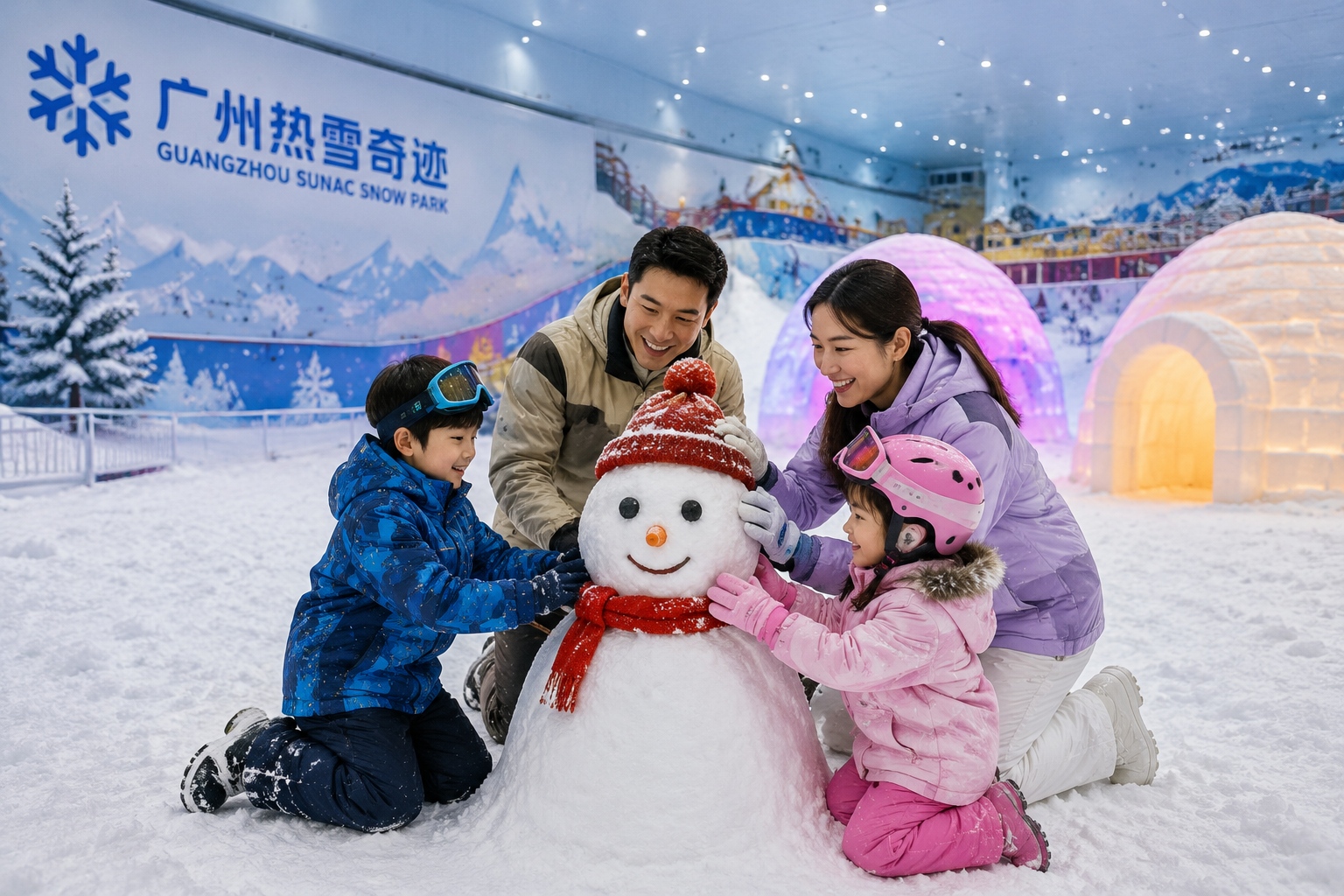
Indoor ski resorts are marketed as “polar zones” or “snow towns.” Around the main run, you’ll usually find a children’s snow playground, a snowman-building area, igloo-style cafes, and even simulated avalanche tubes. For families with young kids, this is a magical weekend escape that doesn’t require a plane ticket.
The commercial potential is huge. Developers pack these venues into larger “formats” along with roller rinks, cinemas, and shopping outlets. A popular model is an integrated resort where the snow area is the anchor attraction, surrounded by restaurants and retail. Business observers note that ski resorts can increase foot traffic in a shopping district by 30–50% during the first year, encouraging developers to invest.
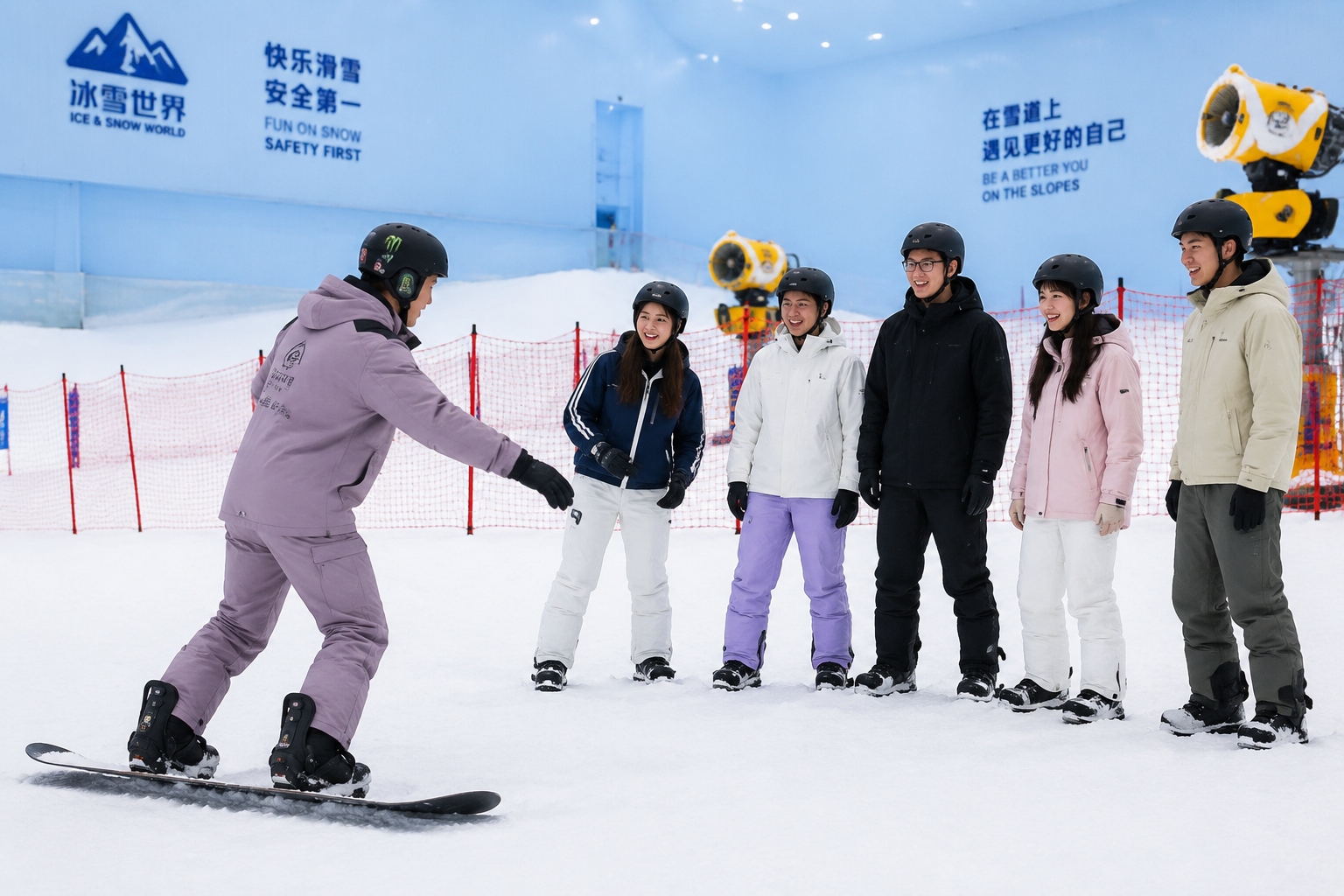
Ski schools are a significant revenue stream. In Shenzhen, course fees for a five-session beginner class usually cost between ¥1,500 and ¥3,000 (about $200–420), and many schools are booked out every month. “I learned to ski here with my daughter,” says a father at one of the Shenzhen resorts. “We drive 20 minutes from our home. It’s like having a ski weekend every Saturday.”
From Novelty to Lifestyle
The rise of indoor skiing mirrors a broader transformation in China’s consumer culture. As income levels rise, urbanites are spending less on imported luxury goods and more on memorable experiences. Skiing, in particular, fits the Instagram generation. Short Chinese video platforms are teeming with clips of young people performing tricks on snow — many shot indoors.
That visibility has turned snowboarding into a socially desirable hobby. It also encourages people to exercise. The Chinese government has actively promoted winter sports, aiming for “300 million people participating in snow and ice activities.” Indoor facilities make this possible in places where it never snows, literally changing the map of winter sports.
Challenges and the Road Ahead
Still, the indoor snow business is not without limits. Operating costs are high, and profitability depends on maintaining steady visitor numbers throughout the year. Some smaller facilities struggle to compete with the big players. Weather also matters: on sunny weekends people might choose the beach instead. There is also the environmental concern — the electricity used to make snow creates a carbon footprint, which sits uneasily with China’s carbon neutrality goals.
Developers are aware of the criticism. The industry is exploring low-carbon technologies, including seasonal energy storage and more eco-friendly refrigerants. “In the future, we may see ski resorts entirely powered by renewable energy,” says Wang Lei. “The snow is artificial, but the experience is real. The trick is to make the experience sustainable.”
By 2025, at least two more large indoor ski resorts are expected to open around Shenzhen, adding to the existing roster. One of them is part of a massive tourism corridor that includes ocean parks and theme rides. The vision is to make the Greater Bay Area a year-round destination for snow lovers from across Asia.
Snow at the Edge of the Tropics
As Chen Jie finishes her afternoon run, she takes off her helmet and looks at the snowy slope behind her. Outside, the temperature will soon climb back to 30°C. She does not need to choose between the tropics and the mountains. In this part of China, the future of skiing is not found in faraway peaks, but in technology, ambition, and a very effective air conditioning system.
The era when skiing was reserved for the cold north is over. The snow has come to the south, and the south has embraced it.
Start the discussion at forum.chinacomes.com