

Introduction: A Thursday Afternoon on the Playground
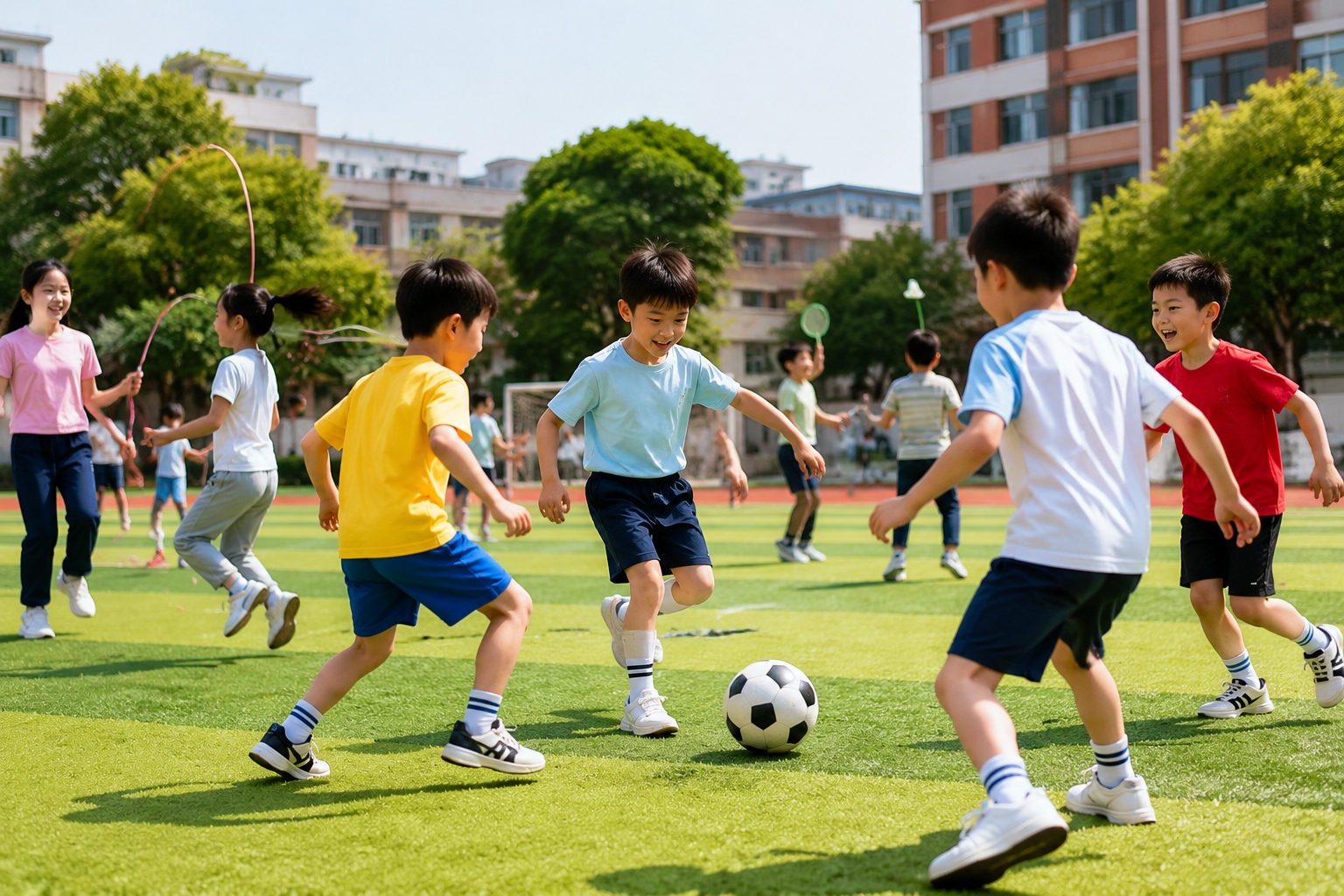
At 3:30 on a sunny Thursday afternoon, the school bell rings at a public elementary school in Chengdu. Children in colorful tracksuits stream out of the classroom building and scatter across the playground. They’re not heading home to do extra homework. Instead, some jump rope, some form a circle to kick a feathered shuttlecock, and a few grab a soccer ball and start a pickup game. It’s PE class — and for most Chinese primary school kids, it’s the best part of the week.
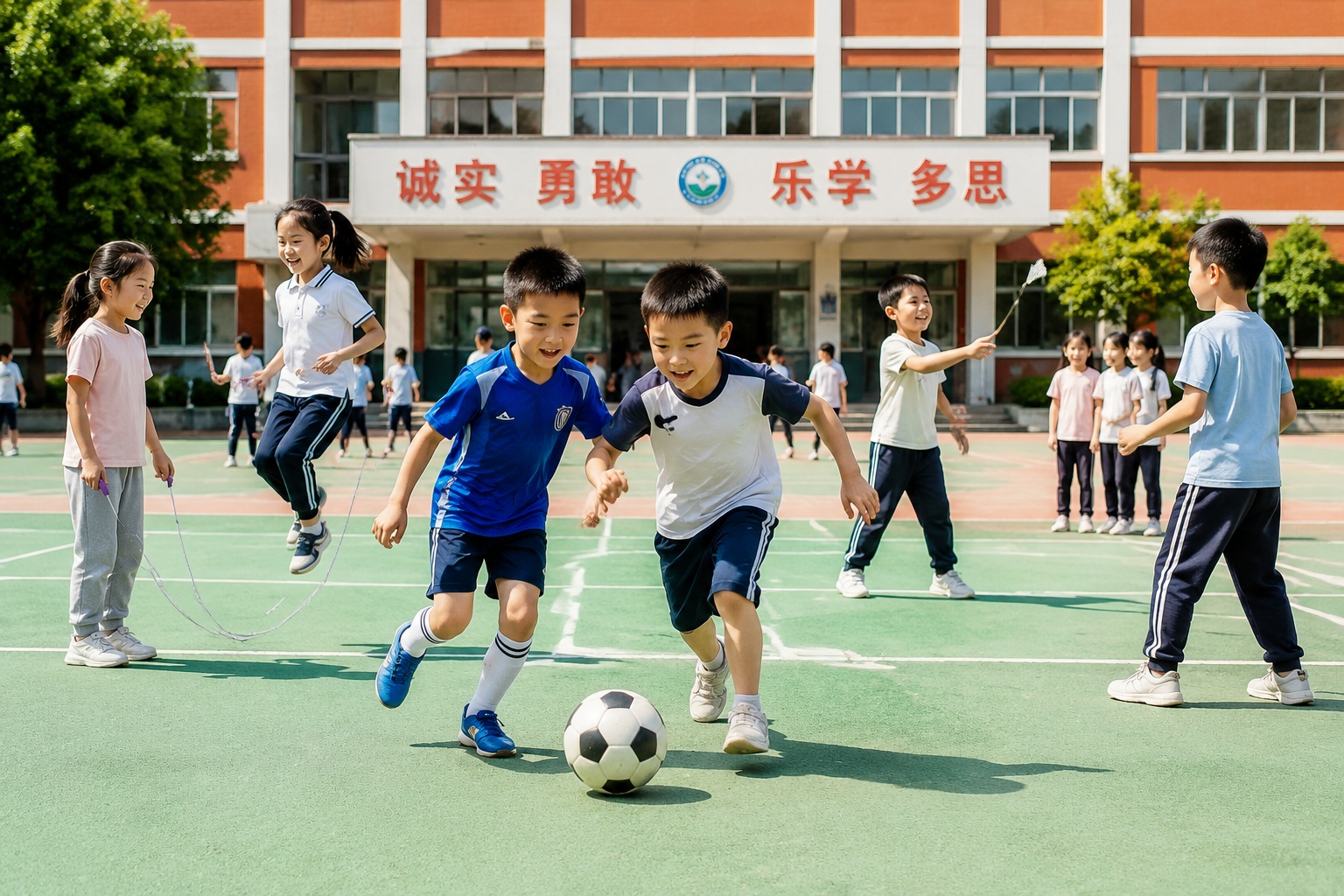
If you grew up thinking Chinese students are always buried in books, you’re not alone. But the scene at recess and PE class says otherwise. Chinese elementary school physical education is far more playful, varied, and even traditional than what many outsiders imagine. So, what exactly do Chinese kids do in PE class? Let’s look beyond the stereotypes.
What Actually Happens in PE Class?
Chinese primary schools usually have two or three PE lessons per week, each lasting 40 to 45 minutes. The national curriculum divides the content by age, but every lesson includes a warm-up, skill practice, and a cool-down period. The real fun lies in the activities.
For first- and second-graders, PE class is mostly about learning through play. Teachers organize games like “old eagle catches chicks” — a tag-like game where one student plays the “eagle” and tries to catch a line of “chicks” guarded by a “hen.” Kids also practice jumping rope, throwing beanbags, balancing on low beams, and doing simple animal walks. The idea is to help children feel comfortable and confident with movement.
By third or fourth grade, the focus shifts to basic sports skills. In one typical urban school, you might see a class split into groups:
- One group practices basketball dribbling around cones.
- Another works on soccer passes against a wall.
- A third group learns the basic steps of a Chinese folk dance routine.
- Some schools even introduce simplified martial arts (wushu) at this age, combining physical moves with breath and coordination.
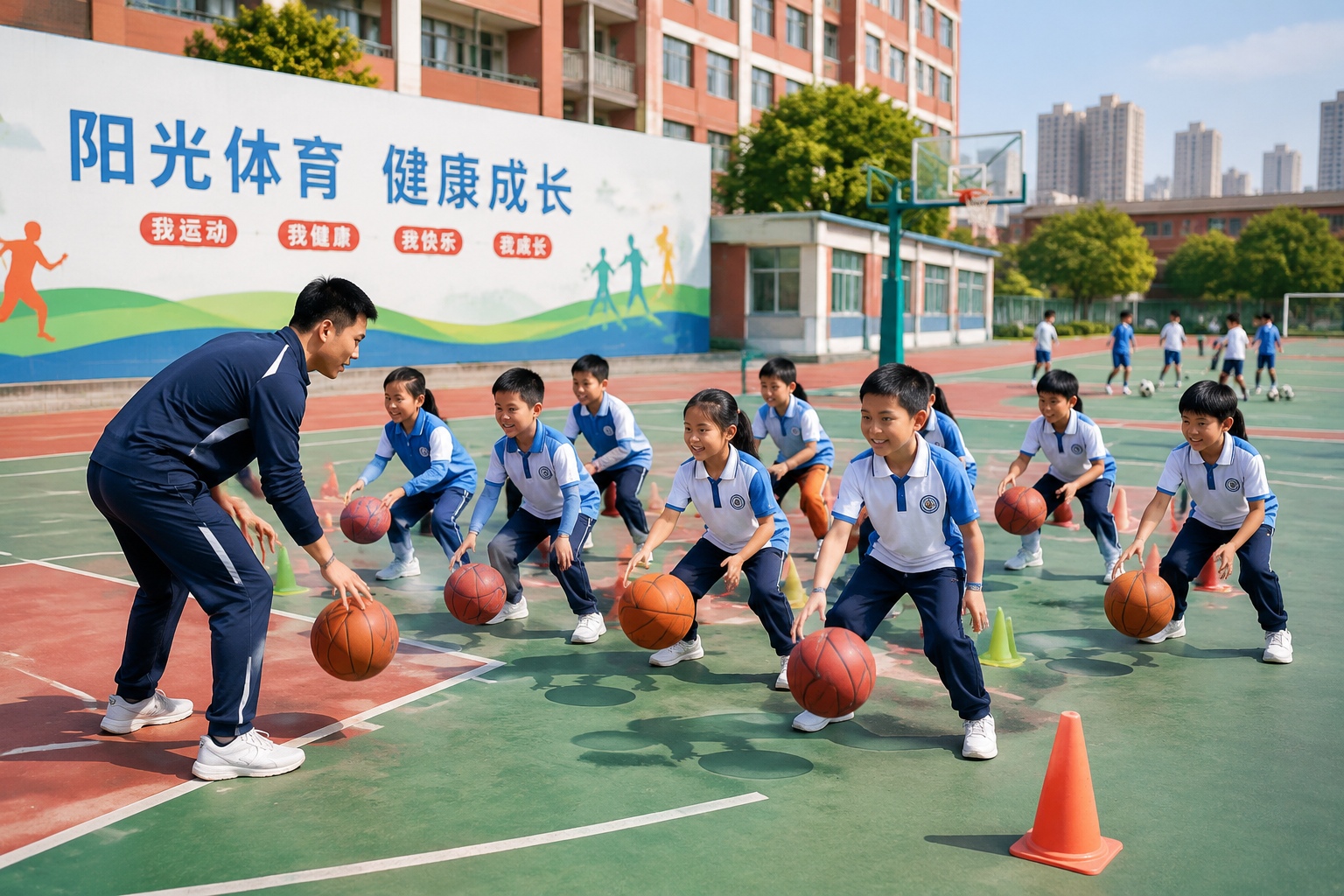
For fifth- and sixth-graders, the curriculum becomes even more structured. Team sports like basketball, soccer, and volleyball are common. Some schools offer table tennis — a favorite in China — while others use the PE period to prepare students for the national fitness test. In colder northern regions, winter PE might include jogging or skiing if conditions allow.
The School-Day Puzzle: Where Does PE Fit In?
“But Chinese students have such a heavy academic load. How do they find time for PE?” This is one of the most common questions I hear from foreign friends. The answer is that official policy requires all primary and middle schools to ensure at least one hour of physical activity every day. That includes PE classes, morning exercise, and a designated “big recess” of about 30 minutes in the morning or afternoon.
In recent years, the Ministry of Education has pushed even harder. Some large cities like Shanghai and Beijing now require one PE class every single school day for younger children. The national guidelines encourage schools to use the rest of the time for “outdoor activity” and “recess games.” So even on non-PE days, kids often head outside for extra play.
Of course, implementation varies from school to school. A top-tier school in a first-tier city may have indoor basketball arenas and swimming pools, while a rural village school might only have a dirt yard. But the official direction is clearly toward more movement, not less.
The Test Factor: Why Fitness Tests Matter
In China, PE is not just about play; it also comes with a yearly fitness assessment called the National Student Physical Fitness Standard. Students are tested on activities such as a 50-meter sprint, standing long jump, sit-and-reach, and in higher grades, endurance running. Younger kids might be tested on rope jumping or shuttle runs.
These test scores are important for schools because they affect the school’s overall performance rating. That means PE teachers sometimes have to “teach to the test.” But most teachers disguise the drills as fun competitions, so students often don’t feel the pressure.
In recent years, fitness test scores have also started to count toward the high school entrance exam (zhongkao) in many provinces. In big cities like Beijing, the PE exam can be worth up to 40 or even 60 points on the total score. That might sound like a lot, but it has a positive side effect: parents and students now take PE much more seriously. Some families hire private coaches or sign their kids up for weekend sports programs. Yes, it adds some exam stress, but it also gets kids moving more frequently.
A Tale of Two Schools: Urban vs. Rural
If you visit a wealthy elementary school in Shenzhen, you might find a modern sports complex with an indoor basketball court, a soccer field with artificial turf, and even a climbing wall. A school in Shanghai made headlines for offering lessons at a nearby Olympic-size swimming pool. But in rural parts of China, the reality is often more modest.
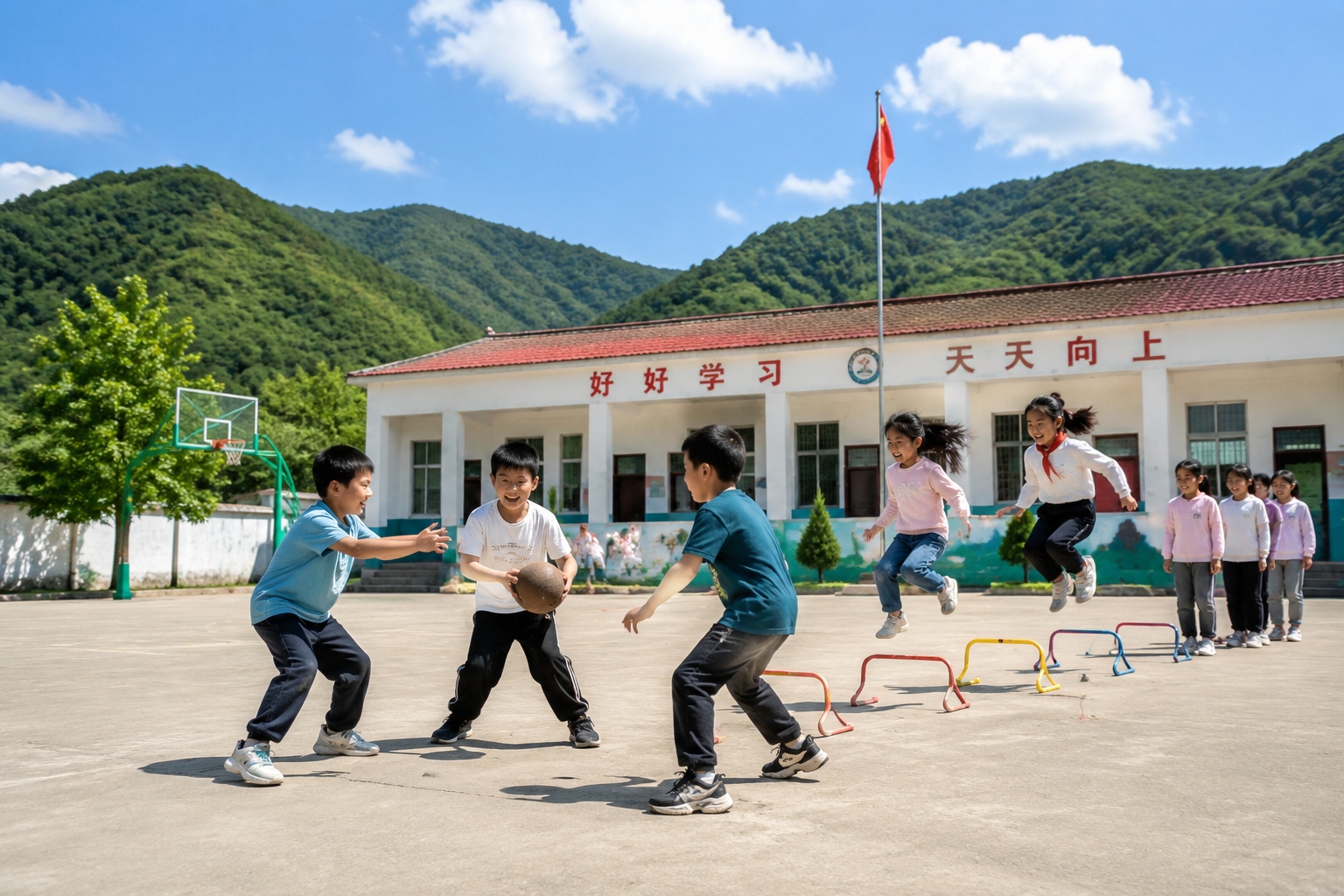
That’s not to say rural PE classes are boring. Many rural teachers become creative with limited resources. They might turn a small patch of grass into an obstacle course with tires and ropes, or organize a friendly tug-of-war tournament. A rural school in Yunnan might have only a cement basketball court, but the kids will still play three on three with tremendous enthusiasm.
Over the past decade, the government has invested heavily in rural education infrastructure. Many rural schools now have plastic-covered running tracks, new basketball hoops, and even indoor activity rooms. The gap is still visible, but it’s closing.
The Untold Fun: Traditional Games That Survive
One of the most charming aspects of Chinese PE is the survival of traditional games. Shuttlecock kicking (踢毽子) is a classic. Kids keep a feathered shuttlecock in the air using their feet, knees, and heels. It sounds easy, but it takes practice and coordination. Many children learn it in PE class and then keep playing during recess.
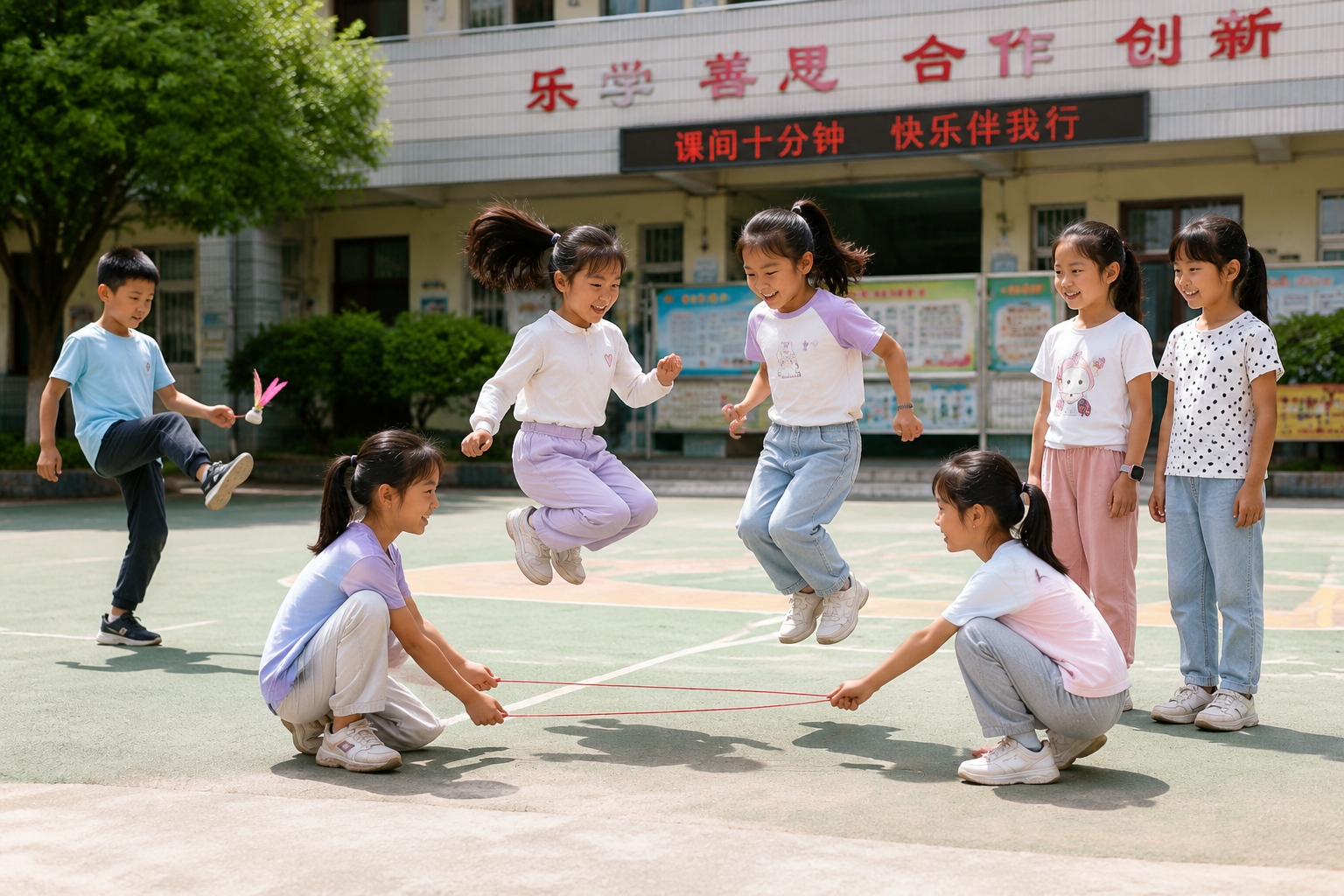
Another beloved activity is rubber-band jumping (跳皮筋), often played by girls. Two people hold a long elastic band around their ankles, and the third person jumps over it in a series of patterns. As the game progresses, the band is raised to knee height and then to waist height. It’s a fantastic workout for legs and balance.
There are also games like “dodge beanbags,” where players throw cloth bags at opponents, trying to tag them out. These traditional games aren’t just nostalgia — they are actually part of the national curriculum and are often featured in school sports meets.
Challenges and the Road Ahead
Let’s be honest: not every school has a dream PE program. Some schools still treat PE as less important than math or Chinese, especially during final exam weeks. A few lazy teachers might let kids play freely without instruction. And in a few ultra-competitive districts, the “daily exercise hour” is more of a slogan than reality.
Yet the overall trend is encouraging. Policymakers understand that a sedentary childhood leads to health problems, so they are pushing for more physical activity. Parents — many of whom experienced desk-bound school years themselves — are eager for their kids to get outside. New policies, better facilities, and changing attitudes are all making PE class more meaningful.
A Long-Overdue Playtime
So, what do Chinese elementary students do in PE class? They run, jump, kick, throw, balance, and laugh. They play traditional games that their parents and grandparents played. They also train for fitness tests and learn team sports. In other words, they get to be kids.
Next time someone tells you Chinese children only sit at desks, you can tell them about the shuttlecock, the rubber bands, and the cheerful chaos on a Thursday afternoon playground.
Start the discussion at forum.chinacomes.com