
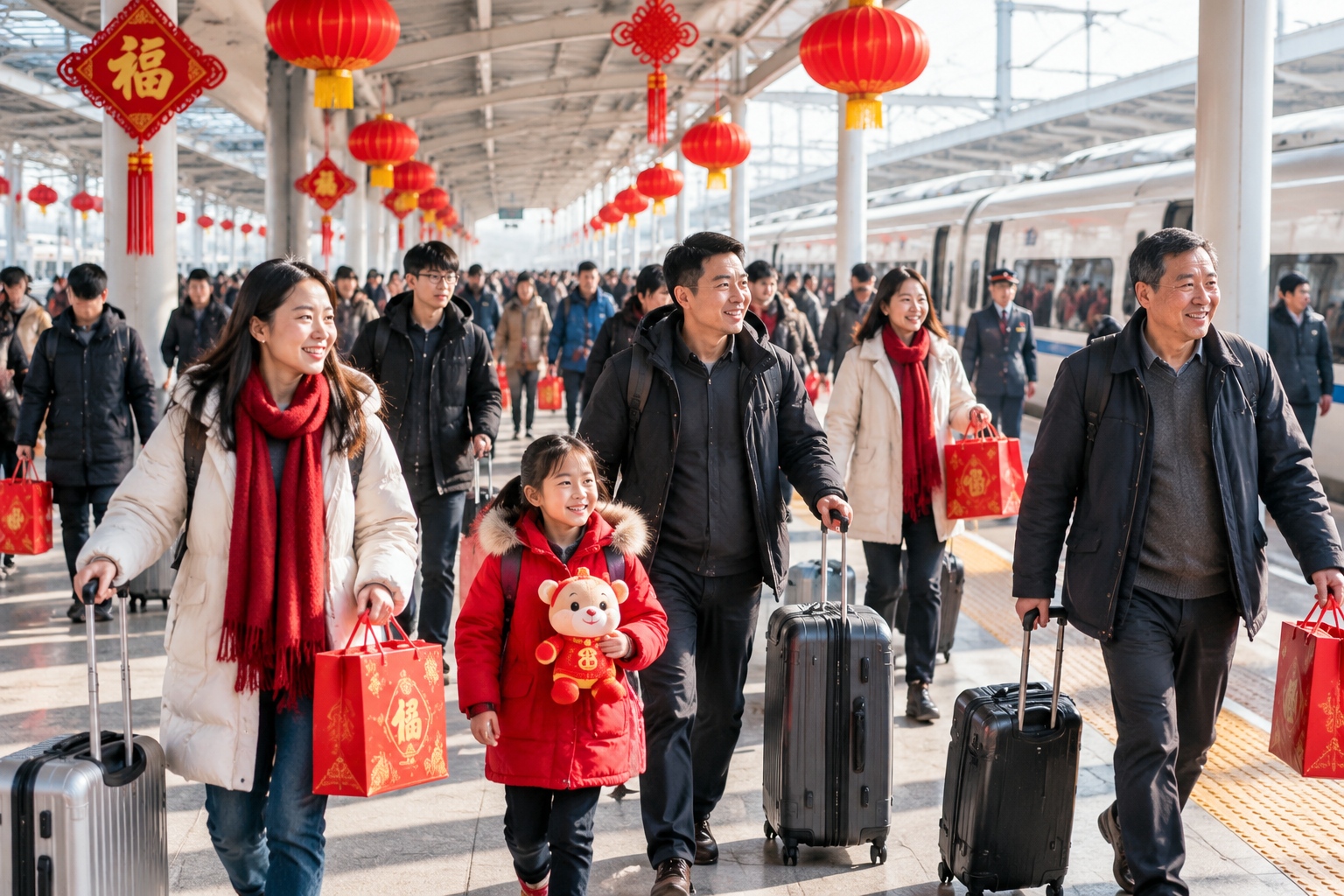

It’s the day before Chinese New Year’s Eve, and Hangzhou East Railway Station smells like instant noodles and orange peels. I’m standing near Gate 12, watching a river of people flow toward the platforms. A woman beside me has balanced three bags of local pastries on her rolling suitcase. A man in his fifties pulls a cart loaded with two plastic buckets, a folded bicycle, and a child seated on top. The station broadcast crackles: ‘Train G7654 is now boarding.’ I check my phone for the hundredth time — my ticket is a seat in car 14, booked after I spent three days staring at the 12306 app, waiting for a ‘waitlist’ spot to turn into a real reservation.
This is chunyun, the Spring Festival travel rush, the largest annual human migration on Earth. This year, the authorities project over 9 billion passenger trips during the 40-day period. For hundreds of millions of Chinese people, this is the only time of the year when they can go home. And going home is never easy.
How I Survived the Ticket War
Getting a train ticket for Spring Festival has become a digital sport. The official ticket-booking platform, 12306, sells millions of tickets in a single day. When bookings open two weeks ahead, high-speed rail tickets for popular routes vanish within seconds. My hometown is a city in Anhui, about 500 kilometers from Hangzhou. The normal two-hour ride becomes a prize I had to fight for.
My strategy was a mix of patience and luck. At 9:59 a.m., I opened the app with 5G on, my thumb hovering over the ‘buy’ button. At exactly 10:00, I tapped, but the screen froze. By the time it refreshed, all seats were sold out. I selected ‘waitlist’ and waited. Miraculously, three days later, a notification popped up: ‘Congratulations, your waitlist request has been fulfilled.’ My friend Liu wasn’t so lucky. He’d spent a week trying every trick—using two phones, a speed-up package from a third-party app, and even a friend’s luckier account. In the end, he gave up and paid 800 yuan for a private long-distance van that would take 12 hours instead of 2.
Many people, especially migrant workers, still rely on old ways. In the station, I saw a group of men wearing dusty jackets sitting on woven bags, holding paper tickets bought by their employers through group channels. One of them told me he hadn’t missed a Spring Festival homecoming in fifteen years. ‘No matter how hard, you have to go back,’ he said.

The Reunion Dinner: A Feast That Tells a Story
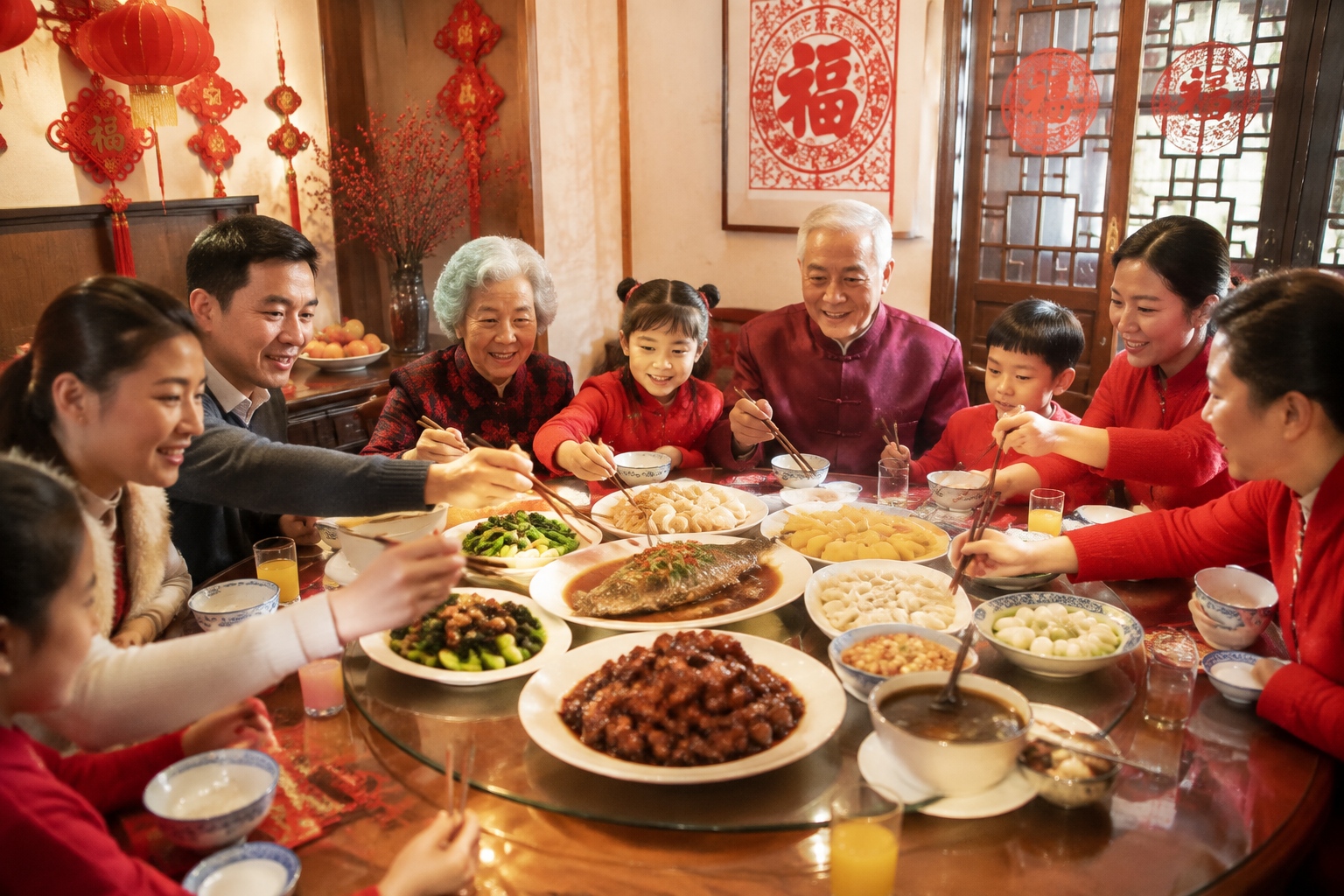
When I finally walked through my parents’ door in Anhui, the smell of soy sauce and frying fish filled the apartment. My mother was at the stove, her sleeves rolled up, flipping a whole bass in a wok. My father was chopping scallions and bantering with my uncle about who made better dumplings. On the dining table, dishes were already appearing: braised pork belly, steamed chicken with mushroom, a platter of salted duck, and a bowl of sticky rice cake coated in syrup.
Every Spring Festival Eve, the dinner table is central. The menu varies by region—in the south, people might have sweet rice balls; in the north, dumplings are essential. But certain dishes carry the same symbolism. In our home, fish must be present, because the Chinese word for fish, yu, sounds like ‘surplus.’ It’s served whole, with the head and tail intact, as a wish for abundance throughout the year. The rice cake, niangao, sounds like ‘year high,’ representing progress and promotion. My mother always places a bowl of raw vegetables with a side of dipping sauce, which she calls a ‘healthy dish’ to balance all the meat.
This year, some traditions have changed. Instead of cooking everything from scratch for three days, my mother ordered half of the cold dishes from a local restaurant. In big cities, many families now book a full reunion dinner at a hotel or use delivery apps. But in smaller towns, the cook-at-home ritual remains strong. My father insists that his braised pork needs the family kitchen’s wok, not a restaurant’s oven.
As we sat down, my grandmother said a short prayer and then turned to me: ‘Eat more, you’re too thin.’ That’s her way of saying ‘I missed you.’
Staying Up Late and Red Envelopes
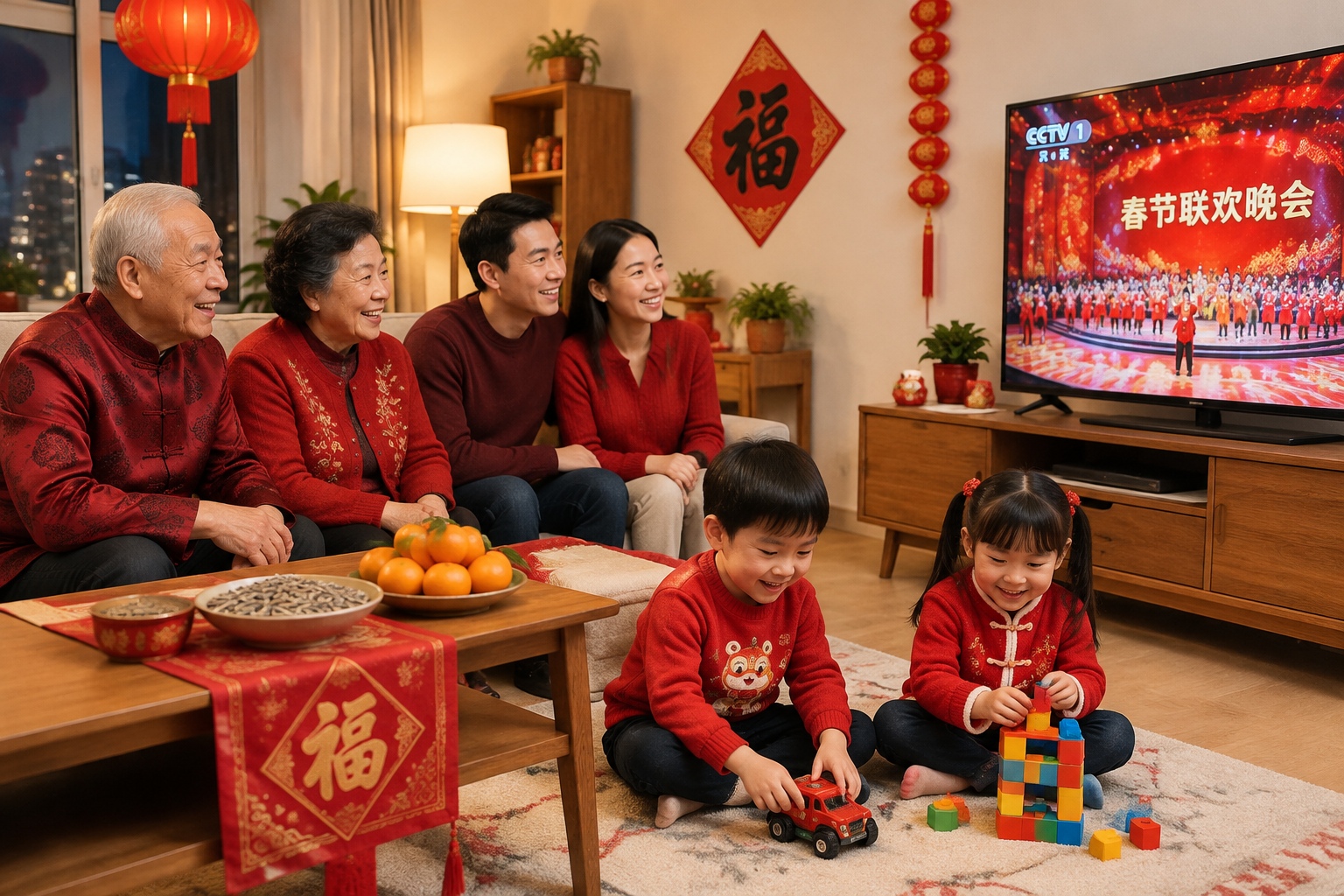
After dinner, the house filled with the sound of the television broadcasting the Chunwan—the annual Spring Festival Gala. Some people complain the show has become predictable, but it still unites the family. We watched a comedy sketch while cracking sunflower seeds and peeling tangerines. Around 9 p.m., my cousin’s kids started pulling at my sleeve. They knew it was red envelope time.
In the past, red envelopes were physical, filled with crisp bills and handed over with blessings. Now, they fly through WeChat. Within seconds, my family group chat lit up with a rain of red packets. Everyone grabbed them, laughing at who got the largest amount. My aunt, who lives in Beijing, sent a video call and ‘poke’ each of us to remind us to check. The children’s favorite part was scanning the ‘AR red envelope’ from a cola can—a hybrid of old custom and mobile marketing.
Staying up late, known as shousui, is a Spring Festival tradition meant to guard the household against evil spirits. In practice, it means chatting, playing cards, and struggling to stay awake past midnight. At 11:50 p.m., we wrapped our coats and walked out to a small courtyard. Although our city bans fireworks within the urban district, we could hear distant bangs from the countryside. A neighbor had illegally set off a string of firecrackers; the smell of sulfur mixed with the cold night air. At midnight, the sky flickered in the distance. My father sighed, ‘It’s not as noisy as when I was young.’ But for the kids, the few fireworks they saw were exciting enough.
The Pressure to Marry: A Sweet Burden
The next day, at lunch with relatives, the conversation turned to me. ‘So, do you have a boyfriend?’ my aunt asked, not for the first time. I felt my smile freeze. My mother chimed in, ‘She’s too busy with work to even think about it.’ My grandmother, though, was direct: ‘I want to hold a great-grandchild before I die.’ The table laughed, and I deflected by offering tea.
Spring Festival is the season when China’s ‘leftover women and single men’ face the most intense pressure to meet someone. Parents matchmake, relatives query, and some young people rent a fake boyfriend or girlfriend to escape the interrogation. I know a woman who paid 500 yuan a day to hire a ‘polite’ actor to pose as her boyfriend for the holidays. It sounds absurd, but for many, it’s easier than explaining why they’re still single.
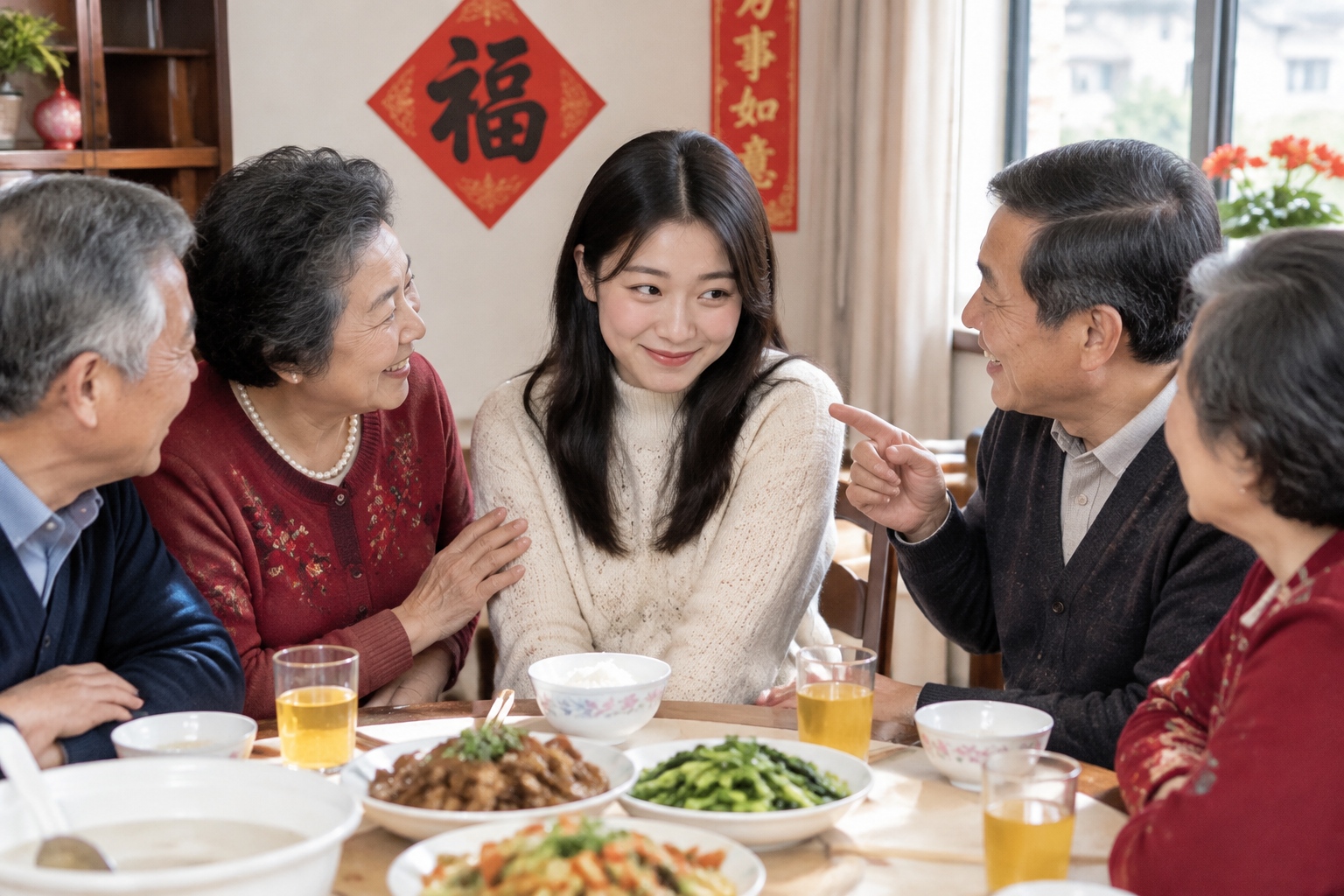
I’m not that desperate, but I understand the generational gap. My parents married at 24; I’m 29 and unmarried. They worry about my old age, not my career. For them, a stable family is the ultimate happiness. For me, it’s about finding the right person, not the right timing. We don’t see eye to eye, but we’ve learned to accept the gap. After my aunt’s question, my father quietly said, ‘As long as she’s happy.’ That’s the real spirit of the season: at the end, family support matters more than tradition.
The Rhythm of One Week: From New Year’s Day to Work Resumes
The Spring Festival holiday lasts for seven official days, but the rhythm of life changes according to ancient customs. New Year’s Day (the first day of the lunar month) is for staying home and worshiping ancestors. The second day is for visiting the wife’s parents. The third and fourth days are for going to temples or appearing at family gatherings. The fifth day is the birthday of the God of Wealth; businesses reopen with a round of firecrackers and customers. The sixth day is a day to clear the ‘poor’ out. The seventh day is renri, the day humans were created; many people eat noodles for longevity.
In modern China, this rhythm coexists with the demands of work. My cousin, who works in a tech company in Shanghai, spent half of New Year’s Day answering messages on her laptop. A factory owner in her hometown promised his workers a bonus if they returned early. Even during the holiday, many people are mentally planning for the year ahead.
On the morning of the seventh day, I packed my suitcase again. The railway station was still crowded, but the mood was different. People were quieter, some already scrolling through work emails. I hugged my mother goodbye. She slipped a red envelope into my pocket, saying, ‘Be safe, eat well.’ I knew it contained money, but her touch was the real gift.
What It Really Means
Spring Festival is not a museum piece. It’s a living, breathing experience that blends ancient customs with modern struggles. It’s about the exhaustion of buying train tickets, the joy of sharing a meal, the awkwardness of family questions, and the quiet reassurance that you belong to someone. If you ever get the chance to spend a Spring Festival in China, don’t just watch a documentary. Stand in a crowded railway station, sit at a round table, grab a red envelope. You’ll feel the heartbeat of a nation, one that values connection above all else.
Start the discussion at forum.chinacomes.com