
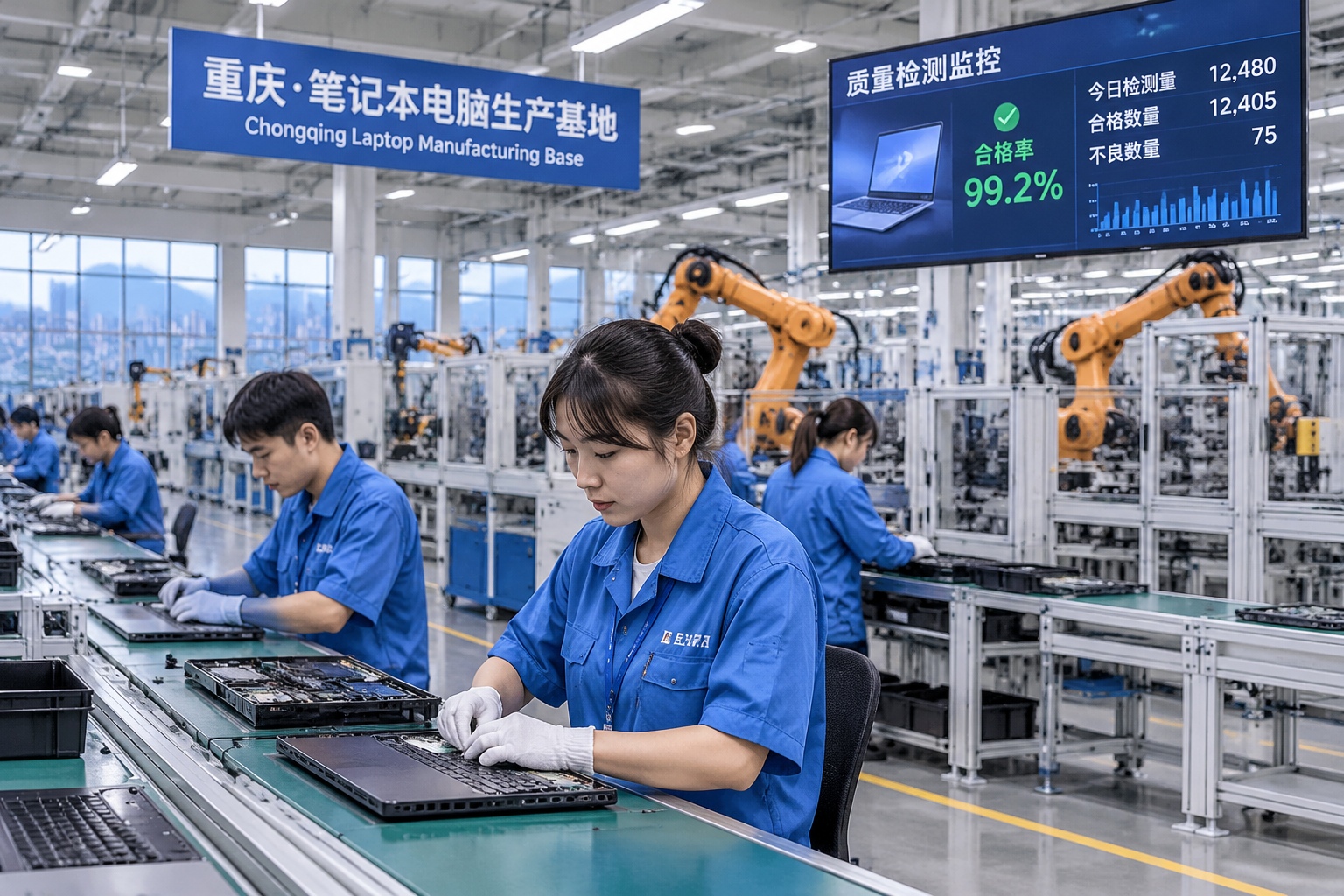

Picture this: you open a brand-new laptop. The sleek metal body, the backlit keyboard, the tiny screws holding it together. Each component has traveled through a global web of suppliers, but the final assembly likely happened in one place: Chongqing, a megacity of 32 million people in southwest China. According to customs statistics, Chongqing now ships out more than 70 million laptops a year—nearly one of every three sold on the planet. How did an inland city, surrounded by mountains, become the heart of the global computer industry? The answer involves railways, tax breaks, and thousands of workers who rarely appear in the product’s marketing.
The Numbers Tell the Story
Let’s start with the raw figures. In 2023, Chongqing’s exports of portable computers (which include laptops and tablets) reached a value of over 200 billion yuan (about $28 billion). The city’s annual output has consistently accounted for around 30% of global laptop production since 2016, according to data from the Chongqing Economic and Information Technology Commission. For perspective, the entire United States buys about 50 million laptops a year; Chongqing produces more than that in just a few months. Key contract manufacturers—the firms that actually build the devices for brands—have set up enormous campuses here. Wistron, Compal, Inventec, and Quanta, among others, operate assembly lines that can turn out a finished laptop every few seconds.
But it’s not just laptops. Tablets, smart TVs, desktop monitors, and even enterprise server components are rolling off lines in Chongqing. The supply chain is remarkably integrated: within a two-hour drive, you can find facilities for producing plastic molds, lithium-ion batteries, precision metal casings, and flex cables. This clustering is why brands return even as labor costs rise globally.
How Did a Mountain City Become a Tech Giant?
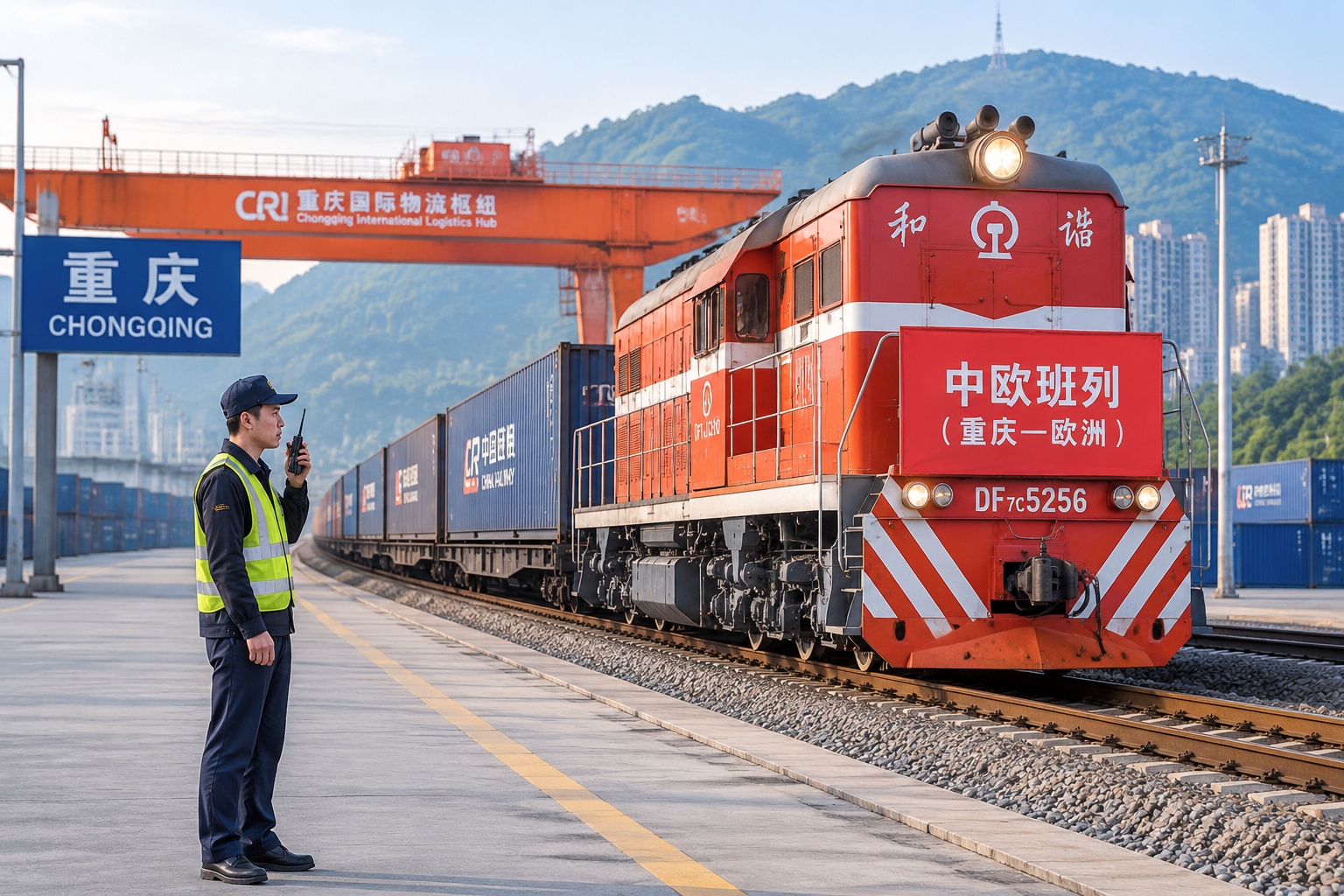
Chongqing’s rise wasn’t an accident. In the mid-2000s, China’s coastal cities like Shanghai and Shenzhen were dominated by electronics assembly. But as labor costs rose, the central government sought to develop the interior. Chongqing, despite being landlocked, had a strategic advantage: it sits at the head of the Yangtze River and, more importantly, became the starting point for the Chongqing–Xinjiang–Europe International Railway. This rail freight corridor, launched in 2011, allows containers to reach Duisburg, Germany, in about 12 days—about half the time of sea shipping. For time-sensitive electronics, this is a game-changer. The local government also created bonded zones, where factories can import parts and export finished goods without tariffs, and invested heavily in infrastructure: highways, airports, and a massive container terminal.
The policy support was equally crucial. Chongqing offered tax breaks to anchor companies—for example, reduced corporate income tax rates and subsidies for land acquisition. It also set up specialized industrial parks, such as the Xiyong Microelectronics Industrial Park, which hosts a cluster of laptop assemblers and component makers. The result was a classic ‘inside-out’ industrial strategy: first attract final assembly, then add suppliers step by step until the ecosystem takes root.
Inside the Factory Floor
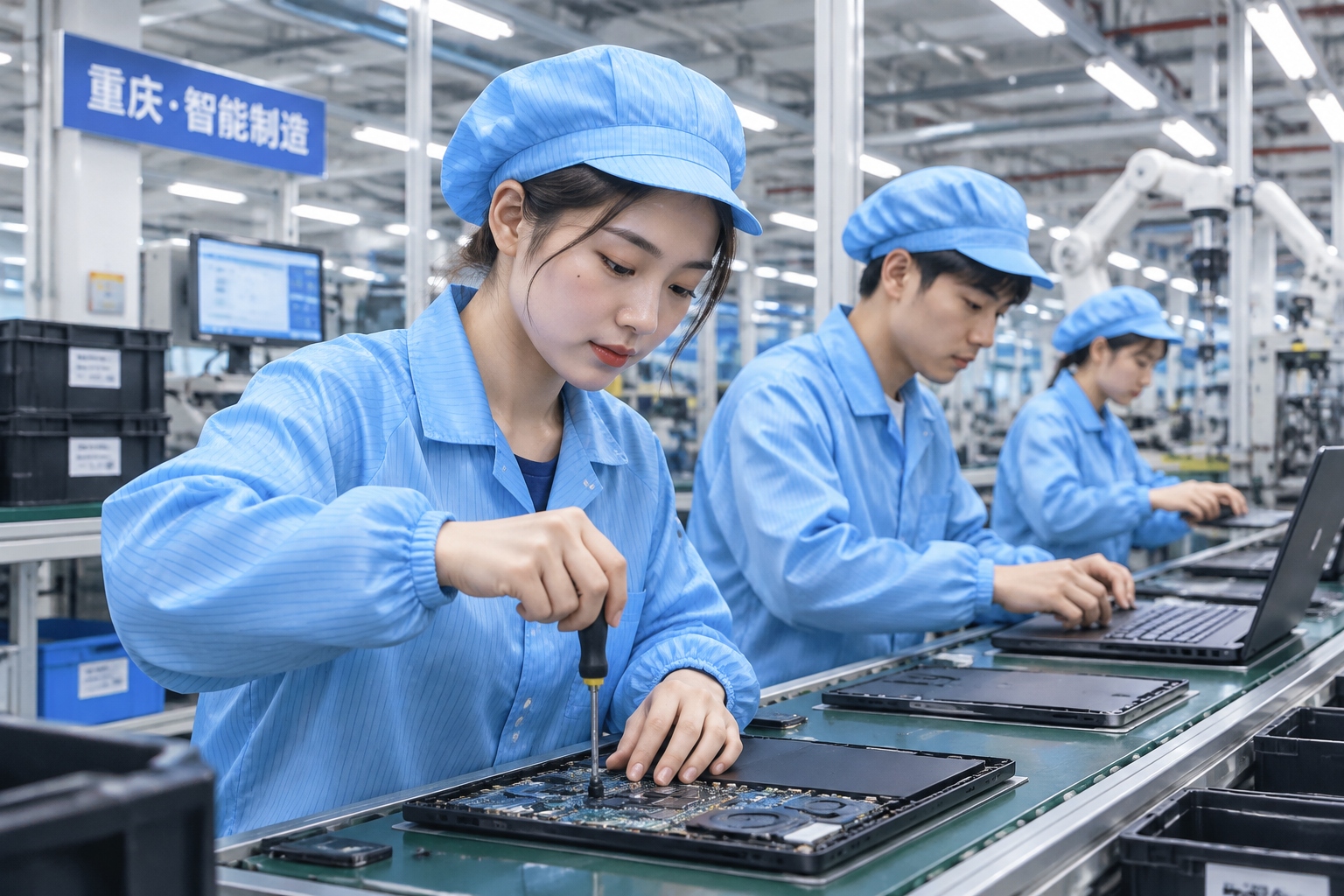
Step into a typical Chongqing laptop factory, and you’ll see a paradox. The scale is staggering—endless rows of automated pick-and-place machines soldering tiny chips onto motherboards. Robots move boxes along overhead tracks, and workers in blue anti-static smocks monitor screens. But alongside this automation, there is still a lot of hands-on labor. Workers insert batteries, attach keyboards, and perform quality checks. Many are in their twenties, coming from rural areas across southwest China. They work 10-hour shifts, with two days off per week, and earn a base salary plus overtime—often 4,000–6,000 yuan per month ($550–830). Dormitories and canteens provide meals that feature Sichuan-style dishes. It’s demanding, but for many, it’s a step up from farm work. The industry has created hundreds of thousands of direct jobs and many more in logistics and services.
Take the industrial park in Bishan District, where one major contractor employs 25,000 people. The workers live in apartments provided by the factory, each room housing four to six people. The canteen serves three meals a day, and there are basketball courts and shops inside the compound. During peak seasons, when orders surge, the factory runs 24 hours with rotating shifts. ‘It’s exhausting, but you can save money if you work overtime,’ says a 22-year-old worker from Sichuan province. ‘I’m not doing this forever, but it’s a job.’
Beyond Assembly: R&D and Upgrading
For years, critics dismissed Chongqing’s role as mere screwdriver work, with little value added. That’s changing. The city is aggressively moving up the electronics value chain. It now hosts display panel production (BOE and other firms) with factories producing more than 20 million screens a year. Chongqing has also become a hub for chip packaging and testing, drawing investments from global leaders like ASE and domestic players. And as China’s electric vehicle industry booms, Chongqing is leveraging its electronics expertise for automotive-grade batteries, sensors, and self-driving hardware.
Local universities and research institutes are feeding this shift. Chongqing University and the Chongqing Academy of Science and Technology have established labs focused on advanced materials and intelligent manufacturing. In 2023, the city launched a $1.5 billion fund to support semiconductor innovation. Of course, not every project succeeds, but the direction is clear: Chongqing wants to be a technology creator, not just an assembler.

Challenges and the Road Ahead
The electronics industry is unforgiving. Margins are thin, and shifts in global trade—tariffs, pandemic disruptions, or AI-driven demand shocks—can hit Chongqing hard. Labor costs are rising, and young Chinese are less willing to do assembly work. Some manufacturers have started investing in Southeast Asia, where wages are lower. Still, Chongqing has an advantage that’s hard to replicate: a complete supply chain. Within a few hours’ drive, you can find manufacturers of batteries, connectors, molds, and packaging. This ecosystem creates a gravity that keeps orders coming. The head of a factory in Chongqing told me, ‘Even if labor costs double, our network of suppliers makes it hard to leave.’ As the world’s electronics demand continues to grow—especially in AI hardware and smart devices—Chongqing’s role is likely to evolve, but not disappear.
So the next time you power on your laptop, consider its journey. It may have been born in a factory in Chongqing, rode a train through Central Asia, and landed on your desk in less than two weeks. The city’s story isn’t just about statistics; it’s about how millions of working people, clever logistics, and patient policy-making can turn a mountain town into a global hub. That’s not a stereotype—it’s the reality of modern China.