
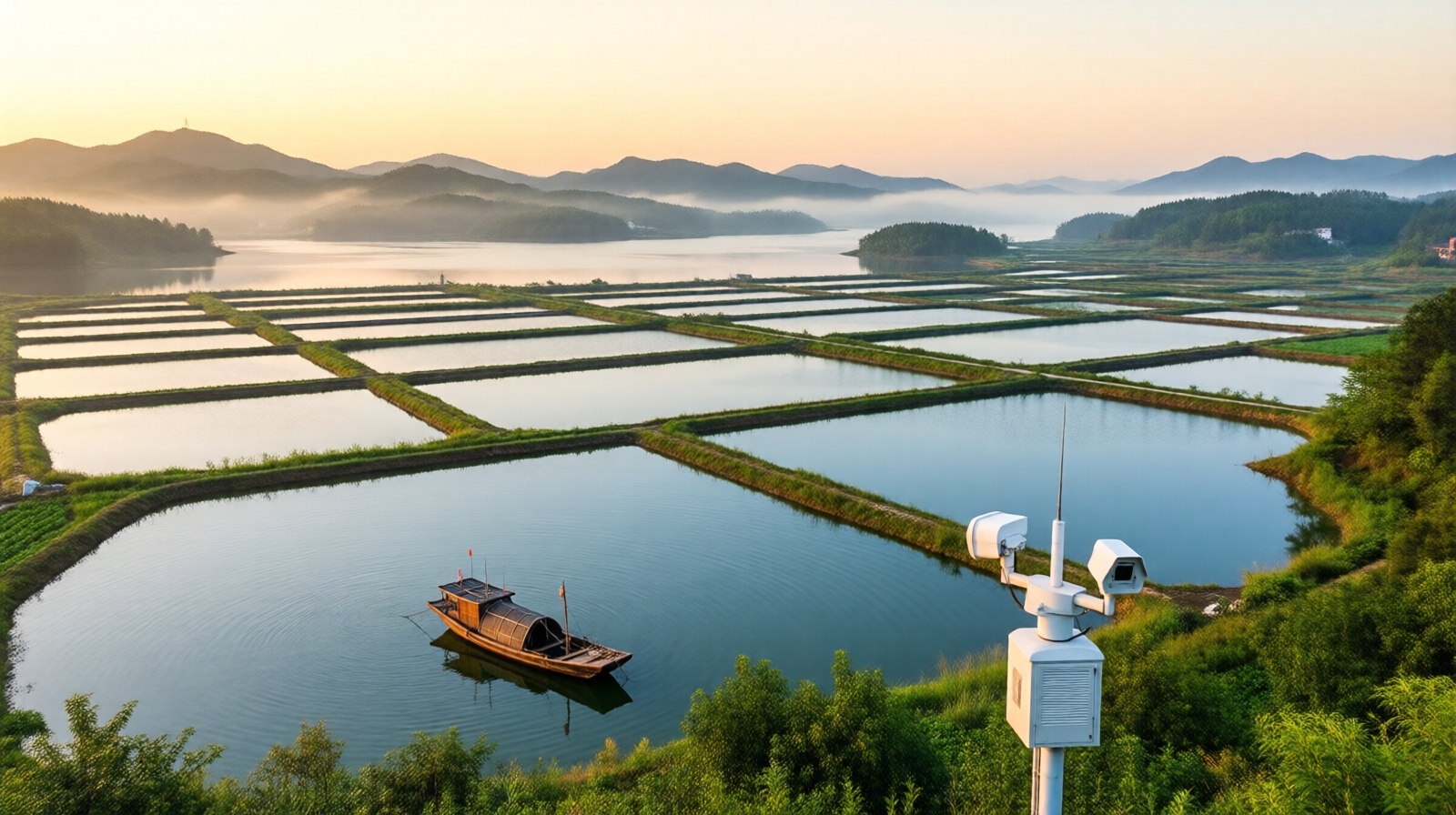

A dawn harvest on Liangzi Lake
At five in the morning, the surface of Liangzi Lake is still dark. Zhou Liqin rows her small boat toward a row of net pens where silver carp jump and splash, their bodies catching the first light. She and her husband have been farming fish here for over a decade, but she remembers a time when her family simply went out and cast nets, hoping the Yangtze River would provide.
That memory feels distant today. After China placed a 10-year ban on commercial fishing in the Yangtze River in 2021, Zhou and her husband joined the many Hubei fishermen who moved from wild catch to controlled aquaculture. Today they raise carp and bream in leased ponds, using feed pellets and a simple oxygen monitor. The harvest now is more predictable, and the income is better. “We no longer chase the fish,” she says. “We grow them.”
Hubei is known as the “province of a thousand lakes,” an apt name for a region that contains one-fifth of the freshwater surface area in all of China. This water has long shaped the local economy. Today, Hubei produces more freshwater fish than any other Chinese province, and the majority of China’s farmed freshwater fish comes from places like this, not from the wild.
From wild-caught to farm-raised
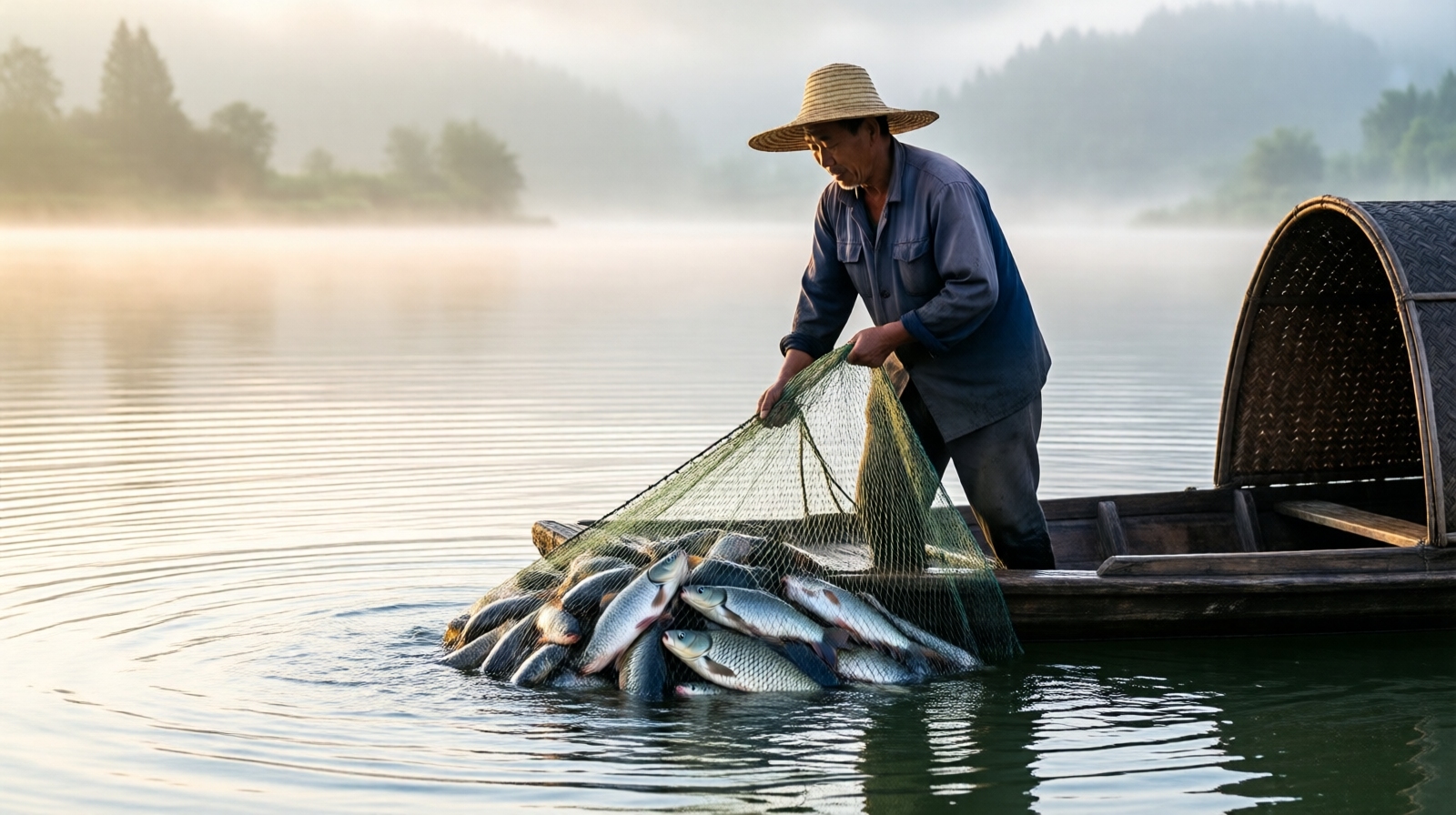
The shift from hunting to farming in Hubei’s fisheries is one of the quieter transformations in China’s food system. In the 1980s, the Yangtze and its lakes were severely overfished, while the human appetite for fish kept climbing. The only reasonable response was to grow more fish on purpose.
By the early 2000s, most fish eaten in Hubei came from ponds, rice paddies and modern farms. The provincial government invested heavily in hatcheries, feed mills and education for rural fishermen. When the Yangtze fishing ban came into full force in 2021, it sealed a change that had already taken place: aquaculture now supplies the market. For many former fishermen like Zhou’s father, who once questioned the ban, the transition turned out to be an opportunity; he now works as a technician in a cooperative, teaching others how to stock and feed fish more efficiently.
Inside the fish supply chain
The fish that leaves Hubei’s farms does not travel alone. It moves inside a complicated supply chain built to keep seafood fresh in a country that loves to eat it. It starts in hatcheries, where hundreds of millions of fry are raised each year. Then feed mills, many within an hour’s drive of the fish farms, supply the ponds. But the backbone of the industry is the cooperative structure. A typical cooperative in Hubei organizes farmers into groups, providing disease management advice, equipment and access to markets. That means even a small family farm can deliver a uniform, high-quality product to the market.
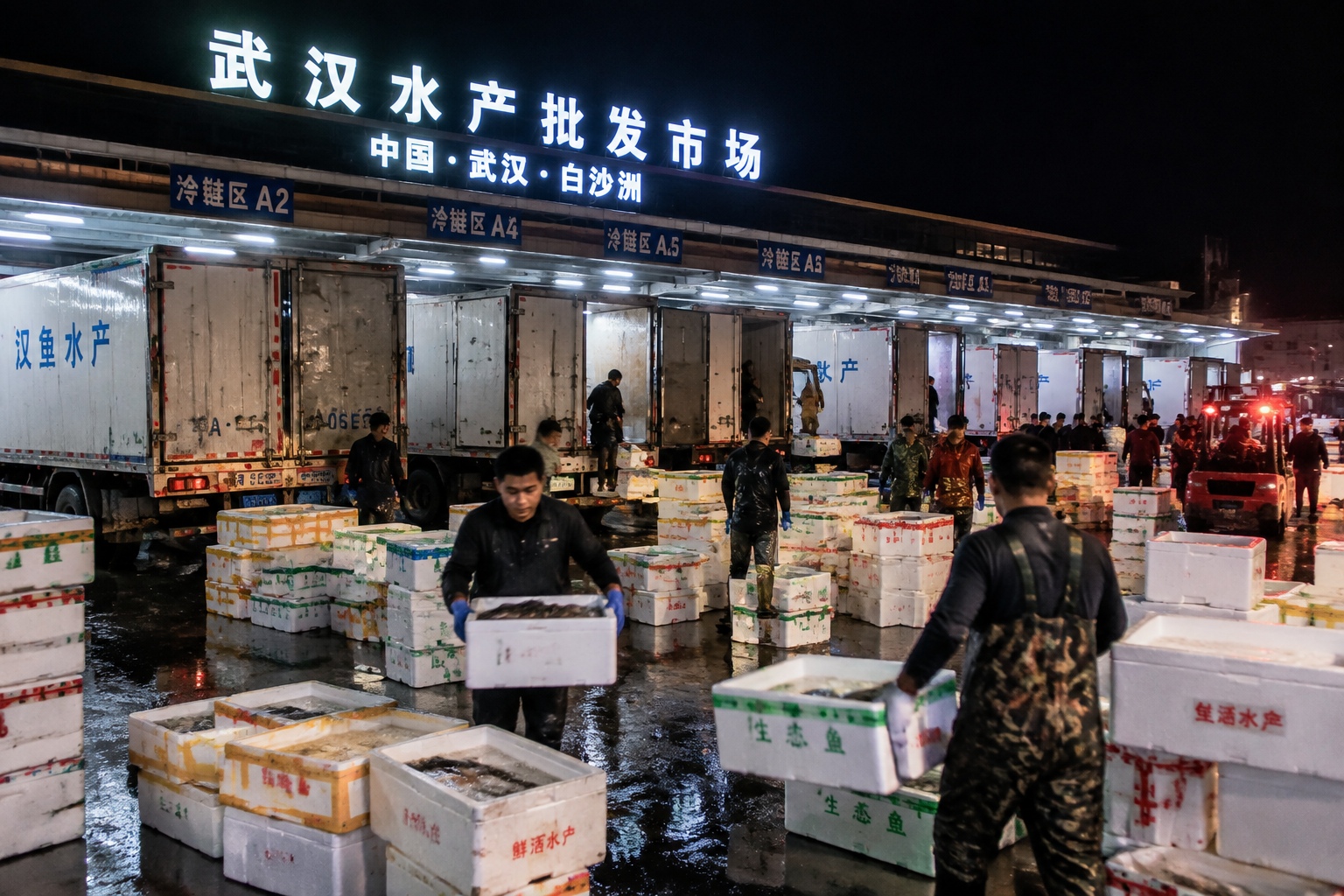
In the cities, wholesalers buy the fish by the ton and move it to large aquatic markets. At the Wuhan Baishazhou market, one of the largest in central China, trucks line up at 2 a.m., waiting to unload silver carp, grass carp, and the famous Wuchang bream. From here, the fish enter wet markets, grocery stores and restaurants.
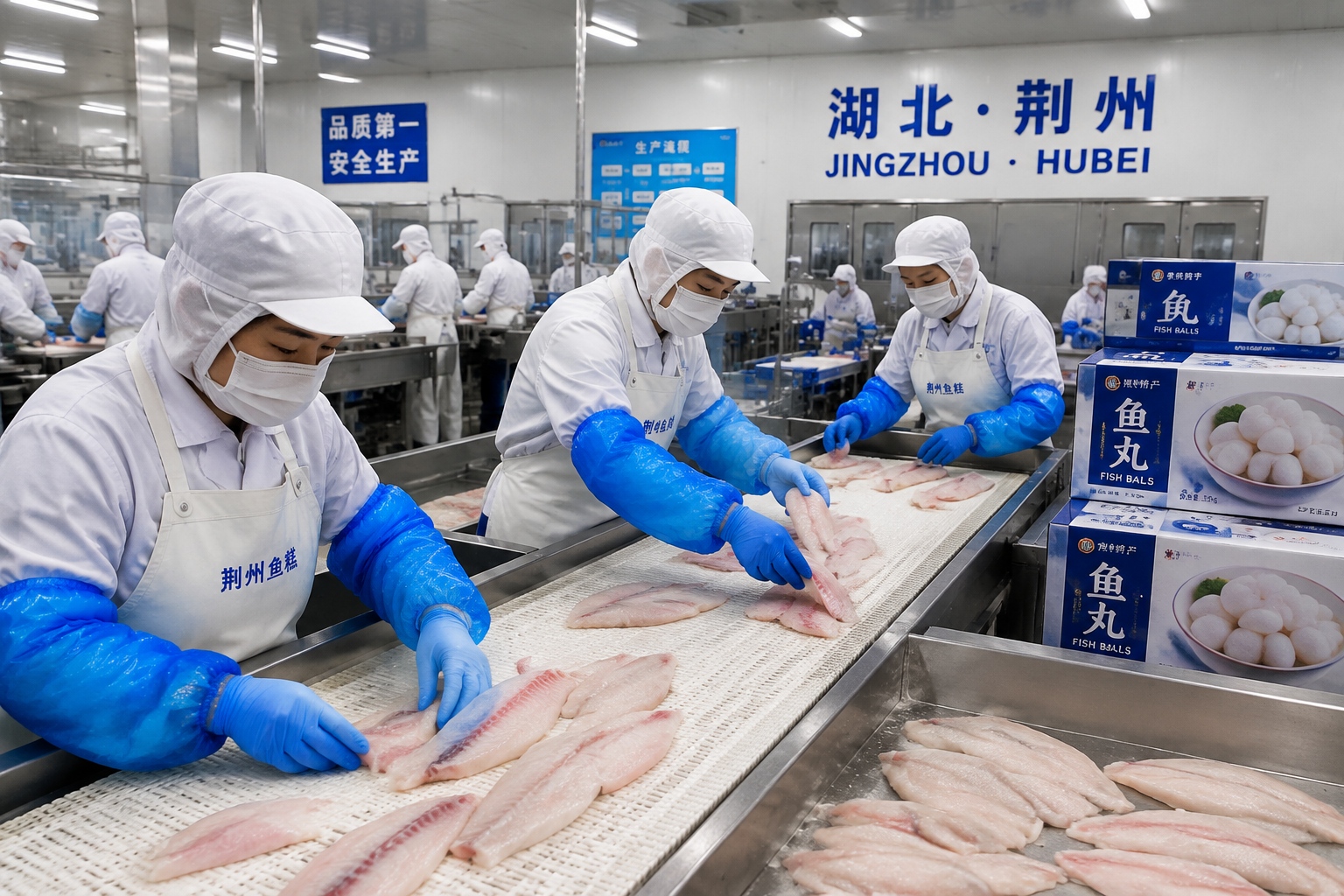
Processing sites have also become an important stop in the chain. In Jingzhou, about two hours west of Wuhan, a food factory turns freshwater fish into fillets, fish balls, and a local specialty called fish flour (yugao). The plant runs almost around the clock, and it employs over two hundred people, many of them from nearby villages. That kind of rural employment is what makes the industry valuable not just as a food source, but as an economic anchor in Hubei’s countryside.
How technology is changing ponds
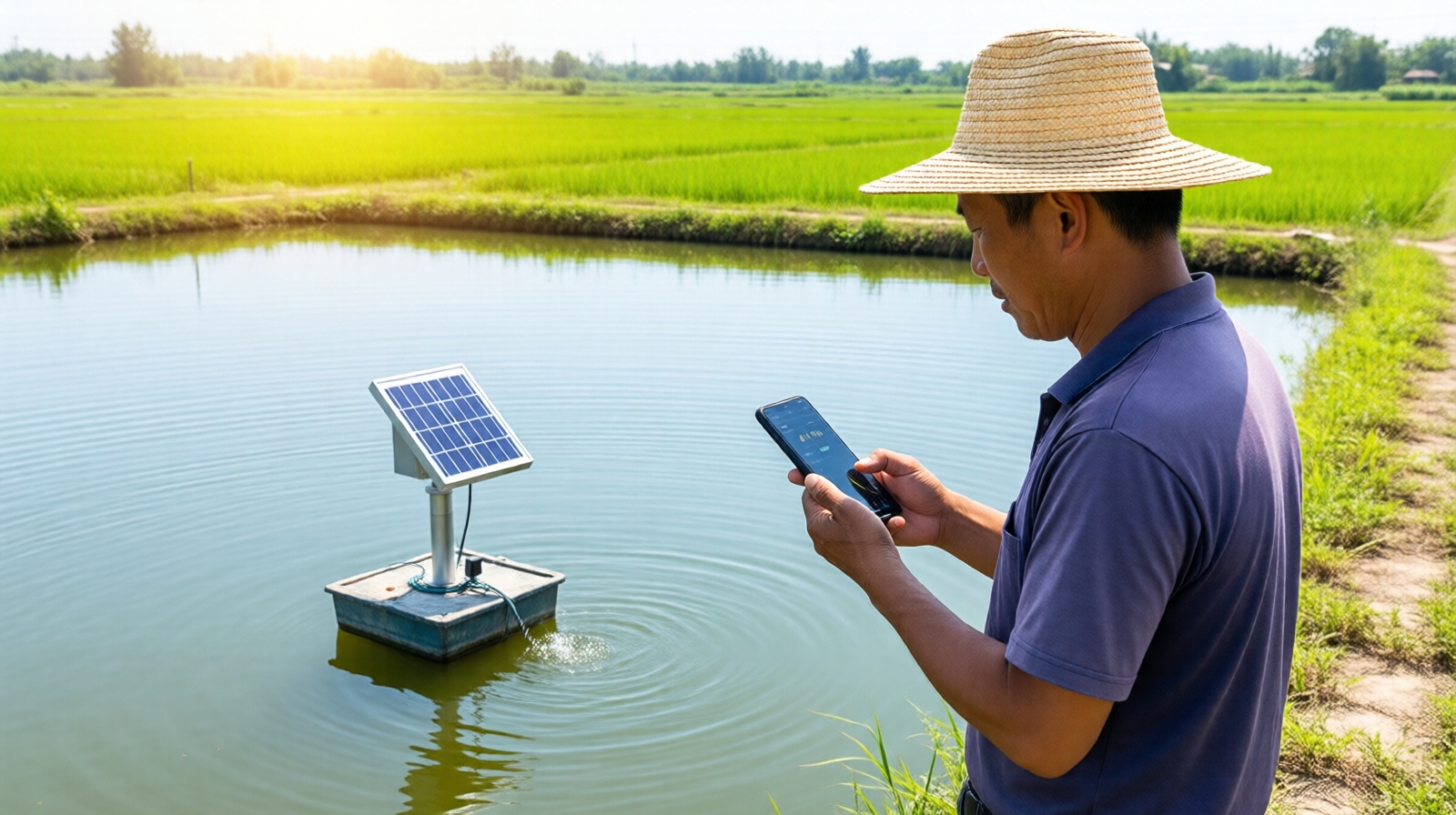
The glassy surface of a fish pond hides a lot of work. Today, in many Hubei farms, sensors fixed under the water measure oxygen, pH and temperature, sending alerts to a farmer’s mobile phone when the environment becomes risky. Feeding has been automated too: a small device catapults pellets across the water at regular intervals, timed with the daily weather forecast.
Some farms have gone a step further. In Ezhou, a modern facility uses a recirculating aquaculture system, a closed-loop tank that cleans and reuses its own water. That approach reduces water consumption dramatically and limits the waste that can pollute nearby lakes. Additionally, new fish breeds developed in partnership with universities grow 20 percent faster and are more resistant to disease, reducing both the cost and the need for antibiotics.
For an ordinary farmer, these innovations may feel modest, but their effect is powerful. Yields in Hubei’s aquaculture have increased steadily over the past decade, with the same amount of water now producing significantly more fish.
From Hubei to Asia and beyond
Hubei’s location in central China makes it a natural logistics hub for inland water food. High-speed rail lines and highways connect the province to ports like Shanghai and Guangzhou, and refrigerated trucks can deliver live fish overnight to cities across China. On weekends, you might find Wuchang bream in Beijing, Shanghai, Seoul, and even Tokyo. While China is the largest consumer of freshwater fish, Hubei has expanded exports in the last decade to Southeast Asia and Europe, especially frozen and processed products.
The company in Jingzhou, for example, began exporting fish balls and fish cakes to Thailand, Singapore and Malaysia several years ago, targeting a fast-growing Asian market for convenient seafood. The move required upgrading sanitation and freezing facilities to meet international standards. It worked, and now those countries’ supermarkets stock boxes labeled “made in Hubei”.
The challenge of keeping it sustainable
No industry is without its costs. Dense fish farming can degrade water quality through excess feed and fish waste. In Hubei, some lakes have suffered from pollution linked to cage farming, prompting a provincial-level crackdown. Back in 2018, Hubei began dismantling thousands of “net pen” enclosures that were placed directly in public lakes. The goal was not to end aquaculture, but to shift it to more contained, land-based systems or more environmentally friendly lake farming.
One promising model is what farmers call “ecological catch and decay,” which combines fish farming with water quality management. In Hong Lake, farmers now grow native species such as grass carp and bream at lower densities and use enough feed to avoid leaving excess. The result has been a gradual improvement in water transparency, while household incomes have held steady. This is a slower, less spectacular way to farm, but it is what the region needs to do to keep its thousand lakes alive.
The same logic applies to the Yangtze. The fishing ban was never just about saving fish populations; it was also about making aquaculture the only reliable source of supply. By protecting wild ecosystems, the ban strengthens the long-term foundation of the fish industry itself.
An invitation to sit at a Hubei table
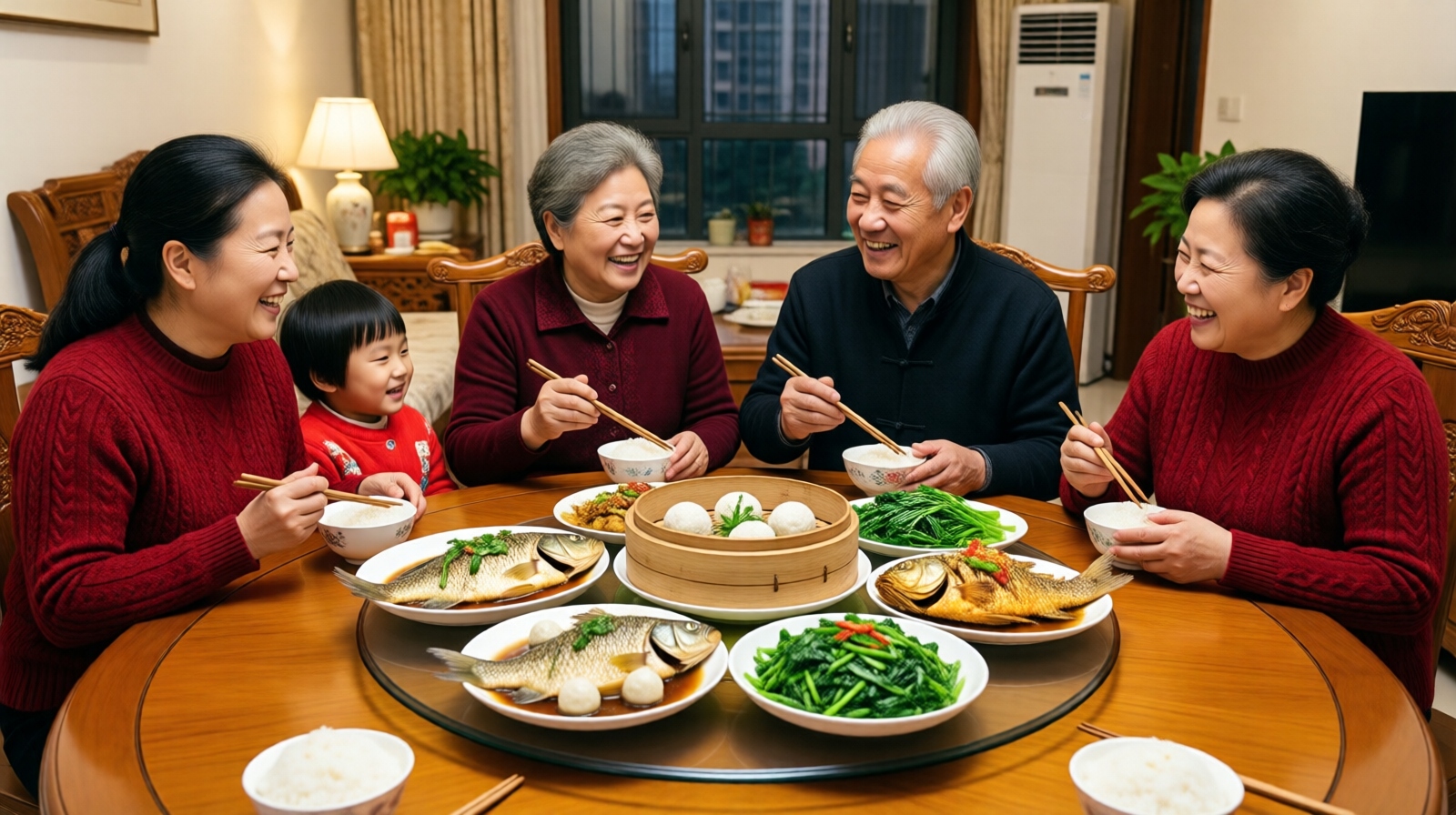
After a day’s thinking about supply chains, technology and environmental balances, the best way to understand Hubei’s freshwater world is to sit down with a family. In almost every household in the province, fish appears on the table several times a week. The traditional meal is simple: steamed Wuchang bream, a light soup made with the bones, and fried fish balls that are soft and bouncy. The taste is both delicate and familiar.
The grandfather in Zhou Liqin’s house claimed he could remember when fish came from the river in front of the village. Now, three generations later, the fish comes from his son’s pond, monitored by a phone app and delivered through a system that connects his family to markets a thousand miles away. The water is still the same, and so is the pride.
For anyone looking to understand China through an ordinary lens, Hubei’s freshwater fish industry offers a perfect starting point: not a loud, futuristic story, but the quiet, steady transformation of how a vital food gets from lakes and ponds to the daily life of hundreds of millions of people.
Start the discussion at forum.chinacomes.com