

Midnight at Yangshan: A Container Symphony
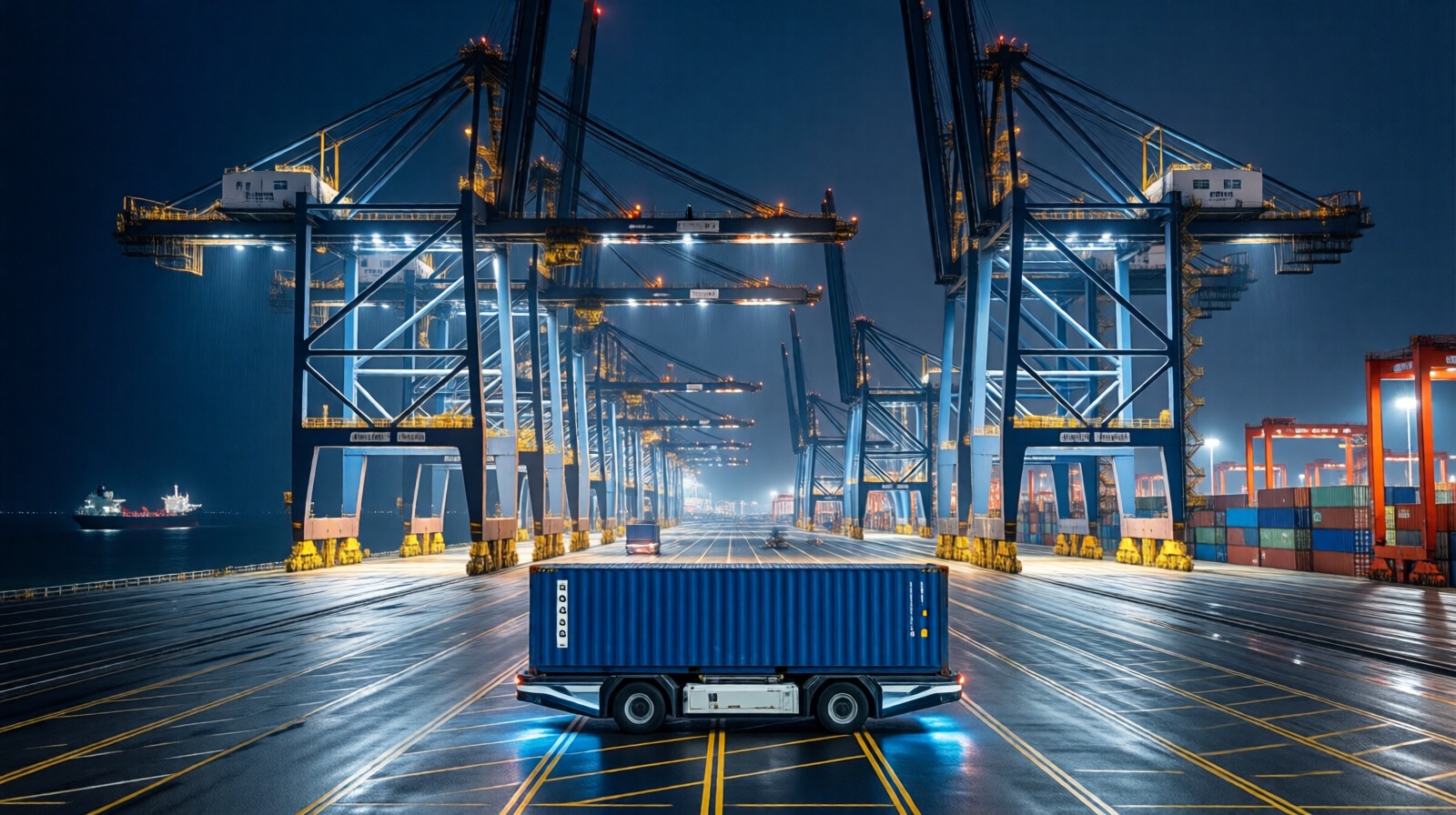
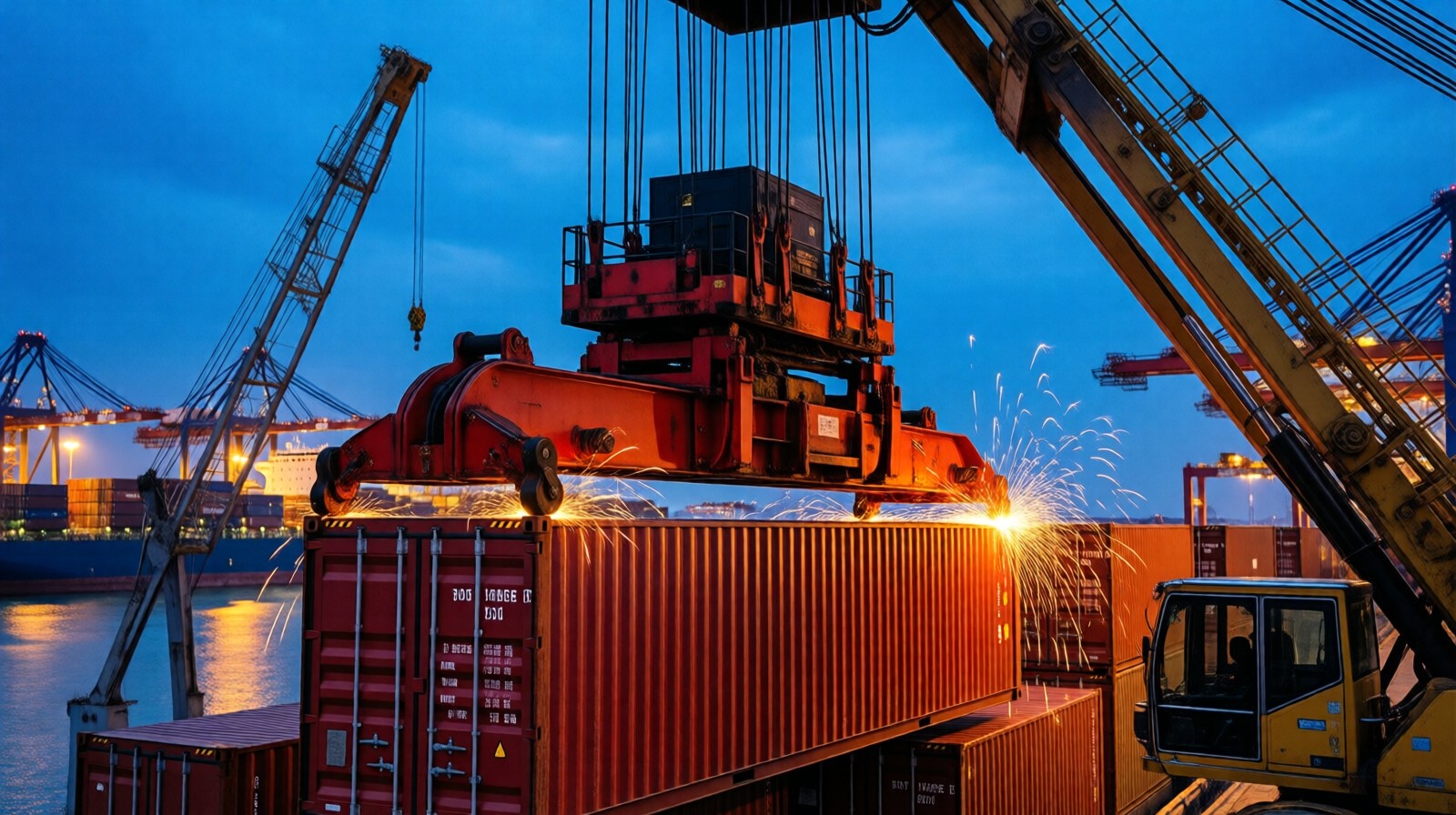
The clock reads 2:17 AM. At Shanghai’s Yangshan Deep-Water Port, a light drizzle slicks the asphalt as a series of towering ship-to-shore cranes swing into action. Each crane drops a spreader onto a container with a metallic clang, then hoists it effortlessly onto a waiting autonomous guided vehicle (AGV). The AGV, silent and driverless, glides down a painted lane to the container yard, where another automated crane stacks the box precisely onto a steel rail. No human hands touch the cargo from ship to stack. This is the world’s busiest automated terminal, and it operates 24/7.
China’s ports collectively handle about 970,000 TEUs (twenty-foot equivalent units) every single day — more than the entire annual volume of many mid-sized countries. To understand how that’s possible, you have to look beyond the sheer scale and into the granular choreography of machines, software, and people working in sync.
The Brains: A Terminal Operating System That Thinks
At the heart of Yangshan Phase IV, the world’s largest fully automated container terminal, is a central nervous system called the Terminal Operating System (TOS). Developed by Chinese engineers, the TOS acts like a real-time air traffic controller for boxes. Every move — which crane picks which container, which AGV carries it where, which yard slot stores it — is calculated and optimized by algorithms considering vessel stowage plans, truck waiting times, and energy efficiency.
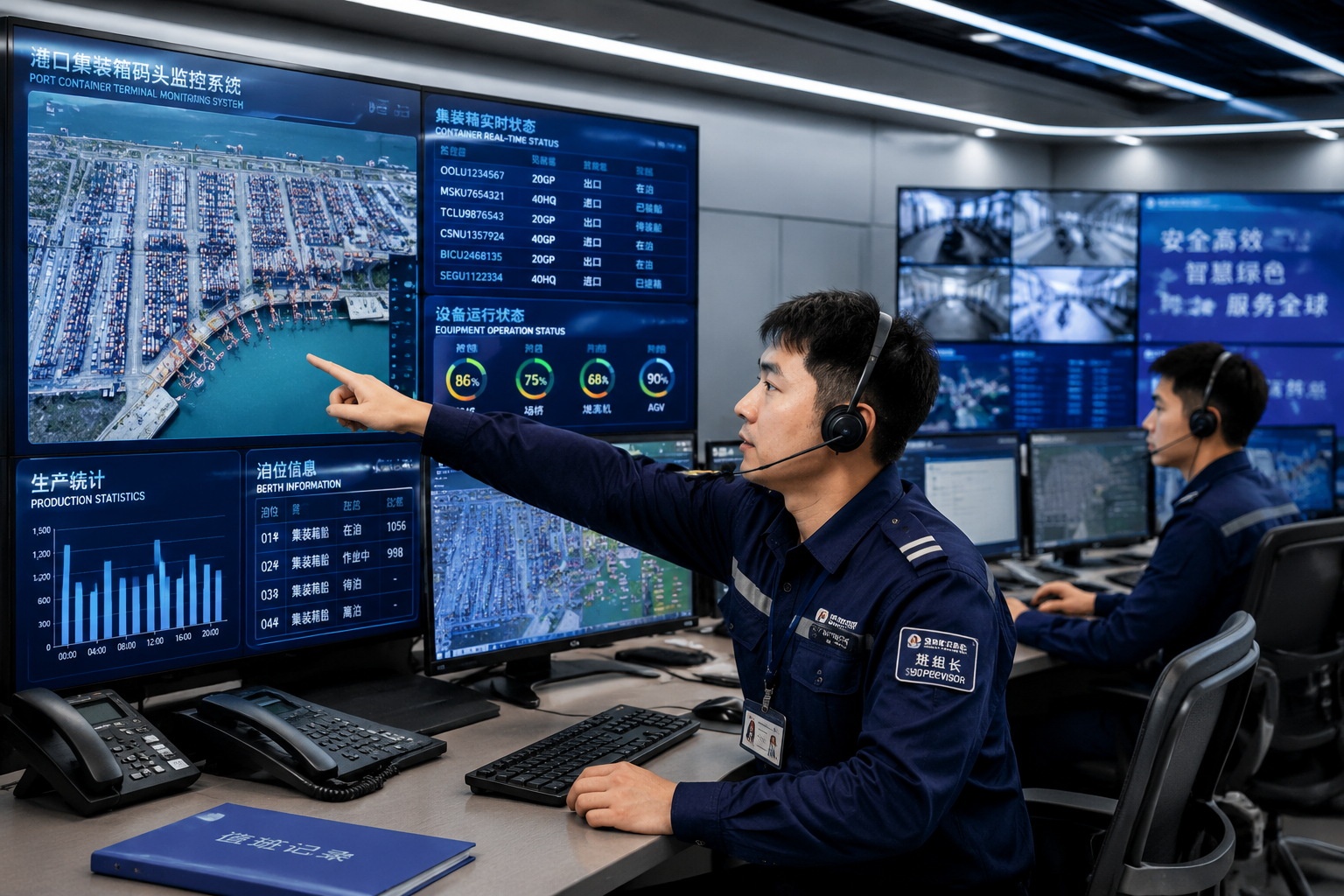
“The system is constantly solving a giant jigsaw puzzle,” says Li Wei, a 34-year-old shift supervisor in the control room. He’s pointing to a wall of screens showing clusters of red and green blocks. “Each color represents a container’s destination, weight, or contents. The AI decides the sequence to minimize turnaround time. A mistake here could delay the entire vessel.” Li Wei’s team of eight oversees 26 automated cranes and 130 AGVs — a fleet that never sleeps.
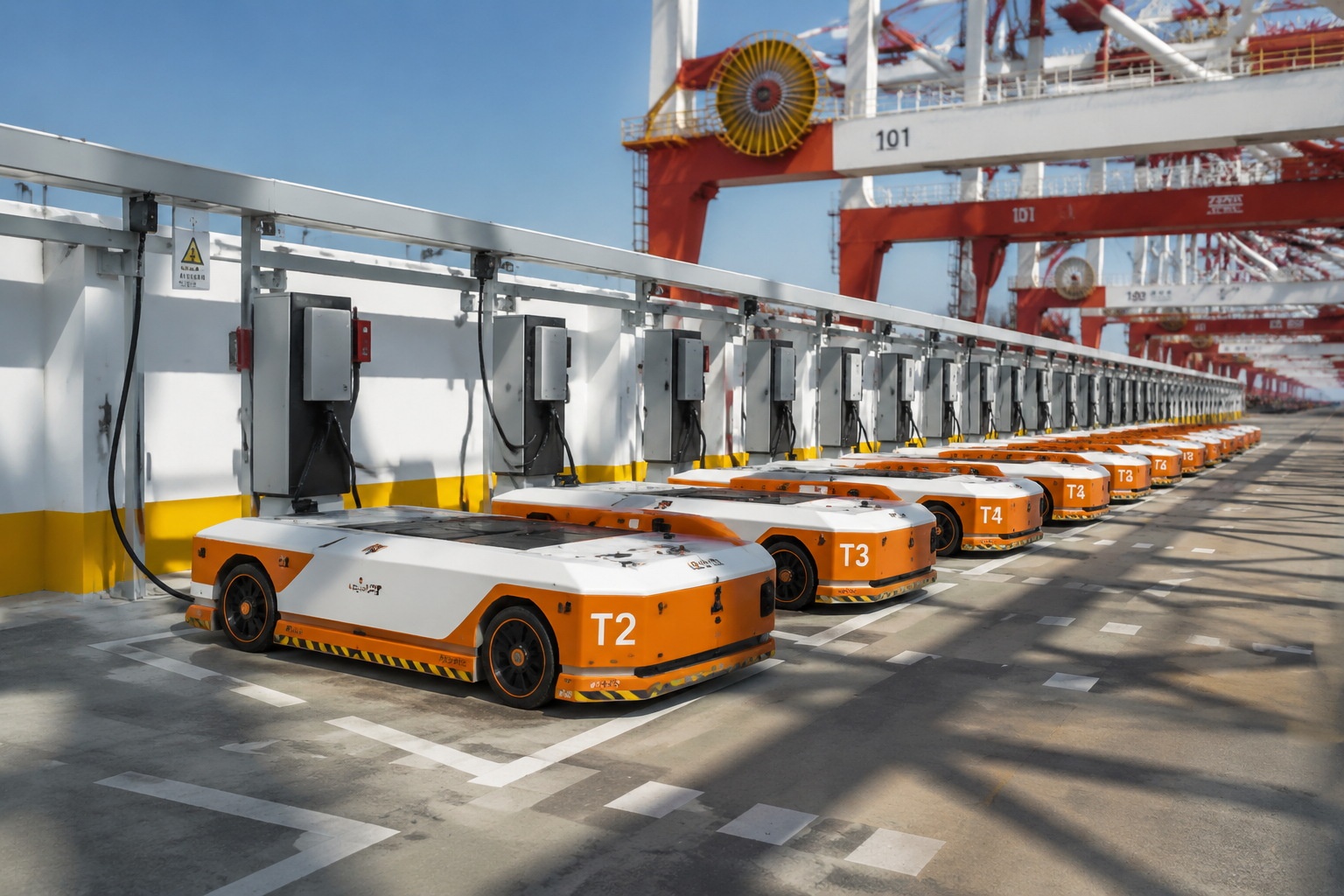
The efficiency gain is dramatic. A traditional quay crane operator might handle 25-30 moves per hour; Yangshan’s automated cranes average 35-40, with peak rates above 45. Meanwhile, battery-powered AGVs recharge at designated spots for just 15 minutes every 4 hours, ensuring near-continuous operation.
From Ship to Truck: The Invisible Hand of AI
Let’s follow one specific box — a 40-foot refrigerated container carrying Chilean cherries destined for a Shanghai supermarket. The vessel, the COSCO Glory, arrives at 3 AM. The TOS has already received its stowage plan and assigned a berth window. Once docked, a crane lifts the cherry container onto AGV #87, which trundles across the terminal at 30 km/h to the reefer yard. There, an automated stacking crane places it onto a power pedestal to keep it cold.
Within an hour, a truck driver named Zhang Yong pulls into a designated gate. His truck license plate is scanned, and the system automatically retrieves the container. He doesn’t need to leave his cab; a digital screen directs him to a specific lane where a crane lowers the box onto his chassis. Total time from ship arrival to truck exit: less than two hours. In a conventional terminal, the same process could take four to six hours.
The Scale: 970,000 TEUs in Context
China’s port system is vast but concentrated. According to the Ministry of Transport, the top five ports — Shanghai, Ningbo-Zhoushan, Shenzhen, Qingdao, and Guangzhou — handle nearly half of the nation’s container throughput. Yangshan alone processes over 20 million TEUs annually, roughly 55,000 per day. Nationwide, the 970,000 figure comes from the sum of all ports, including smaller regional hubs that feed the mega-terminals via coastal feeder ships and inland waterways.
This network is critical for global supply chains. Roughly 30% of all global containerized trade passes through China. Every day, thousands of tons of electronics, apparel, machinery parts, and fresh produce flow from Chinese factories to the rest of the world — and half of that volume exits through these automated terminals.
Challenges and Human Touch
Automation does not mean absence of people. At Yangshan, maintenance technicians walk the gantries daily, checking sensors and replacing worn cables. In the control room, engineers like Li Wei monitor exceptions — a misaligned container, a jammed gate, a battery under 10%. “The AI can handle 95% of cases automatically,” Li says. “The remaining 5% require human intuition and experience.”
He recalls a typhoon alert last summer: “The system slowed operations automatically, but we had to manually override crane wind-lock thresholds to prevent damage. You still need humans for judgment calls in extreme conditions.”
Another challenge is congestion during peak seasons. During the weeks before Christmas or Chinese New Year, the terminal operates at 110% capacity. Then, the TOS prioritizes high-value goods and uses predictive algorithms to stagger truck arrivals, reducing queues. “We don’t have a magic wand,” Li admits. “We just plan better with data.”
What’s Next: Green Ports and Smart Corridors
China is now pushing toward green ports. Yangshan Phase IV is already carbon-neutral for onshore power — all AGVs are electric, and rooftop solar panels feed the control building. By 2025, the port intends to cut overall emissions by 30% from 2020 levels. Meanwhile, pilot projects are linking port data with rail and barge networks to create “smart shipping corridors” that can predict cargo arrival times within 15 minutes along the Shanghai-Nanjing route.
The cherry container on Zhang Yong’s truck eventually arrives at a distribution center in the outskirts of Shanghai, where it will be unloaded and sent to stores within hours. The whole journey — from Chilean farm to Chinese store — takes about 25 days, down from 40 days a decade ago. Port efficiency is a big reason why.
Back at Yangshan, dawn breaks over the sea of colored containers. The cranes keep moving. A new vessel is approaching the mouth of the harbor, its schedule already loaded into the TOS. The symphony continues, 970,000 times a day.
Start the discussion at forum.chinacomes.com