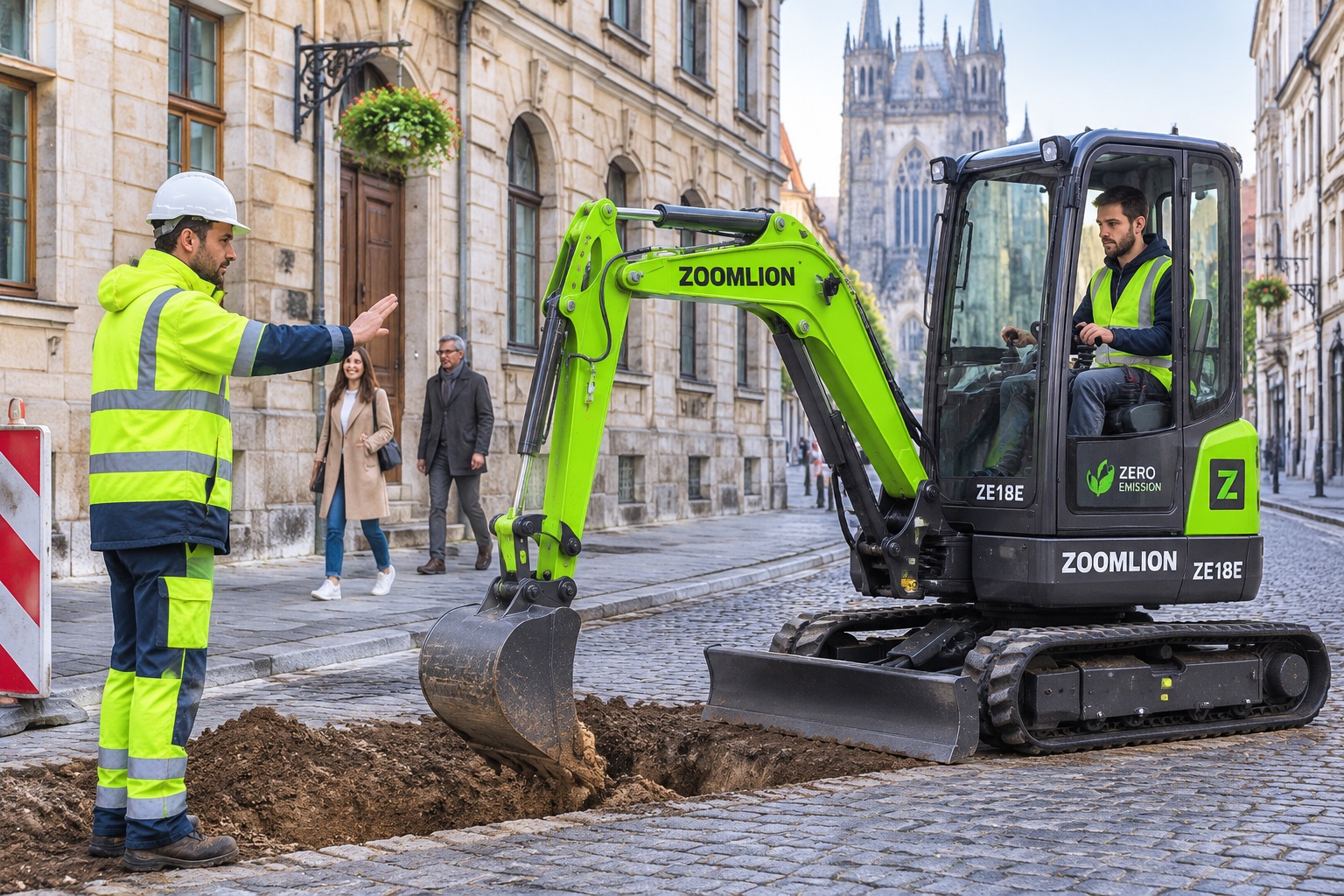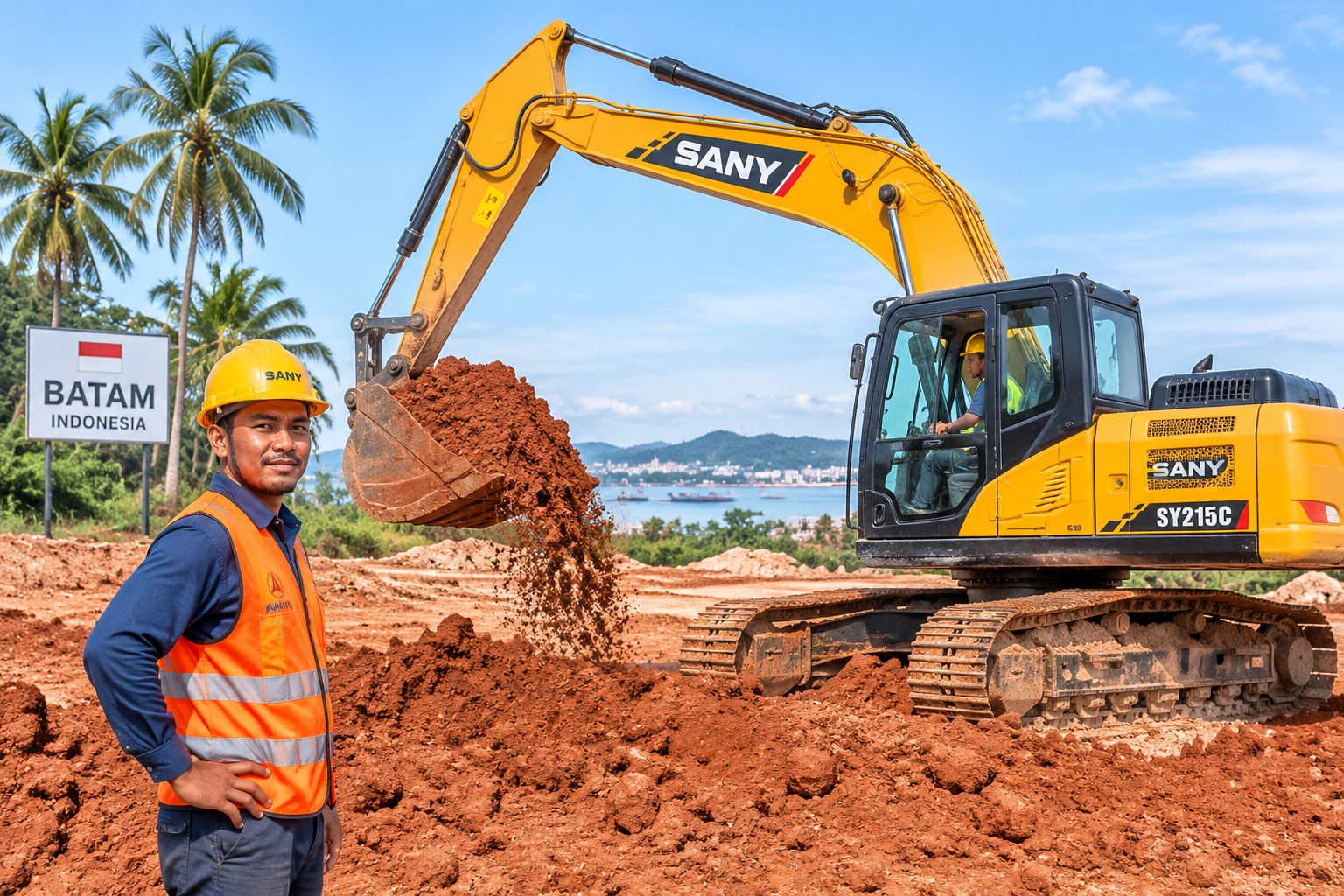

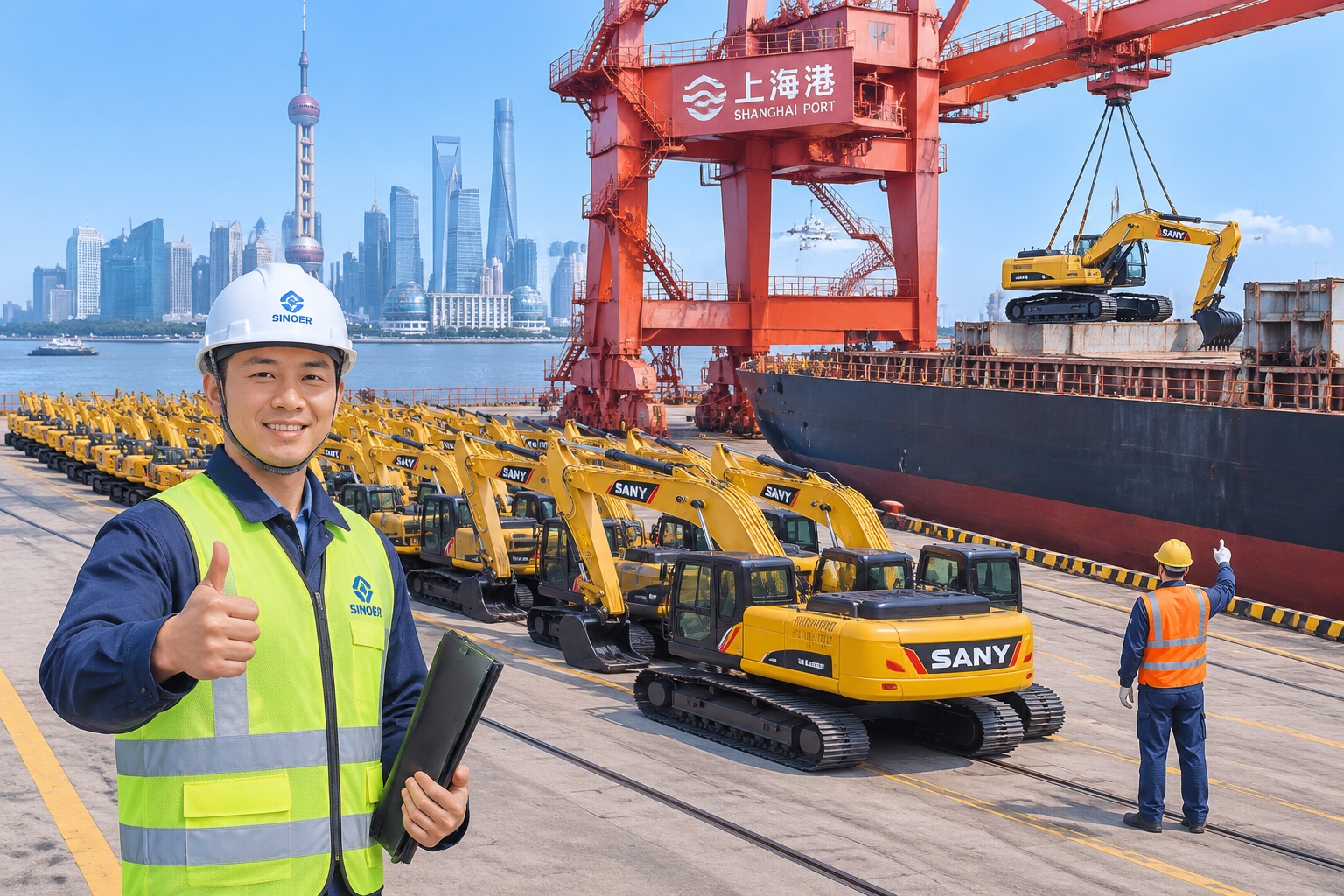
It is early morning in Batam, an industrial island in Indonesia. A row of bright yellow excavators is already moving earth at a new industrial park, their tracks chewing into the red soil. Some are painted with the three-armed logo of SANY, others carry the green-and-black Zoomlion branding. All of them made the 2,500-mile journey by sea from China’s Shanghai port, but they originally came from an even more unexpected place: a sprawling factory complex in Changsha, the capital of central China’s Hunan province.
Hunan is not the first place that comes to mind when people think of global heavy industry. It is landlocked, far from major shipping lanes, and traditionally known as China’s breadbasket for rice. But over the past two decades, this province has turned into the world’s single largest cluster for construction machinery – a surprising milestone that is reshaping the global industry.
The Hard Numbers: A Quiet Export Juggernaut
China now makes more excavators than any other country, and a large share of them come from Hunan. According to the China Construction Machinery Association, the country exported more than 150,000 excavators in 2023, up 15% year-on-year. Analysts estimate that at least a quarter of those machines were produced in Hunan’s integrated industrial zones.
The sheer scale is staggering. In Changsha alone, three of China’s top ten construction machinery companies are headquartered: SANY Group, Zoomlion Heavy Industry and Sunward Intelligent Equipment Group. Their combined annual export revenue exceeded RMB 50 billion (about $7 billion) in 2023, with excavators as the flagship product line.
According to Off-Highway Research, a U.K.-based consultancy, SANY has been the world’s best-selling excavator manufacturer by sales volume since 2020. Zoomlion is among the top five global makers of construction cranes, and its excavator business has grown fast thanks to its strong position in emerging markets.
Beyond Cheap Labor: The Hidden Strength of the Hunan Cluster
It would be easy to assume that Chinese machines are popular only because they are cheaper. That is part of the story, but not the whole truth. In the past decade, Hunan’s engineering firms have embraced advanced manufacturing, predictive maintenance and electrification – and the results can be seen inside their factories.
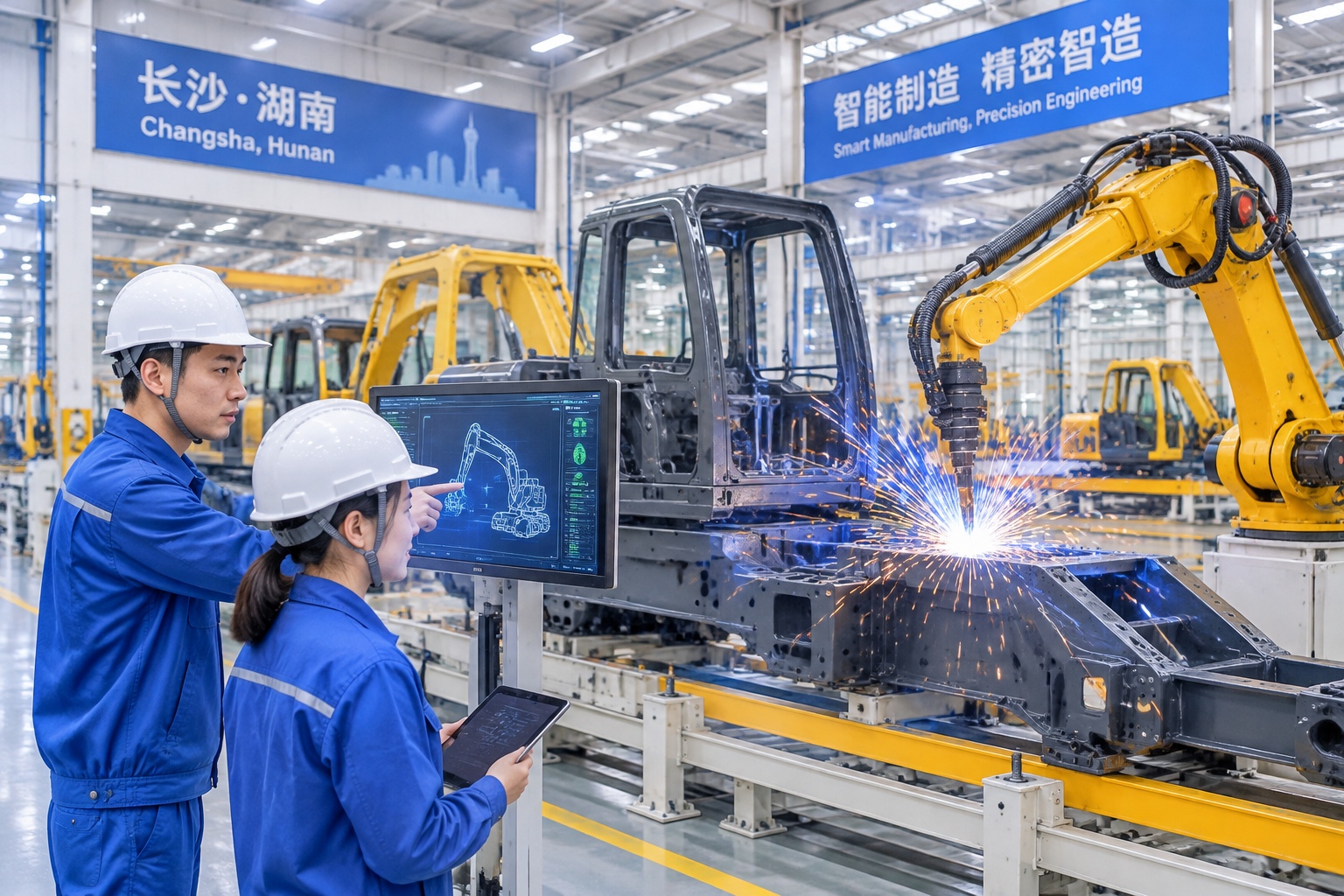
At SANY’s No. 18 workshop, a “smart factory” that opened in 2018, robotic arms weld components with a precision that rivals anything in Europe. Automated guided vehicles move materials across the floor, and a central computer coordinates the entire process. The plant is capable of producing one excavator every five minutes, according to the company, and it has slashed the average production error rate by 60% compared to traditional lines.
But the real edge may be in the supply chain. Around Changsha, hundreds of specialized suppliers make engines, hydraulic cylinders, and electronic controls in a tight radius. This industrial ecosystem makes it easier to develop new models and customize existing ones. When a Norwegian customer wanted an electric excavator that could operate in sub-zero temperatures, SANY engineers say they had a working prototype within weeks, thanks to the proximity of parts suppliers.
Going Global: From Exports to Local Roots
Exporting machines is one thing; becoming a trustworthy brand abroad is another. For years, Chinese equipment suffers from a reputation for poor after-sales service. Hunan’s engineers have invested heavily to change that perception.
SANY has set up assembly plants in India, Brazil, and Turkey, as well as an R&D center in the United States. It also acquired Putzmeister, the German concrete pump maker, in 2012, a deal that gave it access to premium German engineering and a global dealer network. Zoomlion likewise bought Italy’s CIFA in 2008, gaining a foothold in European concrete technology.
Localization goes beyond assembling. In Kenya, for instance, SANY has trained a network of local technicians and stocked spare parts in regional depots, so that when a machine breaks down, a mechanic can arrive within 24 hours. In Indonesia, operators are trained on virtual reality simulators that mimic the exact control layout of SANY excavators, reducing the learning curve.
The strategy is paying off. Recent years have seen Hunan’s construction machinery exports to Africa and Latin America grow more than 20% annually, while European and North American markets are increasingly accepting Chinese-made equipment, especially in the electric segment.
The Electric Frontier
Another differentiator is electrification. Global cities are under pressure to cut emissions, and excavation machines are a major source of diesel fumes. Chinese manufacturers, partly driven by China’s own carbon-neutrality goals, have pushed aggressively into electric and hybrid machines.
Zoomlion launched a series of electric mini-excavators that produce zero local emissions and are 50% cheaper to run than diesel equivalents, according to its own tests. SANY unveiled an electric wheeled excavator at the Munich bauma exhibition in 2023, and signed an order with a German construction company soon after. These machines are quieter, which makes them suitable for night work in residential areas.
Smart features are also becoming standard. Many new Hunan-made excavators come with telematic systems that send real-time data to the owner’s smartphone – fuel level, engine status, and even predictive alerts for part wear. This is a huge differentiator for buyers who previously had to send a technician to check on costly machinery.
Challenges Ahead
Still, the road to global domination is not without obstacles. Established rivals such as Caterpillar and Komatsu have decades of brand loyalty and vast dealer networks. Tariffs and trade tensions could also slow growth; the U.S. has imposed tariffs on some Chinese construction machinery, pushing up prices and potentially dampening demand.
Then there is the matter of perception. Some customers still view ‘Made in China’ as a compromise, even if tests show otherwise. Hunan manufacturers have worked to rebrand by offering longer warranties and round-the-clock remote support, but changing hearts takes time.
Finally, the global economy is cyclical. An infrastructure boom can quickly turn to bust. Chinese companies are learning to ride that cycle, but their margins are still thinner than those of competitors.
The View from the Cab
At a jobsite in Batam, a local operator named Rizky sits in the cab of a SANY SY215C. It has been running for six straight hours, moving boulders and dirt. He nods toward the digital gauge cluster: Everything looks good. ‘I used to work with an old Japanese machine. This one is easier, more comfortable, and if anything goes wrong, the dealer to fix it is 20 kilometers away,’ he says.
That convenience is the quiet engine of Hunan’s expansion. For decades, global construction firms assumed the best heavy machinery came from a handful of American, Japanese, or European brands. Now, a new generation of ambitious manufacturers from an inland Chinese province has not only caught up – they have started to define the next generation of machines, one worksite at a time.