

The parcel that beat my alarm clock
Last month a friend in Manchester ordered a phone case on a Monday. It arrived the following Wednesday. Eight days, and she called it “not bad.”
I ran a small experiment in Hangzhou. At 11:40 p.m. on a Tuesday I ordered a power bank on JD.com and a phone case from a small Taobao seller in Guangdong. The power bank was in my hands at 9:20 the next morning. The case arrived the evening after that, about 42 hours after I paid.
Neither parcel was urgent. That is the point. In China, this is simply what ordering something looks like.
Express companies here handled roughly 174 billion parcels in 2024, according to the State Post Bureau. That works out to about 120 parcels per person per year, or 480 million a day. On the peak day of the Singles’ Day shopping festival, the daily figure has climbed past 700 million.
Foreign readers often call this magic. It isn’t. It’s a chain of unglamorous steps, each one shaving minutes off the next. Follow a single box and you can see the whole machine.

One order, thirty-six hours: following a parcel from cart to doorstep
Take something ordinary: a 39-yuan cotton T-shirt from a seller in Yiwu, a wholesale city in Zhejiang.
10:04 p.m. The buyer pays. Within seconds the order lands in the seller’s warehouse software and an electronic waybill is generated — a tracking number with a barcode, printed on a sticky label. The platform’s system has already picked a carrier based on destination, weight and price.
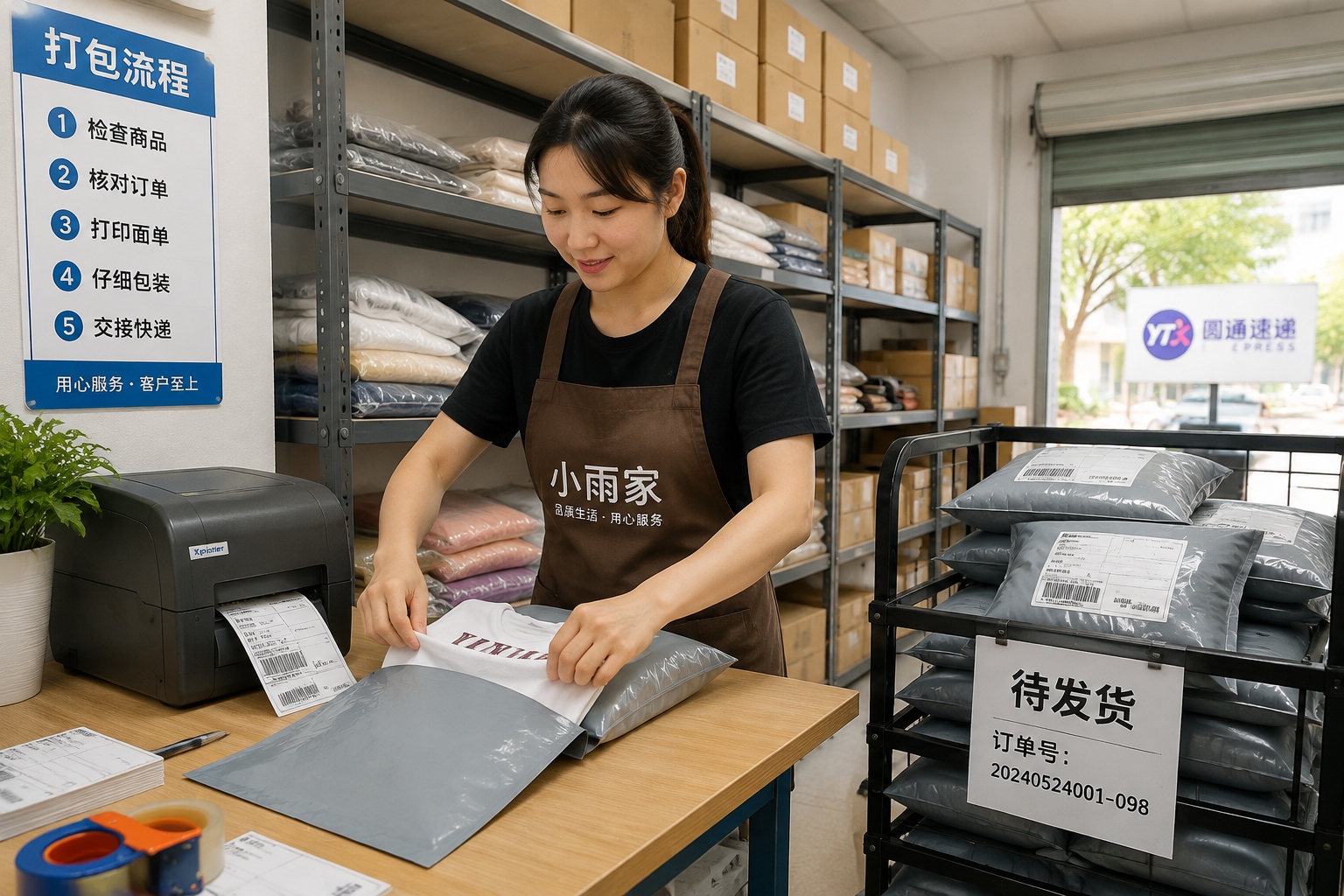
6:30 a.m. A warehouse worker scans the order, pulls the shirt off a shelf, seals it in a grey plastic bag and slaps on the label. The bag joins a cage of 300 others going to the same province.
9:00 a.m. A van drops the cage at a district sorting center on the edge of the city.
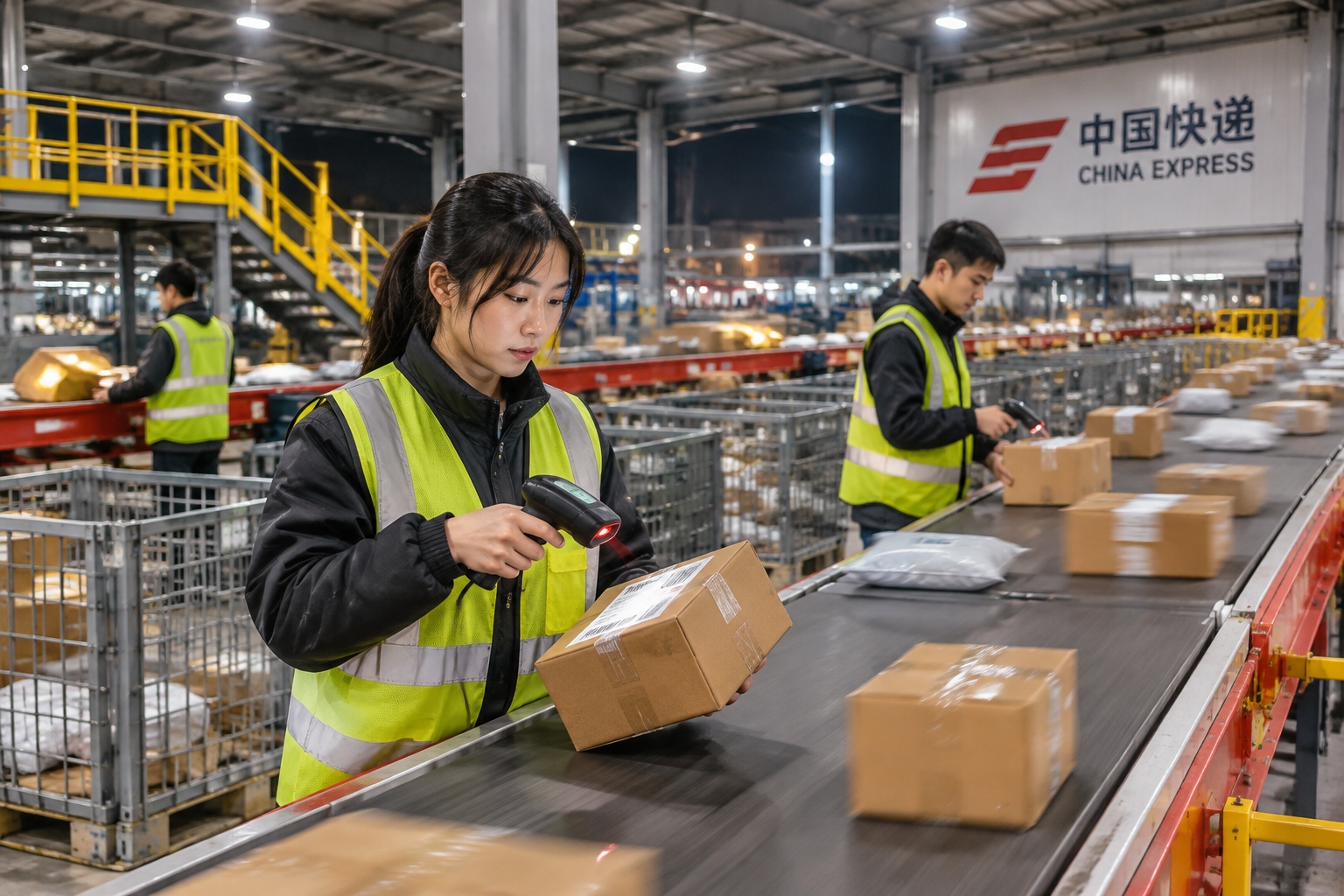
11:00 a.m. The parcels ride a conveyor. A scanner reads each label; a cross-belt sorter tips the shirt into a chute marked for the destination city. Every scan writes a timestamp, which is why the buyer’s app can show a moving dot.
2:00 p.m. A line-haul truck leaves, or — for longer routes — the parcels go by rail or air.
2:00 a.m. The truck reaches a hub near the buyer’s city. Sorted again, this time down to the district.
6:00 a.m. A small local delivery station takes over.
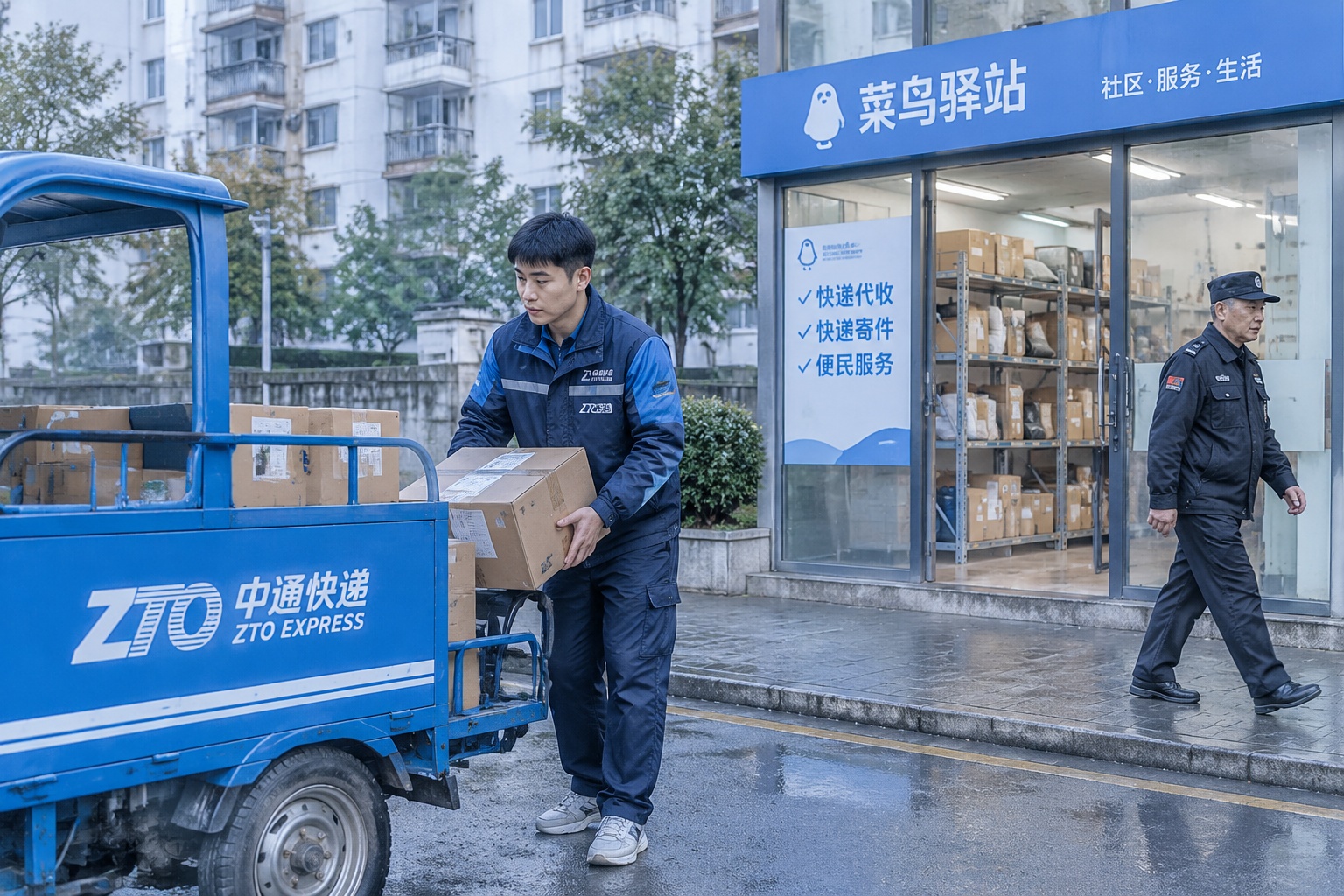
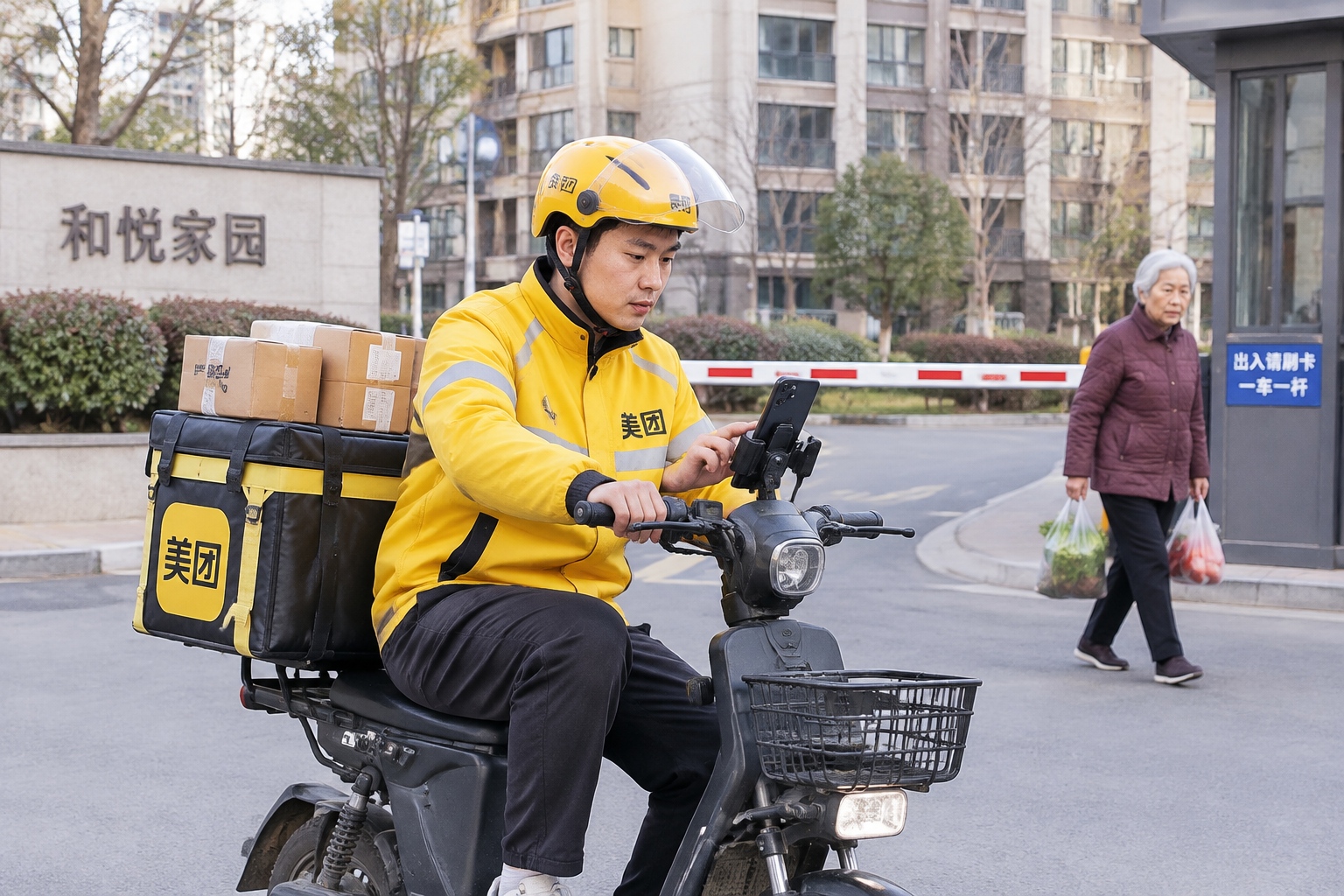
8:00 a.m. A courier loads an electric scooter and starts the round.
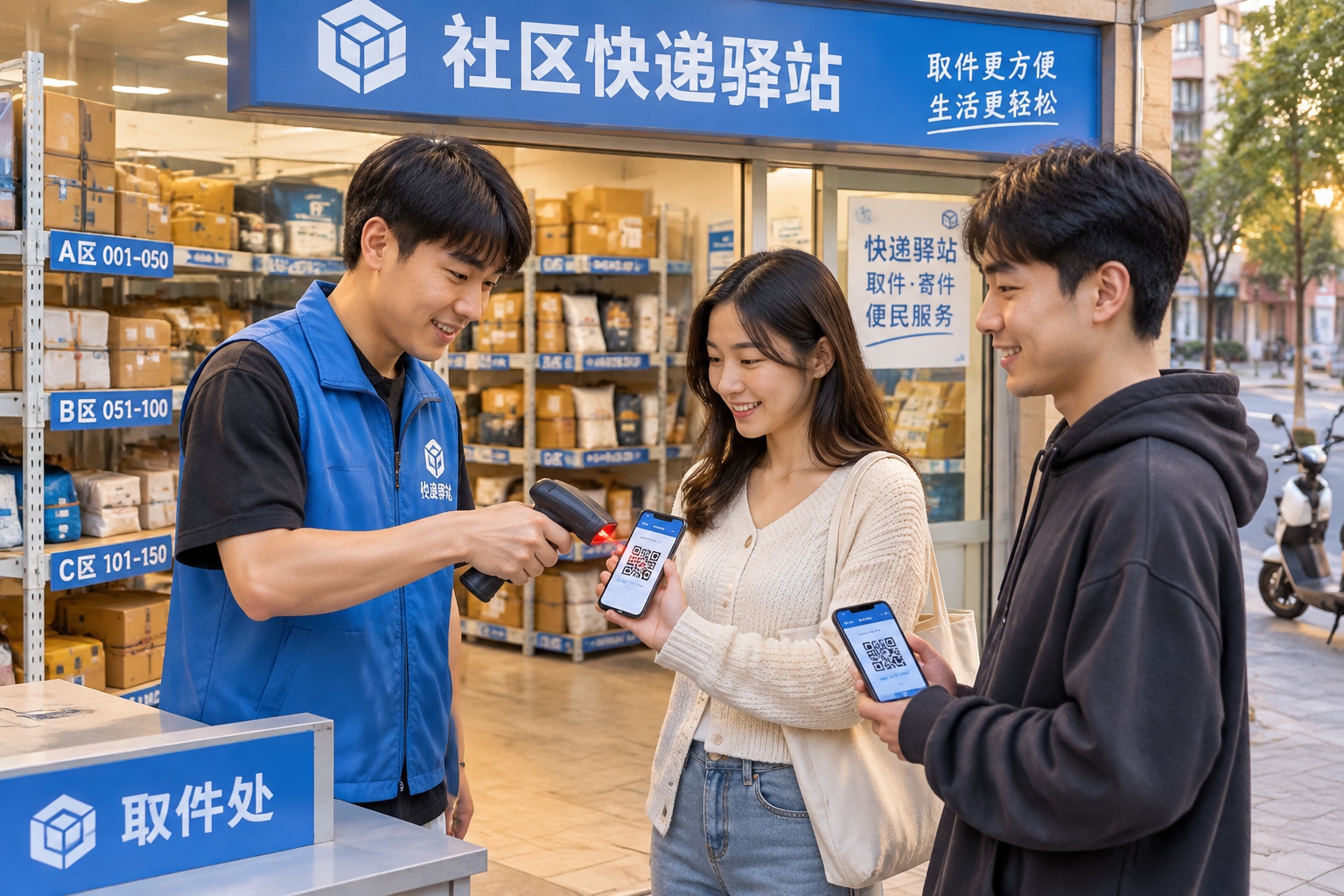
6:00 p.m. The shirt sits in a pickup station 200 metres from the buyer’s flat, and her phone buzzes with a six-digit code.
Thirty-six to forty hours, door to door, for a product that crossed 1,000 kilometres. Nothing in that timeline is exotic. What makes it fast is that every step is designed to hand off to the next one without waiting.
Why a JD.com parcel and a Taobao parcel don’t move the same way
The two big platforms built their speed differently, and consumers feel the difference.
JD.com sells most of its own goods and owns much of the logistics. Its roughly 1,500 large warehouses hold products before anyone orders them, and its own couriers do the delivery. That’s why a late-night JD order can land before breakfast: the power bank was probably already sitting in a warehouse on the edge of my city.
Taobao is a marketplace. Millions of independent sellers ship through dozens of express companies, and Alibaba’s logistics arm, Cainiao, supplies the shared plumbing — waybills, address data, routing, and some hubs. The parcel travels further and touches more hands, so it’s usually a day slower, but the range of goods is far wider.
Both models are exercised by the same pressure: shoppers treat delivery speed as a filter. Slow shipping means fewer clicks.
The data runs ahead of the cardboard
Long before the shirt is packed, software has already made decisions about it.
Electronic waybills replaced handwritten addresses in the mid-2010s and are now close to universal. Each label carries a bar code, so no one types anything at the sorting line.
Addresses get cleaned up automatically. Chinese addresses are messy — “building 3, unit 2, flat 501, opposite the wet market” — so platforms maintain address libraries that convert them into something a machine can route.
Then there’s stocking ahead. During the 618 and Singles’ Day sales, sellers ship goods to regional warehouses before buyers have even paid a deposit. By the time the order confirms, the item may be 30 kilometres away instead of 1,200.
Inside the sorting centre, and on the road at night
A large Chinese sorting hub feels like a small airport at midnight. Conveyor belts run overhead, parcels tip into chutes in a constant clatter of beeps, and trucks back into dozens of loading bays.
Automated cross-belt sorters can push tens of thousands of parcels an hour, and the biggest hubs handle over a million a day. Freight moves overnight by truck, by high-speed rail and by dedicated cargo aircraft.
The economics explain the frequency. The average domestic parcel brings in only around 8 yuan (about $1.10). Companies earn on volume, not on margin, so a truck that leaves full costs almost the same as one that leaves half-empty. Density makes frequent departures affordable.
The last kilometre is a person on an electric scooter
The final leg is the least automated and the most visible. Couriers in most Chinese cities handle 200 to 400 parcels a day, paid per parcel, often with deductions for late scans or complaints.
Much of the job has shifted from doorsteps to shared spaces. Cainiao-branded pickup stations, locker banks, office reception desks, and even the counter of a neighbourhood shop all absorb parcels. There are more than 100,000 Cainiao stations across the country.
In March 2024, new rules said couriers must get the customer’s consent before leaving a parcel in a locker or station. The rule exists, but enforcement is uneven — with 480 million parcels a day, calling every recipient is not physically possible with the current workforce, and many customers prefer picking up on their way home anyway.
Where “fast” stops being true
The smooth version of this story is real, but it isn’t the whole country.
Villages often get deliveries through a shared pickup point, adding a day. Remote areas of Xinjiang or Tibet carry surcharges and longer waits. During Spring Festival, when couriers go home, volumes drop sharply and delivery slows for two weeks. Singles’ Day creates its own congestion: 700 million parcels in one day will clog something.
Why other countries can’t simply copy this
It’s tempting to read this as one country being faster. The mechanics are less about speed than about density and organisation.
A courier in a Chinese city can serve 800 households inside three apartment blocks. The same 800 households in a British or American suburb might stretch across 40 kilometres of road. Online shopping is also a bigger share of retail here — roughly a quarter of consumer goods, compared with about one-sixth in the United States — which means more parcels per square kilometre and cheaper routes.
Add rural migrant labour willing to work per-parcel shifts, dense road and mobile-payment infrastructure, and shoppers who abandon a listing if it says four days, and the system becomes self-reinforcing.
Back to one box
At 6:40 on a wet morning, a courier named Chen is strapping 180 parcels onto his scooter outside a station in Hangzhou. He has done this route for three years and knows which buildings have working lifts.
By evening, most of those parcels will be on shelves or in someone’s hands. Nobody will call it magic. They’ll just check the app, see the dot has stopped moving, and go downstairs.
Start the discussion at forum.chinacomes.com