
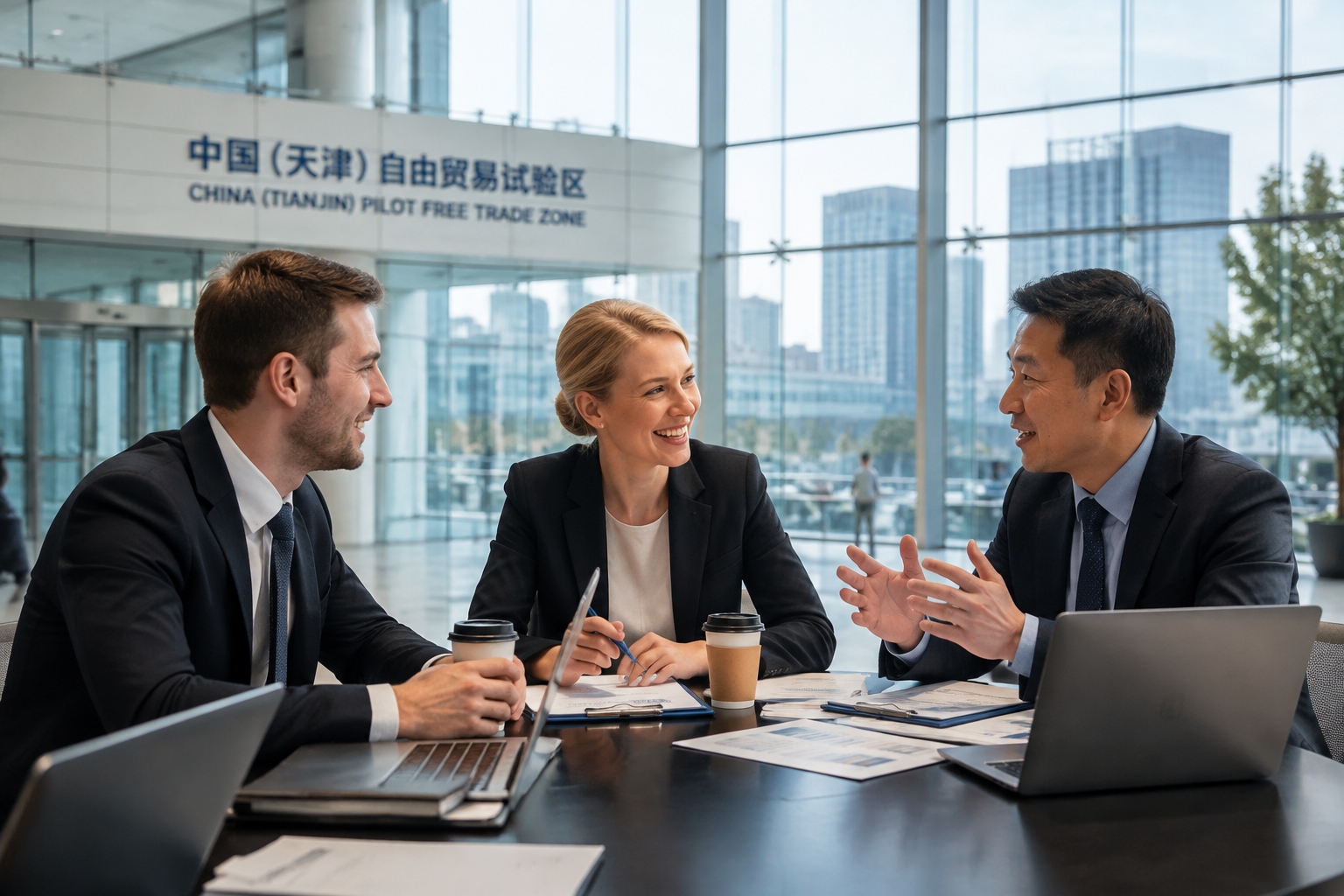

A Morning Coffee with Three Foreign Bosses
Stefan Fischer, a German machinery parts manufacturer, remembers the day he nearly gave up on Tianjin. It was 2018, and his company’s application for a business license had been stuck for six weeks. “I thought, this is the China I was warned about,” he says. But then something changed. A staff member from the local free-trade-zone administration called him, explained the missing document, and promised to have it done in three days. “It actually happened. That was the moment I started believing the reform was real.”
Fischer was one of three foreign business owners I met over coffee in Tianjin’s Binhai New Area one rainy Tuesday. The others were Sarah Chen, an American tech founder originally from California, and Takashi Nakamura, a Japanese trading company veteran. All three run companies inside the Tianjin Free Trade Zone (TJFTZ), one of China’s first experimental zones for opening up its economy. They had different stories, but similar feelings: cautious optimism, sprinkled with real complaints.
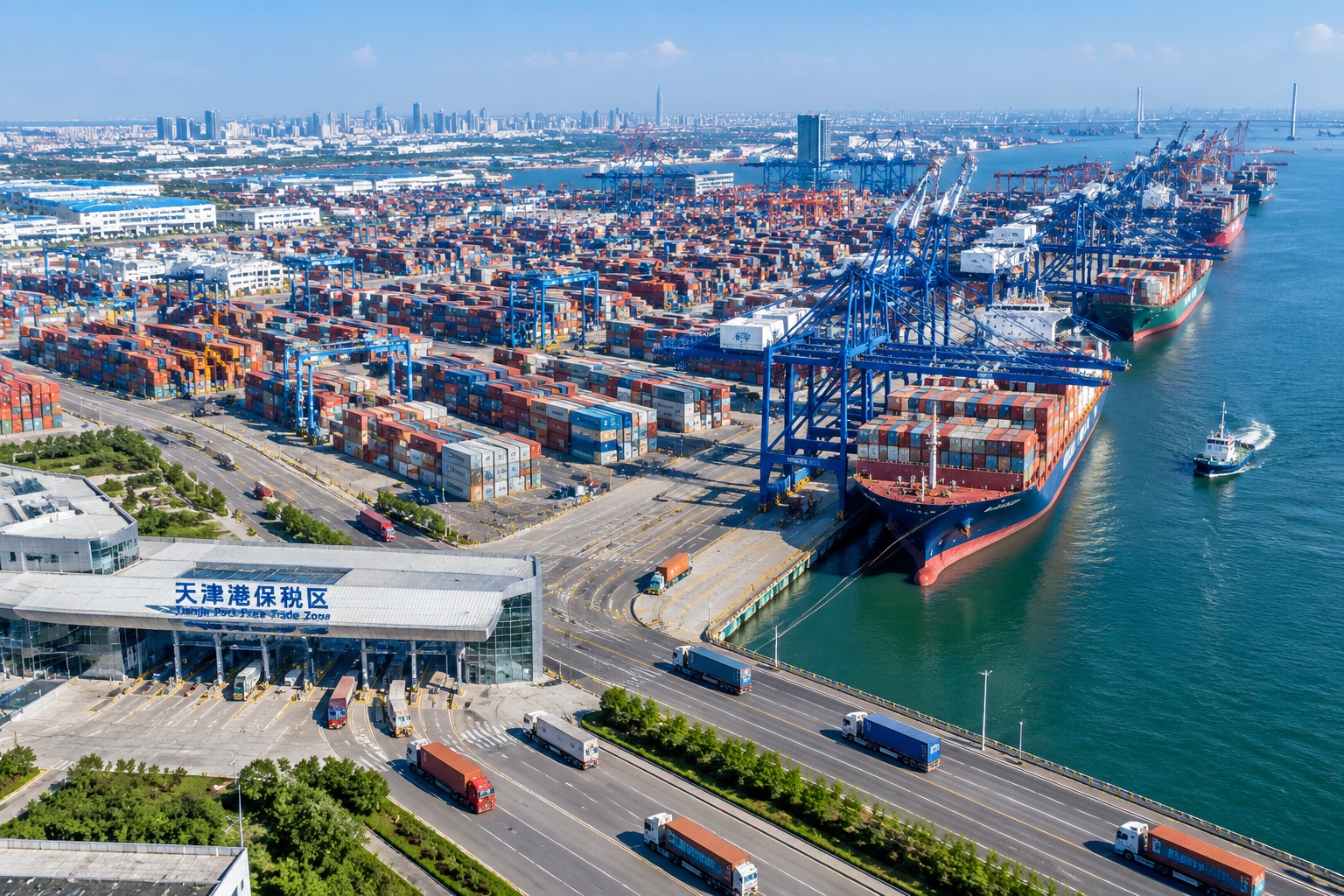
What Is the Tianjin Free Trade Zone, Anyway?
For readers outside China, the term “free trade zone” might sound like a duty-free shopping area. It’s not. It’s a designated area where policies are tested before being rolled out nationwide. TJFTZ, established in 2015, is part of a network of pilot zones created to liberalize rules around foreign investment, trade, and finance. It covers three areas: the Tianjin Port area, the Tianjin Airport area, and the Binhai New Area’s central business district. Each has its own specialty—port for logistics, airport for aviation and electronics, and CBD for financial services.
What makes it special is not the buildings, but the rules. Companies set up here face a “negative list” approach: unless an industry is explicitly on a forbidden list, foreign investors can enter on equal terms with domestic players. That list has shrunk dramatically over the years. For example, in 2015 there were 122 restricted industries nationwide. Now it’s down to just over 30. In TJFTZ, things go even faster.
Interview #1: The German Manufacturer on Speed and Rules
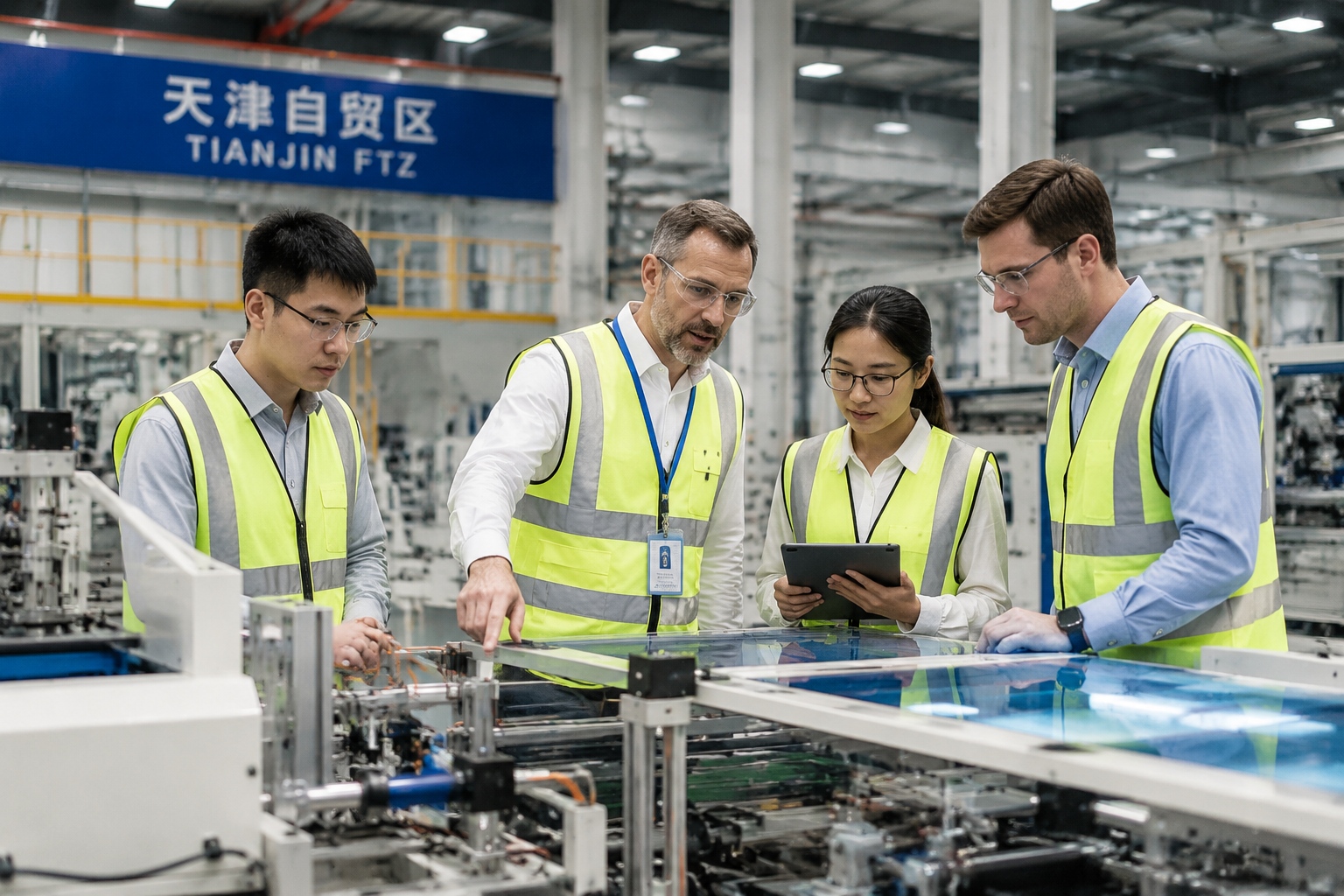
Fischer’s company makes precision valves. He set up a plant in the Airport area in 2017. “Customs clearance used to take two days,” he says. “Now it takes about four hours. I can ship parts to our German parent company in the evening, and they receive them the next morning.” The zone’s “integrated customs clearance” system allows goods to move through a single window, cutting paperwork to a fraction.
But speed isn’t everything. Fischer also noticed a change in how officials behave. “Five years ago, a local official might visit and hint at favors. Now they just check the checklist. It feels more institutionalized.” He also points out that environmental inspections have become stricter. “We had to invest in new waste-treatment equipment. At first I was annoyed, but then I realized it protects our own workers and the air. That’s a trade-off I accept.”
Interview #2: The American Tech Founder on Openness and Data
Sarah Chen runs a software startup that helps logistics companies track cargo using AI. She chose the CBD area because of the proximity to clients. “The negative list gives us clarity,” she says. “When we register, we know exactly if we can operate. It’s not about who you know. That’s a big change from the stories I heard in Shanghai in the early 2000s.”
Her biggest pain point is data cross-border transfer. “We handle data for European clients, and there are strict rules about moving that data out of China. The local authorities are still figuring out how to implement national regulations. We’ve had to set up a separate storage system in Hong Kong, which costs extra.” Still, she says, the zone has created a “sandbox” for fintech and data pilots. “We’re part of a pilot program to test data localization rules. It’s a headache, but at least we have a seat at the table.”
Interview #3: The Japanese Trader on Finance and Talent
Takashi Nakamura is the general manager of a trading firm that imports Japanese food and cosmetics. He has been in Tianjin for 15 years. “The financial services here are what changed the most,” he says. “We used to need approvals for every foreign currency transaction. Now, as a zone company, we have a liberalized current account under the pilot policy. It takes minutes, not days.”
But he’s worried about talent. “Finding bilingual workers who understand both Japanese business culture and Chinese consumer trends is hard. Big cities like Beijing and Shanghai drain the best candidates. We’ve had to offer higher salaries and even sent a Chinese employee to Japan for training.” He laughs. “The government is building an international school and apartments, but it’s still not enough for us to attract senior managers from Tokyo.”
Behind the Buzzwords: Negative Lists, Faster Customs, and More
What do these stories tell us about TJFTZ? Let’s break down the policies that directly affect foreign businesses.
The Negative List
This is a list of industries where foreign investment is restricted or prohibited. If your industry is not on it, you basically get national treatment. Since 2017, the list has been slashed from over 100 items to less than 40. In TJFTZ, a shorter “regional list” applies. For example, foreign-owned financial advisory companies are now allowed, which were previously capped at joint ventures.
Customs and Trade Convenience
The zone uses a “two-step declaration” system, allowing goods to be declared on arrival and finalize details within 24 hours. “Inspection and exemption” lists mean goods with low risk are not checked. Combined with a paperless “single window” system, clearance times have dropped from 2-3 days to 4-6 hours for many goods.
Financial Liberalization
Policies like cross-border RMB settlement, free capital account conversion for companies in the zone, and innovative financing models for tech startups are tested here. Nakamura’s example of faster foreign exchange transactions is a direct result of these pilots.
The Not-So-Glamorous Side: Complaints and Culture Clashes
It’s not all rosy. Fischer complained about the unpredictability of local enforcement. “Sometimes another district has a different standard for the same regulation. We’ve had to hire a compliance specialist just to keep up.”
Sarah points to the challenge of protecting intellectual property. “The overall system is better, and the specialized IP court in Tianjin is helpful. But it still takes time to enforce a judgment. We’ve filed two cases so far, both resolved, but it cost us money and energy.”
Nakamura mentions a subtle barrier: “In Japan, we often have long-term relationships built on trust. Here, business is faster but also more transactional. I’ve learned to be more direct. It’s not bad, just different.”
Also, competition is fierce. Local Chinese companies are quick, nimble, and know the market better. “You can’t just bring a foreign product and expect to win,” says Sarah. “You need a local partner or a very strong niche.”
So, Is It a Good Place to Do Business?
All three said they would still recommend TJFTZ to their colleagues back home—with caveats. “It’s not a Disneyland,” Fischer says. “But the direction is right. If you’re patient and do your homework, you can succeed.” Sarah adds, “The government is actually listening to us. We get invited to quarterly forums where they ask for feedback. Sometimes they change things. That’s rare anywhere.” Nakamura sums it up: “The policies are good on paper, but the real change is in attitude. Officials understand that helping us helps them. That mindset has become contagious.”
As I walked back to the Metro, I thought about how different this picture is from the grim headlines. Tianjin’s free trade zone is not a perfect paradise. It’s a work in progress—with real problems and real progress. For foreign business owners, that’s a fair deal.
Start the discussion at forum.chinacomes.com