
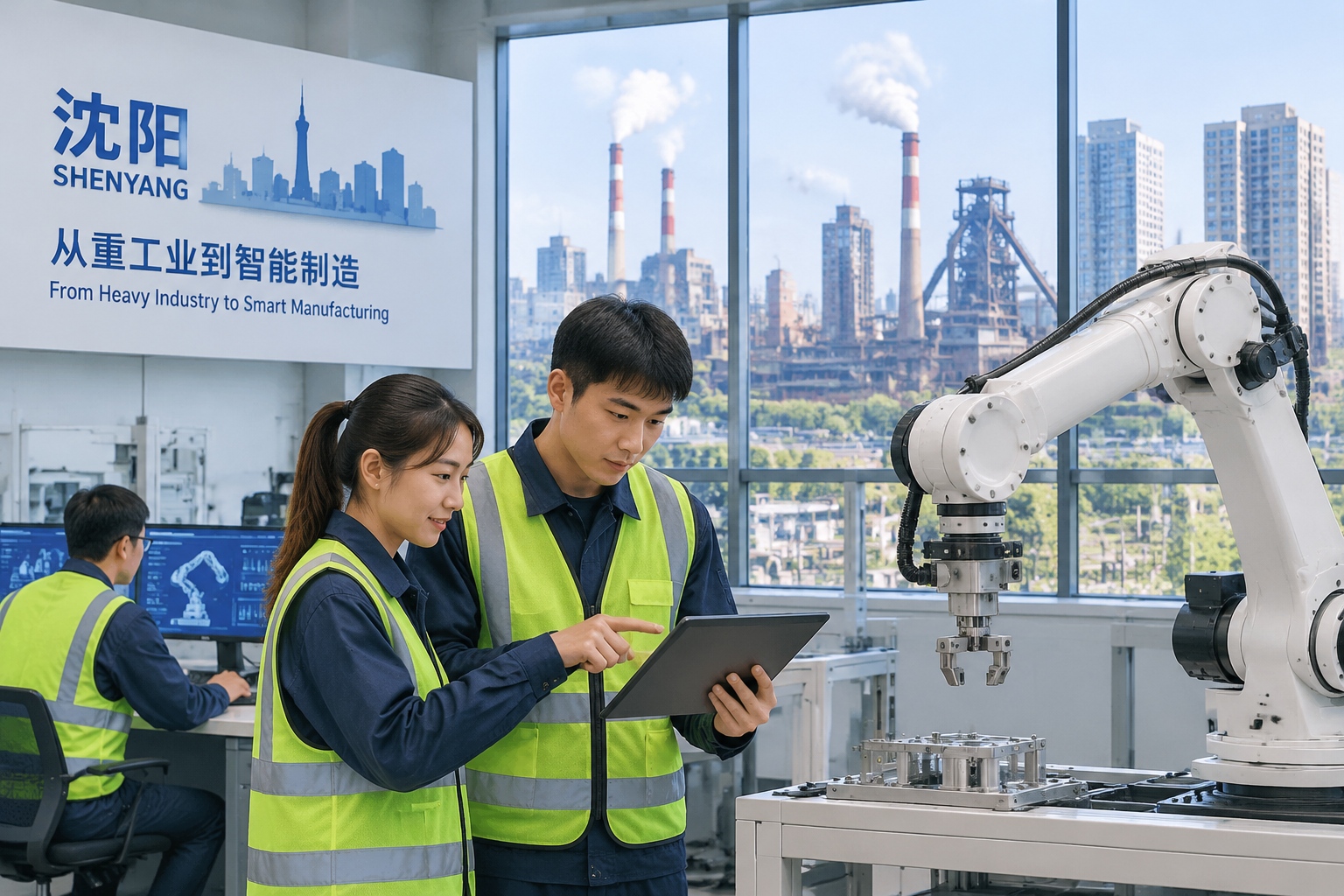

On the edge of Shenyang’s Tiexi district, where factory chimneys once defined the skyline, a new kind of noise now fills the air: the precise hum of robotic arms moving through test runs. The neighborhood used to be the heart of China’s state-owned steel and machinery industry. Today, some of those same sites are part of a robotics and automation cluster that is quietly turning this city into something different.
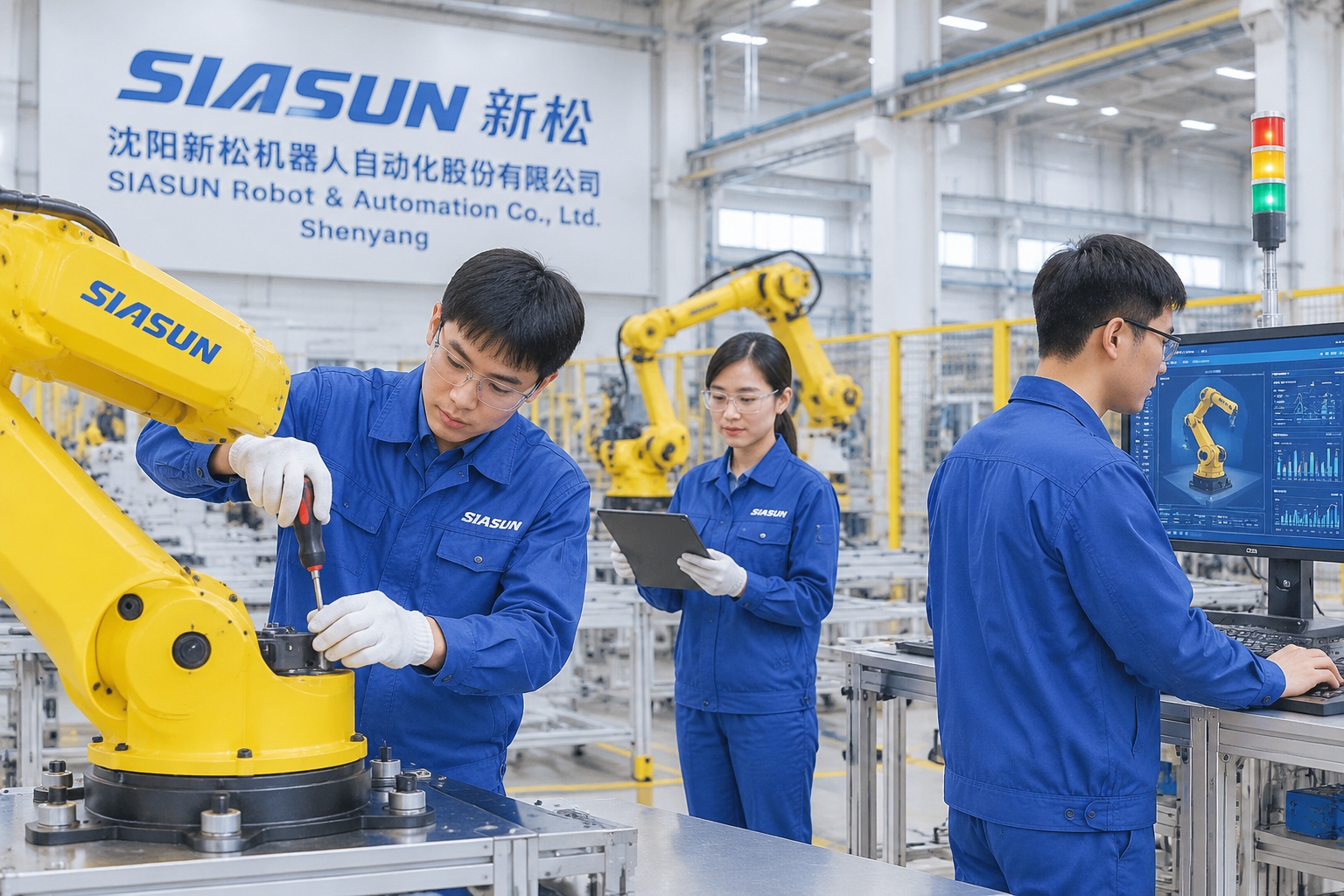
This is not a story of overnight success. Shenyang’s industrial transformation has taken years, with setbacks and slow progress. But it is real, and it can be seen in places like the manufacturing floor of SIASUN Robot & Automation Co., one of China’s largest robot makers. Started in 2000 as a spin-off from the Chinese Academy of Sciences, the company now produces everything from industrial arms used in car plants to mobile robots that deliver goods in hospitals and hotels.
The Old Industrial Heartland
To understand Shenyang’s shift, you need to know what came before. In the 1950s, the Chinese central government built a series of large state-owned factories in Shenyang, part of a plan to turn the city into a base for heavy industry. It made steel, machine tools, and many parts for the country’s first cars and airplanes. Locals used to say that if a machine broke down anywhere in China, Shenyang could fix it or replace it.
By the 1990s, however, this model began to struggle. Many state enterprises were inefficient and burdened with too many workers. As China moved toward a market economy, Shenyang’s factories lost orders and shed jobs. In the early 2000s, hundreds of thousands of workers were laid off in what locals remember as a painful period. The city had to rethink its economic base.
That process took time. In the 2000s and 2010s, Shenyang invested in infrastructure, urban renewal, and new industries. Old factories in Tiexi were demolished or converted into creative parks and offices. New industrial zones on the outskirts attracted investment. But the key shift came through technology. Instead of simply attracting more traditional manufacturing, the city began to focus on machinery with more intelligence built in.
Robots as the New Calling Card
Today, Shenyang is often called the “capital of robots” in China. That nickname is not just a slogan. The city’s robot and intelligent equipment industry has expanded rapidly in recent years, with output value reaching several tens of billions of yuan (several billion U.S. dollars). A large share of China’s robot production capacity is still concentrated in the surrounding area, though much of it is now in modern factories.
SIASUN is the best-known example. The company’s headquarters and main plant are in Shenyang, where workers assemble robotic arms that can handle tasks ranging from welding car frames to packaging snacks. SIASUN’s products are exported to more than 40 countries. They are used in BMW’s factory in Shenyang, which itself is an example of how the city is combining traditional auto-making with new industrial techniques.
The city has also become a center for research. Universities and research institutes in Shenyang work closely with companies on areas like industrial software and artificial intelligence. Many engineers and programmers who grew up here are now choosing to stay instead of moving to southern tech hubs. This changes the old narrative of talented people leaving for Beijing or Shanghai.
How Ordinary Workers Feel the Change
For an outsider, the most visible sign of change is the jobs. In the 2000s, a worker leaving a state-owned steel plant might have faced years of unemployment. Today, new opportunities have emerged, though not always for the same people. A 55-year-old former steelworker may not easily become a robotics engineer. But their children often do. The city’s universities and vocational schools now train thousands of technicians in automation, and companies like SIASUN run apprenticeship programs with local schools.
Walking through a modern factory in Shenyang, you see a different kind of work. The air is not full of smoke; the workstations are clean and bright. Workers monitor screens and program machines rather than pushing steel. One young technician, trained at a local vocational college, told me his job is to calibrate sensors on robotic arms. He earns a salary that lets him rent a good apartment and save for a car. He is not a celebrity engineer, but he is part of the new industrial middle class.
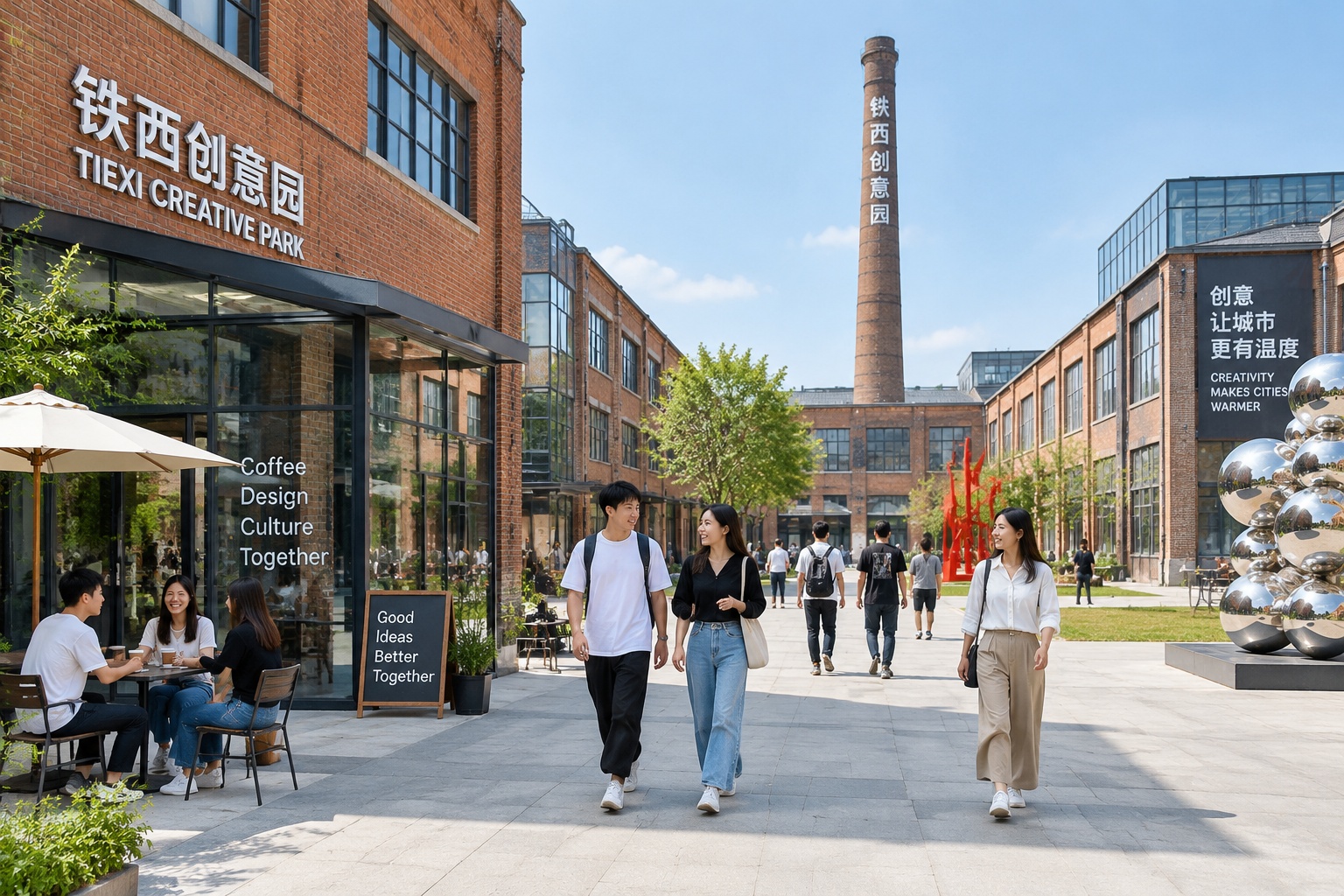
Outside the factories, the city itself has changed. The Tiexi Creative Park, built in a former factory complex, is now filled with cafes, design studios, and tech start-ups. On weekday evenings, young people meet there after work. This is not Silicon Valley, but it is a sign that Shenyang is beginning to attract a different kind of creative energy.
The Challenges Remain
It would be dishonest to describe Shenyang’s revival as complete or perfect. The city still faces problems. Its winters are long and cold, and many young people still prefer coastal cities. The cost of living is lower than in Shanghai, but wages are also lower. Some older industrial neighborhoods have not fully recovered; you can still see empty factory buildings and residents on low incomes.
Also, the robotics industry itself is competitive. Shenyang competes with other Chinese cities like Shanghai, Shenzhen, and Nanjing for talent and investment. The city’s advantages are its deep industrial history and its research base, but it must keep innovating to stay ahead.
A Real, Working Transformation
Shenyang’s industrial renaissance is not a fairy tale about a city that easily traded steel for silicon. It is a harder, slower story about a place that used its existing strengths—manufacturing skills, engineering knowledge, and state support—to move toward something new. The robots being built here today are not fictional machines from a future dream; they are working in factories, hospitals, and warehouses across the world.
What makes this change real is that it is rooted in ordinary life. Workers earn different wages, students study different subjects, and the air in the old factory districts is cleaner than it was two decades ago. The city is still evolving, and some parts of the transformation are still in progress. But the direction is clear: Shenyang is no longer just a place that made heavy steel, but a place that makes intelligent machines—and that is a meaningful change.
Start the discussion at forum.chinacomes.com