
It Starts with a Sudden Shout
The train is gliding at 300 km/h through the countryside. Most passengers are dozing or scrolling their phones. Then a woman’s voice cuts through the hum: “Someone help! My husband can’t breathe!”
In a sealed metal tube hurtling across China, this is the moment everyone dreads. But China’s high‑speed rail system—the world’s busiest, with over 40,000 kilometers of track—has a well‑practiced emergency playbook. Here’s how it works and what you, as a foreign traveler, need to know.
First, Know Where the Emergency Button Is
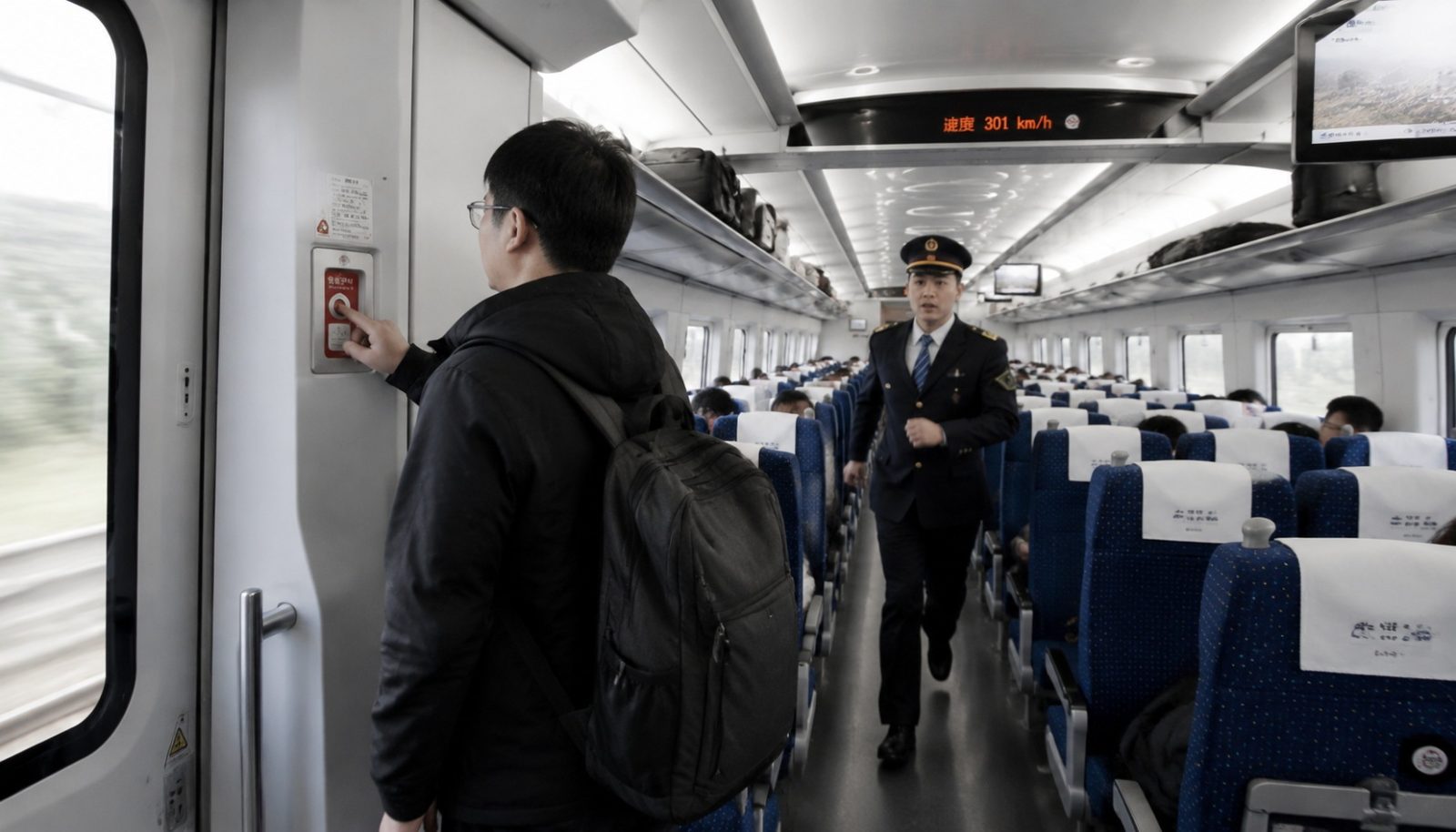
Every high‑speed train carriage has two types of emergency call points:
- At each end of the carriage – near the doors, clearly marked with a red button and a speaker symbol. Press it and you are directly connected to the train crew’s intercom.
- Inside the toilet – a similar button, often used if someone feels unwell in the lavatory (fainting or panic attacks are not uncommon).
Even if you don’t speak a word of Chinese, just pointing at the button and making a distressed face will bring a crew member within 30 seconds. Crews are trained to respond to non‑verbal cues.
What Happens After You Press the Button?
The crew member who answers already knows your carriage number. They will ask (in Chinese) what the situation is. If you don’t understand, just say “Help” or “Doctor”—those English words are widely understood on major routes.
Within one minute, the crew will dispatch two people: one stays with you, the other fetches the onboard medical kit and alerts the train chief.
The Medical Kit: More Than Just Band‑Aids
Every high‑speed train is required to carry a certified first‑aid kit. Its contents are standardized nationwide:
- Blood pressure monitor
- Thermometer
- Oxygen canister (for altitude or respiratory distress)
- Burn cream, antiseptic, bandages, splints
- Basic medicines (antihistamines, pain relievers, oral rehydration salts)
Crew members are not doctors, but they are trained in basic first aid (CPR, wound dressing, choking response) and can use the kit while waiting for professional help.
The “Doctor‑On‑Board” Broadcast System
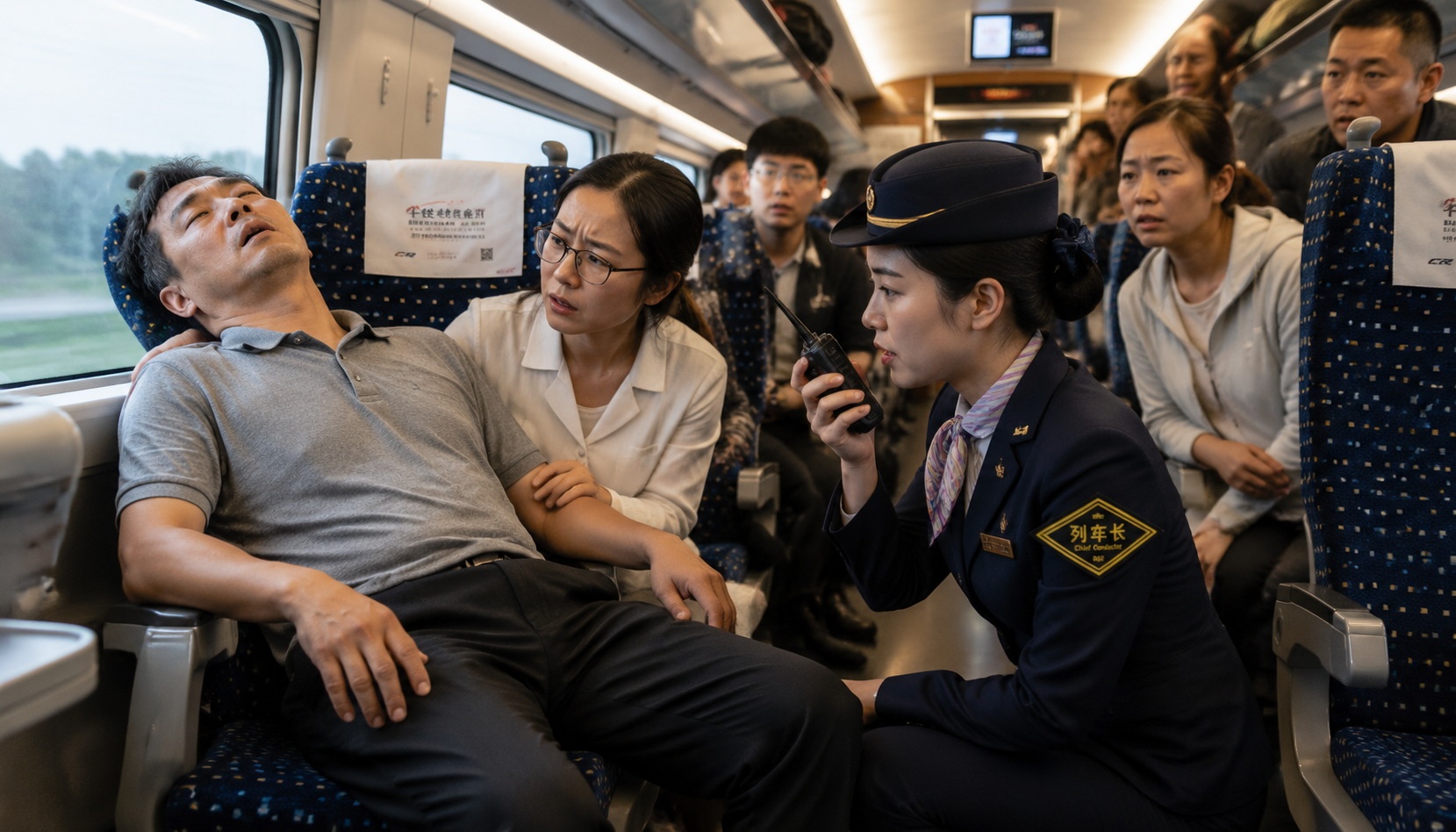
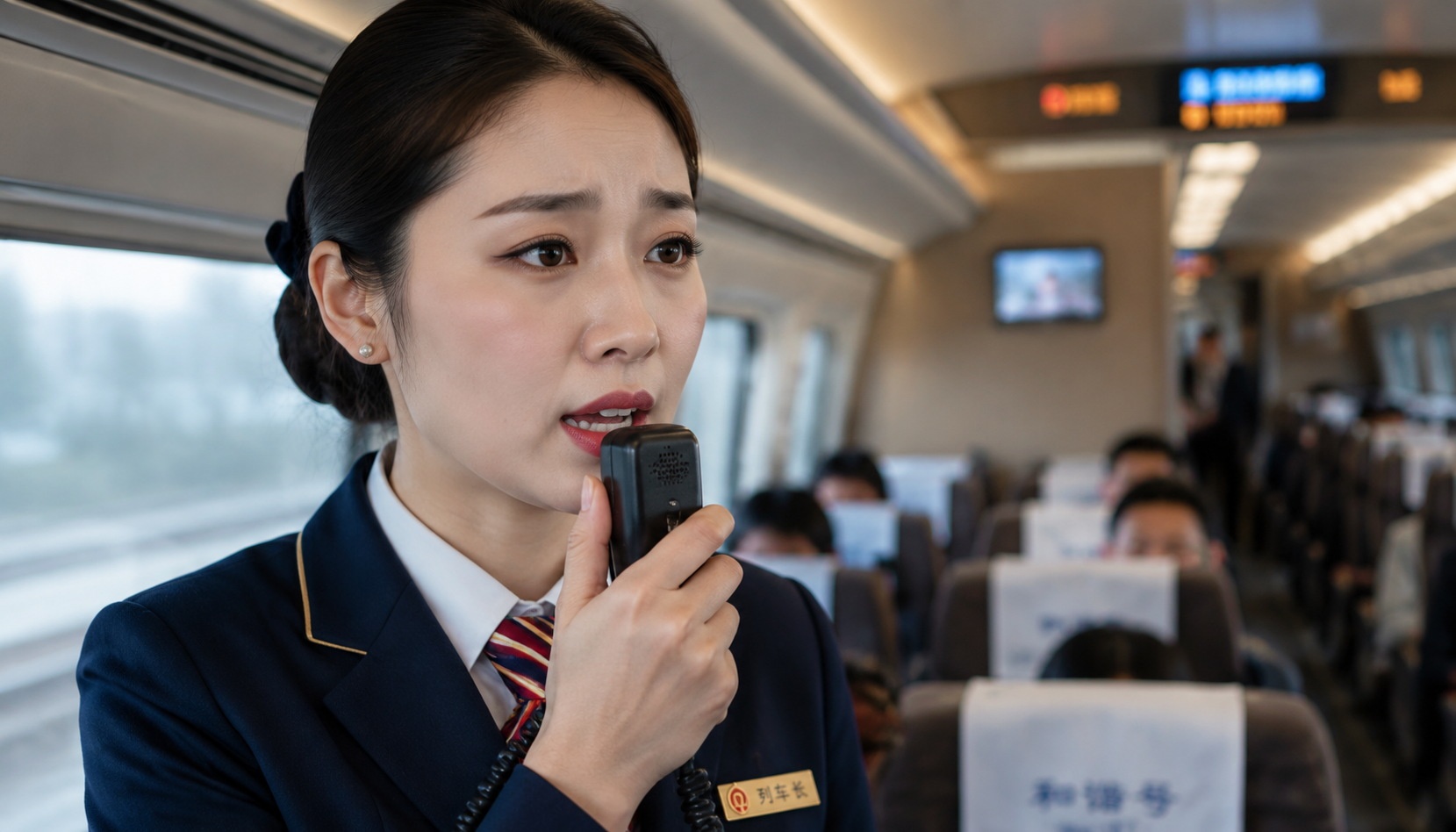
This is the most unique and effective part of China’s high‑speed emergency response. If the situation is serious—cardiac arrest, severe allergic reaction, seizure—the train chief will immediately order a public address broadcast searching for medical professionals among passengers. The announcement goes like this (first in Chinese, then in English on international‑route trains):
“Attention passengers. A medical emergency has occurred in Carriage 5. If there is a doctor, nurse, or any qualified medical professional on board, please contact a crew member immediately. Your help is urgently needed. Thank you.”
On China’s high‑speed trains, there is often a surprising number of doctors—many are commuting between cities for conferences or visiting family. The crew will guide the volunteer to the patient’s seat, hand over the medical kit, and provide privacy as much as possible.
In 2023 alone, over 2,000 such “doctor‑on‑board” broadcasts were made across the network, and in most cases the patient was stabilized before the train reached the next station where an ambulance was waiting.
What About Security Incidents? Fights, Thefts, or Harassment?
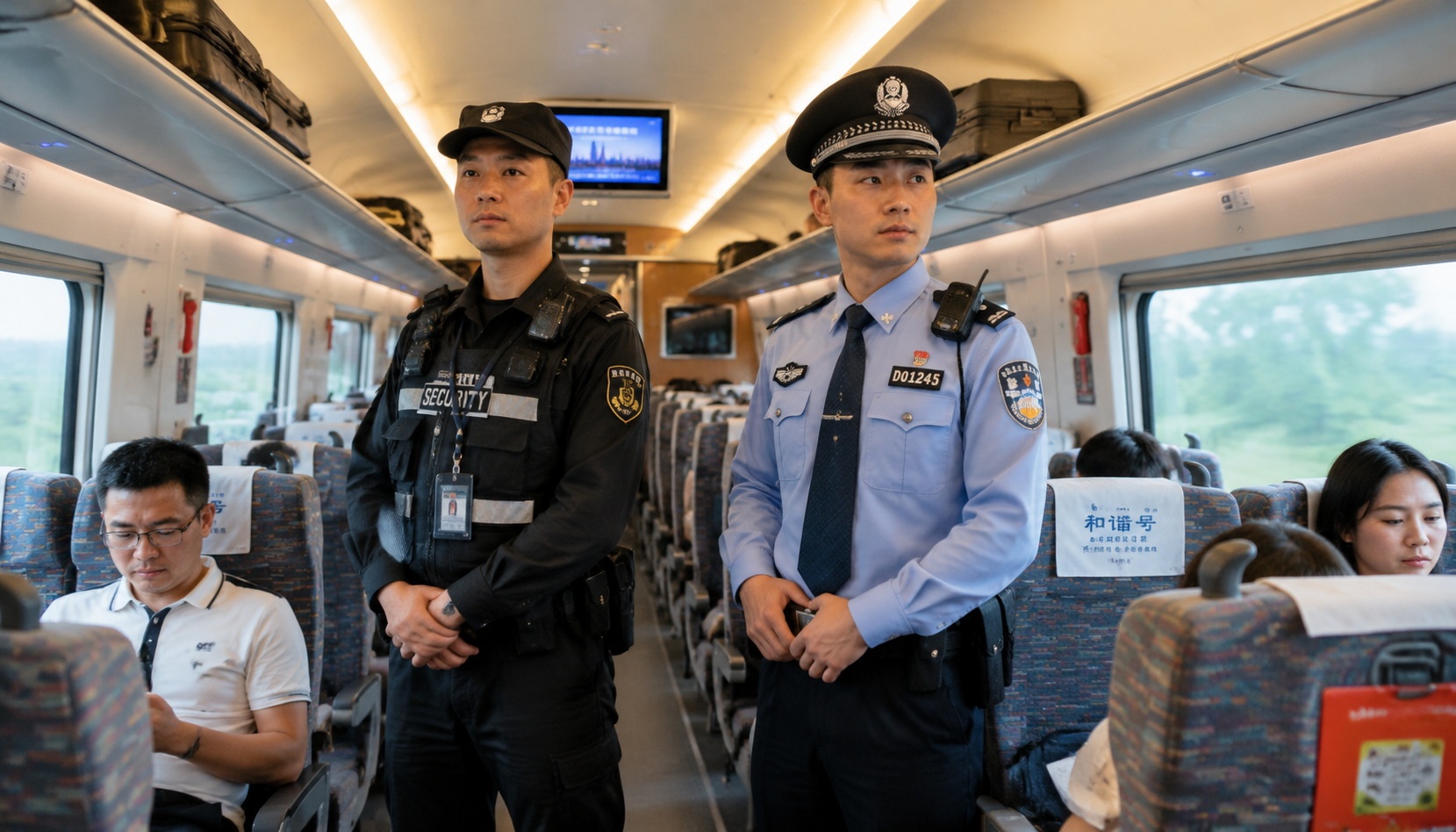
Every high‑speed train has at least one security guard (安全员, ānquányuán) and one train police officer (乘警, chéngjǐng) on board. They patrol the aisles regularly and are in constant radio contact with the crew.
If you witness a physical altercation, theft, or harassment:
- Press the emergency button at either end of the carriage – this alerts the security team directly.
- Or tell any crew member – they carry radios and can summon the guard in seconds.
- If you need to video‑record evidence – be discreet; the priority is your safety.
Train police are authorized to detain suspects until the next station, where local police take over. Since 2020, cameras have been installed in all carriages, so major incidents are recorded.
For Foreign Travelers: Language Tips and Legal Protection
The biggest barrier is language. Here’s your cheat sheet:
- “Help” (救命, jiùmìng) – universally understood.
- “Doctor” (医生, yīshēng) – if you shout this while pointing to a person in distress, crew will know.
- Use a translation app – like Google Translate (works offline on downloaded Chinese language pack) or local favorite Youdao. Show the screen to crew.
- 指向紧急按钮 – if all else fails, just point at the red button. Crew respond to universal body language.
Chinese law (Civil Code, Article 184) provides that anyone offering emergency medical assistance on a train is not liable for unintended harm, as long as they act in good faith. So doctors can help without fear.
Final Advice: Stay Calm and Let the System Work
The Chinese high‑speed rail system handles about 400 million passenger trips per year. Emergencies are rare, but when they happen, the system is surprisingly efficient. Remember three things:
- Press the red button or find a crew member.
- Listen for the “doctor‑on‑board” broadcast – it happens faster than you’d expect.
- If you’re a medical professional, step forward – you’ll be supported and protected.
Next time you board a high‑speed train in China, take a moment to locate the emergency button at the end of your carriage. You likely won’t need it, but knowing it’s there makes the ride a lot calmer.