
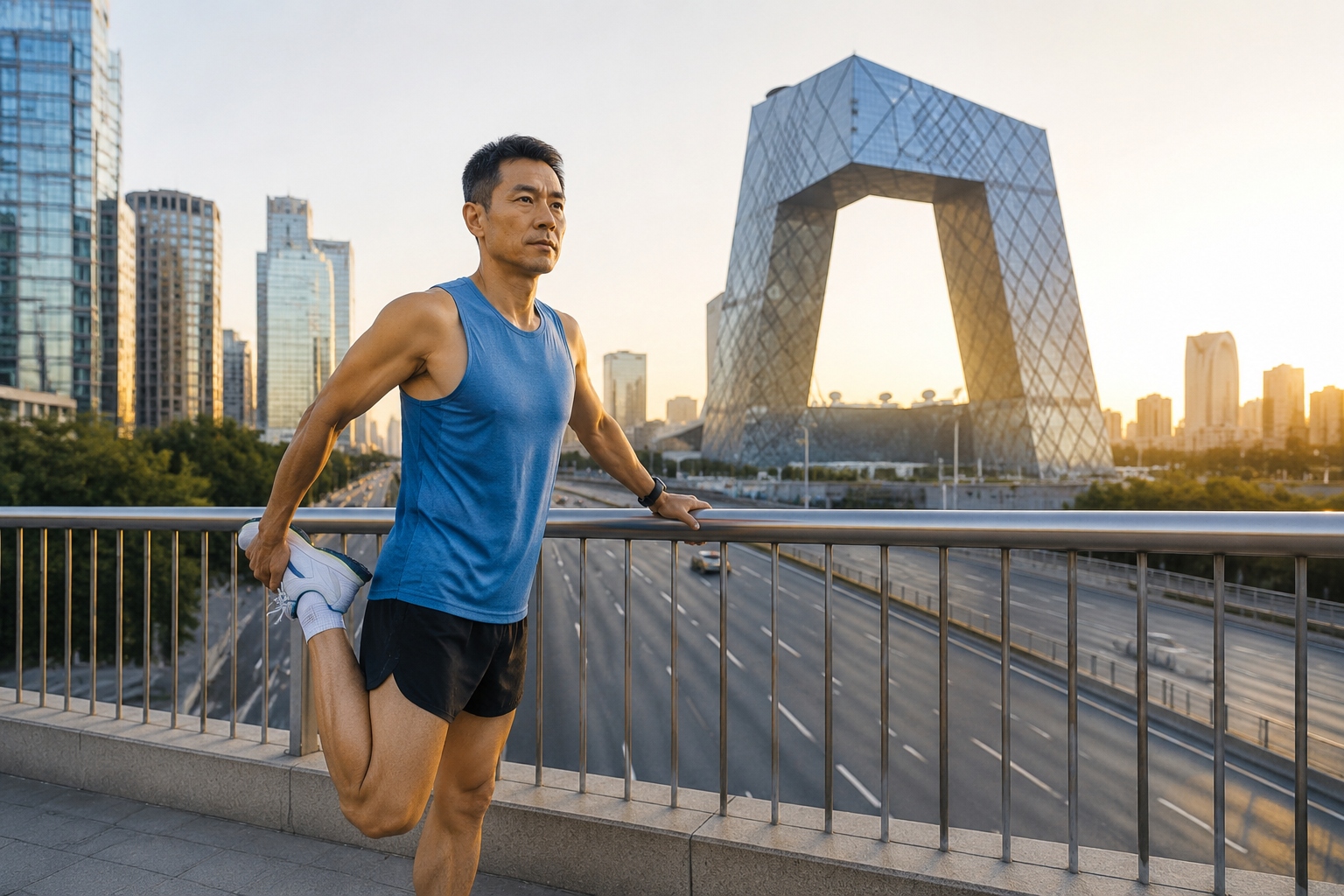

Introduction
At 5:30 a.m. on a clear October morning, 42-year-old civil servant Li Ming stretched his legs under the dim glow of the “East Third Ring Road South” sign. His watch read 5:42. In front of him, the empty lanes of Beijing’s 3rd Ring Road were still waiting for the morning rush. Behind him, a small duffel bag held two water bottles, four energy gels, a phone power bank, and a change of socks. He was about to run the entire 68-kilometer loop—a challenge no official race would ever offer.
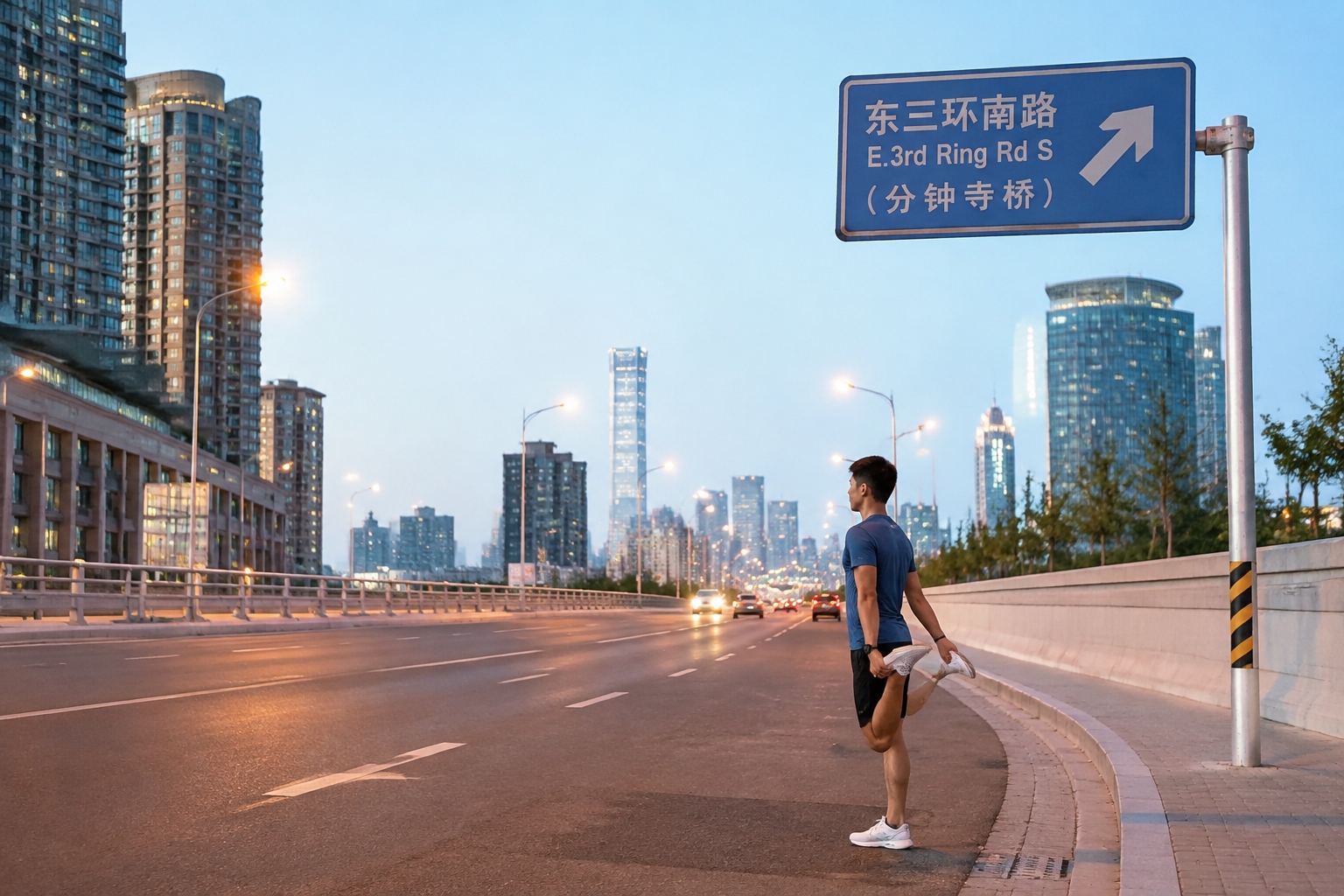
Li is part of a niche but growing community of “Ring Road Runners” in Beijing. They map out loops on city highways, running through tunnels, over bridges, and past landmarks that most people only see from a car window. For them, running a ring road is a way to test endurance and to see the city differently—one step at a time.
Why Run a Ring Road?
“Marathons are everywhere,” Li said when I asked why he chose the 3rd Ring Road. “But a marathon is staged. A ring road is real life. It’s the city breathing.”
Beijing’s 3rd Ring Road, completed in the 1990s, is a 48-kilometer expressway that now curls through the urban core. Running its full loop requires adding the ramps and footpaths, making the actual distance about 68 kilometers—nearly 1.6 marathons. Runners do it solo or in small groups, often at night or in the early morning to avoid heavy traffic. It’s not an official sport, but it has its own unspoken rules: carry your own supplies, run on the sidewalk where possible, and be ready for long stretches without restrooms.
The appeal, Li explained, lies in the mix of monotony and surprise. “You know the road. You’ve driven it a thousand times. But running it is completely different. You notice the smell of the bakery near Jinsong, the old man practicing tai chi under the bridge, the way the city light changes as you cross the Liangma River.”
The Plan and the Gear
Li had spent two months preparing. He’s an average runner—his marathon personal best is 4 hours 12 minutes—but he knew the ring road required more than speed. “It’s not a race. It’s a pilgrimage,” he joked. His training log showed long runs of 30, 40, and 50 kilometers over consecutive weekends. He also mapped out the entire route on his phone, marking every overpass, every water fountain, every 24-hour convenience store along the way.
His gear was simple but deliberate: a lightweight hydration vest, carbon-plate shoes (bought on sale, he emphasized), and a phone with a live-tracking app. “I told my wife I’d update her every 10 kilometers,” he said. “She thought I was crazy, but she came along for the first kilometer to take a picture.”
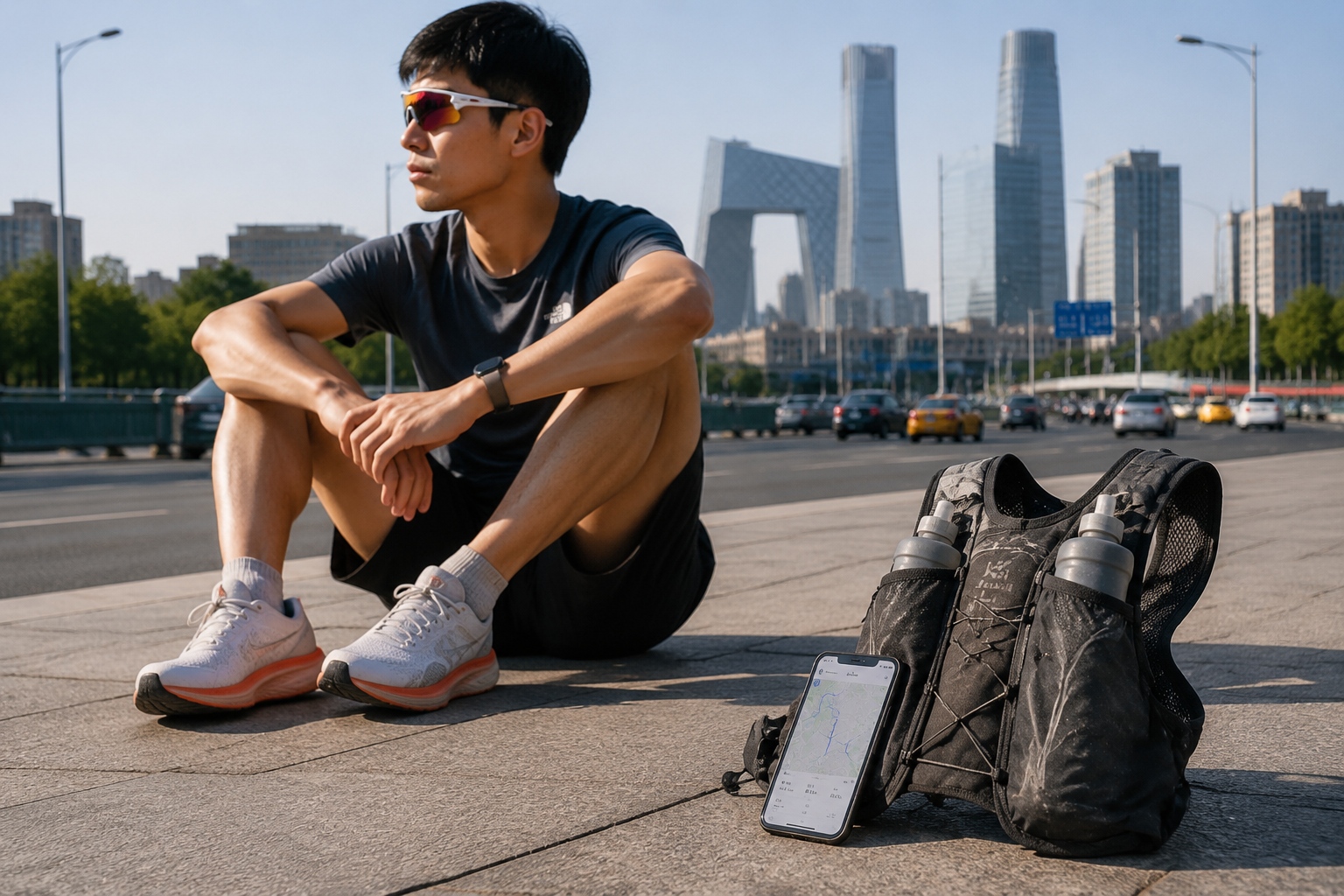
The Start: East Third Ring to South Third Ring
The first 20 kilometers were deceptively easy. The air was cool, and the early-morning city felt almost private. Li passed the CCTV headquarters—its enormous glass facade catching the first sunlight—and then turned south near the China World Trade Center. Here, the road rose and fell like a gray ribbon, and Li kept a steady 6:10 per-kilometer pace.
Around the 15th kilometer, near the Shilihe bridge, the city began to wake. A street sweeper waved at him. “I felt like a celebrity for a second,” Li recalled. Then the traffic started. Drivers gawked at him from idling cars. Some took photos. One taxi driver rolled down his window and shouted, “How far are you going?” When Li answered “68 kilometers,” the driver shook his head and laughed, then gave a thumbs-up and merged into the morning jam.
The Middle: The Mental Game
By the 30th kilometer, Li’s legs were heavy, and the novelty had worn off. The South Third Ring is less glamorous than the north: more construction, older apartment blocks, a maze of overpasses that forced him to stop and check his map. He crossed the Majialou Bridge at one of its busiest interchanges. “I had to walk that part. The sidewalk just vanished. I was in the gutter for 200 meters, hugging the guardrail.”
This is the part of ring-road running that most people don’t imagine. Unlike a closed-off race route, the ring road is a working highway. Runners navigate broken footpaths, bike-share docks, and the occasional discarded tire. Li’s 10th kilometer split was 6:58; the 30th was 7:43. He slowed down but kept moving. “It’s not about pace. It’s about not stopping,” he said.
He met another runner—a 26-year-old graduate student who had started from the western segment and was doing a half-circle. They ran together for a few kilometers in silence, then exchanged WeChat IDs and parted. “That’s the thing about ring roads. You never know who you’ll meet.”
The Wall: Around the 50th Kilometer
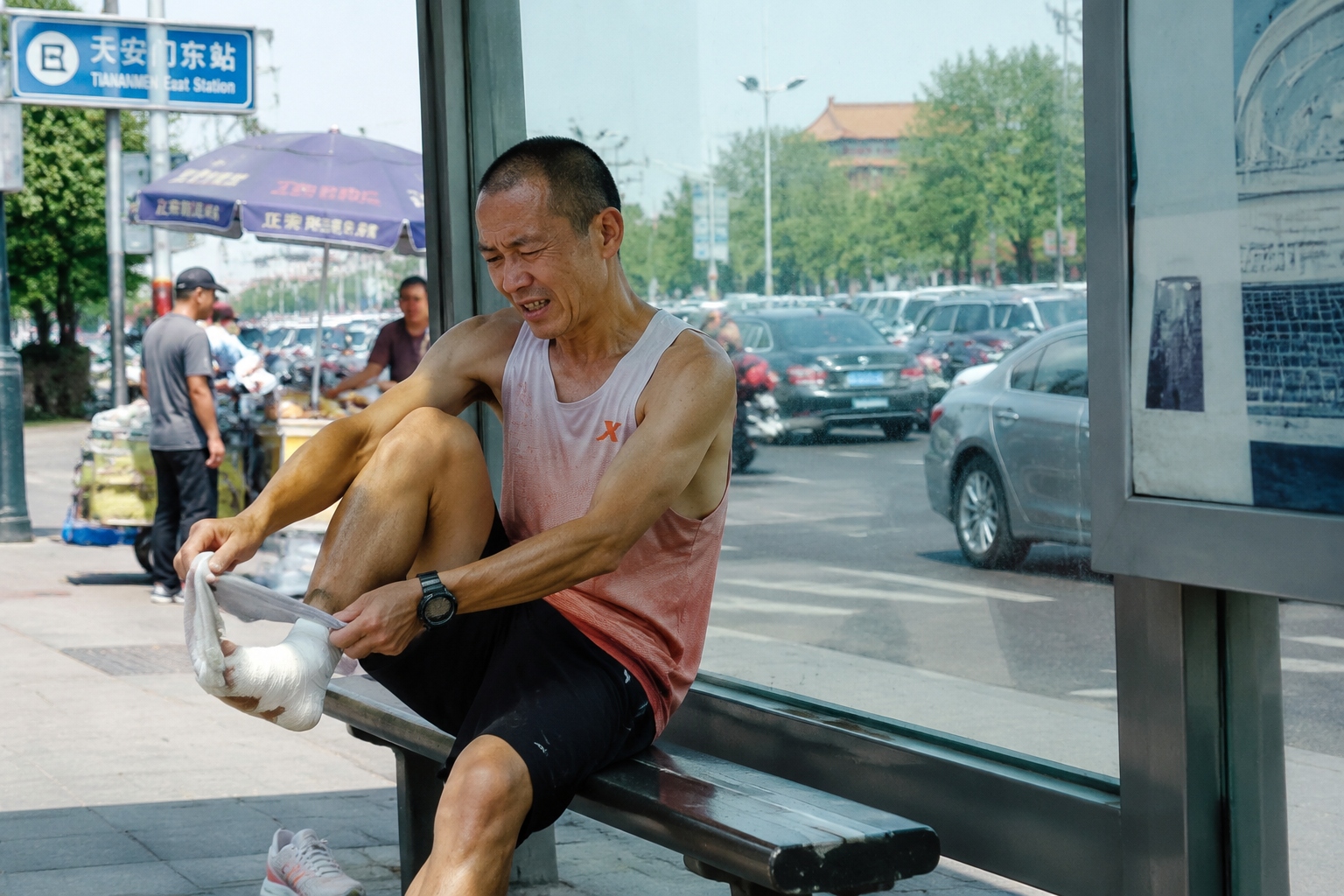
At kilometer 48, Li hit the wall. It was just past the western section near the Gongzhufen bridge. The sun was high, and temperatures had climbed to 24 degrees. His watch showed 5 hours and 10 minutes of moving time. He sat on a bus-stop bench and peeled off his shoes. Blisters had formed on both feet, and his left knee was aching. “I thought about quitting,” he admitted. “I called my wife. She said, ‘You can stop. No one cares.’ And that made me want to finish even more.”
He ate an energy gel, drank half a bottle of water, and stretched for ten minutes. A street vendor selling grilled cold noodles rolled by. Li bought a skewer, ate it standing up, and laughed at the absurdity. “Here I am, trying to run 68 kilometers, and I’m eating street food. Perfect.”
The Finish: Full Circle at Dusk
The last 18 kilometers were slow but certain. Li’s pace dropped to 8:30, but he no longer cared. He passed the Beijing West Railway Station, then turned north along the western section, where the road widens and the skyline opens up. At kilometer 63, he saw the familiar shape of the Central Radio & TV Tower in the distance. “Home,” he whispered.
He crossed the starting line—the East Third Ring South sign’s underpass—at 6:47 p.m. His total moving time was 7 hours 32 minutes. The sun had set, and the city lights flickered on. He stood still for a minute, breathing hard, and then took a photo of his watch. “68.3 km, 7:32:14.”
He called his wife. She asked if he needed a ride. “No,” he said. “I’ll take the subway.” He limped toward the nearby Jing’an Station, his medal being a Chinese-style bag of steamed buns he’d bought from the same vendor near the finish.
What Running a Ring Road Really Teaches
Li’s run is not an extraordinary athletic feat by elite standards. Marathoners run farther in training. But for ordinary runners, finishing a ring road is a personal marathon-plus that demands planning, patience, and a willingness to see the city as it is—not as a postcard. He summed it up: “A ring road is not beautiful. It’s noisy, polluted, crowded. But it’s the real Beijing. Running it, I felt like I was part of the city, not just a commuter passing through.”
In 2023, as Beijing’s running scene rebounds and more fitness apps unlock local challenges, the ring road run has become a quiet obsession for a growing number of amateurs. They organize on mobile messaging groups, share route files, and compare statistics. Some have run all three ring roads—the 2nd, 3rd, and 4th. For them, it’s not about medals or fame. It’s about measuring the city’s pulse with their own two feet.
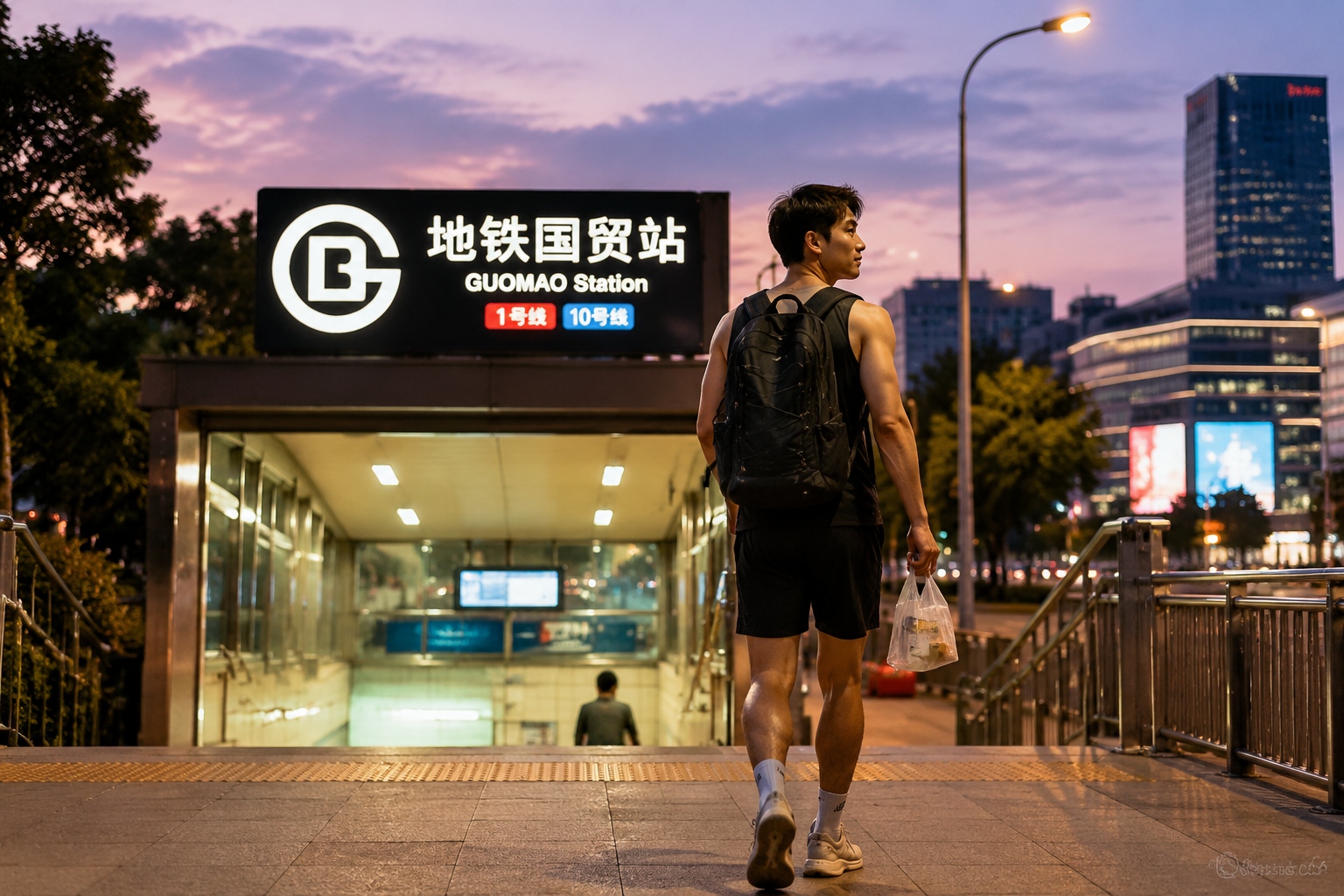
When Li took the subway home, a kid on the train noticed his sore legs and asked, “Did you run today?” Li nodded. “I ran around the whole city.” The kid’s eyes widened. “Which ring?” “Third,” Li said. “Maybe you can do the 4th when you grow up,” he added with a wink. The kid looked at his mother, who shrugged. The train slid into the dark tunnel, carrying Li and his blistered feet toward home.
In the end, what it takes to run Beijing’s 3rd Ring Road is not just training or shoes. It takes a stubborn curiosity about the city you live in, and the willingness to see it from the inside out—slowly, painfully, and joyfully.
Start the discussion at forum.chinacomes.com