
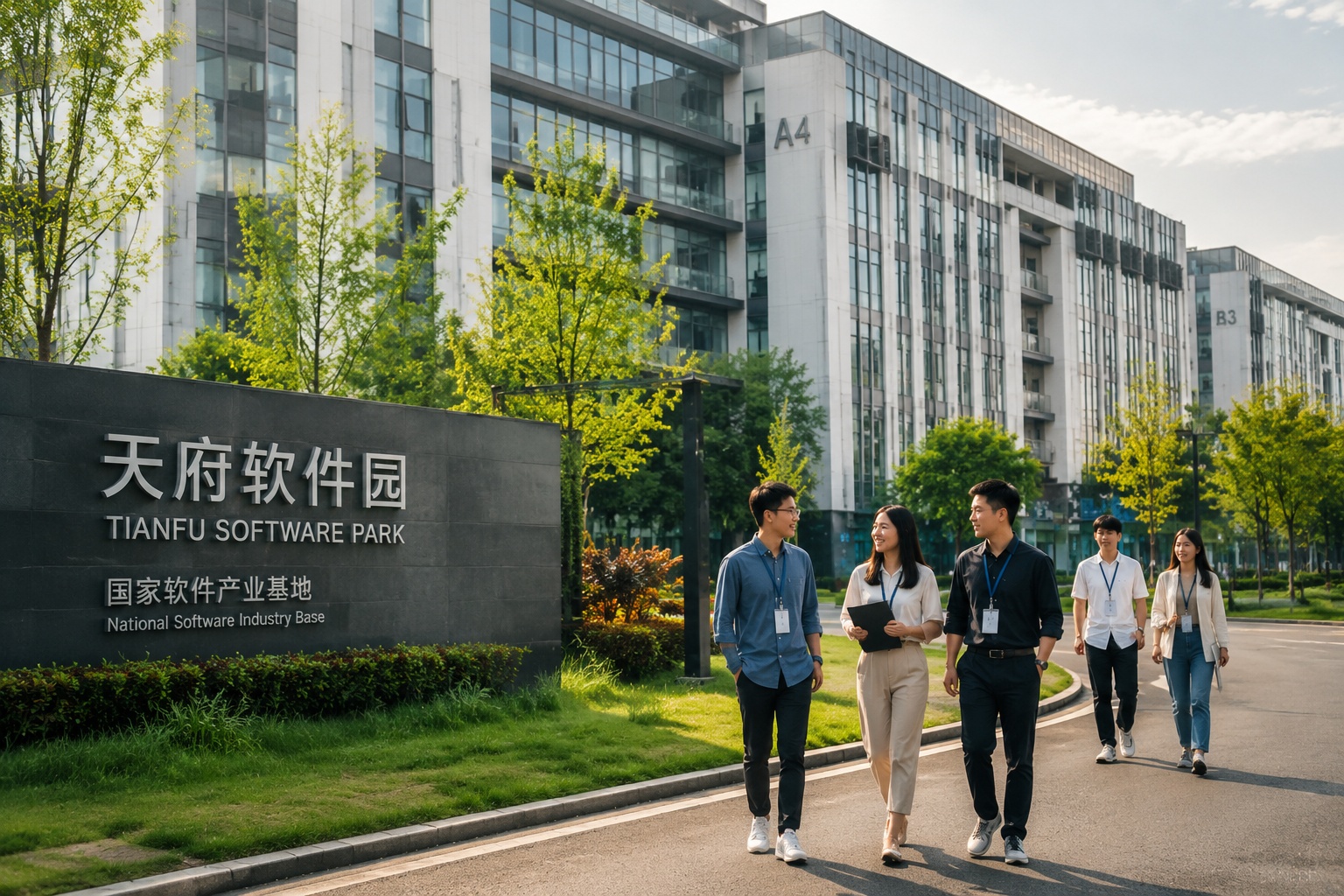

A Friday night in Chengdu
At 9 p.m. on a Friday, the lights are still on in many office towers at Tianfu Software Park, but the streets around are already alive with young people heading to hotpot restaurants or the nearby metro station. Many of them are software engineers, data scientists, and product managers who could have chosen to work in Beijing, Shanghai, or Shenzhen — yet they ended up here, in a city better known internationally for pandas and spicy food.
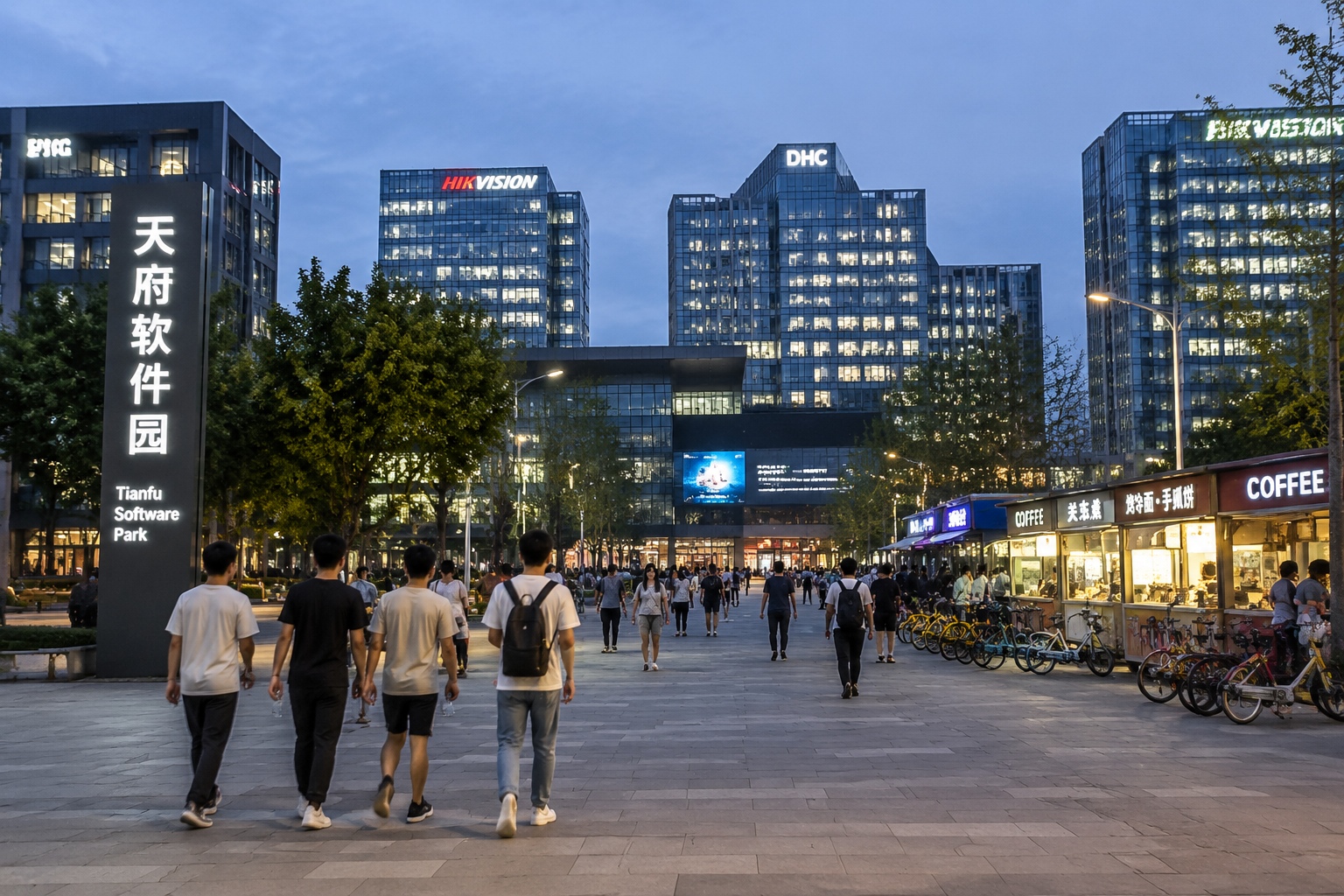
This is not a small exception. Tianfu Software Park, located in the southern part of Chengdu, the capital of Sichuan province, hosts thousands of companies and more than 100,000 workers, making it one of the largest software parks in China. Its growth raises a question that many mid-sized cities around the world are trying to answer: how do you attract and keep skilled tech workers when the biggest hubs are far ahead?
What talent actually gets
Let’s start with numbers. In 2024, the average annual salary for an IT professional in Chengdu was around 180,000 RMB (about $25,000), according to industry recruitment platforms. That is roughly 40% lower than in Beijing or Shanghai, where comparable roles often pay 300,000 RMB or more. But the average price of an apartment in Chengdu is around 15,000 RMB per square meter, about a third of the price in Beijing. In other words, a software engineer in Chengdu can expect to own an apartment after a few years of saving — a prospect that has become almost impossible for many young professionals in the biggest cities.
Beyond housing, Chengdu offers a lifestyle that is increasingly attractive to young Chinese workers. The city is famous for its food, its tea houses, and a relaxed pace of life that contrasts sharply with the relentless grind of Shenzhen or Beijing. “I moved here from Shanghai,” says Liu Wei, a 29-year-old front-end developer who joined an e-commerce company in the park two years ago. “My salary dropped by 25%, but my rent dropped by 60%. I can walk to work in 20 minutes. I have time to cook dinner. I don’t feel like I’m constantly drowning.”
The role of policy
Policies have played a big part. The Chengdu municipal government has been actively courting tech companies and talent for over a decade. The park itself, launched in 2005, was designed as a purpose-built IT cluster. Today it houses R&D centers for companies such as Huawei, Tencent, Alibaba, and Siemens, as well as thousands of startups. The local government offers subsidies for office rent, R&D spending, and even employee training. For individual workers, there are generous relocation benefits: in many cases, a college graduate can get a housing allowance of up to 20,000 RMB per year for three years, plus easier access to residency permits, which historically were a major barrier to moving within China.
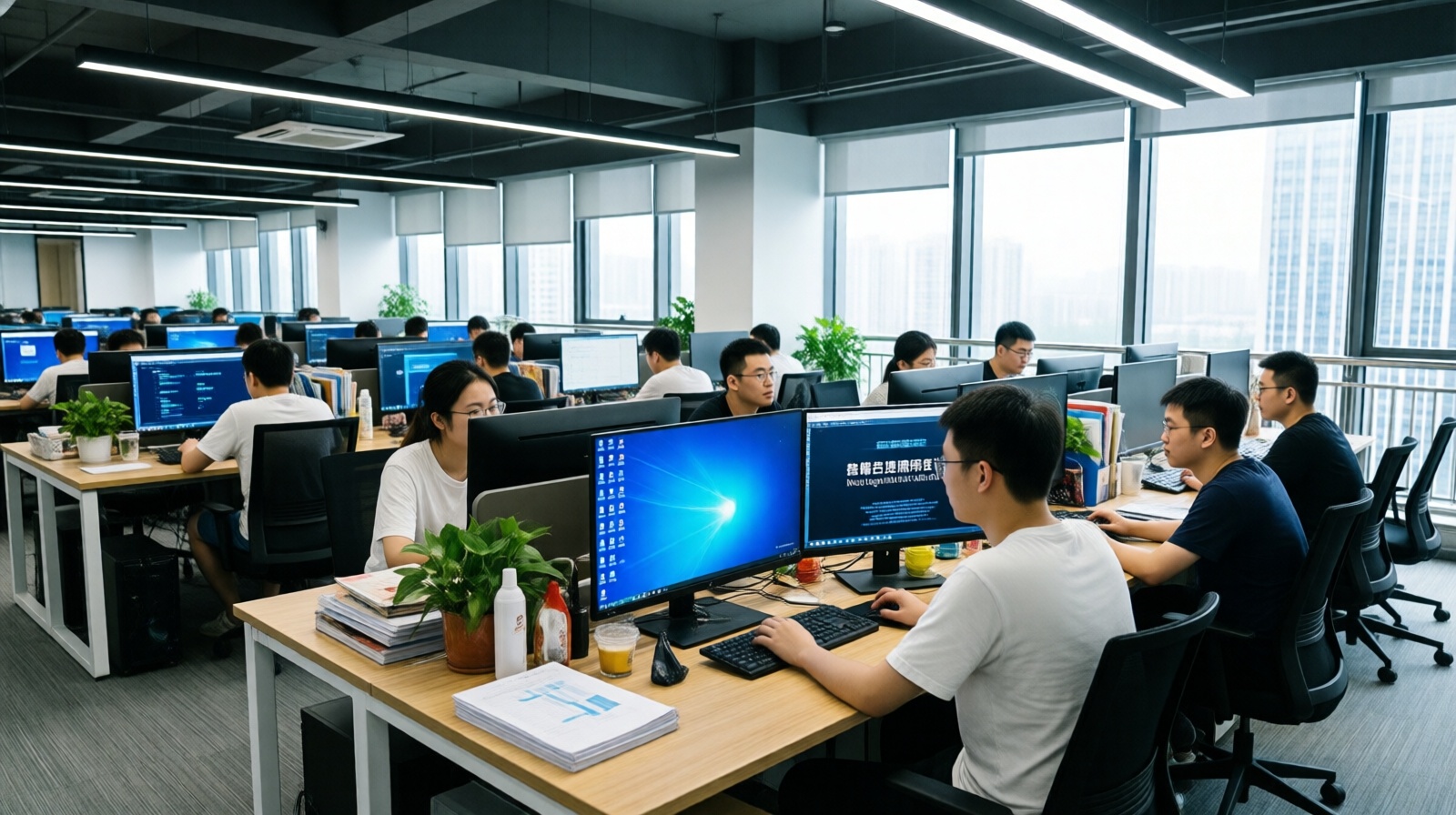
None of this happened overnight. The park’s growth mirrors the broader expansion of Chengdu’s tech economy, which now accounts for a significant share of the city’s GDP. The nearby Tianfu New Area, a state-level development zone, has also attracted major data-center projects and AI research institutes, reinforcing the ecosystem around the park.
The missing piece: jobs that match skills
While cost and lifestyle are powerful draws, the most important factor is that the park has actual work for people with advanced skills. According to industry reports, Chengdu is now China’s fourth-largest destination for software outsourcing, after Beijing, Shanghai, and Shenzhen. The city has also become a leader in digital gaming and live streaming, with companies like TapTap and a growing number of e-sports teams based in the park. For young engineers, this means opportunities to work on global products without relocating to a megacity.
That said, the picture is not entirely rosy. Senior positions, especially in cutting-edge fields like artificial intelligence and cloud computing, remain more common in first-tier cities. Some workers complain that promotions come slower in Chengdu, and that the local ecosystem lacks the density of top investors and mentorship found in Beijing or Hangzhou. The city is still a step behind in terms of the most ambitious, frontier-technology work.
What other cities can learn
Tianfu Software Park is not a miracle — it is a combination of realistic geography, long-term public investment, and a cultural bet on livability. For other second- or third-tier cities that hope to emulate its success, the lesson is not to build a fancy park and wait for talent to come. It is to build an environment where talented people can see a path to a good life: affordable homes, decent salaries relative to local costs, meaningful work, and a city that is pleasant to live in during the hours they are not coding.
As 5G, artificial intelligence, and the internet of things drive demand for software talent across China, cities like Chengdu are showing that the future of the country’s tech industry is not limited to a handful of coastal megalopolises. The revolution is also being written in second-tier cities — one hotpot dinner at a time.
Start the discussion at forum.chinacomes.com