
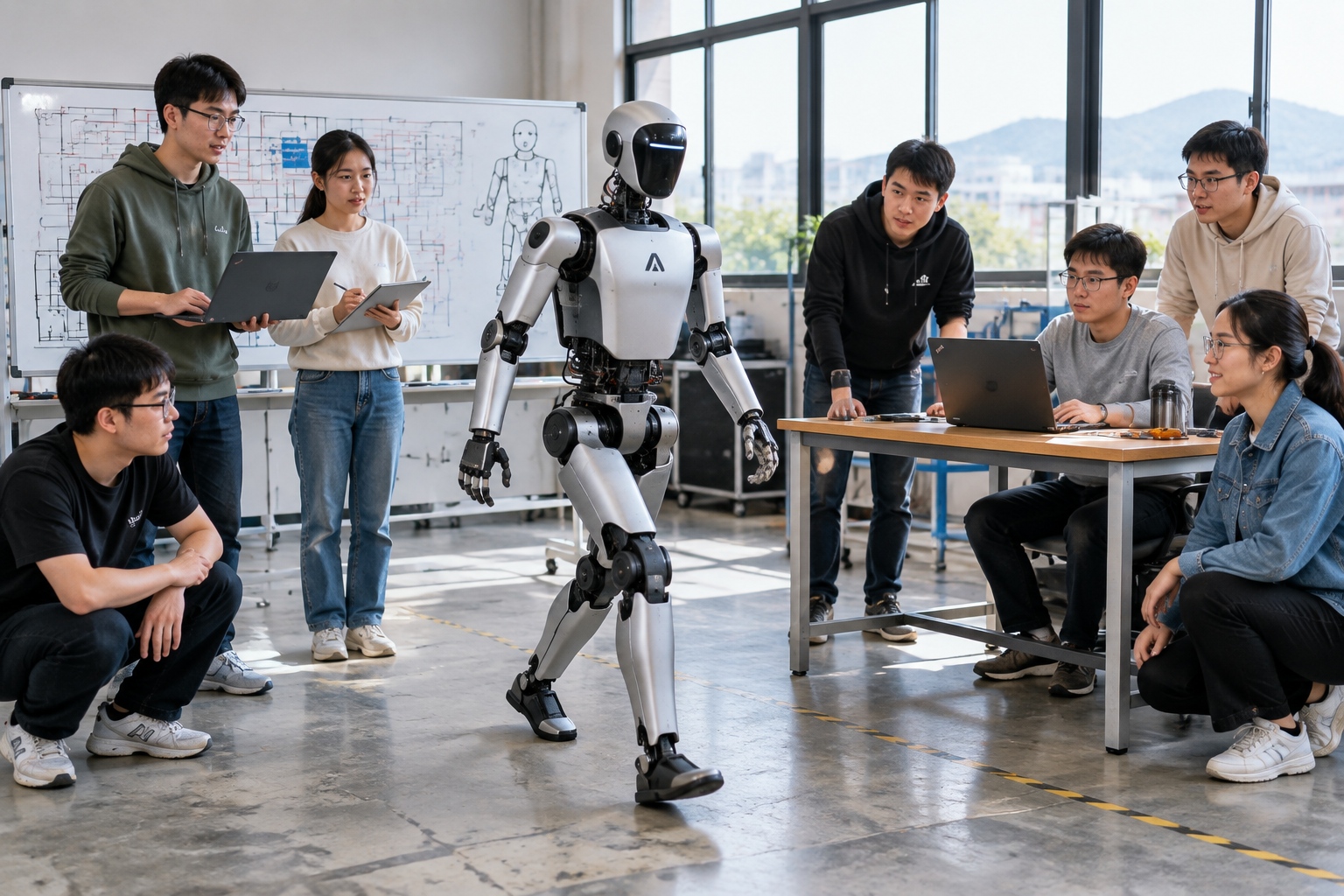

A Robot in Hangzhou, a Headline Somewhere Else
In a workshop in Hangzhou’s Yuhang district, a humanoid robot the height of a ten-year-old takes a few steps, wobbles, corrects itself and walks on. Engineers watch a laptop. The model this company put on sale last year cost roughly as much as a used family car — about $16,000.
The same week, the headlines I was scrolling through were about Ukraine, Gaza and another round of tariffs. That gap is what many readers outside China are trying to make sense of: in a decade that feels dangerous, why does Beijing keep spending on barges, factory robots and software?
There is no single answer, and the honest version involves both a strategy and a lot of improvisation. But the domestic logic is more legible than the headlines suggest.
Where the money actually goes
Canals first, because they sound like a 19th-century answer to a 21st-century problem. In Guangxi, in southern China, crews have been digging the Pinglu Canal since August 2022: 134 kilometres of new waterway linking the Xijiang river system to the sea at Qinzhou, at a cost of about 72.7 billion yuan, or close to $10 billion.
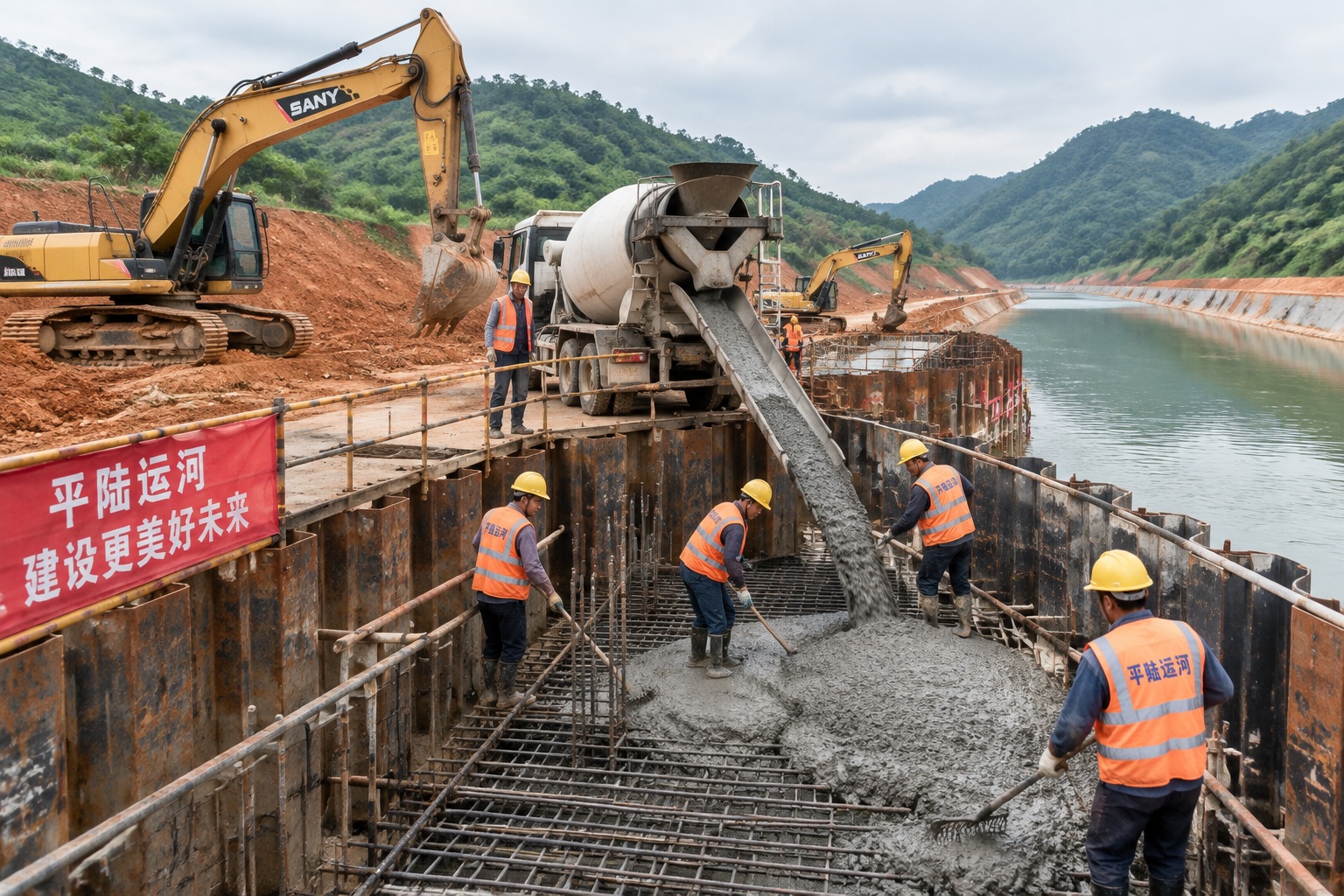
It is due to open around 2026 and cuts roughly 560 kilometres off the route to the Gulf of Tonkin, bypassing the crowded Pearl River Delta. Anhui opened the Jianghuai Canal in 2022; Jiangxi and Guangdong have spent years arguing about a canal that would link the Yangtze and Pearl River basins, with estimates above 300 billion yuan.
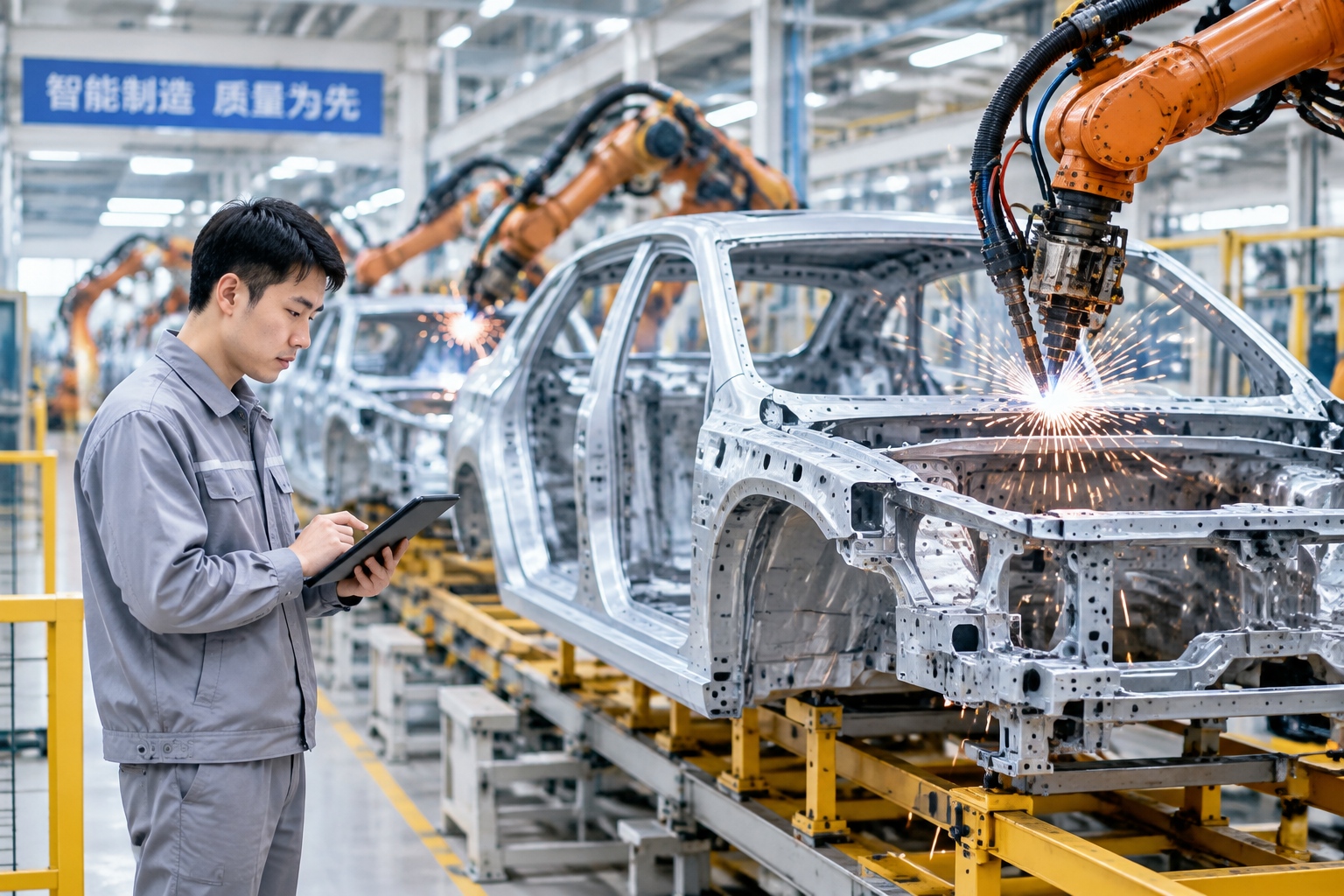
Then the better-known numbers. China’s high-speed rail network passed 48,000 kilometres at the end of 2024 — more than the rest of the world combined. Chinese factories installed about 276,000 industrial robots in 2023, more than half the global total, according to the International Federation of Robotics. Robot density in Chinese manufacturing reached 470 units per 10,000 workers, ahead of Germany and Japan. In January 2025, DeepSeek’s R1 model showed results close to the best American systems at a reported training cost in the single-digit millions of dollars, which is why it rattled markets in Silicon Valley and Taipei as much as in Beijing.
Why barges still make sense
If you are from Rotterdam or Duisburg, none of this is exotic. Inland shipping is how Europe moves coal, steel, chemicals and containers; the Rhine alone carries around 200 million tonnes a year. The Yangtze carries several billion.
What is different is the scale of new Chinese construction and the reason for it. A single 2,000-tonne barge replaces roughly 100 trucks and cuts the cost per tonne-kilometre by a large multiple. That matters because China’s coastal factory belt around Shenzhen, Dongguan and Suzhou is expensive now — land, labour, energy. If factories move inland to Guangxi, Jiangxi or Anhui, their goods have to reach a port cheaply, or the move doesn’t pay. The Pinglu Canal is, in that sense, an export policy disguised as concrete.
It is also a stimulus policy. When property construction collapsed after 2021, provincial governments lost their main source of revenue and their main way of employing people. Dams, rail lines and canals absorb steel, cement and labour, and they can be started with a phone call from the provincial capital.
Robots are a labour story; AI is partly a workaround
The automation push is easier to explain than it sounds. China’s working-age population has been shrinking since around 2012. Factory wages have risen fast enough that Dongguan and Foshan are no longer cheap places to make shoes. Every Spring Festival, the same ritual plays out: factories in Guangdong post bonuses to lure workers back from their home villages, and some still cannot fill the lines. Automating is not a vanity project when the alternative is not producing.
AI has a second motive. Since 2022, US export controls have limited Chinese access to the most advanced chips and chip-making tools. That constraint pushed Chinese labs toward wringing more out of less computing power — mixture-of-experts architectures, aggressive quantisation, cheaper inference. DeepSeek’s efficiency was not purely a technical curiosity; it was the shape of a workaround.

Why the wars feel distant
Here is the part that puzzles foreigners most. Ukraine and Gaza are covered in Chinese media, but they are not the topic of most dinner tables. The conversation is usually about an apartment’s price, a child’s exam score, whether the factory is hiring, whether the restaurant downstairs survived.
That is partly geography and partly a bargain. For decades, the Chinese government’s claim to legitimacy has rested less on ideology than on delivery: growth, jobs, order, safe streets, rising living standards. It is a deal most people I know would describe without enthusiasm and without much desire to trade it in.
Even the military budget is smaller than it looks from outside. China announced 1.78 trillion yuan for defence in 2025, up 7.2% — about $245 billion, and around 1.3% of GDP, compared with roughly 3.4% for the United States. Those are not the numbers of a country organising its whole economy around a war.
None of this means China is insulated. Red Sea attacks raised shipping rates that Chinese exporters pay. European tariffs on Chinese electric vehicles now run as high as 35.3% on top of existing duties. The bet is not that conflict does not matter. It is that the safest position in a fragmented world is not depending on anyone else’s goodwill for the parts you need.
The parts that don’t add up
It would be dishonest to present this as a clean, confident plan. It is not.
Provincial governments are carrying enormous debts, much of it hidden and much of it borrowed against land sales that have stopped. In November 2024, Beijing announced a 10-trillion-yuan package of debt swaps to clear some of it. Some of these canals, including the proposed Jiangxi–Guangdong waterway, may never earn back what they cost. Trained economists in China say so publicly.
Factories, meanwhile, can build far more cars, solar panels and batteries than the world is currently willing to buy. Producer prices have been falling for well over a year, which sounds pleasant to a shopper in Berlin and feels like a slow squeeze to a factory owner in Ningbo. Youth unemployment among 16-to-24-year-olds was 16.1% in December 2024, even excluding students — a number that explains why so many graduates sit for civil service exams.
So the honest answer to “is this a smart bet?” is: some of it, probably, and not for reasons anyone can fully verify in advance.
Two answers to the same question
Every large economy faces the same question now: how do you stay secure in a decade of war, tariffs and supply-chain politics? The United States has answered with alliances, export controls and subsidies to bring chip fabrication home. Europe has answered with regulation and, since 2022, with rearmament. China has answered with barges, robots and cheap models.
Those are not moral positions; they are different countries spending their money where they think the next decade will be decided. You can question the efficiency of the Chinese version. You can also notice that the robot in Hangzhou keeps walking, and that the people watching it are not thinking about the war at all.
Start the discussion at forum.chinacomes.com