
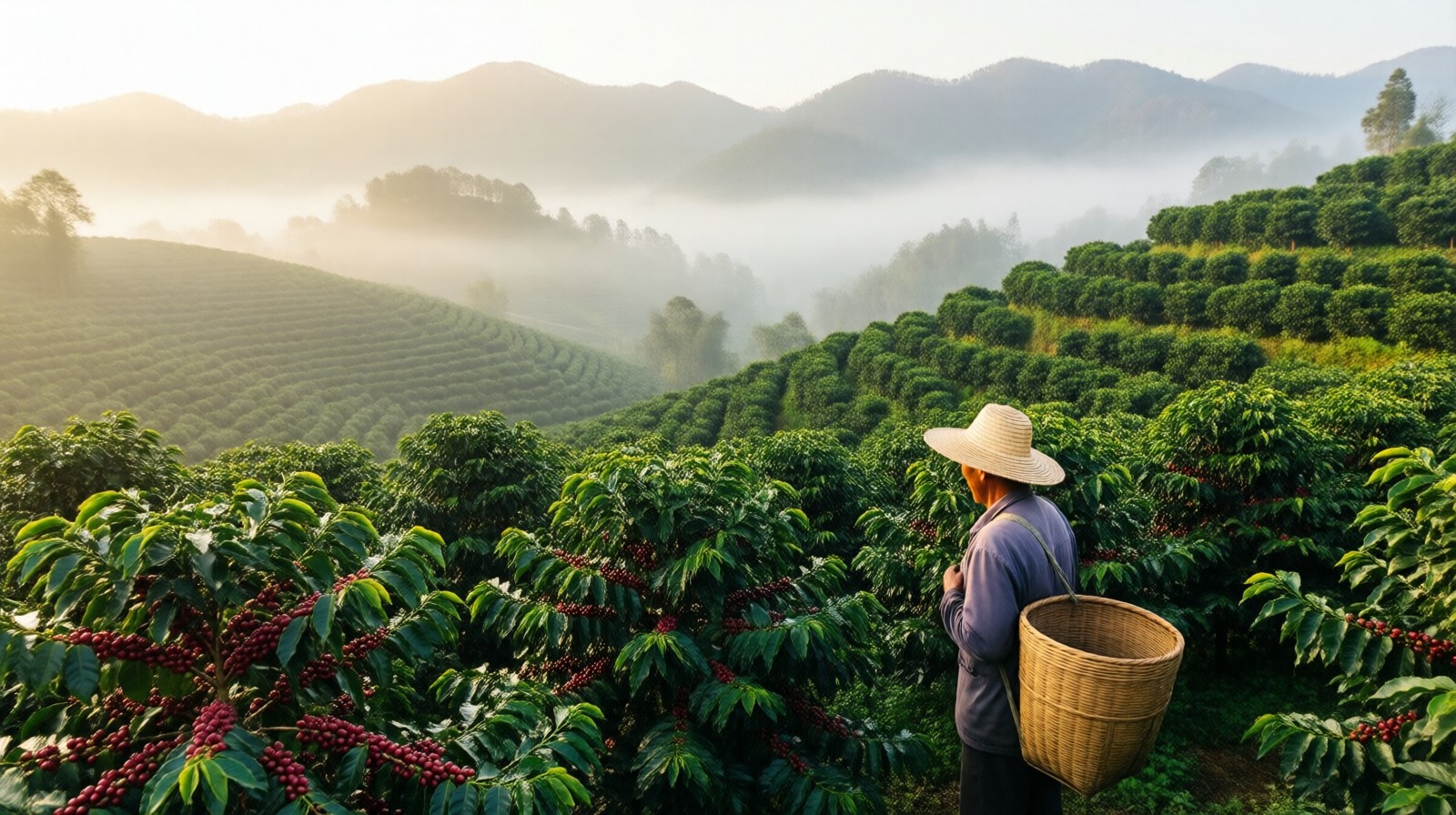

A Morning on a Coffee Mountain
On a steep hillside in Pu’er, Yunnan Province, coffee farmer Zhao Chunli fills her bamboo basket with deep-red coffee cherries. It’s early March, the peak of harvest for some varieties. Two decades ago, her family sold most of their beans to international traders for a price that barely covered the cost of fertiliser. Today, the same beans, grown on the same slope, end up in small-batch roasters and boutique coffee bars from Shanghai to Melbourne.
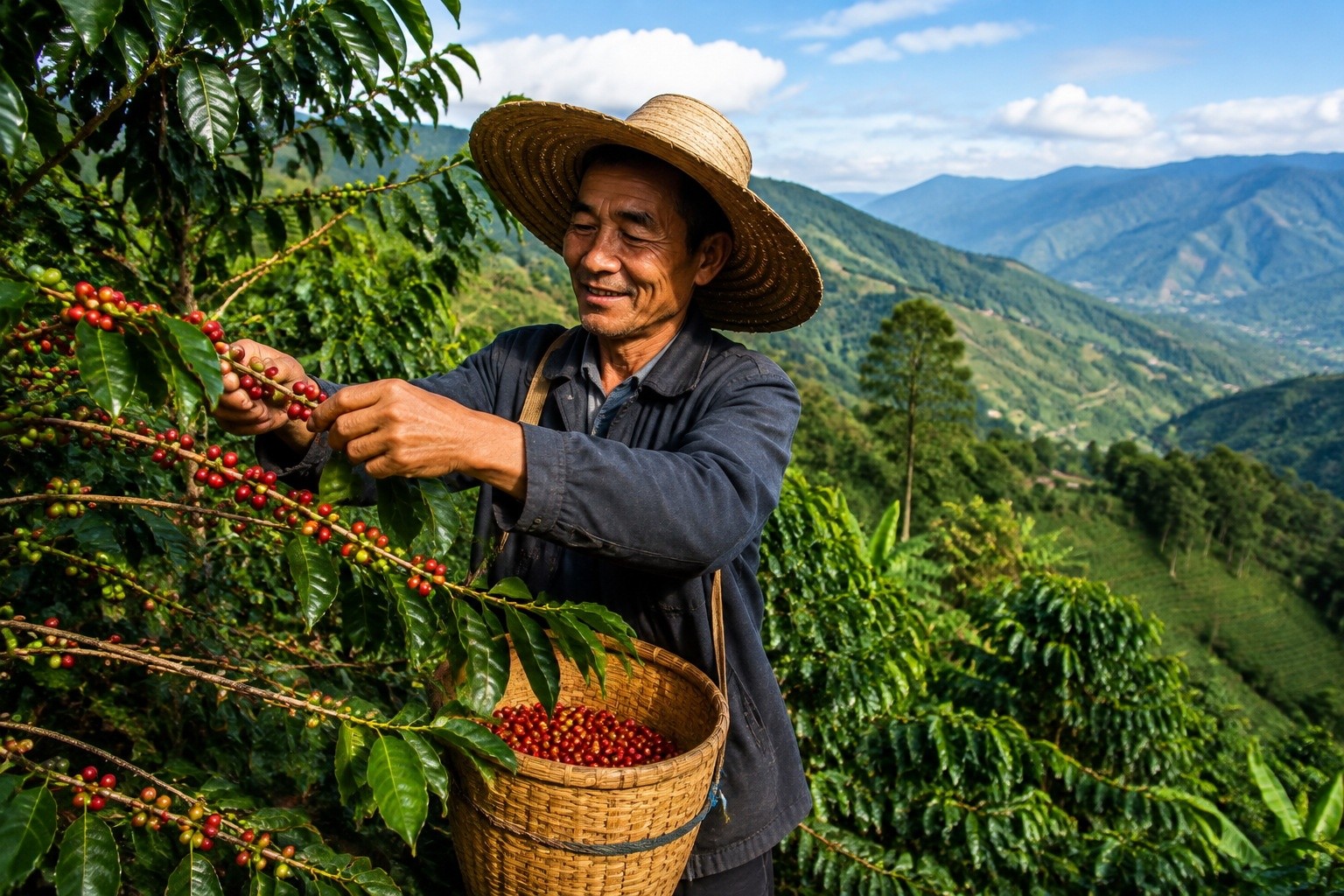
From Cheap Commodity to Forgotten Crop
Yunnan’s coffee story began in the 1980s, when multinationals like Nestlé brought Arabica seedlings to the region and built a network of buyers. For years, the province’s coffee was treated as a low-cost raw material for instant coffee blends. Farmers had no way to influence prices, which followed the volatile New York futures market. After the price slump in 2013–14, many growers in Yunnan cut down their coffee trees and switched to tea or fruit. The industry looked like it might fade away.
Specialty Coffee and Young Chinese Roasters
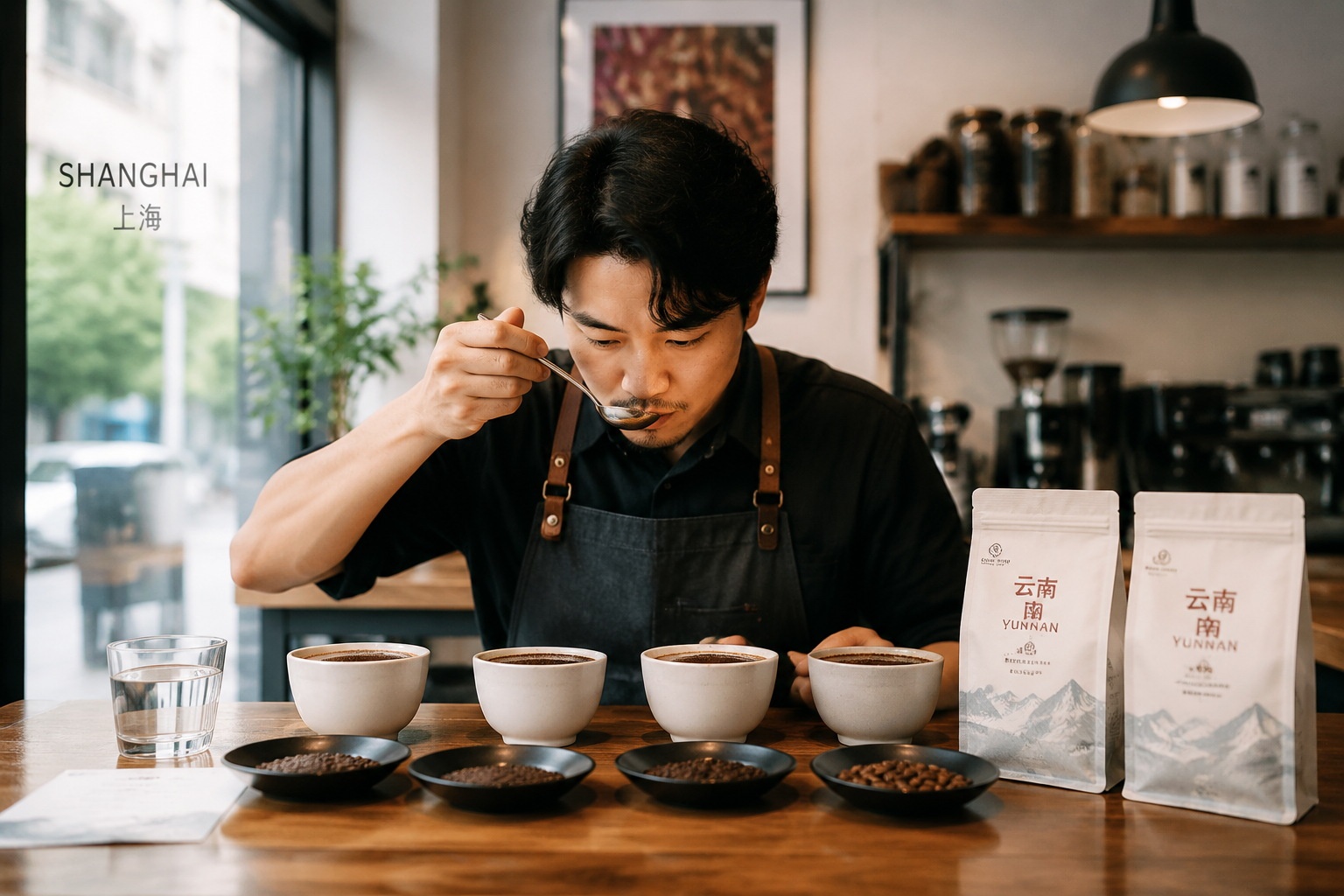
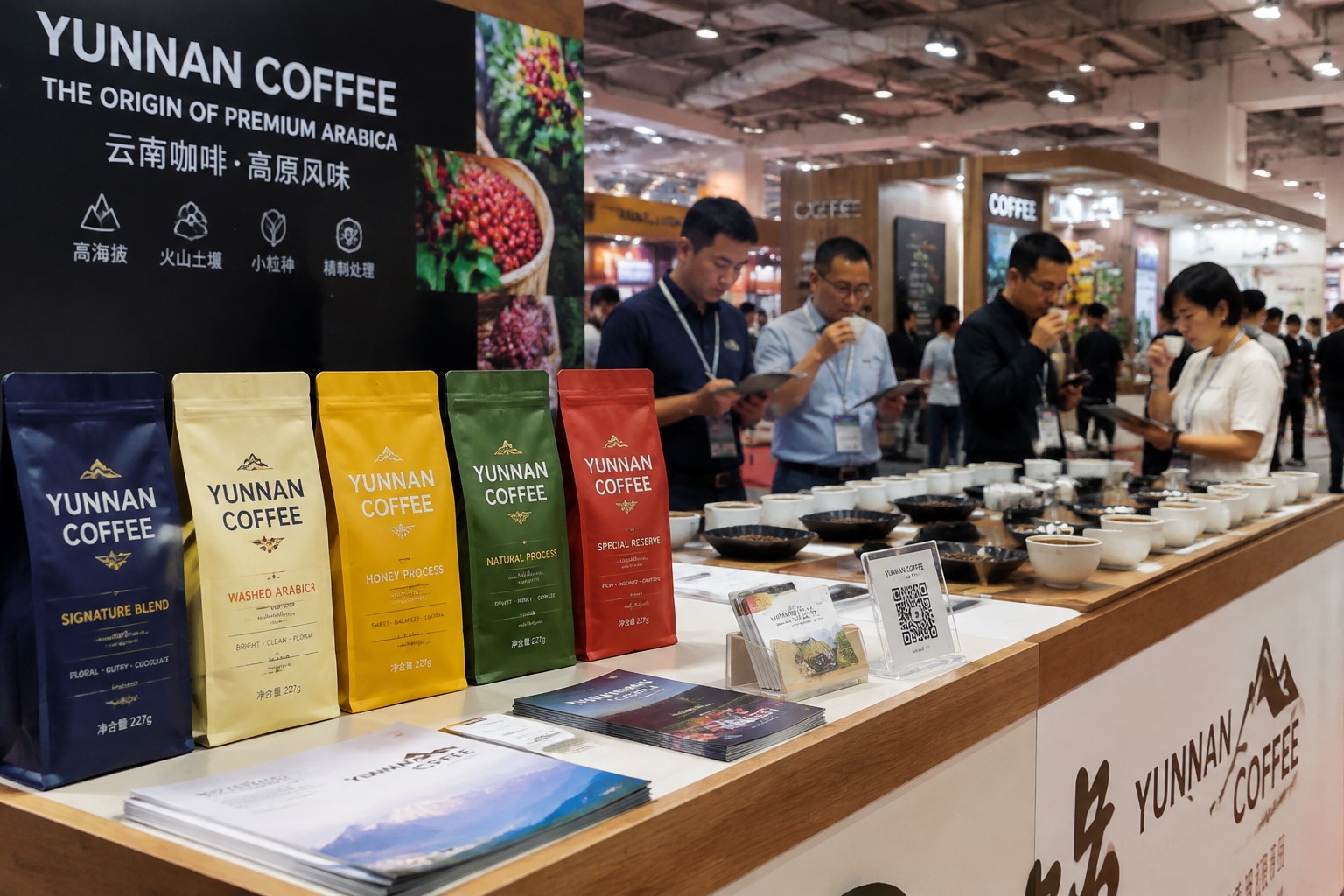
The turning point came with China’s booming café culture. As third-wave specialty coffee spread through big cities, a new generation of Chinese baristas and roasters began asking: why not try Chinese beans? They went directly to Yunnan villages to work with farmers, replacing old processing techniques with careful fermentation and drying methods. They also gave the beans a new image—no longer a cheap filler, but a regional coffee with elevated fruit and floral notes. In recent years, major domestic chains like Luckin Coffee have launched Yunnan SOE (single-origin espresso) menus, giving the region national visibility.
The ‘World’s Third-Largest’ Myth
Claims that Yunnan is the world’s third-largest coffee-producing region appear often in Chinese media and even at business forums. But what do the numbers say? China produces roughly 200,000 tonnes of green coffee per year, with Yunnan accounting for 98% of that. That sounds big, but the global total is about 10 million tonnes. Brazil produces around 3 million tonnes, Vietnam around 2 million, and Colombia nearly 1 million. China’s share is only about 2%, and several producers, including Ethiopia, Indonesia, and Honduras, outrank China. In short, Yunnan is not yet a top-three producer. The confusion may come from consumer statistics: China is already the world’s third-largest coffee-consuming market, but as a producer it carries a different weight.
The Real Revolution: Better Beans and Better Livelihoods
What has actually changed in Yunnan is not rank but value. According to the Yunnan Provincial Agriculture and Rural Affairs Department, the specialty coffee ratio in the province rose from below 5% in 2019 to about 20% in 2023. That shift has been felt in farmers’ incomes. Higher-quality beans can sell for two to three times the commodity price, and some estates now earn extra through agritourism, offering visitors long tables set among the coffee trees. Younger farmers use social media to tell their own stories, posting photos of ripening cherries and their drying beds, and sometimes selling micro-lots directly to consumers.
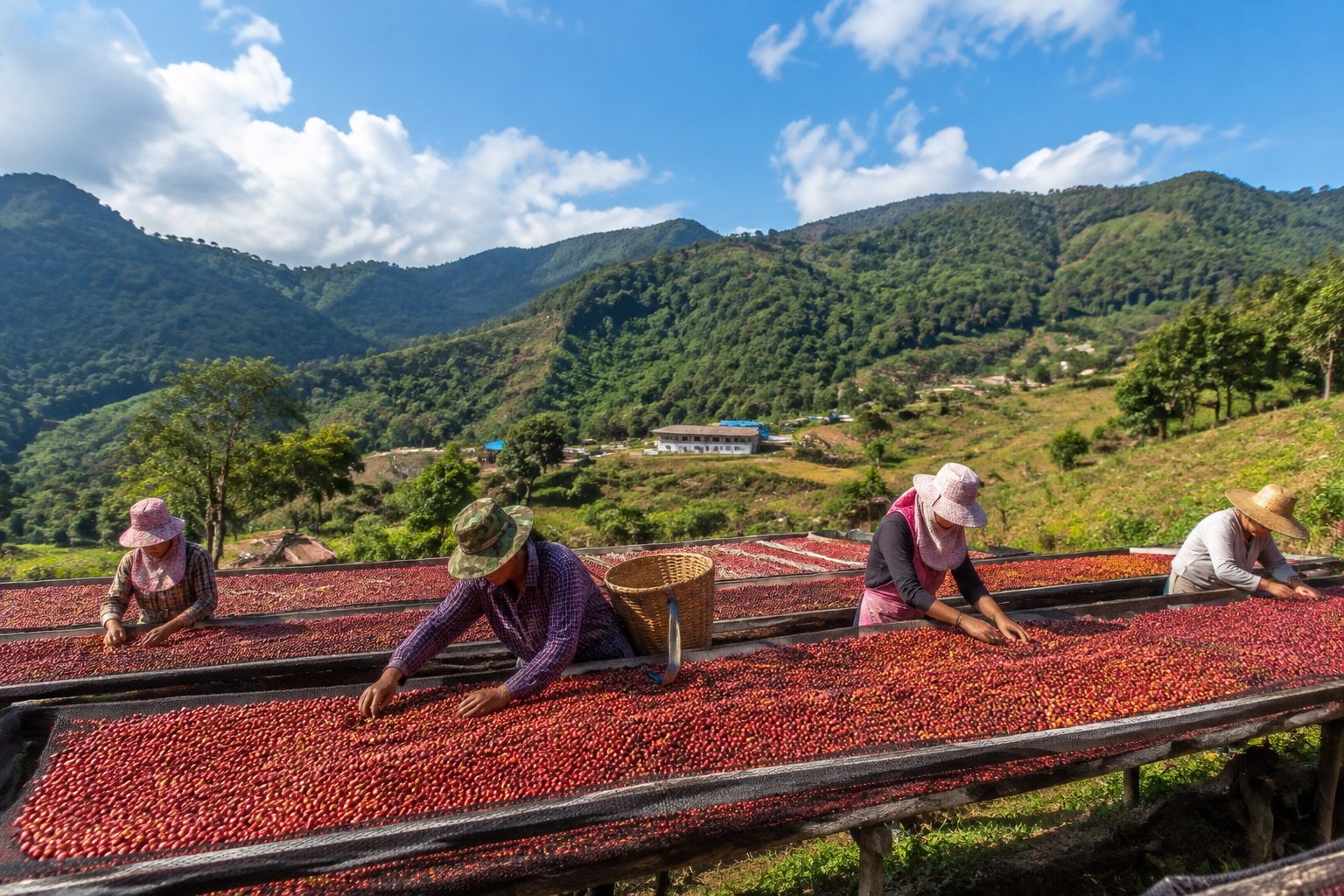
Internationally, Yunnan coffee has also earned spots in competitions and specialty roaster catalogs. A few years ago, a Yunnan sample scored over 85 points in the Cup of Excellence program, an international benchmark for specialty coffee. Today, several export companies in Yunnan ship both green beans and roasted products to Europe, the United States, Japan, and Australia. More important, the beans no longer travel under a generic label like packing coffee; they carry the name of a village, a farm, or a cooperative.
What’s Next for Yunnan Coffee?
Challenges remain. Climate change is a real threat: warmer winters and erratic rainfall can affect flowering and harvest. International certification standards, such as Rainforest Alliance or organic labels, are still hard for small farmers to meet because they require detailed record-keeping and investment. The domestic market, while growing, is sensitive to price, so high-scoring Yunnan beans may not be as profitable as imported ones. Still, the direction is clear. Farmers are organizing into cooperatives, processing stations are adopting water-saving methods, and universities are training a new generation of agronomists with coffee expertise.
Yunnan’s coffee comeback is not a story about a world ranking. It is a story about a region discovering its identity in a global cup. The path has been slow, uneven, and full of small choices made by farmers, roasters, and café owners. That is probably why the taste is more convincing than the label.
Start the discussion at forum.chinacomes.com