
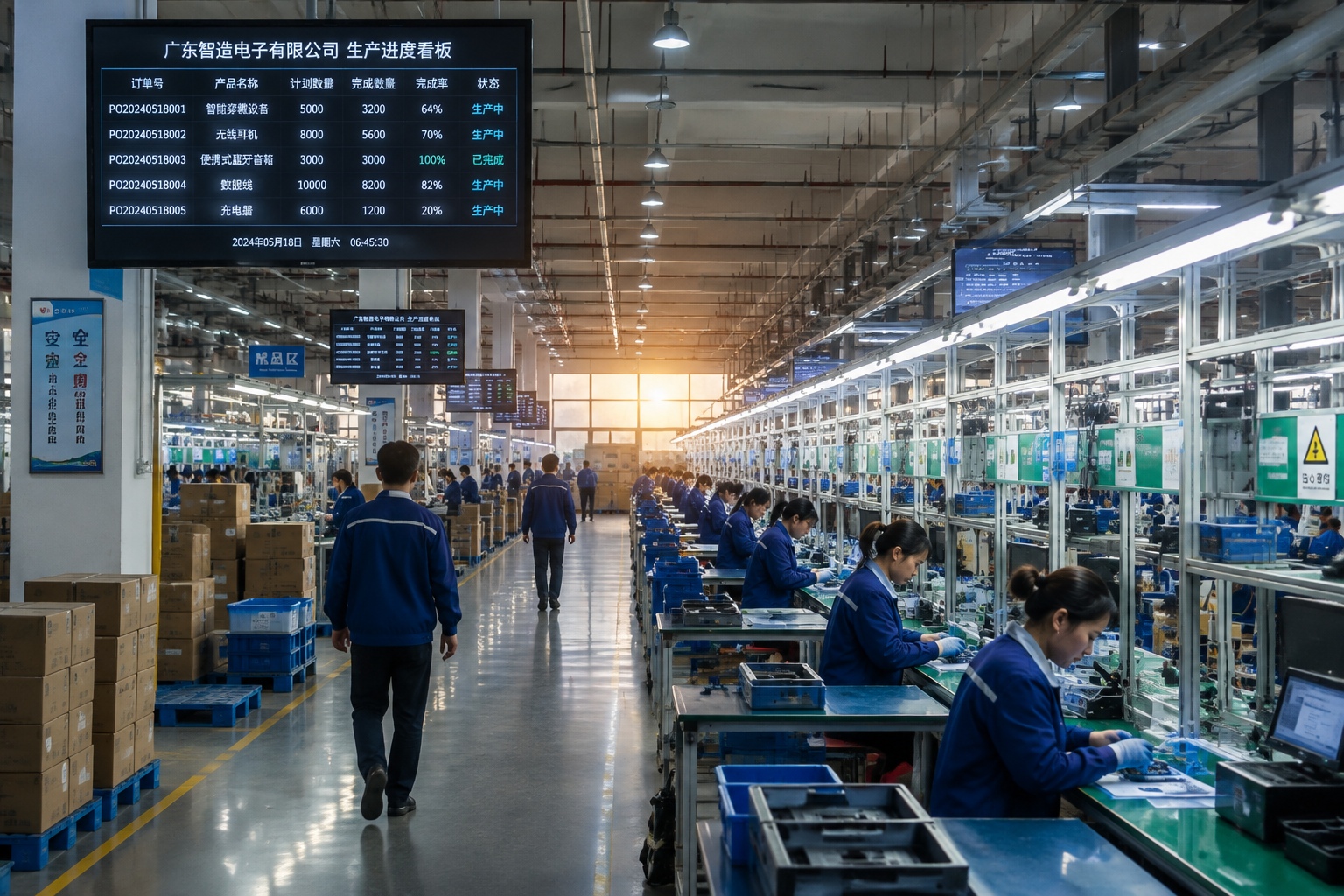

8:00 AM — The New Daily Rhythm
At 8:15 a.m., the first batch of orders is already flashing on the digital board in Workshop No. 3 of a mid-sized electronics factory on the outskirts of Dongguan, Guangdong Province. Zhang Wei, a 28-year-old line leader, checks the screen: 1,200 units of a portable mini fan bound for a brand that only exists online, and 3,000 units of a smart gadget that will be sold under a US label via Amazon and TikTok Shop.
Five years ago, this factory was churning out batches of 100,000 units for big European and American brands, with lead times measured in months. Now, orders come in daily, in small bites, and sometimes change at the last minute. The line in front of Zhang is set up to handle both at once: a quick changeover on the assembly line takes less than half an hour. Workers tap screens to switch tooling and settings.
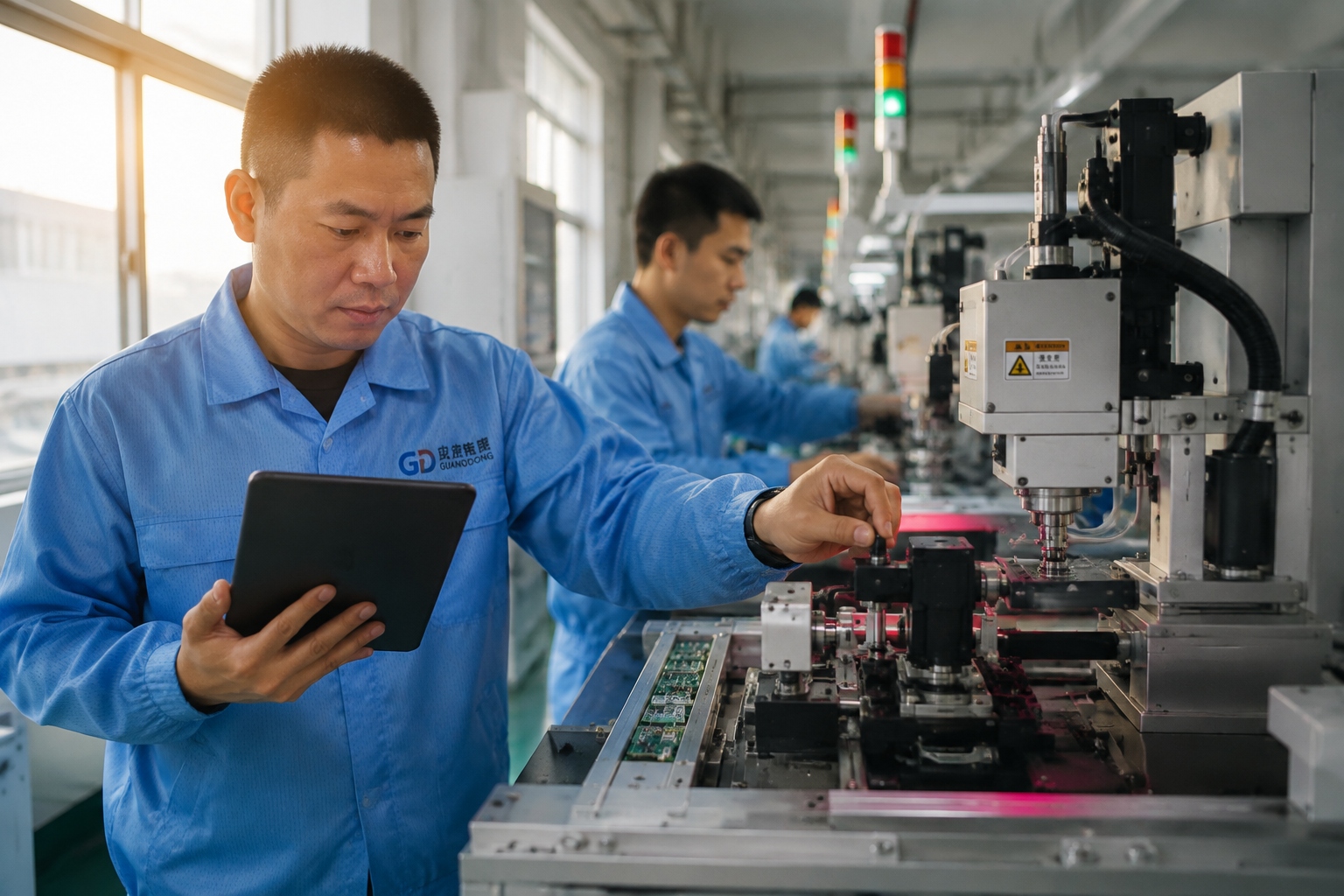
10:00 AM — Where the Old Meets the New
Zhang walks past rows of workers who used to repeat the same motion for months. Now they move between posts more often. “At first, people found it stressful,” he says. “Now we know it’s about survival. The old way—huge orders, slow deliveries—isn’t what buyers want anymore.”
His factory, which once made parts for a well-known German home appliance brand, now labels itself as a “flexible manufacturing” workshop. About 70 percent of its output goes through cross-border e-commerce platforms like Amazon, Lazada, and AliExpress. The rest still goes to traditional importers, but even those orders are getting smaller and faster.
In the office above the workshop, a team of young data analysts watches live sales rankings. When a product spikes in the US market, they know up to three hours before the factory manager does. That information now moves production: a sudden surge in demand for a wireless charging stand in Texas can trigger an extra shift before the sun rises over the Pearl River.
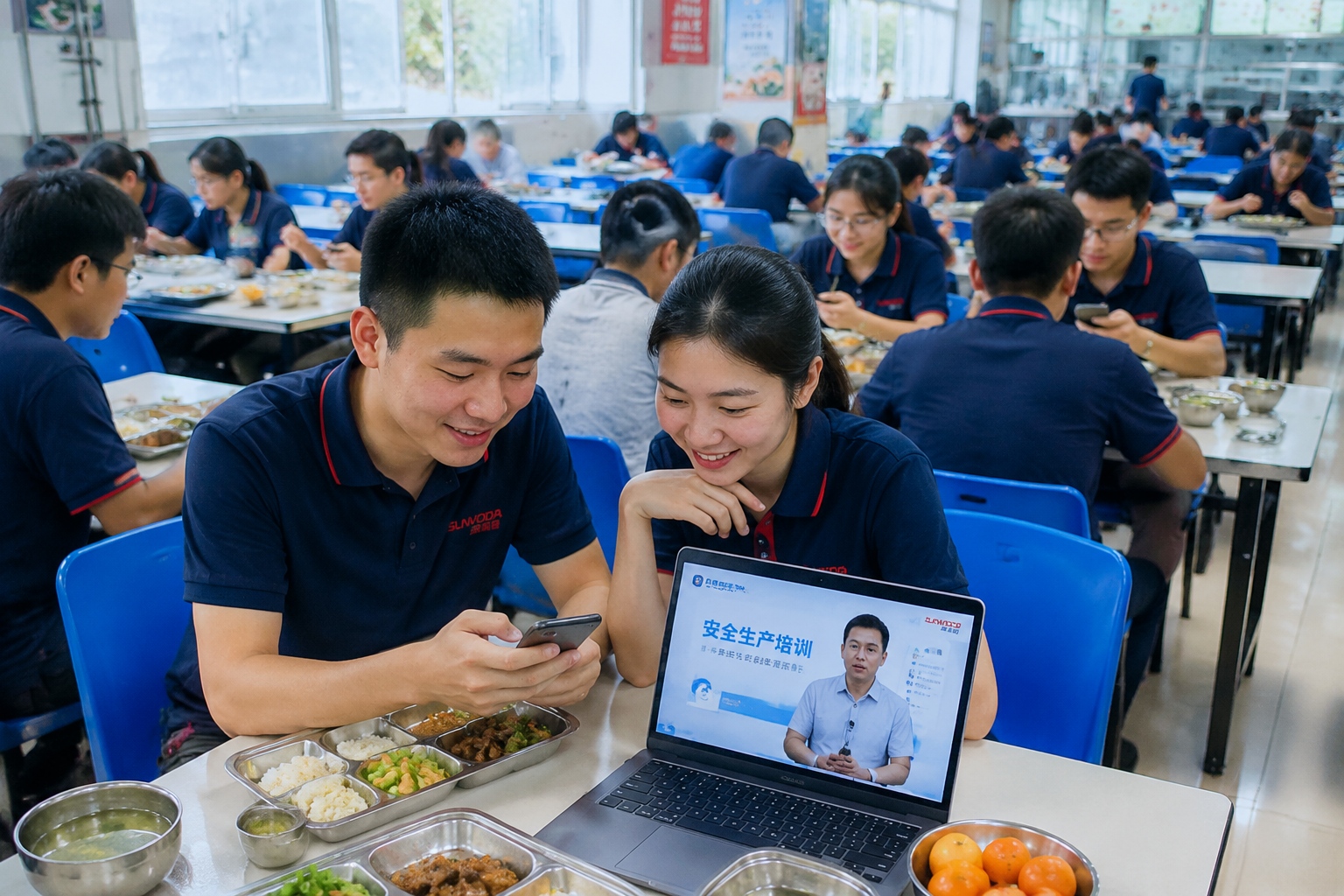
12:30 PM — The Canteen as Classroom
At lunch, the factory canteen is crowded. Workers sit with their phones, some scrolling short videos, others studying online courses in English or data analysis. The factory began offering free evening classes two years ago, after managers realized that the biggest bottleneck wasn’t machinery—it was people’s skills.
Zhao Min, a 24-year-old from Hunan, started as a quality inspector. Now she doubles as a customer-service responder on Shopee, answering buyer questions in halting English. “I used to think I’d go back home and do something simple,” she says. “Now I’m learning how to run my own cross-border store after hours.”
3:00 PM — DTC and the New Math
Behind the factory gate, another business has sprouted: a direct-to-consumer brand. Boss Chen, who founded the factory in 2008, says cross-border e-commerce changed the arithmetic. “In the old days, we counted savings in pennies, but our profit was at the mercy of the buyer. Now we set the price, own the customer list, and respond directly to comments and returns.”
His new brand, which sells portable blenders through TikTok Shop and Shopify, brings in about 30 percent of the factory’s revenue less than 18 months after its first post. The factory itself now runs three shifts, but the third shift is not for making more of the same: it’s for packing personalized bundles and printing labels for existing orders, each destined for a different country.
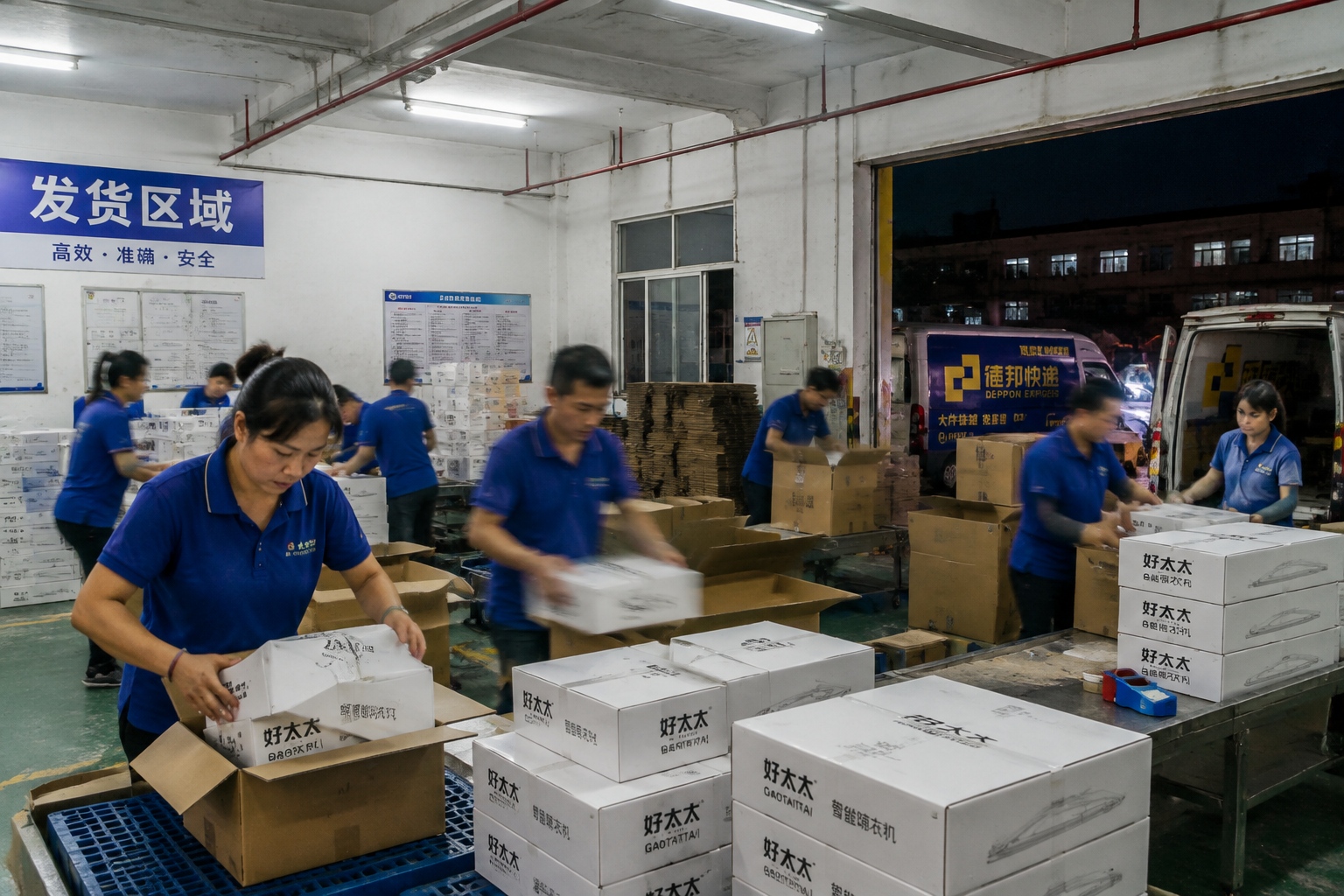
6:30 PM — The Packing Whirlwind
By evening, the shipping area is a whirlwind. Workers move quickly, wrapping products in foam, sliding them into boxes, and sealing with tape that bears the factory’s own logo. On any given night, packages head to Sacramento, Copenhagen, and São Paulo. Many carry handwritten thank-you notes in English—a small but telling touch.
The boxes are scanned by handheld devices that connect directly to the platform’s logistics system. Within an hour, a courier van picks them up. “Speed has become our brand,” says logistics manager Huang, pointing to a data screen showing a 48-hour delivery window to most of East Asia and 5-day delivery to much of Europe.
9:00 PM — Learning After Hours
Back in the dormitory area, the lights burn late in the training room. About 40 workers have gathered for a class on using cross-border e-commerce analytics tools. The teacher is a 29-year-old former warehouse packer who now runs a part-time online store himself. He shows the class how to spot a trend on Google Trends, how to test a product with a small ad budget on Facebook, and how to read a review for mistakes in translation.
Many of these students hope to become what the internet-savvy young call “dianzhu”—online shop owners. Some already have stores, started with savings and a phone. The factory, eager to retain talent, encourages this: it offers supply-chain support to employees who start their own brands, taking a cut only when they sell.
11:30 PM — The Last Scan
At 11:30 p.m., the factory floor is quieter but not idle. A small team is handling a last-minute order for a new product that got a celebrity shout-out on Instagram hours earlier. They expect to finish by 1 a.m. and deliver to the freight forwarder before dawn.
This 24-hour pulse is the new reality for Guangdong’s export manufacturers. The shift to cross-border e-commerce has not just compressed supply chains—it has compressed time itself. And for workers like Zhang and Zhao, it also means their own futures have expanded in ways their parents could not have imagined.
There are still challenges: demand uncertainty, rising costs, and cut-throat competition. But as the lights stay on, the machines keep humming, and the packages fly out, it’s clear that the Pearl River Delta is not just making goods anymore. It’s making brands, careers, and a new rhythm for a global economy.
Start the discussion at forum.chinacomes.com