

A Spindle That Reports on Itself
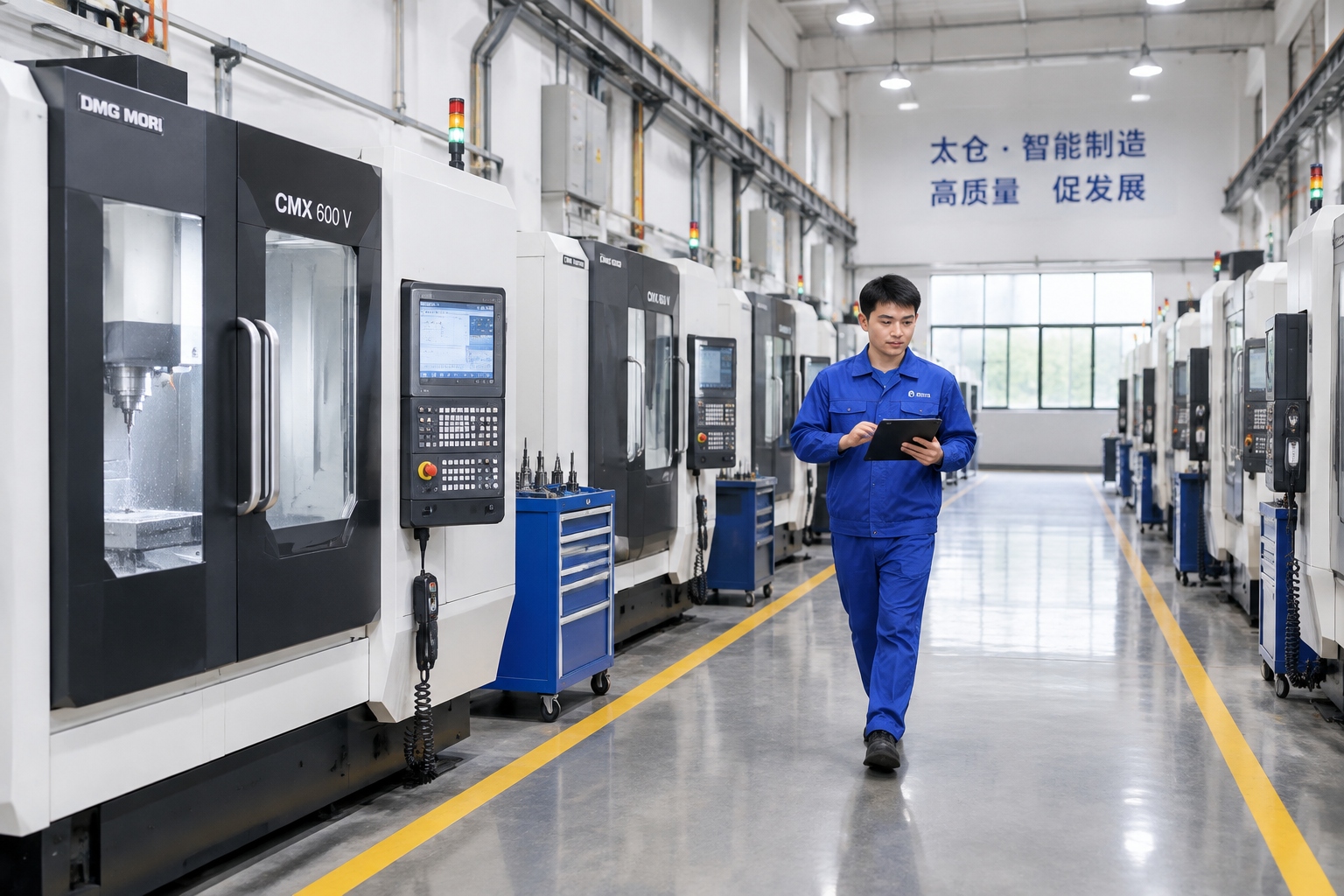
In a machining hall on the northern edge of Taicang, a spindle does more than cut metal. It reports on itself.
Vibration, temperature, spindle load, hours since the last tool change — sensors on the machine log all of it several times a second. The readings go to a screen on the shop floor and to a server that a service engineer in Germany can open from his desk. When the numbers drift out of range, the maintenance calendar moves up by a few weeks. Nobody stops production. Nobody flies in.
That is what Industry 4.0 mostly looks like in Taicang: not a dark, lights-out factory, but a quiet layer of data sitting on top of ordinary metalworking. It is less photogenic than the phrase suggests, and considerably more useful.
Why 560 German Companies Ended Up in a Chinese County-Level City
Taicang is a county-level city, which in China’s administrative system means it sits below a prefecture-level city — Suzhou, in Jiangsu Province — and above a town. It has about 830,000 residents and lies on the Yangtze River, roughly 50 kilometers northwest of Shanghai. Its annual economic output is around RMB 170 billion, larger than that of some small European economies.
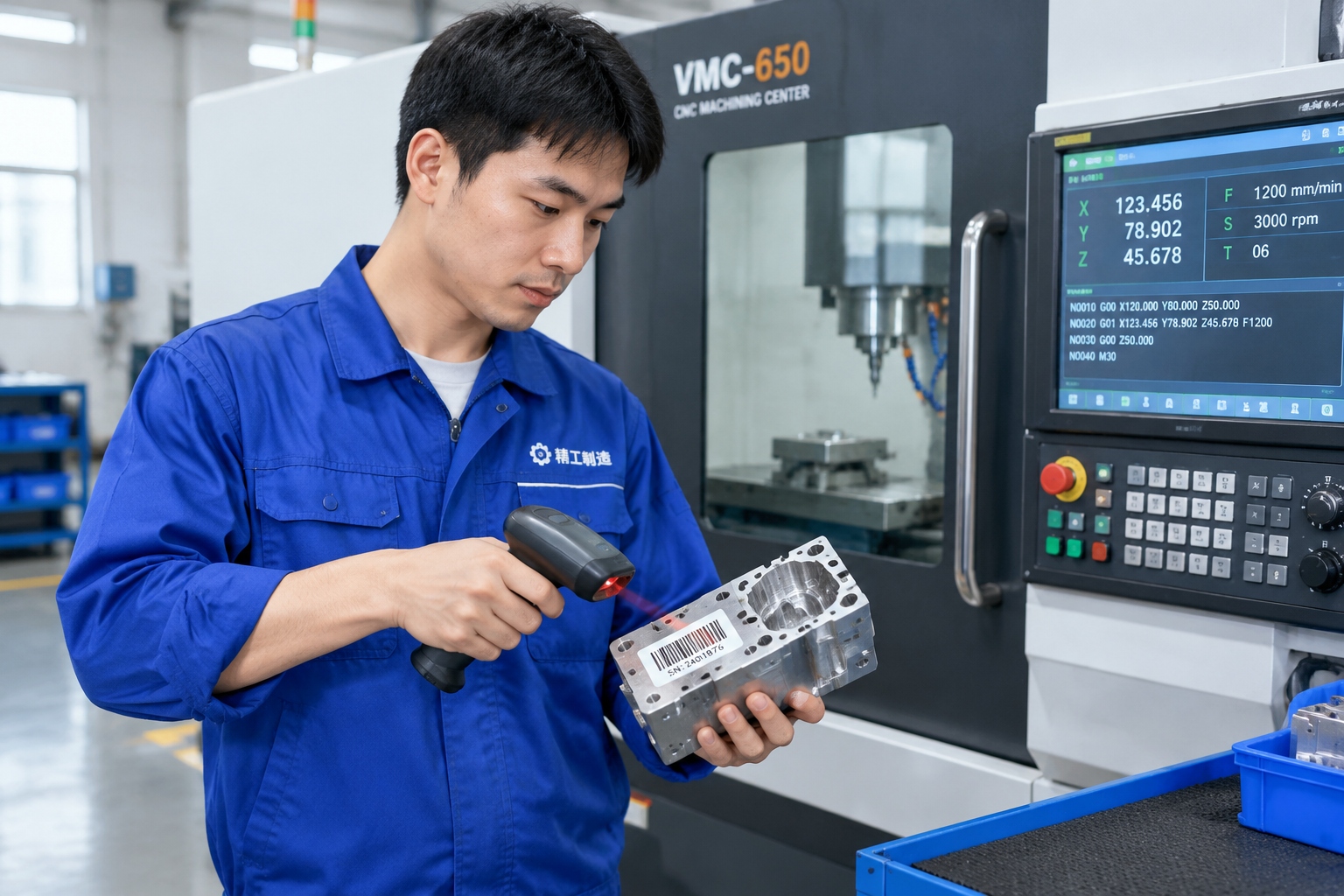
More than 560 German-invested companies operate here. Six of Germany’s ten largest machine-tool builders have a presence: Trumpf, Chiron, EMAG, Index, Hermle and Spinner among them. The first German firm arrived in 1993 — Kern-Liebers, a family-owned spring and stamped-metal maker from Baden-Württemberg.
The cluster grew for ordinary reasons. Shanghai was under an hour away by car, the Yangtze port at Taicang could load containers directly, land and labor cost less than in Shanghai, and the local government assigned staff to handle German paperwork. Then the more important reason kicked in: other Germans were already there.
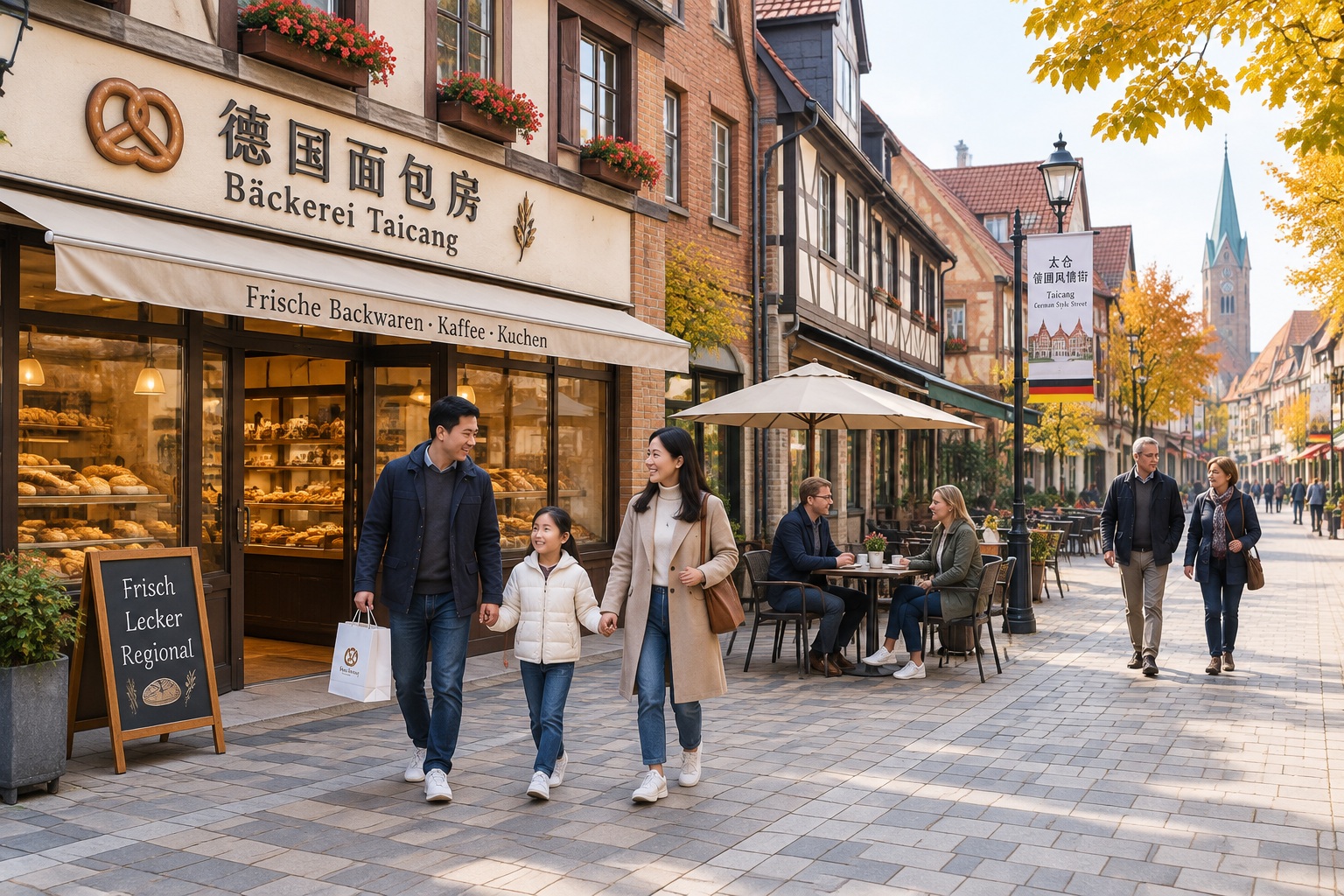
Germany’s Mittelstand — the mid-sized, often family-owned firms that dominate narrow industrial markets — tends to follow its customers and its peers. Once a handful settled, suppliers came, then more suppliers, then a German-run training program, a German bakery and an annual Oktoberfest.
The Four-Kilometer Rule
A CNC machining center contains thousands of parts: a cast iron bed, a spindle, linear guide rails, ball screws, sheet-metal covers, a control cabinet, hydraulic units, tool holders, cables, sensors. In Taicang, company managers and local industry bodies describe a supply radius of roughly four kilometers, inside which the large majority of those parts — by some accounts about 90 percent — can be sourced.
Four kilometers is not a marketing slogan. It changes how a factory runs. If a casting arrives with a machining error, the foundry is a phone call and a short drive away. If a design change requires a different sheet-metal housing, the supplier can be at the plant the same afternoon. Inventory that would sit for three weeks in Europe can sit for three days here.
The honest caveat: not everything is local. High-end CNC controllers, precision bearings and some ball screws still come from Japan, Germany or Taiwan. Taicang’s density is remarkable, but it is not self-sufficiency. The cluster’s strength lies in the middle of the value chain — castings, machined parts, frames, tooling, assembly — not in every single component.
What Industry 4.0 Looks Like When You Stand Next to the Machine
Strip away the conference slides, and the practical version in Taicang comes down to a few things.
Predictive maintenance. Spindle and hydraulic data feed a model that flags early wear, so a part is swapped during a scheduled weekend stop rather than after a breakdown on a Tuesday afternoon.
Remote service. A German engineer can log into a machine in Taicang and diagnose a fault before anyone boards a plane. Trumpf, whose laser-cutting machines are common in Chinese sheet-metal shops, has offered connectivity of this kind for years.
Digital commissioning. A laser program or a milling cycle is simulated first, so the first cut on the real machine is not a trial run. Machine builders sell this as software; on the floor it means less scrap metal.
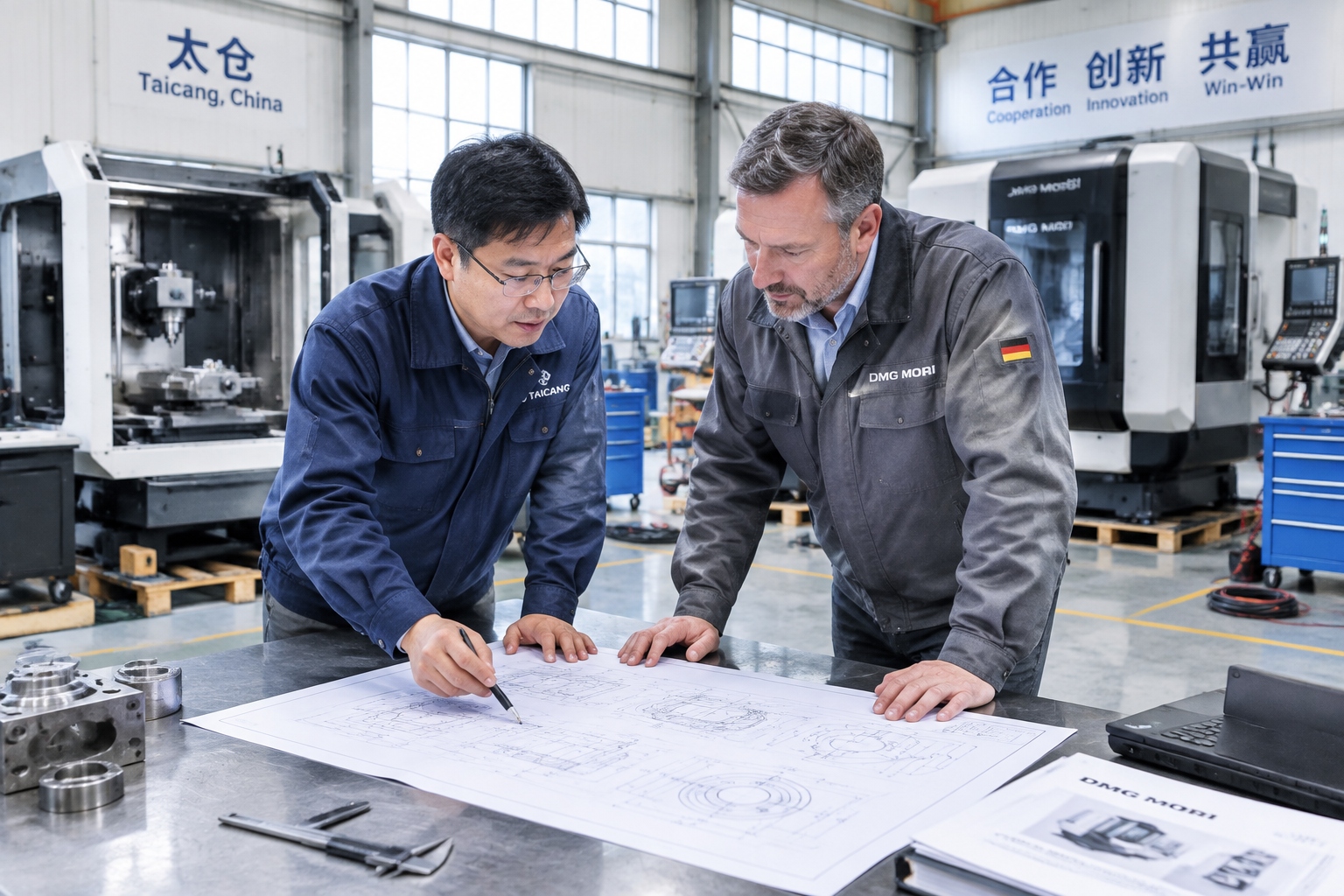
Traceability. Workpieces carry barcodes or RFID tags. A part that ends up in an electric vehicle can be traced back to the shift, the machine and the batch of raw material it came from.
Then there is the unglamorous part. Many plants in Taicang are not fully automated. Tool changes are often manual, automated pallet pools are common but not universal, and some second- and third-tier suppliers still run older machines. Industry 4.0 here is a direction, not a finished state.
Six Giants, and a Long Tail of Quiet Specialists
The six machine-tool names matter because they set the technical ceiling. Trumpf does lasers and punching. Chiron does high-speed milling. EMAG does turning and grinding. Index does multi-spindle turning. Hermle does precision milling. Spinner does CNC turning and milling. Their Chinese customers are increasingly EV makers, medical-device manufacturers and aerospace suppliers — the sectors Beijing has prioritized in its industrial policy.
Behind those names sits a longer list of less famous German firms: spring makers, gear cutters, specialists in industrial adhesives, sensors, or temperature control. The German economist Hermann Simon called these companies “hidden champions”: small or mid-sized, often family-owned, with global market shares of 30, 50, sometimes 70 percent in a single narrow product.
Their Chinese plants are usually small — a few dozen to a few hundred workers — and they rarely make headlines. Together they explain why Taicang’s German footprint is less about brand recognition and more about a dense, specialized industrial base that a machine-tool builder can plug into.
The Apprenticeship Pipeline
German manufacturers in China have a persistent complaint: skilled workers are scarce, and good ones leave. Taicang’s answer has been to import a piece of the German system.
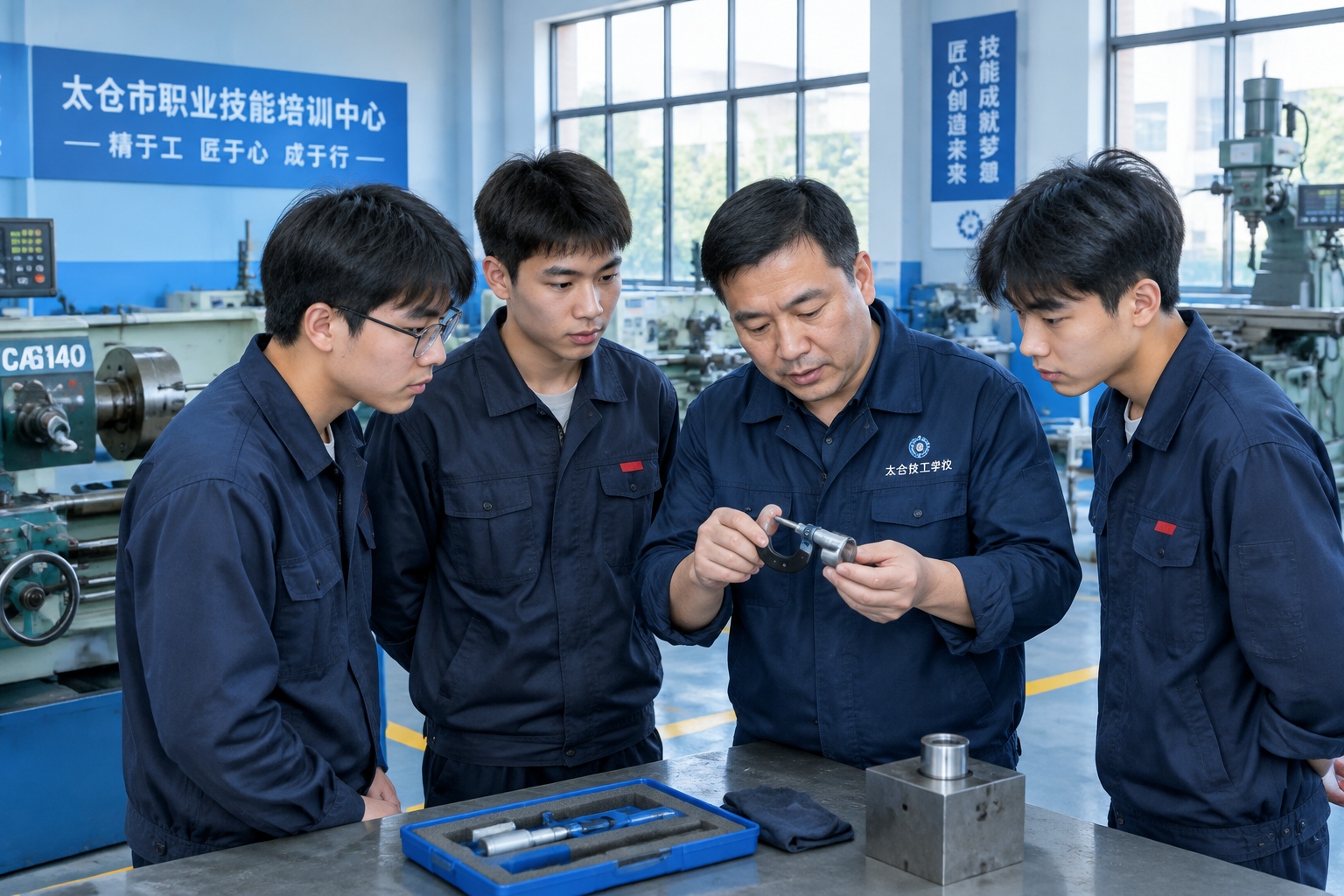
Since the early 2000s, local vocational schools have run a “dual system” program adapted from the German model. Students split their week between classroom and factory, receive a small stipend from the company, and graduate with a certificate recognized by the German Chamber of Commerce in China. Recruiters in Taicang say a machining technician with a few years of experience can earn roughly RMB 8,000 to 15,000 a month — solid for a Chinese industrial city, though not a Shanghai salary.
The program does more than fill vacancies. German managers say they can plan three to five years ahead because they know who will be running the machines. Chinese graduates say the certificate travels well: it means something to almost any German-invested plant in the country.
The Frictions Nobody Puts in the Brochure
Taicang is a Chinese city, not a German one, and the pressures around it are Chinese too.
Competition is rising. Chinese machine-tool builders in Jinan, Ningbo and Guangdong are improving quickly on standard machines and pricing aggressively. The German advantage is narrowing at the low end and holding at the high end.
The EV transition cuts both ways. Chinese electric-car makers buy a lot of machine tools, and they also put pressure on suppliers tied to internal combustion engines — a real concern for some German plants in the city.
Costs are climbing. Taicang is no longer cheap; land is scarce and wages have risen. Some lower-value work has moved inland.
And geopolitics hangs over everything. Berlin’s talk of “de-risking” has not stopped German firms from investing in China, but it has made some boards more cautious about new greenfield projects. Taicang keeps adding German companies anyway — the supply chain, the skilled workers and the customers are all here.
What Taicang Explains About Chinese Manufacturing
The usual story about Chinese manufacturing is about scale: output, exports, capacity. Taicang is about a different variable — proximity. The distance between a machine and the supplier who can fix it. The distance between a vocational student and the company that will hire her. The distance between a German design and a Chinese production line.
Industrial upgrading, seen from here, is not a national slogan. It is a set of small, verifiable things: a spindle with sensors, a four-kilometer supply chain, a certificate an employer trusts. None of that makes a headline. All of it shows up in a factory’s delivery schedule.
Back in the machining hall, the screen on the wall is still green. The spindle is fine. Nobody in Germany needs to know.
Start the discussion at forum.chinacomes.com