
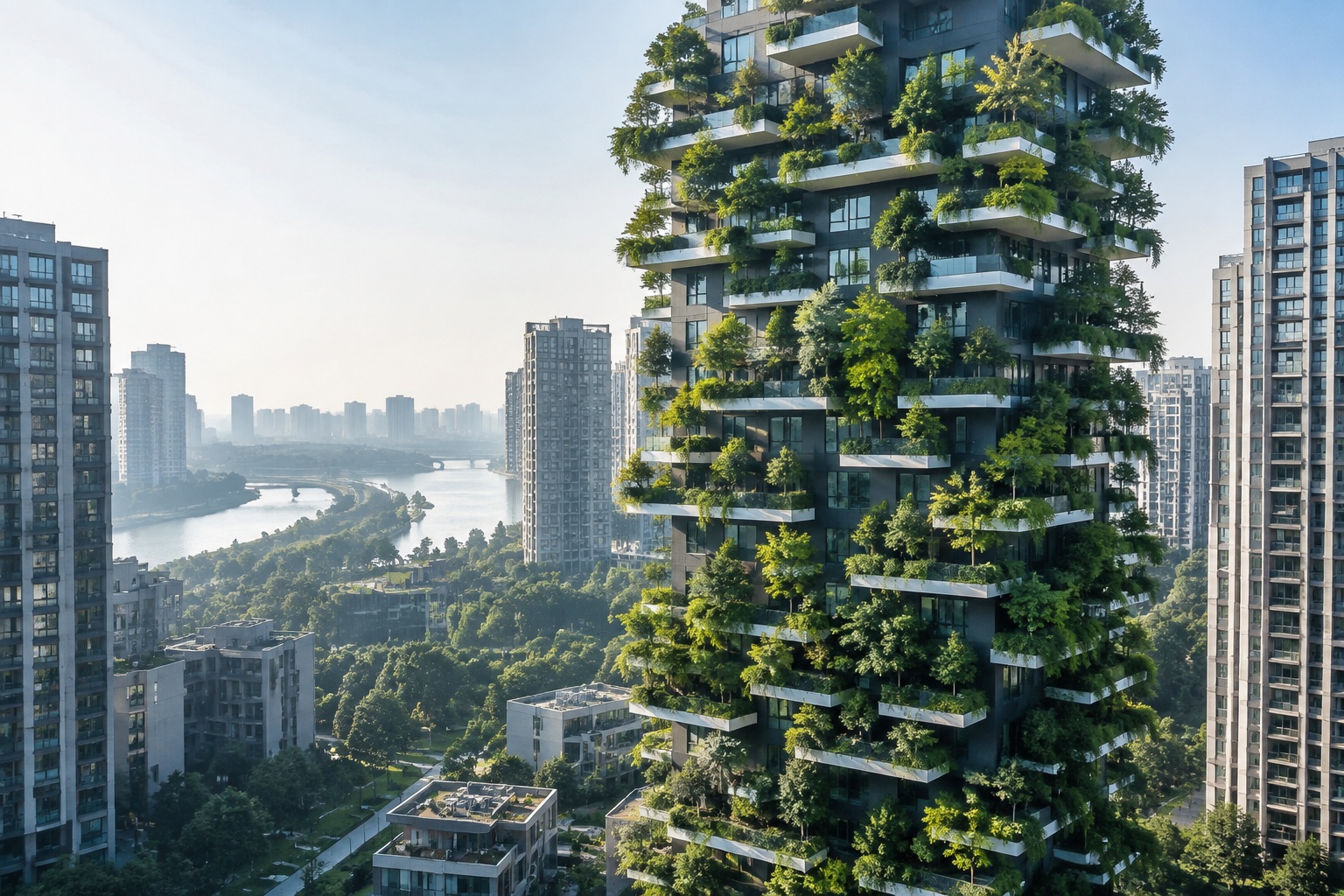

A Building That Breathes
It’s seven in the morning, and the first sound in Huang Lin’s apartment isn’t traffic—it’s birds. She pulls open the sliding glass door to her ninth-floor balcony and steps into a thicket of bamboo, jasmine, and loquat branches. The leaves are wet with dew. Below her, the Chengdu skyline stretches out in grey-green blocks, but here, at the edge of the balcony, she’s wrapped in a pocket of green that feels almost rural.
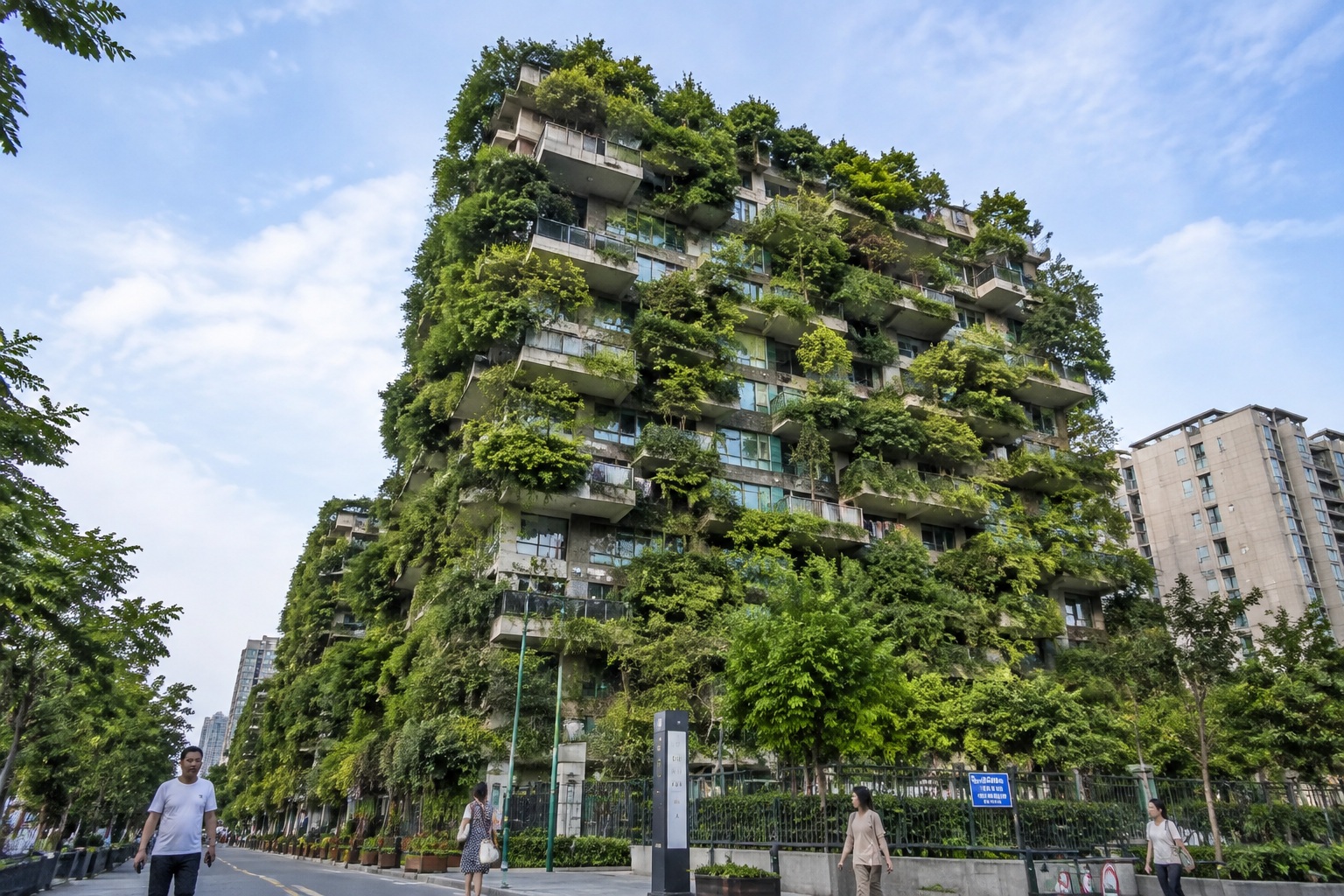
Huang is one of nearly two thousand residents living in what local developers call “vertical forest” apartment towers—residential buildings where every terrace is planted with trees, shrubs, and climbing vines. The project, completed in 2023 in Chengdu’s high-tech zone, is part of a broader experiment in ecological urbanism that has been spreading across Chinese cities from Nanjing to Shenzhen.
Every Balcony Is a Small Farm
The first thing visitors notice is the sheer volume of vegetation. Each apartment comes with a concrete planter box that runs along the entire outer edge of the balcony, about 1.5 meters deep and wide enough to grow a small tree. The developers selected native species—osmanthus, camphor, pomegranate, and various ferns—that can survive the region’s humid summers and mild winters.
Huang, a graphic designer in her early thirties, moved in 2023 with her husband and their seven-year-old son. “Most people in Chengdu buy apartments with balconies for the view or for drying clothes,” she says. “Here, the balcony became a garden before we even turned on the tap.”
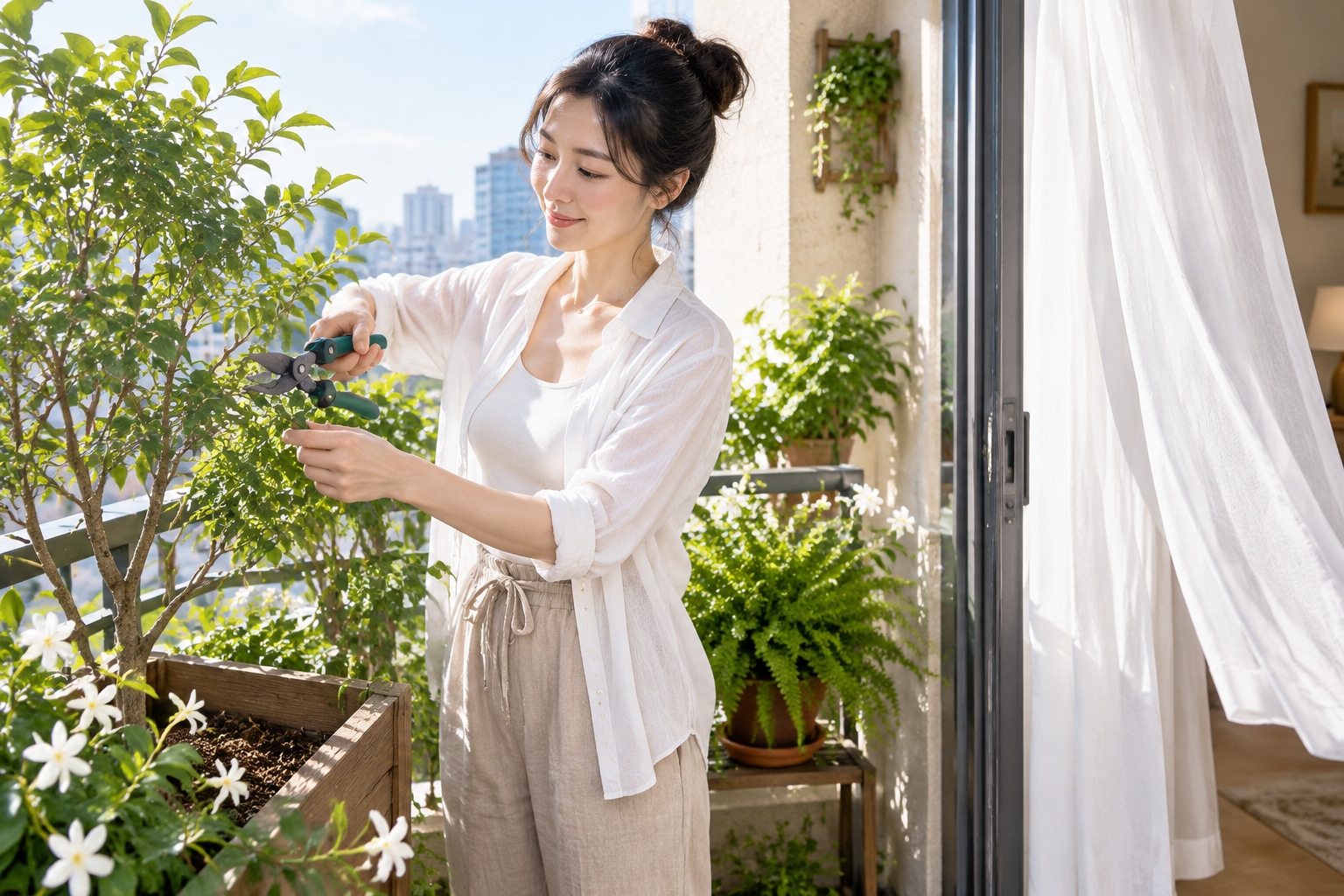
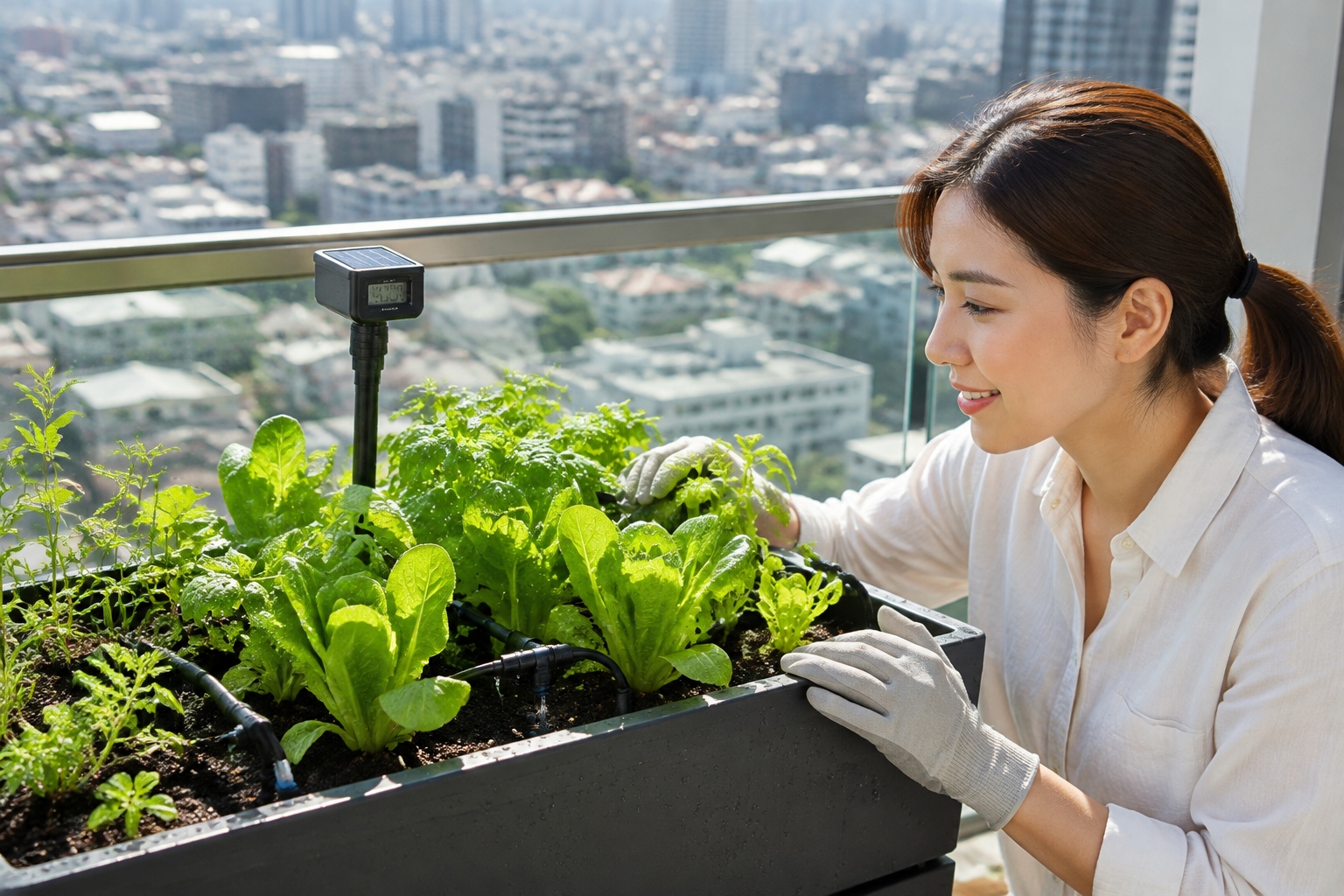
The building’s irrigation system is automated, with sensors embedded in the soil that release water from a greywater recycling system. Residents don’t need to water the plants by hand, but many still do. “It’s meditative,” Huang says. “Every evening, I go out with a pair of scissors and prune a few branches. My son collects the loquats in June. We don’t have a yard, but we have a vertical yard.”
The Logic Beneath the Leaves
Behind the greenery is a practical set of environmental goals. Each tower’s plant canopy acts as a buffer against solar radiation. In summer, the dense foliage blocks direct sunlight from hitting the concrete, reducing the need for air conditioning. A report from the building’s design institute estimated that the green façade lowers the surface temperature of the outer walls by as much as 12°C on hot afternoons. In winter, the leaves create an insulating layer that helps keep heat inside.
The plants also filter particulate matter from the air. A 2024 study by the Chengdu Municipal Research Institute of Environmental Science measured PM2.5 levels on planted balconies versus standard residential balconies in the same district. The planted balconies showed an average reduction of 18% in fine particulate concentration, with larger reductions on days of moderate pollution.
There’s a psychological dimension as well. Researchers from Sichuan University’s School of Architecture surveyed residents of four vertical forest buildings in Chengdu and found that 72% reported improved mood and lower stress levels after moving in. Liu Chen, a retired middle-school teacher who lives on the fifth floor, puts it more simply: “When I’m out here pruning or just watching the cherries ripen, I forget I’m on the 5th floor of a 42-story tower.”
Challenges and Limits of a Green High-Rise
It’s not all seamless. Maintaining the plants costs money—about 2,000 yuan per household per year, a fee that’s included in the property management bill. Some residents complain about an increase in mosquitoes in the summer, and a few have complained about the constant dripping from the automated irrigation system after heavy rain. One ground-floor resident told me that when the wind picks up, leaves and fallen fruit scatter across the walkway, requiring two extra cleaning shifts a week.
There are also design trade-offs. Because the exterior walls are crowded with plants, the apartments receive slightly less natural light than conventional buildings. And the deep planters take up about 8% of the floor area, which some buyers see as a loss of usable space.
But for developers, the vertical forest model is a way to differentiate themselves in China’s competitive housing market. At a time when many medium-tier cities are struggling with oversupply, a project that promises a “green lifestyle” can command a premium—typically 5–10% above similar apartments in the same neighborhood. The Chengdu tower sold out within two months of its launch.
Can Vertical Forests Scale to Entire Cities?
China’s urban population is now over 900 million, and the average available green space per capita in central districts remains below the World Health Organization’s recommended 9 square meters. Vertical forests aren’t a silver bullet, but they offer one way to densify green space without consuming additional land.
A growing number of municipal governments are paying attention. In 2024, the Chengdu city government issued a policy document encouraging “three-dimensional greening” in new residential and commercial buildings, including subsidies for developers who install green walls and rooftops. Similar policies have been adopted in Shenzhen and Shanghai.
The model isn’t limited to luxury towers. In Guangzhou, a public housing project from 2022 incorporated shallow planter boxes into affordable apartments. The plants are smaller, but the concept is the same: give residents a tangible connection to nature, even in the densest concrete environments.
Dusk in the Jungle
At 7 p.m., Huang Lin stands on her balcony again. The sun is low, and the long shadows of the high-rises cross the city. The building’s façade begins to light up—not with LED screens, but with tiny warm lights embedded in the planters. It’s like looking at a cliff face covered in fireflies.
She points to a neighboring tower where a resident is watering herbs on a balcony four floors up. On another balcony, someone has hung a hammock between a fig tree and a bougainvillea. “We’re all in the sky,” she says, “but we’ve got a little bit of forest around us.”
The vertical forest isn’t going to turn China’s cities into gardens overnight. It’s expensive, labor-intensive, and still an outlier in the vast sea of conventional high-rises. But for Huang and her neighbors, it’s proof that living in a steel-and-concrete jungle doesn’t have to mean giving up the green one.
Start the discussion at forum.chinacomes.com