

Two woks, one dish
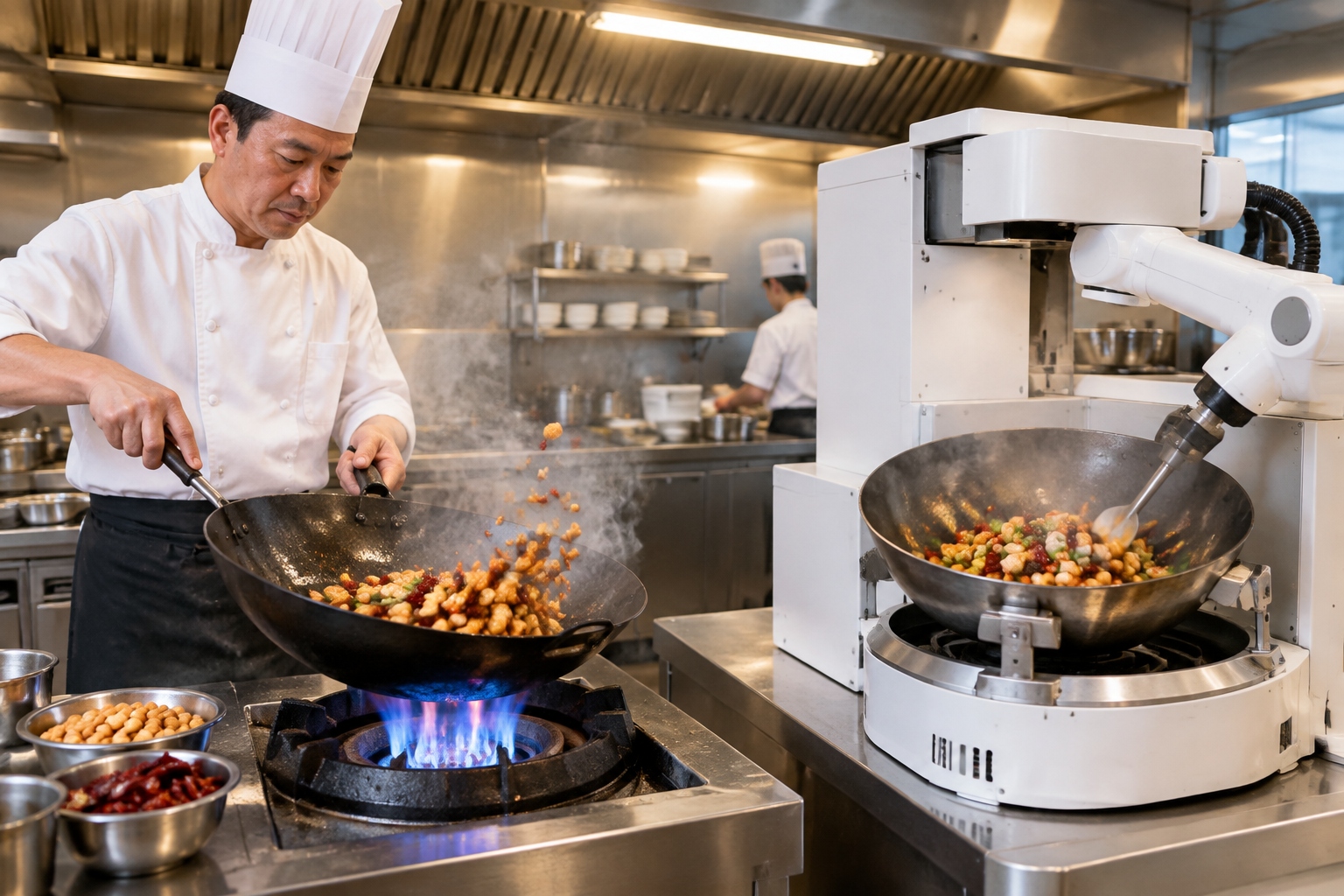
The kitchen smells like dried chilies hitting hot oil — a sharp, sweet burn that makes everyone cough once and then lean in closer. On the left side of the pass, a 52-year-old chef named Liu Weiqing is tossing a wok. On the right, a white machine the size of a hotel dishwasher is making the same dish, with a robotic arm where his wrist should be.
Both woks are full of Kung Pao chicken.
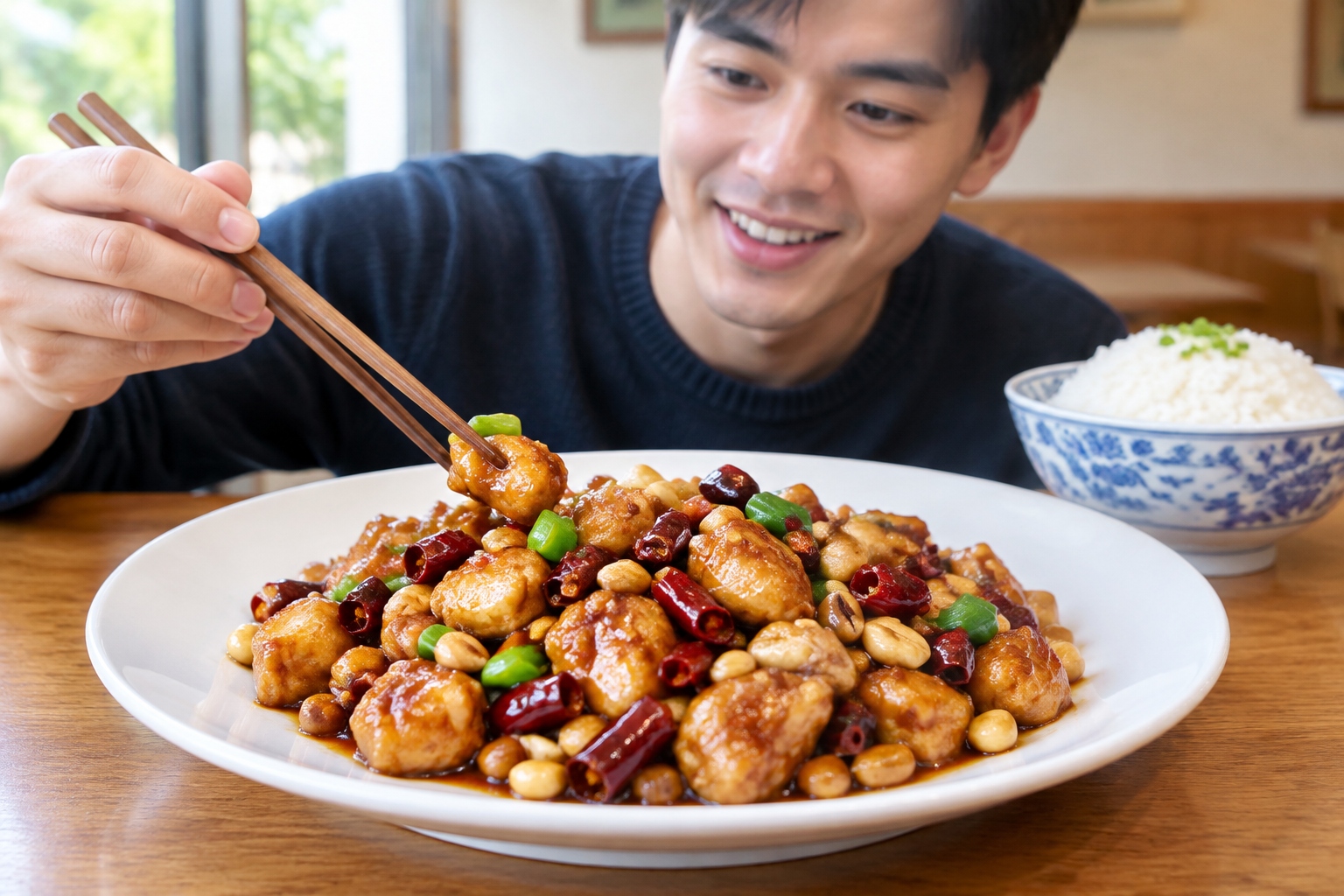
Quick background, for anyone who has only met this dish inside a takeout container: Kung Pao chicken (gongbao jiding) is diced chicken stir-fried with dried red chilies, roasted peanuts and scallions in a sauce that is sweet, sour, salty and slightly numbing all at once. Sichuan cooks call that flavor profile “lychee taste.” The name comes from Ding Baozhen, a Qing dynasty governor of Sichuan whose honorary title was gongbao. It sits on the menu of almost every Chinese restaurant on earth, and it almost never tastes the same twice.
That inconsistency is exactly what the machine was built to fix.
The robot wins the boring parts
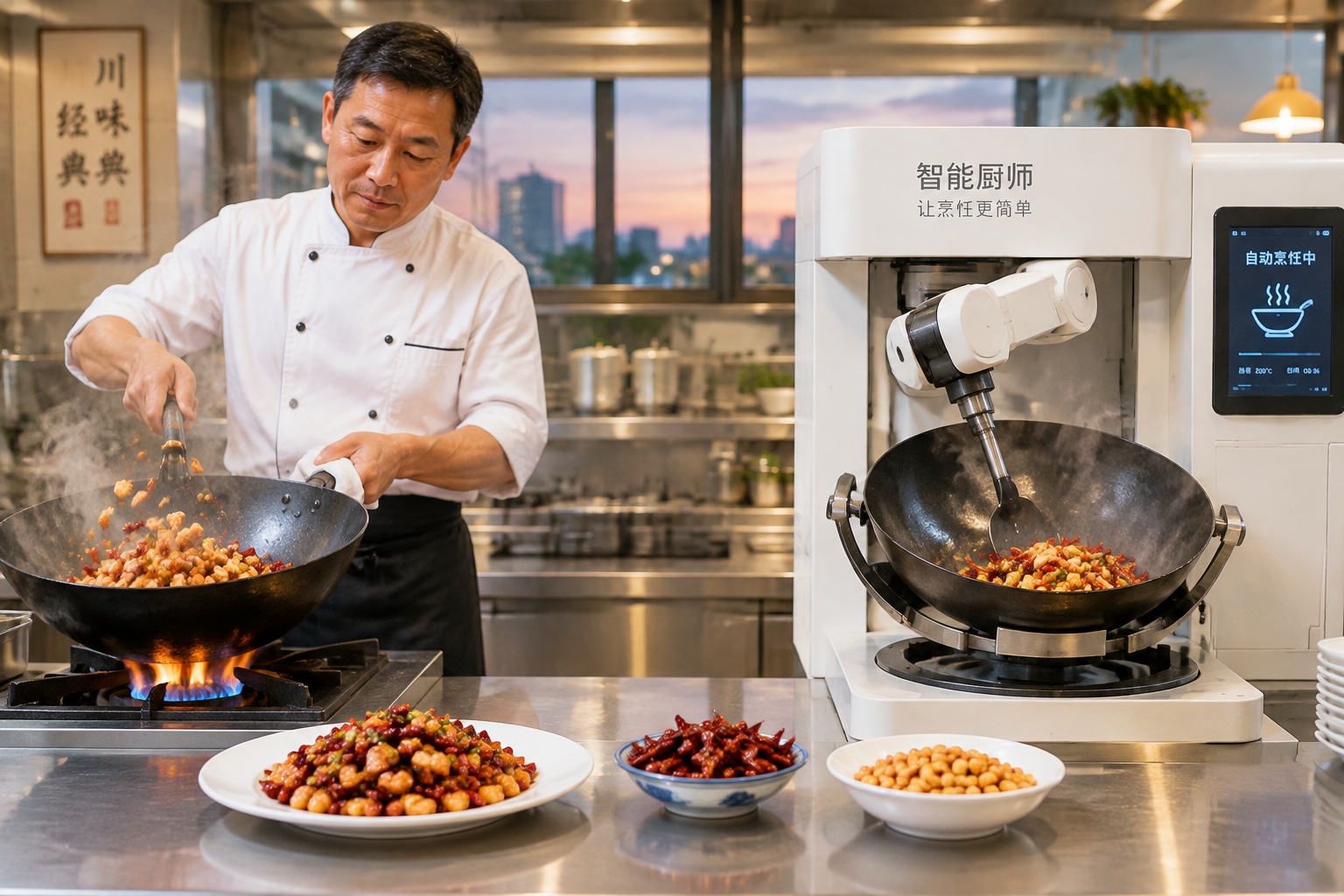
Watching a commercial wok robot work is oddly hypnotic. Here is what actually happens, step by step.
Cutting: the machine wins on paperwork
The robot at this restaurant gets its chicken pre-diced from a central kitchen. A newer model with a cutting arm can slice a chicken breast into cubes of roughly 1.5 centimeters in about forty seconds. Chef Liu takes ninety.
His cubes are also about 1.5 centimeters. Most of them. A few are 1.2, a few are 1.8. Sichuan’s culinary authorities have published standards for classic dishes that specify exactly this kind of detail, because even cooking depends on it. Liu hits the target because he has been cutting chicken for thirty years. The machine hits it because it is Tuesday.
Advantage: the robot. Slightly insulting, but true.
Heat: where the human fights back
The robot heats its wok to 200°C in about thirty seconds and holds it there, within a few degrees, for the whole cook. Liu’s gas burner can spike past 300°C, and he uses that. The food leaves the wok surface, travels through the flame and comes back — the toss known as dianshao, which gives the dish wok hei, that smoky, faintly charred note that makes restaurant food taste like restaurant food.
Some machines imitate the toss with a rotating drum. It looks convincing on video. Up close, the food never really leaves the metal.
“The machine cooks the chicken,” Liu says, scraping his wok with a bamboo brush. “It doesn’t cook the wok.”
Seasoning: precision versus correction
The robot dispenses from a dozen cartridges — soy sauce, black vinegar, sugar, Shaoxing wine, starch slurry, chili oil — to a tenth of a gram. Liu uses a spoon, a ladle and his eyes.
Here is the part that surprised me. The machine’s sauce is more consistent. Liu’s is more correct. Tasting both, three of us agreed the robot’s version was a little flat and Liu’s was brighter — because he had tasted it halfway through and added a splash of vinegar that no recipe called for. Some newer machines claim sensors and AI that adjust for humidity, ingredient moisture and a customer’s spice preference. In this kitchen, a human still stands next to the machine, pressing buttons.
The blind test
We set two unmarked plates on a table: same dish, same rice, one cooked by each wok. Four tasters — Liu, his 24-year-old apprentice, a Chengdu office worker, and a German exchange student who estimates he has eaten Kung Pao chicken forty times in three years.
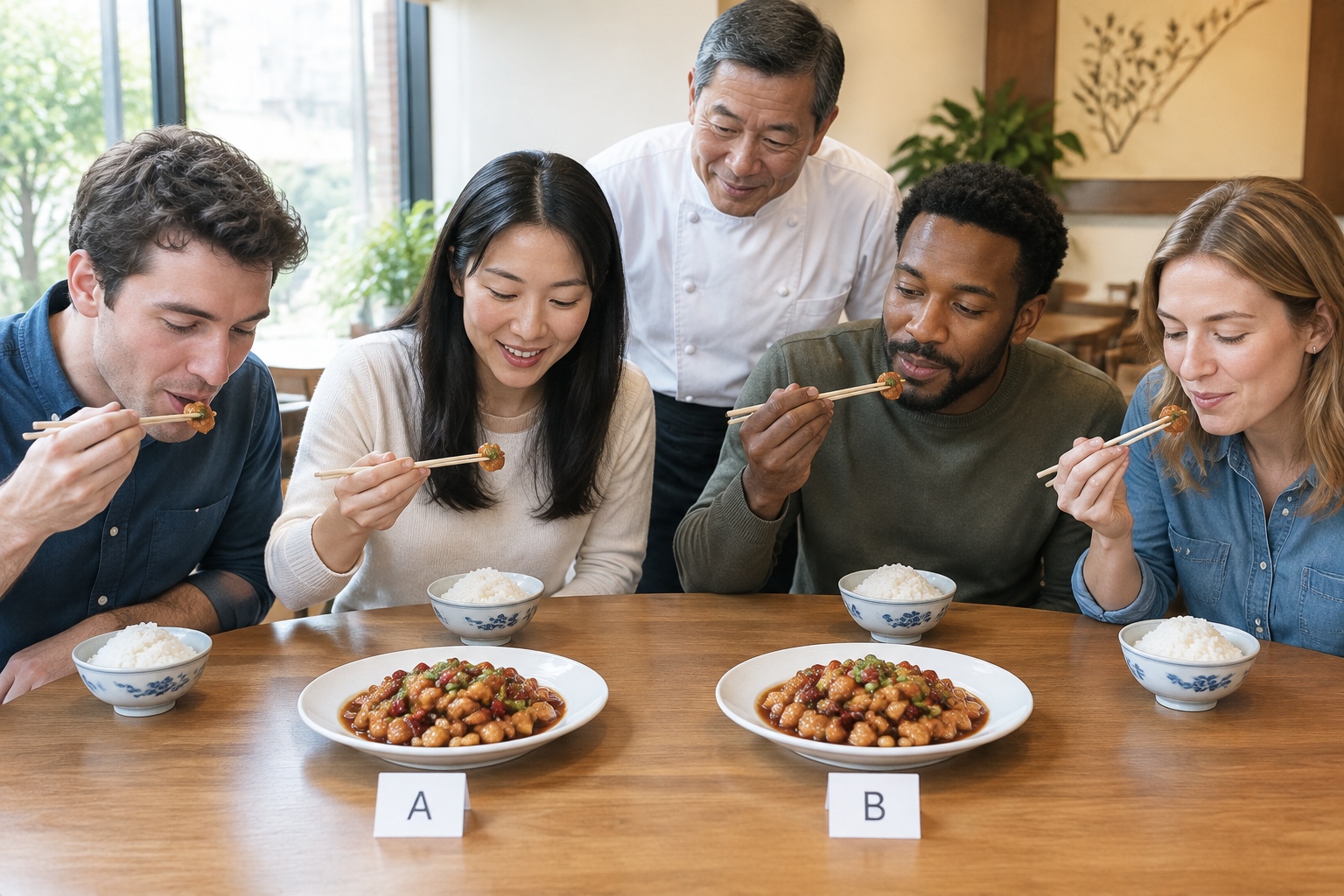
Three of the four guessed which plate was which. Then things got interesting.
The student preferred the machine’s. “The chicken is more tender,” he said, correctly — the robot’s chicken is vacuum-marinated and cooked to a fixed internal temperature every single time.
The apprentice also preferred the machine’s version, which visibly wounded his boss. “It’s more even,” he shrugged. “I don’t have to think.”
The Chengdu office worker went the other way: “The machine’s tastes like a good restaurant. His tastes like someone made it for me.”
Liu, who has cooked this dish perhaps thirty thousand times, gave the fairest verdict. “The chicken in theirs is better than mine. The dish is better in mine.” Asked to explain the gap, he pointed at the chilies. “It never burns the chilies. Every time, the same. But some nights a dish wants the chilies almost burned. You can’t program that. Or maybe you can. I don’t know.”
Why Chinese restaurants are actually buying these machines
This is not a laboratory stunt. Walk through the back kitchen of a mid-size Chinese chain and the odds are decent that a machine is doing the stir-frying.
The economics are simple. A wok station chef in a second-tier city earns roughly 6,000 to 12,000 yuan a month, with high turnover and brutal hours. Catering is one of China’s largest employers, and the wok station is the hardest seat to fill: it is hot, loud and physically punishing, and fewer young workers want it. Meanwhile, a chain with 500 outlets needs its Kung Pao chicken to taste identical in all 500.
A commercial cooking machine costs somewhere between 20,000 and 100,000 yuan, and the companies selling them will happily show you a spreadsheet claiming payback in under two years. Thousands of outlets have already done the math.
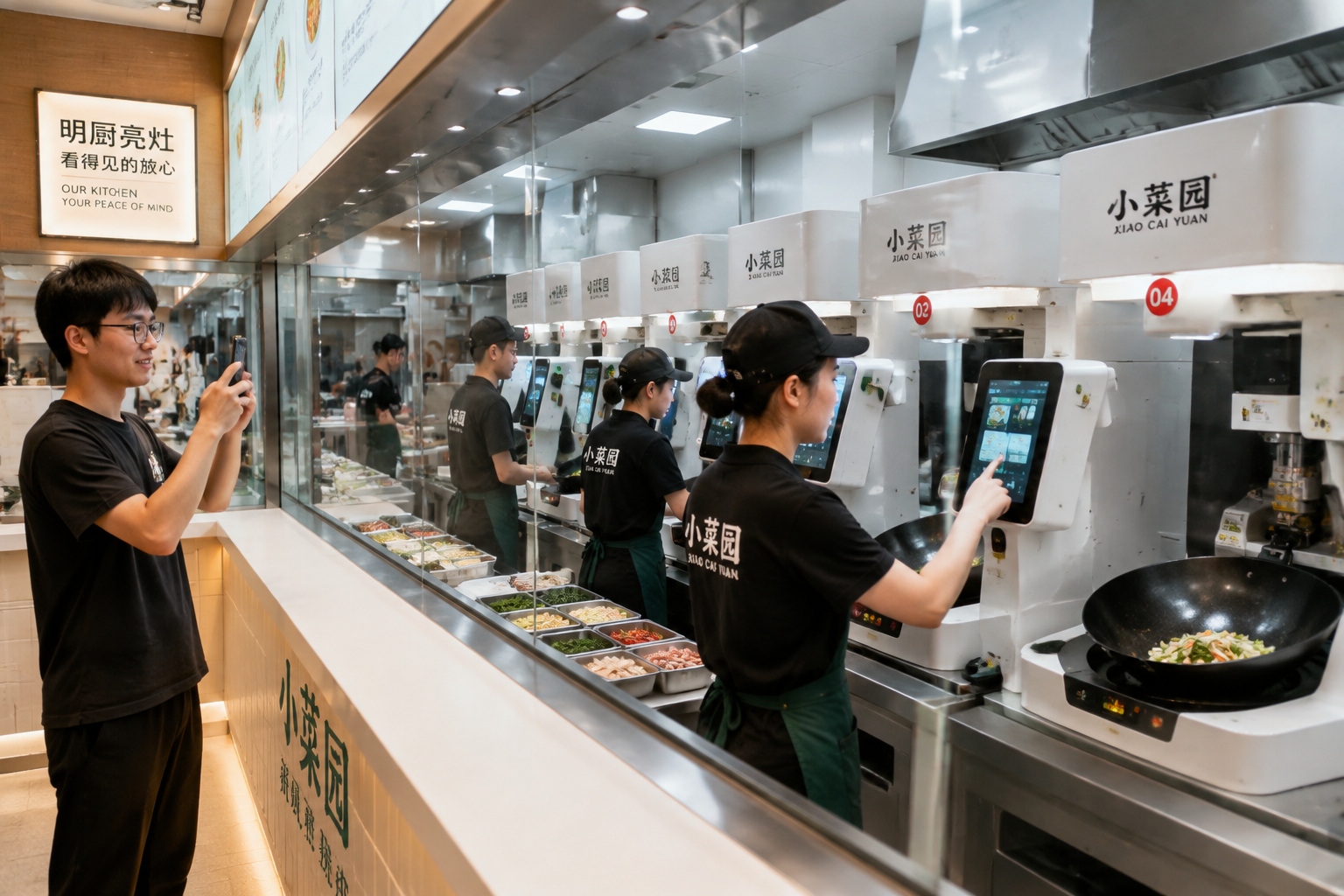
There is a second, sneakier reason. Chinese diners spent the past few years in a bad mood about yucai — pre-prepared dishes quietly reheated in restaurants and sold at fresh-cooked prices. A robot that visibly dices, sears and tosses in front of you is a marketing answer to that suspicion. Several chains put the machines behind glass. The machine isn’t hiding the cooking. It is the cooking, performed nightly for an audience.
So what does “authentic” actually mean here?
Ask an engineer and a chef this question and you get two completely different answers.
The engineer’s answer: a recipe is a data set. A chef’s “instinct” is a model trained on thirty years of examples — just slower, and it forgets when he is tired. The machine trains faster, remembers everything and never has a bad night.
The chef’s answer: cooking is a series of decisions made in the moment, about this batch of chilies, this chicken, this customer. Liu has a regular who always asks for less sugar. The machine has a button for that. Liu has a memory.
Honestly, neither argument wins cleanly. Chinese food has never been frozen in place. The Kung Pao chicken served in Chicago is sweeter than the version in Chengdu, which is numbing-er than the version in Beijing — and nobody has ever agreed on which one is “real.” If a dish can survive a flight across the Pacific, it can probably survive a robotic arm.
What people actually pay for may not be flavor at all, but attention. A plate of Kung Pao chicken cooked by a machine can be delicious, and often is. It is harder for it to taste like someone was thinking about you. That isn’t a technical limitation. It is a definition problem.
Back in the kitchen
Dinner service starts. The machine has already finished its own wash cycle and is waiting, quietly, for the next order. Liu wipes down his station, tastes the chili oil with a fingertip, adds a pinch of salt to something, and turns up the flame.
“Ask me again in five years,” he says. “It will be better than me at this dish. It won’t be better than me at the next one.”
Start the discussion at forum.chinacomes.com