
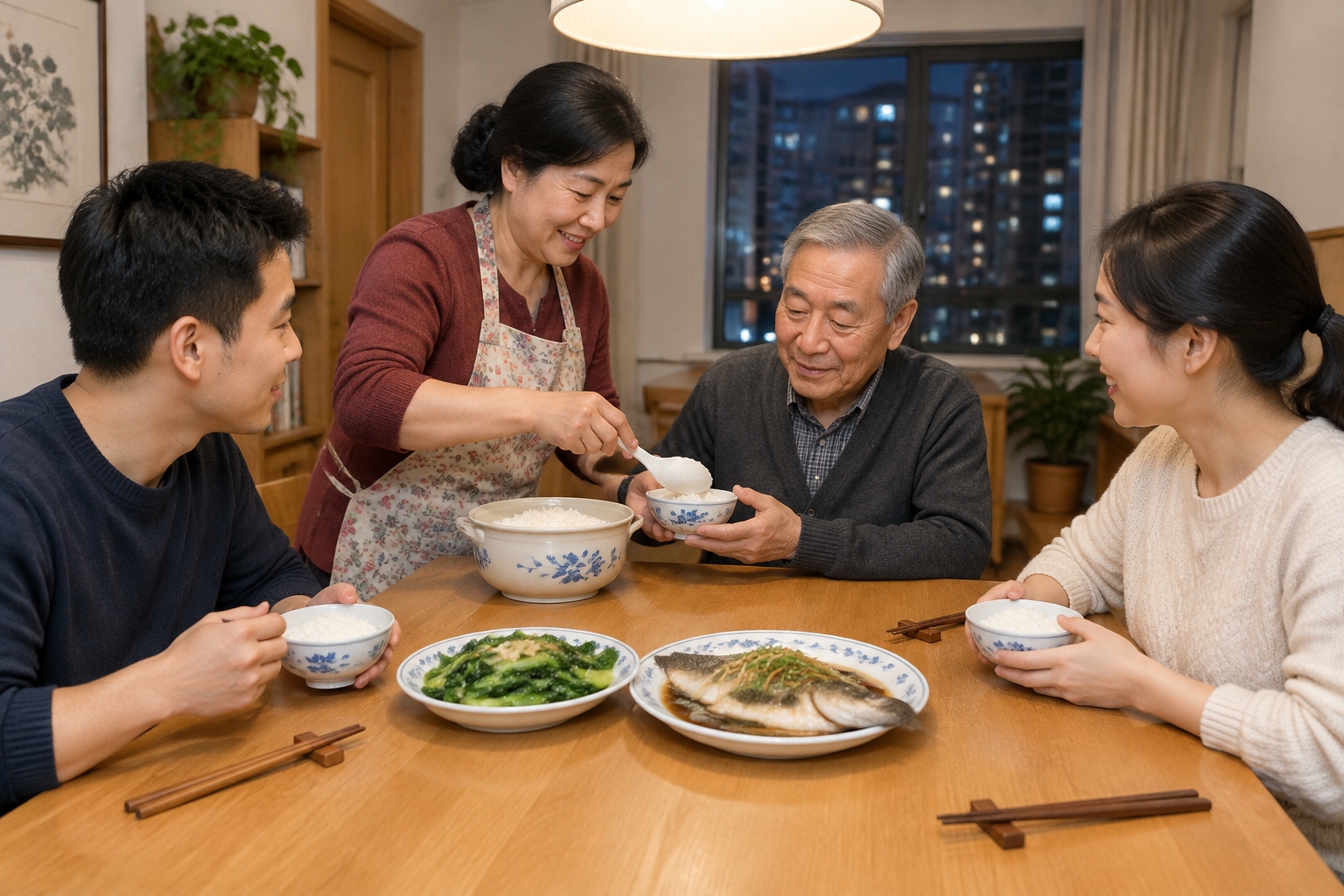

The moment a Chinese dinner table goes quiet
The meal is almost over. A few bowls of rice, a plate of greens down to the last leaves, a fish picked to the bone. A guest at the table — often a foreign one — finishes the last of the rice and, without thinking, sets the chopsticks straight down into the empty bowl, the way you would park a fork in a baked potato. Two sticks, standing upright in white rice.
The conversation does not stop. It dips. Someone reaches over, pulls the chopsticks out and lays them flat across the rim of the bowl. If there is a grandmother at the table, there will be a short, half-joking comment. Nobody is angry. But everyone saw it, and the room shifted for a second.
For a visitor, this is one of the most confusing rules in Chinese dining. In most Western countries, standing a fork in food is at worst slightly careless. It does not stop conversation. So why does a pair of chopsticks in rice read as something close to a small catastrophe?
The answer is not vague superstition. It is specific, and it explains a whole family of Chinese table rules that otherwise look arbitrary.
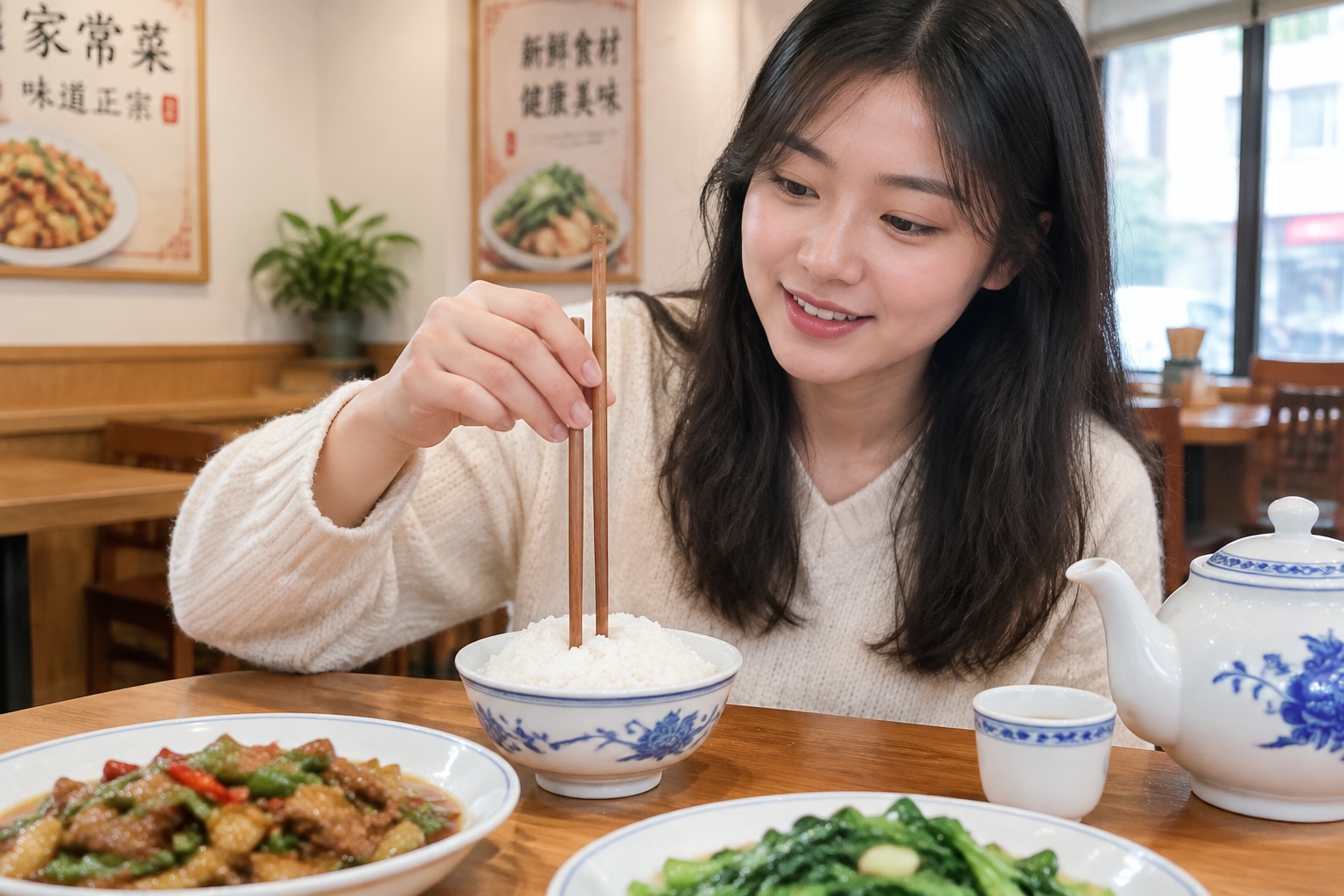
Upright chopsticks look like incense for the dead
Chinese mourning uses incense, and incense burns standing up. Three sticks planted in an urn, leaning slightly outward, burning down toward the top.
A pair of chopsticks standing in a bowl of rice is the same silhouette, lowered to table height. For anyone who grew up around Chinese funerals, the image registers instantly, before any thought arrives.
The bowl set beside someone who has just died
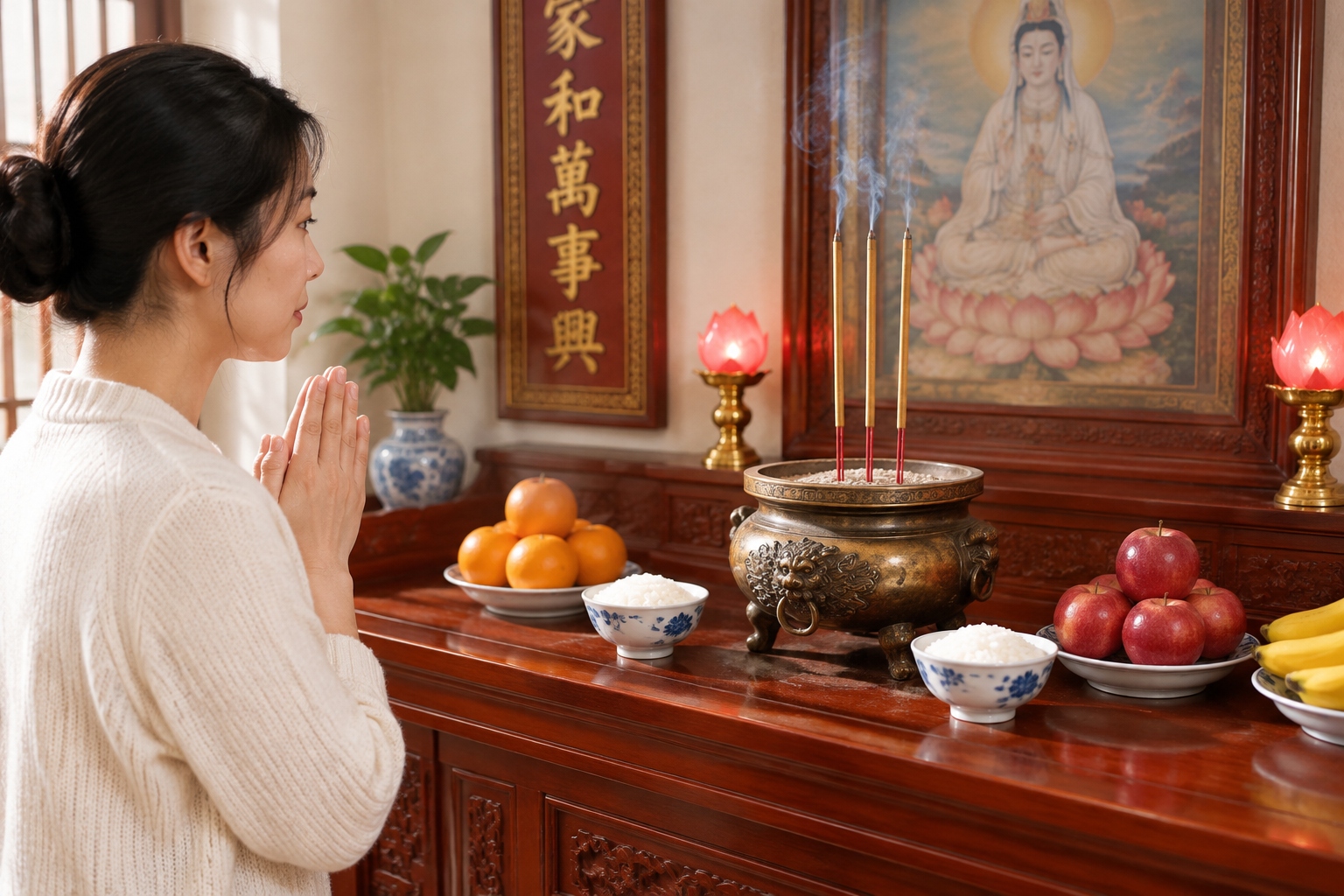
The association is not only visual. It belongs to a real ritual. In southern China and Taiwan, a bowl of rice is placed beside the body of the recently deceased — sometimes called 脚尾饭, “the rice at the foot of the bed.” It holds an egg or two, and a pair of chopsticks is stuck upright in the rice. It is the last meal, laid out for someone who can no longer pick up the chopsticks themselves. Versions of the same arrangement appear on funeral offering tables and in temples, where food is set before ancestral tablets with incense burning behind it.
During 清明 (Qingming, the grave-sweeping day in early April), families carry food, wine and fruit to the gravesite. The chopsticks are set out, the incense is lit, and the two things — rice and upright sticks — end up in the same frame.
So the taboo has a precise content: do not perform a funeral gesture over a living person’s dinner. Old folk lists of chopstick etiquette even have a name for the offense — 当众上香, “offering incense in public.” In the traditional reckoning of twelve chopstick faults, it is the one most people still enforce.
Taboo avoidance is built into the language, too
Chinese has been dodging unlucky words for centuries, and chopsticks are a good example. The original word for chopsticks was 箸 (zhù). Among riverboat and fishing communities, that sound sat too close to 住, “to stop” — the last thing anyone wants on a boat. So people began calling them 快儿 (kuàir), “the fast ones,” and later a bamboo radical was added to the character, producing 筷. By the Ming dynasty (1368–1644), the new name had largely displaced the old one.
Once you notice that pattern, Chinese table customs stop looking random. Giving a clock is awkward because 送钟 sounds like 送终, “attending a death.” A pear is not split between two people at a farewell dinner, because 分梨 sounds like 分离, “separation.” Chopsticks stuck in rice join the same family: a small system of linguistic and visual avoid-and-replace, designed to keep death out of ordinary life.
The rest of the unspoken list
If the rice rule is about death, most other chopstick taboos are about status, hygiene, or simply being unpleasant to sit next to.
Don’t tap your bowl
Rapping the rim of a bowl with chopsticks is the gesture of a beggar asking for food. The old saying is blunt: tap your bowl and chopsticks, and you will beg for a lifetime. In practice it is read not as a prediction but as bad form — you are mimicking someone who has nothing.
Don’t point, don’t wave
Pointing chopsticks at a person appears in the folk list as 仙人指路, “the immortal points the way.” It reads the way a pointed finger does anywhere: as an accusation. Swinging them around while talking is a milder version of the same thing, plus a hygiene problem.
Don’t hand out chopsticks of uneven length
The Chinese idiom 三长两短, “three long and two short,” means an unexpected death or disaster; it originally referred to the planks of a wooden coffin. Two chopsticks of clearly different lengths at one place setting invoke it.
Don’t dig through a shared dish
Rummaging for the piece you want is called 迷箸刨坟 in older etiquette lists — “digging a grave with lost chopsticks.” Half the objection is symbolic, half is practical. Since 2020, the pandemic pushed 公筷, dedicated serving chopsticks, into ordinary restaurants, and many families now use them at home too. The rule is old; the tool is new.
Don’t flip a whole fish
This one is regional. Along the coast and in fishing towns, you eat the top side of a steamed fish and then lift the bone out, rather than turning the fish over, because 翻, “to flip,” also means to capsize. Move inland to Chengdu or Xi’an and plenty of people will flip it without a second thought.
Small courtesies worth knowing
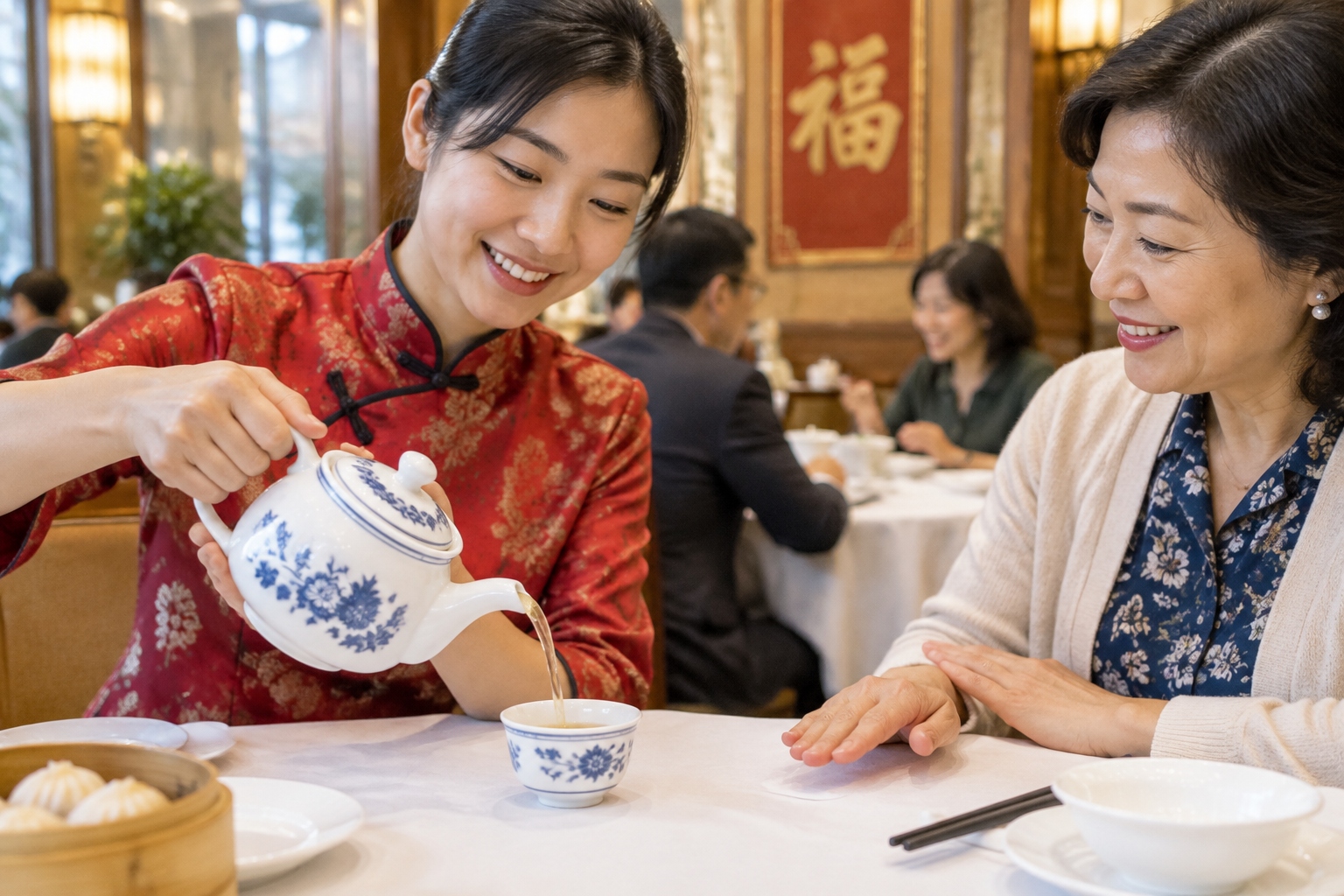
Let the eldest or the host start first. When you pour tea, fill to about seven-tenths — 茶满欺人, “a full tea cup cheats the guest,” while 酒满敬人, a full glass of liquor honors them. If someone pours for you, tap two fingers lightly on the table: a quiet, centuries-old thank-you, said to be a stand-in for a bow.
Do young Chinese still follow the rice rule?
More than you would guess. Ask a 25-year-old in Shanghai or Shenzhen — secular, dismissive of fortune-telling, glued to a phone — and they will tell you the whole thing is superstition. Then they will also tell you they would never stick chopsticks in their rice. The reason they give is usually not fear. It is “it looks wrong,” “it’s bad manners,” or “that’s what you do for the dead.”
That is a meaningful shift. The rule has migrated from belief to etiquette. It survives because it still carries a mood, not because anyone expects a ghost to turn up for dinner.
Other rules have loosened far faster. Shared dishes without serving chopsticks were standard for decades; after 2020, 公筷 spread quickly in restaurants. Younger diners split bills, order for themselves, and do not always wait for the oldest person to lift a chopstick first. Regional gaps are wide: fish-flipping etiquette matters in Fujian and Guangdong fishing communities and barely registers in Beijing.
What keeps the upright-chopsticks rule alive is exposure. For many Chinese people, the first time they see chopsticks standing in rice is at a funeral, when a grandparent dies. That image does not need a superstition attached to it. It already means something.
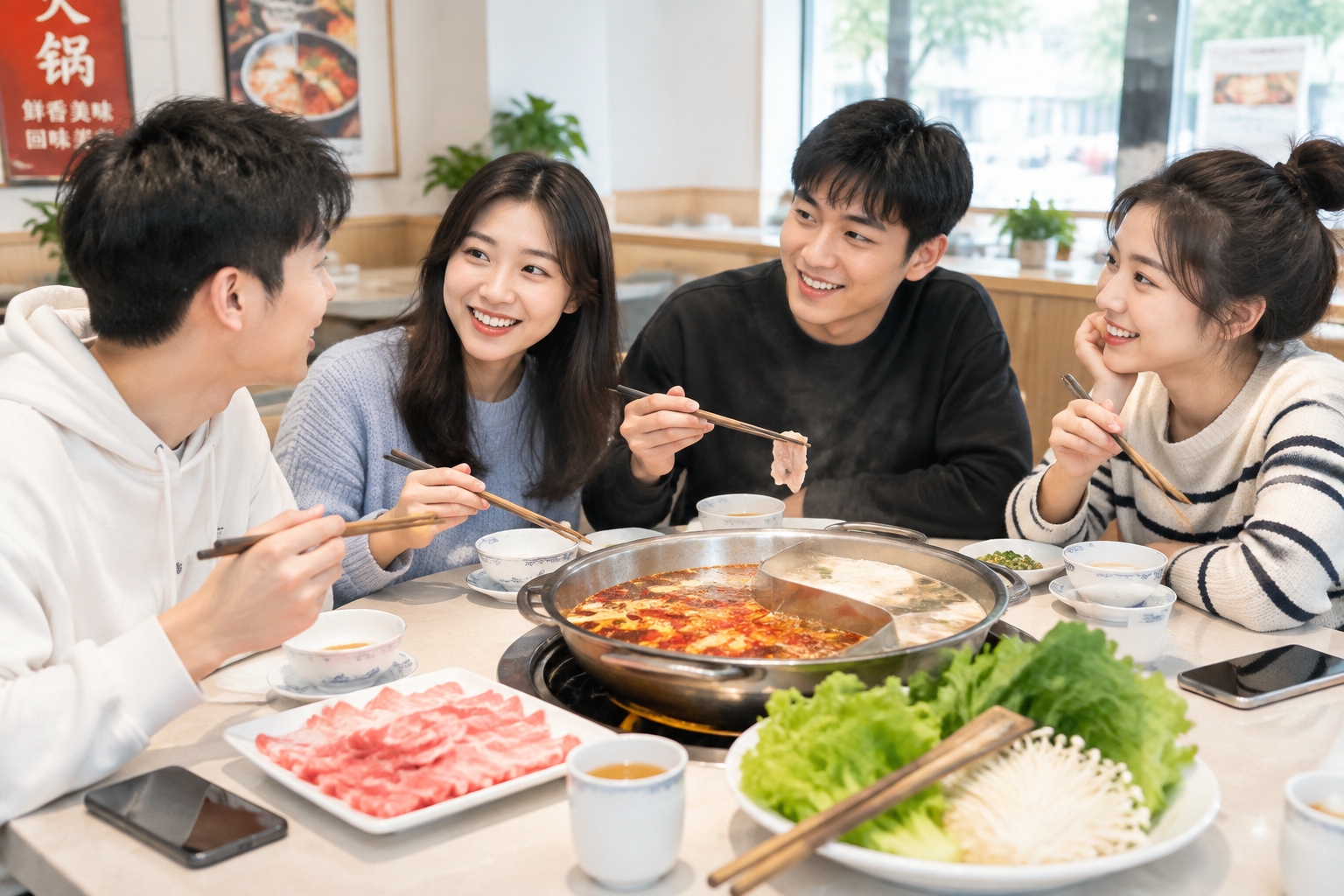
A practical checklist for eating in China
If you remember nothing else, remember the first item.
- Never stand chopsticks upright in rice, or in any bowl. Rest them on the chopstick rest, or lay them flat across the rim of your bowl or plate.
- Do not tap your bowl or plate with chopsticks.
- Do not point chopsticks at people, and do not gesture with them while talking.
- Do not stab a piece of food and hold it up like a fork-speared steak. If something is slippery, it is fine to bring the bowl closer to you.
- Use the serving chopsticks (公筷) when the table provides them, and do not root around in a shared dish.
- Wait for the host or the eldest to start, especially at a formal dinner.
- At a banquet, do not flip a whole fish. Lift the spine out and set it aside.
- Rest chopsticks neatly rather than crossing them on the table.
- Pour tea for others before yourself, and fill to about seven-tenths. Tap two fingers on the table to say thanks when someone pours for you.
- When toasting an elder or a boss, lower the rim of your glass slightly below theirs.
What to do if you slip up
Take the chopsticks out, lay them across the bowl or on the rest, and say something light. Chinese hosts generally assume a foreign guest simply does not know, and the correction is usually enough. What people notice is the recovery, not the mistake.
The deeper point is worth carrying home. Behind most Chinese table rules is an attempt to keep two worlds in their proper places — the living at the table, the dead at the altar — and a bowl of rice is where the two would otherwise meet. That is why the rule has outlasted the superstition behind it. It is a small piece of etiquette, and also a way of saying: not at this table, not tonight.
Start the discussion at forum.chinacomes.com