
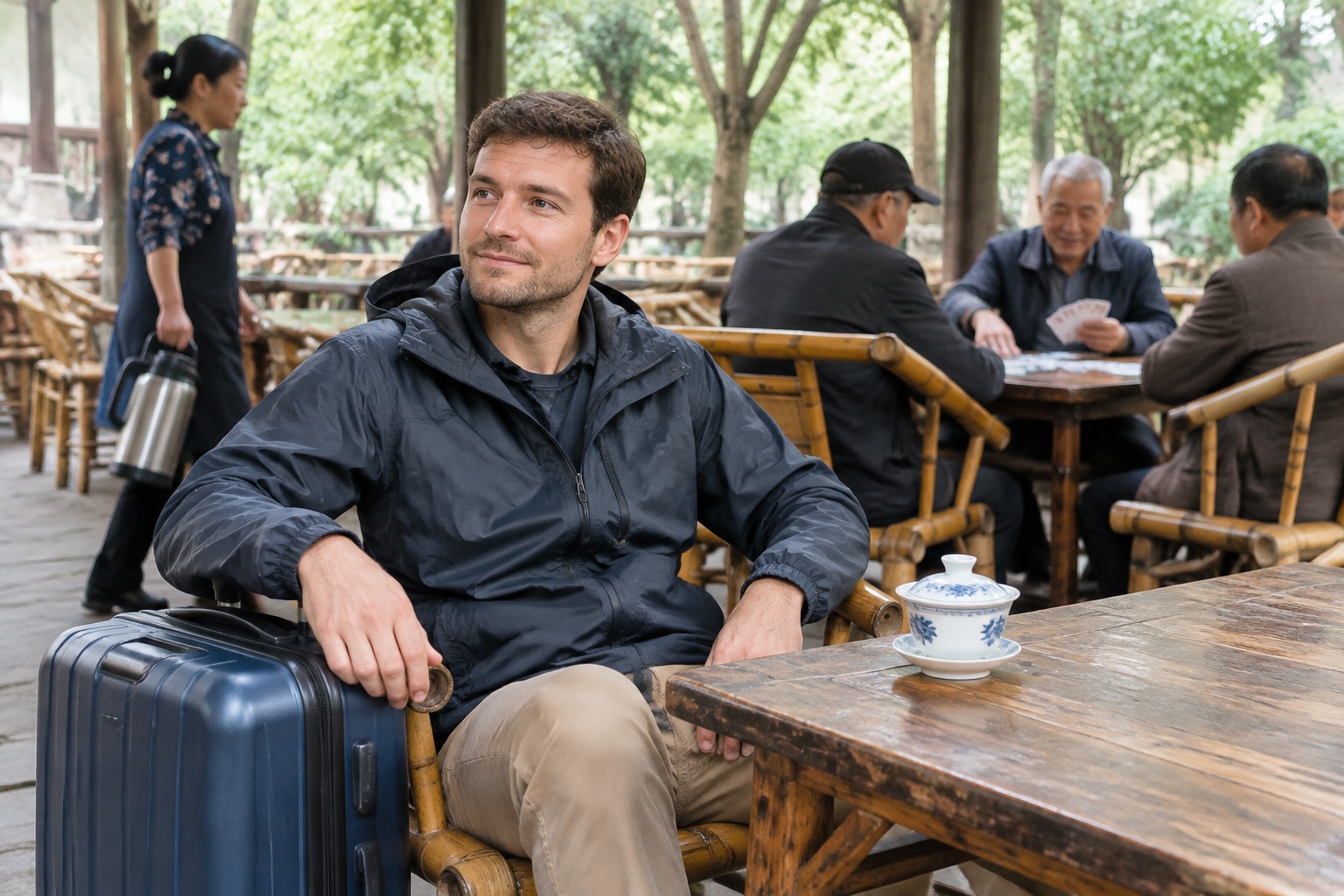

A Boarding Pass on a Teahouse Table
At Heming Teahouse in Chengdu’s People’s Park the chairs are bamboo, low, and built for slouching. On a Tuesday in March, a man in a rain shell sat in one of them with a hard-shell suitcase wedged against his knee. His boarding pass was folded into his passport: Chengdu to Bangkok, 9:40 the next morning. Fourteen hours to fill.
He had ordered jasmine tea because the woman at the next table pointed at her cup and held up two fingers. It cost 20 yuan, about $2.80, and came in a covered gaiwan with a thermos of hot water that nobody expected him to finish. Behind him, four retired men were slapping cards onto a wooden table. A technician in a blue vest moved between the rows cleaning a customer’s ear with a long metal pick; it made a soft, rhythmic click. The traveler filmed ten seconds on his phone, put it away, and then sat still for about forty minutes.
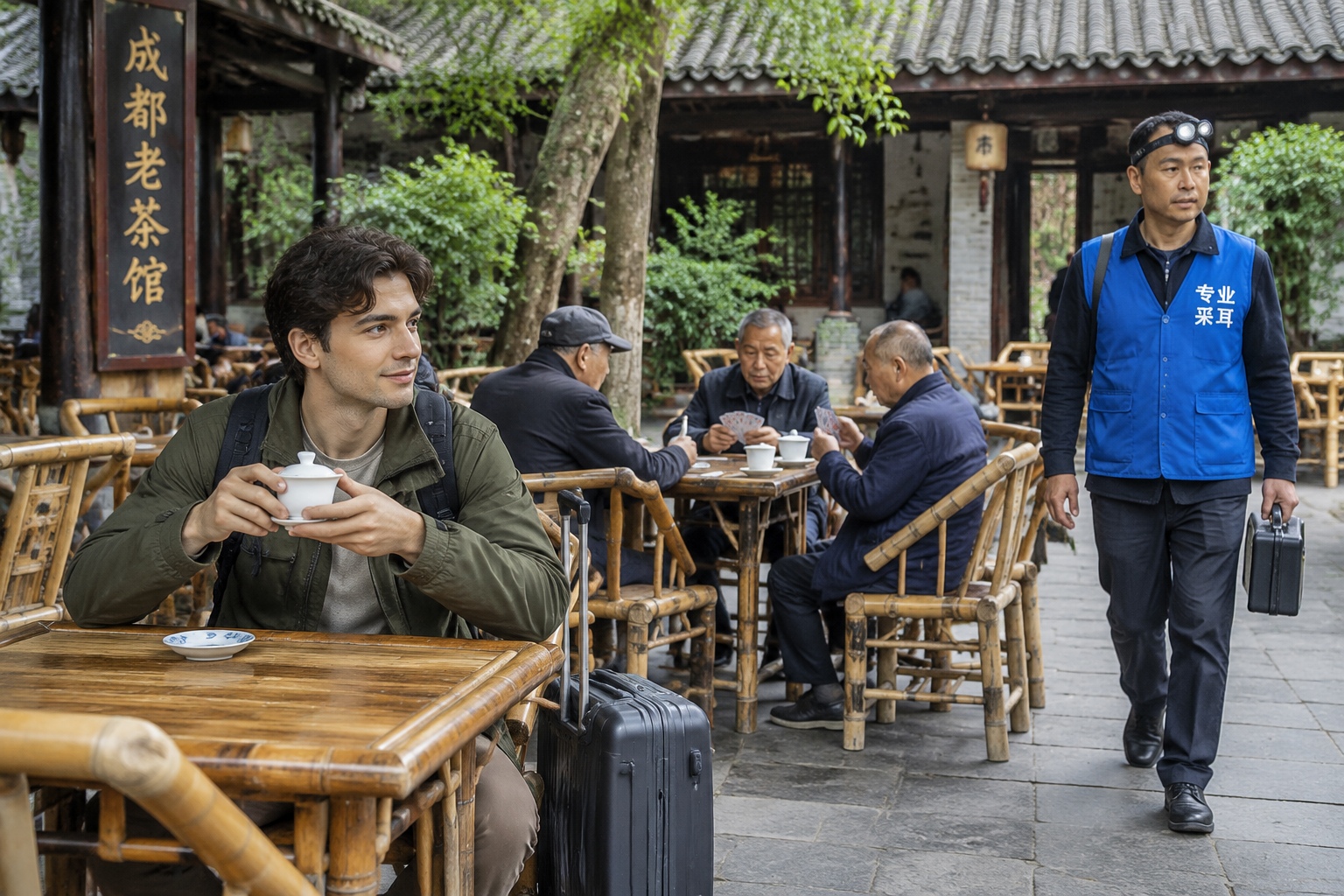
He belongs to a category of visitor that has grown quickly: not a tourist on a two-week tour, not an expat with a work permit, but someone in transit, with a gap between two flights long enough to leave the airport — and, since late 2024, the legal right to do it.
What 240-Hour Visa-Free Transit Actually Means
Strip the name down. China’s visa-free transit policy lets citizens of certain countries pass through China on the way to a third country without applying for a visa in advance, and — the part that matters on the street — leave the airport while they wait.
The current version took effect on 17 December 2024 and stretched the window from 144 hours to 240, or ten days. It covers passport holders from 60 countries, among them the United States, Canada, Brazil, Australia, Japan, South Korea and most of Europe. You must be flying on to a third country or region: a Chengdu–Bangkok ticket does not qualify if you arrived from Bangkok, or if Bangkok is where you live. You need a confirmed onward booking inside the ten days, and you must enter at a designated port and stay inside the designated area, usually a whole province or municipality.
Sichuan and Shaanxi are both on the list, which is why a Chengdu or Xi’an layover can now include a teahouse or a night market. Shanghai, Beijing, Guangdong, Yunnan and roughly twenty other provinces and municipalities work the same way.
What it is not: visa-free entry. It does not let you come and go as you please, take a job or enrol in a course. Citizens of many European countries, Japan and Australia now have a separate 30-day visa-free arrangement, which is simpler. The transit rule matters most to passports that are not on that list, Americans and Canadians among them. The rules have been revised several times and the port list keeps changing, so verify with the Chinese embassy in your country before booking.
The Time Budget: Can You Really Leave the Airport?
Yes, but the arithmetic is tighter than it looks.
From Chengdu Tianfu International, Metro Line 18 reaches Chengdu South Railway Station in about 40 minutes; change to Line 1 for the center. Door to door, allow 60 to 75 minutes. The older Shuangliu airport is closer, around 30 minutes on Line 10. From Xi’an Xianyang, the airport intercity railway gets to Xi’an North in under 20 minutes, and Line 2 continues to the Bell Tower in another 25.
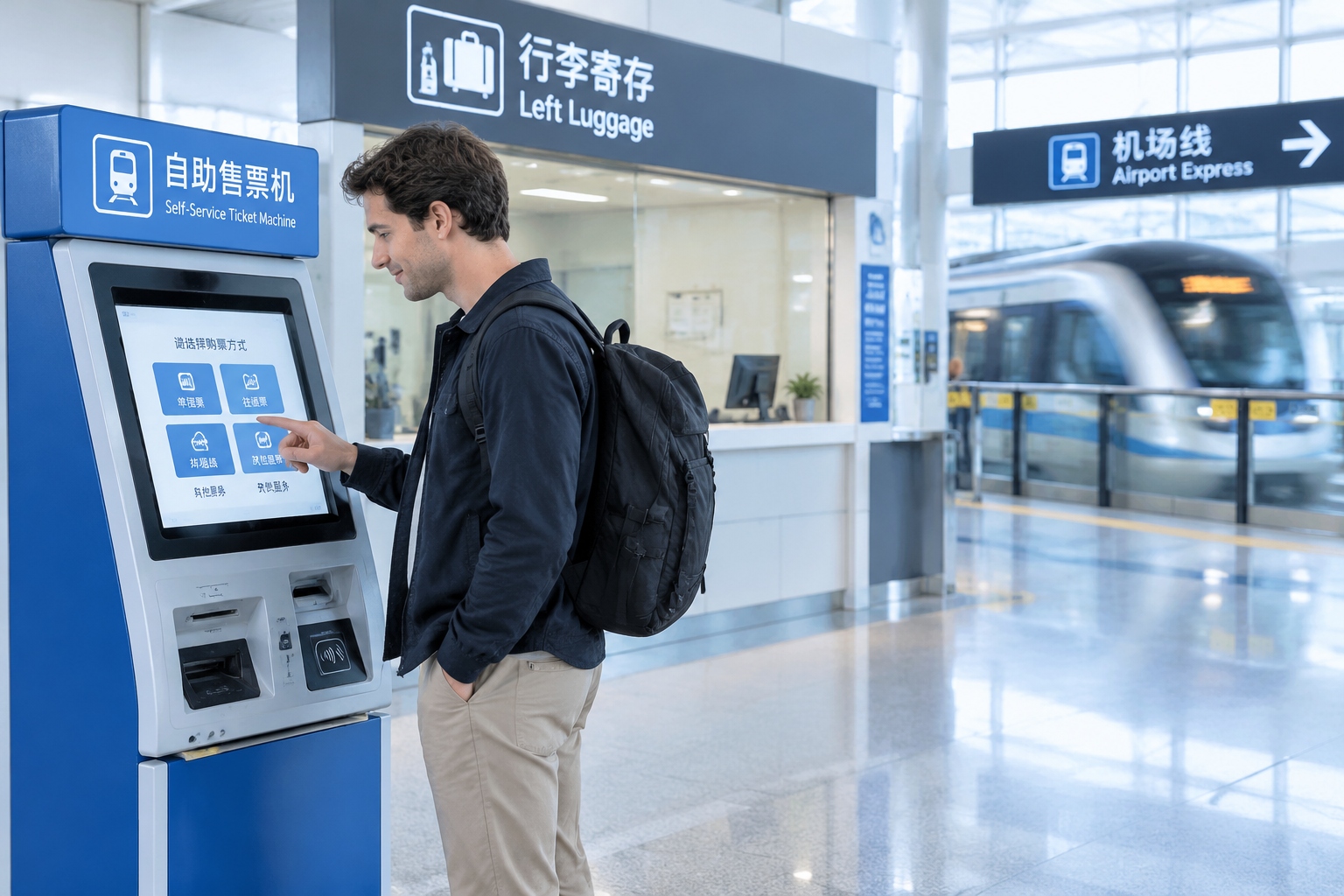
Then the dull parts. Immigration on arrival can take 20 minutes or an hour depending on the hour. Left-luggage counters are easy to find at both airports — 20 to 40 yuan per bag per day — and some metro stations and convenience stores hold bags too. Under eight hours, stay near the airport; at ten or more, the city is genuinely within reach.
Two things used to stop people here: money and language. Both have loosened. Alipay and WeChat Pay accept foreign Visa and Mastercard, with a $5,000 single-transaction cap and a $50,000 annual one. Cash still works. A metered taxi from Tianfu to the center runs 150 to 200 yuan. Translation apps cover the rest, and in tourist districts the menus carry photos.
Chengdu: A Chair Facing the Street
Heming charges by the cup and refills are free, which is why nobody hurries you out. On any afternoon you will find the same regulars: men in their seventies playing cards, couples with a bag of sunflower seeds, two or three people asleep upright with their heads tipped back. The ear cleaners work the aisles with a headlamp and a set of picks, charge 30 to 50 yuan, and will happily clean a foreigner’s ear while he tries not to move.
Ms Liu, who has waited tables there for eleven years, says the change shows up in the seating. “Groups used to come with a guide and a flag and stay twenty minutes for photos,” she said. “Now people come alone with a backpack. They sit for an hour. Sometimes two.” She has learned four English words — tea, hot water, thank you, good — and says that is enough.
What the short-stay visitor actually gets is not an attraction. It is a chair, a view of a courtyard where people are doing nothing in particular, and the mild social permission to do nothing as well.
Xi’an: Follow the Smoke and the Queue
In Xi’an the entry point is smell. Walk north from the Bell Tower into the lanes around Beiyuanmen after seven in the evening and the air is cumin, lamb fat and woodsmoke. Half the stalls sell roujiamo — a flatbread split and stuffed with braised pork or beef, 12 to 15 yuan — and the queues are the best guide you will get. A line of locals means fresh oil and fast turnover.
Vendor Zhang runs a paomo counter with three stools. His payment setup is a laminated QR code taped to the counter: Alipay on one side, WeChat on the other. When a traveler cannot say how spicy he wants it, Zhang holds up three fingers, points at the chilli jar, and they negotiate. “Ten years ago I wrote the price on paper,” he said. “Now I hold up the phone.”
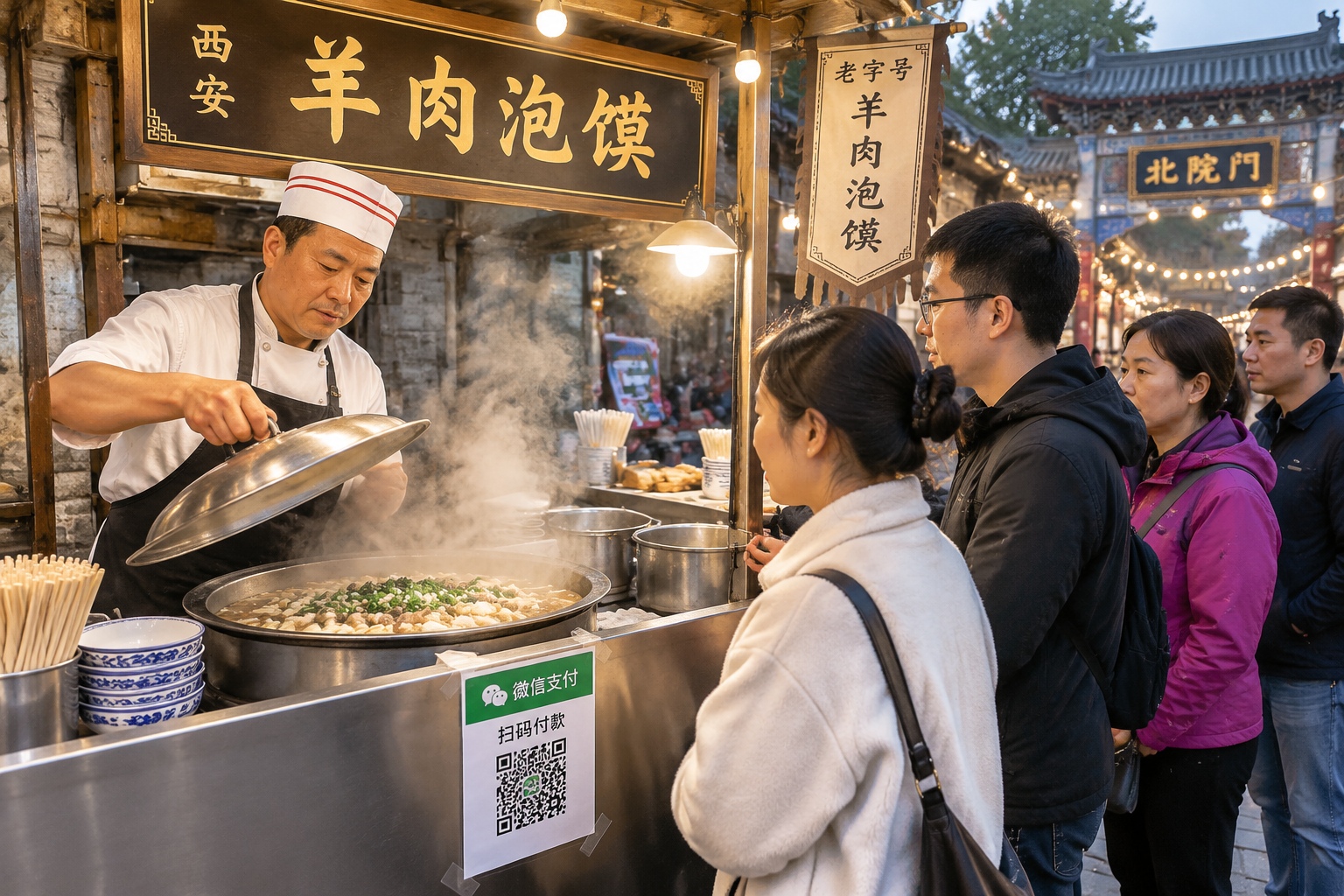
The commercial logic is simple. A transit visitor spends two to five hours in the neighbourhood, eats at two or three stalls, buys a bottle of water and maybe a bag of dried fruit, and leaves. That is not a large sum per person. It is a sum that arrives on a Tuesday in February, when the tour buses do not.
What the People Behind the Counter Notice
Chengdu taxi driver Chen Guoping, who works the airport queue, says he recognises the type: a backpack, no checked bag, a question about how long the trip back takes. “They always ask twice,” he said. “Then they ask me to write the Chinese name of the airport on a piece of paper.” He keeps a stack of blank cards in the glove box for exactly this.
Near Xi’an’s city wall, a six-room guesthouse takes maybe two or three transit bookings a week, according to its owner. Not enough to change her business, she said, but enough that she now keeps printed instructions for the airport bus by the door.
What It Changes for a City, and What It Doesn’t
Local tourism authorities have noticed. English signage around major teahouses and market lanes has improved. Left luggage and card payments have become standard topics in service training. Small vendors who never needed to accept a foreign card now do.
The limits are just as real. Most transit visitors stay a single day and spend a few hundred yuan. The benefit concentrates in cities with international flight connections and fast airport rail links; a city two or three hours from its airport sees very little of it. Ten days looks generous on paper, but flight schedules mean most people use a fraction of it.
The most common misunderstanding outside China is that the policy equals open entry. It does not. You must arrive from and depart to a third country, you cannot work, and you cannot travel to a province that is not on the approved list. A few travelers discover this at the immigration desk, which is not where anyone wants to discover anything.
Practical Notes Before You Book That Connection
- Check your passport against the current 60-country list, and confirm that the airport you fly into is designated for transit visa-free entry.
- Keep your onward ticket as a printout or screenshot; officers do ask for it.
- Stay inside the approved province. Chengdu gives you Sichuan; Xi’an gives you Shaanxi.
- Keep your hotel registration slip. Hotels register foreign guests with the local police, and that slip is the record of where you slept.
- Build in a two-hour buffer for the return to the airport. Evening departure immigration is slower than you expect.
Back to the Boarding Pass
The man in the rain shell left the teahouse at six, walked through the park where people were dancing in loose rows, ate a bowl of noodles for 14 yuan, and took Line 1 and Line 18 back to Tianfu. He was at the gate three hours early and slept in an airport chair anyway.
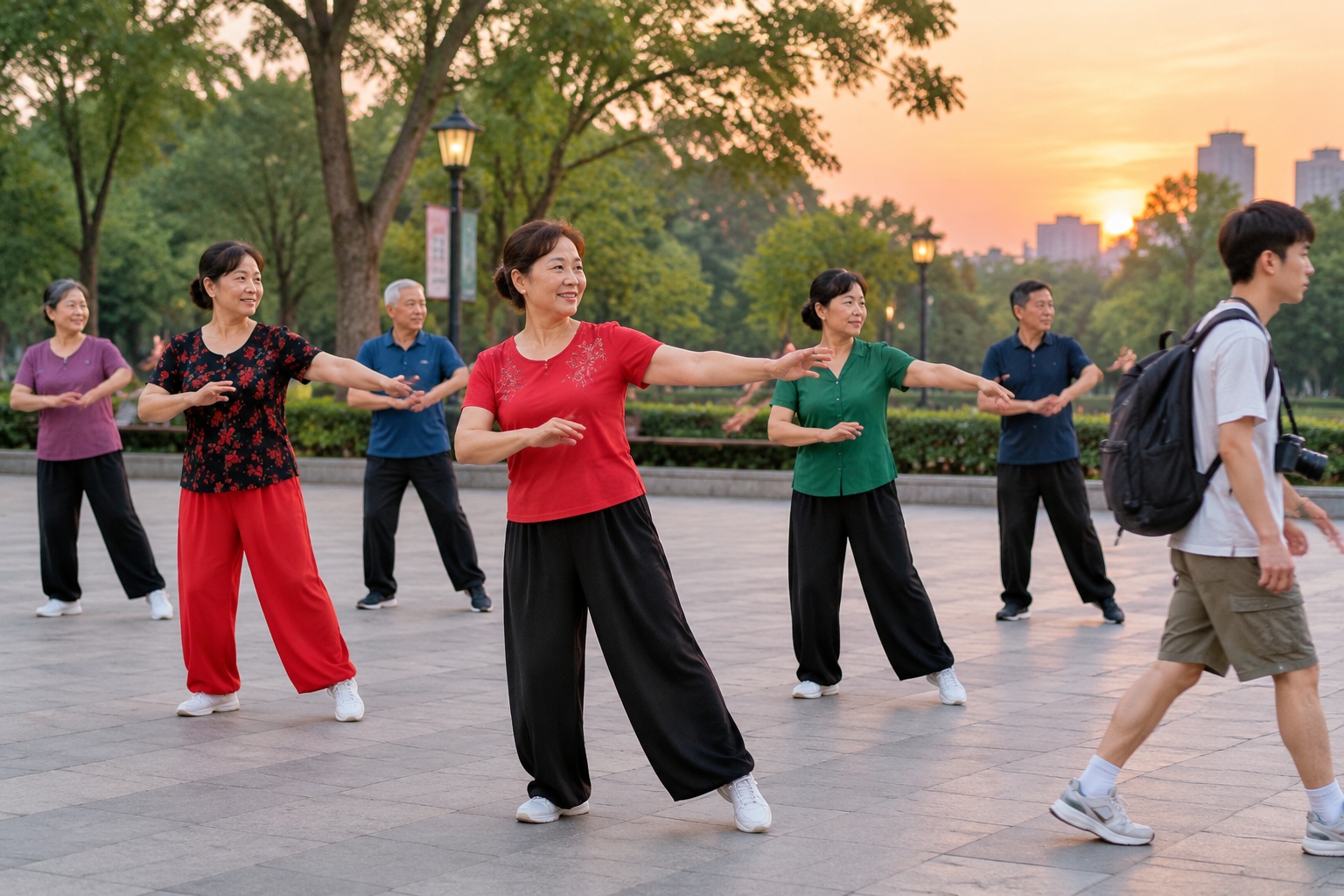
He did not become an expert on China in fourteen hours. He learned that a covered cup of jasmine tea costs 20 yuan, that ear cleaning sounds like a metronome, and that a city park on a Tuesday afternoon is full of people with nowhere in particular to be. For someone with a connecting flight, that is not a small thing. It is the difference between changing planes in a country and briefly standing in one.
Start the discussion at forum.chinacomes.com