

Enter the Teahouse
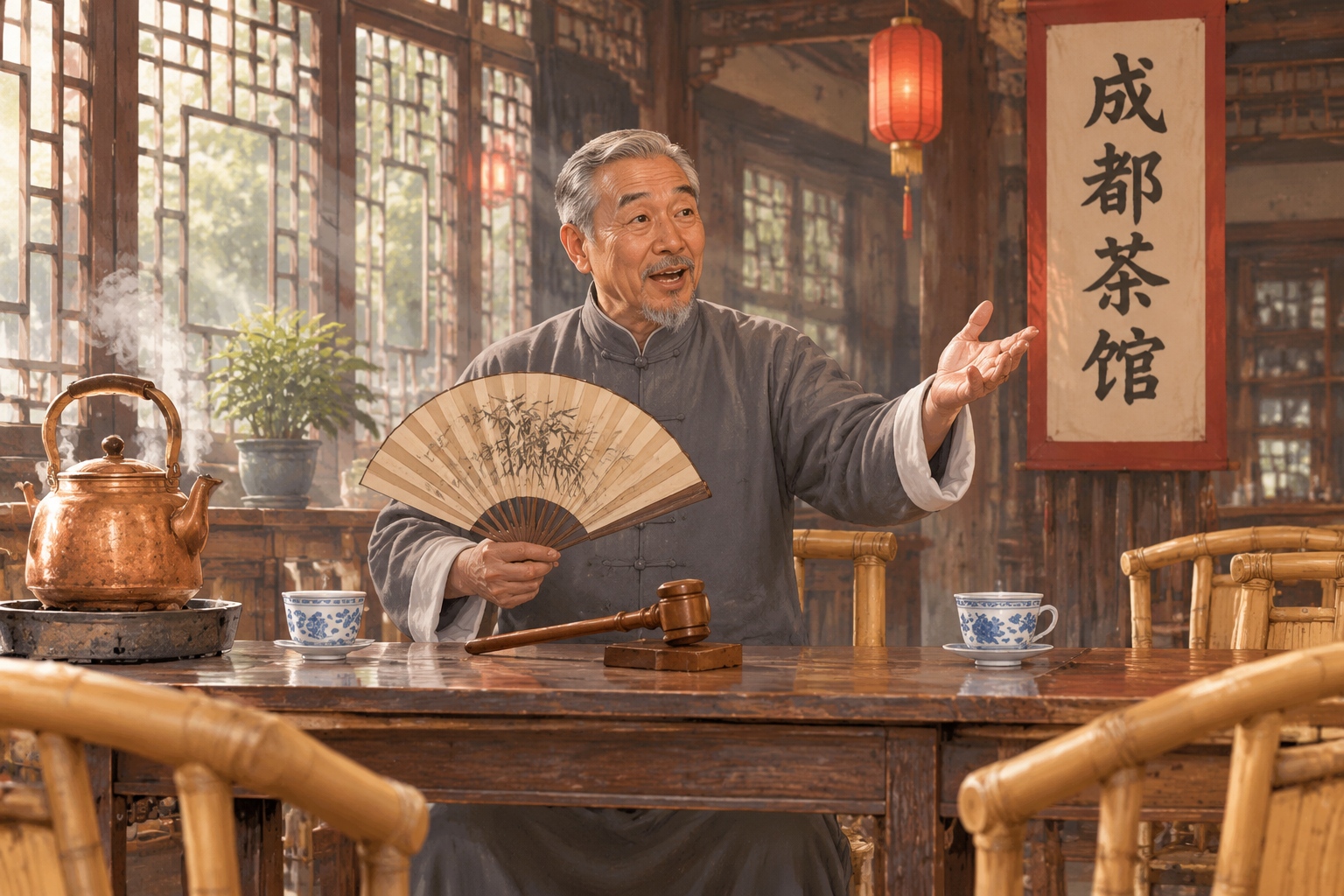
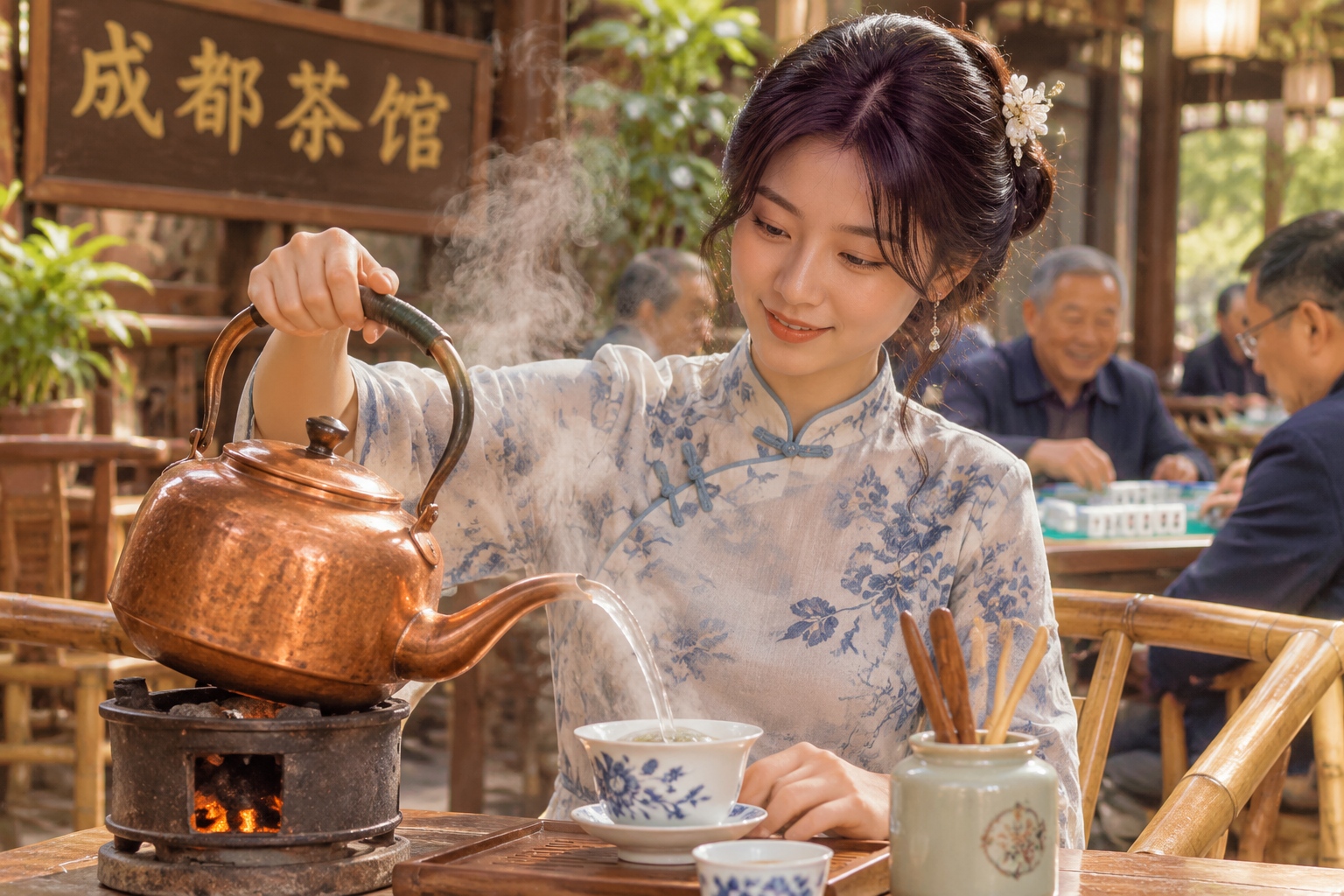
At 3 p.m. on a Tuesday, the air in this Chengdu teahouse is thick with steam from long-spouted copper kettles and the low hum of mahjong tiles. The wooden tables are worn smooth by decades of tea cups and elbows. Near the back, a 68-year-old man in a grey tunic sits behind a small table. He clears his throat, picks up a wooden gavel, and brings it down with a sharp crack. The room settles. He begins: ‘A lone hero rides through the rain-swept night…’ The voice is raspy but carries force. He is telling The Three Heroes and Five Gallants, a 19th-century wuxia novel that has been told and retold for generations.
The Man Behind the Gavel
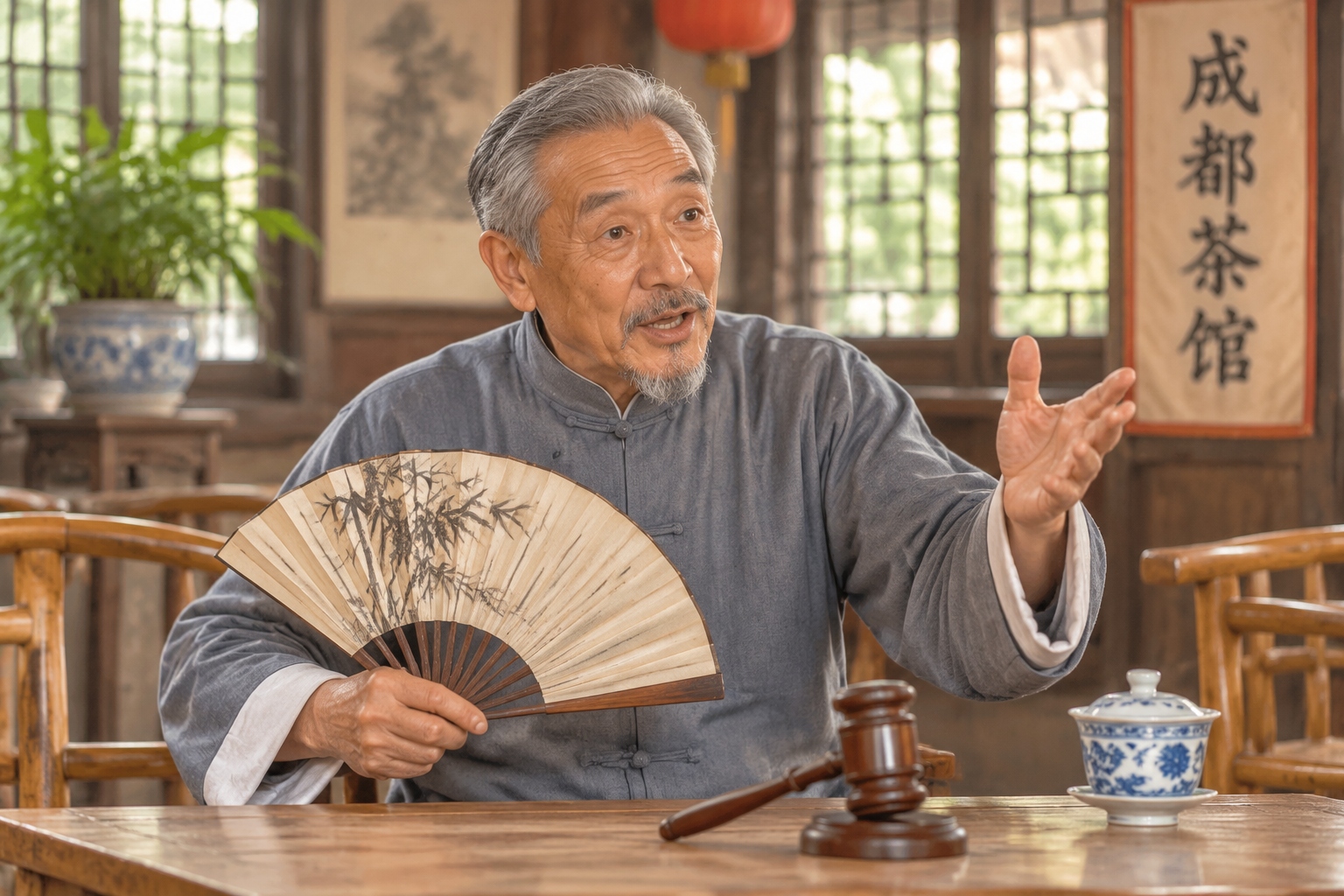
His name is Zhang Guoliang, but everyone calls him ‘Storyteller Zhang.’ He started learning pingshu from a master in the 1980s, when Sichuan teahouses were full of storytellers. ‘At one time, every block had at least one. Now, I can count the active ones in Chengdu on two hands,’ he says between sips of jasmine tea. His performance today is a sequel chapter: the heroes are trapped in a fortress, and the audience leans in. A young man with a smartphone records a short clip for his social media. ‘My grandfather used to bring me here. Now I come alone,’ says a retired worker in the front row, nodding at Zhang.
Why ‘Three Heroes and Five Gallants’ Still Matters
Written during the Qing dynasty, The Three Heroes and Five Gallants is a sprawling epic about righteous outlaws and martial arts brotherhood. It laid the groundwork for modern wuxia stories—from Louis Cha’s novels to Wong Kar-wai’s films. For Chinese readers, the story is a cultural shortcut to values like loyalty (yi), justice, and sacrifice. In an era of fast media, Zhang’s slow, deliberate delivery forces listeners to receive the story in real time, without pause or rewind. ‘Young people today don’t have the patience for three-hour chapters,’ Zhang laughs. ‘But those who stay often come back.’
A Tradition on the Edge
Pingshu, or ‘storytelling,’ was once the primary entertainment in Chinese teahouses, predating radio and television. In Chengdu alone, hundreds of teahouses hosted storytellers daily. Today, less than a handful of professional pingshu artists remain in the city. The art relies on voice, gesture, and a wooden gavel—no props, no scripts. Zhang memorizes entire novels, using a fan and a folded handkerchief as makeshift weapons. ‘I have no apprentice. It’s too much memory work,’ he admits. But the locals have not abandoned him entirely. The tea house owner, Ms. Chen, says she keeps the Saturday slot open for him even if only ten people show up. ‘He is part of the furniture.’
Connecting Generations
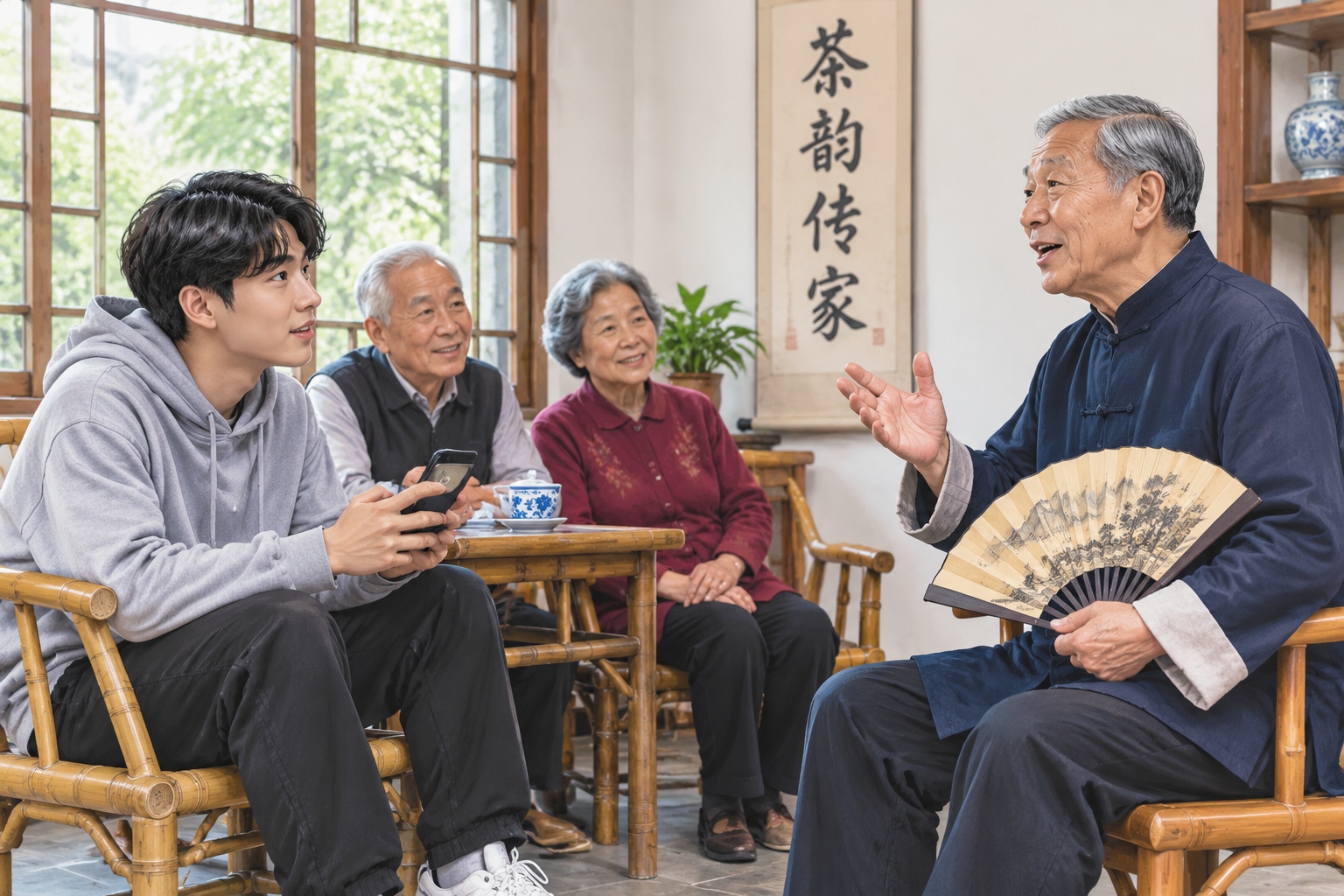
On weekends, Zhang’s audience swells slightly. A few university students from Sichuan University drift in, drawn by curiosity or a class assignment. One says she is writing a paper on ‘endangered intangible cultural heritage.’ Another, a young man in a hoodie, says he loves wuxia but never imagined it was performed live. ‘I always thought pingshu was just for old people,’ he whispers. Zhang overhears him and adds a flourish to the story: the hero leaps from a cliff. The students applaud. For a moment, the teahouse feels timeless.
Teahouses as Living Museums
Chengdu’s tea culture has evolved. Many old teahouses have been replaced by sleek café chains or become tourist traps. But a few, like the one Zhang performs in—nestled in a narrow alley near Wenshu Monastery—remain stubbornly authentic. The walls are yellowed with age, the chairs wobble, and the tea is cheap. ‘No air conditioning, no Wi-Fi. Just tea and stories,’ says Chen. On a hot day, the electric fan hums. Zhang’s voice rises. The condensation drips off the copper kettle. This is the China that feels genuine—unpolished, alive, and deeply human.
Zhang packs his gavel and fan into a cloth bag at 5 p.m. ‘Come again tomorrow. I’ll be doing ‘The Jade Dragon’s Revenge.’ The story never ends.’ He walks out into the wet street, and the teahouse returns to the clatter of mahjong.
Start the discussion at forum.chinacomes.com