

Introduction
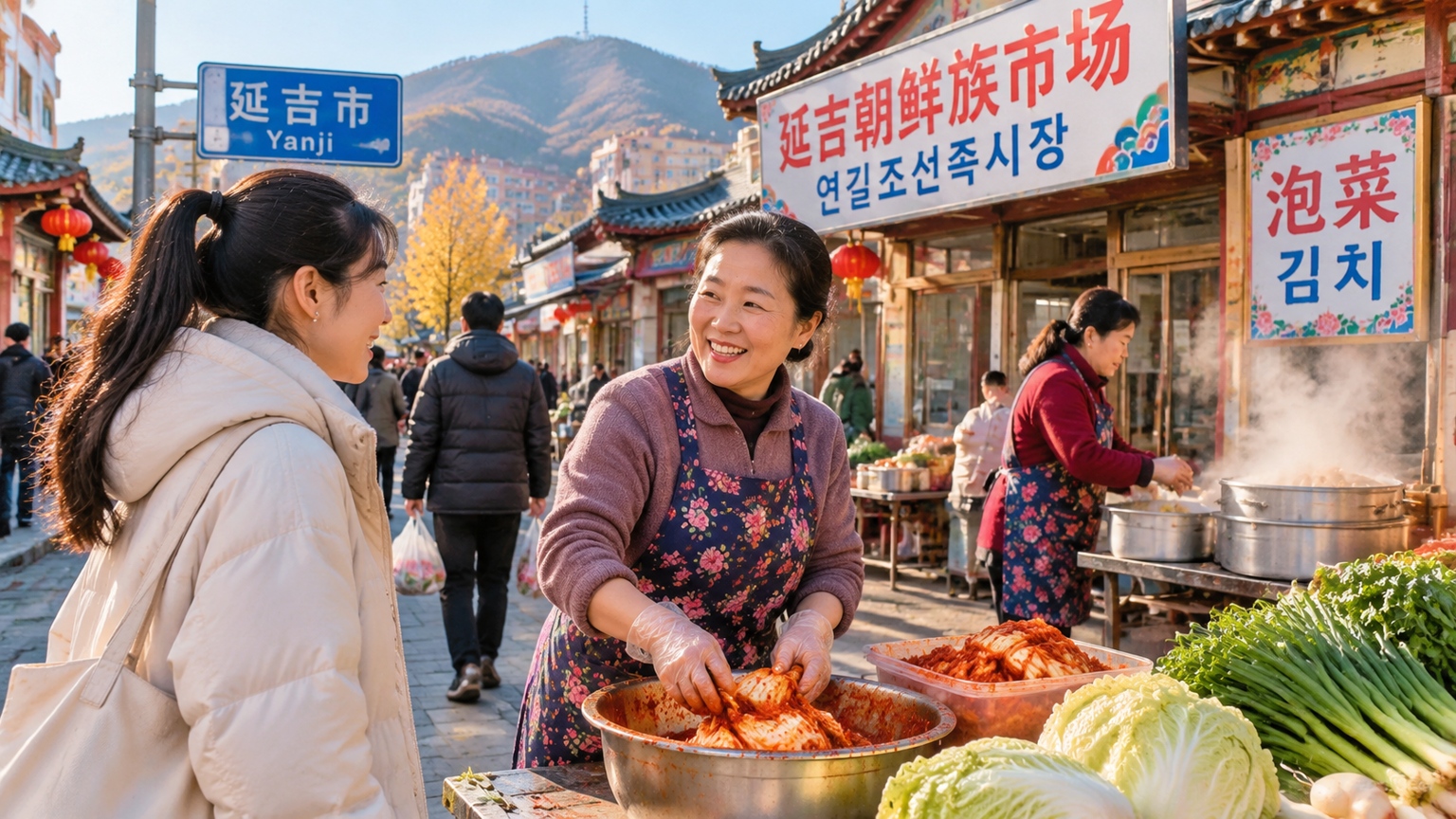
On a Saturday morning in Yanji, a small city near China’s border with North Korea, the air smells of soybean paste and boiling rice. Elderly women in floral aprons stack brass bowls of kimchi onto their market stalls. Next door, a middle-aged man flips buckwheat noodles into a bowl of iced broth, steam rising from a cup of warm beef soup beside it. The street signs are in both Chinese and Hangul, the Korean alphabet. An elderly couple sits on a plastic stool, sharing a plate of fried dumplings and speaking a Korean dialect that sounds old-fashioned to visitors from Seoul.
For many foreign visitors, Yanji is a surprise. This is not a museum version of Korean culture. It is a working border town where a minority culture has lived side by side with Chinese Han culture for more than a century. Welcome to the Korean-Chinese world of Jilin.
Who Are the Korean-Chinese in Jilin?
Koreans began crossing the Tumen River into northeast China in the mid-19th century, driven by drought and hardship at home. Today, their descendants are one of China’s 56 officially recognized ethnic groups, with a population of around 1.9 million. In Jilin Province, the Yanbian Korean Autonomous Prefecture is their cultural heartland, and Yanji is its capital.
Korean-Chinese are not identical to Koreans in Korea. They have their own dialect, food habits and identity. Many speak Mandarin fluently, write in Chinese, and celebrate both Chinese and Korean holidays. When they say “our country,” they mean China. When they say “our hometown,” they often mean the cool, pine-scented hills of Yanbian.
Food: Where the Culture Lives Most
If you only have one day, head straight to the food street. Korean-Chinese cuisine is the clearest expression of this culture’s history, blending Korean techniques with northern Chinese ingredients and a generous amount of cold-climate pragmatism.
Cold Noodles: A Summer Ritual with a Winter Twist
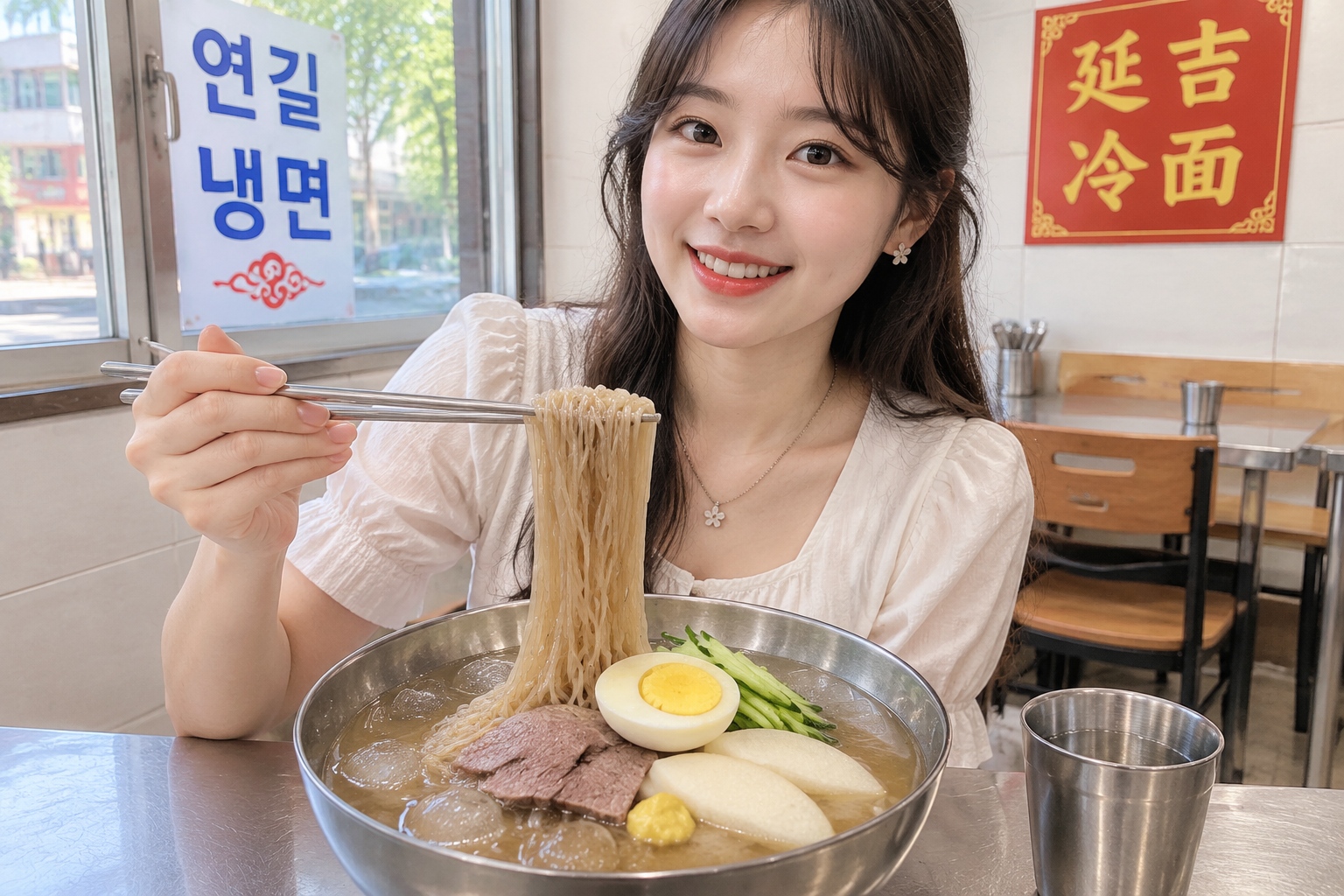
Yanji’s signature dish is naengmyeon, cold buckwheat noodles in a tart iced broth. It is a perfect match for Jilin’s humid summer heat. The noodle soup is made with beef, dongchimi (radish water kimchi), and topped with a slice of beef, half a boiled egg, pear slices and cucumber. A dab of mustard and vinegar wakes it up.
Here is the twist: locals also eat cold noodles in winter. Why? Because guesthouses and restaurants are so warm, and the dish is comforting. You might see office workers in down jackets making slurping sounds in a steaming-hot room at minus 10 degrees outside. It is not a tourist attraction; it’s a serious routine.
Kimchi with a Northern Accent
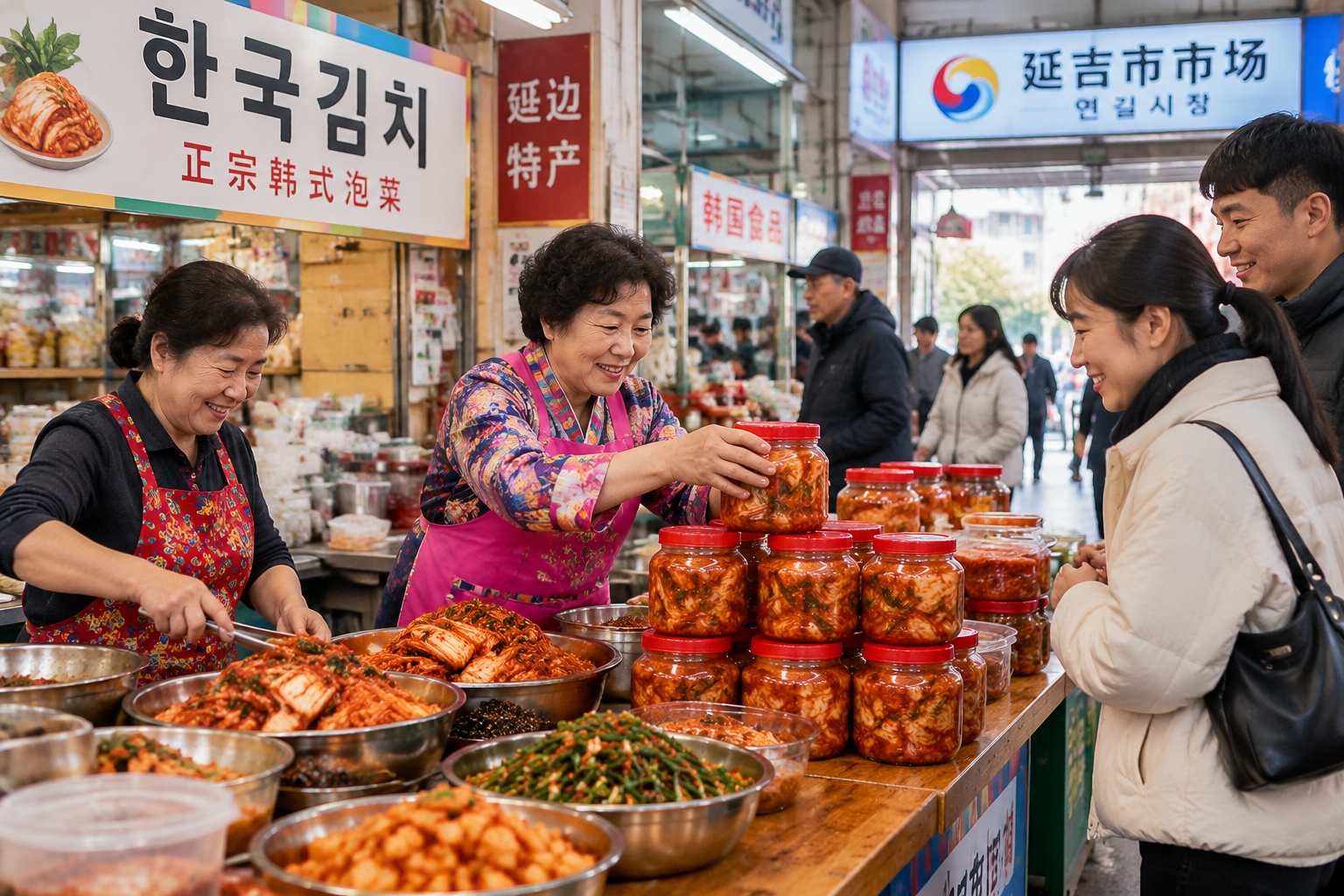
Kimchi, called pao cai in Mandarin, is everywhere in Yanji. But you will notice a difference from the kimchi found in Seoul. In the cold northeast, Chinese cabbage grows thicker, so the kimchi is slightly less pungent and more watery. Locals often add Asian pear or apple, giving it a fruity kick. Many families still keep large ceramic jars, or big vats in a basement, to ferment a full winter’s supply.
At the market, kimchi is sold by weight. Buy a couple of pounds and the vendor wraps it in a plastic bag with a piece of spicy daikon radish thrown in for free. That small gesture tells you a lot about the social culture here: generous, direct and not overly polite.
Barbecue and Makgeolli Nights
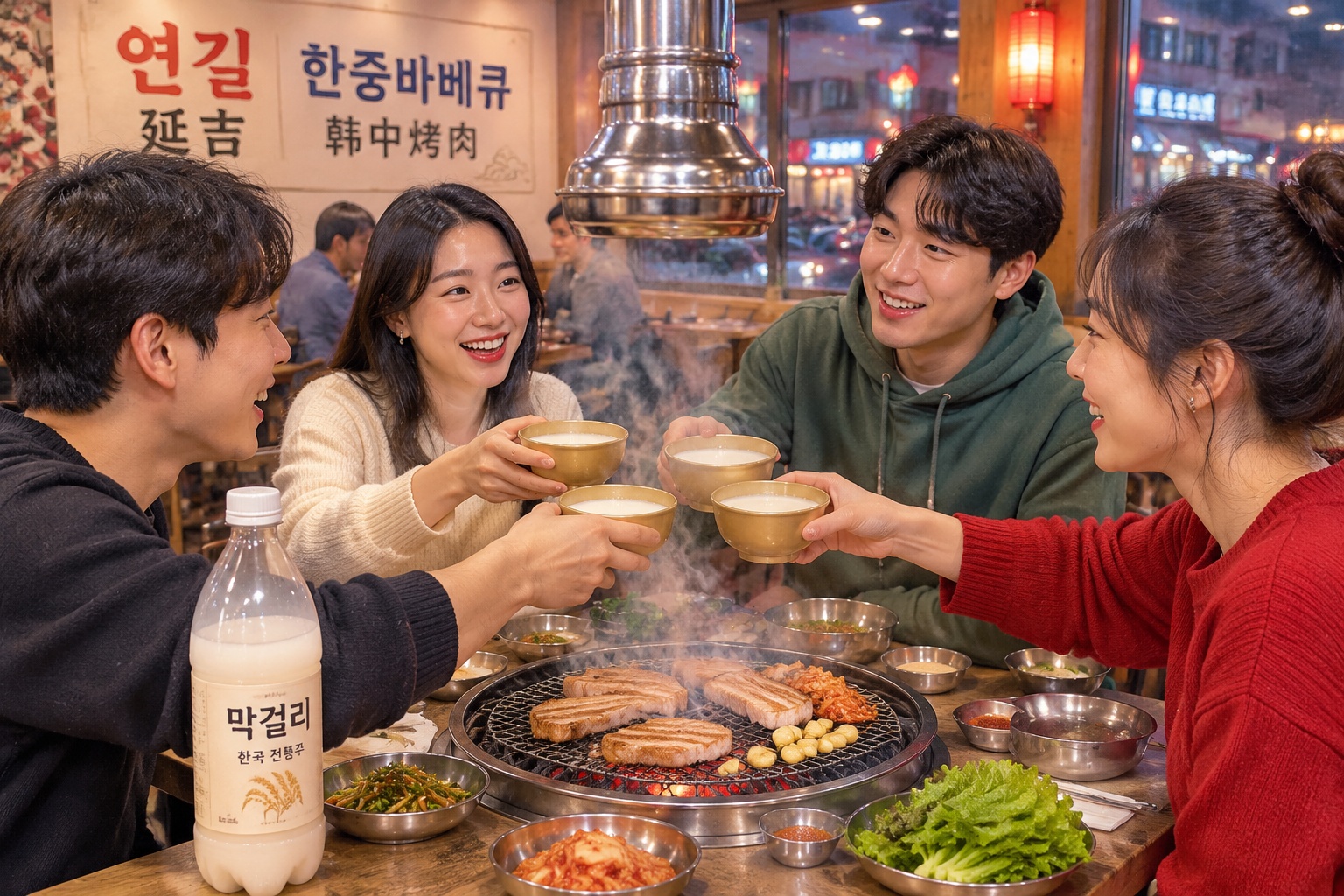
As evening falls, the charcoal smoke rises from a dozen barbecue restaurants. Grill a slice of pork belly over glowing coals, dip it in salted sesame oil and wrap it with garlic and pickled vegetables. The meal is washed down with a local milky rice brew, makgeolli. It is slightly sweet, a little sour, and dangerously easy to drink. Korean-Chinese barbecue differs from typical Korean-style galbi; the marinades here are simpler, the side dishes are heartier, and the overall mood is louder. Older men often drink soju instead, tossing back tiny shots while discussing border-town politics and the price of apartments.
Beyond Food: Customs and Daily Life
Food is the most visible layer, but the culture runs deeper. Simply walking down a Yanji street shows you how two languages and traditions coexist in daily life.
A Truly Bilingual Town
Every street sign in Yanji is in both Chinese and Hangul. Public buses announce stops in two languages. Schoolchildren learn in Mandarin, but many study Korean as their heritage language. On a normal day, you might hear a bank teller speak Chinese to one customer, then seamlessly switch to the Korean dialect with another. This is not an artificial bilingual scene staged for tourists; it’s how the town actually works.
Dancing in the Park, Remembering the Past
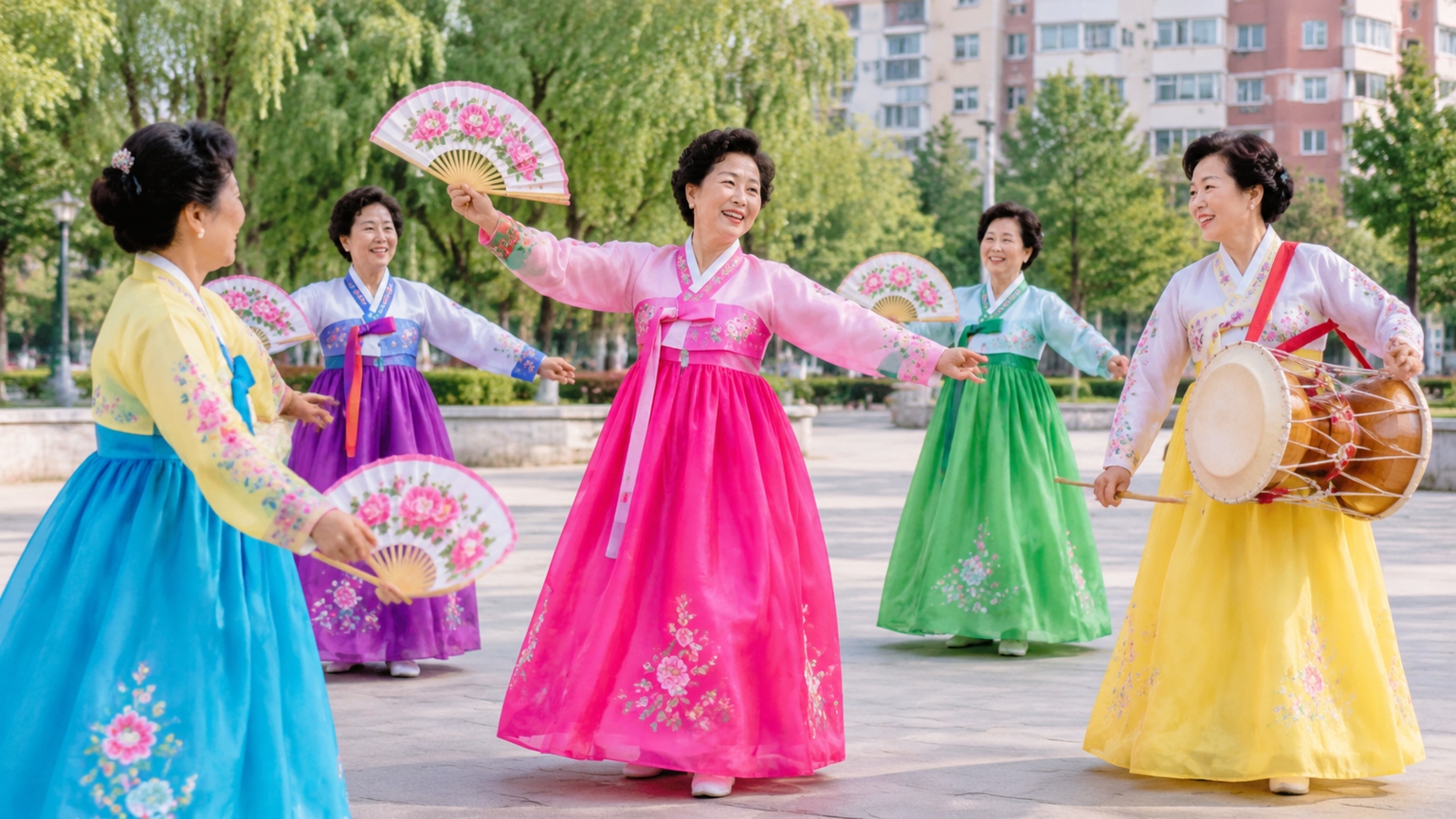
In the early morning, in parks and along the banks of the Buerhatong River, groups of middle-aged and older women gather to dance. They are not performing for anyone. They wear colorful chima jeogori dresses and hold a fan or a drum, moving to music that mixes traditional Korean rhythms with Chinese pop. It’s a modern expression of an old culture, one thing that became the signature of Korean-Chinese identity in China. Many of these women grew up seeing their grandmothers dance during harvest festivals, and they keep the memory alive in their own way.
Festivals That Honor the Family
Several traditional holidays still shape the calendar. On the fifteenth day of the first lunar month, many villagers eat five-grain rice and listen to elders tell stories. On the hundredth day of a baby’s life, relatives gather for a feast and a blessing. Most notable is the 60th birthday, or hwangap, an important celebration for Koreans in China. Dinner tables are loaded with a dozen or more dishes, and the whole neighborhood is often invited. It’s a powerful reminder of the culture’s respect for longevity and family bonds.
A Cross-Border Life
Given the proximity to North Korea and South Korea, it’s no surprise that many Korean-Chinese have relatives across the border. The Tumen River can be crossed in some areas on a shallow day, though that’s now rare. Yet cultural exchange remains. South Korean TV shows are popular; Korean-Chinese chefs often travel to Seoul to work in restaurants and return with new ideas. At the same time, many older residents still remember trading with North Koreans in the small border markets before stricter times. The relationship is complex, but the daily reality is friendly and practical.
A Real China You Might Not Expect
Visitors often expect China to be one unified block, and indeed the Han Chinese culture dominates in many places. But Jilin’s Korean-Chinese border towns are living proof that China’s diversity is not just a slogan. It’s visible in the kimchi jars on a balcony, the rhythmic sounds of a drum in the park, and the bilingual schoolyard where children shout to each other in both languages.
If you travel to Jilin, don’t just check off the famous Changbai Mountain. Spend two days in Yanji or Longjing or Hunchun. Walk slowly, eat a long breakfast, sit in a park and watch the dancing. You’ll see a part of China that feels both familiar and delightfully different — a place where two cultures have rubbed against each other for generations, producing something neither Korea nor mainstream China offers by itself.
Then finish with a bowl of cold noodles and a spoonful of rice wine. That’s the taste of a border town.
Start the discussion at forum.chinacomes.com