


First, which visa do you actually need?
Imagine this: you have been living and working in China for a few years. Your parents are retired back home, and you want them to spend half a year with you. Or maybe you married a Chinese citizen and want to settle down together in China. The Chinese visa system has a specific category for family visits, marked Q1 and Q2. Both are called “family reunion” visas, but they work very differently.
The simplest way to remember: Q1 is for stays longer than 180 days, while Q2 is for shorter visits, up to 180 days. Q1 is a long-term entry visa that requires you to apply for a residence permit after arriving in China. Q2 is a short-term visit visa that lets you stay for a specific period, often 120 or 180 days, without extra paperwork.
Who can apply for a Q-family visa?
China defines family narrowly for this visa category. Eligible relatives include:
- Your spouse
- Your parents and your spouse’s parents
- Your children, including adopted children
- Grandparents and grandchildren in some cases
- Your spouse’s children if they live with you
For most applicants, the key relationships are spouse, parent, parent-in-law, child, grandparent, or grandchild. Siblings, aunts, uncles, and cousins do not qualify for Q visas. They would need to apply as ordinary tourists (L visa) instead.
Q1 visa: the long-term option
The Q1 visa is designed for people who plan to live in China for more than six months. It is not a residence permit itself. Think of it as a one-time entry ticket that lets you land in China with a clear purpose. After you arrive, you must convert it into a residence permit within 30 days.
Core materials for a Q1 application
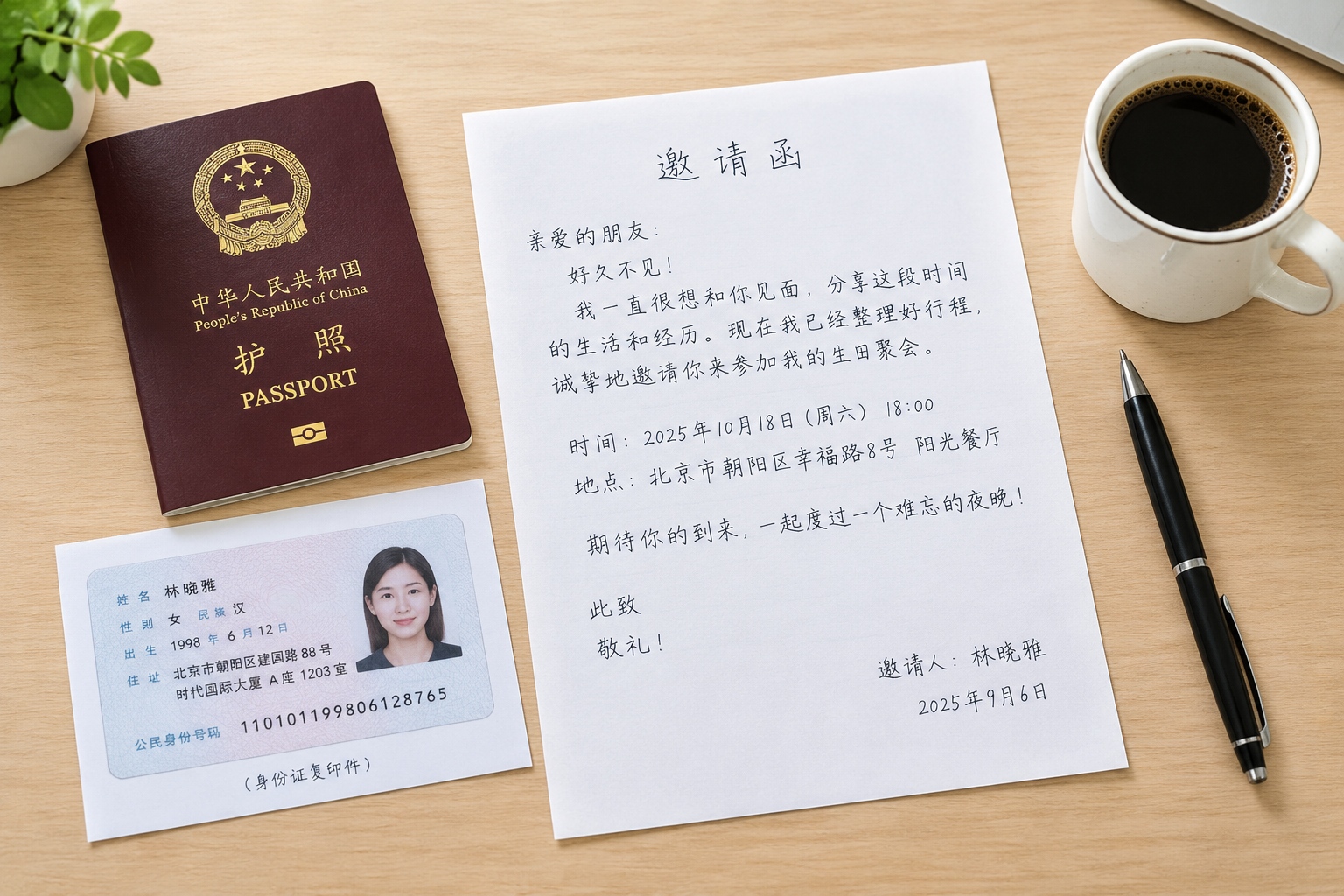
- The invitation letter from your relative in China, with their ID copy
- Proof of kinship – a notarized certificate showing the family relationship, such as a marriage certificate, birth certificate, or relationship certificate
- Your passport with at least two blank pages and six months of validity
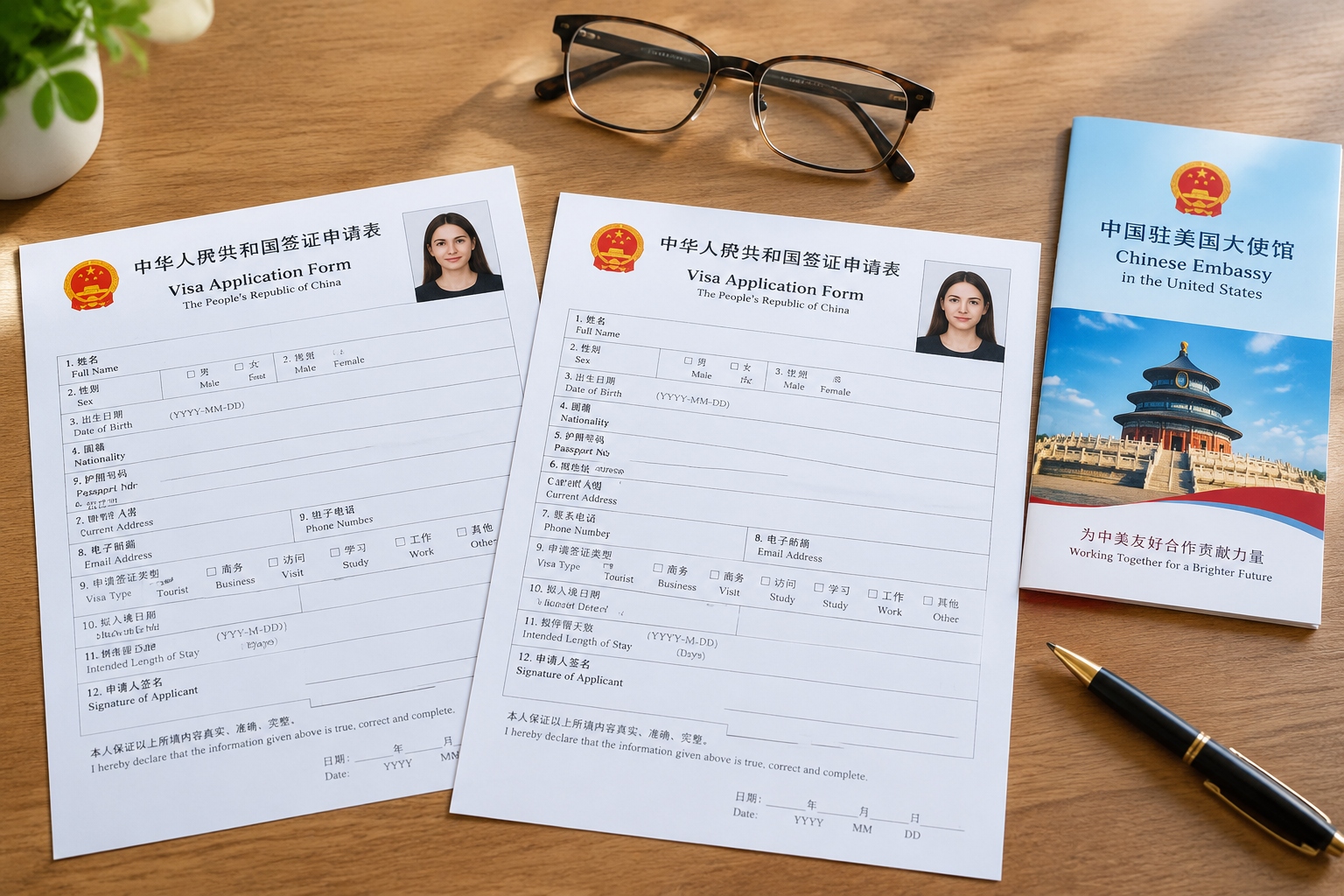
- Visa application form completed online
- A recent photo that meets Chinese visa standards
- Proof of the inviter’s status – for example, a Chinese ID, residence permit, or work permit
- For spouses of Chinese citizens, sometimes proof of the Chinese spouse’s household registration is required
- Medical examination – after entering China, you will typically need to do a health check within the first few days if you plan to stay more than 6 months
Most Chinese embassies and consulates also ask for an “invitation letter issued by the inviter” which should include the inviter’s personal information, contact details, and the applicant’s relationship to them.
What happens when you arrive in China with a Q1?
Within 30 days of landing, you must take your passport, the Q1 visa sticker, your notarized kinship certificate, and the medical examination report to the local Entry-Exit Administration Bureau. There you will apply for a family reunion residence permit. This permit can be granted for up to two years at a time for spouses, sometimes longer for elderly parents. Once you have that permit, you can live, travel in and out, and even work in some cases depending on the permit type, though family reunion permits generally do not allow employment without an additional work endorsement.

Key point: get the medical exam done early
If you are over 18 and applying for a residence permit, you will be sent to a designated hospital for a physical exam. This usually includes blood tests, a chest X-ray, and basic vital checks. The report takes a few days, so do not wait until the last day of your 30-day window.
Q2 visa: the simpler short-term route
If your family member only wants to visit for a few months, or if you are not yet ready to commit to a long-term move, Q2 is much easier. It is essentially a tourist-style visa but with a family invitation, giving longer stays than an L visa in many cases.
What you need for Q2
- An invitation letter from a relative in China
- Photocopy of the inviter’s Chinese ID or residence permit
- Passport and application form
- One photo
That is basically it. Many applicants receive a Q2 visa valid for one year, allowing multiple entries and a stay of up to 180 days per entry. Others may get a single-entry visa with 120 days. It depends on your nationality and the specific consulate.
Can you extend a Q2?
Yes, you can apply for an extension at the local Exit-Entry Administration Bureau before your current stay expires. Typically, a Q2 can be extended once, with the total continuous stay not exceeding 180 days. That means if you entered with 90 days, you can usually extend for another 90. If you entered with 120 days, the extension may only give you 60. In practice, do not plan to stay longer than 180 days without switching to Q1 or another visa type.
A ready-to-use invitation letter template
The invitation letter is the heart of the application. It does not need to be fancy, but it must contain specific details. Here is a no-nonsense template you can adapt:
Dear Visa Officer,
I, [Inviter name], passport/ID number [number], residing at [full address in China], would like to invite my [relationship – e.g., mother, wife] [Applicant name], passport number [number], to visit me in China.
The purpose of the visit is [family reunion / caring for grandchildren / living with my spouse], and the proposed duration is from [date] to [date]. I will cover the applicant’s accommodation and living expenses during their stay.
My contact information is [phone number], and my address is [same full address].
Sincerely,
Signature: [Inviter signs]
Tips for the invitation letter:
- Use the exact name and passport number from the applicant’s passport.
- Be very clear about the relationship. If you are inviting your spouse, mention your marriage certificate number.
- Make sure the address in China is complete, including the postal code, as officers sometimes verify it.
- Sign the letter by hand. A scanned signature on a printed page is usually accepted, but a handwritten one is safer.
- Always bring a photocopy of your Chinese ID or residence permit alongside the original invitation.
Realistic timeline: work backwards from your planned arrival
Do not assume this is a quick process. A safe timeline from start to finish is at least three months. Here is a rough breakdown:
- Month 1: Prepare the notarized kinship certificate. This can take time, especially if the marriage or birth certificate was issued outside China. You may need to have it apostilled or authenticated depending on your country.
- Month 2: Submit the visa application at the Chinese embassy or visa application service center. Wait for processing, which usually takes 3 to 7 business days, but can be longer if additional review is needed.
- Month 3: Fly to China. Complete the medical exam and apply for the residence permit within the first two weeks to stay safe.
For a Q2, the process is faster, often two to three weeks from document collection to visa issuance. But still plan for the invitation letter and any minor hiccups.
Common scenarios and what to emphasize in your application
Scenario 1: Retired parents coming to live with you
If your parents are retired and plan to stay six months or more, go straight for Q1. The Chinese system is familiar with this family pattern, especially when the parent has no other children nearby. Emphasize in the invitation letter that you will provide housing and medical support, and that your parent has sufficient travel insurance or savings. Some consulates ask for proof of your income or assets to show you can take financial responsibility. The medical exam inside China will be a given for parents over 60, and the residence permit is often issued in multiple-year increments to elderly parents.
One additional document that helps is a notarized “family relationship certificate” issued by a Chinese notary office if your parent was born in China but later moved abroad. If they are foreign-born, the birth certificate with your details works.
Scenario 2: Spouse moving to China
For foreign spouses of Chinese citizens, the Q1 visa is the standard path to residence. The key document is the marriage certificate. If you got married outside China, you will need to have the marriage certificate notarized and authenticated in the country where it was issued, and then often translated into Chinese by an official translation service after you arrive. Some couples choose to register their marriage again in China to avoid translation headaches, but this is optional.
When applying for the residence permit, be ready to show both spouses’ passports, the Chinese spouse’s household registration (hukou), and sometimes a statement from the local community or police confirming the marriage is genuine. This step is usually routine for real couples, but it helps to keep your own house in order.
Common mistakes that delay applications
- Using the wrong visa type. If your parent says they want to stay for “a while” but you do not know if it will exceed 180 days, apply for Q1. Upgrading from Q2 to Q1 later means leaving China and reapplying.
- Waiting until the last 30 days to apply for the residence permit. Overstaying, even by a few days, can lead to fines or a record that complicates future visas.
- Not notarizing the relationship certificate correctly. A plain translation is not enough. It must be notarized and authenticated in the country of issue, then recognized by the Chinese embassy.
- Forgetting that the residence permit has its own renewal cycle. Once you have it, mark the expiry date on your calendar. You should start the renewal about two months before it expires.
Final thoughts
Bringing family to China is not an impossible maze of red tape, but it rewards careful planning. Start with the question of duration. Six months or more? Go Q1. Less than that? Q2 may be all you need. Then focus on the invitation letter and the relationship certificate—these are the two pieces that matter most. Once the paperwork is in, the process feels surprisingly mechanical, and you will soon find yourself in the normal rhythm of everyday life with your loved ones in China.
If you have a specific nationality that has special visa agreements with China, check the Chinese embassy website for that country, because a few nationals can get longer multi-entry visas. But for most, the Q1 and Q2 route described above works exactly as laid out.
Start the discussion at forum.chinacomes.com