
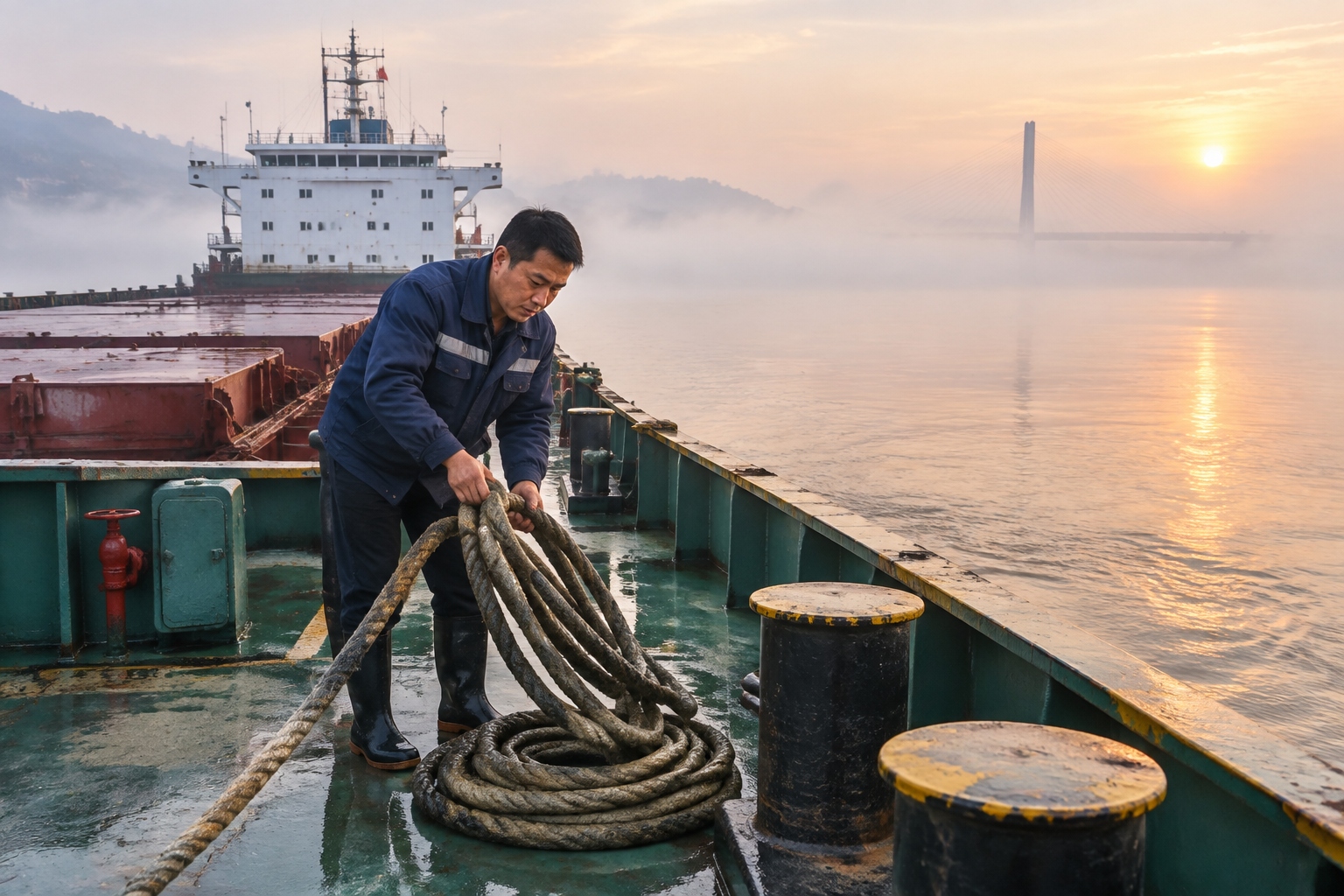

5:40 a.m., somewhere below Yichang
The deck of the Wanhuo 3168 is still wet with river fog, and the only sound is the generator — a low throb you feel in your back teeth before you actually hear it. I come out of the wheelhouse with a torch and a thermos, walk along the port side, and check the lines we tied up at two in the morning. The water is high and brown. Two hundred metres off, a smaller ship is pushing upstream, its wheelhouse lights smeared across the surface.
I am 39, from Wuwei in Anhui province, and I have worked on the Yangtze for twelve years. Our ship is a 4,000-tonne bulk carrier, about 90 metres long, with a hold as deep as a three-storey building. This trip we are carrying cement clinker down to Nantong, near the sea. After that we will hunt for something to take back up — steel coils, fertiliser, sometimes containers — and head for Nanjing, or Chongqing if the rate is good. That is how the job works. The boat goes where the cargo is, and the schedule arrives as a phone call.
Why people work the river
The Yangtze runs 6,300 kilometres from the Tibetan plateau to the East China Sea. From Yibin in Sichuan to the estuary, roughly 2,800 kilometres is navigable, and the main-line ports along it handle more than three billion tonnes of cargo a year. No other river on earth carries as much freight.
People outside China rarely think about this. But the cement in a Shanghai apartment block, the gravel under a highway in Jiangsu, the coal for a power station in Hubei — a large share of it floats. The Yangtze River Economic Belt covers 11 provinces and accounts for roughly 40 percent of China’s population and GDP. When the freight rate moves, prices on shore move with it, usually without anyone noticing where the money went.
I did not grow up dreaming of boats. I spent four years in a shoe factory in Fujian and two more driving a truck. A cousin was a deckhand and said the pay came on time. I started at the bottom, hauling lines and chipping rust, then sat the exams for a licence: navigation, collision rules, basic engineering, and enough time on the water to be allowed to stand a watch. The studying was harder than the work.
The day starts before the sun
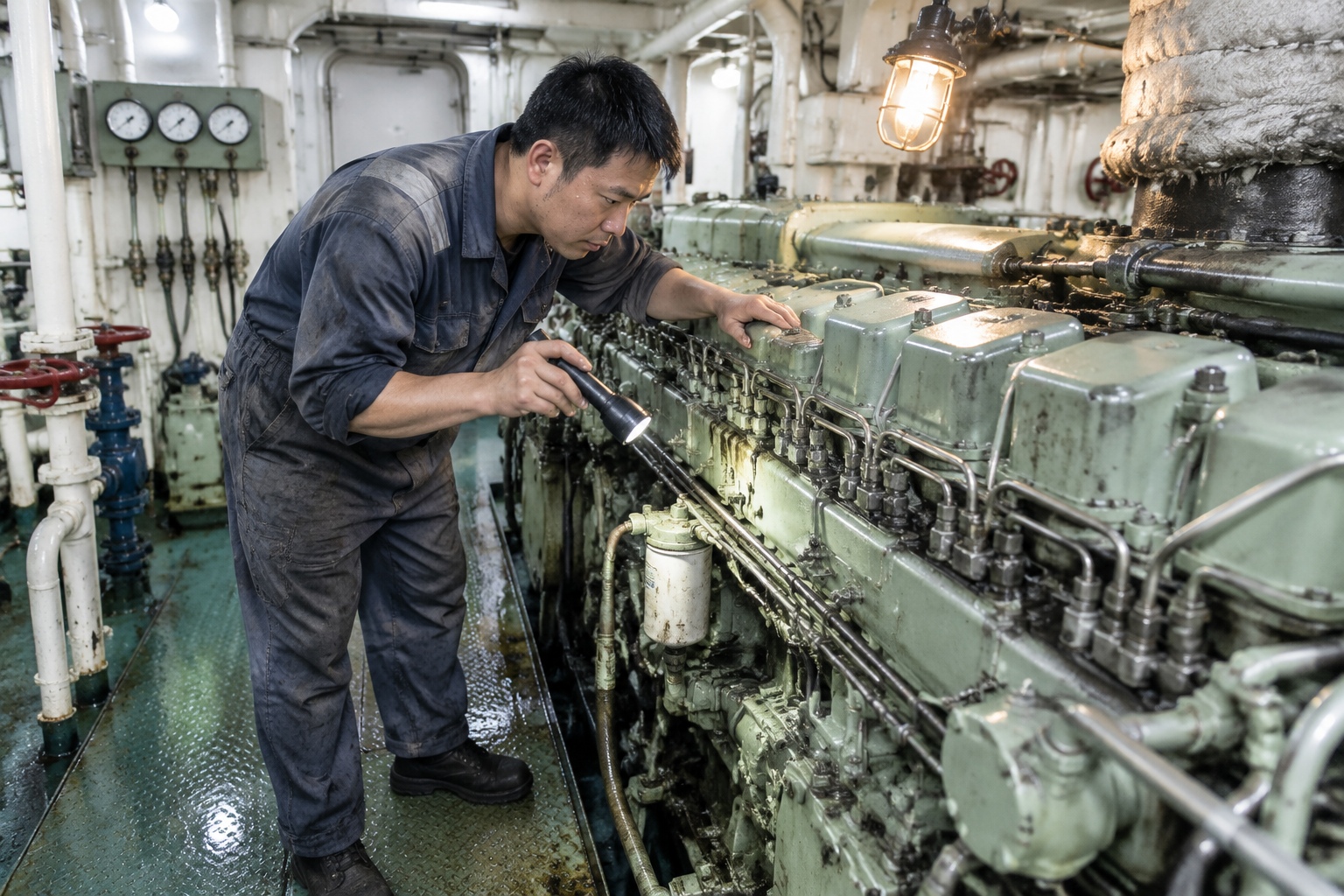
By six I am in the engine room with the chief engineer, torch in hand, checking oil levels, cooling water and the bilge. The engine is the heart of everything. If it stops in a narrow channel, you are a wall across the river, and other people have to come and save you.
Breakfast is at half past six — rice porridge, pickled vegetables, a boiled egg, sometimes leftovers from last night. Whoever is off watch eats first. Whoever is on watch eats standing up in the wheelhouse with one eye on the water. Three of us rotate the watches: four hours on, eight off, around the clock.
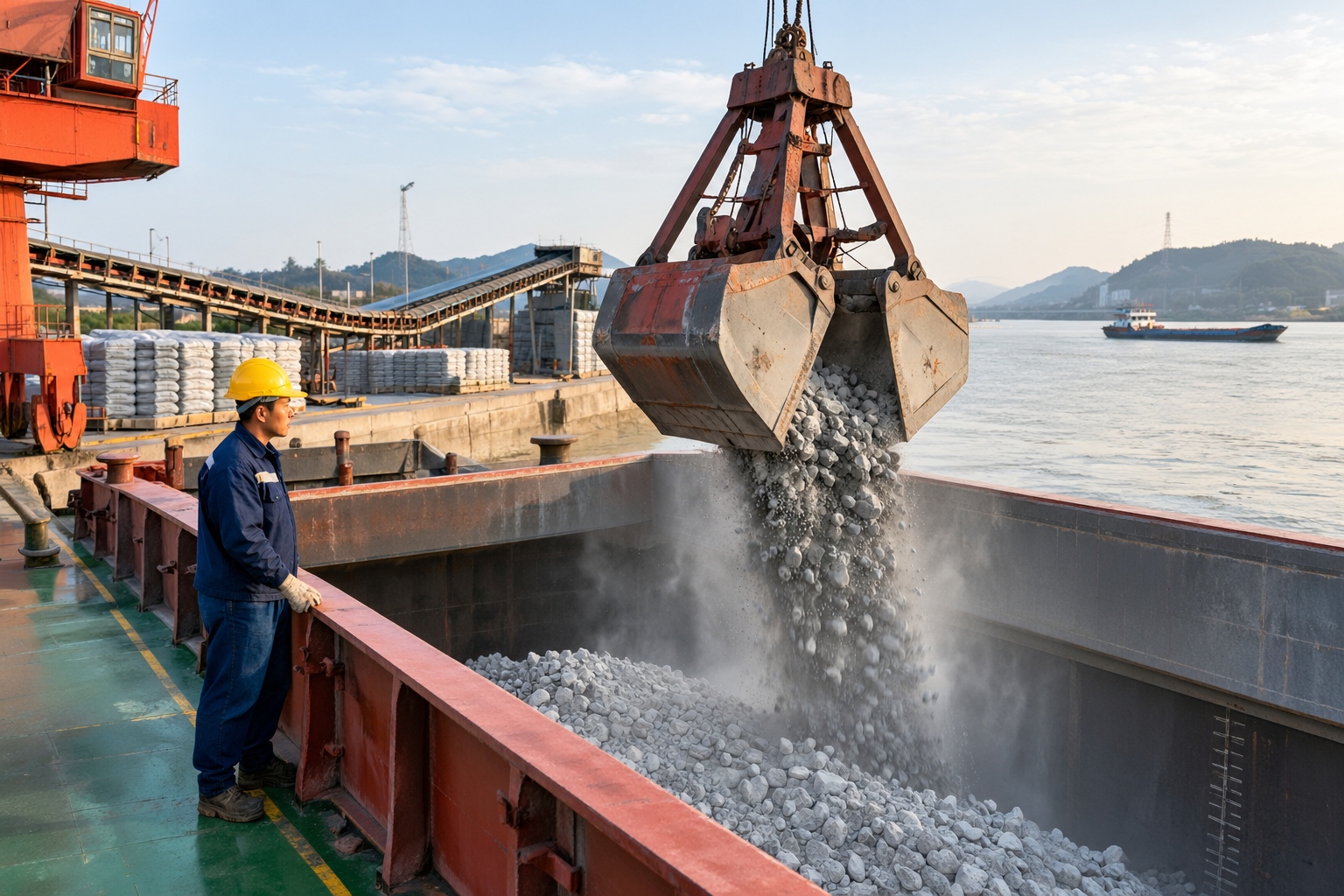
On a loading day I am on deck instead — hatch covers open, lines adjusted, watching the conveyor or the grab crane swing over the hold. Loading 4,000 tonnes of clinker at a wharf takes ten to fourteen hours. Nobody stands around. You watch the trim of the ship, because a badly loaded hold makes a hull that leans and steers like a drunk.
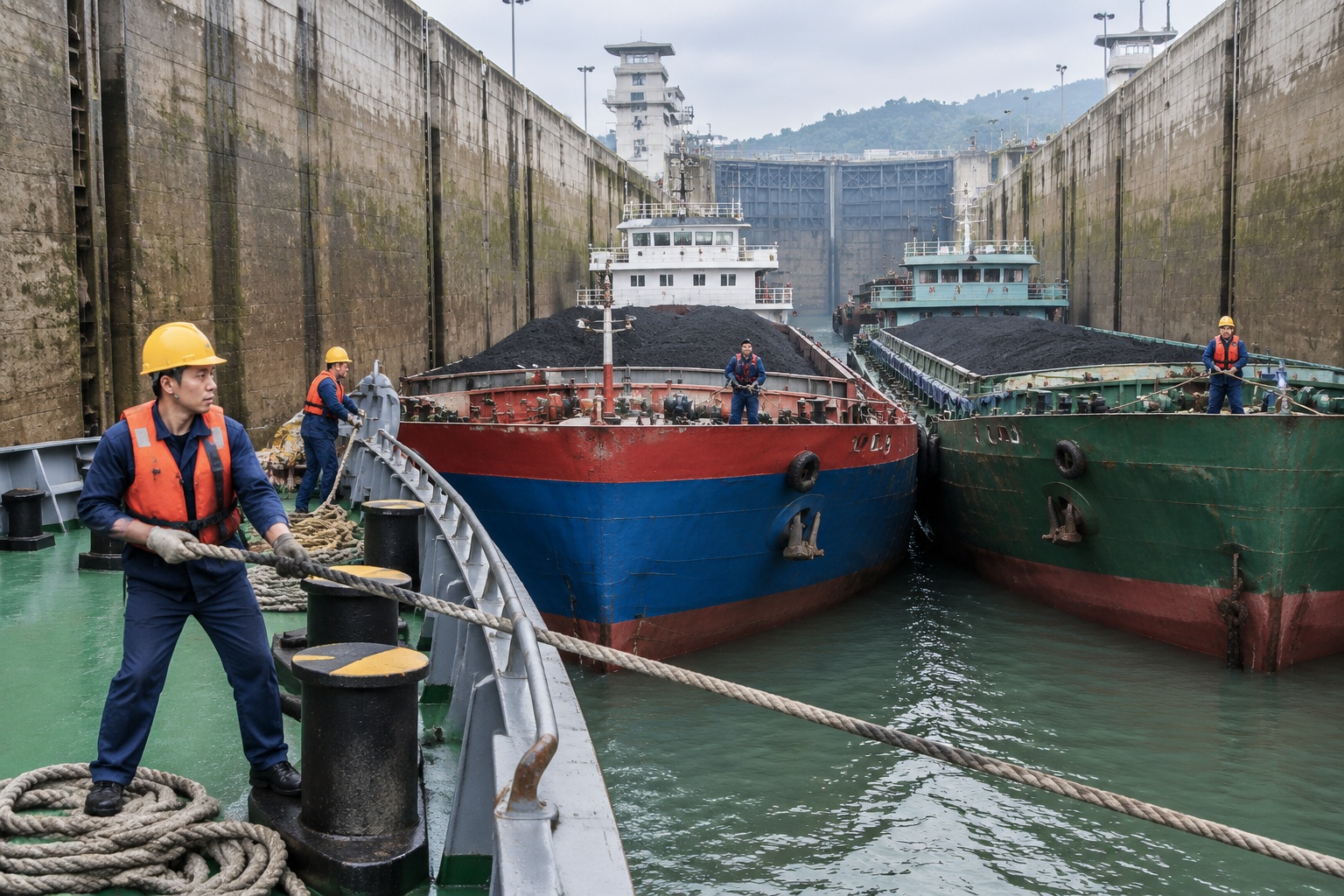
Then there are the locks. At the Three Gorges, ships are lifted or dropped about 20 metres at a time through five steps on two parallel lines, and in busy months you can wait a day, sometimes two or three, anchored in the queue. We book a slot through an app, watch the screen for our number, and move when we are called. When our turn comes, the chamber fills with ships side by side, engines idling, lines taut, and everyone on deck watching the walls.
The six of us
Our crew is small: the captain, the chief mate, me, the chief engineer, one deckhand, and a cook who also handles lines. Everyone does two jobs. A deckhand makes around 6,000 to 7,000 yuan a month; I take home about 10,000 as a second mate; the captain, who carries the legal responsibility for everything that happens on board, earns closer to 18,000. Nobody gets rich. On some routes the owner’s margin is thinner than the crew’s wages, and there are weeks when a boat sits at anchor waiting for a cargo that pays enough to be worth burning fuel for.
Fuel decides everything. Marine diesel runs about seven yuan a litre, and a day under way swallows a serious share of what the trip earns — owners will tell you it is close to half. Hauling a tonne of gravel a few hundred kilometres earns the ship 20 or 30 yuan, sometimes less. That is the arithmetic behind every departure time.
Families are the part nobody explains before you start. My daughter is ten and lives with my wife and my parents in Anhui. I get home two or three times a year for ten days or a fortnight, usually around the New Year and once in summer. Video calls have changed this job more than any piece of equipment. There is 4G along most of the river now; five years ago you were unreachable for days at a time. My daughter does her homework on camera while I sit in the wheelhouse, and I check it, badly.
Crews are getting older. Young people would rather deliver food in a city, where the money is comparable and the bed does not move. A lot of boats on the river are run by husbands and wives together, which keeps the family on board but not the children — those stay ashore for school.
Screens, cables and paperwork
When I started, navigation was a paper chart, a compass and a lot of shouting. Now there is an electronic chart on a screen beside the wheel, updated regularly, with depth contours and channel markers, plus a satellite positioning feed that puts our ship on the display to within a metre or two. AIS tells every other vessel who we are, how fast we are moving and where we are going. The VHF radio is still the real instrument: you pick up the handset and talk to the ship ahead of you like a person.
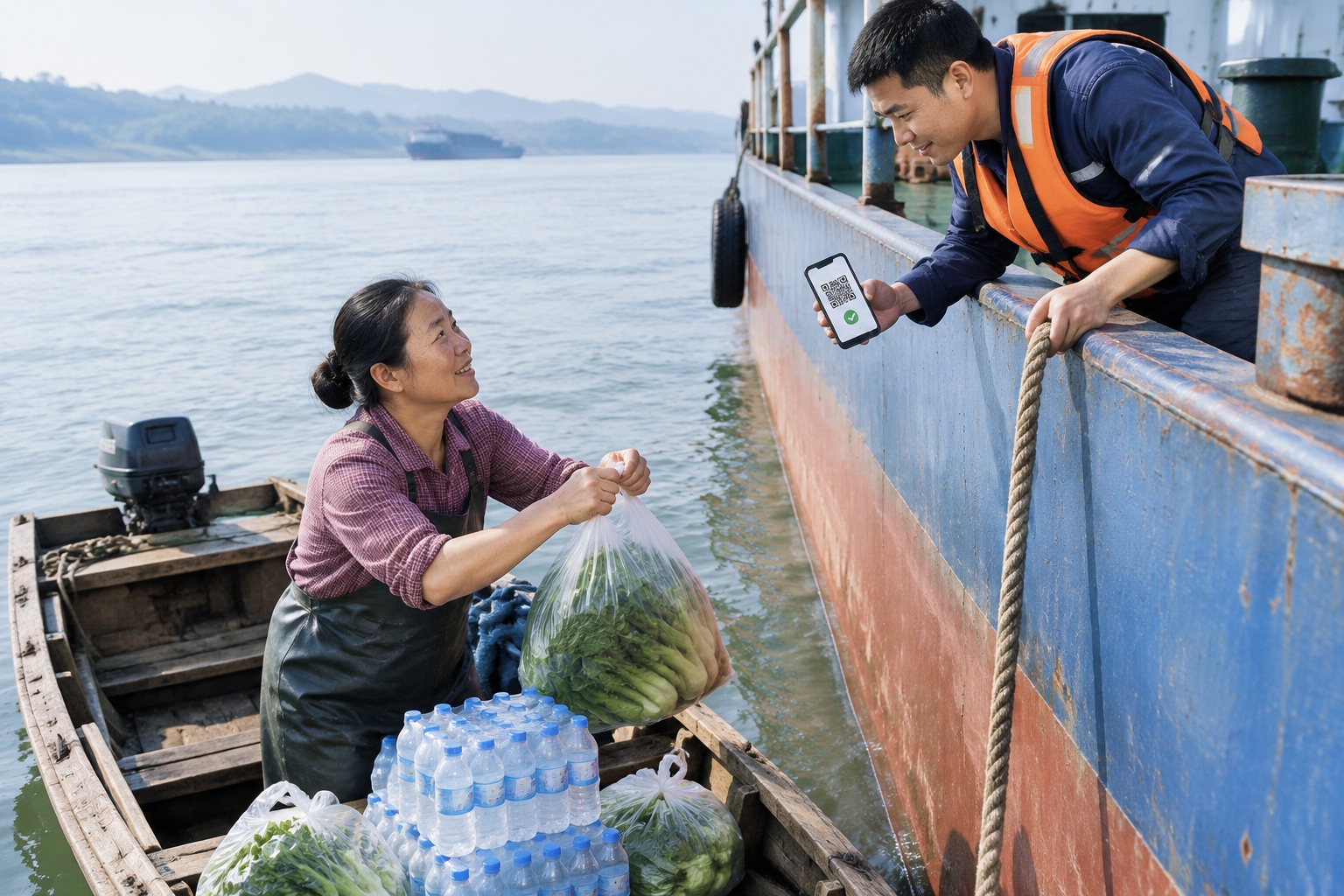
The rules have tightened too. On the Yangtze these days, nothing goes over the side. Sewage is held in a tank and pumped ashore, oily water goes through a separator and is handed over, garbage is delivered at ports and logged in an app. At a berth we plug into shore power instead of running the generator, and pay by phone at around a yuan a kilowatt-hour. Inspectors from the maritime safety administration come aboard without warning: certificates, fire equipment, life jackets, the valve on the sewage tank. If something is wrong, you fix it before you move. Most crews I know grumble about the paperwork, then admit the river smells different than it did ten years ago.
What passes the windows
You watch the country change from four metres above the water. Downstream of Nanjing the channel is dredged to 12.5 metres, so ships far bigger than ours come up from the sea — 50,000-tonne vessels reaching the port at Nanjing. The banks read like a list of what China is building: cement plants, steel yards, container terminals stacked with boxes, the towers of a city you have never heard of, then ten kilometres of reeds and a man in a small boat with a fishing rod.
The cleanup since 2016 is visible from the water. Chemical plants that once sat scattered along the shoreline have been pulled into industrial parks with their own treatment works; illegal docks and sand pits were shut down; stretches that were rubble and rubbish now have paths, trees and people walking on them at dusk. Sand mining is tightly controlled, which slows some cargoes and saves others.
The porpoises came back first. The Yangtze finless porpoise — small, round, grey, with barely a fin to speak of — is what we watch for now. The ten-year fishing ban that began in January 2021 took the nets off the river, and last spring, off Honghu, I saw two of them roll in our wake for maybe a minute. The deckhand filmed it. It is the only thing on this river that makes everyone stop talking.
Water, weather and the queue
The river sets the rules and refuses to negotiate. In winter, when the water drops, we load less than the ship can carry, because a few centimetres of draft is the difference between passing a shallow stretch and sitting on it. In flood season the current runs fast enough to steal a kilometre an hour off your speed, and the water carries tree trunks and whole clumps of uprooted bamboo. Fog stops everything. So does a hard wind on the open reaches. You do not argue with either.
The biggest risk is not the river, it is the traffic. Small boats cross without looking. Ferries cut across the channel on a schedule. Fishing boats appear at night without lights. We are 90 metres long and need a kilometre to stop. So you plan ten minutes ahead, always, and you learn to read another captain’s intention from the angle of his bow.
Night in the wheelhouse
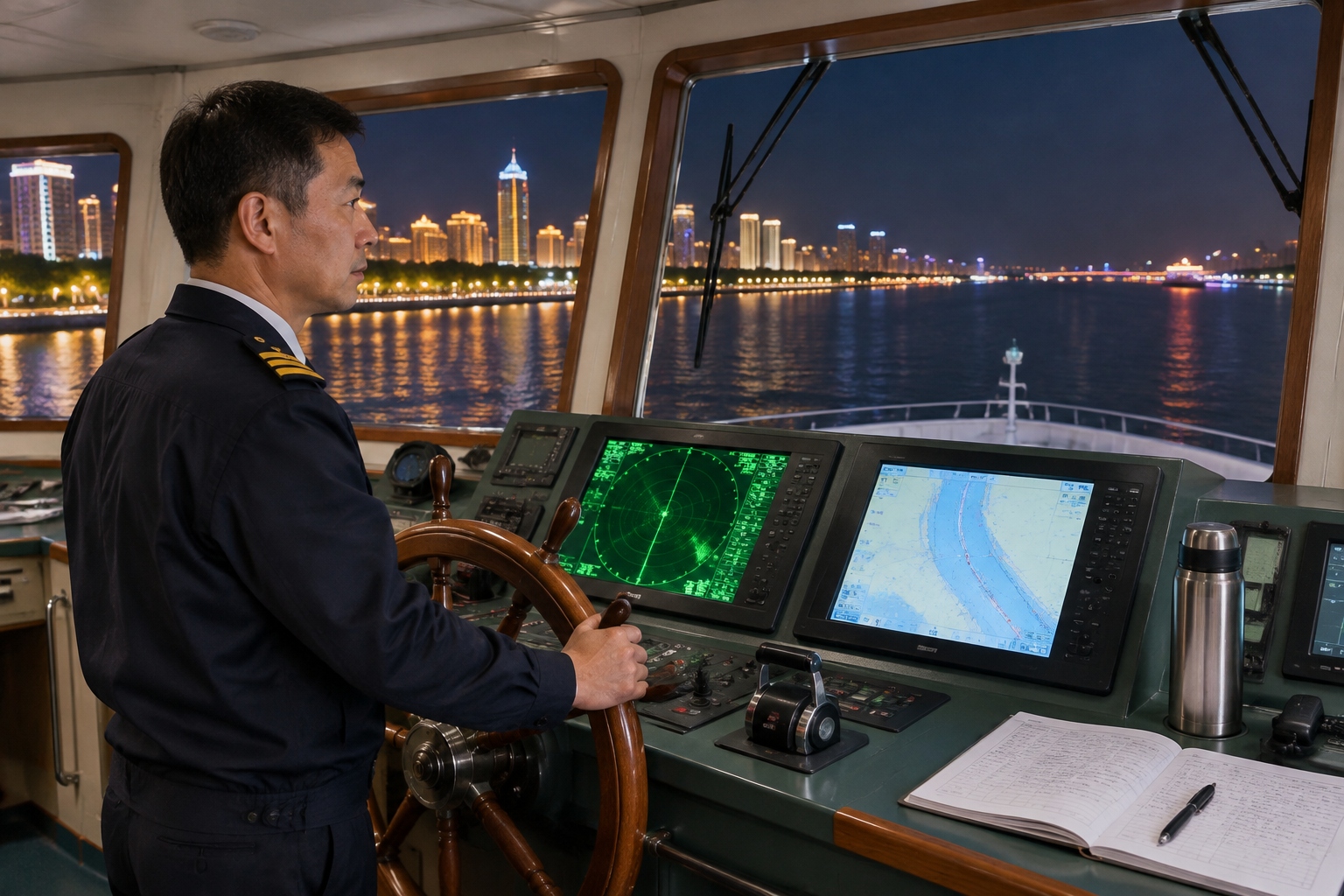
At eleven at night the wheelhouse is dark except for the radar sweep, the chart screen and the green glow of the instrument panel. The river is a black road with lights on both sides. My watch ends at midnight; the captain takes over, and I sleep for eight hours in a cabin that hums.
I think about the cargo then. Four thousand tonnes of clinker in the hold is a school building somewhere, or a stretch of road, or the floor of a shop. Someone will walk on it without ever knowing it came down the river at nine kilometres an hour, behind a man who was checking his daughter’s maths homework from a wheelhouse.
My daughter asked me once what I do all day. I told her I drive the river. She thought about it and said that sounds like a job for a giant. In the morning I will check the oil, eat porridge, take the wheel again, and the Yangtze will still be going where it goes.
Start the discussion at forum.chinacomes.com