
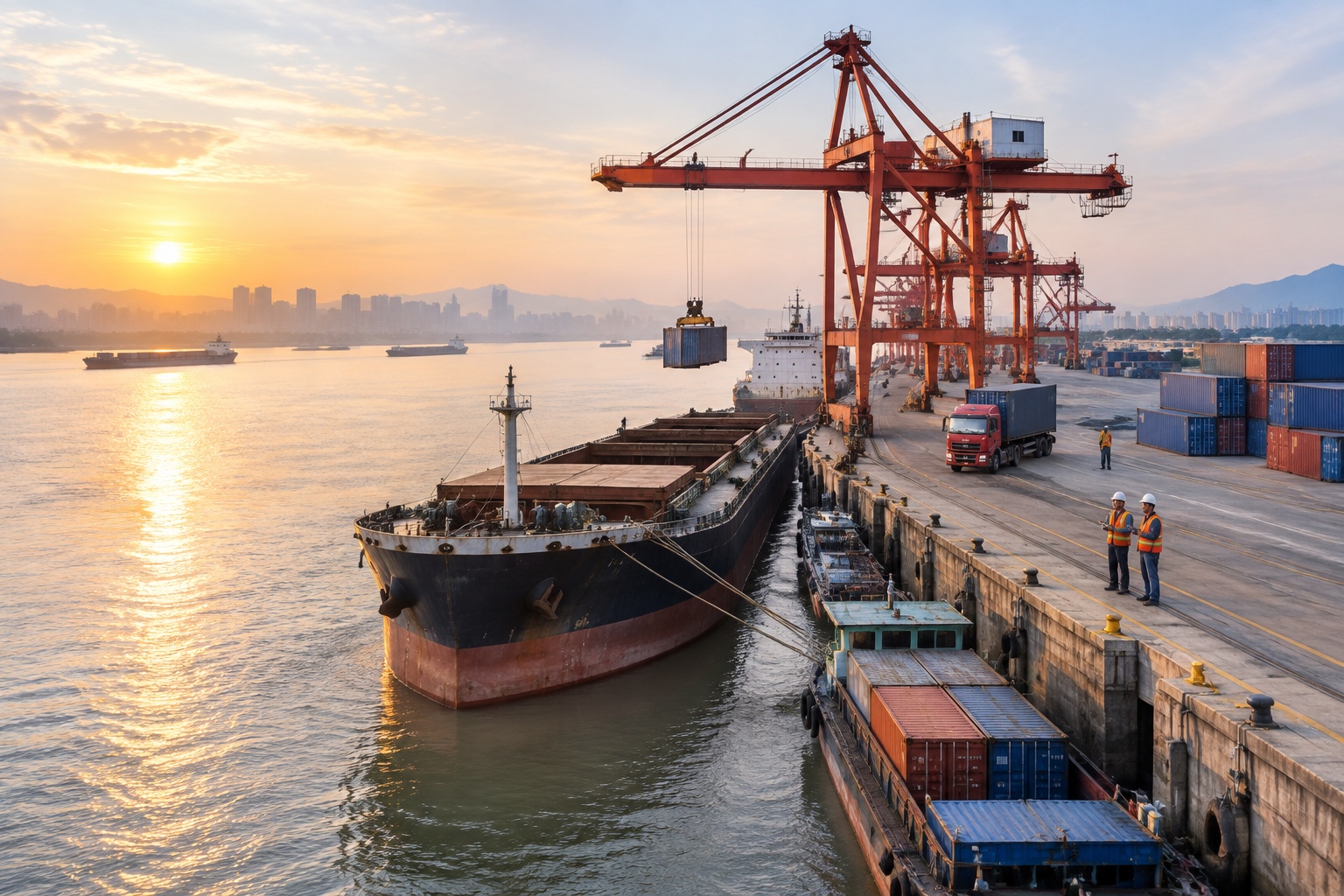

A queue of ships at Yichang
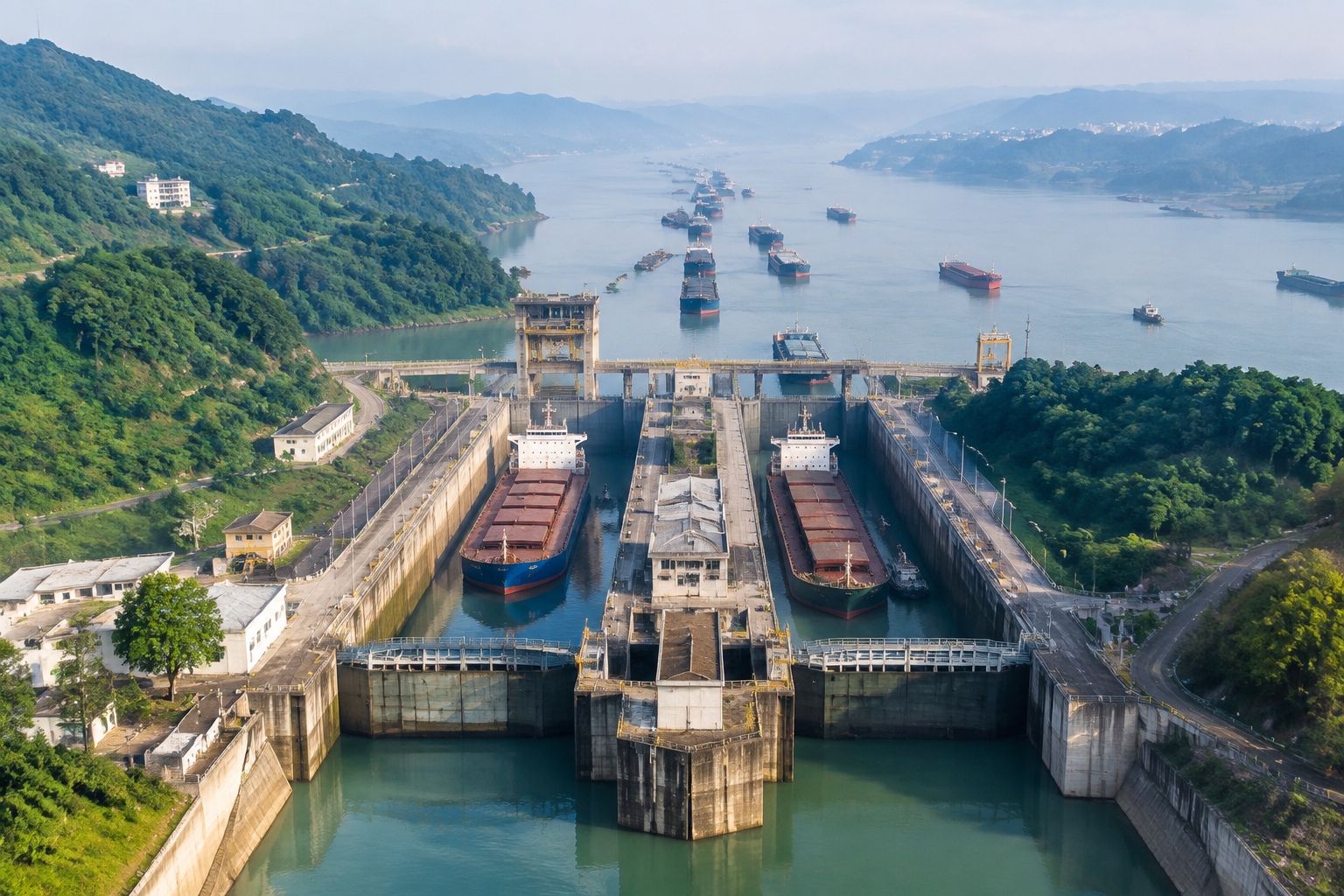
Stand on the embankment above the Three Gorges ship lock in Yichang, in central China’s Hubei province, and the first thing you notice is not the dam. It is the line. Five or six vessels sit inside a lock chamber at once — bulk carriers loaded with iron ore, container barges, a roll-on/roll-off ship carrying new cars — while dozens more wait out on the river with their engines idling. A full lock cycle takes about three hours. In a busy week, the queue runs into the hundreds.
That queue is what a hard-to-imagine number looks like in physical form: 4.2 billion tons. That is the annual cargo throughput of ports along the Yangtze’s trunk line, according to the river transport authority under China’s Ministry of Transport. It is also the figure behind a ranking that rarely gets explained — for 20 years running, the Yangtze has been the busiest inland waterway in the world.
What 4.2 billion tons actually looks like
Billion-ton numbers get thrown around loosely in infrastructure coverage, so it is worth translating. Four point two billion tons a year is roughly:
- Seven times the cargo carried annually by the entire Mississippi River system, the largest inland waterway in the United States.
- About twenty times the Rhine, Europe’s busiest river.
- Almost the same as the total freight moved by every railway in China in a year, which is around 5 billion tons. One river moves close to what an entire national rail network moves.
Try another conversion. A standard highway truck carries about 30 tons, so 4.2 billion tons is roughly 140 million truckloads. Parked nose to tail at about 15 metres each, those trucks would form a line some 2.1 million kilometres long — more than 50 times around the equator.
Or count trains. A heavy-haul freight train of the kind used on China’s coal corridors hauls about 10,000 tons. You would need 420,000 of them.
One clarification matters here. The 4.2 billion figure counts cargo handled at ports along the trunk line, including ship-to-ship and sea-to-river transfers near the estuary. Not all of it travels the full length of the river. Even with that caveat, the scale is real.
Why this much cargo ends up on one river
The Yangtze runs 6,300 kilometres from the Tibetan Plateau to the East China Sea — the longest river in Asia, third longest in the world. Its navigable trunk line, from Shuifu in Yunnan province down to the sea, covers about 2,800 kilometres. That is roughly the driving distance from London to Cairo.
Length alone does not create volume. Two decades of dredging, channel training and lock construction did. In 2015, engineers completed a project that keeps the channel from Nanjing to the river mouth at a guaranteed depth of 12.5 metres, allowing 50,000-ton ocean-going ships to reach Nanjing. Heading upstream, the guaranteed depth steps down: about 6 metres to Wuhan, 4.5 metres to Yichang, and around 3.5 metres through the gorges to Chongqing. Each step matters, because draft — not width — decides how much a river vessel can carry. An extra metre of depth can add hundreds of tons to a single hull.
Then there are the locks. The Three Gorges lock complex was designed to handle 100 million tons a year. It passed that mark in 2011 and has stayed above it ever since, moving well over 100 million tons annually in a near-continuous procession.
The river as a factory floor
What matters is not only how much moves, but what. Iron ore for the steel mills at Wuhan, Ma’anshan, Nanjing and Chongqing. Coal. Cement. Grain. Chemicals from the plants lining the Jiangsu and Anhui banks. And increasingly, containers and finished vehicles.
Water is the cheapest way to move heavy goods. A working rule of thumb in Chinese logistics is that barge freight costs about a third of rail rates and a sixth or less of road rates for the same tonnage over the same distance. That gap decides where factories get built. The Yangtze River Economic Belt — the 11 provinces and municipalities along the river — holds roughly 40 percent of China’s population and a similar share of its GDP, and cheap barge transport is a large part of the reason.
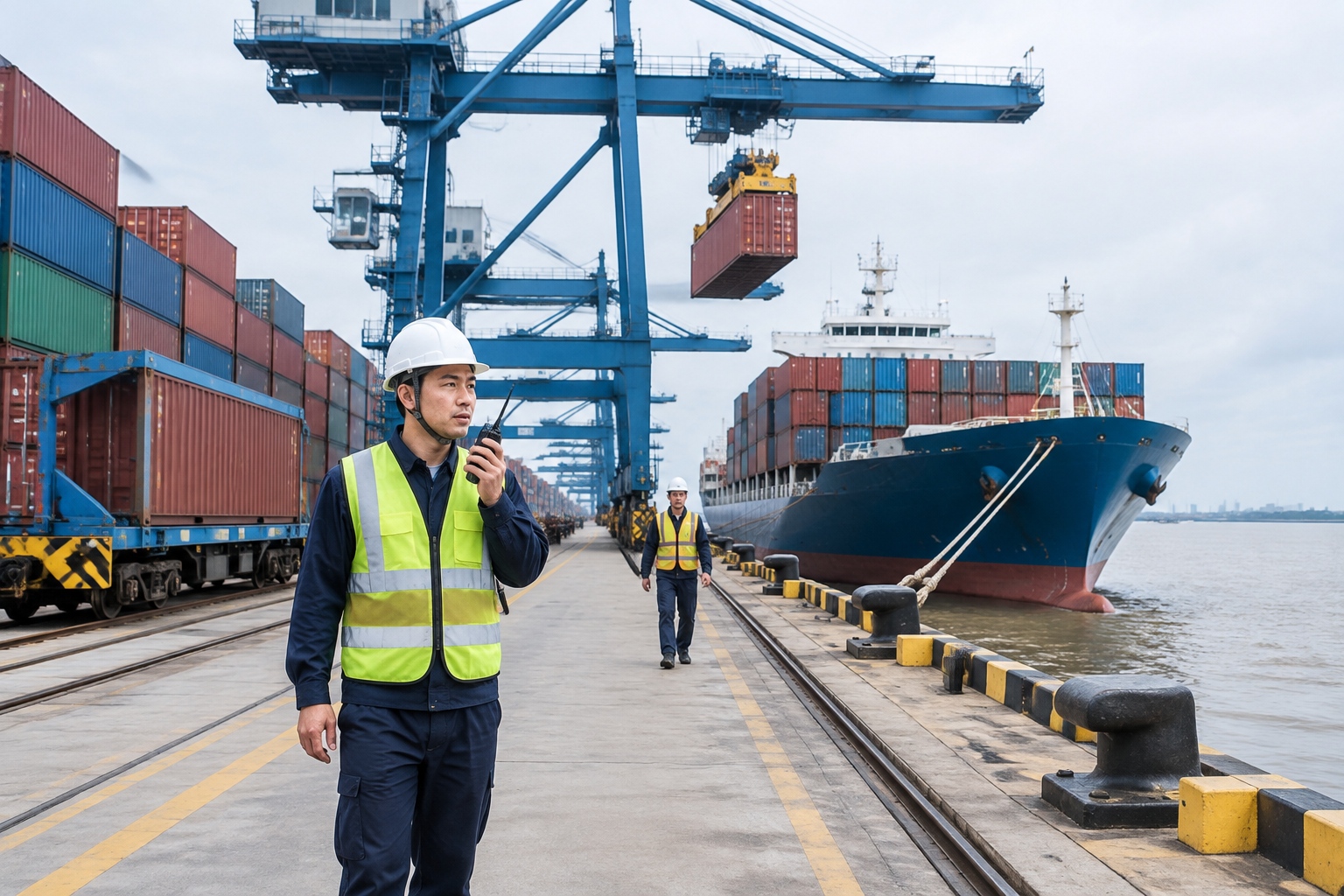
The container business is newer. Trunk-line container traffic now runs above 20 million TEU a year. Suzhou, on the lower reaches, handles more than 500 million tons of cargo annually, making it the busiest inland river port in the country. At the river mouth, Shanghai has been the world’s largest container port since 2010.
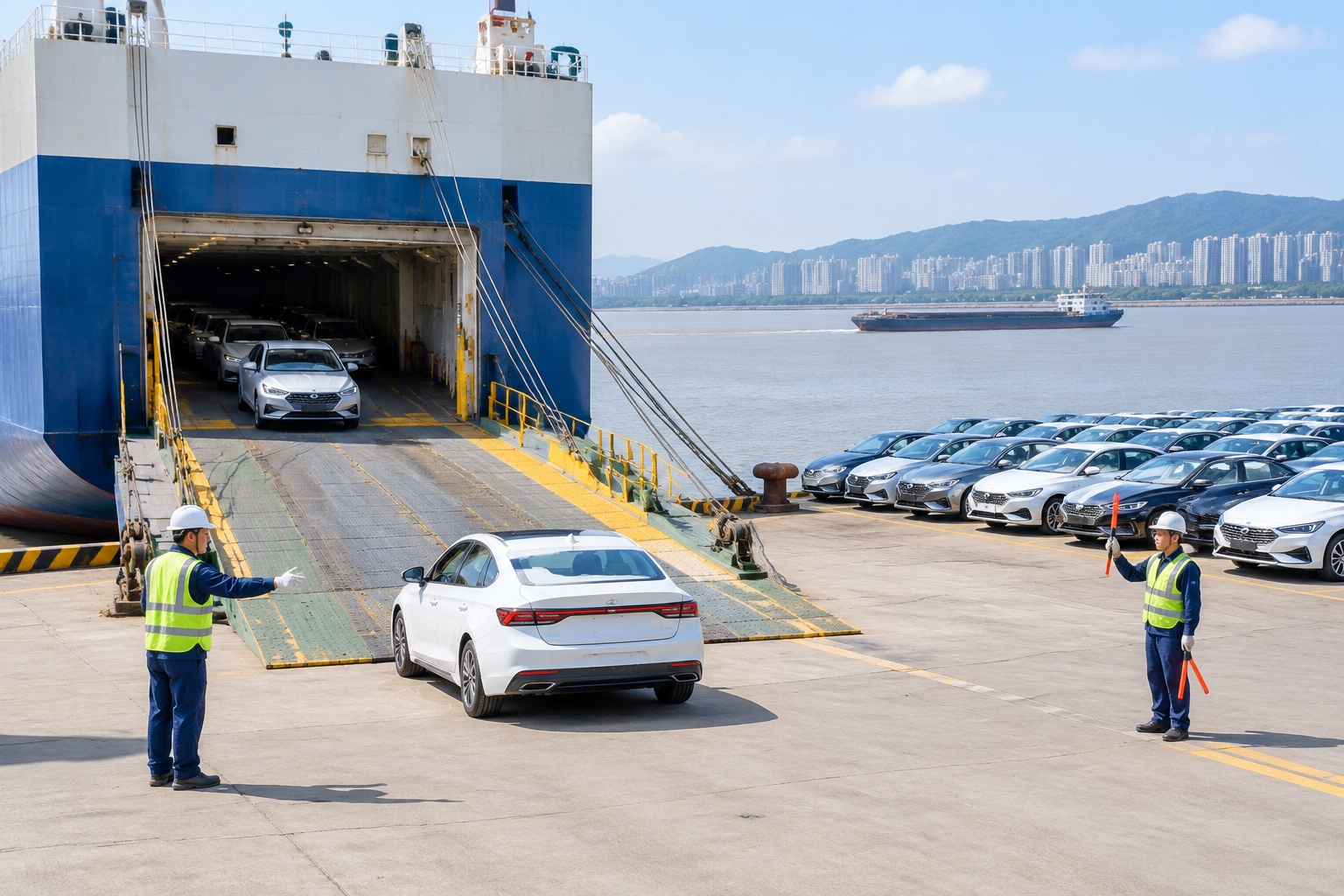
New cars are another cargo that barely existed here a decade ago. China became the world’s largest auto exporter in 2023, shipping 4.9 million vehicles abroad. A growing share of those cars travel by water for at least part of the journey, carried by roll-on/roll-off ships from plants in Chongqing, Wuhan and Hefei down to ports near Shanghai.
Congestion is part of the story
A river moving 4.2 billion tons a year also has traffic jams. The Three Gorges lock is the clearest one. Built as a passage for the country’s southwest, it now works as a bottleneck, with waiting times ranging from hours to days depending on season and water level. Some shippers unload onto trucks on one side of the dam, drive around it and reload on the other — a workaround known in Chinese as fanba, literally turning the dam.
A second lock complex, the Three Gorges Water Transport New Channel, has been discussed for years and is now moving through planning and early construction. Its cost is counted in the tens of billions of yuan.
Water levels add a second variable. The 2022 drought pushed the river to its lowest levels in decades and forced limits on how deeply ships could load. In dry seasons, barge schedules, coal deliveries to power plants and port storage all adjust to a depth gauge.
What the next 4.2 billion tons will look like
Two shifts are visible at river ports right now. The first is electrification. Battery-powered container ships have entered regular service on the Yangtze, swapping charged battery containers at ports instead of refuelling. Shore power — plugging a vessel into the grid while it is berthed — has become standard at major terminals, replacing the diesel generators that used to run day and night on moored ships. LNG bunkering exists at a handful of hubs.
The second is data. Electronic navigation charts, satellite positioning and river-wide AIS tracking mean ships, locks and ports work from the same information. Delta port authorities use it for scheduling, and several sections of the river are being surveyed for remote-controlled and automated shipping trials.
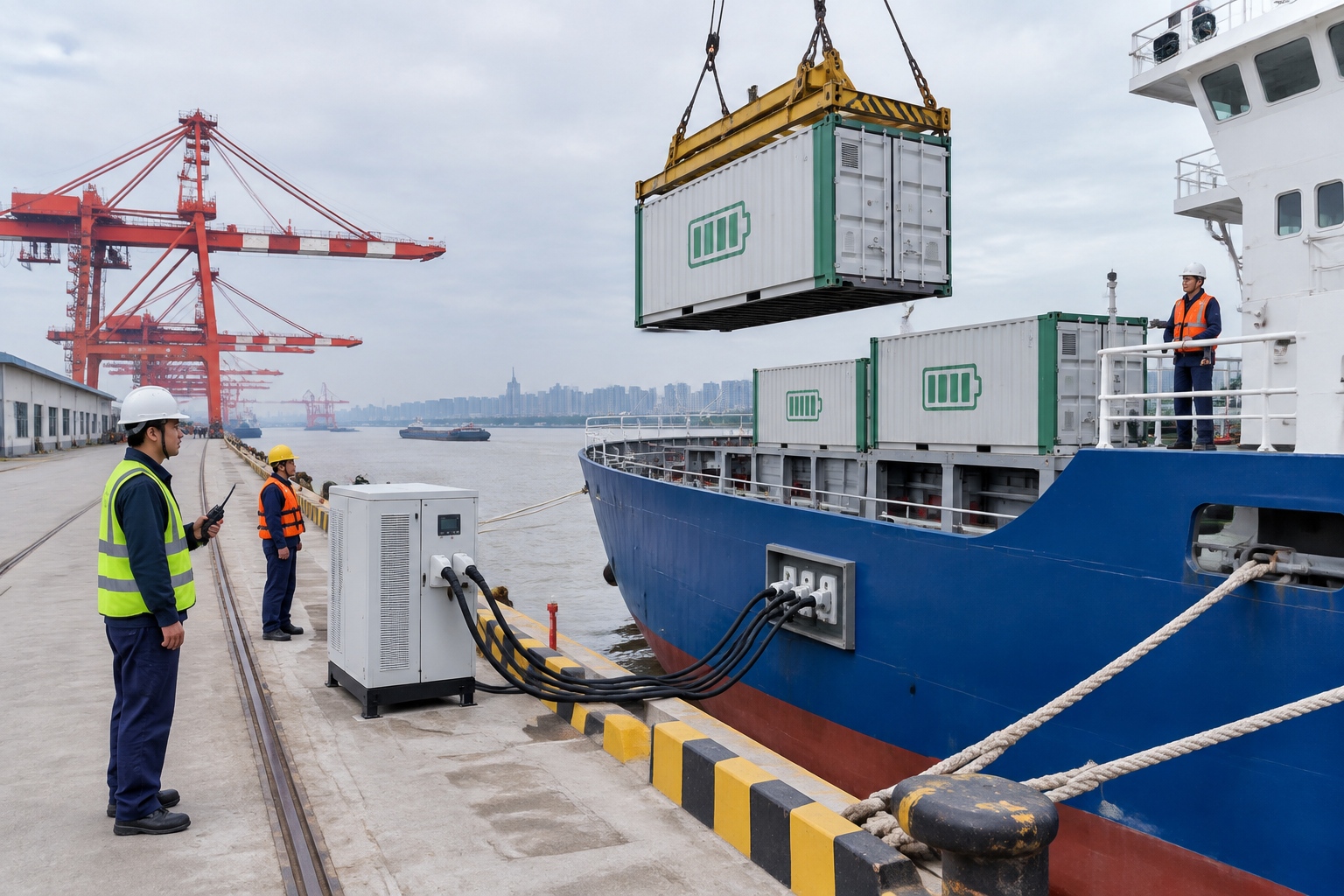
These are incremental changes. The bigger question is capacity. The river already carries close to what the entire national rail network carries, and demand is not falling. Whether new locks, deeper channels and cleaner ships keep pace will determine how large the next number is.
Why this number matters beyond China
For readers outside China, the useful part of a 4.2 billion ton figure is not its size. It is what it explains about how the country makes and moves things. A car, a washing machine, a steel beam for a bridge — all of them start with raw materials that probably spent time on a barge. The Yangtze is not a scenic backdrop to the Chinese economy. It is closer to the conveyor belt underneath it.
Which is why the queue at Yichang says more than most indicators that get quoted. When that queue grows faster than the locks can handle, it means the system is working harder than its designers planned for — and that fixing it costs billions.
Start the discussion at forum.chinacomes.com