

A summer night, a red basin, and a city’s signature dish
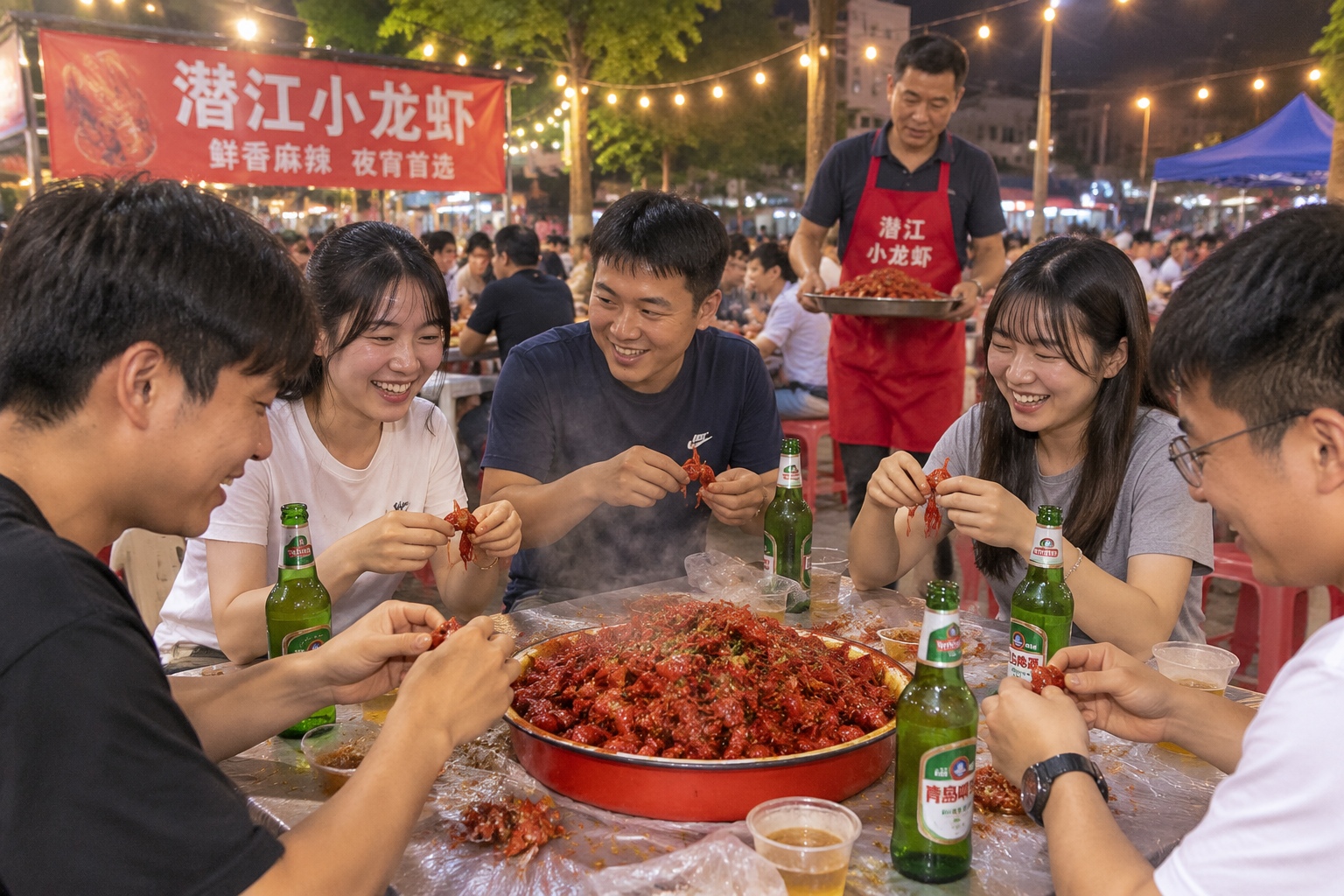
At 8 p.m. in Qianjiang, a small city in central China’s Hubei province, the street outside a row of restaurants is still 30°C. Plastic tables spill onto the sidewalk. The order that lands first is almost always the same: a red enamel basin heaped with glossy, oil-braised crayfish, a pile of plastic gloves, and a round of cold beer.
For three or four people, a generous pot costs roughly 150 to 200 yuan — about $21 to $28. That is not a luxury meal by local standards, but it is not a cheap snack either. In a city where many people earn a few thousand yuan a month, crayfish is a treat people plan around: payday, a friend’s return, the end of a hot week.
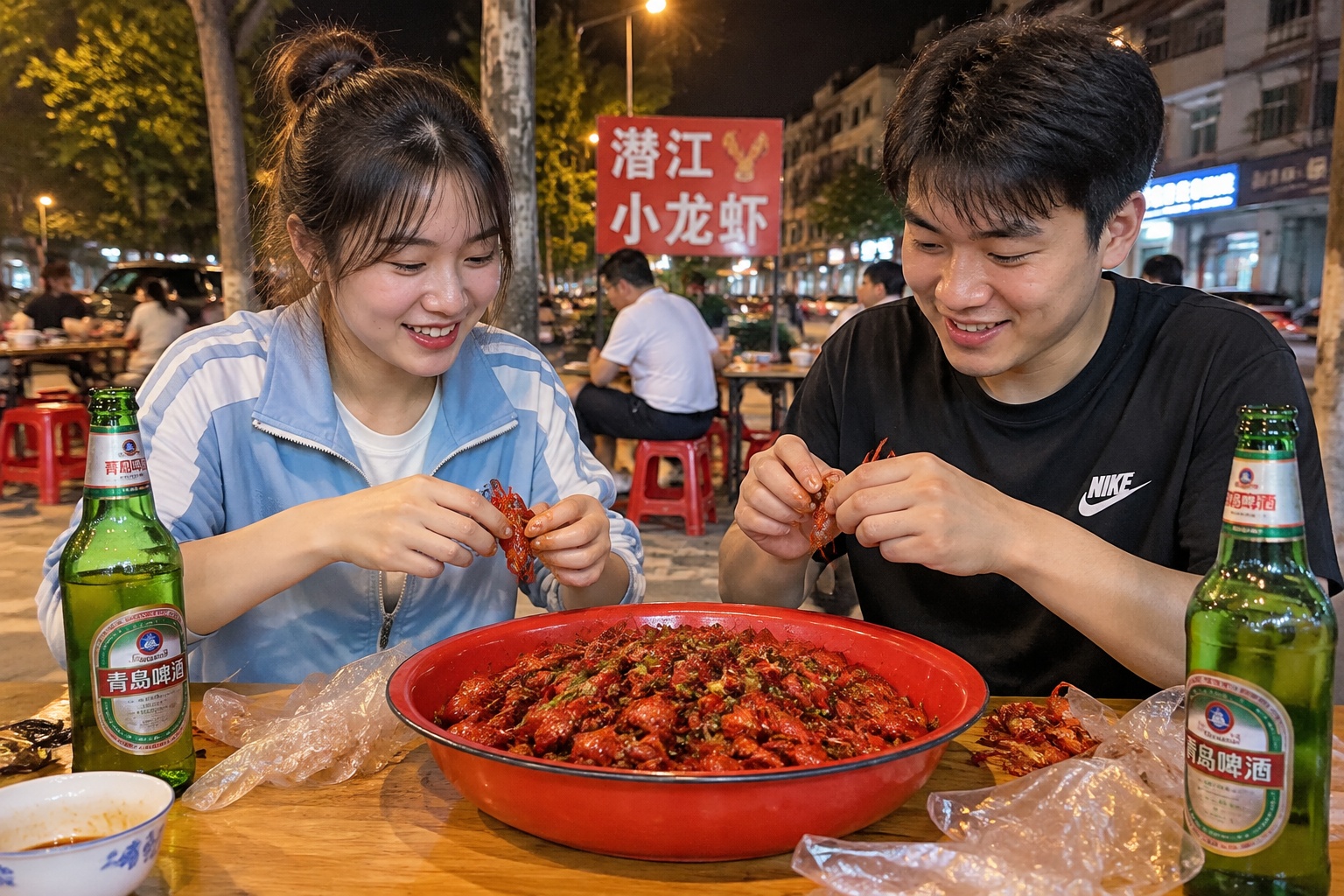
Understanding today’s China is often easier through a table like this than through a headline. Qianjiang is not a famous metropolis. It sits on the flat Jianghan Plain, surrounded by rice fields, canals and small factories. Yet this city has turned a messy, seasonal freshwater crustacean into an industry that reaches supermarkets, e-commerce warehouses and dinner tables across China. The story is partly about appetite. Mostly it is about how a local food economy actually works.
Why Qianjiang? Rice fields that grow two harvests
Crayfish — what Americans call crawfish — are native to North America, but China has farmed them for decades. Qianjiang’s advantage came from a simple farming change: rice-crayfish co-culture, or “shrimp-rice” farming. Instead of choosing between rice and crayfish, farmers raise both in the same paddy.
The logic is easy to see. Young crayfish are released into flooded rice fields. They eat weeds, insects and leftover organic matter. Their waste becomes fertilizer. The rice provides shade and habitat. After the rice is harvested, the field is still used for crayfish. For a farmer, the same piece of land can produce grain and a cash crop.
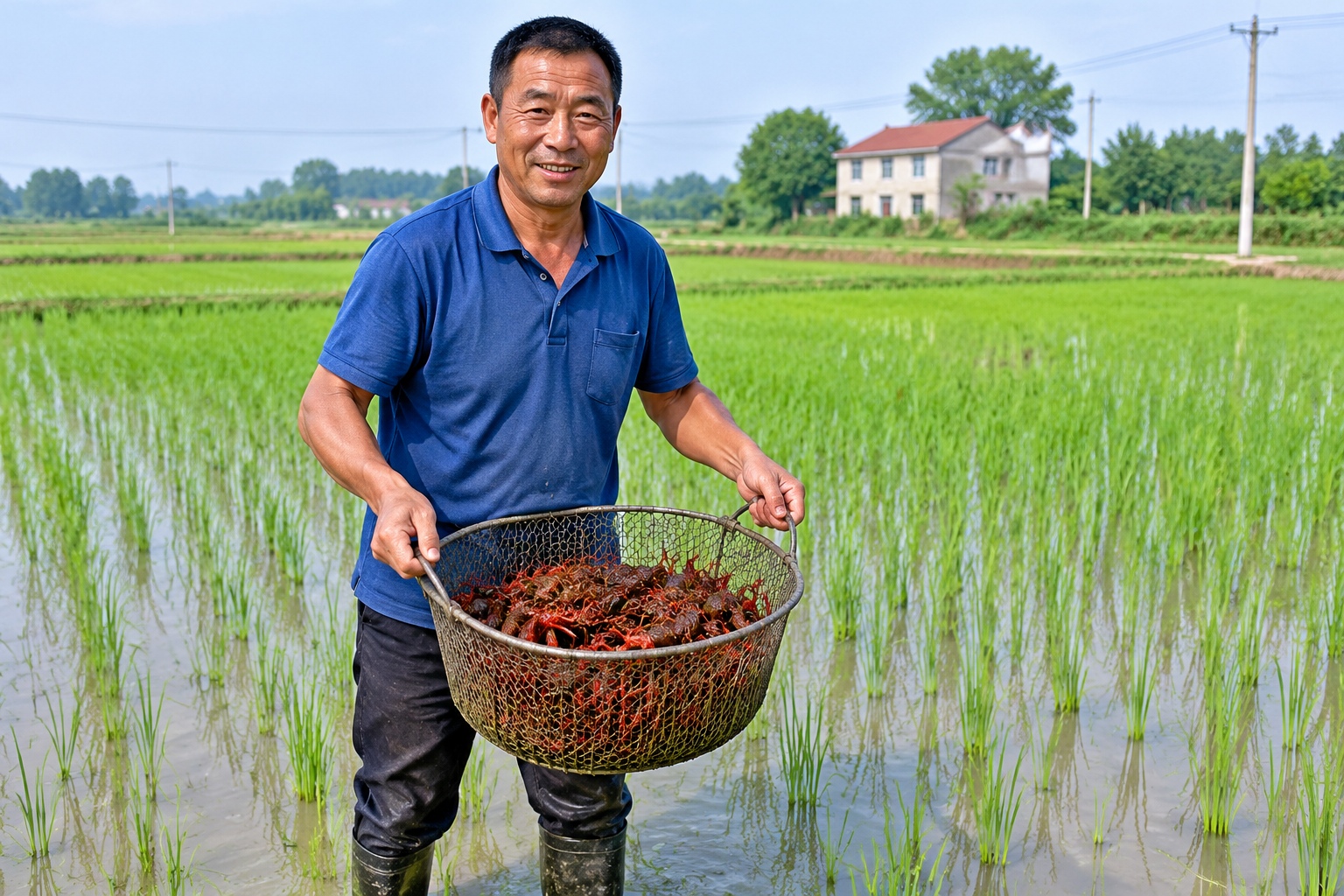
This model is replicable, which is why it spread quickly. It does not require a coastal port or a giant tech campus. It requires water, flat land, technical training and a market. Qianjiang had all four. Local extension stations taught farmers how to manage water depth, when to release fry, and how to avoid overcrowding. The result was not a single factory but thousands of small ponds and paddies tied into one supply chain.
That matters for readers used to thinking of Chinese growth as big infrastructure and export factories. A lot of rural income in China has grown through small, practical adjustments like this: a new seed variety, a rotation pattern, a cold-chain truck, a livestream account.
From pond to parcel: how a crayfish travels
The crayfish economy only works if the product moves fast. Live crayfish are fragile. They must be sorted, kept cool and delivered quickly, or they die and lose value. In Qianjiang, the sorting happens close to the ponds. Workers grade crayfish by size: small ones go to processing, medium ones to restaurants, large ones to premium orders.
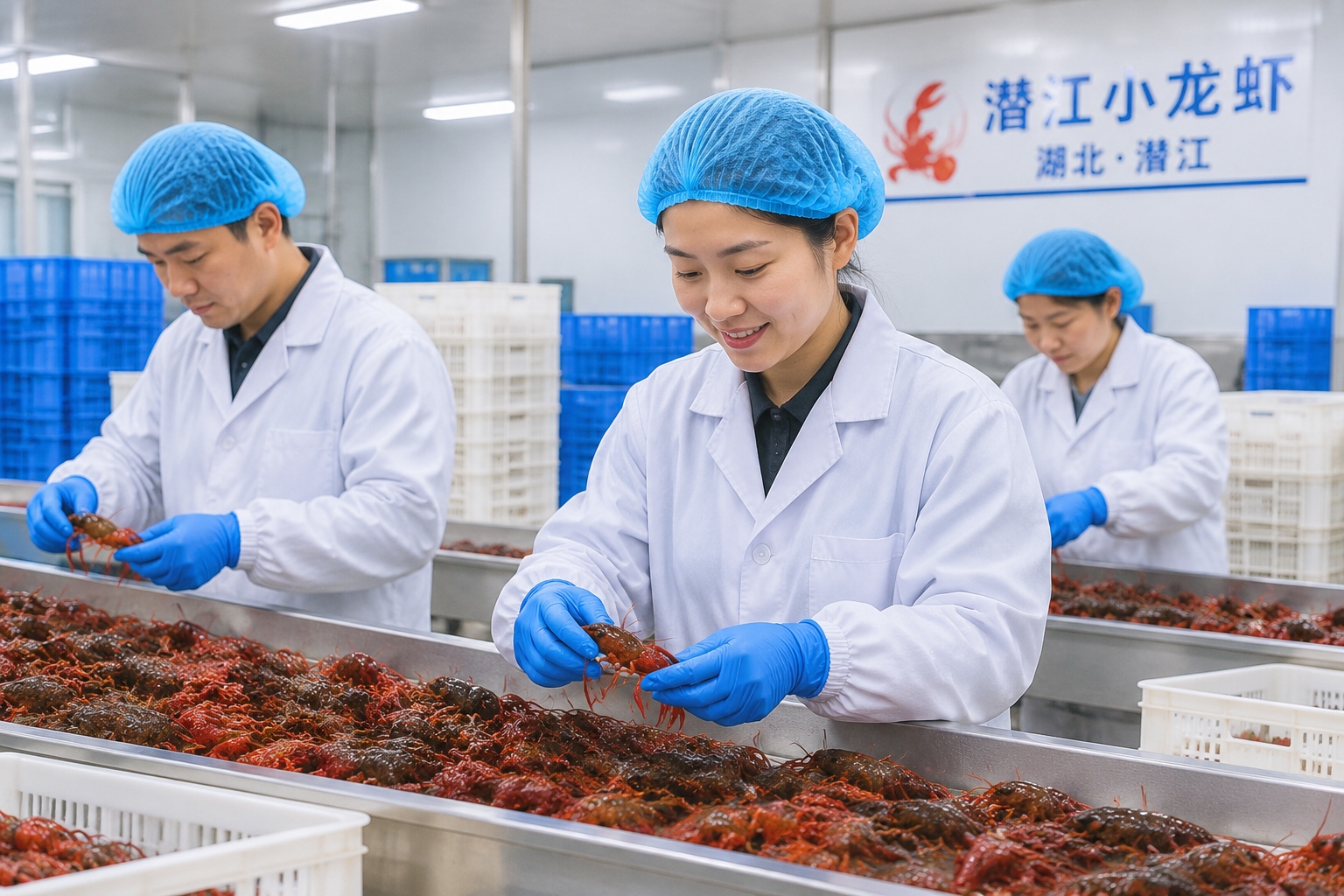
Processing plants turn part of the harvest into seasoned, vacuum-packed crayfish — the kind a customer in Beijing or Shenzhen can heat up at home. Cold-chain trucks carry fresh crayfish to cities across China. On e-commerce platforms, sellers sell “Qianjiang crayfish” as a brand, often with cooking instructions and seasoning packets. The local government has promoted standards and geographical indication protection. In other words, a farm product became a packaged consumer product.
This is where small-city China becomes more modern than outsiders expect. A restaurant owner can order live crayfish through a WeChat group. A farmer can watch a video about water quality on Douyin. A 25-year-old in a warehouse can scan boxes that will be on a high-speed train the same night. These are not futuristic scenes. They are ordinary tools, used in an ordinary agricultural town.
A city reshaped by one ingredient
Walk around Qianjiang in June and the crayfish presence is hard to miss. Restaurant signs show cartoon crayfish. Delivery riders carry red bags. The annual crayfish festival brings crowds, cooking competitions and a giant mascot. There are training schools for cooks, and local vocational programs for farming and food processing.
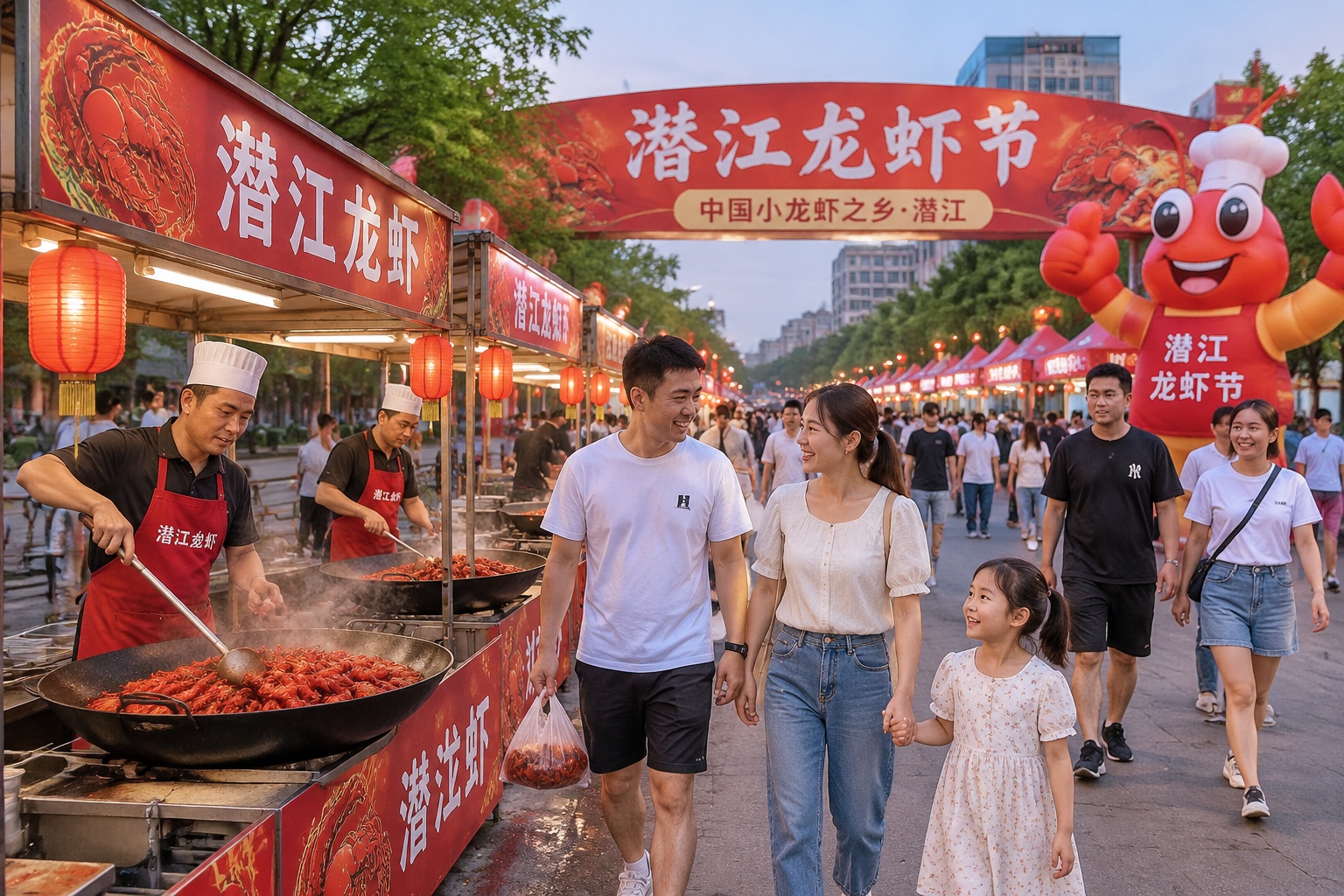
The night market is the most visible part. But the industry also changed public space: a dedicated crayfish street, exhibition halls, cold-chain parks and logistics hubs. The local government uses the crayfish brand to attract tourists and investment. For a city that was once known mainly for oil, this is a new identity — one built on food rather than heavy industry.
For ordinary residents, the change is practical. A farmer with a few mu of land can earn more than from rice alone. A server can find work through the long summer season. A young person who does not want to leave for a coastal factory can work in a processing plant, a restaurant, a delivery station or a livestream studio. The wages are not Silicon Valley wages. But they are local wages, earned at home.
The people behind the shell
Consider a typical day. Before dawn, a farmer in rubber boots walks along a paddy, checking the water and pulling up a cage. By 7 a.m., a small truck has picked up the catch. At a sorting center, women in caps and gloves separate crayfish by size for hours, their hands moving fast. By noon, a restaurant kitchen is boiling oil, frying crayfish with chili, ginger and garlic. At night, a livestreamer sits at a table with a ring light, showing viewers how to peel the shell.
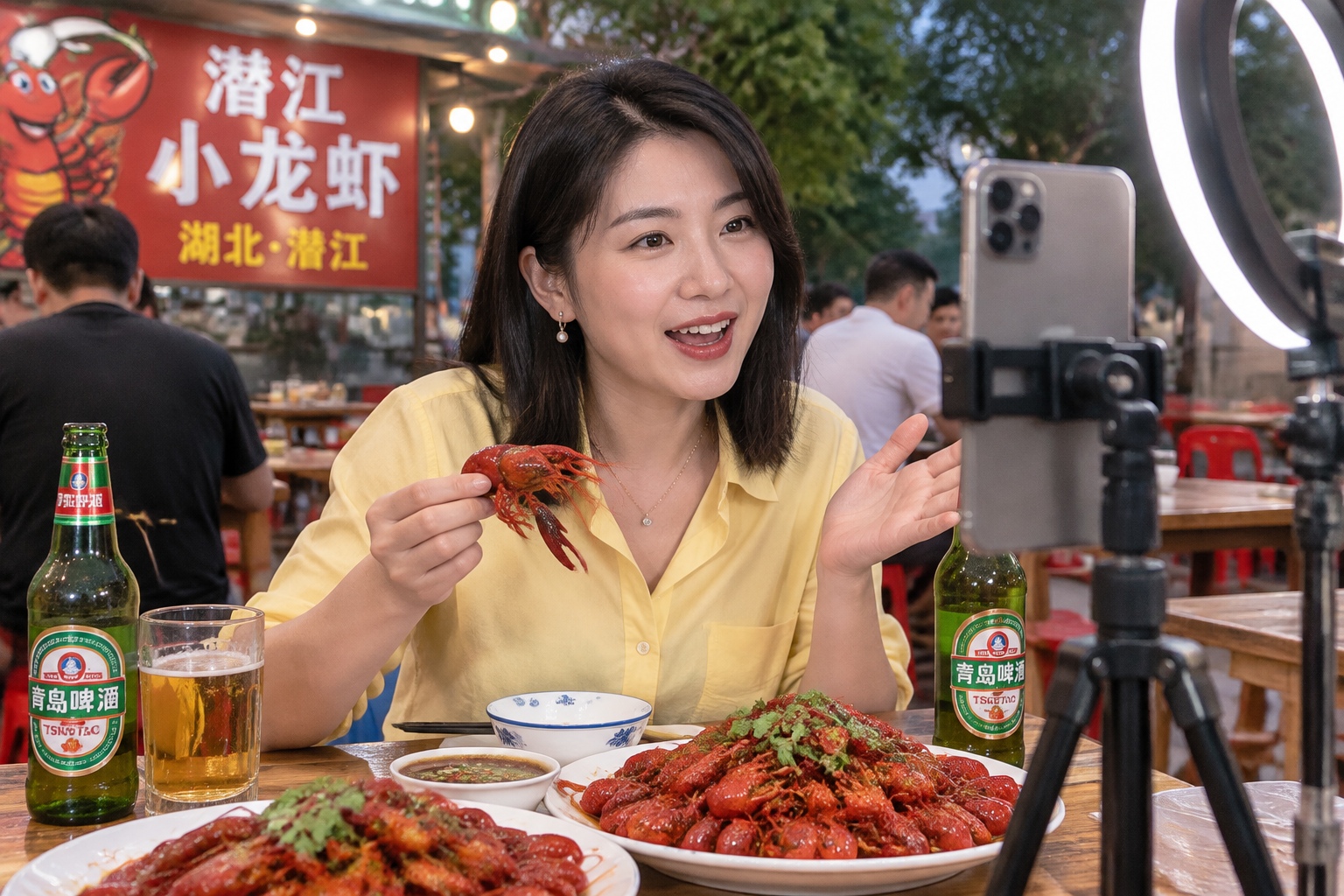
Each step is labor-intensive. That is one reason crayfish can support a lot of jobs. But it is also a reminder that the industry is not just a cute food story. It runs on early mornings, hot kitchens, cold storage and repetitive manual work. The glamorous part — the festival, the brand, the viral videos — sits on top of a long, physical supply chain.
The less pretty side: price swings, water and competition
Crayfish is a boom-and-bust business. Prices can fall sharply when too many farmers grow in the same year. A heat wave or disease outbreak can hurt yields. Demand is concentrated in summer, so restaurants and workers face a long off-season. Qianjiang has tried to smooth this out with processed products, frozen crayfish and online sales, but seasonality has not disappeared.
There are environmental questions, too. Intensive farming can strain water quality if ponds are overcrowded or waste is not managed. Local authorities have promoted standards for water use and pond management, but enforcement across thousands of small farms is not simple. Competition is another issue: other cities in Hubei, Hunan, Jiangsu and Anhui want a share of the crayfish market. Qianjiang’s brand is strong, but it is not alone.
None of this makes the industry fake or fragile. It makes it normal. Successful agricultural clusters always face price cycles, environmental limits and copycats. The interesting question is whether a small city can keep upgrading — better breeding, better cold chain, better branding — instead of just selling more shellfish.
Back to the table
By 11 p.m., the tables in Qianjiang are still full. The shells pile up. Someone orders another round of beer. The conversation moves from work to family to the next day’s weather. The crayfish itself is not complicated: freshwater, spice, oil, heat. What is complicated is everything that had to happen before it reached the table.
For overseas readers, Qianjiang is a useful sample of a certain kind of Chinese city: not a megacity, not a poverty story, not a sci-fi showcase. It is a place that took a local advantage, built a supply chain around it, and turned a summer snack into a year-round industry. The next time you see a tray of red crayfish, look past the shell. You are seeing rice paddies, cold-chain trucks, factory lines, night markets and a small city trying to secure its future.