


Two giants in one city
At eight in the morning, in the sprawling laboratories of Hisense’s R&D center in Qingdao, engineers are humming around a laser TV that can turn a blank wall into a 100-inch cinema screen. Twenty kilometers away, another team at Haier’s Global Innovation Center is testing a fridge that answers questions about milk expiry dates and suggests a dinner menu based on what’s inside. The two buildings are the brain cells of China’s home appliance industry — and they belong to two rivals who share the same hometown.
Qingdao, a coastal city in Shandong province, is the global headquarters of both Haier and Hisense. Together, they account for about 10 percent of all home appliances sold worldwide. But their ambitions have long moved beyond selling washing machines and televisions. Both companies now want to create an entire ecosystem of smart home products that learn from your habits, anticipate your needs, and quietly blend into your living space. It’s a war for the heart of the connected home — fought not in Silicon Valley, but on the streets of Qingdao.
Haier: From icebox to ecosystem
Haier’s story often begins with a scene that has become corporate legend. In 1985, the then-plant director Zhang Ruimin ordered 76 defective refrigerators to be smashed with sledgehammers, sending a message that quality was non-negotiable. That moment symbolized the birth of a brand that would eventually become the world’s largest major appliance maker — a position it has held for 15 consecutive years according to Euromonitor.
Today, Haier’s “Smart Home” strategy runs through everything it makes. In its latest iteration, the company has moved away from selling standalone devices and toward “scene-based” solutions. Instead of buying a smart speaker, a smart bulb and a robot vacuum separately, customers can purchase a whole scenario, such as “night sleep” or “morning freshness”, where every device is pre-configured to work together.
Walk into a Haier showroom in Qingdao and you’ll see a kitchen where the refrigerator’s screen recognizes the food inside and recommends recipes. The oven starts preheating before you ask. When you leave for vacation, the home security system sends alerts to your phone, and the air conditioner switches to eco mode automatically. The technology is powered by Haier’s “brain”, a cloud-based operating system that claims to connect over 47 million smart home devices worldwide.
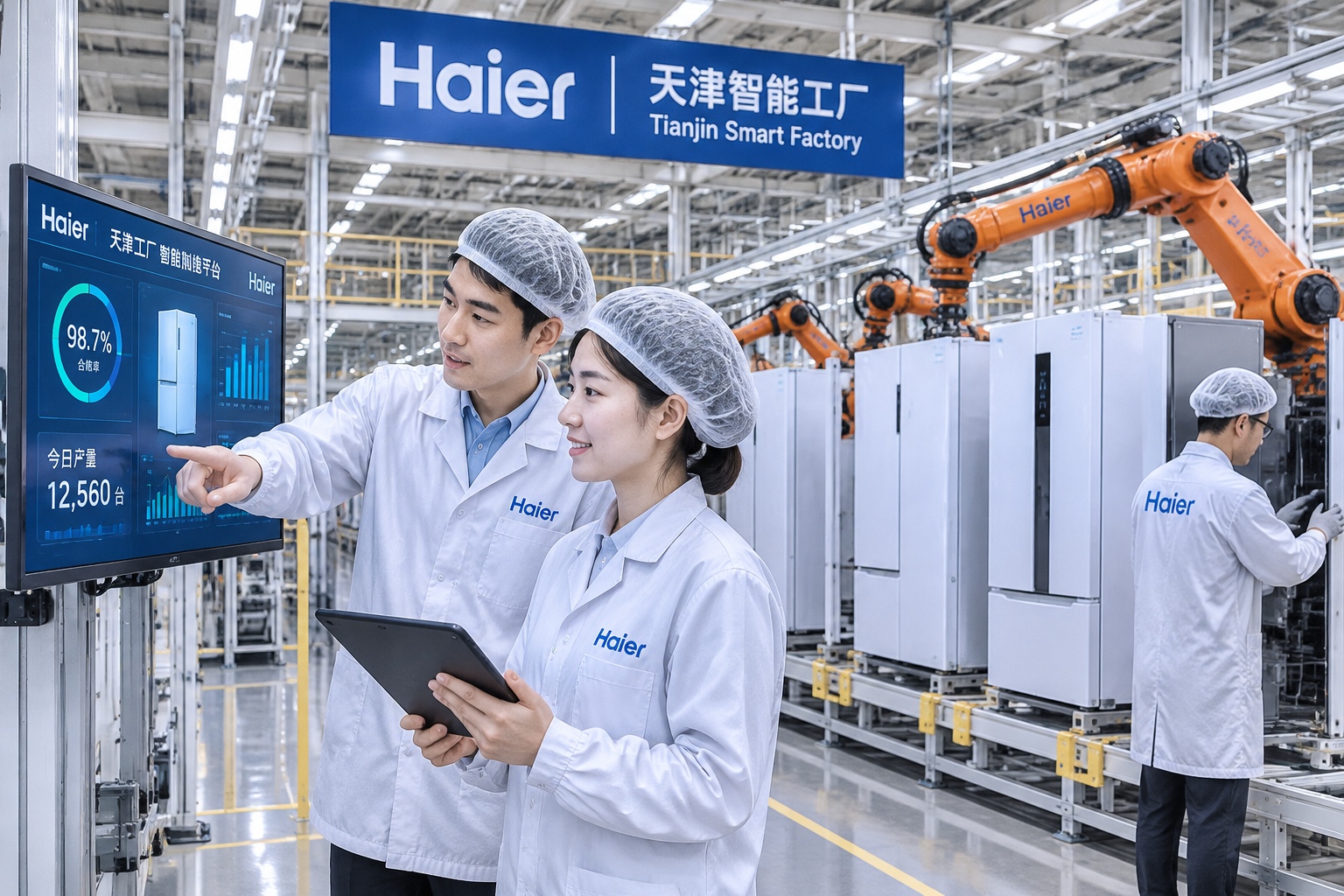
Behind the smooth demo, the company is also transforming its manufacturing. In the “smart factory” of Tianjin, robots assemble refrigerators while workers monitor production via tablets. Each refrigerator is custom-built to order, with a unique configuration that changes every few minutes on the assembly line. This is known as “mass customization”, and it’s a key part of Haier’s strategy to operate in 200 countries while catering to local tastes.
Hisense: Display technology at the core
Hisense, the younger and quieter sibling, started as a radio factory in 1969. Over the decades, it transformed into a consumer electronics giant, but its identity is firmly tied to screens and display technology. Hisense is now one of the world’s top three TV brands in terms of shipping volume, according to its own annual report. It is also the self-proclaimed leader in “laser television” — a unique projection technology that reflects images off a special screen, supposedly giving a more theatrical experience than a regular LED screen.
Hisense has poured hundreds of millions of dollars into developing its own chips for image processing and laser light sources, reducing reliance on imports. In the company’s R&D lab, engineers are testing a laser TV that can auto-adjust brightness based on ambient light, and a micro-LED display wall that can be customized to any size. These behemoths are not just for living rooms; they are also aimed at commercial use, from digital signage to luxury yacht displays.
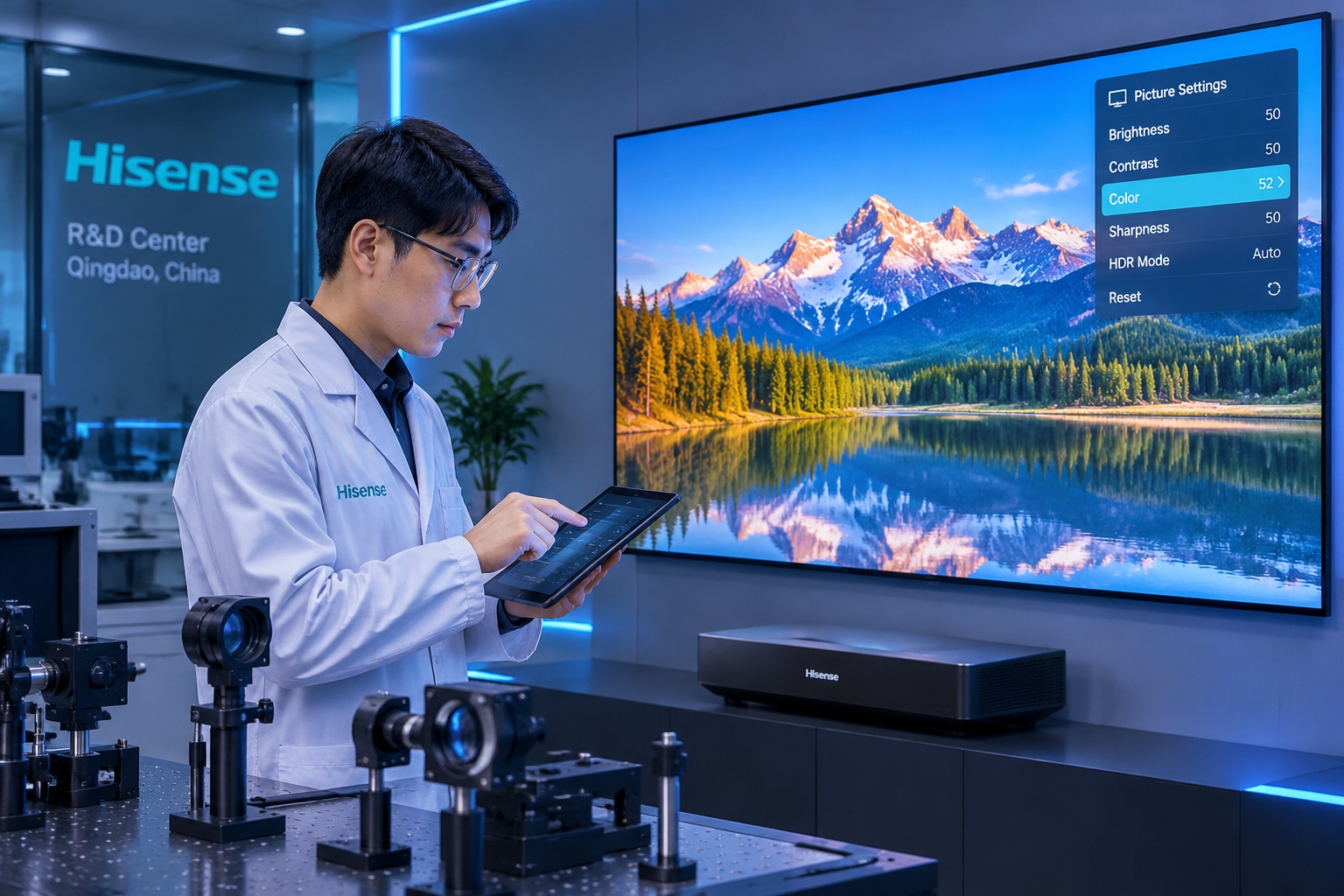
For smart homes, Hisense’s displays serve as the control hub. The TV can be turned into a large dashboard to manage other connected appliances, and the latest operating system supports voice controls in multiple languages. In overseas markets, Hisense has learned to adapt aggressively. It powered into the U.S. market by sponsoring football tournaments like the UEFA European Championship, and acquired world-famous brands such as Toshiba Visual Solutions in 2018, which gave it access to Japanese technology and a legacy of reliable picture quality.
Going global by staying local
Both companies have adopted a strategy that many Chinese companies are only beginning to embrace: they don’t just export products; they invest in local operations. Haier has seven major R&D centers and 33 industrial parks around the world. Its 2015 acquisition of GE Appliances gave it a huge foothold in the U.S., and it now sells more appliances in North America under the GE and Haier brands than any competitor. In Europe, it operates as Candy and Hoover. This “brand matrix” approach allows Haier to respect local preferences while sharing a common technology backbone.
Hisense, meanwhile, has factories in Mexico, South Africa, and Hungary, and a global network of 16 R&D centers. The purchase of Sharp America in 2015 and Toshiba TV in 2018 helped Hisense skip decades of brand-building in mature markets. The result is that in Australia, for instance, Hisense is now the second-largest TV brand; in Europe, it more than doubled its TV market share since 2016.
This global footprint also encourages a two-way flow of innovation. Engineers in Shanghai may develop an AI noise reduction algorithm for dishwashers, which is then tested at a plant in the U.S. A French design center may propose a trendy color palette for refrigerators, which later appears in showrooms in Shanghai. The companies hardly pretend to be “purely Chinese” anymore.
Smart home, Chinese style
The smart home industry in China has grown in a different way than in the West. In the U.S., consumers often choose from a patchwork of connected gadgets from Amazon, Apple, or Google. In China, the market is dominated by platforms like Alibaba’s Tmall Genie and Xiaomi’s ecosystem, but appliance makers like Haier and Hisense are fighting to own the point of entry — the appliance itself.
One major difference is the willingness to pay for ecosystem services. Chinese users are used to buying integrated experiences, whether it’s mobile payment or community group buying. So a smart home in China often means a single app connects everything, from the air conditioner to the rice cooker. Haier’s smart home app has over 30 million monthly active users, and Hisense’s VIDAA OS is embedded in millions of TVs worldwide.
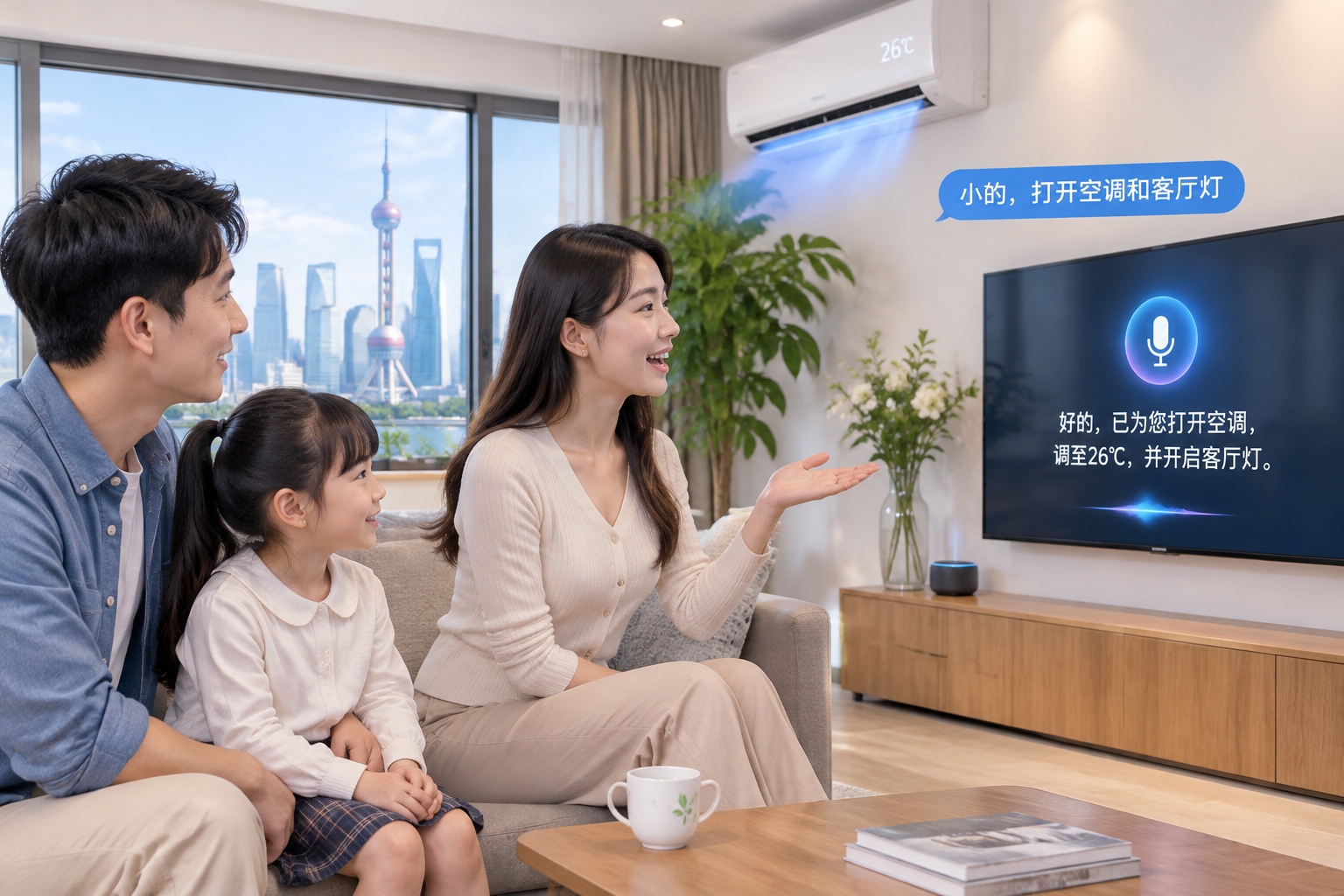
However, the two companies are also aware of the limitations. Most consumers still buy smart appliances because they are cool, not because they save time. Privacy concerns are rising, and many people shut off voice assistants for fear of being recorded. Both companies are grappling with how to build “trustworthy AI” that performs reliably without feeling creepy. For Haier, that means focusing on “scenarios” that are demonstrably useful. For Hisense, it means keeping the display non-intrusive while offering a seamless entertainment experience.
Challenges ahead
No great industry transformation comes without friction. The global chip shortage and disruptions in raw material supply chains have raised production costs for both firms. The ongoing technology war between China and the U.S. may also put pressure on their access to certain advanced semiconductors for high-end displays and AI features. Both have responded by boosting their own chip design capabilities and hunting for alternative suppliers in Asia and Europe.
There is also the challenge of consumer fragmentation. A smart home standard known as Matter, backed by Apple, Google, and Amazon, aims to make devices from many brands interoperable. Haier and Hisense have joined the standard, but they have also been investing in their own proprietary ecosystems to keep customers loyal. Striking the right balance between open and closed will be difficult.
These issues are not stopping the duo. In the first half of 2023, both companies posted double-digit revenue growth in their smart home and display businesses. They have become the flagships of “Made in Qingdao”, a city that once exported beer and now exports intelligent homes. As the sun sets over the Yellow Sea, the lights in the R&D centers remain on, testing yet another way to make our lives a little more connected.