
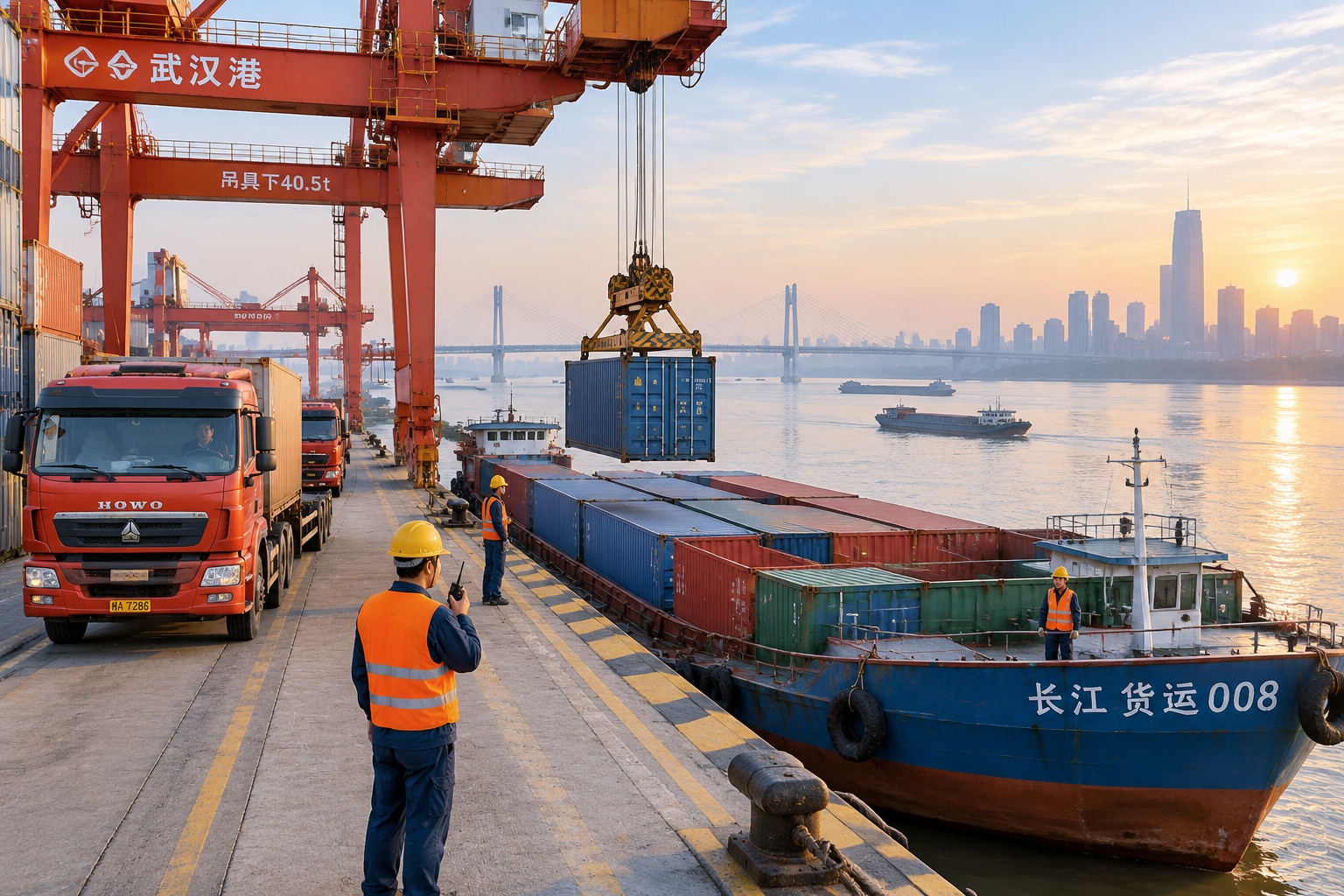

A Morning at Yangluo Port: Cranes Before Coffee
At 5:40 a.m. at Yangluo Port in Wuhan, the river already sounds like a city. Gantry cranes groan over stacks of containers. Trucks wait in a line that curves past a noodle shop. A barge captain watches the current, calculating how long it will take to reach the next lock. On the bridge above, commuters glance down at a string of box ships moving east toward Shanghai.
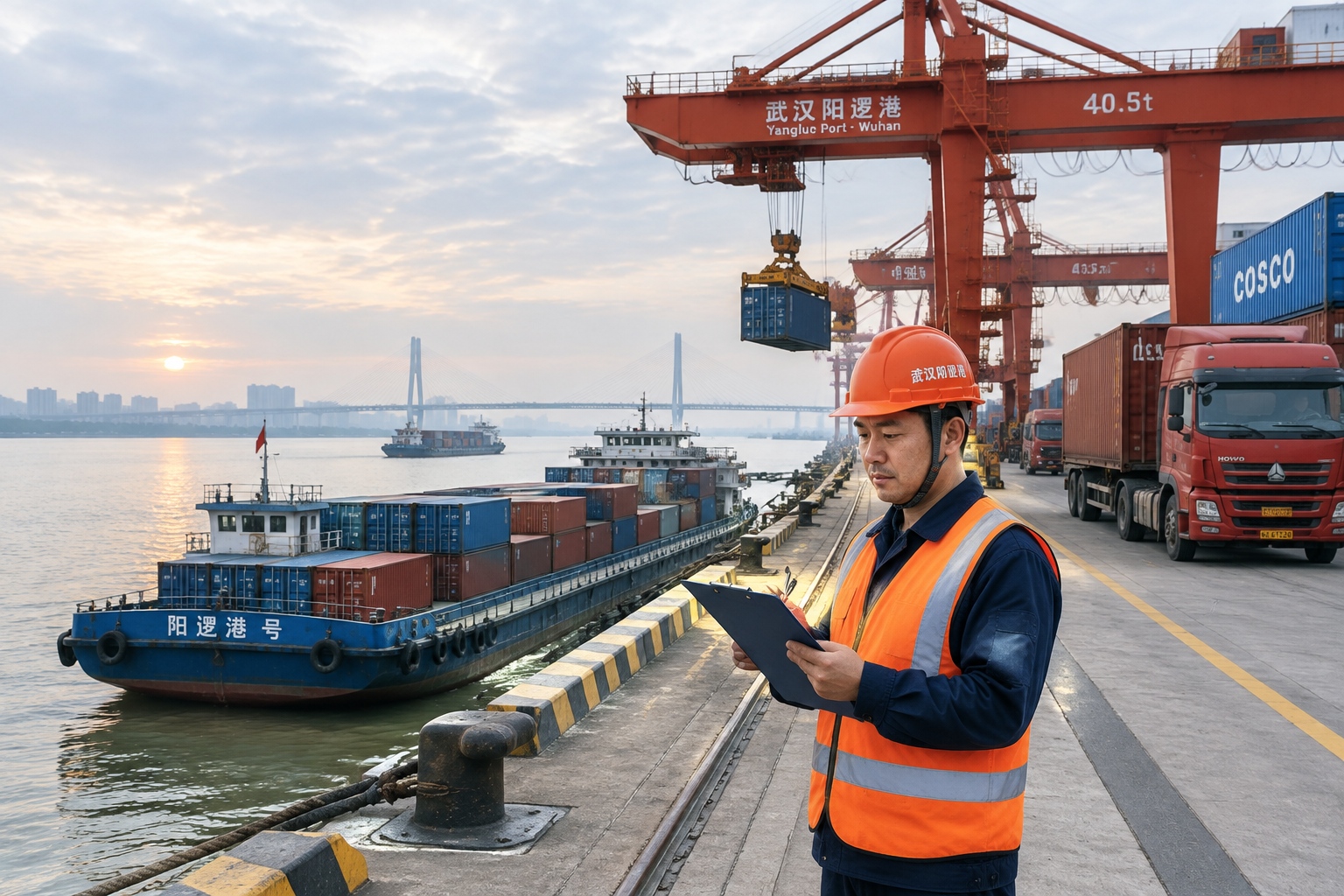
For many visitors from Europe or the United States, a river is a place to walk, photograph, or fish. The Yangtze is all of that too, but first it is a working tool. It runs about 6,300 kilometers from the Tibetan Plateau to the East China Sea. Its basin covers roughly 1.8 million square kilometers and is home to more than 400 million people. That population and the factories around it produce an enormous amount of cargo that needs to move.
What Counts as a Busy River?
Before comparing the Yangtze, the Rhine, and the Mississippi, it helps to ask what “busy” means. A river can be busy by tonnage, by number of vessels, by lock passages, by passenger cruises, or by the value of goods. Each river wins in a different category.
By raw tonnage, the Yangtze is in a league of its own. Mainline ports along the Yangtze handle more than 3 billion metric tons of cargo a year. In recent years the figure has been around 3.5 billion tons. The Rhine, Europe’s busiest inland waterway, moves somewhere in the range of 200 million to 300 million tons annually depending on water levels and how the route is counted. The Mississippi River system moves around 500 million tons a year. Those numbers are not perfectly comparable—each river has different boundaries and cargo types—but the scale gap is real.
Why the Yangtze Is So Much Busier
The first reason is geography plus manufacturing. The Yangtze flows through or near Shanghai, Suzhou, Nanjing, Wuhan, and Chongqing. These are not small river towns. They are industrial and consumer centers. Factories along the river need coal, iron ore, steel, cement, chemicals, and containers. Moving bulk goods by water is usually cheaper than rail and far cheaper than truck. A single Yangtze barge can carry thousands of tons, and a convoy can carry much more.
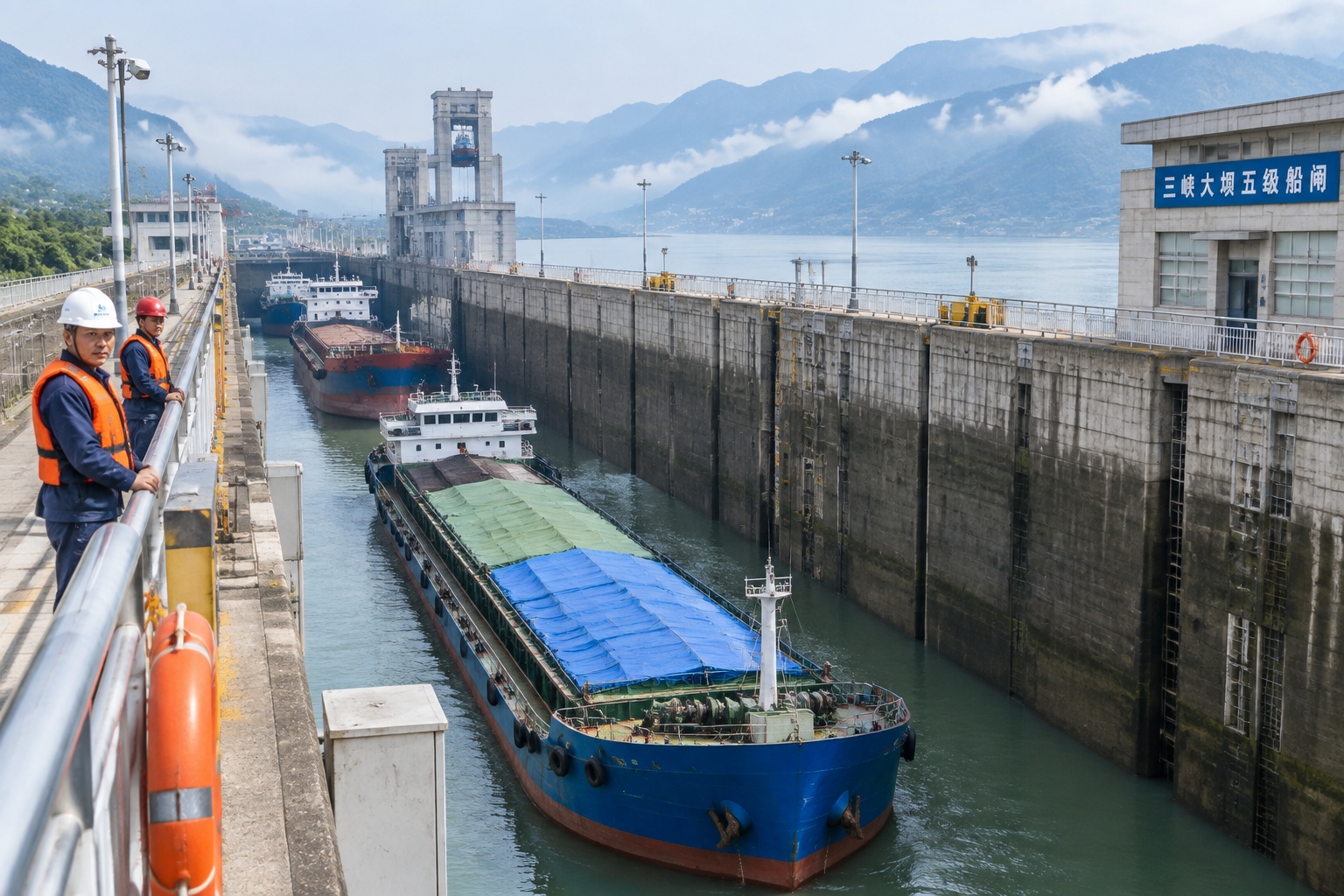
The second reason is public investment. China has spent decades dredging channels, building ports, and managing the river as a national logistics corridor. The Three Gorges Dam, completed in 2006, added a five-stage ship lock and later a ship lift to move vessels past the dam. Queues can be long, and the lock is a bottleneck, but it also keeps the upper Yangtze connected to the sea. Ports have been consolidated, rail lines have been extended to quays, and digital systems track cargo. The result is a river that behaves less like a natural feature and more like a busy highway with water.
The third reason is energy and construction. The Yangtze basin moves coal, sand, gravel, and equipment for hydropower. It also supports huge passenger ferries and cruise ships, especially in the Three Gorges area. The river is not only for exports. It is also the daily transport network for millions of people and businesses.
The Rhine: Europe’s Precise but Constrained Waterway
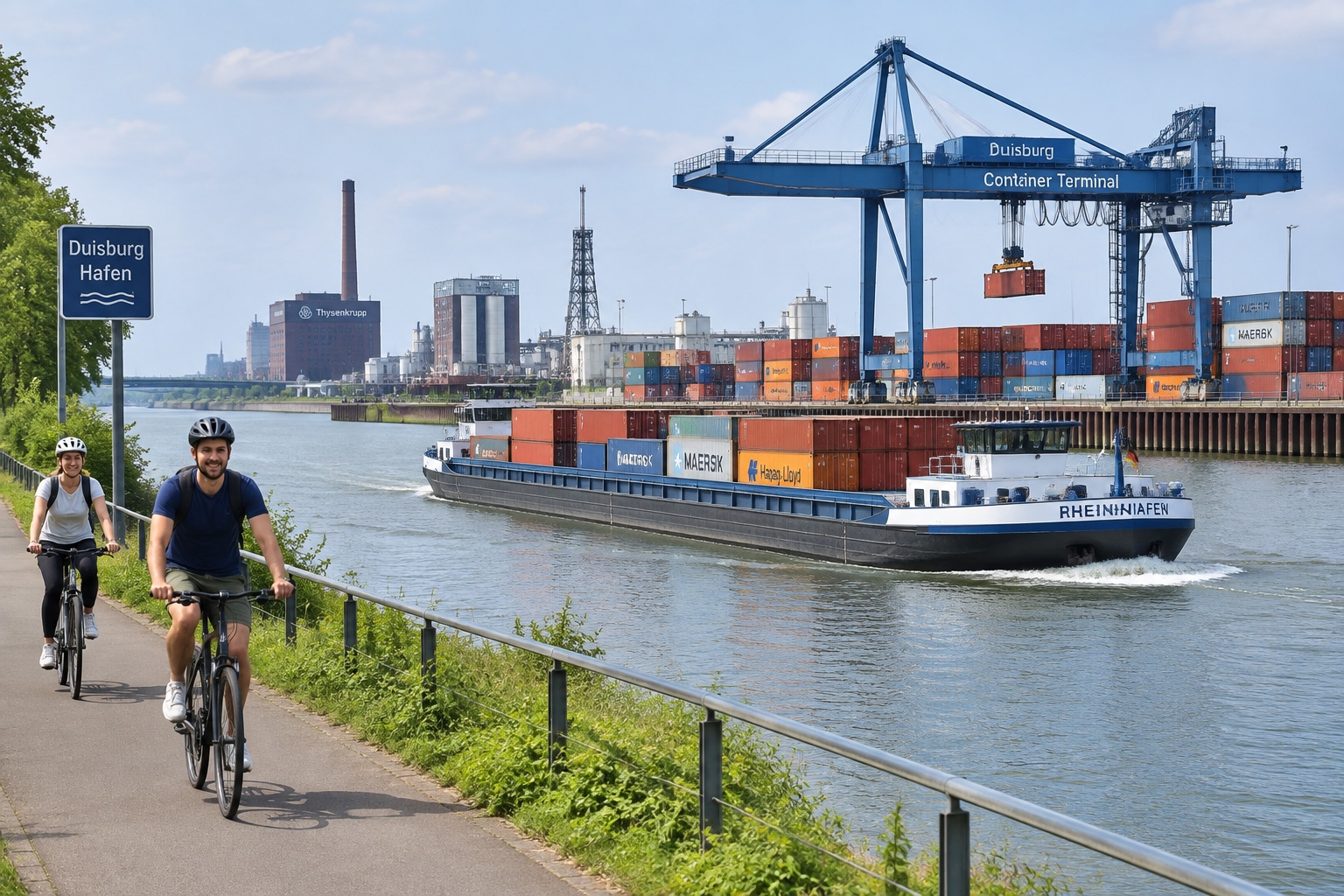
The Rhine offers a useful contrast. It runs about 1,230 kilometers from the Swiss Alps to the North Sea. It passes through Basel, Strasbourg, Mannheim, Cologne, and Rotterdam. Duisburg, in Germany, is often called the world’s largest inland port. The Rhine carries chemicals, coal, steel, cars, and containers. It is deeply integrated with Europe’s rail and road networks.
So why is its tonnage lower? Europe’s manufacturing is more dispersed. Many goods move by truck or train. The Rhine is also shared by several countries, which means different rules, languages, and priorities. And the river has a physical weakness: low water. In 2018 and 2022, drought dropped Rhine levels so low that barges could carry only part of their normal load. A barge that usually carries 3,000 tons might sail with 1,000. That raised costs and disrupted chemical plants. The Rhine is busy, but its busyness is constrained by water levels and by competition from other modes.
The Mississippi: An Export Conveyor Belt
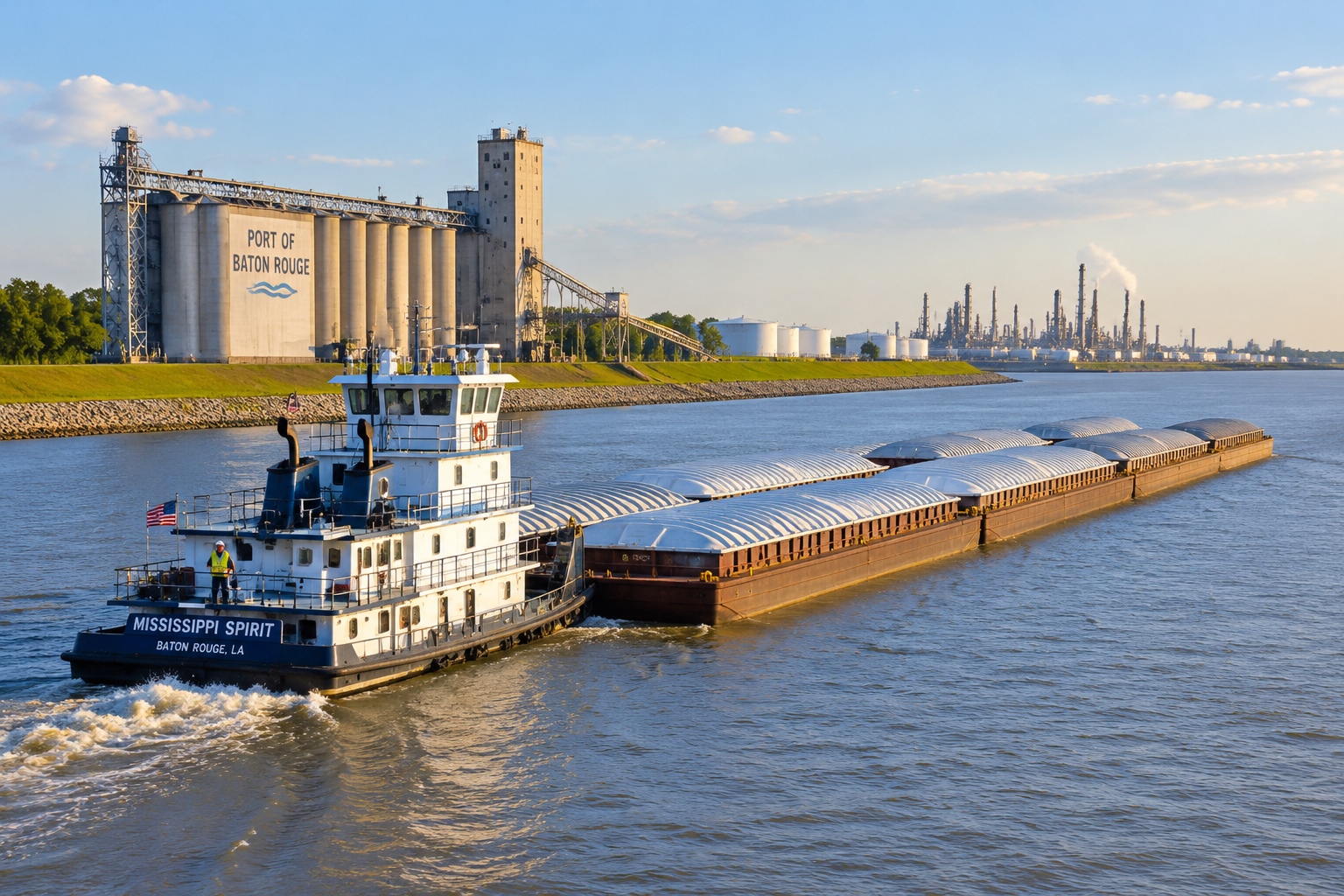
The Mississippi is about 3,766 kilometers long and drains a huge agricultural and industrial basin. Its river system moves roughly 500 million tons a year, much of it grain, soybeans, coal, fertilizer, and petroleum products. The iconic image is a tugboat pushing a long row of barges—often 15 at a time—downriver toward New Orleans and the Gulf of Mexico. One such tow can carry as much as hundreds of trucks or rail cars.
But the Mississippi is not the same kind of people’s river as the Yangtze. Many riverside cities are smaller, and the river’s main job is to move bulk exports. Aging locks and dams on tributaries slow traffic. Drought in 2022 and 2023 lowered the Mississippi and restricted barge drafts, just as low water did on the Rhine. The river is busy in harvest season and quiet in others. It is a conveyor belt more than a commuter corridor.
What It Looks Like From a Bridge
If you stand on the Nanjing Yangtze River Bridge, you see a working river. Smokestacks, cranes, container terminals, and ships of every size. If you stand on the Hohenzollern Bridge in Cologne, you see the Rhine as a postcard: cyclists, cruise boats, and barges. If you stand on the levee near Baton Rouge, you see petrochemical plants, grain elevators, and barge tows. Each view tells you what the local economy asks of the river.
For ordinary people, the difference shows up in daily life. In Wuhan or Chongqing, river jobs are common. A family might have a relative who works at a port, on a ferry, or in a shipyard. In Cologne, the river is more likely to be a weekend walk. In Baton Rouge, it is often a workplace behind a fence. None of these is better or worse. They are different social answers to the question of what a river is for.
So Which River Is Busier?
By cargo tonnage, the Yangtze is the busiest inland waterway in the world by a wide margin. By vessel density and tourism, the Rhine can feel busier. By barge-tow size and grain exports, the Mississippi has its own claim. The word “busy” depends on the lens.
That said, the Yangtze’s scale is hard to overstate. It is not just a river; it is a national logistics spine. It connects the coast to the interior and allows factories far from the sea to ship goods cheaply. It also creates pressure. Dams change sediment flows. Shipping traffic affects fish and water quality. China has responded with a 10-year fishing ban in key Yangtze waters and with pollution controls, but the river remains a place of trade-offs.
The next time you see a barge, ask three questions: What is it carrying? Where is it going? Who depends on it? On the Yangtze, the answers often include a factory, a port city, and a consumer somewhere overseas. On the Rhine, they may include a chemical plant and a cross-border supply chain. On the Mississippi, they may include a farm and an export terminal. The rivers are not rivals. They are mirrors of the economies around them—and right now, the Yangtze reflects the fastest, heaviest flow.
Start the discussion at forum.chinacomes.com