

The Dawn Standoff
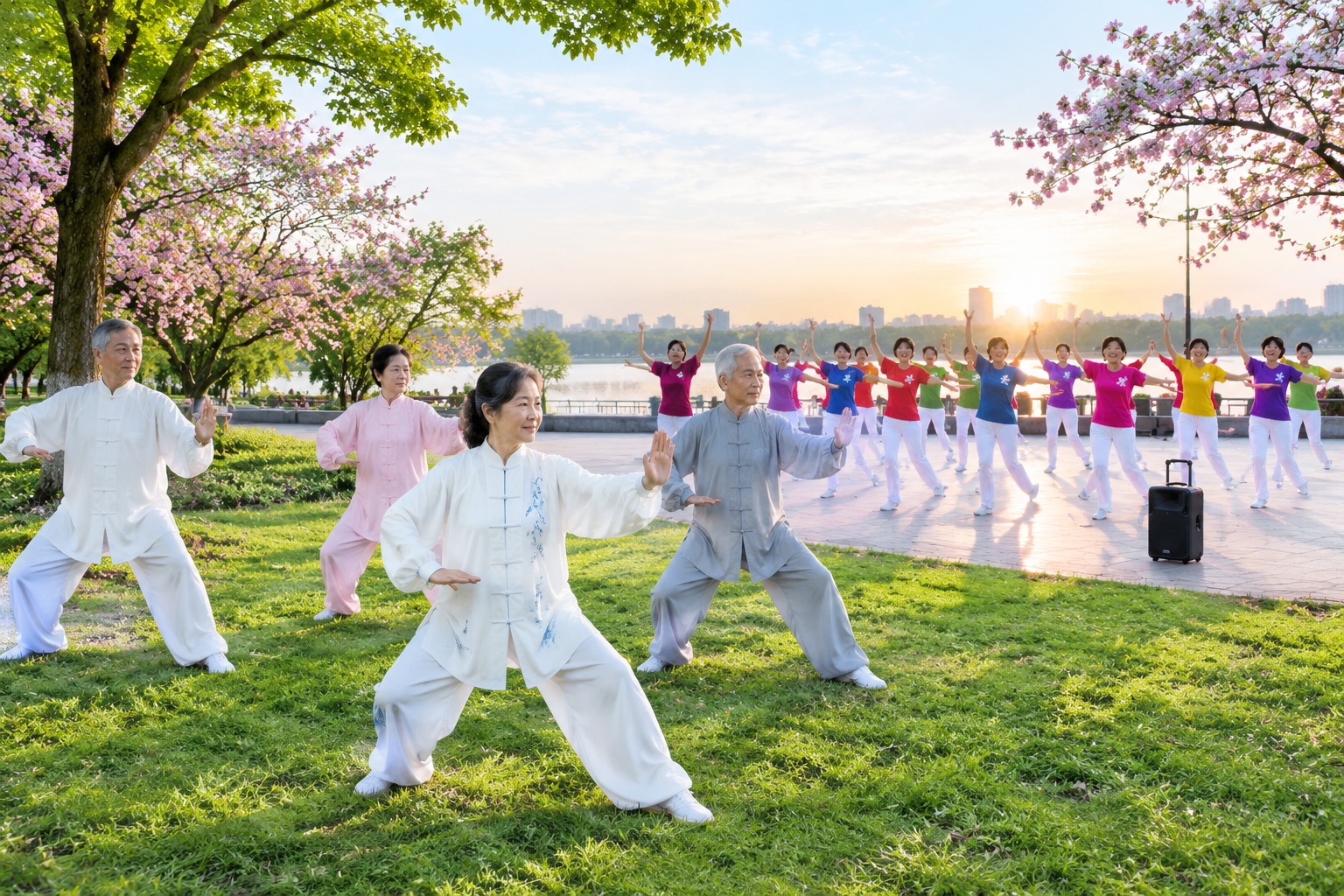
At 7 a.m., the park is still half-asleep. The only sounds are the rustle of leaves and the soft whoosh of a fan. Then, from the square near the lake, a boom box erupts with a remix of a 1980s pop song. A hundred women in synchronized neon T-shirts begin to bounce and twirl. Across the path, a man in loose white pajamas slowly unfolds his arms like a heron waking up. He doesn’t flinch. He’s a tai chi master. She’s a square dancer. They share the same grass, separated by an invisible fence of understanding.
This is the morning park in China—a place where two exercise empires compete for territory, decibels, and dignity. Call it the “Martial Arts World” (武林) versus the “Dance World” (舞林). Every dawn, they face off. But it’s not a war. It’s a wonderfully messy truce.
Two Tribes, One Park
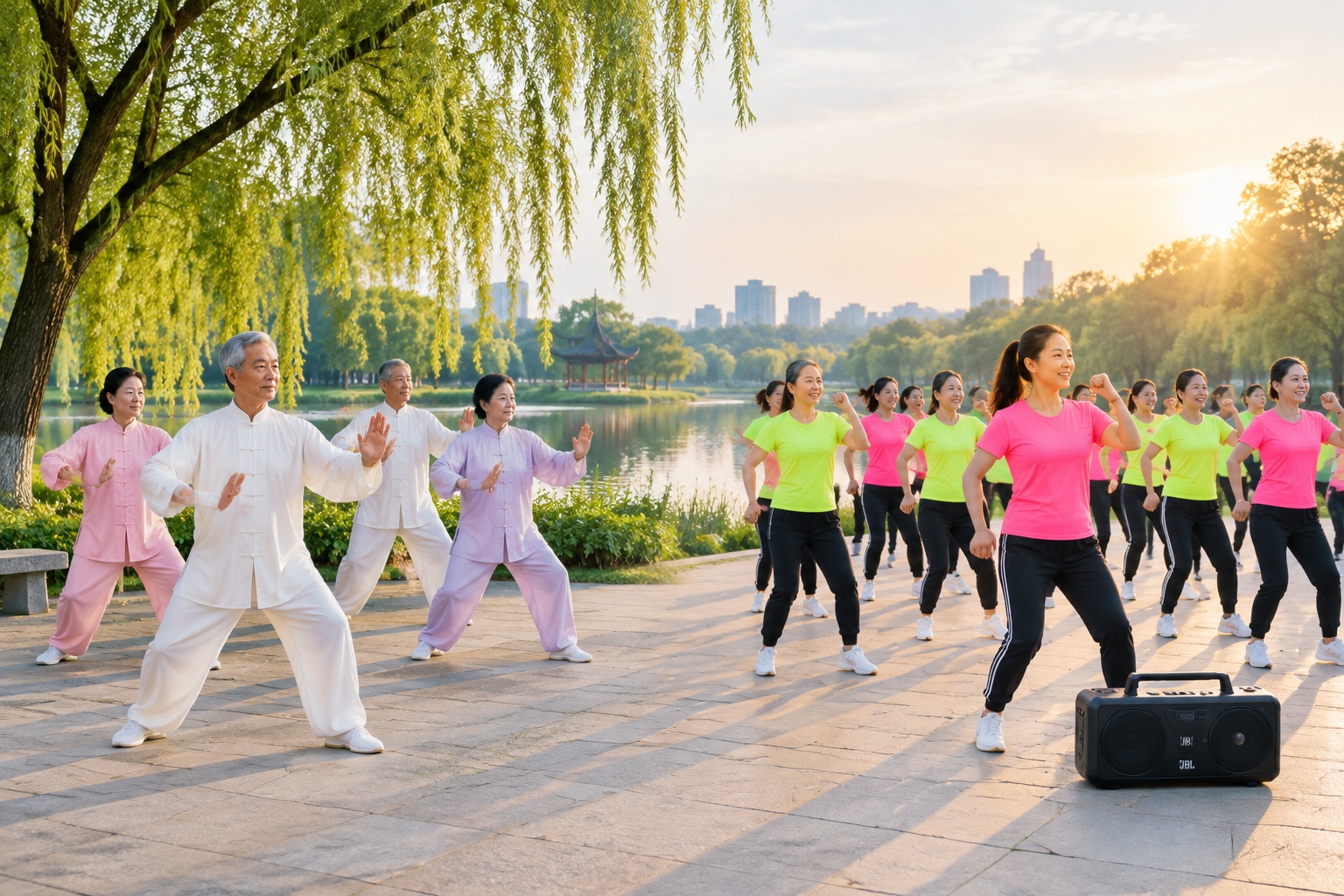
If you’ve never been to China, you might not know that parks are not just for strolls. They are open-air gyms, community centers, and stages rolled into one. And the two biggest acts are tai chi and square dancing.
Who Are They?
Tai chi is an ancient martial art that looks like slow-motion swimming. The people who practice it are often older men and women who have been at it for decades. They arrive before sunrise, carry their own swords or fans, and choose a spot under a tree where the air is still. They move with the focus of tea masters in a ceremony. Greetings are whispered. Respect is automatic.
Square dancing (guangchang wu) is the loudest thing you’ll ever see at 6:30 in the morning. It’s a mass dance, usually led by a woman with a wireless mic and a playlist of upbeat hits. Participants range from retirees to the occasional office worker who just wants a good cardio session. They dance in lines, follow simple choreography, and smile a lot. Their motto: if it doesn’t hurt your ears, you’re doing it wrong.
The Moves
Tai chi is about internal energy, balance, and the slow control of every joint. The postures have poetic names like “White Crane Spreads Wings” or “Wave Hands Like Clouds.” It’s meditative, almost silent. Square dancing is about external energy, coordination, and the joy of moving in sync with a crowd. The steps are simple enough for anyone to follow, but the arms fly and the hips sway. It’s aerobic, joyful, and very, very audible.
The Music
Tai chi doesn’t need music. The practitioners listen to their own breath, or occasionally a tiny speaker playing a bamboo flute. Square dancing, on the other hand, treats the park as a concert venue. The bass thumps, the treble screeches, and the beat is the dictator. Everyone moves on the same count: 1, 2, 3, 4. Or as some locals joke: “One two three, one two three, kick the dust.”
The Territory
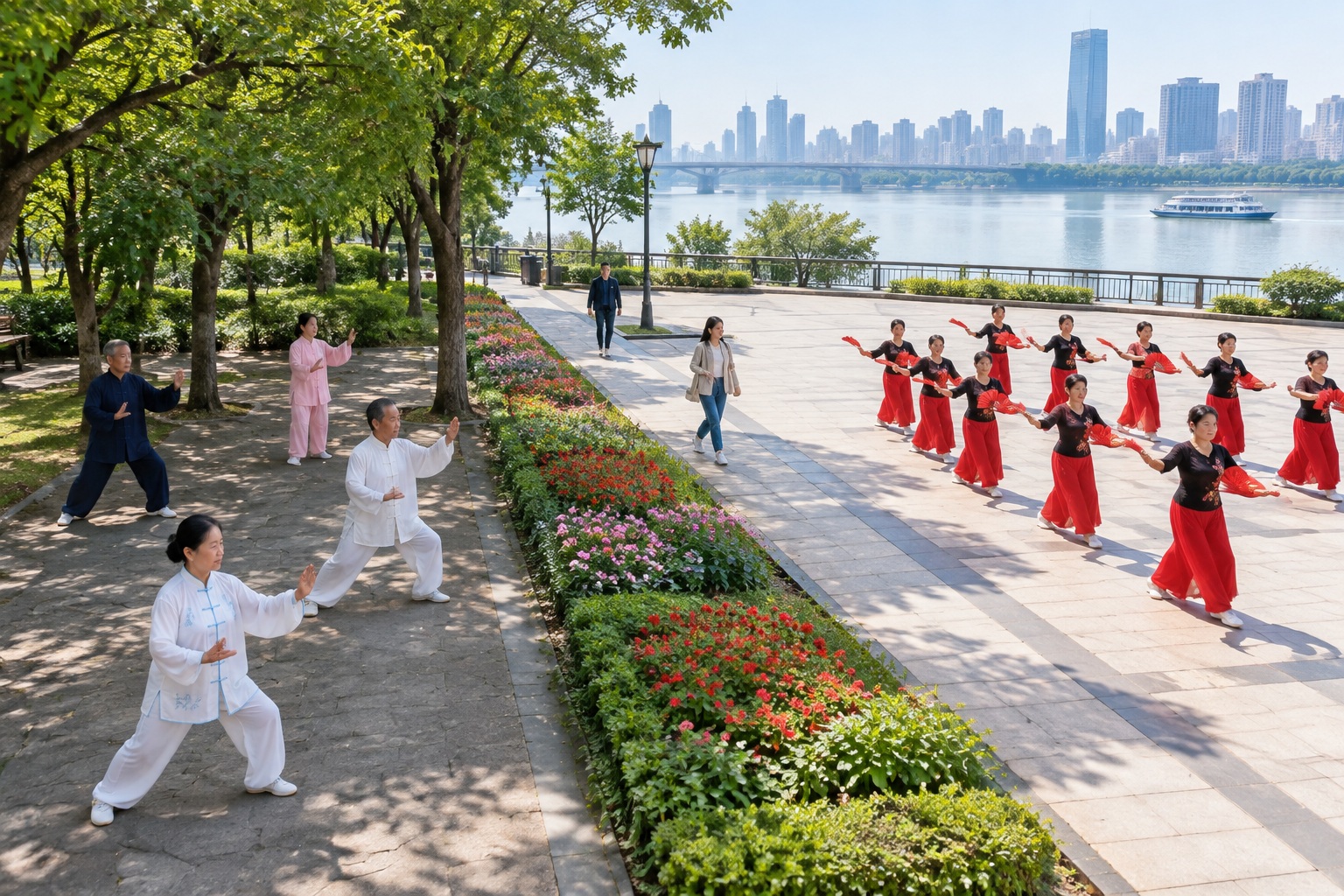
Every park has its zones, decoded through years of silent negotiation. The square near the main gate is the dancers’ domain—flat, open, and visible to all. The lakeside terrace or bamboo groves are the tai chi sanctuaries—shaded, quiet, and far from the speakers. Occasionally, a dancer rolls a cart with a sound system into shaded territory, and you see raised eyebrows. But the war is fought with looks, not words.
Beneath the Clash, a Shared Rhythm
Here’s the thing about the “struggle” between tai chi and square dance: it’s mostly friendly. In many parks, they even swap places. The tai chi crowd leaves by 8 a.m., and the dancers take over the quiet spots for a late-morning session. Or a grandpa finishes his tai chi routine and walks over to join the dance line. His moves are a little stiff, but no one laughs. Instead, they make room.
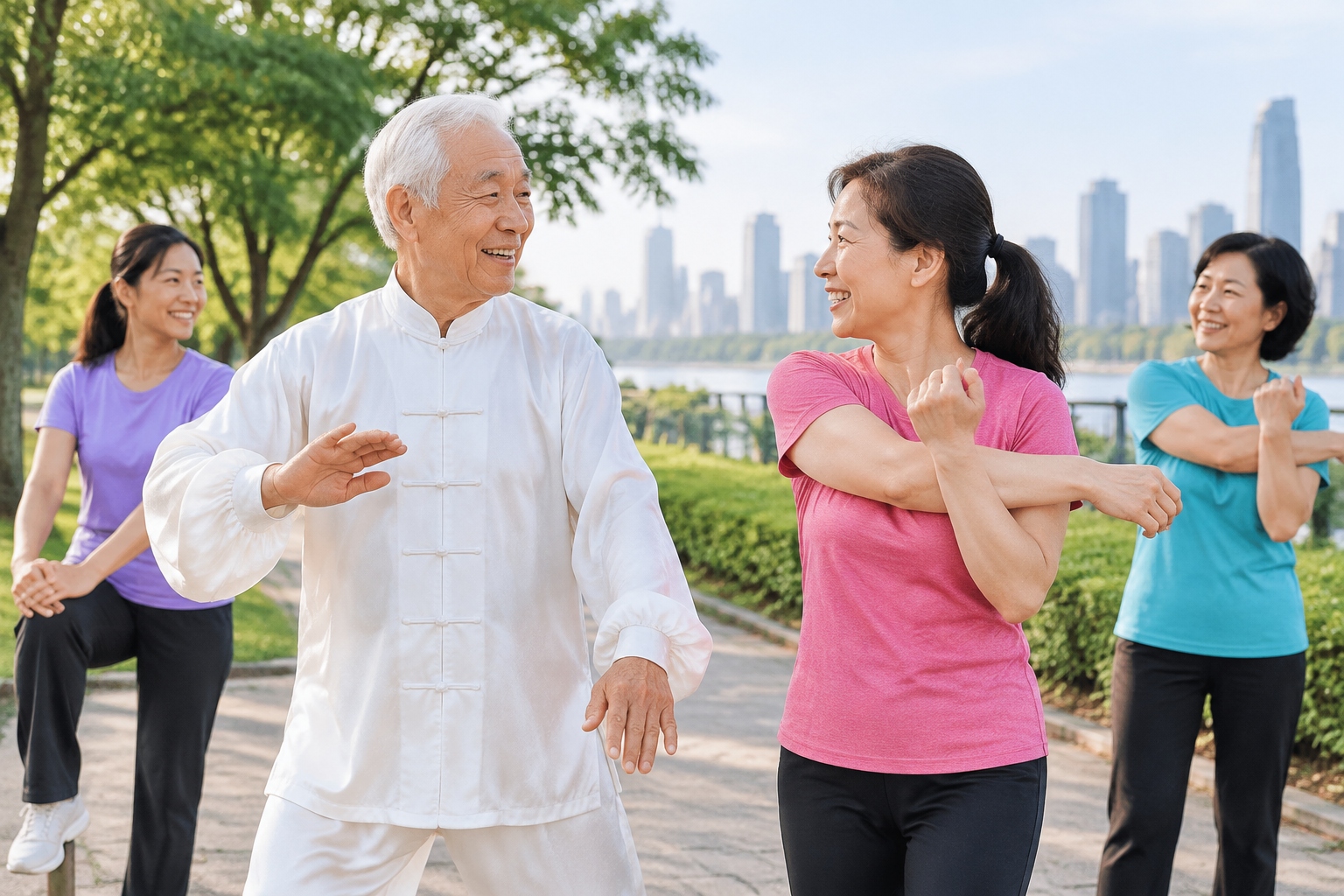
The two styles reflect a deeper truth about Chinese public life. There’s a saying: “Everyone has their own ladder.” The park allows people to climb in their own way. Tai chi offers a connection to tradition, a way to keep the body quiet and the mind sharper. Square dancing offers community, a chance to escape the loneliness of aging and to feel the buzz of a collective heartbeat. Both are valid. Both are essential.
More Than Exercise
Square dancing has grown so powerful that it sometimes triggers noise complaints. In recent years, some cities have issued guidelines on volume and hours. But for millions of retirees, the dance is their social lifeline. It’s where they hear gossip, make friends, and even find romance. On a good night, a square dance group can have 200 participants, with spectators applauding from the benches.
Tai chi, on the other hand, is often practiced in small groups guided by a master who offers corrections with a gentle tap of a stick. The groups have names like “Morning Dawn Tai Chi Club” and they organize annual competitions. Members take turns bringing tea. It’s a social network too, just with more breathing.
Can They Coexist?
Yes, and mostly because both sides understand the unwritten rules. Respect the other’s space. Keep the volume down during tai chi hours. And when you cross paths, nod. “The park is big enough for both of us,” says Mr. Chen, a 68-year-old tai chi regular in Beijing’s Temple of Heaven Park. “They have their energy, and we have ours. The trees don’t mind.”
In some parks, there is even a middle ground: groups that start with tai chi warm-ups and then transition into a lively folk dance. They call it “tai chi dancing”—a hybrid that would make both ancestors and pop singers proud.
The Verdict
So which one wins? Neither. And both. The park is a living stage where the past and the present perform side by side. The old martial artist and the new dance queen both claim the morning for themselves, but they do it without swords or lawsuits. They just share the sunrise.
If you ever visit China, get up early. Look for the big square with the neon shirts. Then walk ten minutes to the bamboo grove. You’ll see two worlds, moving at different speeds, yet somehow in the same rhythm. It’s a beautiful way to start the day.
Start the discussion at forum.chinacomes.com