
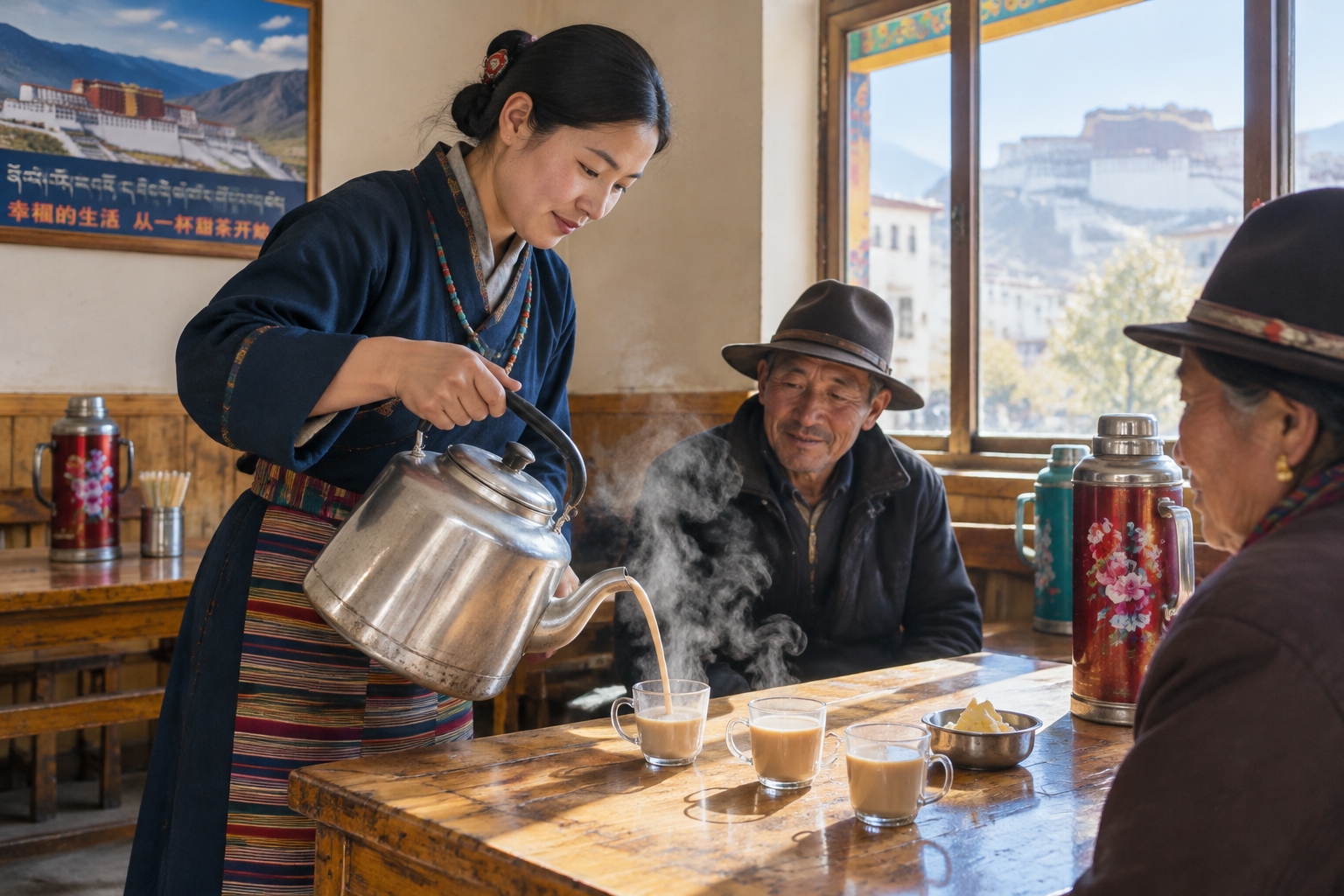

8 A.M. at a Lhasa Sweet Tea House
It is 8:10 on a Tuesday morning in Lhasa, and the sun has just cleared the roofline of the Jokhang Temple. Inside the Penpa Sweet Tea House, a few blocks from the Barkhor, the air smells of milk, black tea, and faint woodsmoke. A woman in a dark blue chuba pours sweet tea from a steel kettle into small glass cups. The cups clink against saucers. Someone laughs at the back table. Nobody is in a hurry.
A glass of sweet tea costs 1 yuan. Most customers order three or four, plus a bowl of thukpa — Tibetan noodle soup — or 藏面 (zang mian), a simple yellow noodle dish with a few chunks of yak meat and a scoop of broth. Breakfast for two rarely passes 20 yuan.
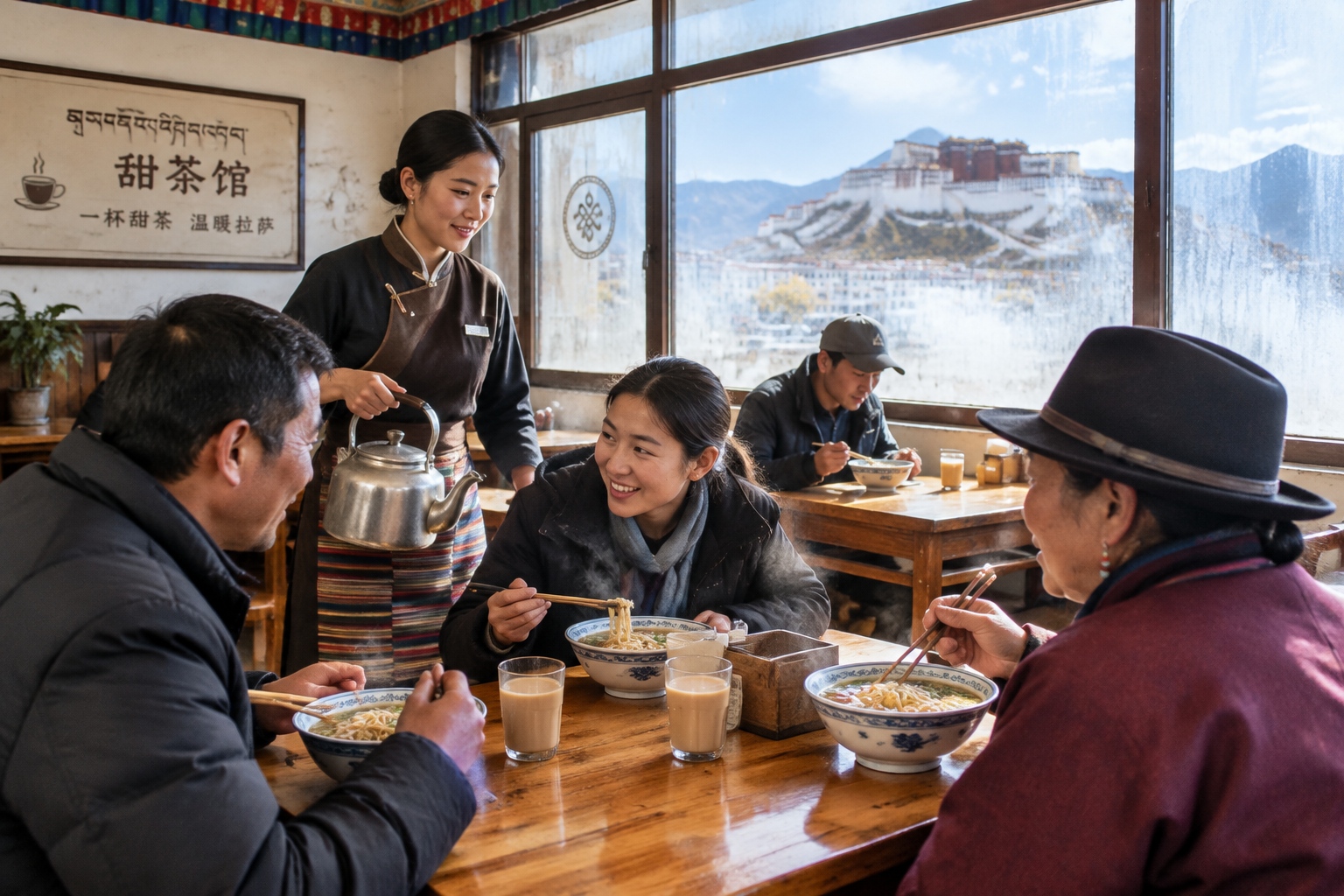
The sweet tea house is not a tourist invention. It is a working institution. Retired nomads from Nagqu sit next to government office workers. A monk in red robes scrolls his phone. Two college students review notes for an exam. The tea keeps coming until you turn your cup upside down on the saucer, a quiet signal that you are done.
Sweet tea (cha ngamo) is different from butter tea (po cha). Butter tea is salty, thick, and made with yak butter, brick tea, and salt. Sweet tea is black tea with milk and sugar, introduced through trade routes from India and Nepal more than a century ago. In old Lhasa, sweet tea was a luxury. Now it is everyday.
Why Butter Tea Still Matters
For anyone unfamiliar with Tibetan food, the two drinks are the easiest entry point. Butter tea is not a casual beverage; it is calories, warmth, and hospitality. Herders on the Changtang plateau drink dozens of cups a day to stay warm and hydrated at 4,500 meters. When you visit a Tibetan family, the host will refill your cup before it is empty. Leaving it full is a small compliment.
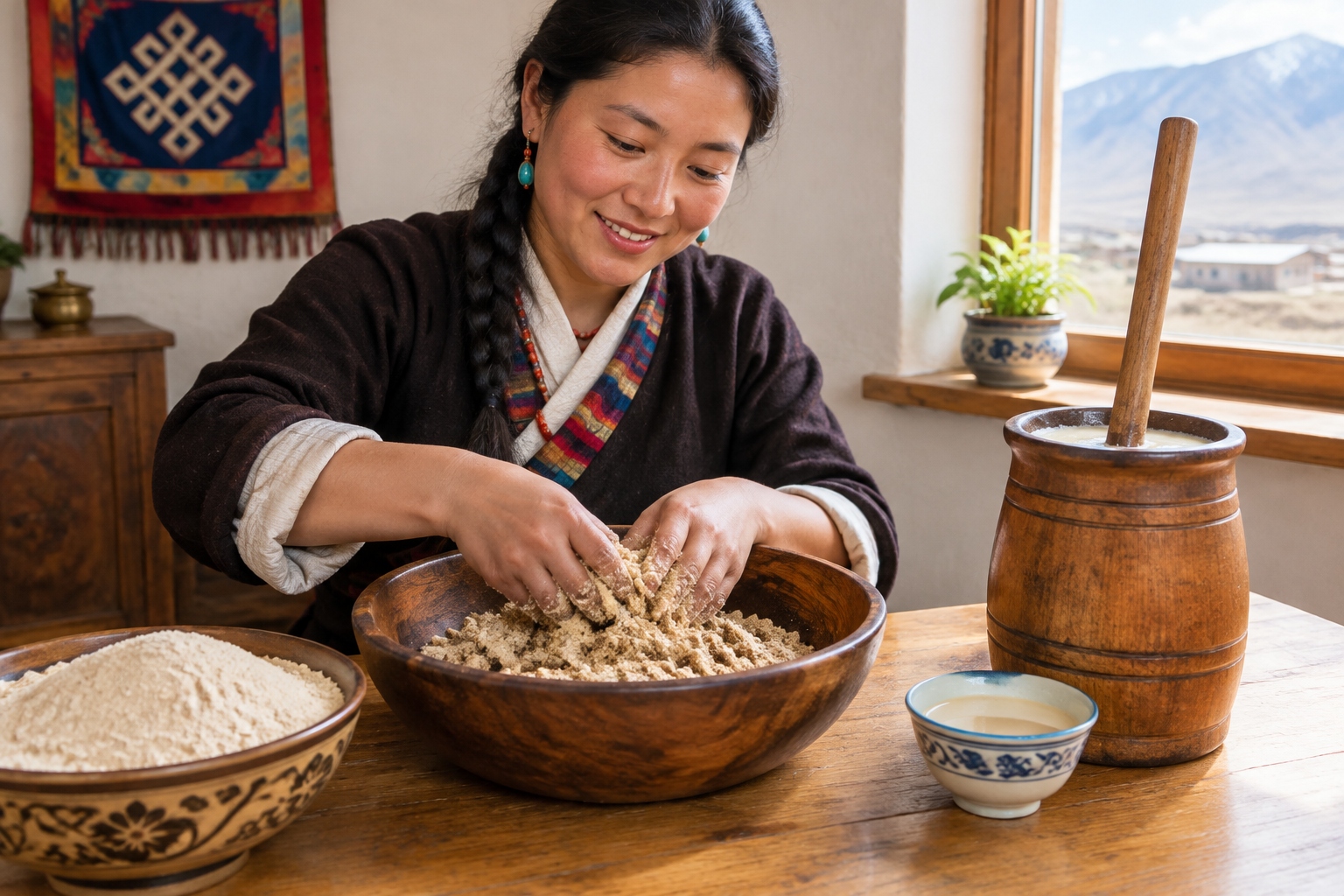
Tsampa — roasted barley flour — is the other staple. You mix it with butter tea in a bowl, knead it with your fingers, and eat it as a dough. It tastes nutty, slightly smoky, and filling. In Lhasa, office workers often skip tsampa at lunch and eat it at home in the evening. In farming villages, it is still breakfast.
Then there is Shoton or Linka season — the summer picnic festivals when families spread carpets in parks like Norbulingka and eat, drink, and sing for hours. Sweet tea houses are busy year-round, but during Linka they pack fruit, thermoses, and bags of tsampa into cars and head for the grass.
The Barkhor: Walking as Prayer
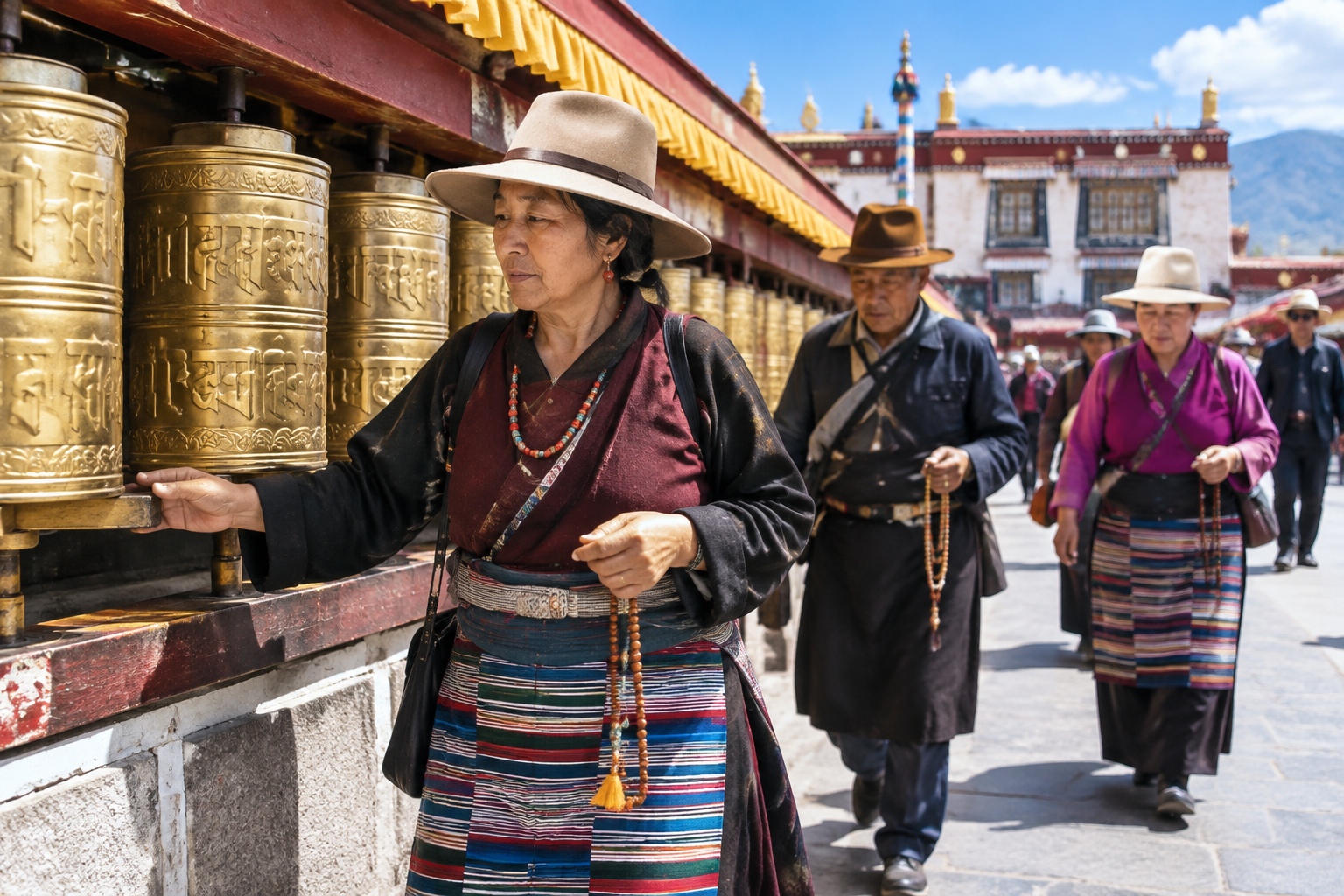
By 9:30, the Barkhor circuit around the Jokhang is already crowded. Pilgrims walk clockwise, some spinning hand-held prayer wheels, some counting beads, some murmuring mantras. The street is a loop about one kilometer long. Most people walk it three times, seven times, or 108 times. It is not a performance. It is a commute of the soul.
A woman in her seventies, wearing a faded pink headscarf, stops at a incense burner. She adds a pinch of juniper. Smoke rises. She bows slightly and continues. A young father carries a toddler on his shoulders. Two teenage girls in sneakers and puffer jackets walk fast, laughing, prayer beads in their hands.
The Barkhor is also a market. Vendors sell prayer flags, yak butter lamps, rosaries, and Chinese-style milk tea. A shopkeeper tells me business is slower than before the pandemic, but local customers still come every morning. “They buy butter for the lamps,” he says. “They buy tea for themselves.”
Families Moving Between Farm and City
Lhasa’s population is around 900,000, and it has grown fast in the past two decades. Many families now live between two worlds. A father may herd yaks in Damxung County during the summer and drive a taxi in Lhasa in winter. A mother may run a small shop near the Barkhor while her daughter attends a boarding school in the city.
Education is the main reason families move. Tibet has a 15-year free education policy, from kindergarten through high school. In rural areas, boarding schools provide meals, dormitories, and Tibetan-language classes alongside Mandarin. Parents who never finished primary school now sit in tea houses comparing their children’s exam scores.
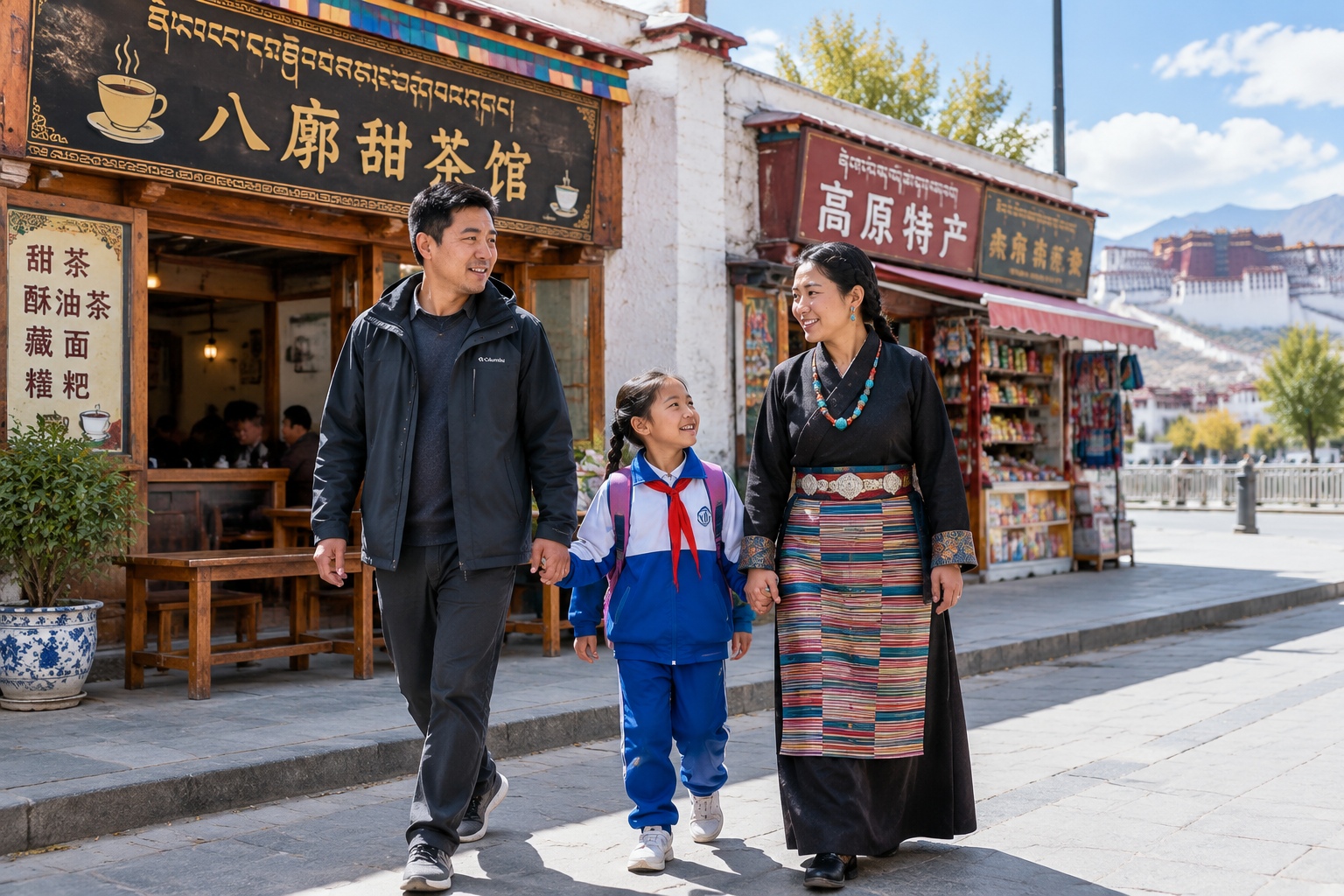
Not everything is easy. Housing in Lhasa is expensive. Jobs are concentrated in tourism, construction, and government services. Young people who grew up in villages sometimes feel caught between the expectations of their grandparents and the pace of city life. But the tea house is a leveler. A bowl of noodles costs the same for everyone.
What a Visitor Can Learn from a Tea House
If you visit Lhasa, spend one morning doing nothing. Sit in a sweet tea house. Order a glass of tea and a bowl of thukpa. Watch who comes in. Listen to the mix of Tibetan, Mandarin, and the clatter of cups. Then walk the Barkhor. You will not understand everything. That is fine. The tea house does not ask you to understand. It asks you to sit down, drink, and let the sun move across the floor.