
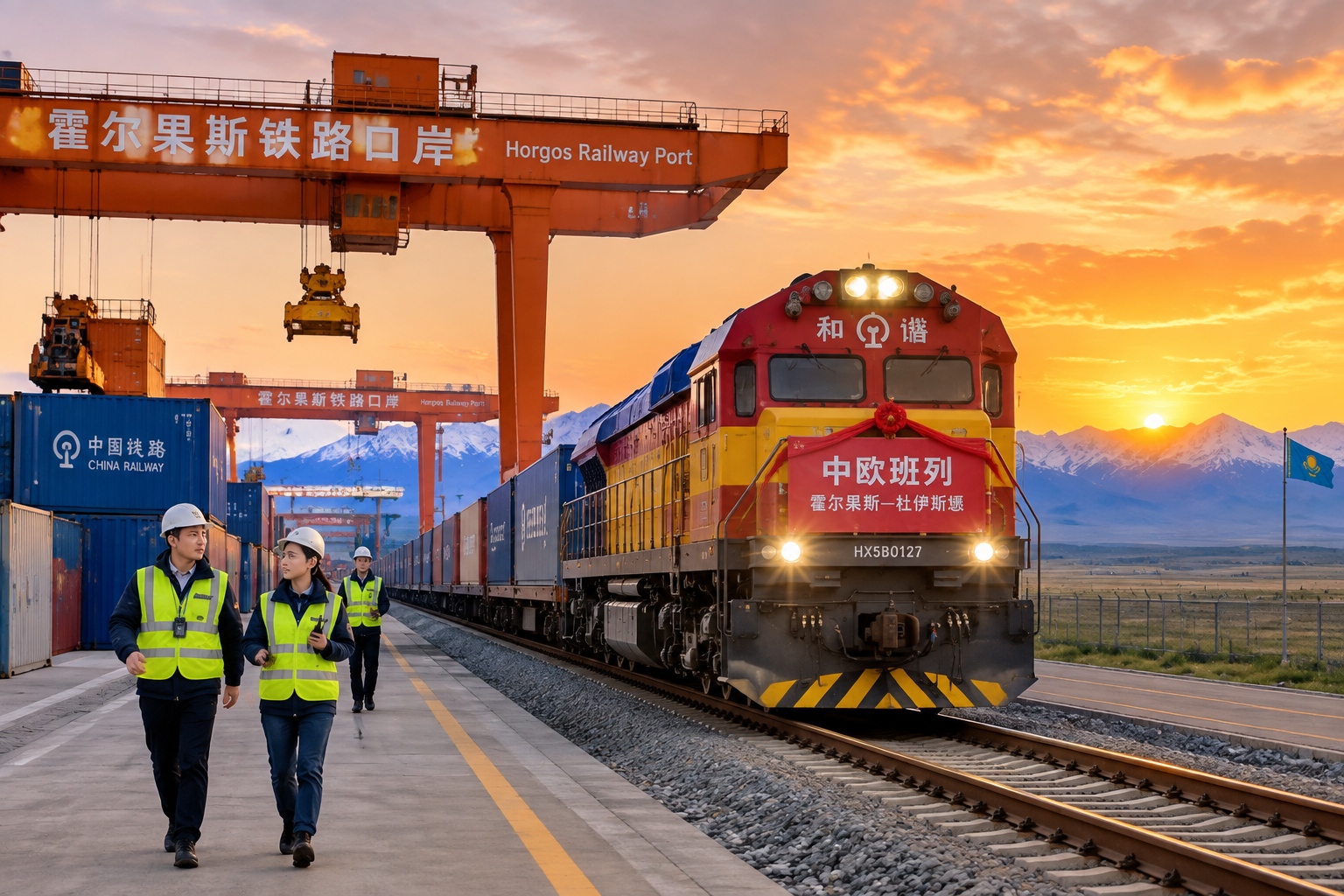

At 3 a.m., the Horgos rail port in Xinjiang is still buzzing. Cranes lift containers the size of classrooms, steel wheels squeal, and the air smells of diesel and dust. Twenty-five-year-old Yang Chen sits in a glass office, watching her screen refresh with a new manifest. She’s been on duty since midnight, clearing a consignment of mobile phones from Shenzhen. ‘No rest tonight,’ she says, sipping tea. ‘If I delay this train, a factory in Warsaw will get angry.’
Yang is a customs broker at Horgos, a border city with Kazakhstan and one of the busiest hubs for China-Europe freight trains. Most people outside China have never heard of it. But if you order a product online from Europe or Central Asia, there’s a chance it traveled through this stretch of railway.
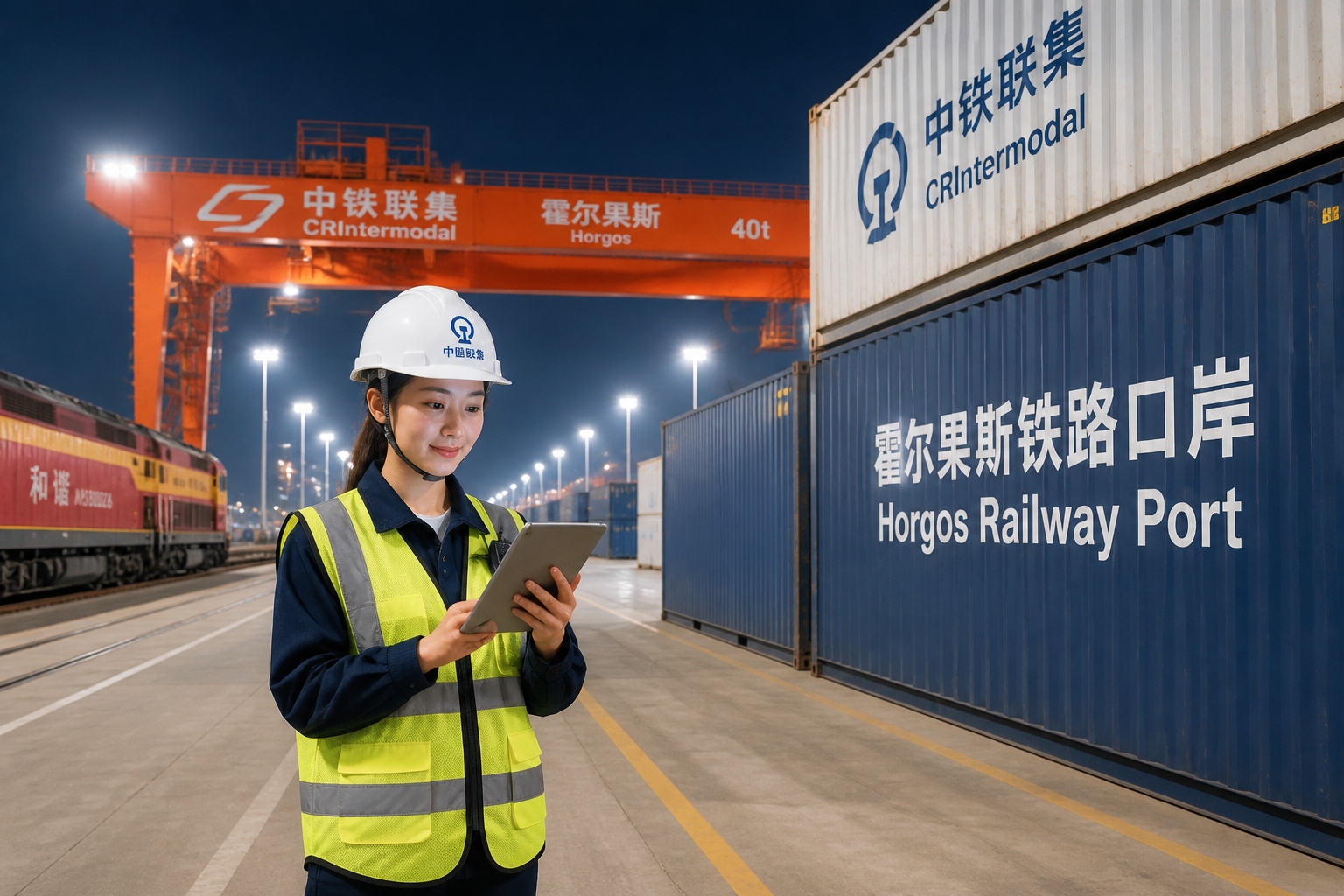
What Is Horgos and Why Is It Important?
Horgos sits at the western tip of China, along the ancient Silk Road. For centuries, it was a small trading post. Today, it’s a railway gateway connecting China to Kazakhstan, Russia, and Europe. The China-Europe freight train launched in 2011 as an initiative to speed up trade between Asia and Europe. Since then, thousands of trains have crossed the border here, carrying electronics, garments, auto parts, and even fresh fruit.
The reason Horgos matters is simple: railway gauges differ. China uses standard gauge, while Kazakhstan uses a wider Russian gauge. Trains can’t just cross the border; containers must be lifted and placed onto new wagons. That physical transfer happens at large terminals like Horgos. It’s a complex choreography, and young people are the ones doing it.
Meet the Young Workers Behind the Trains
Yang Chen grew up in Urumqi, the capital of Xinjiang. After graduating in foreign trade, she saw a recruitment video about Horgos and packed her bags. ‘People said it was a godforsaken desert town,’ she laughs. ‘But I saw cranes, railway tracks, and opportunity.’
Her daily routine is a mix of digital platforms and face-to-face negotiation. ‘I check HS codes, weight certificates, and container seals. Then I send the data to our Kazakh counterparts. Sometimes they call back about a discrepancy. We argue, we joke, we fix it.’ On a good night, she clears more than 500 containers. On a bad one, delays mean angry phone calls at 2 a.m.

On the ground, there’s Alim, a 29-year-old Uyghur truck driver. He used to help his father herd sheep near the Tianshan mountains. Now he drives a dozen trips a day between the port and the nearby border post. ‘I used to count sheep; now I count containers,’ he says with a grin. ‘Each container is like a story. One time it was full of Turkish ceramics. Another time, German beer.’ Alim’s favorite part is meeting international drivers. ‘We don’t need to speak the same language. We share a cigarette, and he shows me pictures of his kids.’
Then there’s Zhang Wei, a 26-year-old freight forwarder who returned to Horgos after working in Shanghai for three years. ‘In Shanghai, I was just one of thousands of people in a skyscraper. Here, I can see the physical train and know that my clients’ goods are safe,’ he says. Zhang manages shipments for small companies that sell on European online platforms. ‘If a product from Guangzhou needs to reach Berlin in 12 days, we design the rail route and schedule. It’s like arranging a blind date between a container and a train.’
How Does the Port Run Day and Night?
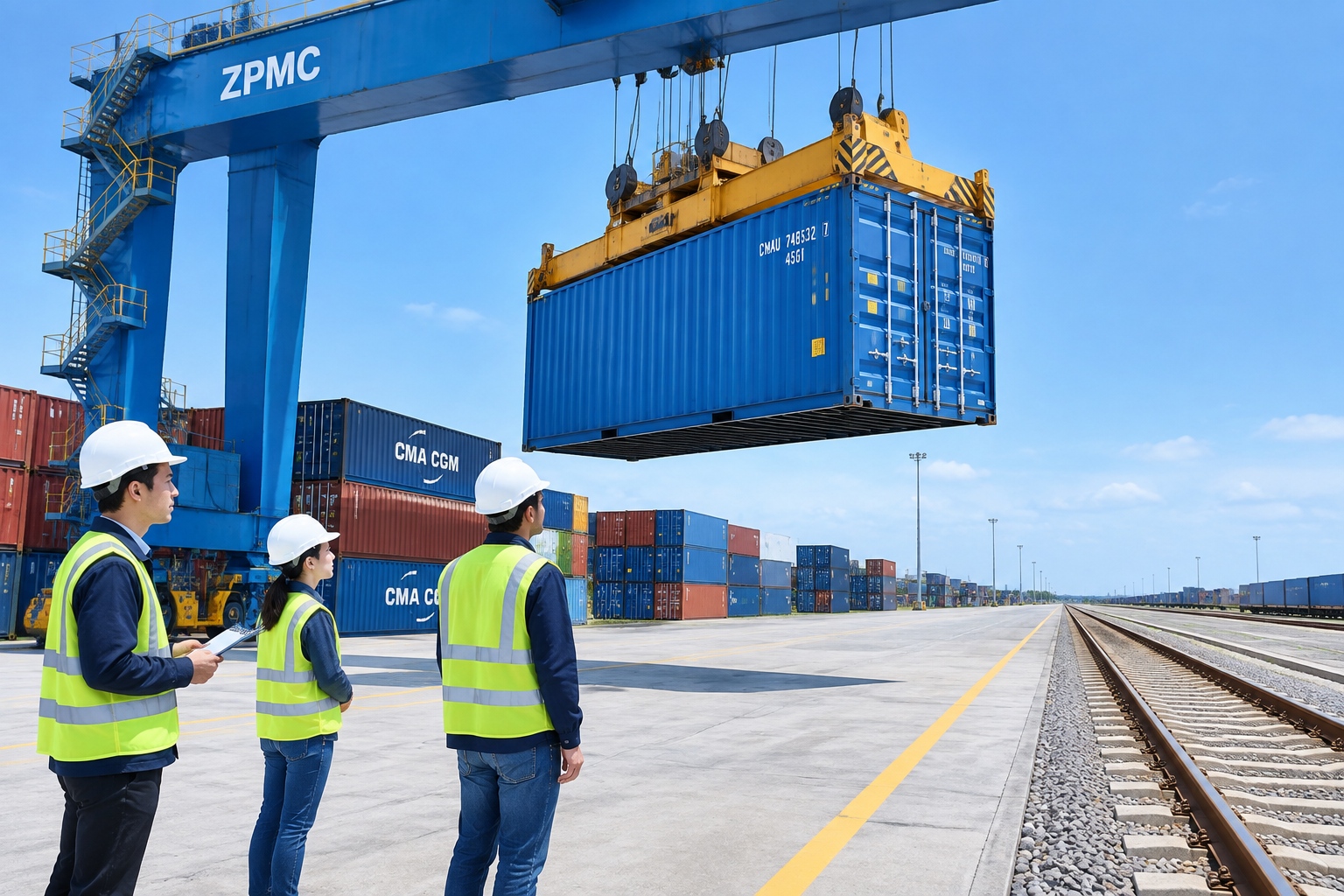
The heart of Horgos port is the transshipment yard. Enormous gantry cranes roll along rails, grabbing containers by their corners and moving them from Chinese wagons to Kazakh wagons. It’s a dance of gloved signalmen, radio chatter, and swinging steel. Workers wear high-visibility vests and hard hats, even in summer heat that can reach 40°C.
Yang says her job is all about precision. ‘A container is 40 feet long and weighs 20 tons. If the crane operator misjudges by one centimeter, it could hit another container. That’s why we follow strict protocols.’ But the pressure is mostly mental. ‘We have a daily quota of trains. If one train is late, it creates a domino effect. I’ve seen colleagues cry during the peak season.’
Why Would Young People Choose a Border Town?
It’s a question that surprises even locals. The salary is decent—higher than in many inland cities—but the lifestyle is unusual. ‘There are only a few main streets, and everyone knows everyone,’ says Yang. ‘But we have a sense of purpose. I’m not just pushing paper; I’m part of a global supply chain.’
Young people also enjoy the cross-border vibe. Since China signed a visa-free agreement with Kazakhstan, it’s possible to pop over for lunch. ‘A group of friends and I took a bus to the Kazakh side and bought honey and chocolate,’ says Zhang. ‘It felt like a mini trip to Europe.’
The city has invested in new amenities to attract talent. There’s a modern hospital, sports facilities, and a night market that serves both Uyghur and Kazakh dishes. A new shopping mall opened last year, and developers are building apartments with views of the rail yard. ‘You can rent a decent flat for half the price of Urumqi,’ Yang says. ‘And I walk to work in ten minutes.’
The Tough Parts: Language, Waiting, and Exhaustion
Not everything is smooth. Language is a daily struggle. Yang speaks Mandarin and learned basic Russian through an app, but her Kazakh counterpart sometimes uses technical jargon. ‘We solve it with patience and Google Translate,’ she says.
Truck drivers face long lines at the border checkpoint. ‘Sometimes I wait three hours just to scan my ID,’ Alim says. ‘There’s no restroom nearby, so we plan around it.’ During winter, temperatures drop to minus 20°C, making outdoor work harsh.
The work hours are unpredictable. ‘I’ve slept in the office many nights,’ says Yang. ‘But I’m young. I can catch up on sleep later.’ She also worries about the social life. ‘Most of my friends are married or moving away. But the new generation of workers is changing that.’
What’s Next for the China-Europe Rail Route?
China’s rail freight to Europe has grown rapidly. In 2024, the number of trips reached a record high, according to official statements. Horgos is expanding its capacity, with new tracks and a second phase of the railway yard. The local government is also building a vocational training center for logistics and languages.
Young people like Yang see a future here. ‘I want to become a senior manager and maybe teach new recruits,’ she says. Alim dreams of buying his own truck. ‘I’m saving for a yellow one,’ he says. Zhang is experimenting with digital systems. ‘We’re moving toward paperless trade. My job might change, but the world still needs people to connect the dots.’
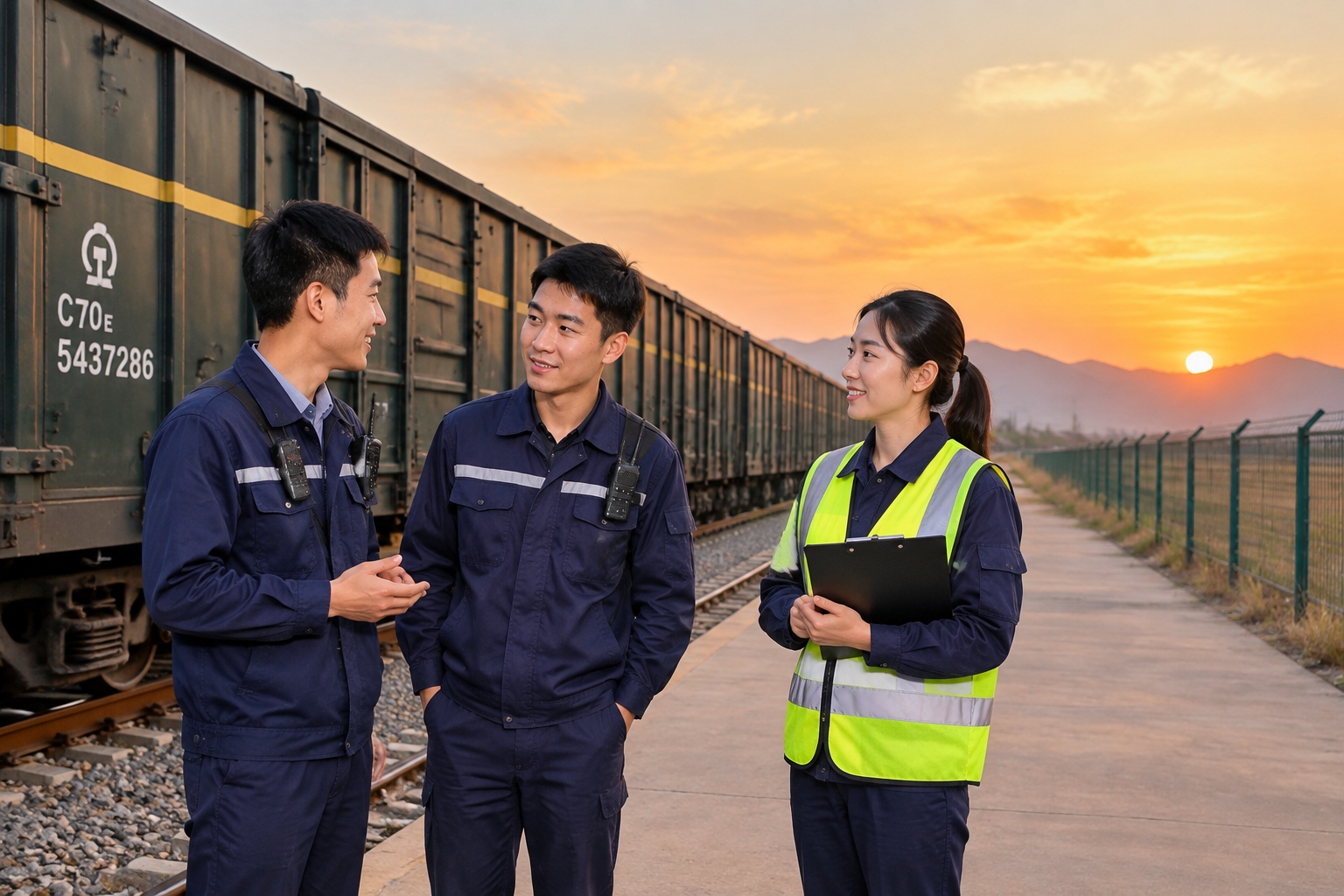
At dusk, I stand on an observation platform near the border. A long train pulls out, its headlights cutting through the steppe. In three weeks, its cargo will arrive in Germany. But before that, it passed through the hands of a young woman in a safety vest who checked every number, a young man who drove the container to the right spot, and another who stared at a screen until the train was on its way.
These are the faces of China’s global trade. They don’t appear in boardrooms; they appear in hard hats and reflective vests. If you ever meet a train from China, remember: somewhere near the edge of the world, a young person is checking its papers, making sure it reaches you.
Start the discussion at forum.chinacomes.com