

Morning at the Naan Pit
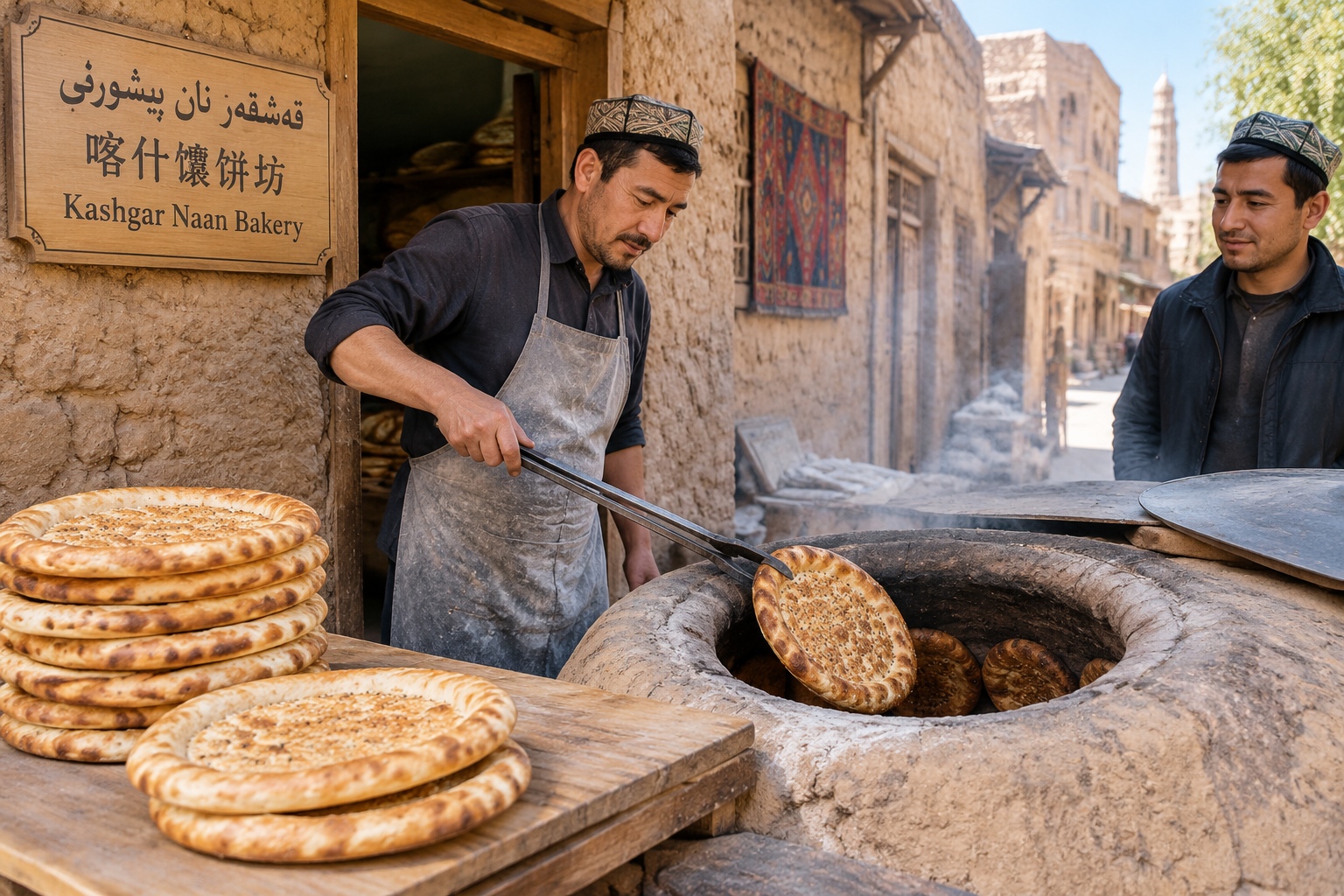
It is just past seven in the morning in Kashgar’s old town, and the air already smells of wood smoke and baking dough. A man named Abdurehim stands at the mouth of a clay oven, his face lit orange by the flames inside. He slaps a round of dough against the oven wall, then another, working quickly with a padded hook. The naan puffs and browns in under two minutes. He pulls them out with a metal tongs, stacks them on a wooden board, and hands the first one to a waiting customer.
This is how the day begins for many families here. Naan is not a side dish. It is breakfast, lunch, and sometimes dinner. It is also a currency of hospitality—you break it with guests, you carry it on long drives, you buy it fresh every morning from the same pit you have trusted for years.
The Bazaar as a Living Map
By nine, the streets around the Id Kah Mosque are filling up. Vendors unfold carpets, arrange dried apricots and raisins in neat pyramids, and hang colorful fabrics from wooden frames. The bazaar here is not a single market but a network of alleys, each with its own specialty: copper pots, handmade knives, herbal medicines, hats, spices, and tea.
A woman named Gulnur sells grapes from a cart. She has three varieties today—green, red, and a small purple seedless kind that she says comes from her family’s orchard outside the city. “People buy by the kilo,” she says, weighing a bag for a customer. “In the morning, it’s mostly locals. Afternoon, more tourists. But the grapes are the same.”
The transaction is quick, almost wordless. A nod, a price, a handshake. This is a trading culture that predates modern borders. The bazaar is where farmers, herders, craftsmen, and shopkeepers meet. It is also where languages mix—Uyghur, Mandarin, and sometimes a few words of Russian or Arabic from traders passing through.
Night Market in Urumqi
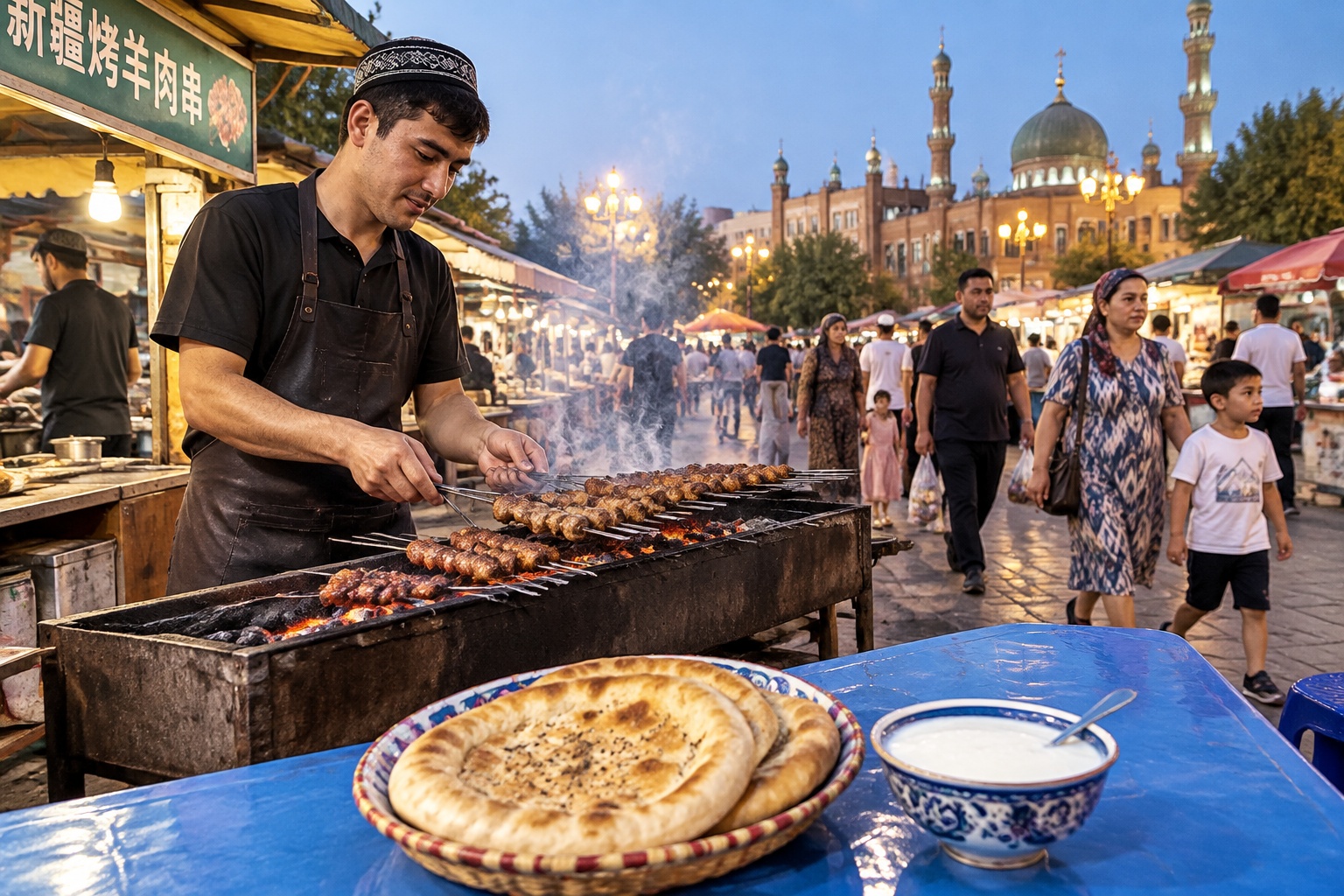
Five hundred miles east, Urumqi’s night market starts to come alive around eight in the evening. The sun is still up in summer, but the grills are already hot. Smoke rises from rows of lamb skewers, each one dusted with cumin and chili powder. Vendors call out prices, fans whir, and the smell of roasting meat mixes with the sweetness of fresh melons.
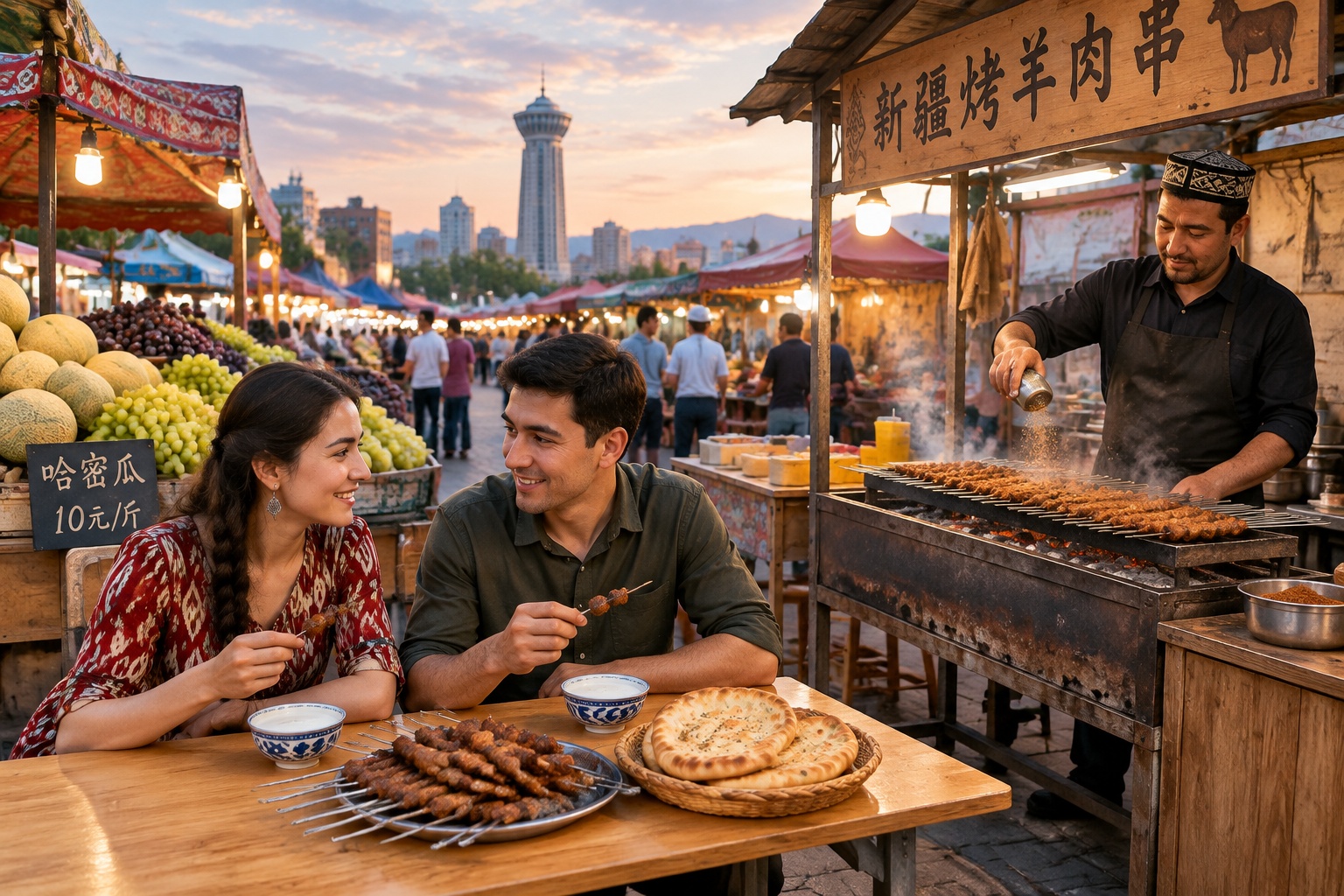
A young couple, Mei and her boyfriend, sit at a plastic table with a plate of skewers, two bowls of yogurt, and a shared piece of naan. “We come here twice a week,” Mei says. “It’s cheaper than a restaurant, and you can try a little of everything.”
Yogurt is a staple here—thick, slightly tart, often served with a sprinkle of sugar or a piece of ice. It cuts through the richness of the meat. So do the melons: Hami melons, watermelons, and grapes so sweet they almost taste like candy.
Music, Dance, and the Everyday
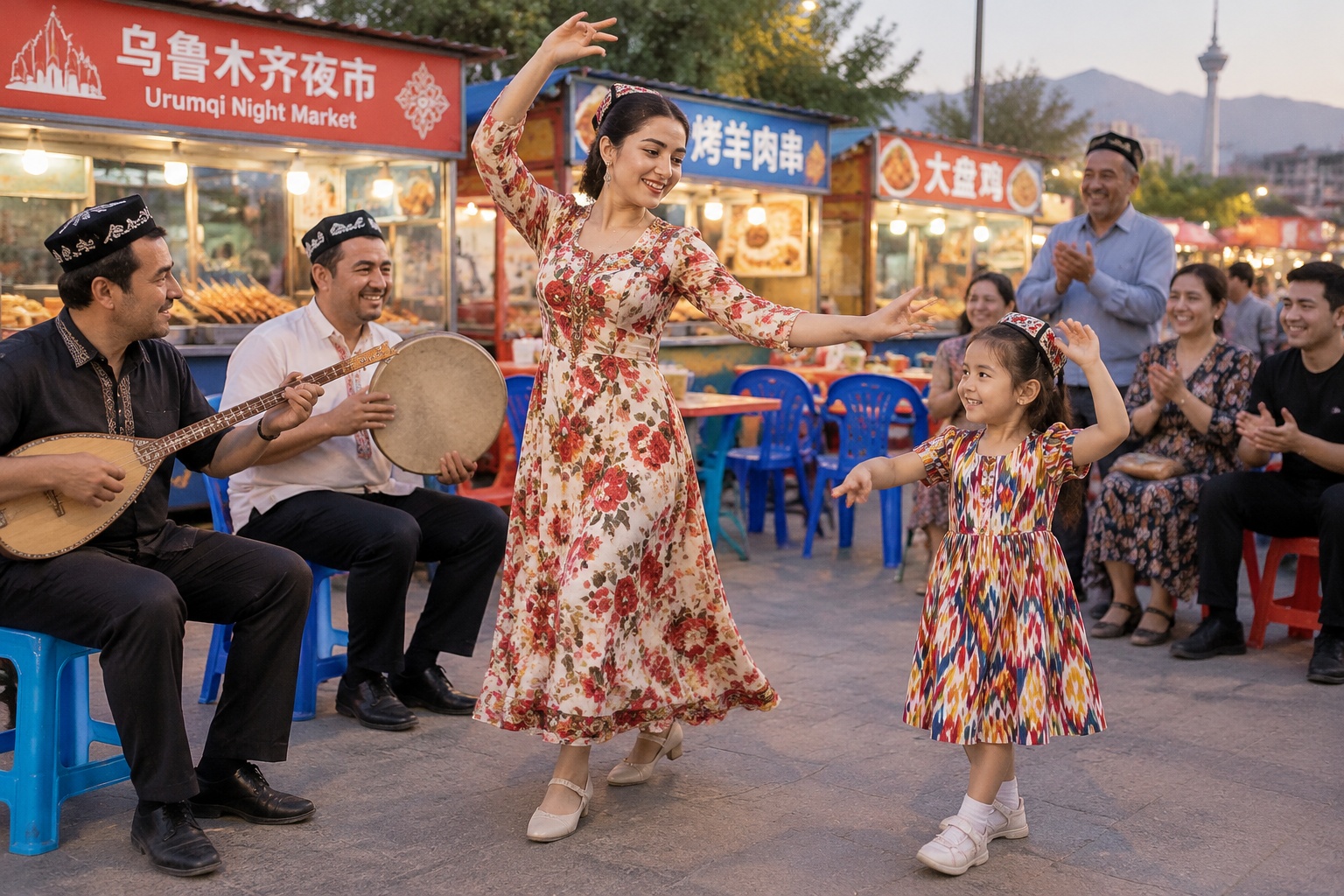
What strikes a visitor most is not the food but the ease of it all. In one corner of the night market, a group of men start playing a dutar and a hand drum. Within minutes, a small circle forms. A woman in a floral dress steps forward and dances. A child copies her. Nobody organizes this. It just happens.
This is not a performance for tourists. It is a Tuesday night. The music is part of daily life, the way a radio might be in other places. In Kashgar, you hear it in teahouses and courtyards. In Urumqi, it spills out of restaurants and parks. It is one of the most visible signs that this is a region of many cultures, and that they have learned to share space.
From Cotton Fields to City Tables
Drive an hour outside Kashgar and the landscape changes. Cotton fields stretch to the horizon, white and dense. In September, pickers—many of them seasonal workers from other provinces—move through the rows. The cotton goes to textile mills, some local, some further east. It becomes shirts, sheets, and towels sold across China and abroad.
Fruit orchards are just as important. Grapes from Turpan, melons from Hami, pomegranates from Hotan—these are not just local specialties. They are shipped by truck and train to markets in Beijing, Shanghai, and Guangzhou. A family in Urumqi can buy the same grapes that grow near Kashgar. The distance collapses in a refrigerated container.
This connection between farm and city is not abstract. It is visible in the bazaar every morning, where the same farmers who tend the fields bring their produce to sell. It is visible in the night market, where a skewer of lamb can be traced back to a pasture a few hours away. The economy here is not just oil and gas. It is also naan, grapes, and the daily trade that sustains small towns and big cities alike.
What the Day Leaves Behind
By midnight, the night market in Urumqi is winding down. Vendors pack up leftover food, stack chairs, and hose down the pavement. The music has stopped. The last customers drift toward taxis and buses. In Kashgar, the naan pits are cold, but the smell of dough and smoke lingers in the alleys.
Tomorrow, it will start again. The same hands will knead dough, the same carts will roll into the bazaar, the same grills will fire up. This is not a story about grand changes. It is a story about continuity—about how people in Xinjiang make a living, feed their families, and share a meal with strangers. That, more than anything, is what the bazaar and the night market reveal.
Start the discussion at forum.chinacomes.com