
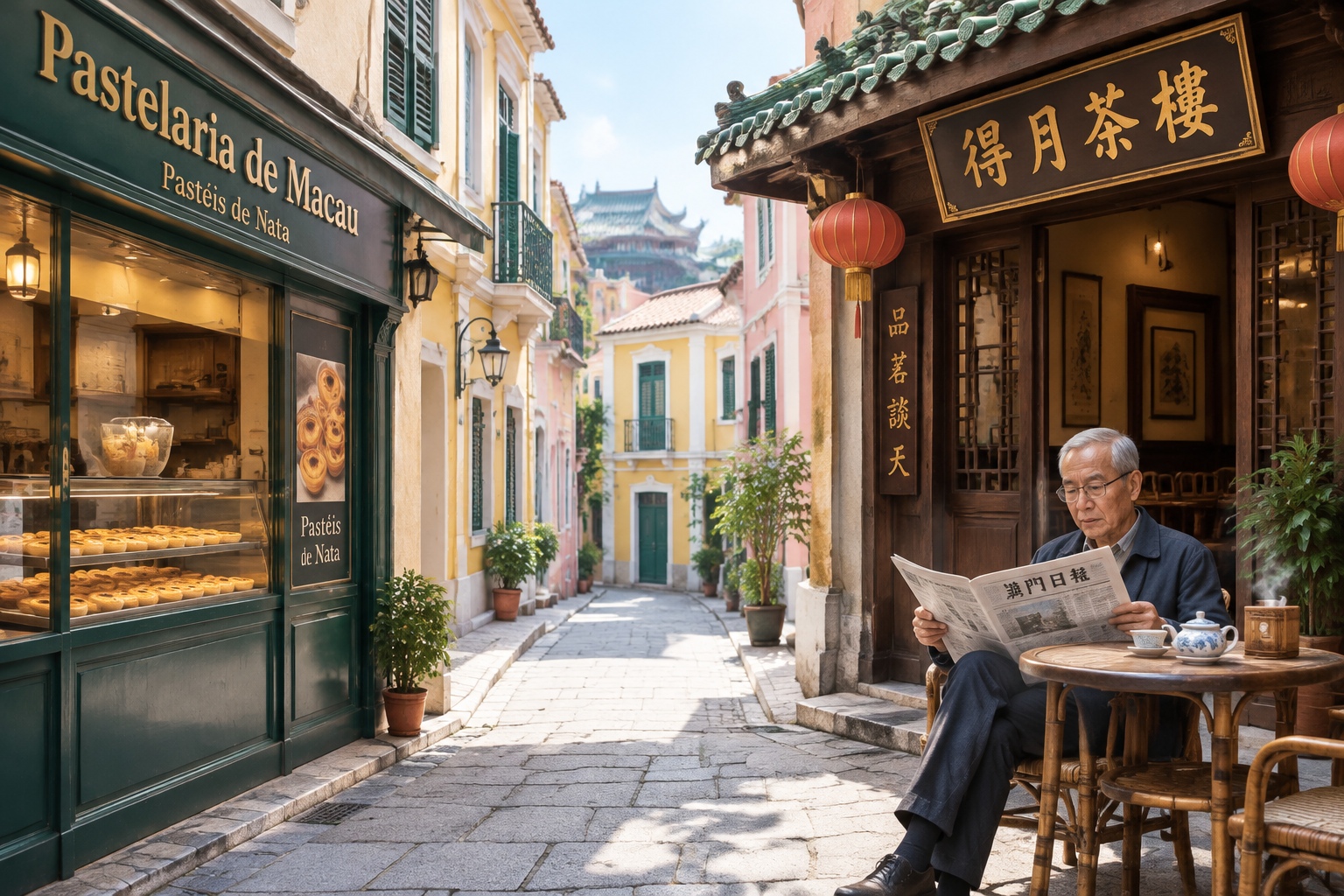

A Morning That Starts with Tea and Dim Sum
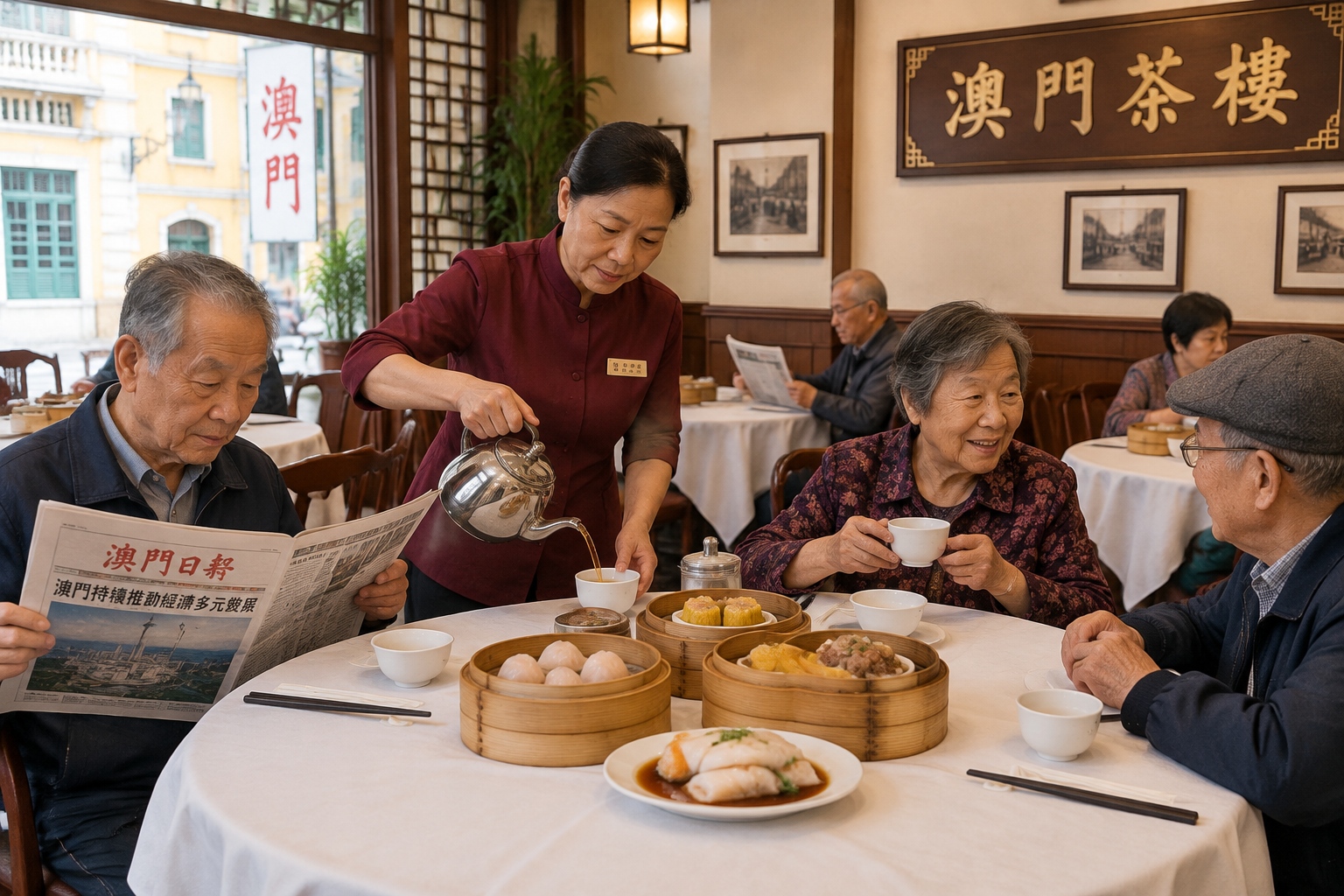
It’s 7:30 a.m. on a Tuesday in Macau. At Long Wa Tea House, tucked into a side street off Avenida de Almeida Ribeiro, the tables are already full. Retired men in polo shirts read the morning paper. A grandmother feeds her grandson a har gow with chopsticks. The tea server, carrying a battered metal kettle, refills cups without being asked. This is yum cha — literally “drink tea” — but in Macau it means something more: a slow, social breakfast where a pot of pu’er and two dim sum dishes, known as yut sung leung gin, can stretch for two hours.
If you come from a culture where breakfast is a solo, five-minute affair, this ritual feels almost radical. Nobody checks their phone. Nobody rushes. The bill for two people rarely exceeds 80 patacas — about 10 US dollars. And the same scene plays out across dozens of similar tea houses, some of which have been operating for over half a century.
Macau’s tea houses are not tourist attractions. They are neighborhood institutions. The waiters know the regulars. The menu hasn’t changed in decades. And in a city of just 680,000 people, that constancy matters.
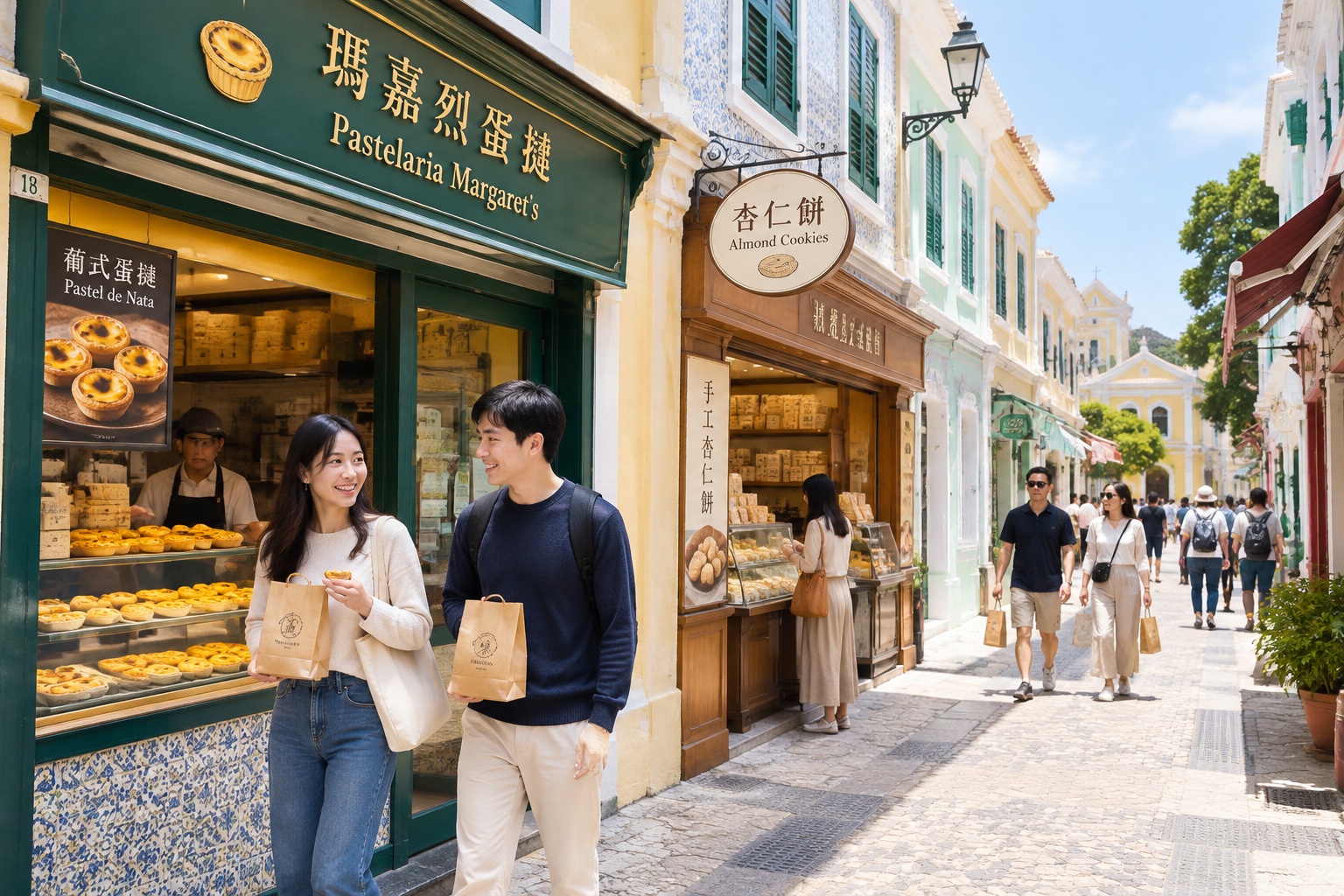
Egg Tarts, Bakery Streets, and the Pleasure of Walking
By 9 a.m., the streets around Rua do Cunha in Taipa Village are waking up. This narrow lane, less than 200 meters long, is packed with bakeries selling pastéis de nata — Portuguese egg tarts — alongside Chinese almond cookies and dried pork jerky. The smell of caramelized custard drifts through the doorways.
What strikes a first-time visitor is not just the food but the scale. Everything is walkable. Macau is one of the most densely populated places on Earth — over 20,000 people per square kilometer in some districts — yet its historic center remains stubbornly human-sized. Alleys are narrow. Buildings lean into each other. You can cross from a Portuguese-style plaza with cobblestones to a Chinese temple courtyard in under three minutes.
This walkability is not a design trend. It’s a necessity. Macau’s peninsula and islands were settled long before cars dominated urban planning. The result is a city that rewards pedestrians. You notice details: a Catholic saint’s statue above a shop selling Buddhist incense; a Portuguese tile facade next to a bamboo scaffolding. The hybridity isn’t staged for tourists. It’s just how the city grew.
For visitors from car-dependent suburbs in the US or Australia, this density can feel intense at first. But it also creates something rare: a public life where you constantly bump into neighbors, shopkeepers, and strangers. The street is the living room.
Portuguese Roots, Chinese Rhythm: How Macau’s Culture Actually Works
Macau was a Portuguese colony for over 400 years, until its return to China in 1999. That history left more than egg tarts. It left a legal system, a bilingual bureaucracy, and a layered identity that locals call Macanese — a culture that is neither purely Portuguese nor purely Cantonese, but something distinct.
You see it in the language. Street signs are in both Chinese and Portuguese. In restaurants, you might hear Cantonese, Mandarin, Portuguese, and English in the same conversation. You see it in the food: minchi, a minced pork and potato dish with a fried egg on top, is a Macanese staple, born from Portuguese ingredients adapted to Chinese kitchens. You see it in the architecture: pastel-colored colonial buildings with Chinese-style tiled roofs.
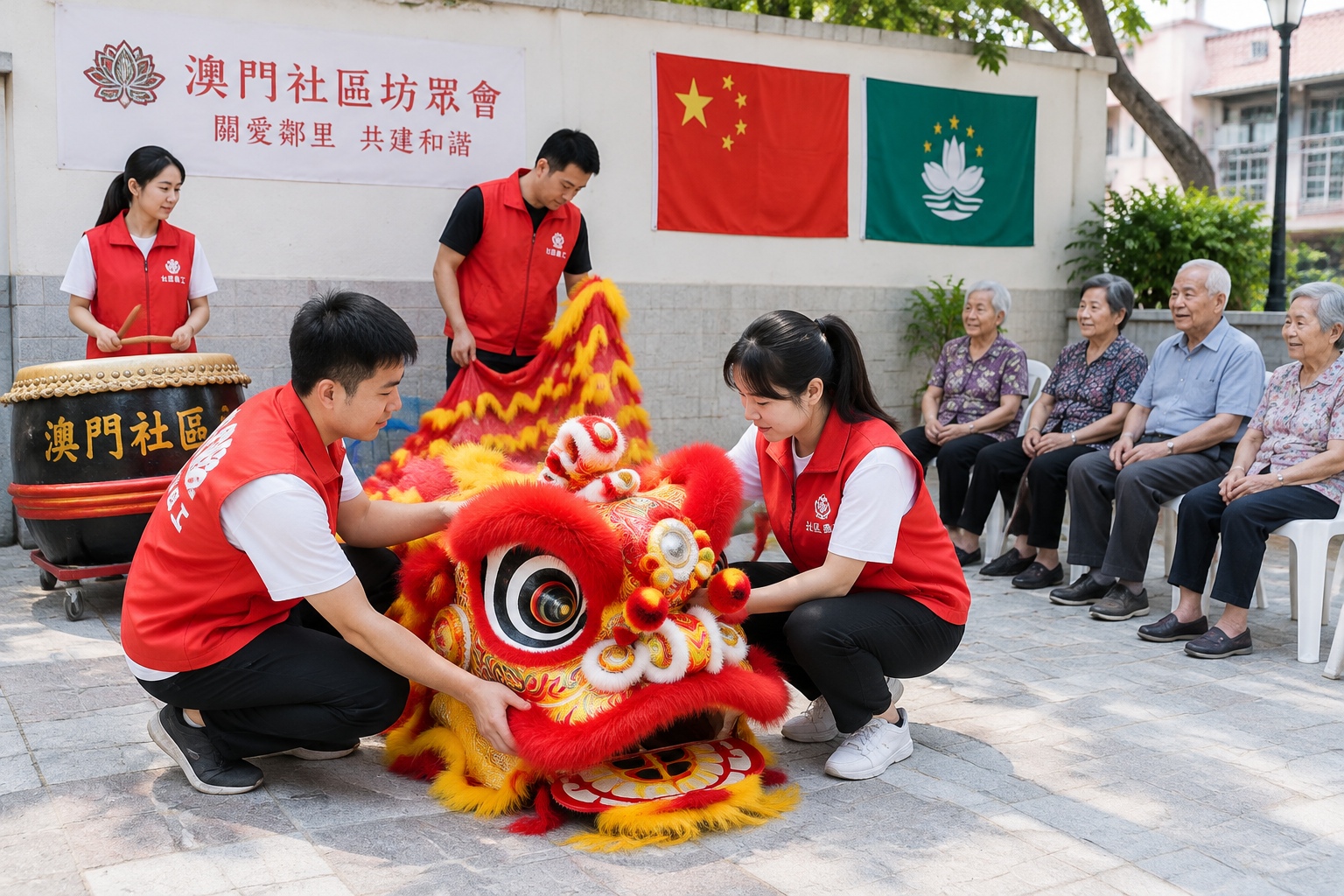
But the deeper structure of daily life is Chinese. Neighborhood associations, known as associações de moradores, organize everything from festival parades to elderly care. These groups are not government agencies. They are grassroots, often run by volunteers who have lived in the same block for decades. They mediate disputes, run after-school programs, and organize the Lunar New Year lion dances.
This kind of hyper-local social organization might feel unfamiliar to someone from a Western city where neighbors barely know each other’s names. In Macau, the neighborhood association is a safety net, a social club, and a cultural guardian all at once. It’s one reason why Macau, despite its density and income inequality, has relatively low crime and strong social cohesion.
Beyond the Casinos: Parks, Markets, and Everyday Life
The casinos dominate Macau’s skyline and its economy. Gaming revenue here is roughly five times that of the Las Vegas Strip. But for most residents, the casinos are simply workplaces — or places to avoid.
On a Saturday morning in the northern district, far from the glittering Cotai Strip, the scene is entirely different. At the Patane Market, vendors sell live fish, fresh tofu, and vegetables from mainland China. Older women carry plastic bags and negotiate prices in rapid Cantonese. A few stalls sell Portuguese chorizo next to Chinese sausages. Nobody is in a hurry.
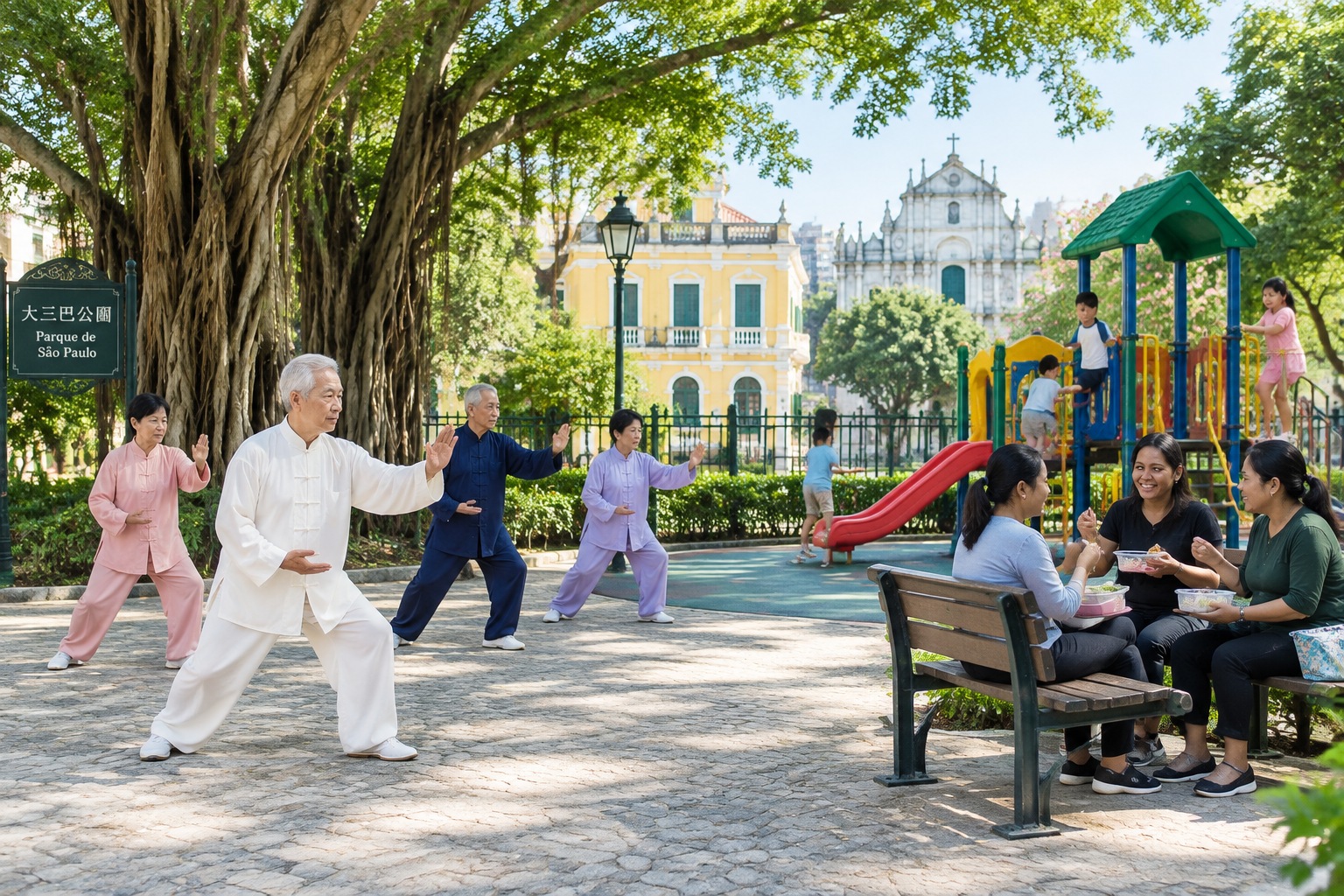
Nearby, in the small neighborhood parks like Jardim da Cidade das Flores, retirees practice tai chi under banyan trees. Children play on jungle gyms. Domestic workers from the Philippines and Indonesia gather on benches, sharing lunch and laughter. These parks are not tourist destinations. They are the city’s pressure valves — free, open, and used by everyone.
If you come from a city where public space is either privatized or neglected, this might surprise you. Macau’s parks are small but well-maintained. They are also genuinely public: no entry fees, no consumption requirements, no security guards profiling who belongs. The government funds them, but the neighborhood associations often manage the daily rhythm — organizing exercise classes, cleaning up, and keeping an eye on things.
That combination — state funding plus community management — is a pattern you see across China, from Macau to Shanghai to Chengdu. It’s not exactly the Western model of civil society, nor is it pure top-down control. It’s something in between, and it works for the people who live here.
What Macau Tells You About China’s Diversity
Macau is often described as a gambling capital, a former colony, or a weekend getaway for Hong Kongers. All true. But for anyone trying to understand how China actually works — its diversity, its local governance, its hybrid cultures — Macau is a useful case study.
It’s a city where you can eat a Portuguese egg tart for breakfast, dim sum for lunch, and Macanese minchi for dinner. Where you can walk from a colonial church to a Buddhist temple in five minutes. Where neighborhood associations still organize lion dances and elderly care. Where the government funds public parks but doesn’t micromanage them.
None of this is simple. Macau has real problems: income inequality, housing affordability, dependence on gaming revenue. But its daily life — the tea houses, the alleys, the egg tarts, the parks — shows a city that has learned to hold multiple identities at once without falling apart.
For a visitor from Europe or America, that might be the most interesting thing of all. Not the casinos. The ordinary morning at a tea house, where a pot of tea and a plate of dumplings cost less than a coffee in London, and nobody is in a rush to leave.
Start the discussion at forum.chinacomes.com