

A City That Jokes Before Breakfast
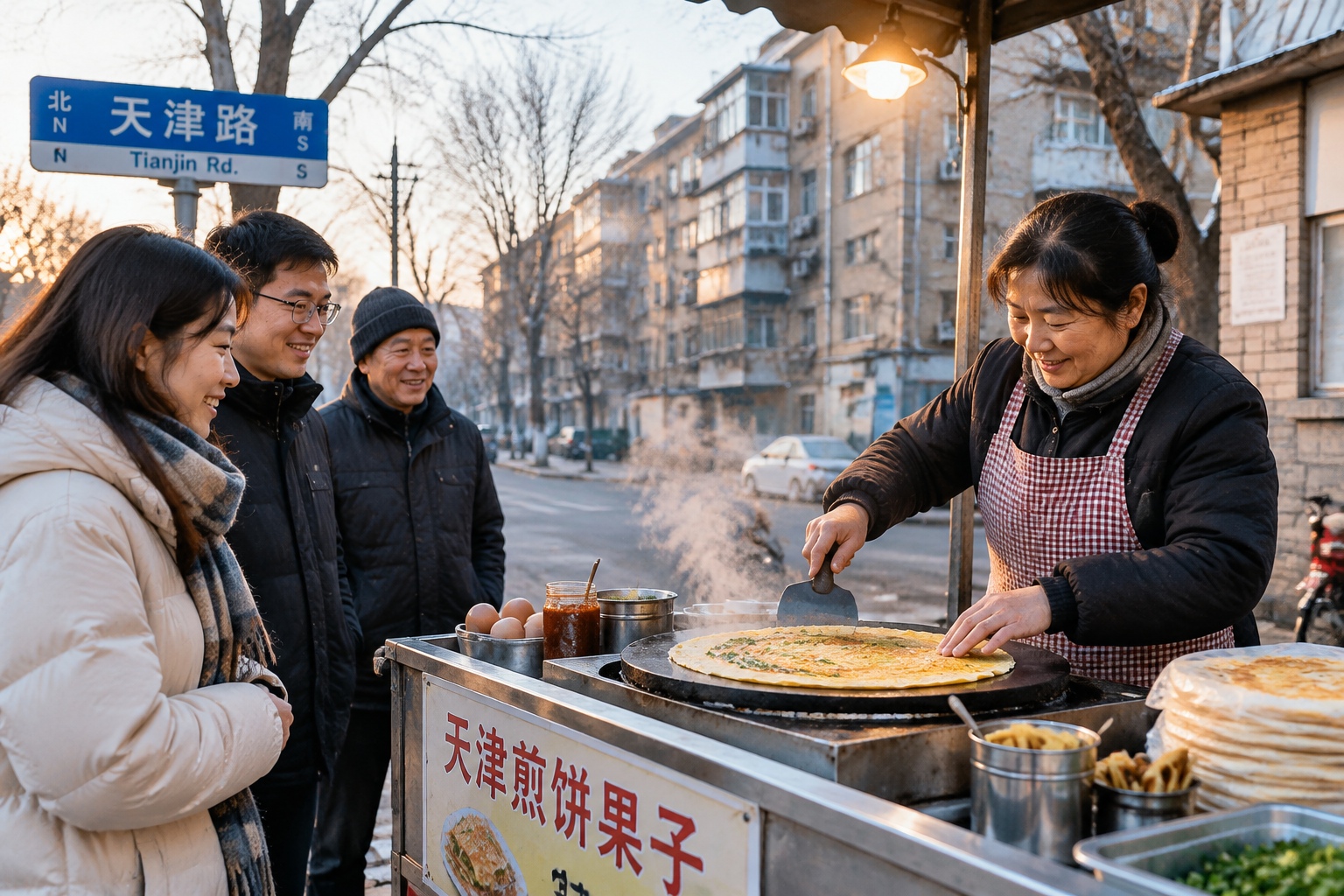
It’s 6:45 on a Tuesday morning in Tianjin, and the woman running the jianbing stall on the corner of Dagu Road is already mid-routine. She spreads the batter thin, cracks an egg, flips it with one hand, and asks the customer in front of me: “One or two crispy sheets? And before you answer—did you hear about the guy who tried to order a jianbing without cilantro?”
The customer laughs. The man behind him laughs. I laugh, and I don’t even know the punchline yet. That’s Tianjin in a nutshell: the joke arrives before the breakfast does, and nobody is in a hurry to explain it.
For a foreign visitor, this city of 13.6 million people—about 120 kilometers southeast of Beijing—can feel like a quieter, funnier cousin of the capital. It has the same northern Chinese grit, the same industrial backbone, the same cold winters. But the rhythm is different. Slower. Looser. More likely to make you laugh at your own confusion.
What Is Jianbing Guozi, Exactly?
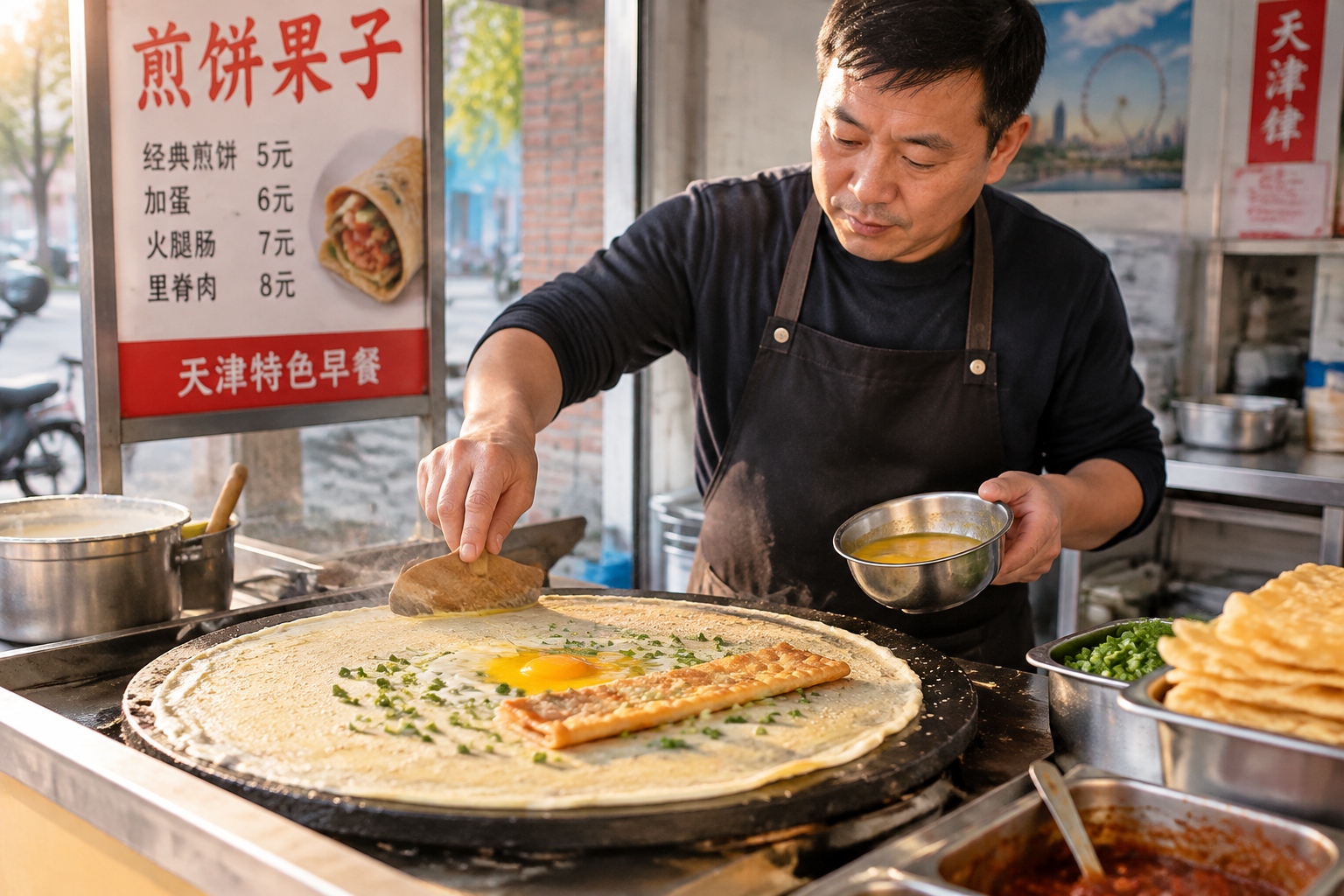
If you’ve never had one: jianbing is a thin crepe made from mung bean and wheat flour, cooked on a flat griddle, filled with egg, scallions, cilantro, a crispy fried cracker called baocui or guobi, and a brushstroke of sweet bean sauce and chili paste. It costs between 6 and 10 yuan—roughly a dollar. It is breakfast, and in Tianjin, it is also theater.
The stall owners here are not just cooks. They are commentators. One vendor I met near Wudadao, the old concession district, told me he’d been making jianbing for 22 years and had never once served a customer in silence. “Some people come for the food,” he said, folding a crisp in half. “More people come because they want someone to talk to before work.”
That’s not a small thing in a city where winter mornings can hit minus 10 Celsius and the streets are still dark at 7 a.m. The jianbing stall is a warm spot—literally and socially. You stand shoulder to shoulder with strangers, you wait two minutes, you get a hot breakfast and a bad pun. For many Tianjin residents, that’s a better start to the day than a quiet coffee shop.
The Humor on the Riverbank
By 9 a.m., the breakfast crowd thins out. The city moves toward the Haihe River, the waterway that cuts through central Tianjin and has been the city’s commercial spine since the Ming Dynasty. Along the riverfront parks, you’ll find something you won’t see in many Chinese cities: amateur crosstalk performers.
Crosstalk—xiangsheng in Mandarin—is a two-person comedy act, usually a straight man and a funny man, trading rapid-fire dialogue. It’s traditionally performed in teahouses, but in Tianjin it spills into public space. On weekend mornings near the Jinwan Plaza stretch, retirees set up portable speakers, unfold two stools, and start performing. Audiences form in a loose semicircle. Nobody claps at the end. They just nod, smile, and move on.
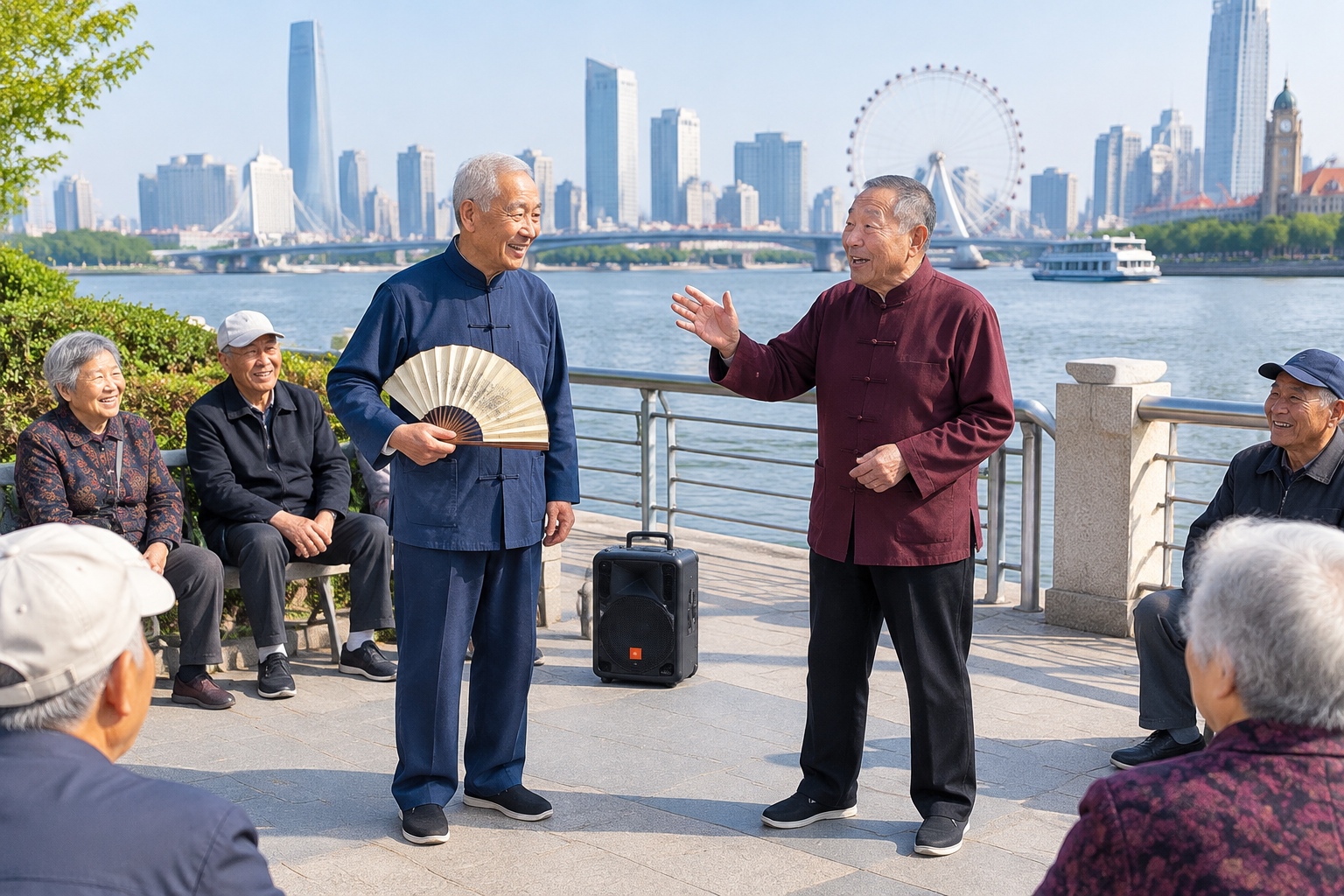
One performer, a 67-year-old former factory worker named Liu, told me he’d been doing this for eight years. His partner, a former schoolteacher, writes most of the material. “We don’t rehearse much,” Liu said. “Tianjin audiences are sharp. If you say something dumb, they’ll tell you.”
The humor is fast, self-deprecating, and deeply local. It references traffic on Nanjing Road, the price of baozi, the way Tianjin people say “má” instead of “shénme” for “what.” If you don’t speak Mandarin, you’ll miss most of it. But you’ll still catch the rhythm—the pause before the punchline, the audience’s collective groan, the way the performers lean into each other like old friends arguing about nothing.
Why Tianjin Laughs So Much
Tianjin’s humor isn’t random. It’s rooted in the city’s history as a port and treaty port. From the 1860s onward, Tianjin was forced open to foreign trade, and it became a chaotic, multicultural dockyard—sailors, merchants, gangsters, missionaries, and laborers all crammed into the same riverside neighborhoods. Survival meant learning to read people fast, to defuse tension with a joke, to not take yourself too seriously.
That attitude survives today in a phrase you’ll hear constantly: “má dōu bù jiào shì”—roughly, “none of it is a big deal.” It’s not laziness. It’s a kind of social lubricant. When something goes wrong—a delayed train, a bad meal, a sudden rainstorm—Tianjin people tend to shrug, make a joke, and move on. Visitors often mistake this for apathy. It’s closer to resilience.
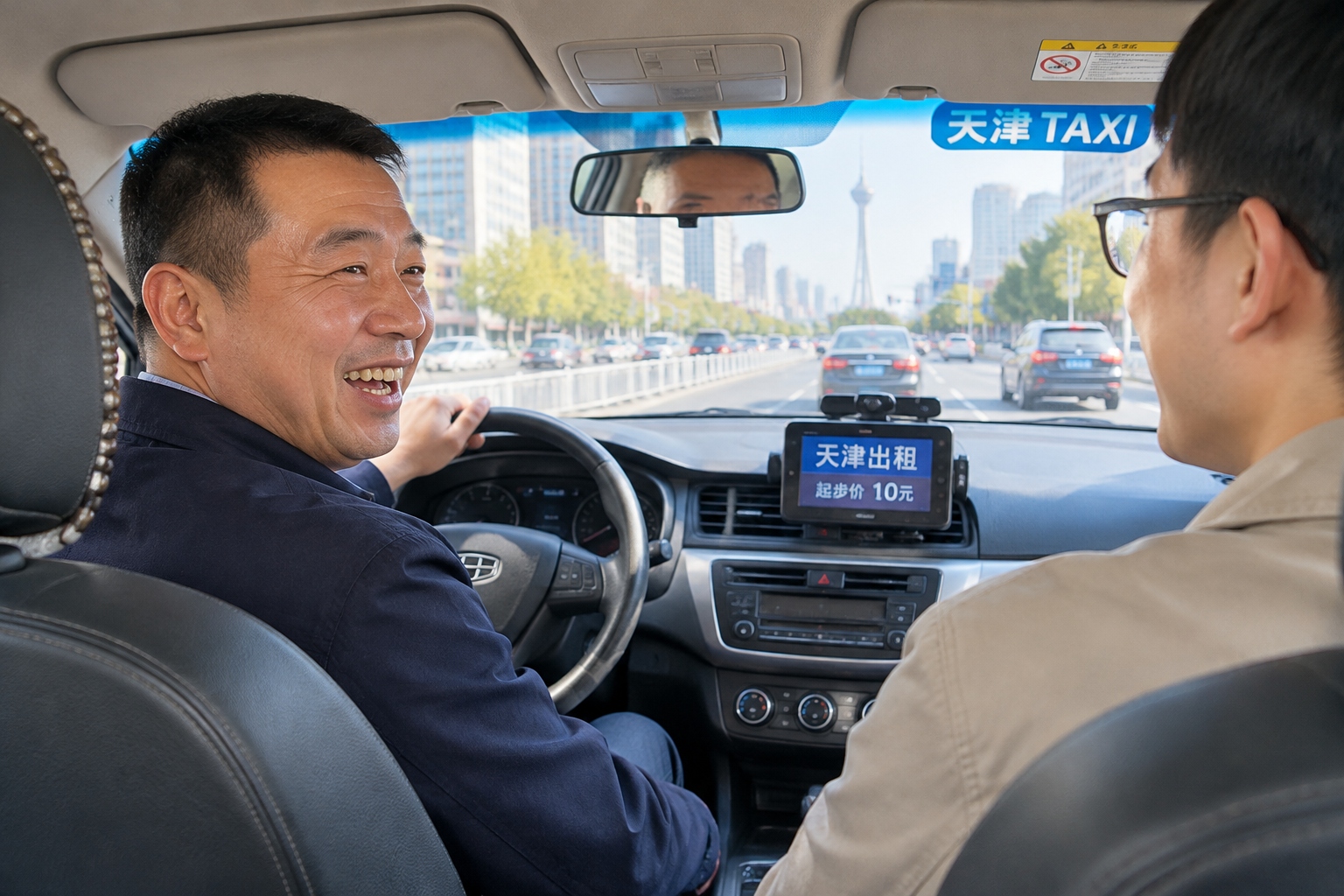
You can see it in how people talk to strangers here. In Beijing, conversations tend to be efficient. In Shanghai, they’re polite but guarded. In Tianjin, a taxi driver will ask where you’re from, guess your age, offer an opinion on your haircut, and tell you a story about his cousin who once visited your country—all before you’ve reached the second traffic light.
Teahouses, TikTok, and the New Generation
By evening, the crosstalk moves indoors. Tianjin has dozens of teahouses, some dating back a century, others opened in the last five years. The most famous is Mingliu Teahouse, near the Ancient Culture Street. On a recent Friday night, the room was full—not with tourists, but with locals in their twenties and thirties, holding milk tea and filming short videos.
That’s the shift. Crosstalk used to be for older audiences. Now it’s a content genre. On Douyin, China’s version of TikTok, clips of Tianjin performers routinely rack up millions of views. Young comedians mix traditional routines with jokes about dating apps, office politics, and the struggle to afford an apartment near the river. The audience laughs at the old bits and the new ones equally.
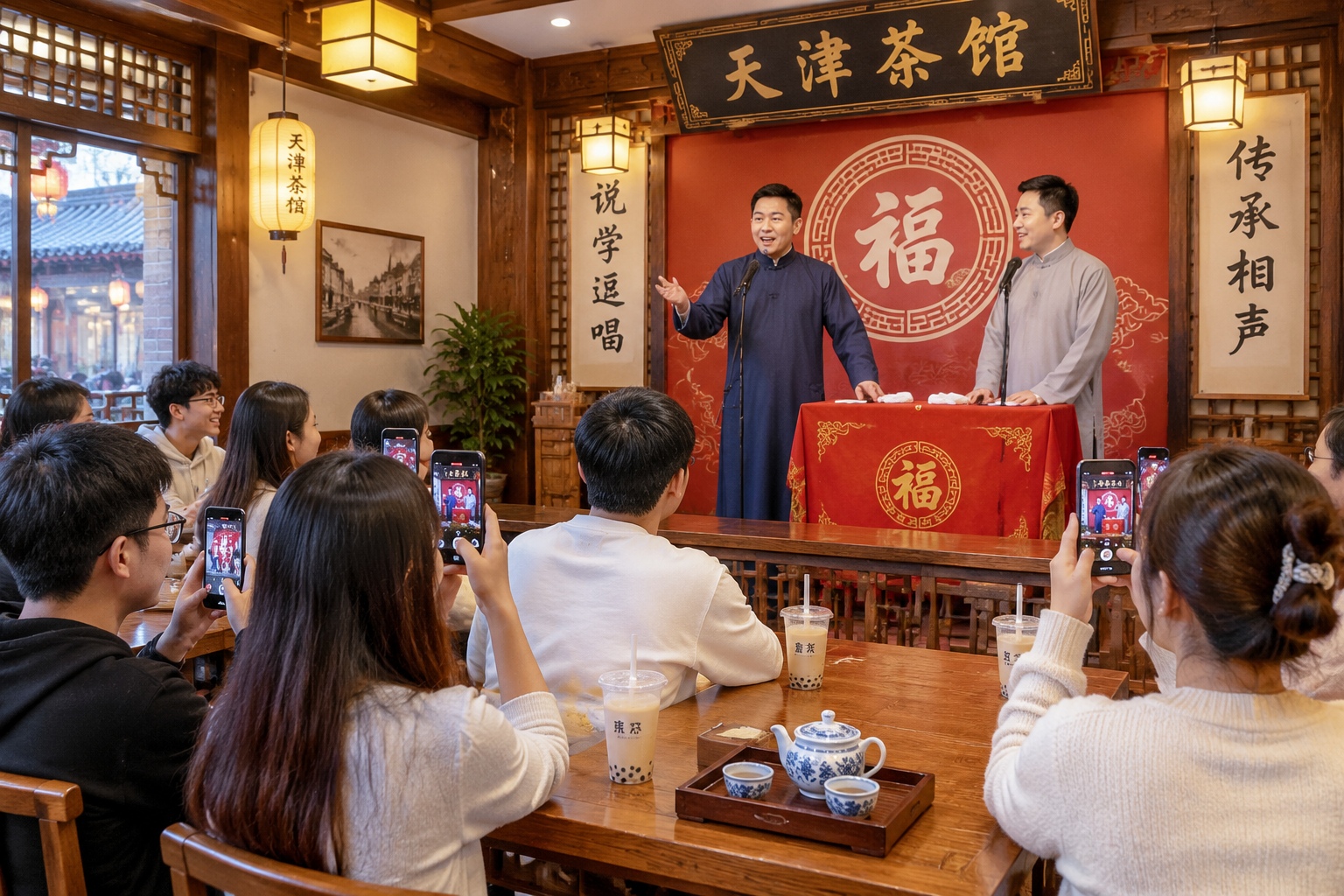
One performer in his late twenties, who goes by the stage name Xiao Zhang, told me he quit a job in finance to do crosstalk full-time. “My parents thought I was crazy,” he said. “Now they send my clips to their friends.”
The teahouse serves unlimited tea for around 30 yuan. You stay as long as you want. Nobody rushes you out. On a cold night, it’s one of the warmest rooms in the city—not because of the heating, but because of the noise. People talk over each other. They laugh loudly. They heckle. It feels less like a performance and more like a living room that happens to have a stage.
What Tianjin Tells You About China
Tianjin doesn’t top many travel lists. It’s not as photogenic as Shanghai, as historic as Xi’an, or as trendy as Chengdu. But that’s exactly why it’s worth paying attention to. It shows you a China that isn’t performing for anyone—a city that works, eats, complains, and jokes its way through the day.
The jianbing vendor who tells jokes at 6:45 a.m. The retiree doing crosstalk by the river. The twenty-something filming a teahouse routine for Douyin. They’re all part of the same story: a place where humor isn’t a luxury, but a way of getting along.
If you come to Tianjin, start with breakfast. Order a jianbing. Listen to the vendor. You’ll learn more about this city in five minutes than you will from any museum.
Start the discussion at forum.chinacomes.com