

Morning by the Water: Where Hammering Meets the Canal
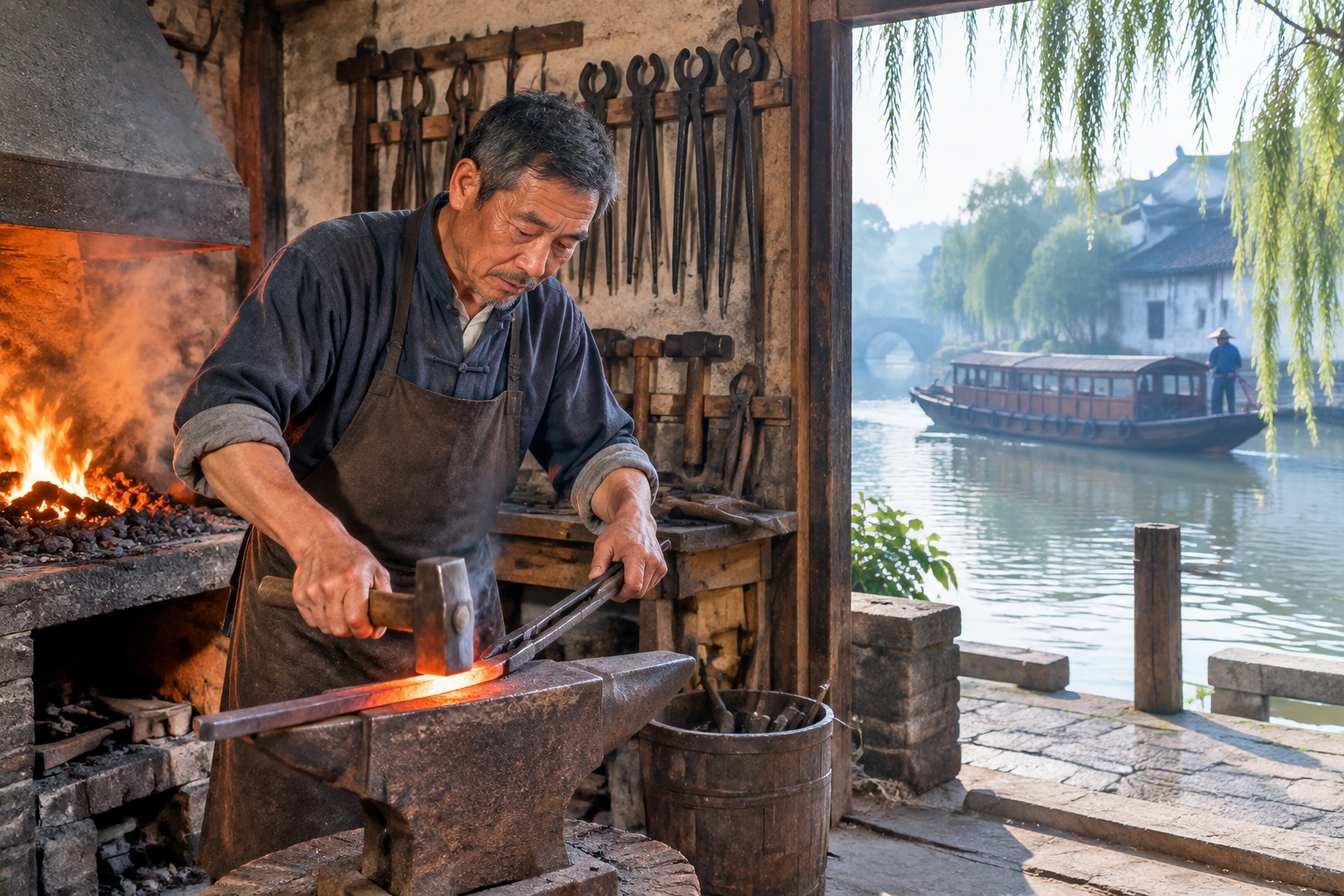
At 7:40 on a Tuesday morning, the Suzhou section of the Grand Canal is already moving. A white tour boat slides past a row of willows. A delivery rider crosses a stone bridge. Behind a low wall, in a workshop no wider than a bus, a man in his late sixties named Lao Xu is heating a bar of steel until it turns the color of a tangerine.
He does not look up when the boat passes. He lifts the bar with tongs, lays it on the anvil, and brings down a hammer in short, even strokes. The sound is not cinematic. It is a dull, bright clang, followed by the softer slap of water against the stone bank. Coal smoke mixes with the smell of wet masonry and morning noodles from a stall two doors down.
Lao Xu is one of the last blacksmiths still working along this stretch of the canal. His shop has no signboard, only a hand-painted board that says ‘ironwork’ in faded characters. Inside, hammers hang in rows. A bucket of water waits for quenching. On a wooden bench, a restaurant owner has left three blunt cleavers to be repaired.
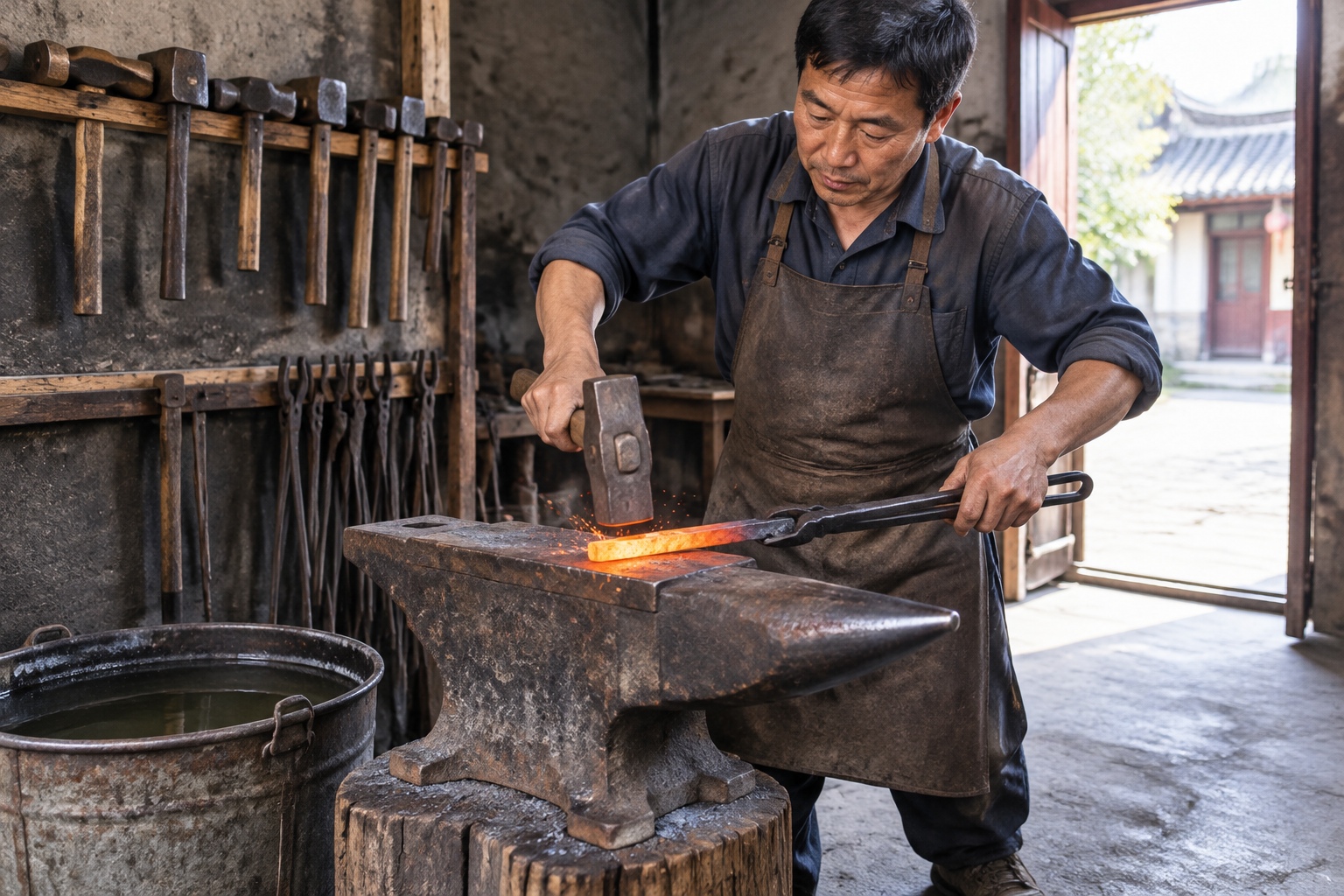
For a visitor, the scene can look like a piece of old China preserved for photographs. For Lao Xu, it is simply Tuesday. He has rent, steel prices, and a knee that aches when it rains. The forge is not a museum. It is a small business trying to survive.
What the Anvil Once Did for the Canal
The Grand Canal is not a single river. It is a 2,500-year-old network of channels, locks, and wharves that once connected Beijing to Hangzhou and moved grain, salt, silk, timber, and people across eastern China. In 2014, UNESCO added the Grand Canal to the World Heritage List, recognizing it as the longest and oldest man-made waterway still in use. Suzhou, with its dense web of canals, bridges, and old warehouses, is one of its most vivid living sections.
Before diesel engines and steel hulls, that waterway ran on wood, rope, and iron. Boat builders needed blacksmiths. A wooden barge required long iron nails, rudder hinges, anchor chains, and metal bands to hold timbers together. Shipyards needed chisels, adzes, caulking irons, and hammers. A blacksmith near a wharf was as ordinary and essential as a repair garage is today.
‘When every boat was wood, every boat needed iron,’ Lao Xu said. He learned the trade from his father in the 1970s, when the canal was still crowded with wooden cargo boats. In those years, his family’s forge ran two fires. Apprentices slept in the back. Orders came from boatyards, farms, and households.
By the 1990s, the economics had changed. Steel factories could stamp out nails, hinges, and tools by the million. Motorized boats with steel hulls replaced wooden ones. Container trucks and railways took cargo that once moved slowly on water. The boatyards along the canal closed or moved to industrial parks. One by one, the blacksmiths shut their doors.
Structural Change, One Small Workshop at a Time
China’s economic transformation is often described in national numbers: GDP, exports, urbanization. Along the canal, it arrived as a series of small closures. A forge that once employed five people became a one-man repair shop. A son took a job in a warehouse. A daughter moved to Shanghai. The anvil stayed, but the order book thinned.
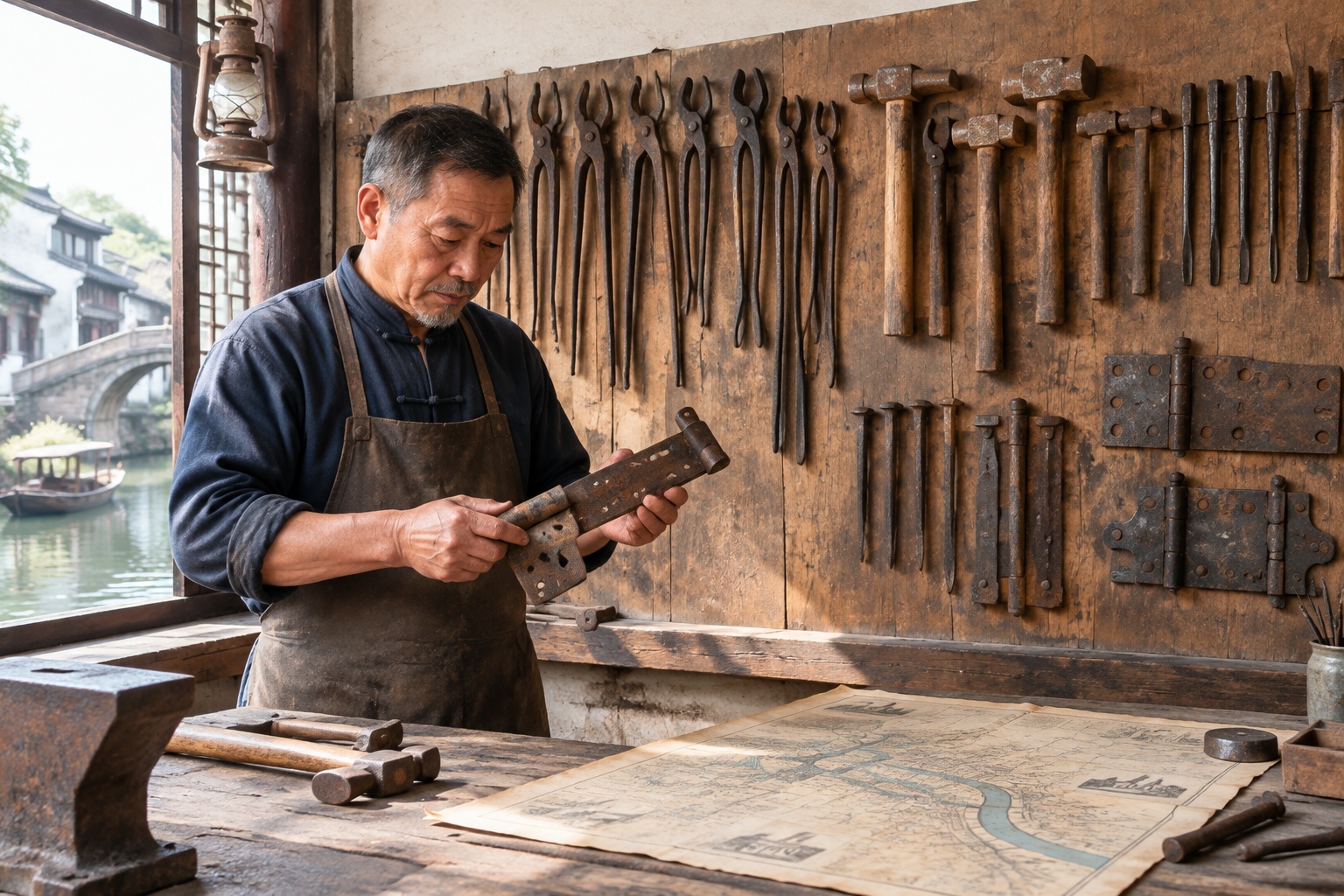
Lao Xu adapted. He stopped making ship nails and started sharpening knives, repairing garden tools, and forging custom hinges for old wooden doors in restored neighborhoods. He makes cleavers for local cooks and small hoes for gardeners who prefer a handle shaped to their hand. The work is less steady, but it keeps the fire lit.
Some blacksmiths have moved closer to heritage tourism. In cultural districts, visitors can watch a smith hammer a red-hot bar into a small knife or a decorative hook. Local governments list traditional forging as intangible cultural heritage. Museums collect old tools. Festivals invite craftspeople to demonstrate. This recognition matters, but it does not automatically pay rent. A demonstration fee is not the same as a year of orders.
‘Heritage is a nice word,’ Lao Xu said. ‘But I still need to buy coal.’
The tension is familiar in many countries. When a craft loses its original market, it can survive in three ways: as luxury goods, as tourism, or as a hobby. Each has limits. Luxury custom knives can sell for high prices, but the market is small. Tourism depends on foot traffic and season. Hobbyists may learn for fun, but few commit to the heat, noise, and years of practice.
Young apprentices are rare. The work is hot in summer and cold in winter. The pay is uncertain. Most young people in Suzhou now look for jobs in electronics factories, logistics, restaurants, or e-commerce. Lao Xu’s own son works in a delivery warehouse and earns more than his father did at his age. He respects the craft, but he does not want the forge.
Keeping the River’s Soul Alive, Without Turning It into a Set
Yet the story is not only decline. In recent years, archivists, filmmakers, and students have begun recording the last canal blacksmiths. They photograph hands, tools, and the color of heated steel. They record the hammer’s rhythm and the canal’s background hum. Some projects map the old boatyards and the smithies that served them, linking a shop to a wharf, a wharf to a trade route.
This documentary work matters because much of the craft lives in the body, not in the object. A blacksmith reads temperature by color: straw yellow, cherry red, orange, white. He knows when to strike, when to wait, and when to quench. He can feel a flaw in the metal through the hammer. These skills are hard to capture in a museum case. But they can be recorded, taught in short courses, and passed on if someone is willing.
Some young craftspeople are returning, though not always in the old way. A former graphic designer might spend weekends learning to forge knives. A small workshop might sell tools online and ship them across the country. A heritage hotel might order handmade iron fittings for a restoration project. These are modest markets, but they keep the forge connected to the present.
The risk is making the blacksmith into a stage character. When a craft becomes only a performance, the knowledge can freeze. Visitors take photos, the smith repeats the same five-minute demonstration, and the deeper skills disappear. The more interesting path is when the forge still makes things people use: a knife that cuts, a hinge that turns, a tool that fits a hand.
What the Last Smiths Show About Change
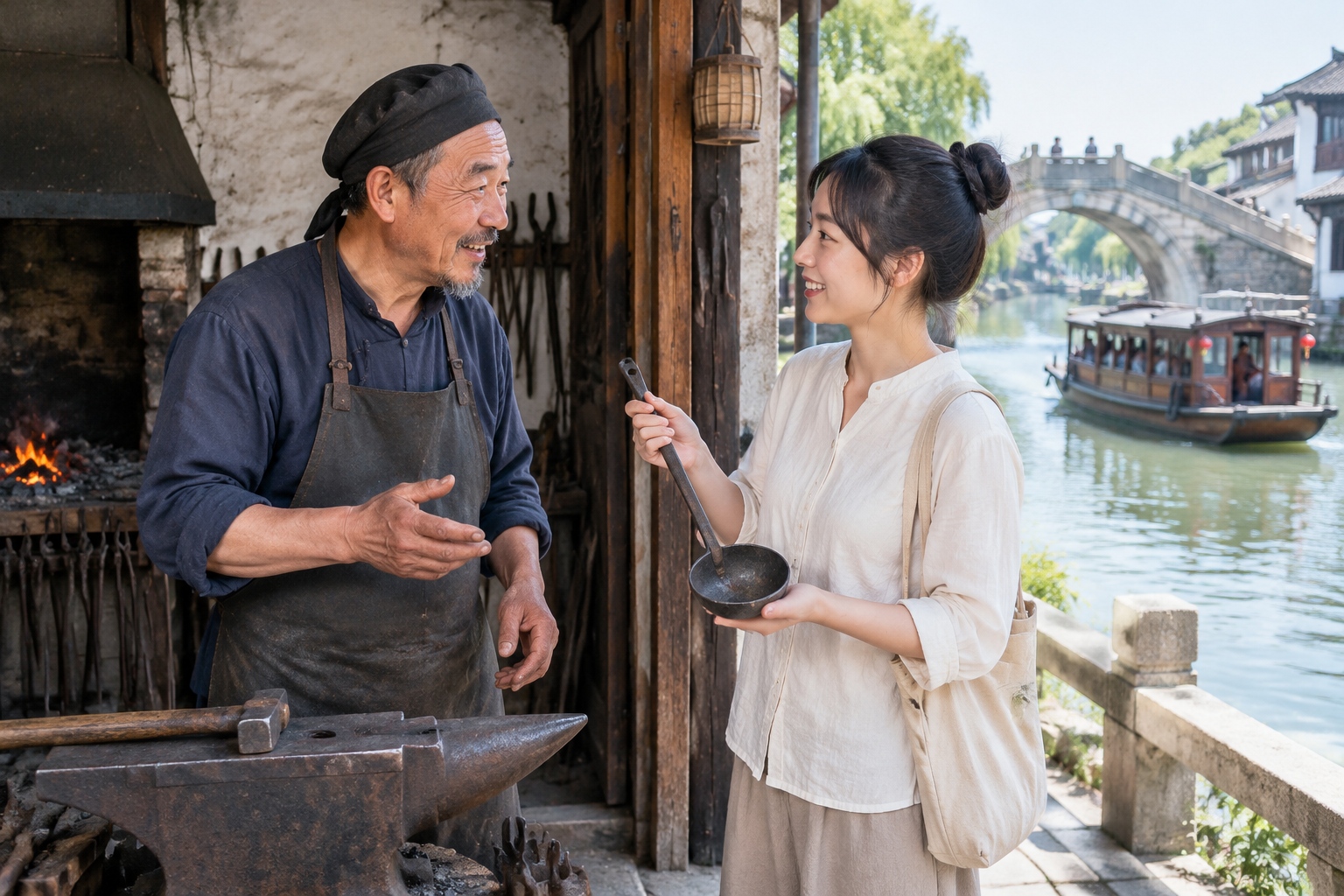
On the day I visited, a young woman came in with a broken iron ladle from her grandmother’s kitchen. Lao Xu looked at the crack, heated the metal, and tapped it closed. The repair took fifteen minutes and cost less than a new ladle. She left happy. The canal outside kept moving.
That small transaction says something about China’s economic transition. Growth has given people more choices and cheaper goods. It has also made repair less common and old skills less necessary. The state can protect heritage sites and list intangible culture. Markets can create niche demand. But the soul of a place often survives in ordinary decisions: whether to fix a ladle, pay for a handmade knife, or spend an afternoon learning why the hammer falls that way.
The Grand Canal is a UNESCO World Heritage site, a tourist route, and a working waterway. The blacksmiths are not the canal’s main story, but they are part of its texture. If the last forges go quiet, the river will still flow. It will just carry one less sound.
Start the discussion at forum.chinacomes.com